codex

6LACK’s Tattoos Are a Map of the Choices He Made

6LACK talks about his tattoos in a direct, down-to-earth way. He names the designs, explains some choices and admits when a tattoo began as a quick decision. The collection includes a first piece he later called a bad buy, a hand tattoo he still loves, and drawings he got simply because he liked them.

His 2023 GQ tattoo tour covers his chest, arms, hands, neck and newer designs. An i-D interview from 2017 adds more about the bear claw. Together, the conversations say more than online lists that attach a fixed meaning to every shape.

His first tattoo was a few cursive letters on his chest
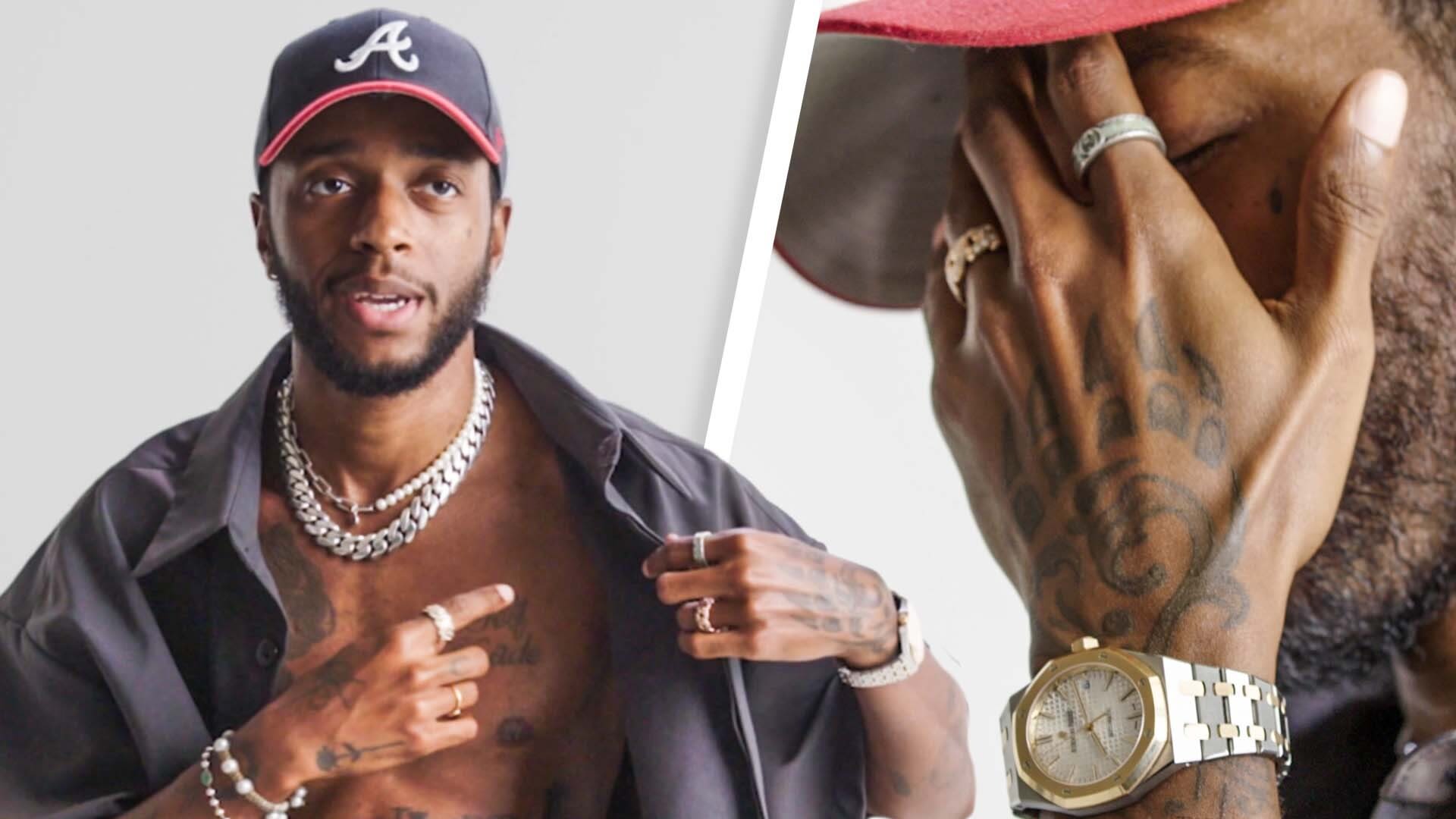
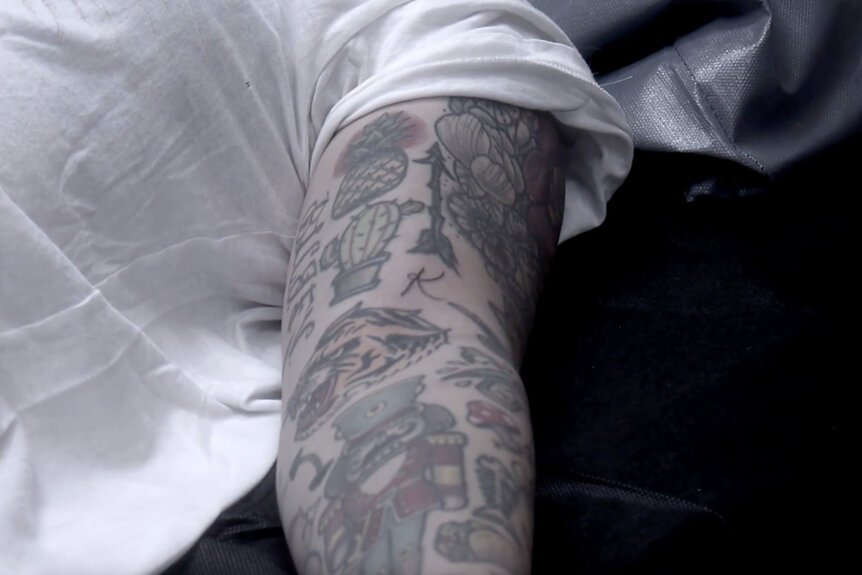
GQ tattoo-tour image of 6LACK pointing to the cursive self-made tattoo on his chest, with a close view of hand tattoos

The first was “self-made”, in small cursive on his chest. He told GQ the phrase came to him during spring break at Valdosta State. He stopped at a tattoo shop without a design in mind; the words simply occurred to him. He wanted something straightforward that he would not regret.

He tied the tattoo to a decision about work. At the time, visible tattoos could still make it harder to get hired. He did not want to plan his life around the kind of job other people expected him to have; he wanted to make music and do work he cared about. For him, the phrase marked the choice to take that risk, not a slogan added after success.

He has also joked about the less romantic side. In a later GQ conversation, he said the first tattoo cost too much for what it was; in i-D, he called it his least favourite. That does not erase what it meant at the time. It can mark an important decision and still be a design he would not choose again.

GQ does not pin down the exact year, the tattooer or which side of his chest bears the phrase. What 6LACK remembers is the spring-break setting and the decision to pursue music.

The bear claw on his hand marks the leap into music
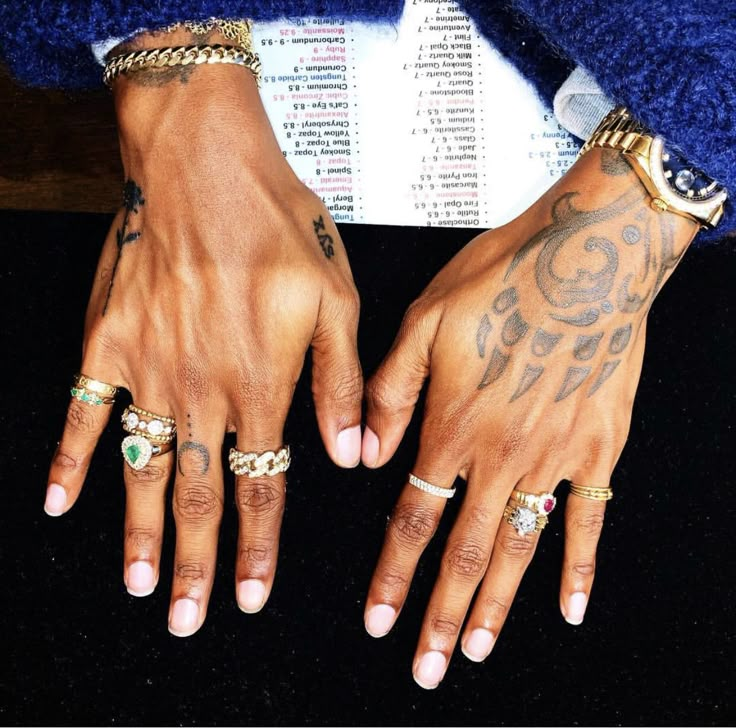
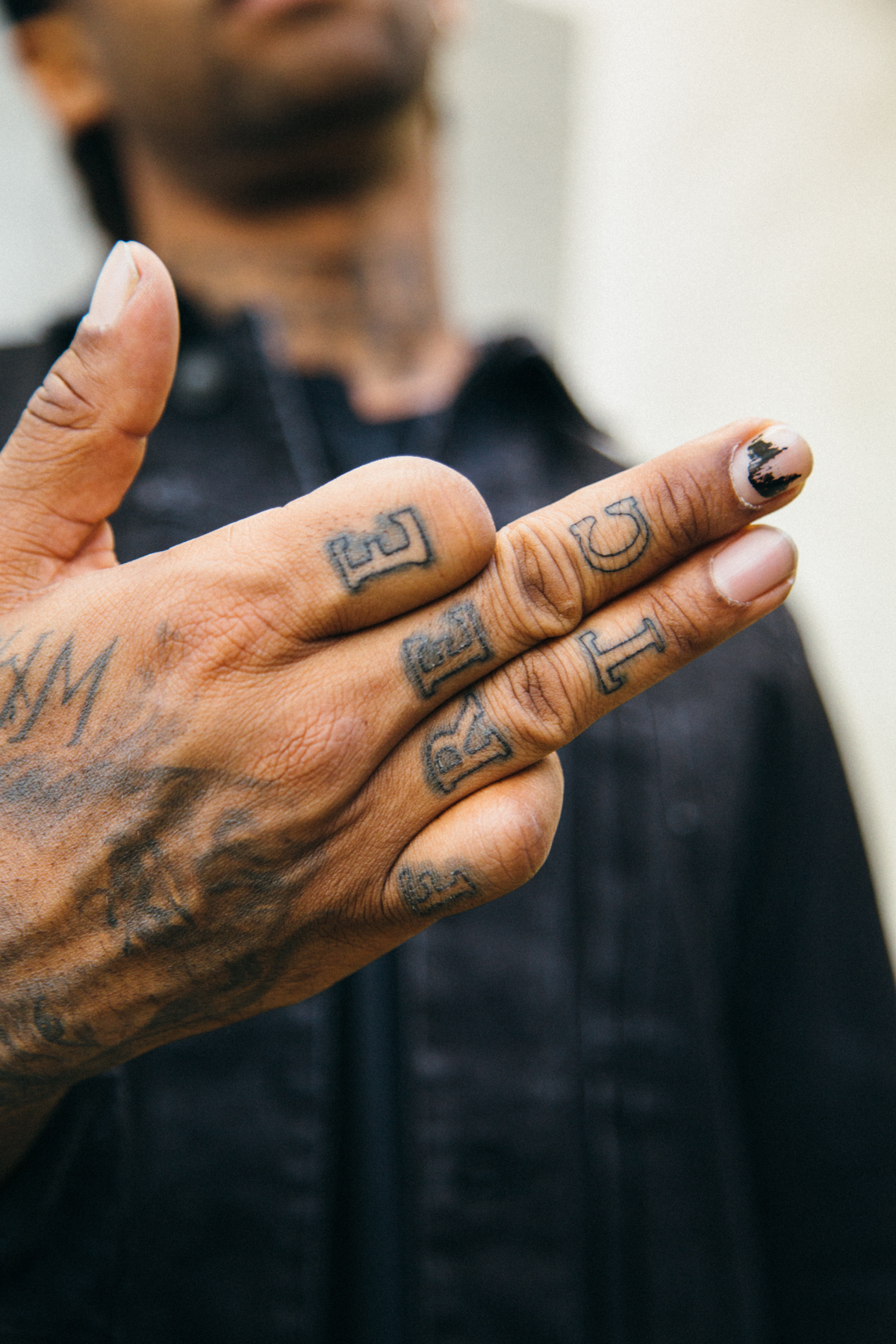
Close photograph of 6LACK’s tattooed hands, including the broad claw-like motif and smaller hand designs

The bear claw on his hand is the tattoo he calls his favourite. In i-D, he remembered getting it just before he stopped looking for a conventional job and committed to music. In GQ, he connected the claw to that same choice: a tattooed hand might close some doors, but he chose the life he wanted.

He links the bear and big cats with quiet strength, staying undisturbed and feeling at home in their surroundings. He has a panther head and a small geometric bear too, but those are separate designs in his account. The claw marks his career decision; the animals reflect qualities he admired.

The hand piece hurt most as the needle neared his wrist bone, he said. That spot could bring a tear, while he tried to treat the rest of the session as meditative. The black panther took longer to heal because of its dense shading and needed a touch-up. Those details show what living with the tattoos was like.

Photos show more small marks across his hands and fingers, but the bear claw is the one he has explained most fully. Some lines in close-up images remain hard to identify.

His arms and neck mix hand-drawn symbols with music and pop-culture references
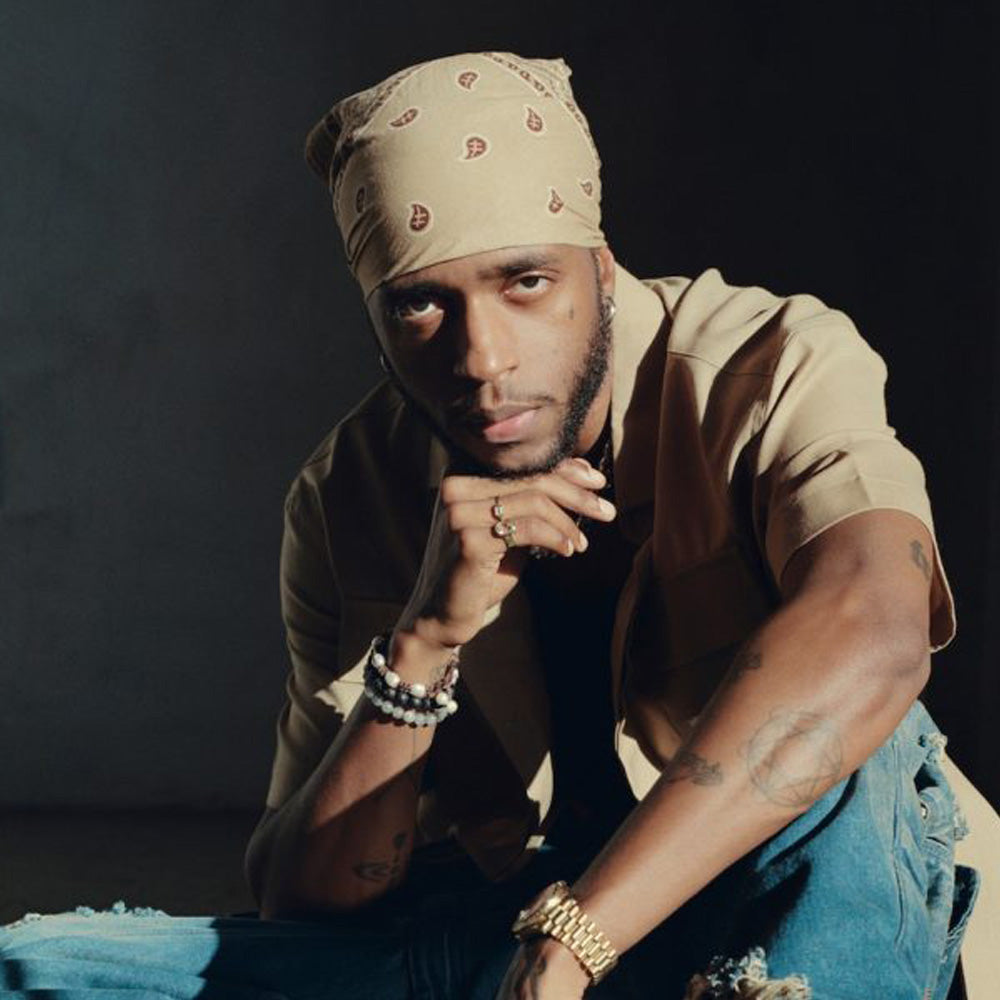
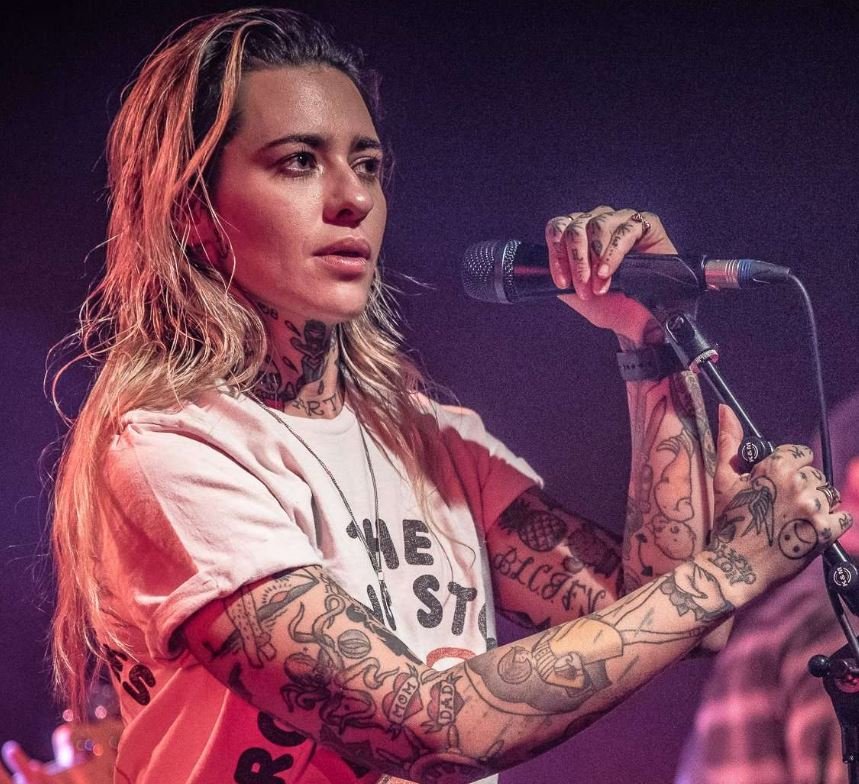
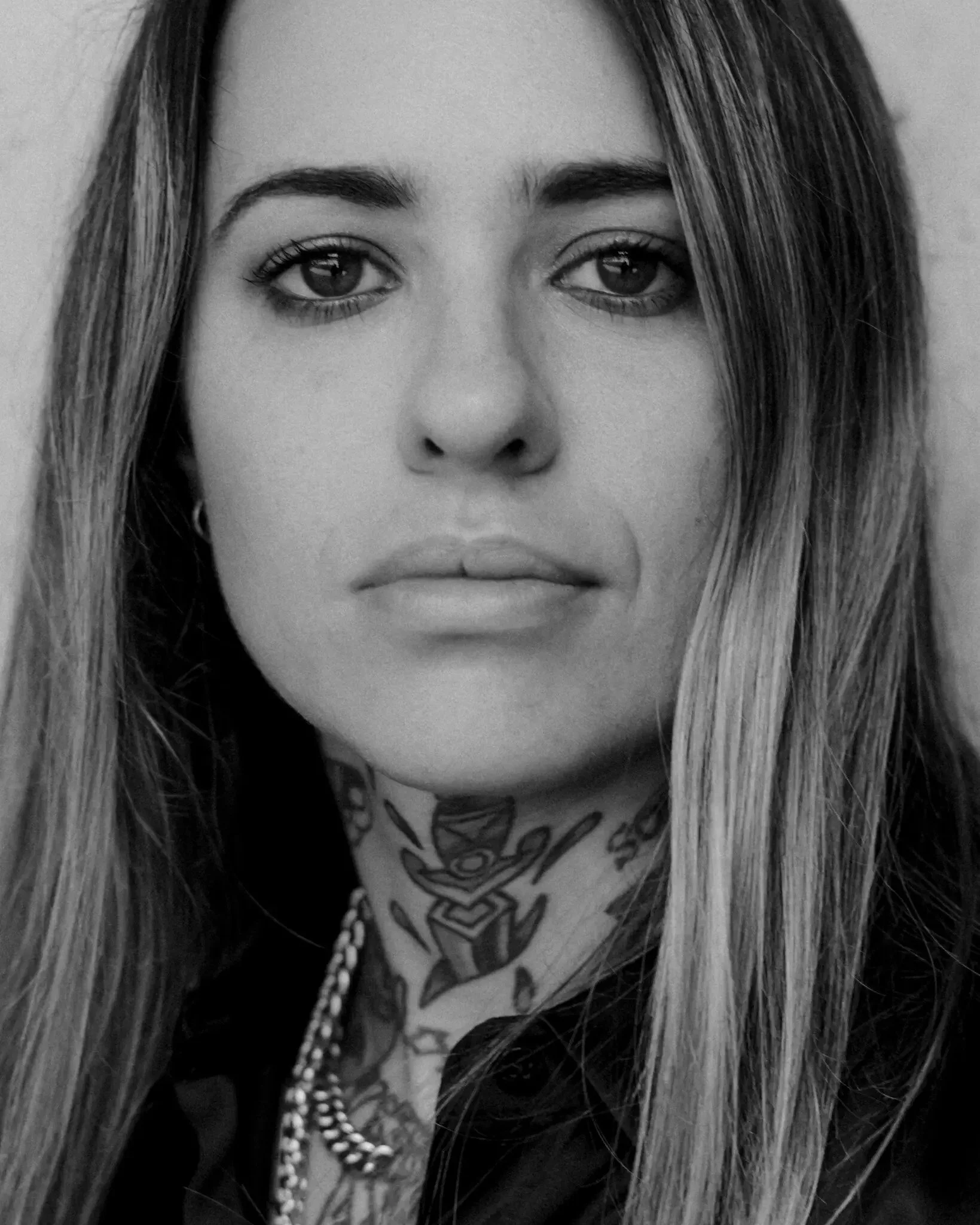
Official 6LACK portrait with separate tattoos visible on his forearm

Drawing is part of how 6LACK works. He said he often sketched or edited designs before getting them tattooed. Near the wrist is an ensō, or Zen circle, which he connects with accepting imperfection and finding value in what remains unfinished. He also said the wrist bone was one of the most painful places for him.

From there, he describes a cluster of related designs: water symbols, the Cancer constellation, a small crab, and the Seed of Life. He connects the water marks and crab to his Cancer sign, and the Seed of Life to creation and how physical things relate. He jokes that this is his “woke arm.”

His other arm has dragons, which he says came after a binge of Game of Thrones. He likes medieval stories, magic, kings and queens, so the designs began as a straightforward nod to a show and an aesthetic he enjoyed.

He also points out a small bear and the shaded panther among his animal tattoos. The bear is geometric; the panther’s dense shading made it slow to heal. Several other shapes came from his own sketches. The interview shows the spread of the work, though not every mark is clear in a still image.

One forearm tattoo is more like a note to himself than a symbol: “talk about it”. He got it during a tour when he kept holding back things he wanted to say until the silence caused trouble. The words remind him to speak while a feeling is present, before it grows into something bigger.

His compass has a practical purpose. He told GQ he is unusually preoccupied with directions, time and being on time—then admitted he had arrived late that day. There is a little humor in that: an instrument for finding your way, on someone who knows he does not always get there on schedule.

Family and the number six share space in his hand tattoos
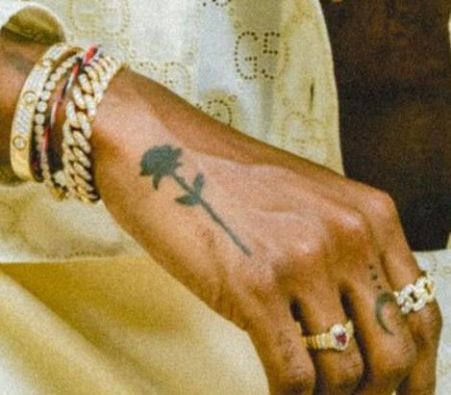
6LACK’s small rose tattoo on the back of his hand

Some of his most direct tattoos are for his daughter, Syx. He has her name on his hand and a rose for her middle name. He also links Metatron’s Cube and the digit 6 to her and his favourite number. He says the cube’s six points reflect how things are made and connected. He drew the number on his iPad first, then preferred the simpler version once it was tattooed.

The name is a separate hand tattoo from the rose for Syx’s middle name. In GQ, he groups the cube and the six with his daughter and his favourite number. Short summaries sometimes fold the name, rose and geometry into one supposed tattoo, though they are separate designs.

He also has a small “Barbara” tribute to his grandmother. He said Barbara was the grandparent he felt closest to, and that the tattoo was his tribute after she died. He discussed it while explaining his mother’s concerns about his face tattoos. GQ gives the relationship and reason, but not the exact placement.

Another family reference honours a cousin known as Speed. He also showed a Prince tribute, with a purple line at the bottom, which he got after Prince died. They are two separate memorials, not one sleeve or part of Syx’s designs.

Several pieces connect directly to music. Atlanta artist Ink by Kali made a sound-wave tattoo for the lead single from Since I Have a Lover and a separate “lover” mark. GQ does not give an exact location for either one. He also names the East Atlanta Love Letter acronym and a mark tied to the Free 6 album, but trails off before describing where they sit.

The neck carries a Mamba reference to Kobe Bryant. 6LACK said Bryant was his favourite athlete and that the late player’s mindset influenced how he approached music. He got the tattoo after Bryant died. That is the connection he has shared.

In GQ’s 2023 tour, he also showed Totoro, Jiji from Kiki’s Delivery Service, and a lotus flower. He named the films as favourites and described the designs as among his more recent tattoos at the time. “Recent” refers to the interview, not to the present day.

One symbol behind his ear is a drawing he made himself. He told GQ he had it tattooed without assigning it a fixed meaning and rarely sees or remembers exactly what it looks like. Sometimes he likes a drawing and gets it; there is no bigger story attached.

What the interviews establish, and what they leave open

6LACK has not published an official tattoo count. His GQ conversation identifies many designs, but it is a tour, not a numbered catalogue. Some pieces are clear in a photo; others are covered, faded or hard to place. He explains the bear claw in detail, while the symbol behind his ear has no defining meaning for him.

The best-supported list includes the cursive self-made chest tattoo; the bear claw and animal designs; the ensō, water and Cancer references, Seed of Life and dragons; his reminders and compass; Syx’s name and rose; the six-related geometry; tributes to Barbara, Speed, Prince and Kobe Bryant; and the music and Studio Ghibli pieces. That is a substantial collection, even if not every shape in every photo can be named.

A photograph may confirm that a tattoo exists without showing enough detail to identify it. Dates help track changes, and 6LACK’s own descriptions fill in much of the rest: commitment, family, drawing, music, and the jokes he does not need to explain away.
More musician tattoo guides

Angelina Jolie Tattoos: Designs, Meanings and What Is Confirmed

Angelina Jolie has been getting tattoos for more than two decades. Her collection ranges from family coordinates and script to Buddhist and Cambodian designs, a large tiger, older relationship tattoos and newer work on her hands. Jolie has explained some pieces herself; others are known through photographs or published reports, so not every detail is equally certain.

Coordinates on her forearm

Angelina Jolie’s forearm coordinate tattoo shown in close-up

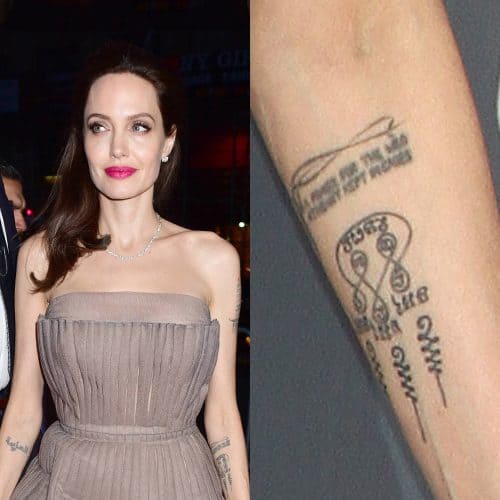
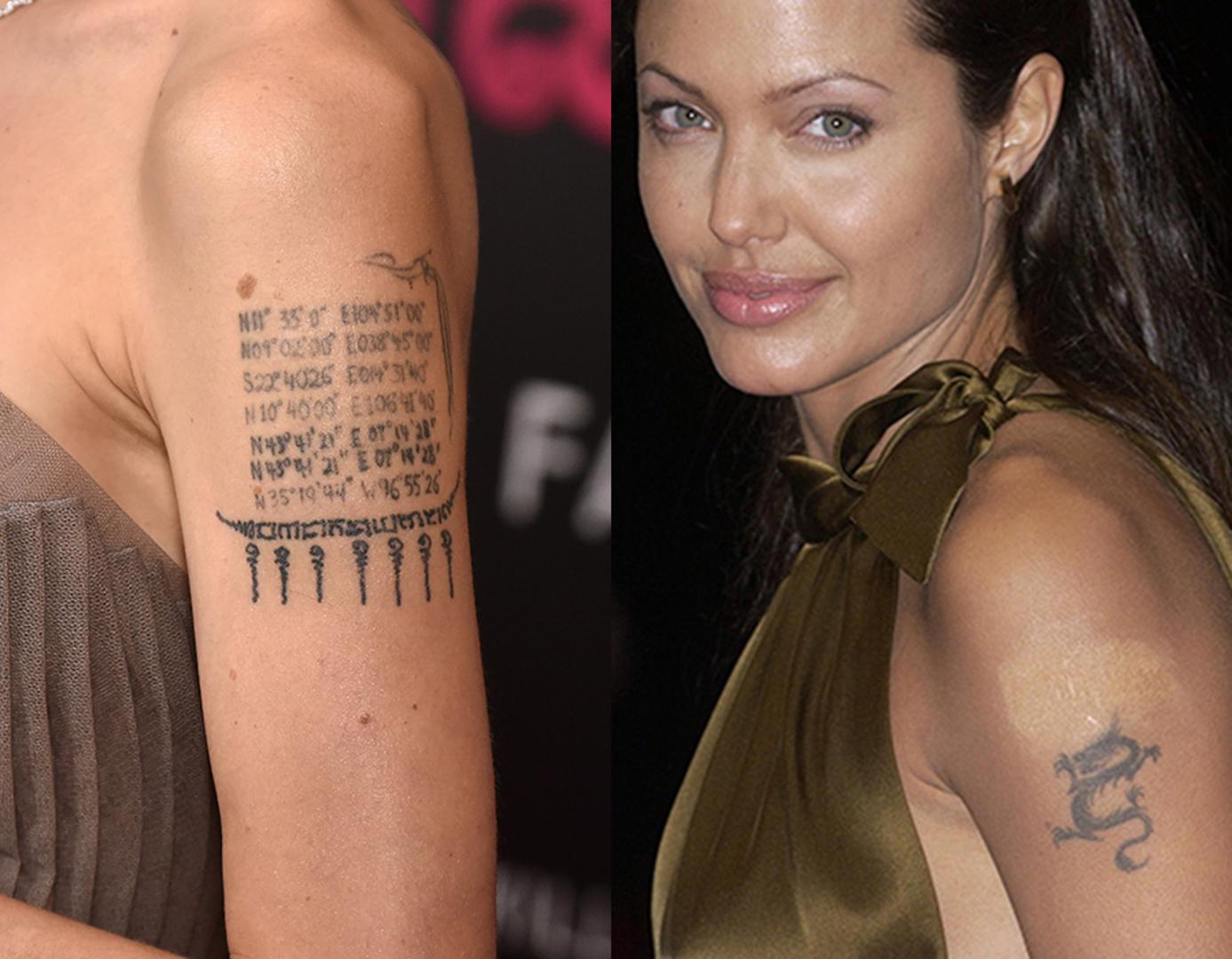
The vertical coordinates on Jolie’s forearm are among her most recognizable tattoos. They mark places connected with her children. In 2011, CBS News reported that she had added a seventh line for Brad Pitt’s birthplace, Shawnee, Oklahoma. She clarified that the new line marked his hometown, not another child.

The list grew with Jolie’s family, so it looks different in photos from different years. Each line records latitude and longitude. Online lists sometimes give different locations, so it is best to check the numbers against a reliable source.

Family lettering and matching work

Angelina Jolie’s forearm lettering tattoos

Family has come up often in Jolie’s tattoos. The forearm coordinates are the clearest example, but reports have linked other pieces to her children too. W Magazine says Jolie and her daughter Vivienne share the words “Stay Gold,” a reference to the stage production of The Outsiders. The reported matching tattoo is tied to that project, separate from the older coordinate work.

Photographs also show small script and lettering that reports connect to Jolie’s children and personal life. A mark near the coordinates is not necessarily a child’s name. If the writing cannot be read clearly and Jolie has not explained it, its meaning remains unknown.

Cambodian and Thai tattoos

Angelina Jolie’s Cambodian Sak Yant tattoos across her upper back

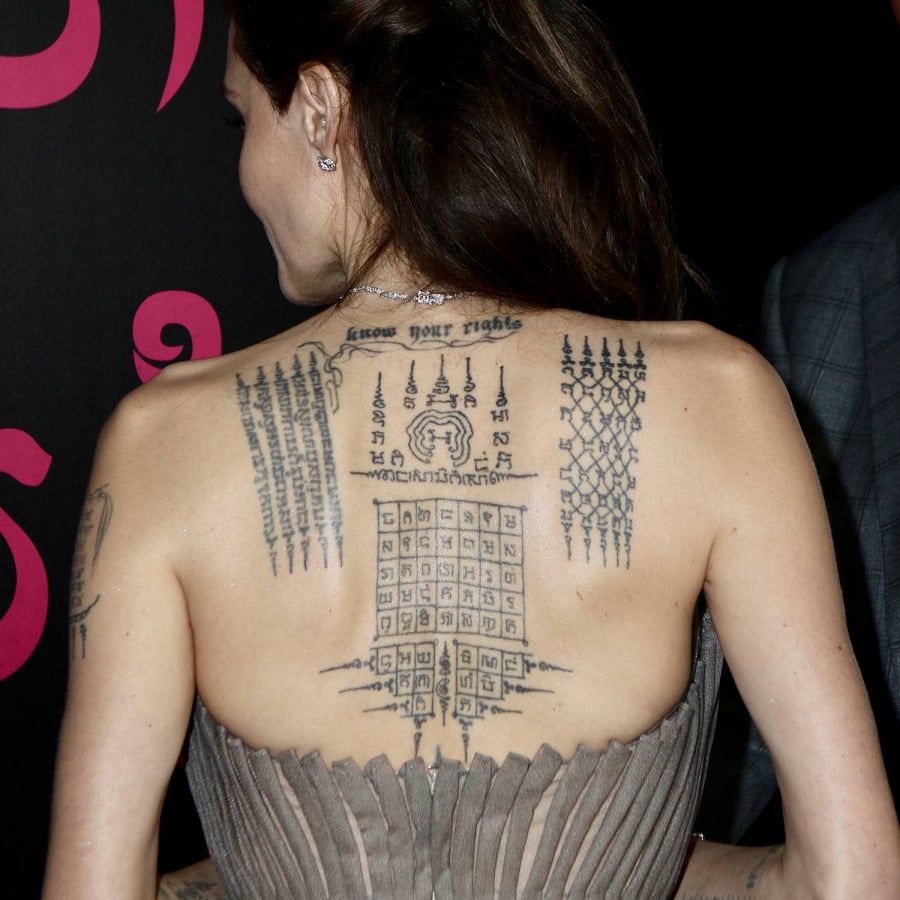
Cambodia is part of both Jolie’s personal history and her tattoo story. She adopted Maddox from Cambodia and has returned for work and humanitarian activity. Her large lower-back tiger is widely described as a traditional Southeast Asian design. Vanity Fair reported that she travelled to Thailand and worked with tattoo artist Sompong Kanphai, who used a traditional method and blessed the piece.

Other large designs across her back and shoulder use Buddhist or Cambodian script. Reports often describe them as protective or spiritual, though translations are not always agreed on. Some are traditional designs whose meaning depends on their religious and cultural setting, rather than a simple English phrase. Published accounts describe the context, but not a confirmed word-for-word meaning for every symbol.

The tiger tattoo

Angelina Jolie’s tiger tattoo being worked on across her lower back

The Bengal tiger is one of Jolie’s largest tattoos, stretching across her lower back. Public photos show it, and coverage often discusses it alongside her Thai tattoo session. Some published accounts also connect the tiger with her ties to Cambodia. That context appears in reporting; Jolie has not necessarily described it as the tattoo’s personal meaning.

The tiger is much larger than the small lettering on her arms and fingers, spanning her lower back. It was done using a traditional method. Photos show where it sits, but cannot capture all the ceremony’s details or its full religious significance.

Neck and upper-body lettering

Angelina Jolie’s upper-back lettering tattoo reading Know Your Rights

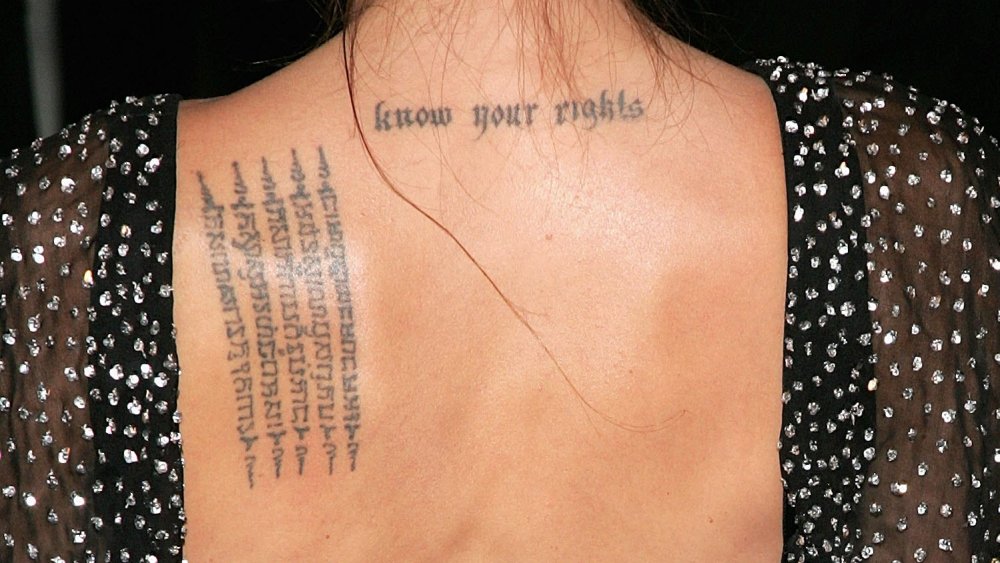
Jolie has worn the words “Know Your Rights” across her neck. Marie Claire reported that she discussed the tattoo alongside her concerns about human rights; the phrase has also been linked to her 2004 film work. The lettering is clear, but no single account establishes all of the tattoo’s meaning or her reasons for choosing it.

More script and symbolic designs cover her upper back and shoulders. Older photos show the collection taking shape over time. A published account may identify a tattoo as Buddhist, Cambodian or Thai; a photograph alone can show where it sits and what it looks like.

Older tattoos and cover-ups

Angelina Jolie older Billy Bob tattoo and coordinates cover-up

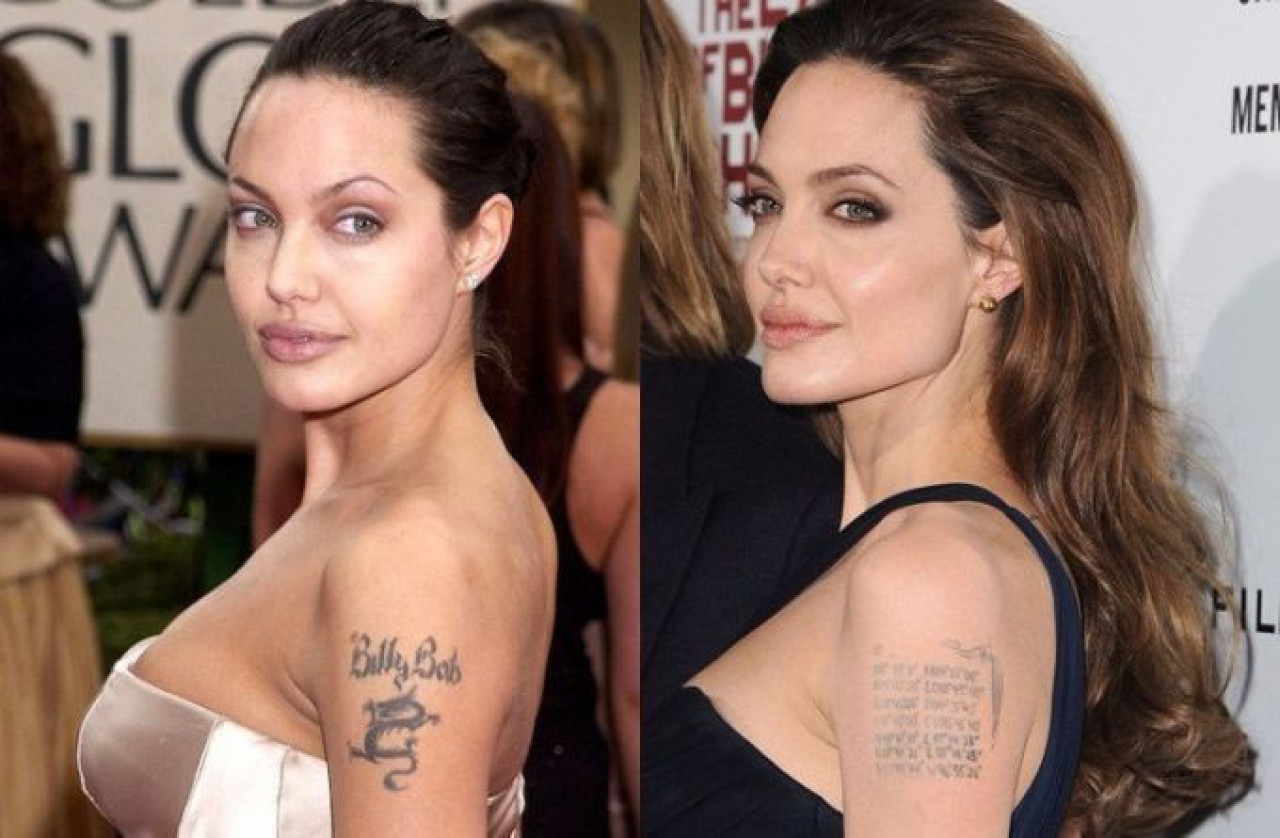
Jolie’s early tattoos include the Roman numeral XIII and a dragon, both associated with her younger years. She has also spoken about regretting some former partners’ names and having them removed or covered. Billy Bob Thornton is the best-known example in public coverage. Sources do not give a consistent timeline or method for every removal, so the full sequence is not clear.

Her tattoo history shows how designs can change over time. An old partner’s name may disappear while family coordinates remain and gain a new line. A current photo cannot show the whole collection; older images fill in what is no longer visible.

Hand and finger tattoos

Angelina Jolie matching middle-finger tattoos

Later photos show small tattoos on Jolie’s fingers. Bustle reported that tattoo artist Mr K shared an image of them. These marks are newer than the back pieces, but publications have not established a meaning for each design.

What is actually known?

Jolie’s tattoos include forearm coordinates, Cambodian and Thai script, the lower-back tiger, “Know Your Rights,” older relationship designs and newer finger work. She has explained some pieces herself; other details come from publications or photographs. The traditional designs, in particular, do not always have a single plain-English translation.

The clearest accounts identify a design, where it sits and, when a source has reported it, when it was done and who did it. Jolie has explained some meanings herself. For the rest, it helps to distinguish what a source reports from what a photograph can show.

Ty Dolla $ign’s Chest Griffin and Other Tattoos

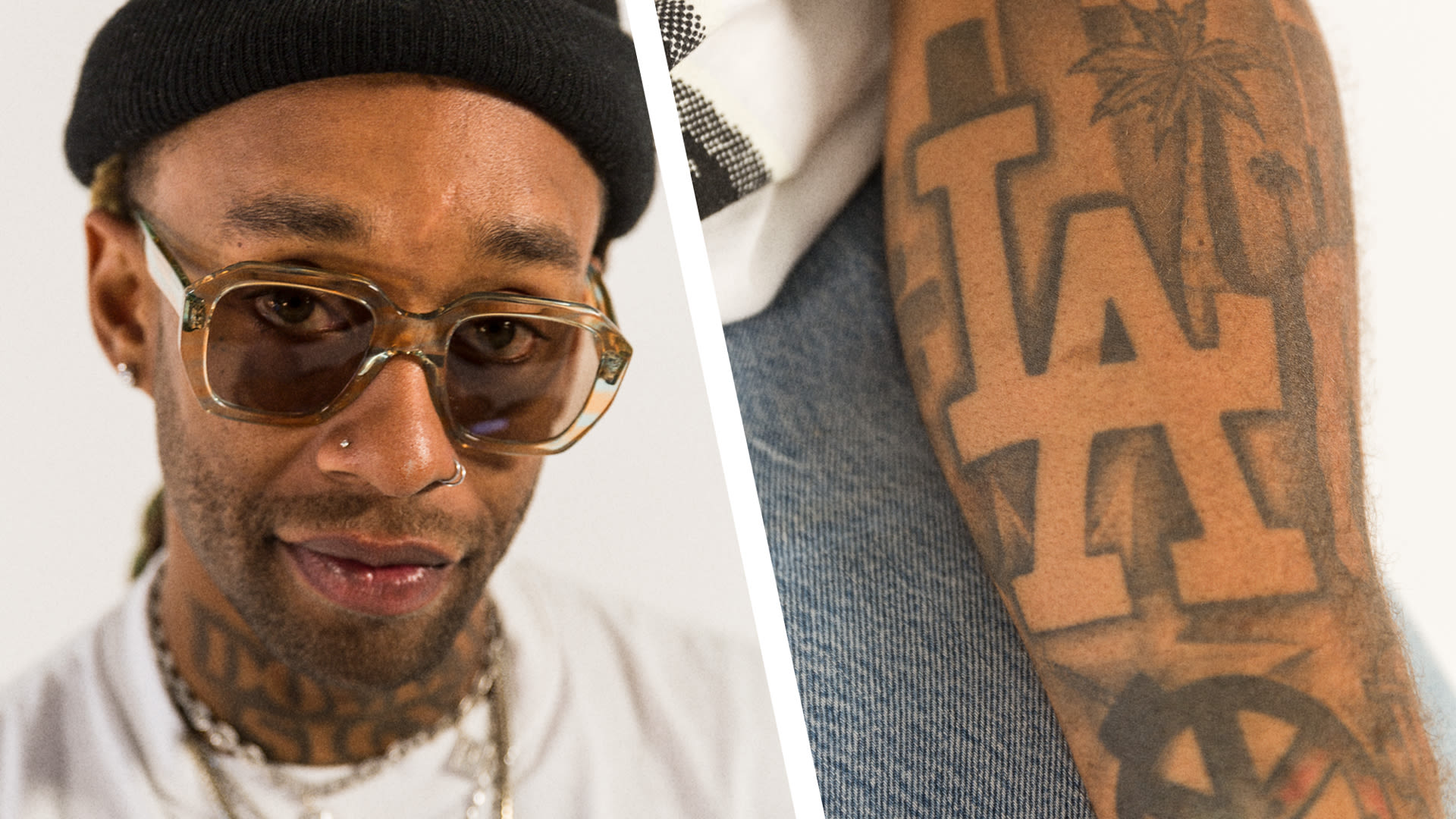
Ty Dolla $ign’s tattoos are closely tied to the image he built through West Coast music. GQ’s Tattoo Tour is the clearest record of them: he talks about the designs while the camera shows where they sit. The large chest griffin is the standout, with more ink on his arms, hands and neck. Some pieces are identified in the video; others are visible only as shapes in photographs.

What Ty Dolla $ign’s tattoo tour documents

The chest griffin is the most recognizable piece in Ty Dolla $ign’s collection. GQ shows how it spans the chest, making its scale clear. It stands out in open-shirt photos and can disappear under performance clothes, so the date and setting matter when comparing pictures.

A tattoo credit and a tattoo’s meaning are separate details. A source may identify the design or its artist without explaining why Ty Dolla $ign chose it. His own comments carry more weight than fan captions. Unless he has explained it himself, ideas like power, protection or mythology remain interpretations, not his stated reason.

The chest griffin

Ty Dolla Sign tattoo tour showing the large chest griffin tattoo

The griffin sits in the center of his chest and is the piece most consistently named in coverage. Its wings and animal features form one large image rather than a small, isolated symbol. The GQ video shows the design in relation to his chest, which is easier to read than a tight crop.

The central griffin is clear; the smaller lines around it are harder to separate. Public sources do not map every mark across the chest, so those details cannot be identified with the same confidence.

Arms and sleeve-style work

Ty Dolla $ign raises both arms, showing distinct forearm and hand tattoos

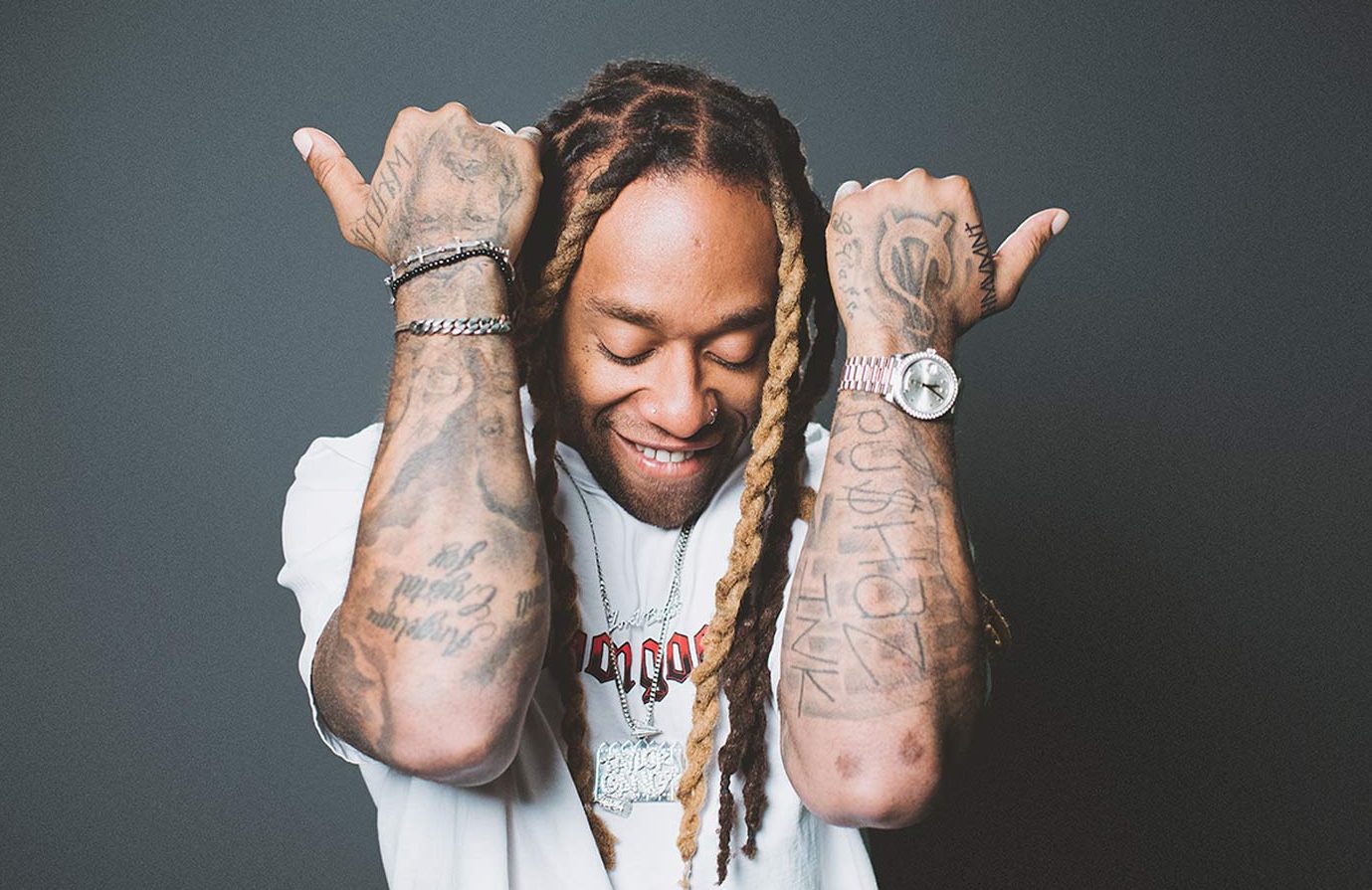
More tattoos appear across Ty Dolla $ign’s arms in music videos, interviews and stage photos. Short sleeves can reveal some designs, while clothing, instruments and other equipment hide others. Photos confirm the arm work, but a distant performance shot rarely shows every shape clearly.

As more pieces are added, open skin between them can fill in and make an arm look like a connected sleeve. That change does not mean an earlier tattoo was removed; it may simply reflect newer work nearby. Dated photos help tell the difference.

Hand and neck details

Ty Dolla $ign tattooed hand

Small tattoos on his hands and neck are harder to make out. Jewelry, microphones, lighting and the way a hand bends can obscure letters or symbols. A close interview shot is more useful than a blurry event photo. If the wording is unreadable, it is better to describe where the mark sits than guess at a transcription.

Neck tattoos also appear and disappear depending on the angle and clothing. An open collar can reveal a design that is hidden in a red-carpet photo. Comparing clear images from different dates gives a better sense of what changed than relying on one picture.

Artists, meanings and evidence levels

GQ’s Tattoo Tour gives Ty Dolla $ign’s own perspective, but it does not explain every piece. When he names an artist or connects a tattoo to someone, that detail can be reported. When a photo only shows a design, its appearance and location are what can be described; its meaning may be private.

The griffin is easy to identify, but its mythology does not tell us what it means to him. Readers can describe what the image looks like without assigning it a personal story he has not shared.

How the collection has developed

Photos from different points in his career show the collection taking shape over time. The chest griffin is its largest focal point, with tattoos on his arms, hands and neck extending the look. Clothing and camera angles reveal different parts, so no single picture captures the full collection.

The tattoos fit the visual world of Ty Dolla $ign’s music and fashion, but that does not mean every piece was chosen for publicity. A design’s personal meaning, the artist who made it and the way it appears in a photo are separate things.

The setting changes what a photograph can show. A studio interview may give a clear view of the chest, while a concert photo may catch only his arms and hands. Seen together, those images show the collection at different moments, though none is a complete record on its own.

The griffin can be named because GQ identifies it. Smaller marks can be described by location when no reliable source gives them a name. That keeps a blurry shape from turning into a confident but unsupported tattoo claim.

What the public record confirms

GQ’s Tattoo Tour clearly documents the large chest griffin. Photos and reporting also show tattoos on his arms, hands and neck, though some of the smaller designs remain difficult to identify. The available sources do not provide an official list of every tattoo or its meaning.

The chest griffin is the clearest place to start when comparing photos. Close images may reveal more on his arms and hands; distant stage shots usually show less. Any new identification can be added when a clear interview or photograph supports it.

More musician tattoo guides

Jason Momoa’s Shark Tooth and On the Roam Tattoos

Jason Momoa is often recognized by the black triangular pattern running along the side of his head, but that is only one part of his collection. His tattoos also touch on family, Hawaiian heritage, protection, his creative projects and people he has lost. Some are easy to spot; others come into view when he turns an arm or explains the mark.

Momoa’s tattoos span different chapters of his life. His first large piece came before his daughter was born, while later designs connect to On the Roam and Pride of Gypsies, projects he built with friends and family. The shark-tooth patterns link those personal themes to his Hawaiian aumakua, a guardian spirit he has described as a shark.

The clearest picture comes from the designs Momoa has explained and the details photographs can show. Some marks have a personal story behind them; others are visible without a confirmed explanation.

The shark-tooth head tattoo is tied to Momoa’s Hawaiian roots

Jason Momoa shark tooth tattoo on the side of his head

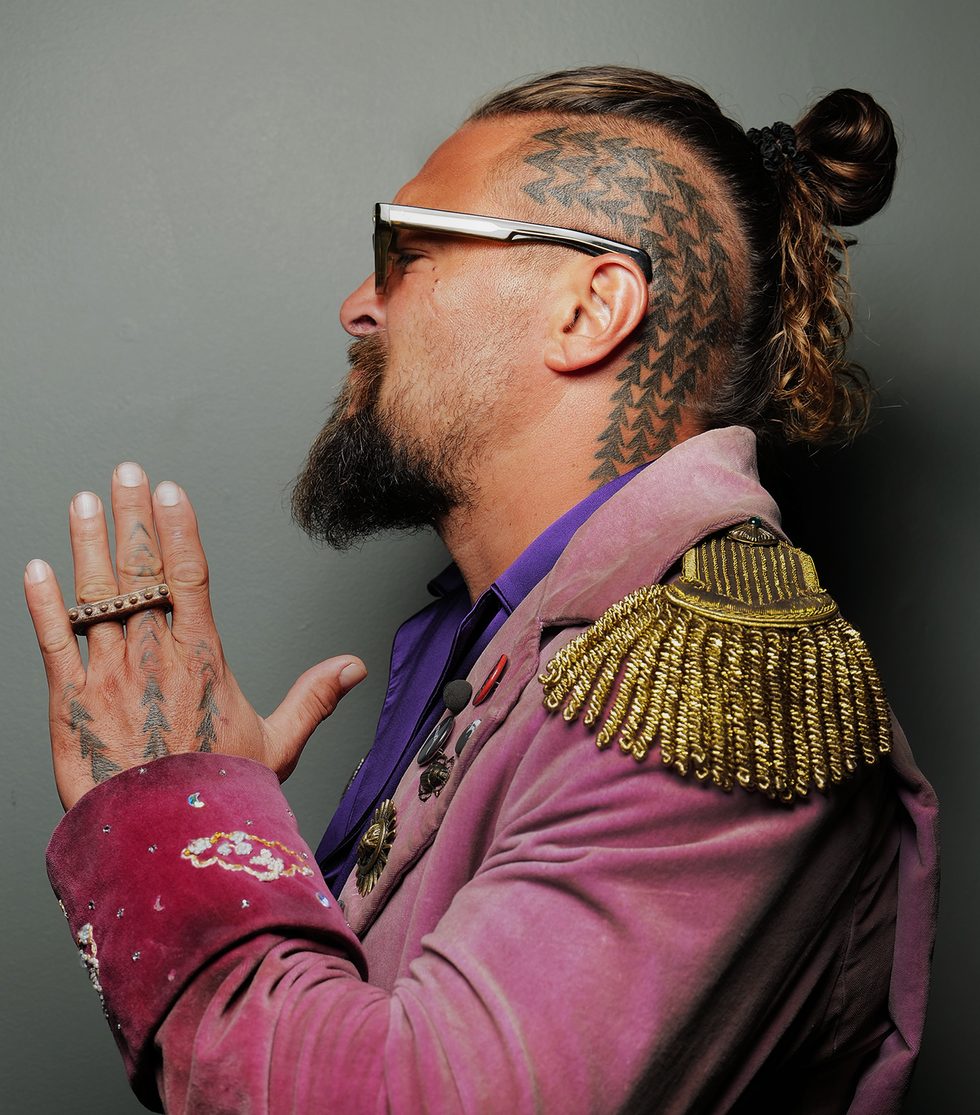
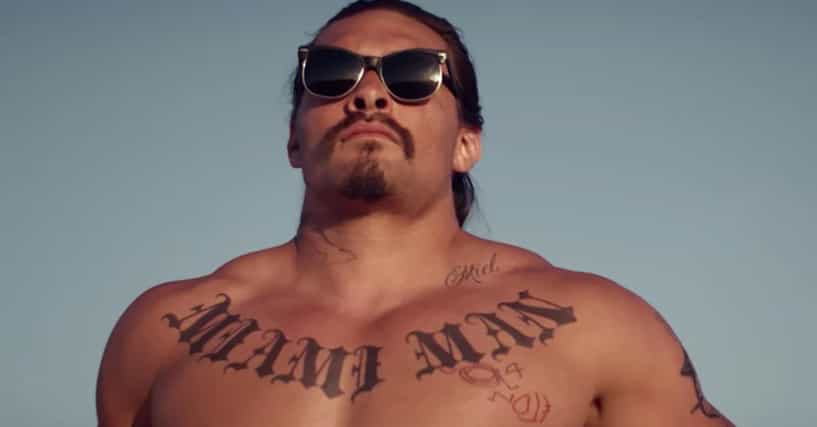
The head tattoo is the most dramatic addition to Momoa’s collection. Rows of solid black, arrow-like shapes run from the shaved side of his scalp toward his ear and neck. They echo the triangular shark-tooth pattern on his forearm, but the higher placement makes them much more noticeable. With his hair tied back, the design stands out in profile.

Momoa revealed the head piece in 2022 while talking about “Chief of War” and his Hawaiian heritage. He said it was a design he had wanted for years, and later called it a favorite.

Momoa connects the pattern to his family’s aumakua, which he describes as a guardian spirit in the form of a shark. The shark-tooth shapes are tied to protection, family and his Hawaiian identity, rather than chosen only for their bold look.

Momoa has explained his own connection to the design, but a photograph cannot tell us what each individual triangle means. What it does show is the repeated tooth shape, the heavy black ink and the way the pattern follows his scalp toward his neck.

The forearm shark teeth were Momoa’s first major tattoo

Jason Momoa shark tooth aumakua forearm tattoo

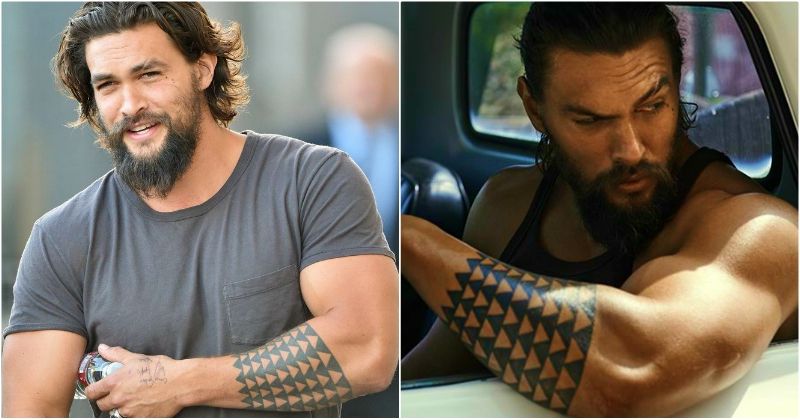
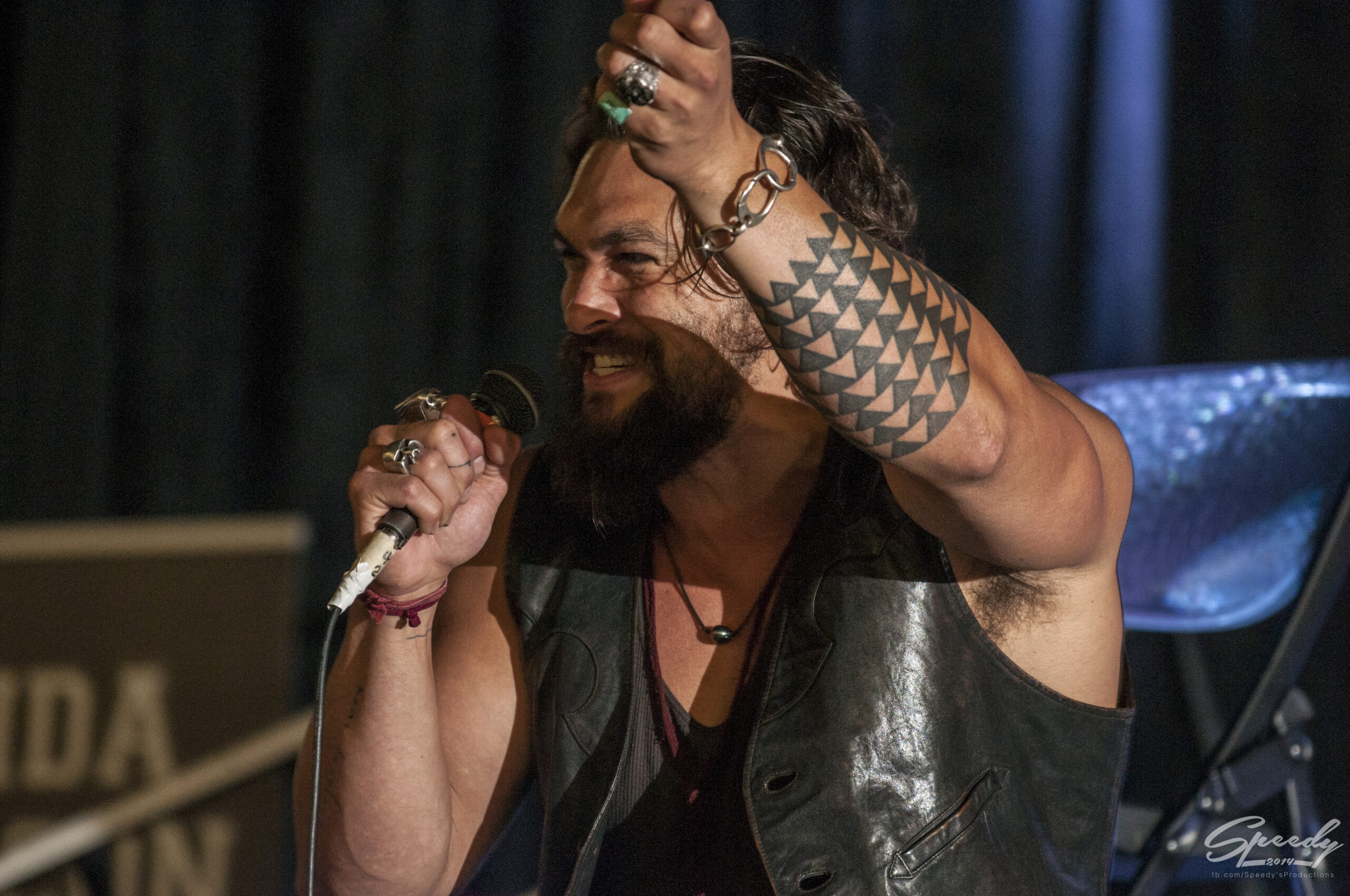
Momoa’s forearm tattoo came much earlier and remains the foundation of the collection. He has said it was his first tattoo, took about eight hours and was done when he was 26, shortly before his daughter was born. Its size is why it still dominates photos of his arm.

Rows of black triangles create the shark-tooth pattern, which wraps around Momoa’s forearm instead of sitting flat on the front. As he moves his arm, the design shifts: from the wrist it can look like a band, while the side view shows the rows climbing toward a half sleeve.

Momoa connects the design to his family guardian, the shark aumakua. He has said the tattoo represents protection and a way of carrying that family connection with him. He has also talked about sharks recognizing him when he is in the water.

Momoa later added to the arm tattoo for a character he played. He said the extension suited the role and that, at the time, he wore that part only as the character. The original forearm piece and the later addition belong to different points in his career.

The arm tattoo often appears in photos because a sleeveless shirt or raised arm reveals it, while a jacket or costume can hide most of the pattern. A wide shot shows its scale; a close side view makes the rows of teeth and the wrap around the arm easier to see.

Momoa’s chest carries his children’s names and family lettering

Jason Momoa MAMA DAD chest tattoo

The chest tattoos are more closely tied to family than to Momoa’s public warrior image. Photos show lettering across the upper chest, including “MAMA DAD”, and reports identify his children’s names in their own handwriting. These are personal family marks, distinct from the shark-tooth design.

The handwritten names keep the tattoos close to the children who wrote them; they are not polished display lettering. Shadows and body position can obscure parts of the chest, so the words and their placement are easier to confirm than the meaning of every line nearby.

Momoa has discussed family in connection with several tattoos, from the protective shark designs to the names linked with his children. That does not make every mark on his chest a family tattoo. Some are identified in reports; others are visible only in a particular photograph.

A shirtless photo can still hide the chest lettering under hair, necklaces or shadow. A closer image is needed to read the words and distinguish a name from a decorative line.

On the Roam, Pride of Gypsies and the smaller pieces

Jason Momoa On the Roam tattoo and arm lettering

Not all of Momoa’s tattoos are ancient family symbols. Some mark the projects and companies he has built. The On the Roam design is linked to the travel and making project he created with his team. Momoa has said he got it with people around him, giving it a group meaning as well as a connection to the project.

Pride of Gypsies is the name of Momoa’s production company and is commonly reported on his inner right forearm. It sits near the larger tribal work, but the two designs speak to different parts of his life: the triangles connect to ancestry and protection, while the lettering points to his company and creative community.

Momoa has smaller tattoos too, including a simple line and designs linked to people he has loved and lost. Some are hard to identify consistently; a bracelet can cover a mark, and an arm turned toward the camera may change how it looks. Those smaller pieces need a clear photo or Momoa’s own explanation before their details can be pinned down.

Some of Momoa’s tattoos have been covered or changed for acting roles. Costumes can hide his real forearm ink, and temporary designs may be added for a character. A tattoo seen in a film is not automatically part of his permanent collection; interviews and clear off-set photos help tell the difference.

Why Jason Momoa’s tattoos work as a timeline

Jason Momoa forearm tattoo timeline

Dates help put Momoa’s tattoos in order. The shark-tooth forearm piece came first and connects to his family and aumakua. Years later, the head tattoo carried the pattern up toward his scalp and neck. The chest lettering keeps family close, while the company designs record the people and projects around his work.

The collection moves between Hawaiian heritage, family, work, grief and smaller ideas that may be personal to Momoa alone. It is not one matching sleeve made for a photo shoot. Some designs have a clear explanation from him; others can be seen in photographs without a confirmed meaning.

Momoa has explained the forearm teeth as a link to his aumakua, and described the head tattoo as a later extension of that pattern. The chest words and company names can be read where photos show them. For the less visible marks, it is better to wait for a clearer image or his own account than to turn a dark shape into a story.

What makes Momoa’s tattoos interesting is how they bring different parts of his life together. The shark-tooth pattern connects family with Hawaiian heritage; the chest lettering keeps family close; and the company marks follow the people and projects around him. The collection spans from his twenties to newer roles and creative work, and no single photo shows all of it.

More actor tattoo guides

Chris Daughtry’s Tattoos: The Blackout Redesign and the Ink It Replaced

Chris Daughtry’s tattoos tell a before-and-after story. Older photos show colorful, detailed work across both arms; more recent coverage follows a dramatic blackout redesign. The change has made online tattoo galleries hard to compare: a photo may show pieces that are now covered. Keeping the old sleeves separate from the newer blackwork makes the timeline clear.

Some designs are easy to see in photographs, but their personal meanings have not been explained in detail. A picture shows how a tattoo looked at the time; a report may add context. Neither fills in the story behind every shape in an old image.

The colorful sleeves came before the blackout redesign

Chris Daughtry showing the colorful tattoos on his arms before the blackout redesign

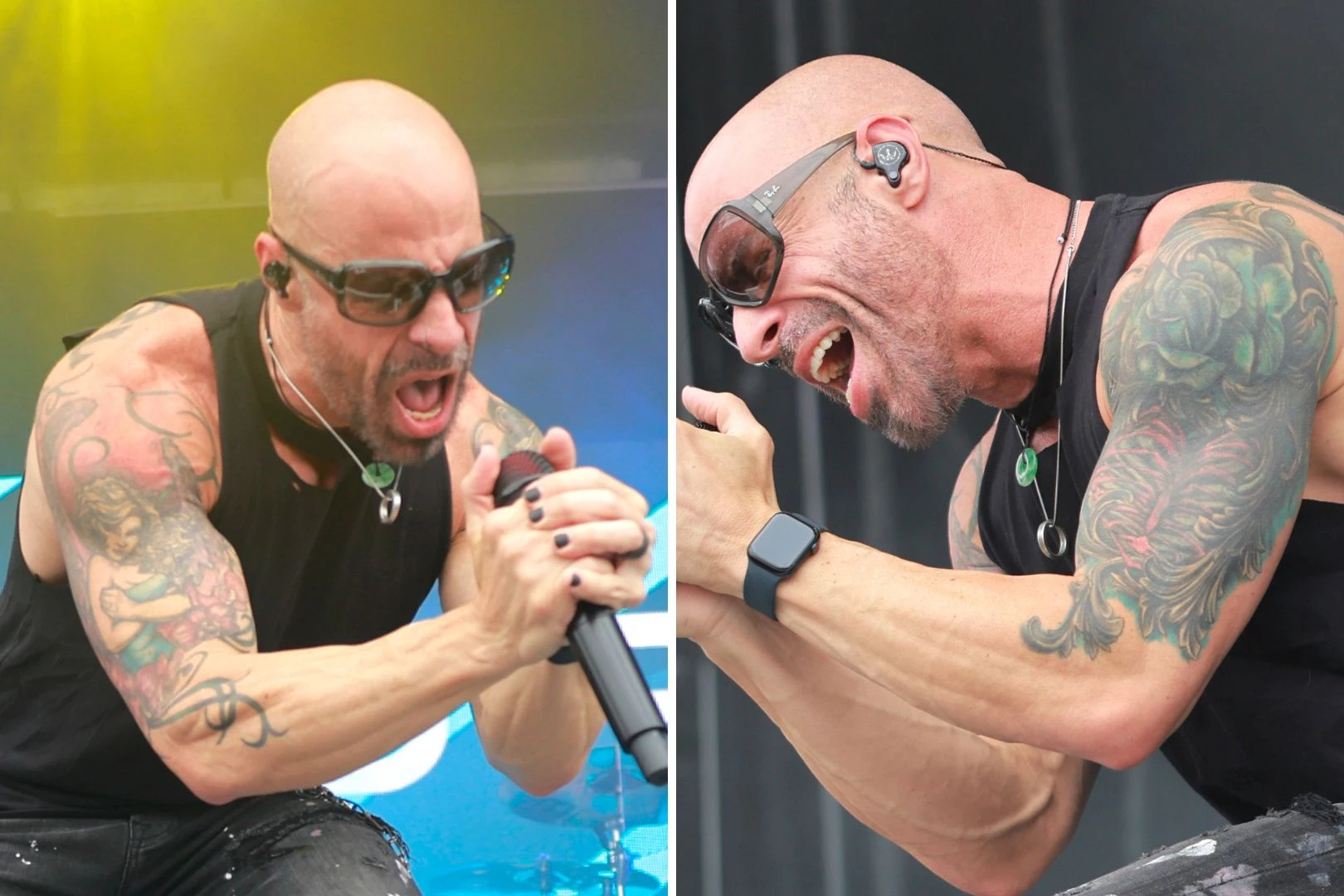
Before the blackout, Daughtry had substantial color and linework on both arms. Photos show sleeves built from several designs rather than one small emblem. Faces, shaded forms and saturated color cover the upper and lower arms, though no photo provides a reliable catalogue of every piece.

The earlier sleeves explain why the newer work looks so different. Blackout ink covers or sits beside existing tattoos, changing the balance of the arms and hiding much of the original artwork. A before photo shows the old designs; it does not show what is visible now.

Older lists sometimes repeat names for individual tattoos without saying where the identification came from. The photographs support a broad description of colorful arm sleeves with portrait-like and illustrative designs. If a small detail cannot be made out, it is better to leave it unnamed than guess.

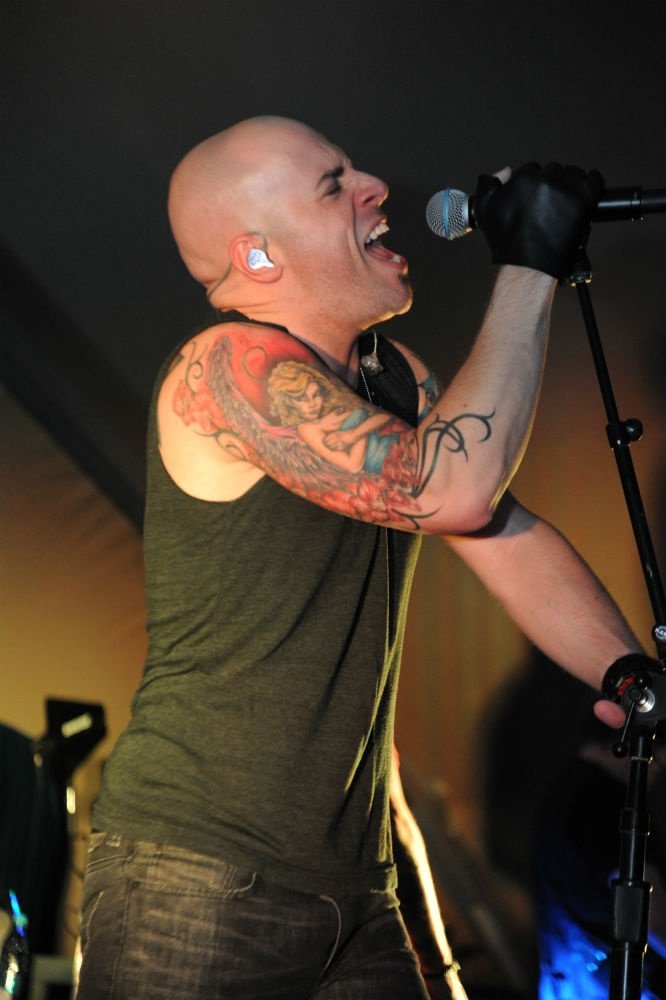
An angel and portrait imagery survives in the older record

Chris Daughtry showing the angel and colorful tattoo sleeve on his upper arm

Portrait-style imagery is one of the clearest themes in the older arm photos. An angel-like figure and other faces are visible, but the available reports do not establish a confirmed meaning for each design. Their appearance and placement can be described without assigning a religious, memorial or family story.

Photos from different years can make a detailed sleeve look like a different tattoo. Lighting, clothing and camera angle change what is visible, and a close crop can exaggerate one part of a larger design. The images do not identify every portrait as a particular person.

Daughtry’s tattoo history is often summarized as a collection of colorful designs later covered by blackwork. Older photos show how the pieces fit across his arms and why some of the original work is hard to see now.

The blackout arms use solid ink and negative space

Chris Daughtry showing the solid blackout tattoos and pointed negative-space shoulder stripes

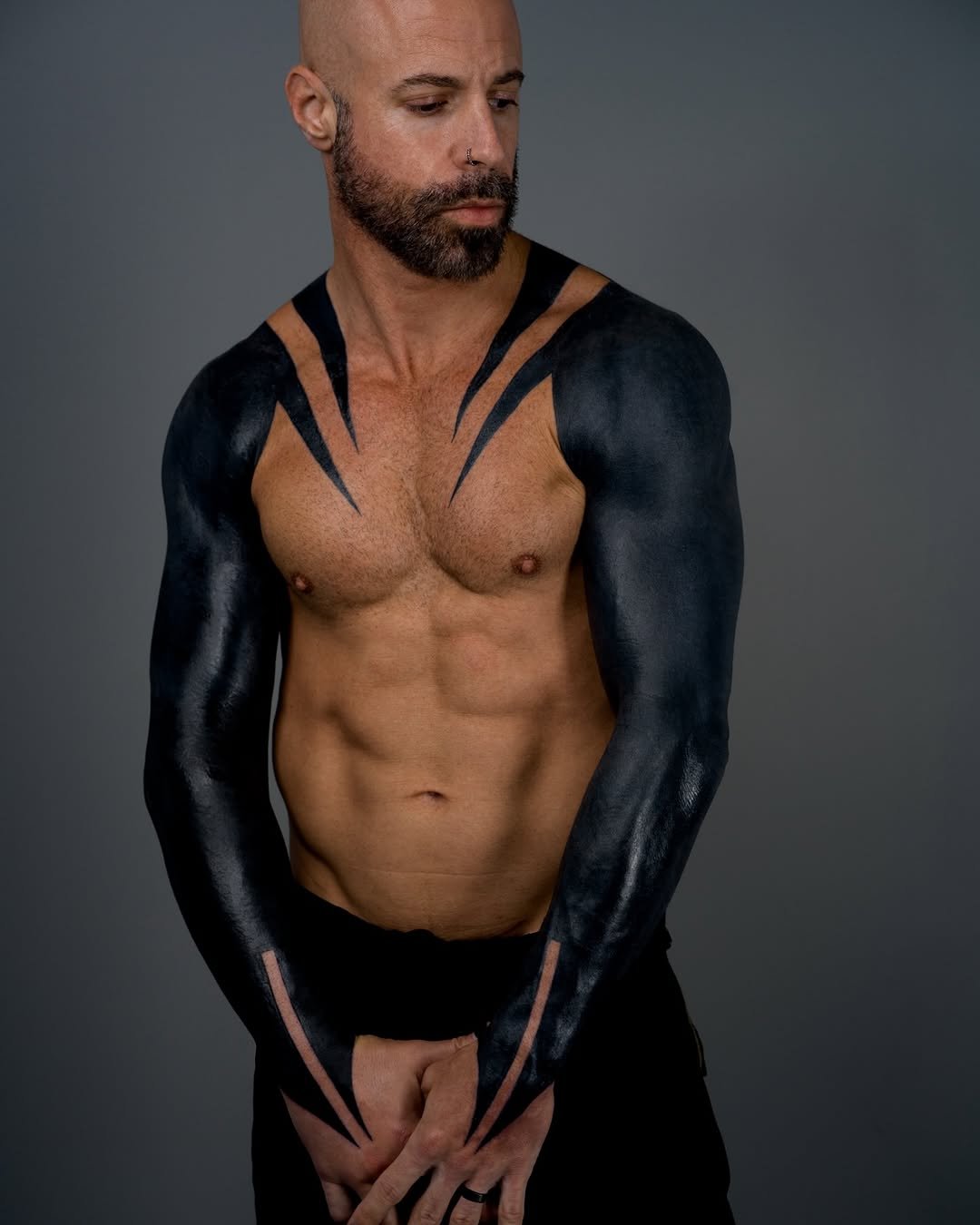
In December 2024, Loudwire reported that Daughtry had new blackout work done by Los Angeles artist Roxx, who has also worked with Machine Gun Kelly. The redesign covers both arms with solid black areas, negative-space stripes and pointed accents near the shoulders.

Blackout tattooing can be a style choice as well as a way to cover older work. For Daughtry, the contrast with the colorful sleeves is striking: solid black fields hide much of the old ink, while untouched skin creates the new pattern. The result is a coordinated blackwork composition, not a single symbol with one fixed meaning.

Reports also place the blackout across Daughtry’s upper back and the back of his neck. Those areas are harder to see clearly in the available photos, so the reports establish their location without showing enough detail to describe their exact shapes. The arms remain the clearest view of the redesign.

The negative-space shapes keep the design from reading as a flat block of black. Reports describe stripes running from the knuckles toward the wrists and pointed accents around the shoulders. Their edges may look different as the tattoos heal or appear under different lighting.

Daughtry has been described as seeing the blackout tattoos as cohesive and intentional, which fits the unified look of the finished work. The redesign changed how the earlier sleeves appear, but the available coverage does not establish a deeper private motive.

How to read Daughtry’s tattoo timeline

The timeline has three clear stages: colorful arm sleeves in older photos, portrait and illustrative designs within that work, and the later blackout by Roxx. Keeping those stages distinct prevents an old photo from being mistaken for a current view.

Tattoo galleries may seem to disagree because they were photographed years apart, before or after the blackout, or from angles that show only part of an arm. The date and viewpoint explain many of the differences.

The arms show the redesign most clearly. Reports also include the upper back and neck, though fewer details are visible there. Those locations can be noted without guessing at the shapes or their meanings.

Daughtry’s tattoos are a record of a major visual change, not a fixed list. The blackout is the latest chapter, and the photographs make the most sense when they are dated and compared with the colorful sleeves that came before.

Morgan Wade’s Tattoos: Family Ink, Old-School Flash and the K from Kyle Richards

Morgan Wade’s tattoos cover a lot of ground, from her neck to her feet. She has described a mix of family references, traditional flash, small jokes and designs she chose because she liked them. She has not published a complete inventory, but interviews and photos identify several designs clearly enough to discuss without guessing at every meaning.

Wade has explained some tattoos herself. Her first piece—the initials of her four younger siblings—has a clear family story, as does the Morton Salt girl she connects to a childhood memory. The K on her arm has a different history: Kyle Richards made it during a television scene. Many of the older flash designs have no published explanation.

Photos from different dates show different parts of Wade’s densely tattooed arms, neck and hands. A studio portrait may reveal her hands while a performance shot shows an arm. The dates and angles help explain why the collection looks different from one image to another.

Morgan Wade’s four younger siblings’ initials

Morgan Wade showing her four younger siblings initials tattoo area on the arm

Wade told Inked that her first tattoo was the initials of her four younger siblings, on the inside of her arm. She was in college, had little money and took a friend’s suggestion that a tattoo would suit her.

Wade has described those letters as a family tattoo. That is their documented meaning; it does not establish why she chose every piece that came later. Photos may not show each letter clearly, but the placement and family connection are known.

The inside-arm placement can disappear in concert photos, hidden by a microphone, sleeve or crossed arm. A close image shows the initials more clearly than a distant stage shot, especially when distinguishing the first tattoo from the many designs she added later.

The Morton Salt girl carries a childhood memory.

Wade told the same Inked interviewer that her favorite tattoo is the Morton Salt girl on top of her arm. She connects it to her grandmother, who kept a salt can on the table, and to tracing the figure as a child.

That small household memory is what makes the tattoo personal to Wade. She named the advertising character and recalled tracing it as a child; the story is more specific than a general association with nostalgia or family.

The Morton Salt girl sits among other traditional-style tattoos on Wade’s upper arm. Clear photos make it easier to distinguish the figure from neighboring ink. Older images may show different shading or nearby designs, so their date helps place the tattoo in context.

The K initial tattoo was made by Kyle Richards

Morgan Wade showing the K initial tattoo made by Kyle Richards on her arm

In 2023, Kyle Richards tattooed a cursive K on Wade’s arm during a visit to a tattoo shop featured on The Real Housewives of Beverly Hills. E! and Us Weekly reported the scene, including Wade’s joke that no one else could say Richards had tattooed them.

The K is linked to Richards because she made it, but the reports do not identify it as a romantic symbol or something beyond the friendship shown on the program. The scene was treated as a spontaneous joke, which is part of the tattoo’s history.

The K came from a very different moment than Wade’s other tattoos. The sibling initials came from a decision she made in college; the letter came from a filmed visit with a friend. Both are part of the collection, but their stories are separate.

Reading the record behind Wade’s collection

Morgan Wade showing neck tattoos and old-school Sailor Jerry style pieces

Wade told Inked that her tattoos reach from her neck to her feet. She named old-school Sailor Jerry designs, a fish bone and a French bulldog honoring her Frenchie, Chop. Those examples show the range of the collection, though the interview does not provide a complete map of every tattoo.

The French bulldog has a clear connection to Chop. The fish bone is easy to identify, but Wade did not explain its personal meaning. “Old-school Sailor Jerry” describes a style; it does not prove every traditional design was tattooed by Sailor Jerry or copied from a particular flash sheet.

In coverage of the K tattoo, Richards also mentioned a trout and a roll of toilet paper among Wade’s designs. Reports do not consistently give their locations or meanings, so they remain brief entries rather than developed stories.

Photos show Wade’s neck, arms and hands crowded with compact images and bold outlines. The collection has a recognizable visual style, but that does not tell us the biography behind each mark.

What the available record can and cannot confirm.

The best-documented pieces are the siblings’ initials, the Morton Salt girl, the K from Kyle Richards, the French bulldog for Chop and the broader collection described in Wade’s Inked interview. Reports also name a fish bone, trout, toilet-paper design and traditional flash, though their meanings are not known.

Start with the tattoos Wade or a named source has identified, then use photos to see where each one sits among the others. A small mark beside a documented tattoo is not automatically a reference to a song, relationship or recovery milestone.

Wade has said she is more careful with the space she has left. The collection grew through many separate choices, and the remaining blank skin now affects what she can add. Taken together, her tattoos keep memories of family, friends and pets alongside her visual tastes.

More interviews and close-up photos may identify other pieces. For now, Wade’s own explanations are the clearest guide to personal meaning; the rest can be described by what is visible, or left unexplained.

More musician tattoo guides

Teddy Swims Has Far More Than Face Tattoos

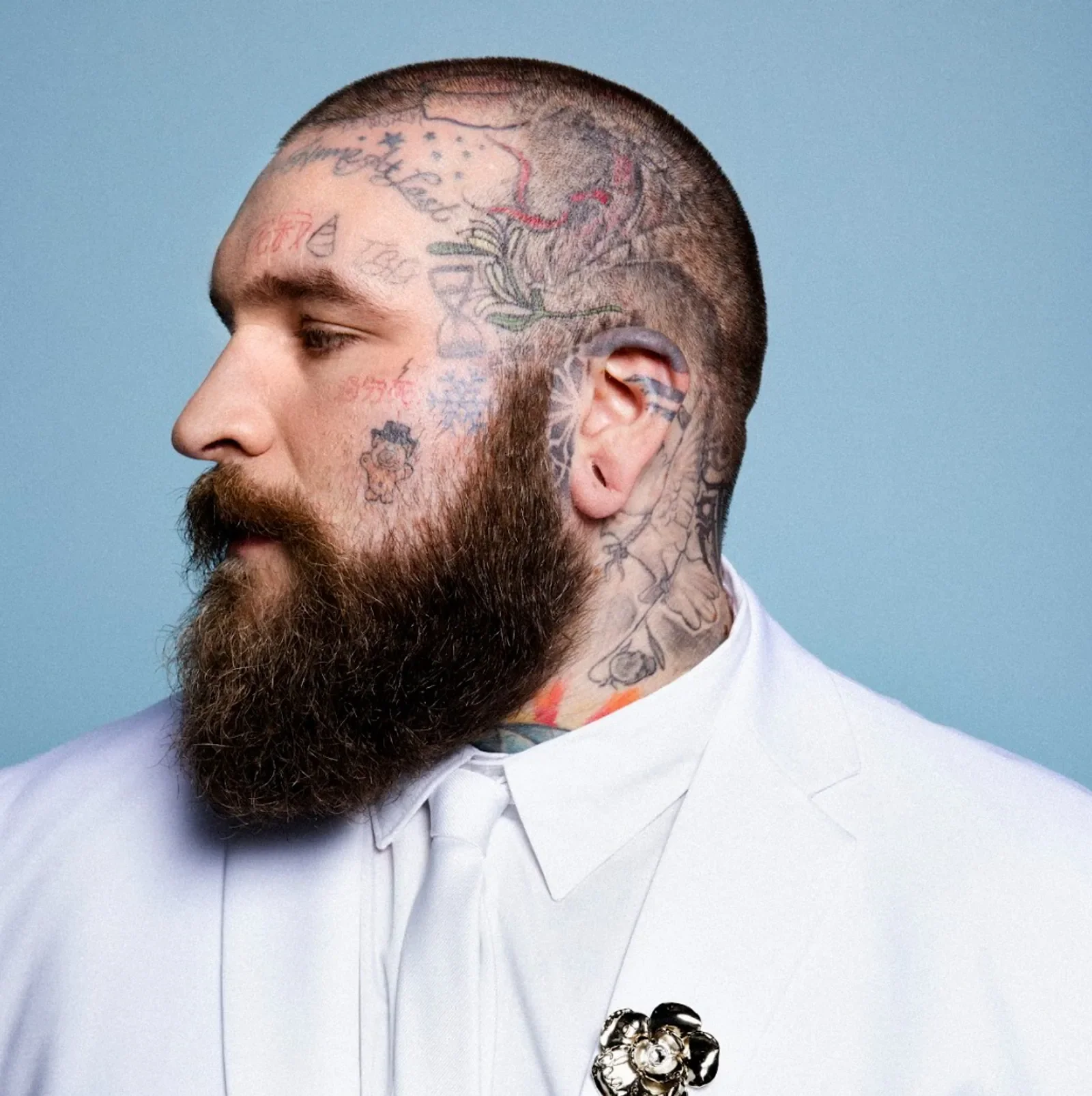
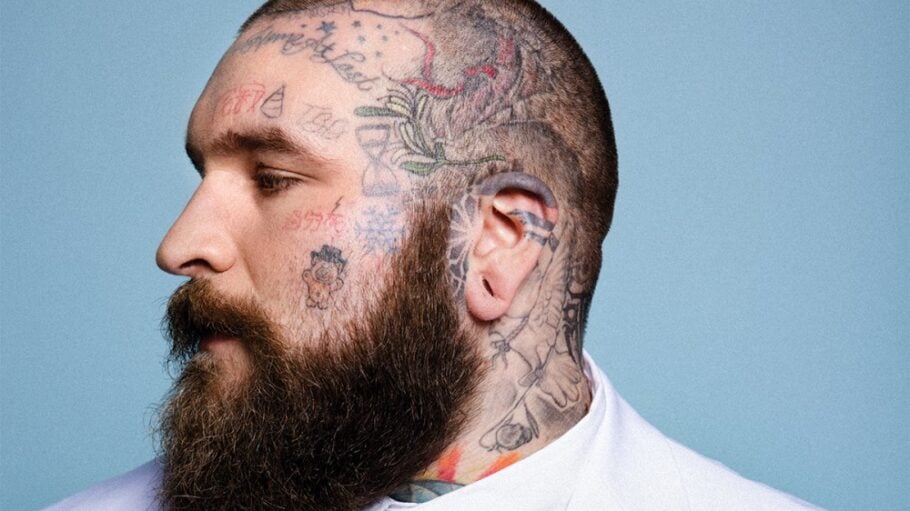
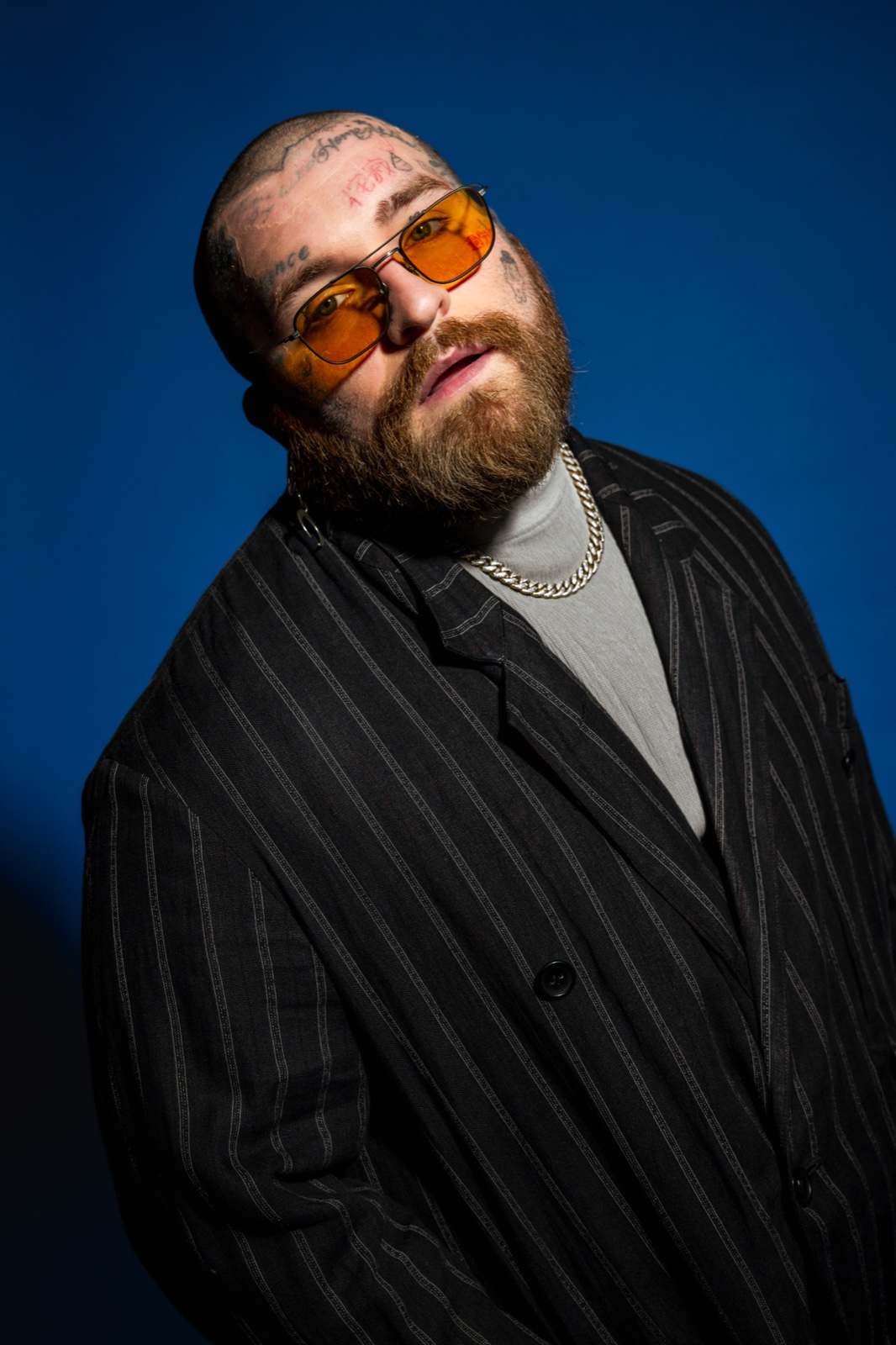
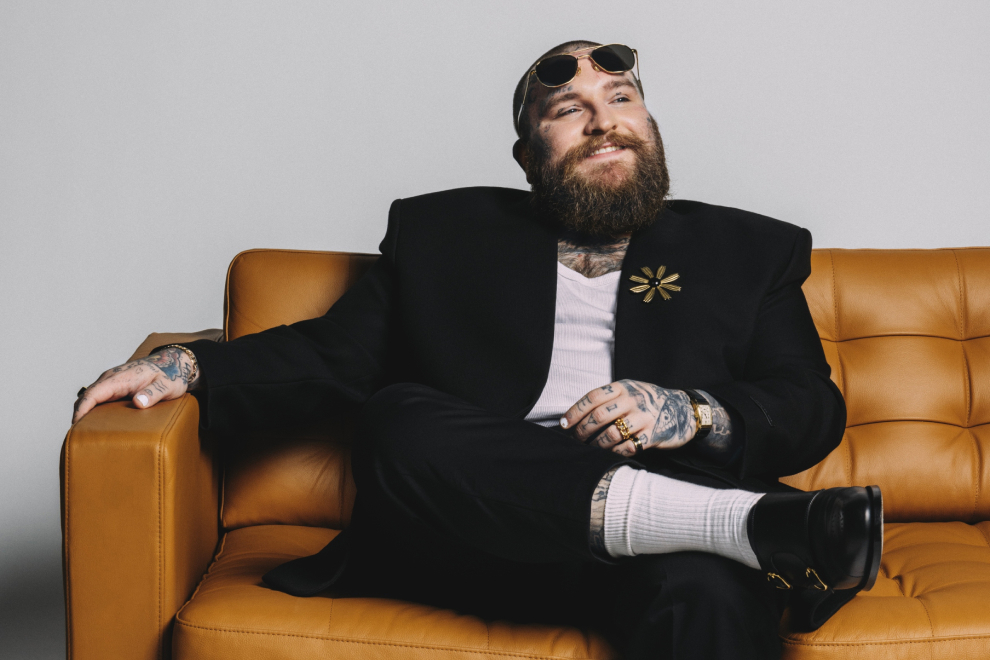
Teddy Swims has far more tattoos than face photos suggest. His ink runs from his scalp, eyelids and cheeks to his neck, hands, arms, legs, torso and back. The collection mixes large portraits, tiny lettering and designs still in progress. It has grown as he has toured, recorded music and met artists along the way.
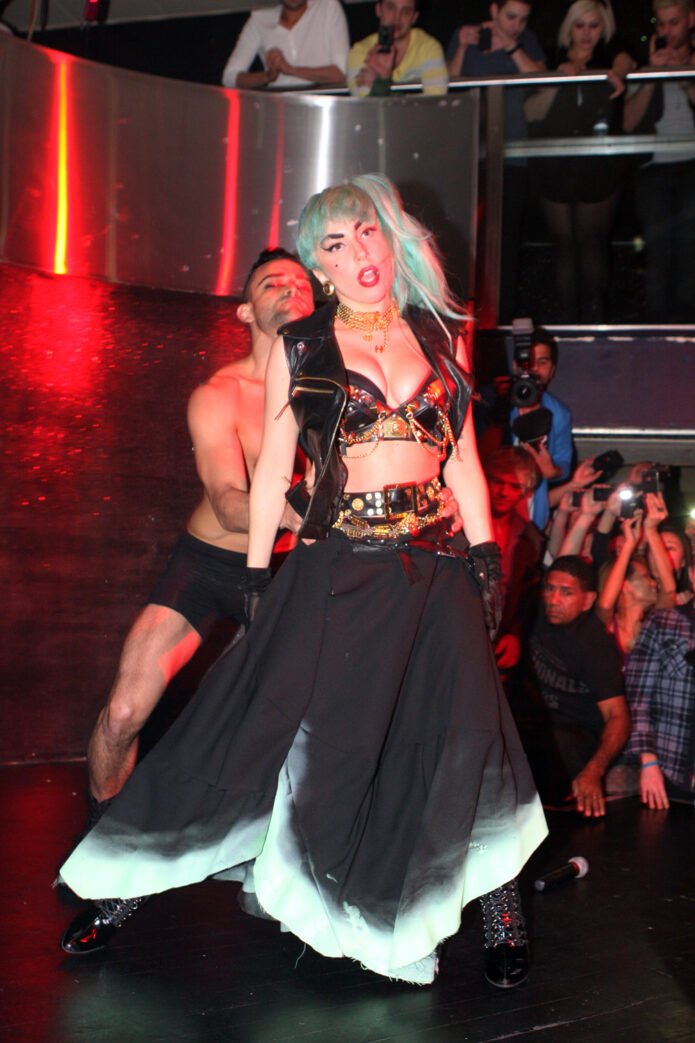
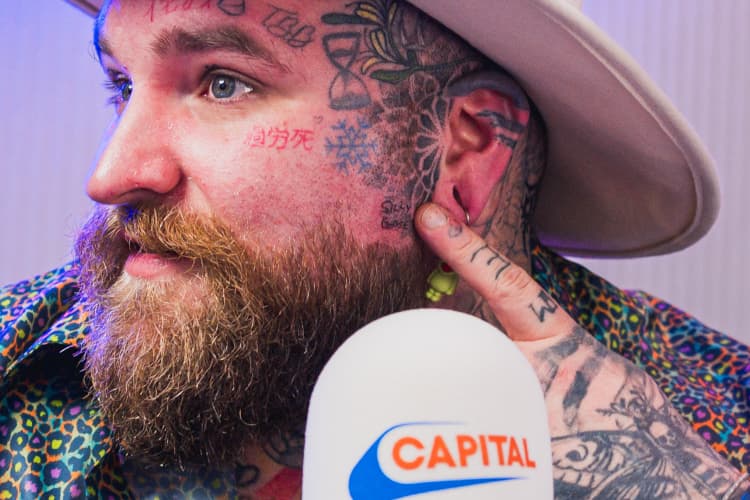
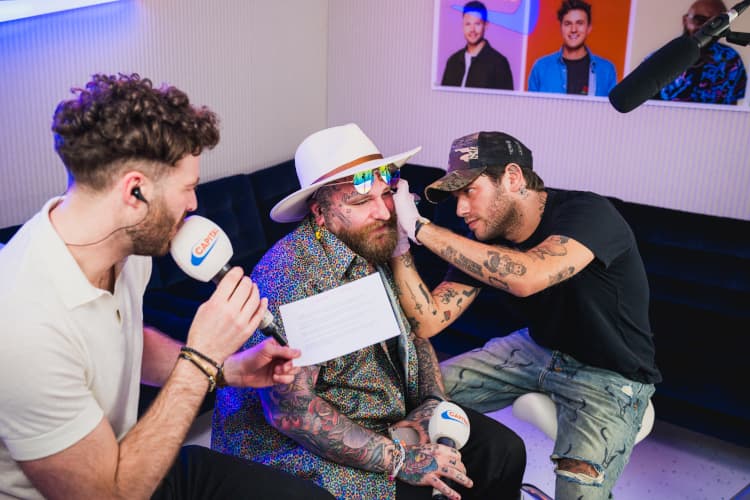
Different sources fill in different parts of the picture. Inked has identified several film and television tributes, while interviews and a Capital Breakfast session cover the face tattoos and more personal designs. Photos show placement, but not always meaning.

Patience sits above the eye and sets the tone for the face ink

Teddy Swims face and neck tattoos close-up

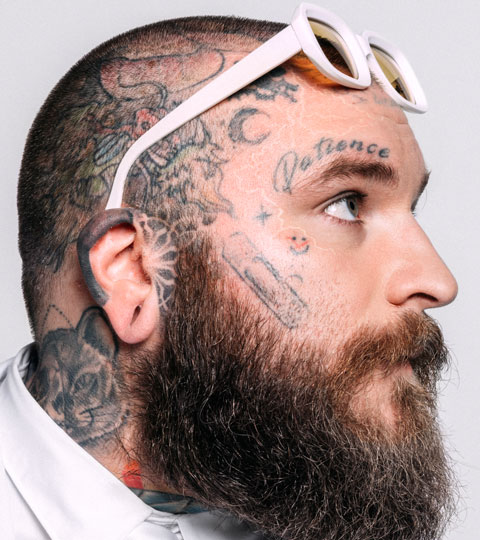
The word Patience above Swims’s eye is one of his most recognizable tattoos. In an Inked interview, he said patience is something he has struggled with, giving the word a direct personal connection. Its lettering can look different in photos depending on the angle and his shaved head.

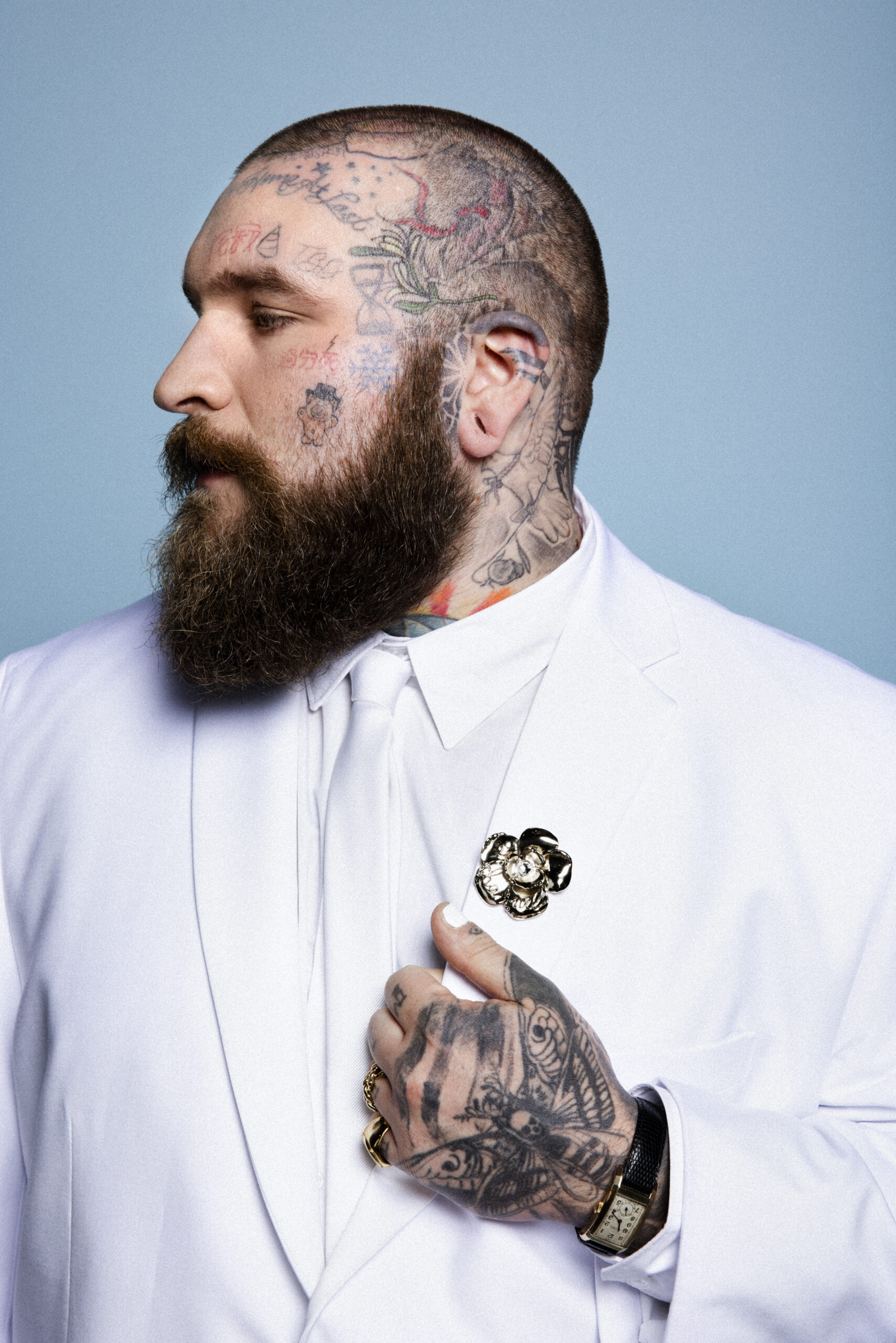
The rest of Swims’s face is much more densely tattooed, with script, small words, red marks, symbols and lines across his forehead, cheeks and temples. Some designs are clear in close photos; others blend into the hairline or beard. A close face shot shows more than a distant performance photo, which can turn the whole area into a blur.

The face tattoos were added over time, not as one design in a single session. Older writing sits beside newer marks, some added while Swims was touring or working with artists he met on the road. The result is busy, but each addition belongs to a different moment in the collection.

The eyelid lettering came from his love of Lil Wayne

Teddy Swims Patience face tattoo and scalp tattoos

Swims has linked the small lettering around his eyelids to Lil Wayne, whose face tattoos inspired him. The marks are easy to see up close but nearly disappear in a distant photo, making them some of the harder pieces to document.

The word above the eye and the smaller marks around it are separate tattoos. Photos show different colors, scripts and symbols beside one another, but a faint mark is not automatically a confirmed design just because it appears near a more recognizable one.

Swims has also talked about his grandfather warning him against face tattoos. That family story gives the decision context, but it does not make every mark on his forehead a tribute to his grandfather. The designs need to be considered individually.

Face ink changes how every other tattoo reads: even a small word stands out beside the eye. Close photos make the linework easier to see than generic headshots of Swims.
Chris Farley appears as Han Solo on one of the legs

Teddy Swims tattoo close-up from the Capital Breakfast session

One of Swims’s more specific tributes is a portrait of Chris Farley dressed as Han Solo. Inked identifies it as a tribute to Farley, not simply a Star Wars tattoo. Han Solo gives the portrait its visual frame; Farley is the person Swims chose to honor.

An interview places the Han Solo portrait on one of Swims’s shins. That lower-leg work is easy to miss in red-carpet photos and music interviews, where trousers usually cover it.

The photo helps show the portrait’s placement and overall look; Inked supplies the Chris Farley connection. Without that context, it could be mistaken for a Star Wars-only design.

The Farley portrait has a playful side, but it is also a clear tribute. Swims’s collection holds serious family memories alongside favorite performers and characters that make him laugh.

Chubbs Peterson gives the other film tribute its own identity

Teddy Swims profile showing head and neck tattoos

Inked also names Carl Weathers as Chubbs Peterson from Happy Gilmore. It is another portrait tied to a particular character and performance, rather than a generic image of an actor.

Chubbs takes up less space in the collection than the face lettering, but it shows how Swims keeps favorite performers and fictional characters close.

The reports do not specify the portrait’s size, date or artist. They identify its subject and film connection, which is enough to place it among the many personal and pop-culture tattoos Swims has collected.

“Chris Farley tattoo” and “Carl Weathers tattoo” are short labels for very specific images. Naming the character and the role gives a clearer idea of what Swims has on his body.

Simba sits on the right bicep while an angel rests under the arm

Teddy Swims arm tattoo detail

Inked places a Simba tattoo on Swims’s right bicep and links it to The Lion King. The interview does not give a more personal explanation, so the film reference is the clearest description.

The bicep gives the character enough room to read, but a sleeve can hide it. A performance photo may catch only an edge; a sleeveless image shows the reference more clearly.

Inked also identifies an angel under the left armpit. Clothing hides this piece in most public photos, and the profile does not give a personal story behind it.

Simba and the angel show the range of Swims’s larger tattoos: one is a bright character on his upper arm, the other is usually hidden under his left arm. Photos that show the body area are more useful for these pieces than another headshot.

Words such as Home at Last and Patience make the body read like a notebook

Teddy Swims arm tattoo session photograph

Swims has plenty of lettering alongside the portraits. Inked lists Home at Last, while Patience is the face tattoo with the clearest explanation from him. Other words appear across his body, but their meanings have not all been published.

The phrases are scattered through the collection like notes in a sketchbook. Some are easy to read; others disappear beneath hair, beard or overlapping tattoos. Their emotional tone alone does not tell us why Swims chose them.

Swims has said that artists sometimes sign his skin when he meets them while traveling. Those small signatures record places and working relationships as well as designs. They help explain why new tour photos can show details that were not visible earlier.

Session photos show new tattoos beside older ones, with open skin still visible before the next appointment. The collection looks less like a finished mural than work that is still being added to.

The unfinished back piece and newer family ink show the collection is still changing

Teddy Swims high resolution head and hand tattoos

Swims has a large back tattoo based on an internet meme, and the session remains unfinished because it was painful. PEOPLE reported that he believed many hours of work were still left. The incomplete state is part of the tattoo’s history.

Back tattoos are hard to follow under clothing. A shirtless photo may show only one section, while a stage image may show none of it. Swims’s interview documents the piece even though there is no clear photo of the full back, and it should still be described as unfinished.

Recent reports describe tattoos connected with Swims’s son, Rambo, and his wish to leave room for future children. These belong to a later chapter than the film portraits and the Lil Wayne-inspired face work. Reports mention the family connection, but do not map every design or placement.

A soft photo cannot show whether a mark is new, old, covered or hidden by shadow. Swims’s collection is still changing, so a date matters when comparing images.

What the full Teddy Swims tattoo map actually shows

Teddy Swims tattooed hands and neck

The collection extends well beyond Swims’s face: Patience above the eye, eyelid lettering inspired by Lil Wayne, portraits of Chris Farley as Han Solo and Carl Weathers as Chubbs Peterson, Simba on the right bicep, an angel under the left arm, Home at Last, artist signatures, family references and an unfinished back piece.

Each group calls for a different photo. Close portraits show the face tattoos; arm and torso shots locate Simba and the angel; leg photos place the Chris Farley and Carl Weathers portraits. Dated session pictures help track the unfinished back work.

The collection keeps growing as Swims tours and meets tattoo artists in different places. Some pieces remain unfinished, and old lists will not give a final count. The clearest accounts name a design and location, then separate his stated meaning from what a photo alone can show.

Swims’s tattoos are part tribute wall, part travel record and part work in progress. Face tattoos get the quickest attention because they are hard to hide, but his arms, legs, torso and back hold just as much of the story.

Lady Gaga’s Tattoo Timeline: Roses, Trumpets and Early Symbols

Lady Gaga’s tattoos follow the music, collaborators and visual eras of her career. The collection includes a large rose on her back, musical notation, a trumpet tied to Tony Bennett, a peace symbol and other tributes. Gaga or the artists have explained some pieces; others are known from photographs and published reports.

A clear photo can show a tattoo’s design and location, but it cannot supply a private meaning Gaga has not shared. Some pieces have a direct explanation from her or the artist; others remain visual details or reported associations.

The La Vie en Rose design runs down Gaga’s spine

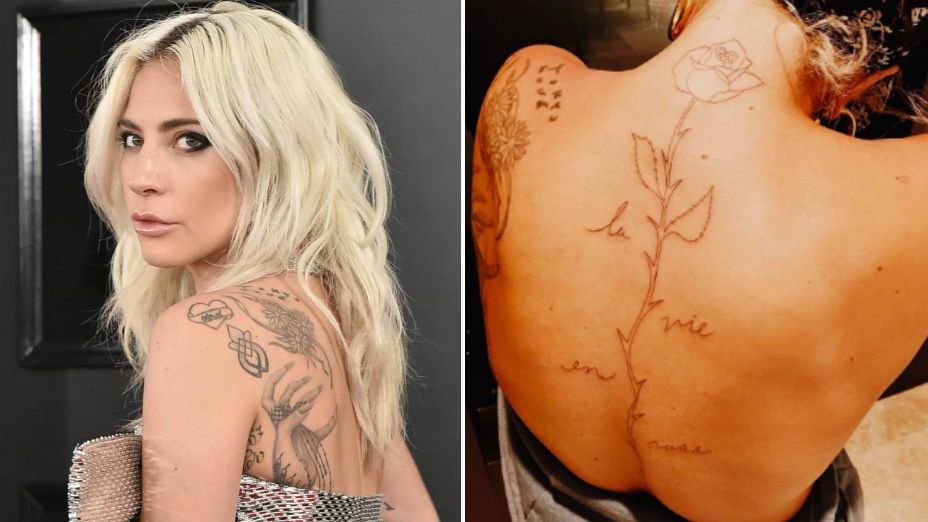
Lady Gaga's La Vie en Rose rose and musical staff tattoos on her back

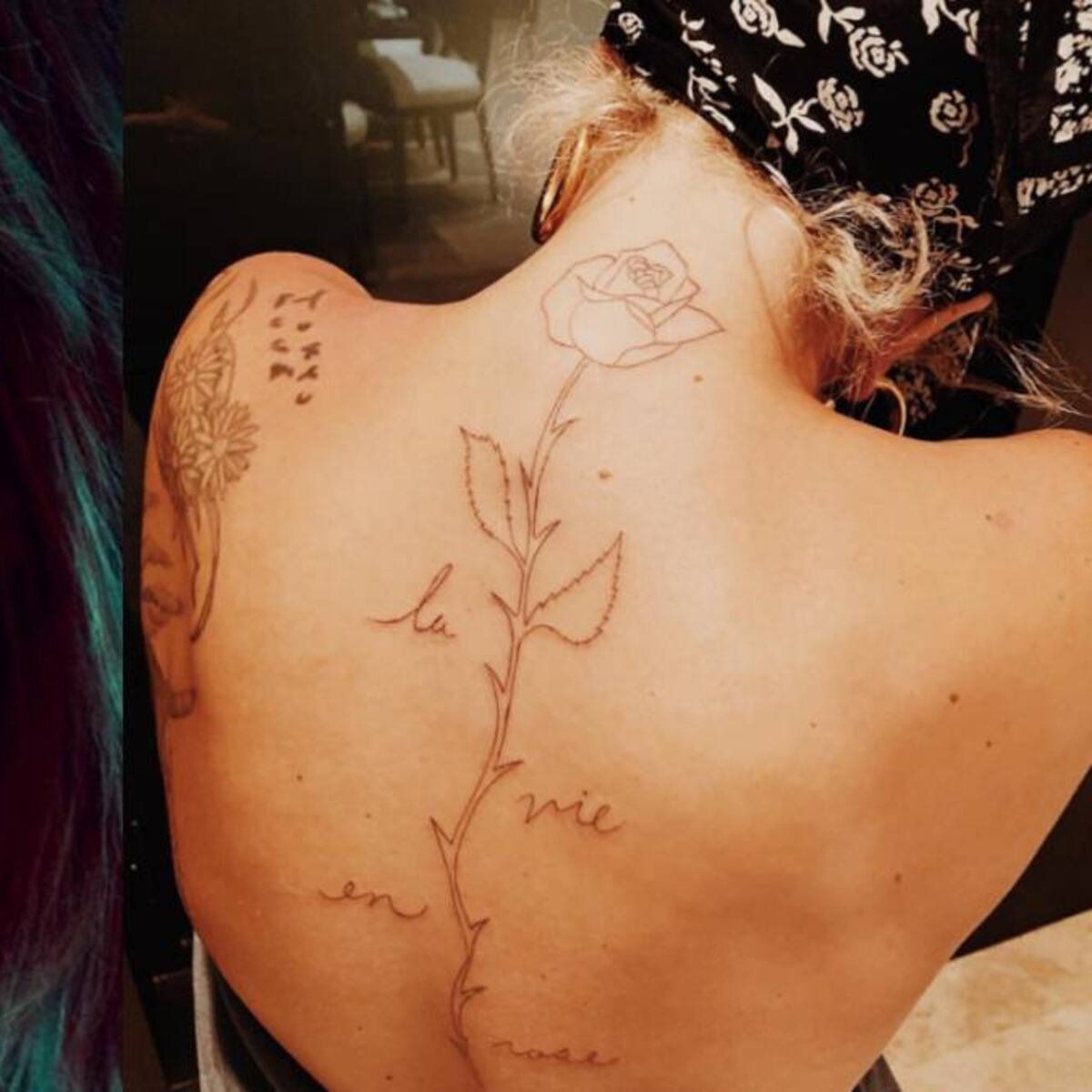
One of Gaga’s most prominent recent tattoos is a large rose running down her spine. Allure discussed it in connection with La Vie en Rose and the song’s history in her work around A Star Is Born. Unlike a small emblem on the arm, the rose forms a central back design, easy to see in photographs taken from behind.

Artist coverage credits Daniel Winter, also known as Winter Stone, with the rose. That credit applies to this piece; it does not establish who made every tattoo Gaga has. Photos show the flower and its linework, while reports connect it to the song and film period. They do not give a single private meaning beyond that association.

Lady Gaga showing her upper-back flower, script and shoulder tattoos

Online summaries sometimes call the tattoo a tribute to the film alone. The available account is more specific: Gaga chose a rose and related musical imagery during a period when the song mattered to her professionally and personally. That does not make the design a complete explanation of her inner life.

Her musical staff tattoo had to be corrected

Lady Gaga's musical staff tattoo spelling GAGA on her back

Gaga also has a musical staff tattoo that spells her stage name in notes. Allure reported that the first version was missing the fifth line needed for the notation to read correctly. Gaga and Winter later fixed it, so photos from before and after the correction show different stages of the same design.

The G-A-G-A notes make the tattoo more than a generic music symbol: they spell the name Gaga built as a performer. The staff sits beside the rose, but it remains a separate design—musical notation that needed a correction.

It helps to date the photos. An image from before the correction shows the first version; a later one shows the finished staff. They document the same tattoo at different points in its history.

The Benedetto trumpet is a tribute to Tony Bennett

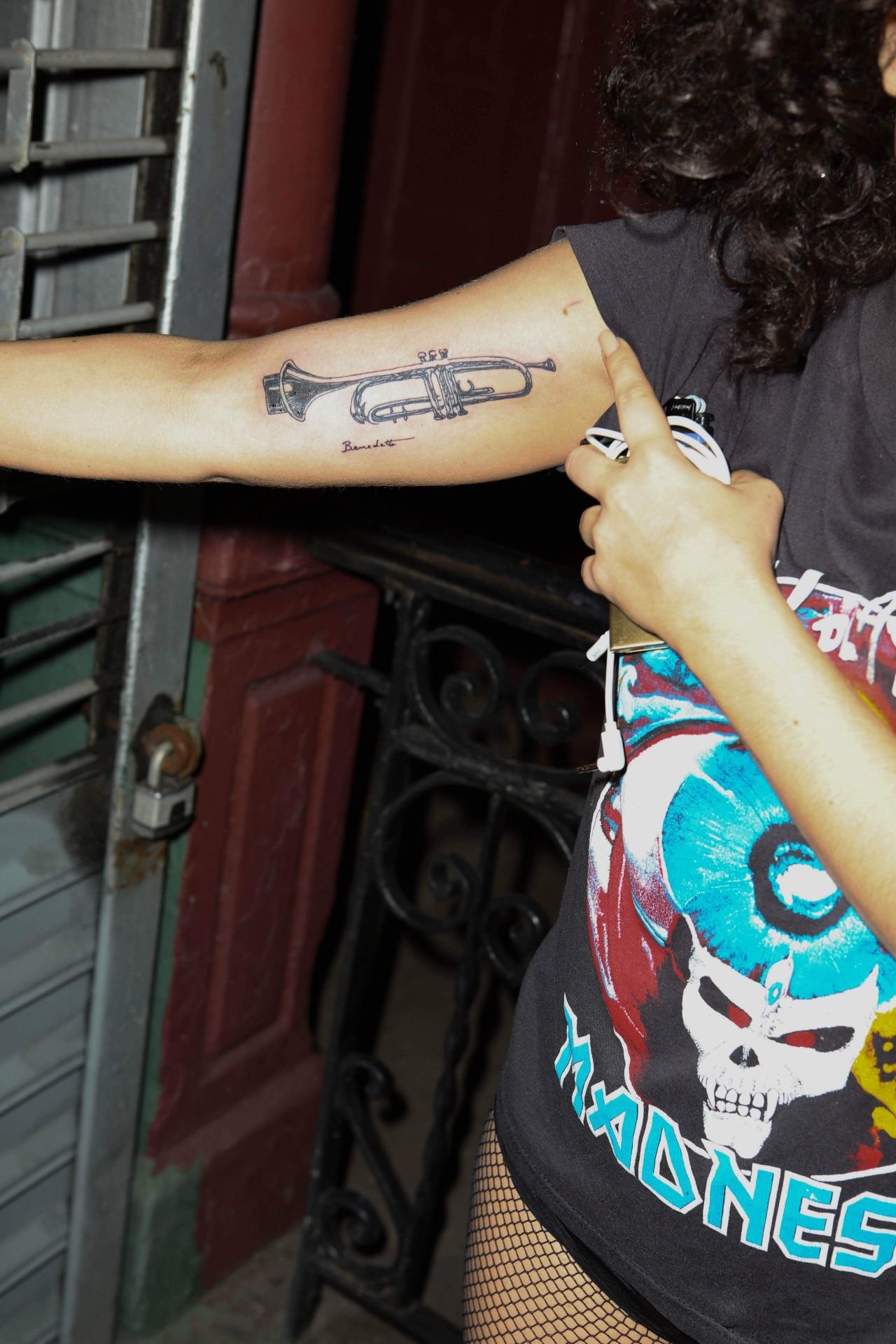
Lady Gaga's Benedetto trumpet tattoo on her inner arm

The trumpet on Gaga’s inner right arm has one of the clearest stories. Reports say Tony Bennett drew the instrument for her in connection with their jazz work. The word Benedetto, Bennett’s family name, appears with it. The instrument, signature and collaboration give the tattoo a distinct identity without requiring a guessed meaning.

Gaga showed the tattoo publicly after releasing Cheek to Cheek, her album with Bennett. She and Brian Newman also had a related tattoo moment, which some reports describe through both the jazz collaboration and friendship. At its clearest, this is a trumpet tribute tied to Bennett and Gaga’s music.

Lady Gaga looking over her shoulder, showing her upper-back tattoos

The trumpet sits on Gaga’s inner right arm. Close photos show the valves, bell and signature more clearly than a distant red-carpet shot.

The peace symbol belongs to Gaga’s earlier visual vocabulary

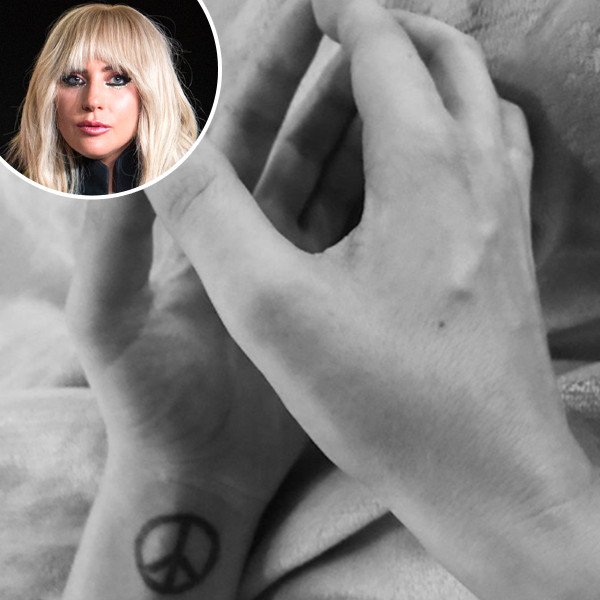
Lady Gaga's peace symbol tattoo on her wrist

A small peace symbol on Gaga’s wrist appears in early photos and entertainment coverage. It is often mentioned when people look back at her first public era. The symbol is easy to recognize when her wrist is visible, but that alone does not establish a political statement or personal explanation.

Gaga’s public work has often included messages of compassion and peace, so people may connect the wrist tattoo with those themes. Unless a source records her explanation, though, that remains an association rather than a confirmed reason for choosing the symbol.

Wrist tattoos can be partly hidden by bracelets, microphone cables or the angle of a hand. The E! image is a useful reference because it shows the mark clearly; heavily edited red-carpet photos may not.

Lady Gaga performing with her peace-symbol wrist tattoo visible

Reading the record

Coverage also mentions other tattoos, lettering and tributes, including a David Bowie design associated with Gaga’s later work. Dates and clear photos matter: a dark shape near the ribs is not automatically a portrait, and a blurred line of text should not be translated as fact.

The Bowie piece is generally described as a tribute to an artist Gaga admired. It has a different history from the trumpet, which is tied to a direct collaboration with Bennett. Reported lettering on her arm is another design whose subject is clearer than its complete personal meaning.

A body-area label alone can miss what makes a tattoo distinctive. The design, location, date and source together give a fuller picture; when one of those details is unknown, it is better to leave it open.

Conclusion

Gaga’s timeline has several clear points tied to music and collaborators. The back rose belongs to her A Star Is Born era and has an artist credit. The staff, trumpet and tributes add other chapters, though their meanings are not all equally well documented.

There is no official final count. Gaga may add new work, while older tattoos can be covered or look different in photos. Tattoo galleries sometimes repeat interpretations without showing where they came from, so dates and direct comments help keep the record straight.

Gaga’s tattoos trace her relationships with music, collaborators and different creative eras. Photos show the designs; interviews and reports add dates, artists and context. Together they make a clearer account of what the tattoos look like and what can be said about them.

More musician tattoo guides

21 Savage’s Ink: The Dagger Tribute, Slaughter Gang Chest and Face Marks

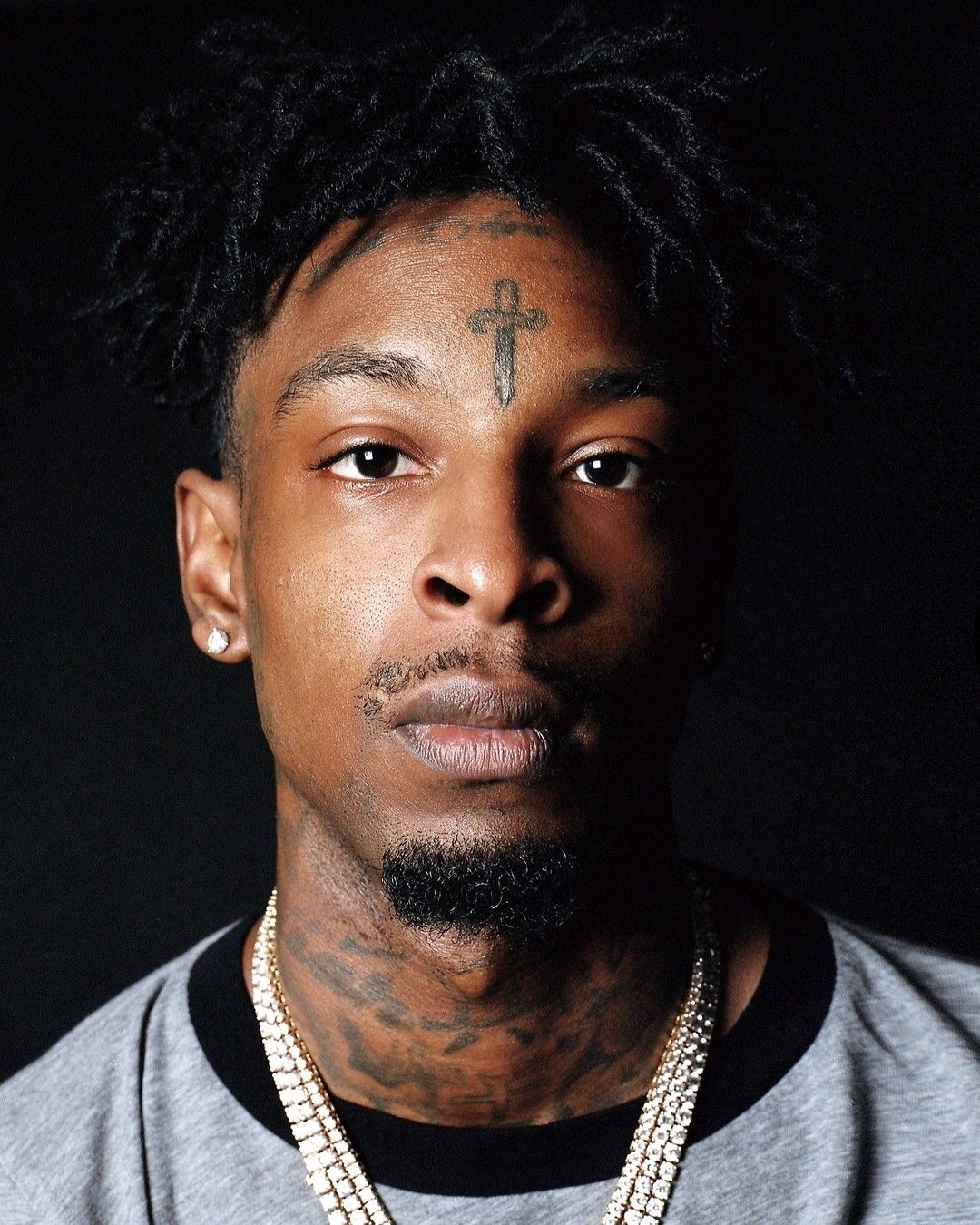
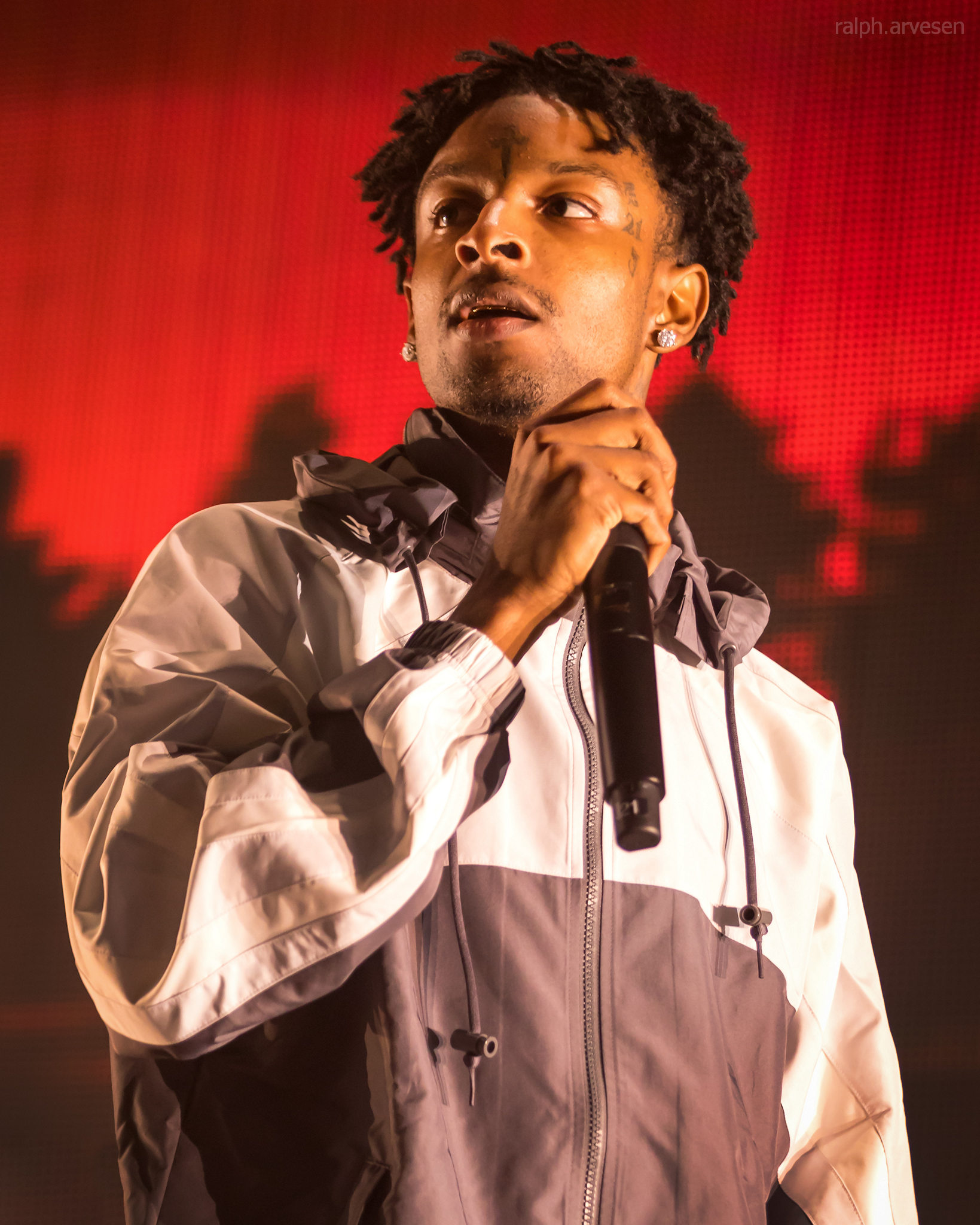
21 Savage’s tattoos tell several stories at once: the dagger between his eyes honors his late brother Tayman, Slaughter Gang spans his chest, and other words and symbols appear across his face and torso. Photographs show where the ink sits; interviews and reporting fill in some of its history.

The dagger dates to the period when Savage was building his public image. Later shirtless portraits show a fuller set of face and torso tattoos. Those images can establish what a design looks like and where it sits, but they cannot reveal its personal meaning on their own.

The dagger between 21 Savage’s eyes is a tribute to Tayman

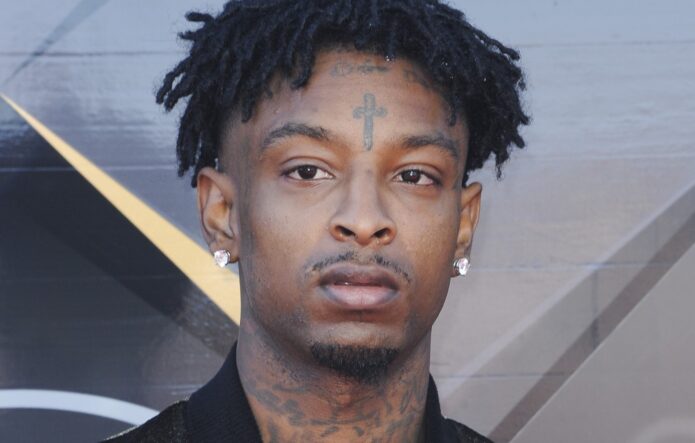
21 Savage close-up showing the dagger and other face tattoos

The mark with the clearest backstory is the dagger between his eyes. It draws on the blade Tony Montana wears in Scarface. Savage and his brothers had talked about getting one; his younger brother Tayman got the face tattoo first. After Tayman was killed, Savage had a similar dagger inked in his memory.

The tattoo joins a movie reference to a family tribute. Close-up photographs confirm its position, and reporting traces the design to Tayman. Claims that the dagger simply stands for toughness miss the story Savage has shared.

From a distance, some captions call it a cross. In a clear, straight-on photo, the blade shape is easier to see. The distinction matters because a small mark can be mislabeled when the image is blurry.

Slaughter Gang lettering makes the chest a public identity statement

21 Savage shirtless showing Slaughter Gang and torso tattoos

The large Slaughter Gang chest lettering stands out across Savage’s upper torso. It names the collective tied to his music and public identity, giving the chest piece a different role from a small symbol with no public explanation.

The words are easy to read in shirtless and open-jacket portraits. Smaller marks nearby are harder to make out: lighting, pose and dense tattooing obscure details. The photos confirm the phrase and its broad placement, but they do not provide a full inventory.

Slaughter Gang is one part of the collection, not an explanation for all of it. The dagger is tied to Tayman; the chest lettering points to a collective. Those stories sit together without needing one meaning to cover every tattoo.

Johnny B Dawg and the torso lettering

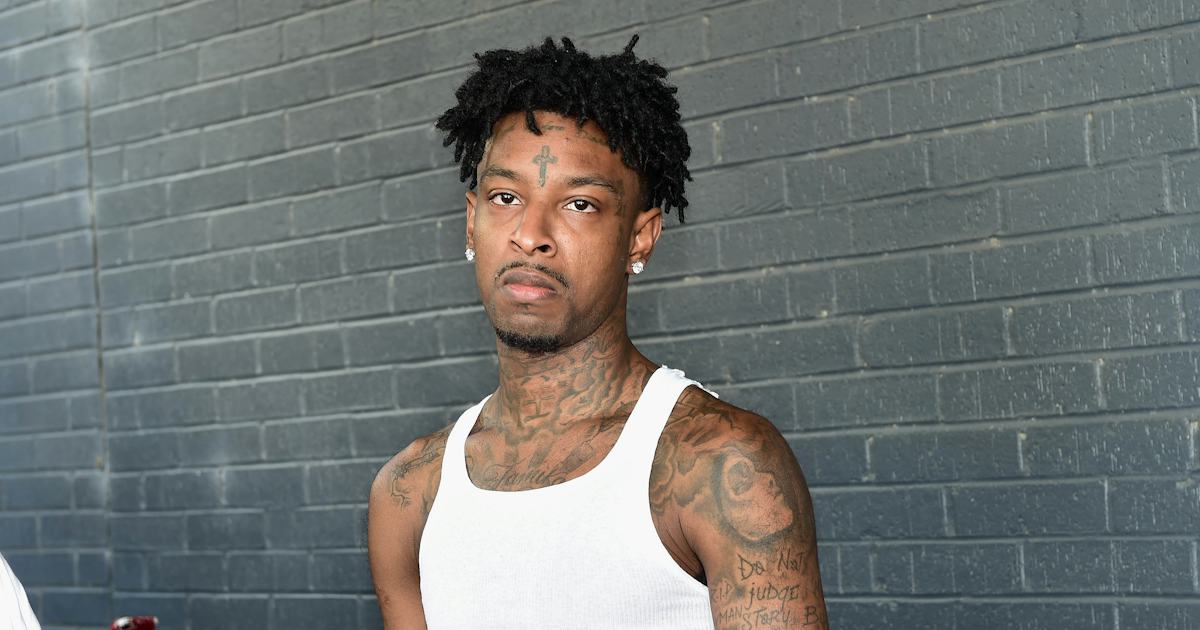
21 Savage in a white tank top showing chest and face tattoos

Torso photos also show Johnny B Dawg and EA Zone 6 across the chest and abdomen. Both phrases are legible in published images, though a readable tattoo does not tell us everything about why it was chosen.

Images identify Johnny B Dawg as a name or phrase. EA Zone 6 points to the Atlanta area connected with Savage’s life and music. That context is useful, but it does not confirm a private story for either tattoo.

A wide torso shot shows how these words sit among smaller symbols. A cropped face portrait may establish one facial mark while leaving the abdomen out of frame. Shirtless photos give a broader view, though fine details can still be hard to read.

The Forehead Cross and other face ink

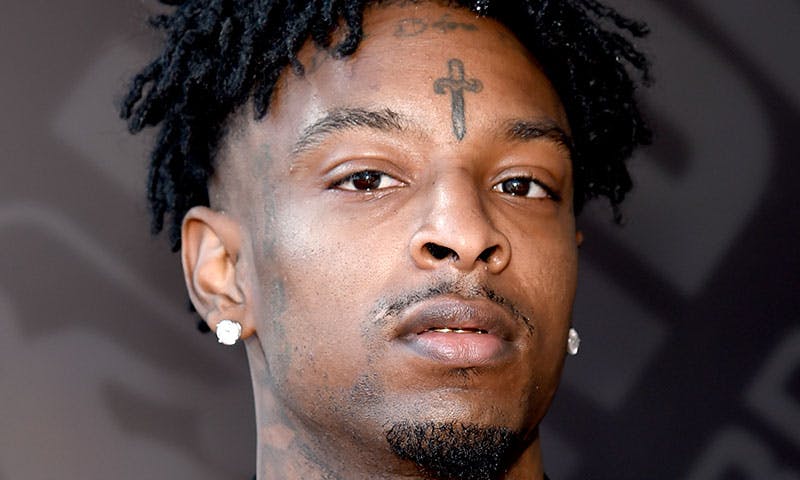
21 Savage portrait showing face and neck tattoos

Photos show more ink across Savage’s forehead, cheeks and the sides of his face, including small letters and symbols. Public accounts do not explain the personal meaning of each mark.

For these tattoos, the visible details are often the most reliable ones: shape, location and the date of the photograph. A source may identify a phrase or give its history. When an image is too small or a design looks different in later photos, it is better to leave the uncertainty than borrow a standard meaning from someone else’s tattoo.

Taken together, the collection includes a memorial dagger, Slaughter Gang lettering, readable torso phrases and smaller face symbols whose meanings remain private. The tattoos carry different stories; they are not one code to decode.

Why the close-ups matter as much as the wide shots

Close-up face photos work best for the facial tattoos; shirtless or open-jacket portraits show the chest and abdomen. Dated pictures also help place later additions alongside older designs.

No single public inventory settles every tattoo. Online captions often repeat one another, misidentify symbols as letters or rely on distant shots. The clearest details are the ones visible in a good photo or traced to a source; the rest remain uncertain.

Viewed as a whole, the tattoos point to relationships and affiliations: Tayman’s tribute at the center of the face, Slaughter Gang across the chest, and personal or Atlanta references on the torso. Photographs show the designs; reporting adds context where it exists.

Slaughter Gang is placed to be seen. The broad lettering across the chest reads clearly in a straight-on photo; marks nearby need a closer look because the chest can curve or flatten depending on the angle.

21 Savage performing with visible arm and face tattoos

Johnny B Dawg sits in a different context from the Slaughter Gang phrase. Both use lettering, but their placement sets them apart. Keeping them separate makes it easier to see which part of the torso each reference belongs to.

Face ink changes the way every other tattoo is seen. The Forehead Cross and smaller nearby marks become part of his expression, not just details in a full-body image. Makeup, hair and lighting can hide them, so a close portrait shows more than most event photos.

Some arm and torso tattoos can be described by their shape or placement even when their meaning is unknown. A clear symbol does not always come with a public explanation.

The collection has changed over time: new work appears, older tattoos fade, and later photos may show more face ink than earlier ones. Stage shots can hide his arms, while dated portraits make those shifts easier to follow.

The collection balances public affiliation and personal references. Slaughter Gang and the forehead marks are immediately visible; the dagger and smaller arm details become clearer in close-up.

When comparing older and newer photos, look for changes in colour, cover-ups or added lettering. A photo can show the change, but only Savage or a reliable source can explain the reason for it.

No single line explains the collection. Each tattoo has its own size, place and history, so the photos are most useful when they show the area being discussed.

That leaves room for each design to keep its own context: the chest lettering, the forehead marks and the smaller torso work can be described without assigning them the same meaning.

The photos make the main groups easier to follow: a memorial dagger, chest lettering, and smaller references on the face and torso.

A close portrait can confirm a mark; its backstory still depends on what Savage has said or what reliable reporting has established.

What the images don’t answer stays private.

More musician tattoo guides

Snoop Dogg’s Tattoos Tell Stories About Nate Dogg, Shanté and the Lakers

Snoop Dogg’s tattoos trace the people and places closest to him. The best-known pieces remember Nate Dogg and Shanté Broadus, and nod to Mister Cartoon, the Lakers and the West Coast. Smaller marks on his shoulders, hands and arms are easier to miss under a jacket or behind a microphone.

There is no single confirmed final count. Snoop has added tattoos over several decades, and photos show different parts of the collection. The portraits and large lettering are easy to identify; smaller marks in distant shots are harder to read. The visible details are strong enough without guessing at every meaning.

Nate Dogg’s memorial portrait carries the heaviest meaning

Snoop Dogg Nate Dogg memorial tattoo

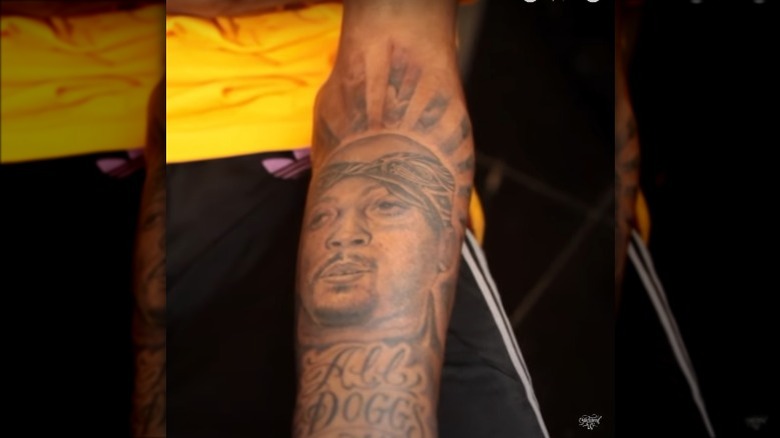
The standout is the Nate Dogg memorial on Snoop’s forearm. The black-and-grey portrait shows Nate beneath the words “All Doggs Go To Heaven”. The lettering makes the tribute clear: this is a remembrance of Snoop’s close friend and collaborator.

Mister Cartoon tattooed it after Nate Dogg died in 2011. Its forearm placement keeps the portrait in view in many everyday and performance photos. For Snoop, the memorial has a lasting place beside his work and public life.

Mister Cartoon’s familiar black-and-grey shading gives Nate’s face depth, while flowing script sits below it. The words carry as much of the story as the portrait; without them, it could look like a friend’s face without its memorial context.

Snoop also helped establish the Nate Dogg Memorial Trust. The tattoo sits alongside those public efforts to honor his friend: photographs show the portrait and lettering, while reporting explains the wider memorial work.

Boss Lady is a portrait of Shanté Broadus, not just decorative lettering

Snoop Dogg Boss Lady portrait tattoo

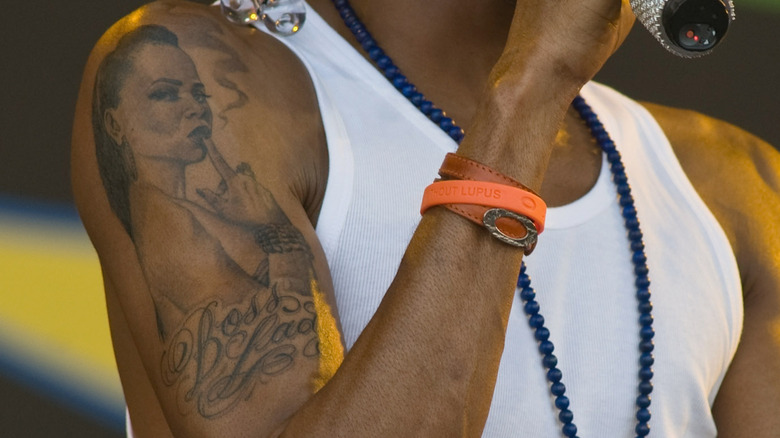
On Snoop’s upper arm, a portrait of his wife Shanté Broadus sits above Boss Lady. Mister Cartoon made the piece. The face identifies the subject, and the words show the name Snoop uses for her. It is one of the clearest family tattoos in the collection.

The script is part of the composition. In a tight crop, the portrait might look like another black-and-grey face; the words “Boss Lady” beneath it identify the piece as a whole.

A photograph alone shows a woman’s portrait. Snoop’s public comments and reporting identify Shanté, which supports calling it a portrait of his wife. They do not establish a longer private message behind it.

The Shanté portrait and Nate tribute share Mister Cartoon’s realistic shading and script, but their stories differ: one celebrates Snoop’s wife, the other remembers a friend and musical partner.

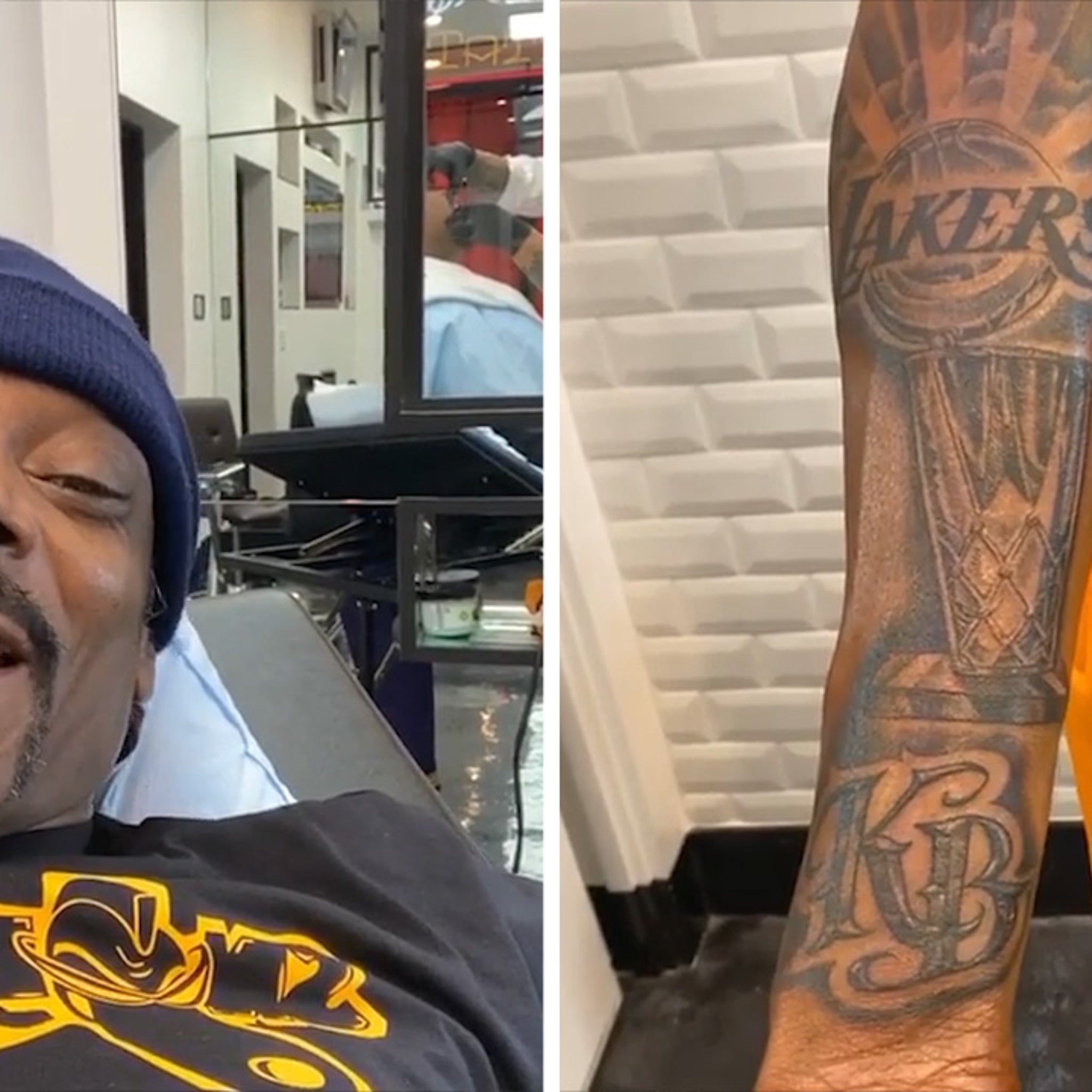
The Lakers and Kobe Bryant forearm tattoo arrived after the 2020 title

Snoop Dogg Lakers and Kobe Bryant tattoo

Snoop’s Lakers championship tattoo marks the team’s 2020 title. Mister Cartoon made the forearm design with the Lakers logo, the Larry O’Brien trophy and Kobe Bryant’s initials near the wrist.

The trophy anchors the championship moment, while the “KB” initials bring Kobe into the tribute. Together with the logo, those details make the tattoo specific to the 2020 win rather than a general Lakers design.

Snoop had been a vocal Lakers supporter for years. The timing gives this piece its occasion: a record of the franchise’s seventeenth title in 2020.

Its black-and-grey finish matches Mister Cartoon’s portrait work, but the subjects carry different weight. The Lakers piece celebrates a title; the Nate tattoo is a memorial. They share a visual style without telling the same story.

Mister Cartoon’s hand and shoulder work connects Snoop to R&G

Snoop Dogg hand tattoo by Mister Cartoon

Snoop’s work with Mister Cartoon includes more than the memorial and Shanté portrait. In the “Ups & Downs” video, Cartoon tattoos an R&G logo on Snoop’s right shoulder. The initials refer to the album R&G (Rhythm & Gangsta): The Masterpiece.

The shoulder tattoo is simpler than the Nate portrait: a set of album initials, with no face or long inscription. The video shows Cartoon doing the work, so its origin is clearer than a caption attached to an old photograph.

Small marks on Snoop’s hands and wrists show up between rings, bracelets and microphone shots. The strongest sources do not name all of them, so it is best to describe only the letters or symbols that can be made out.

The R&G tattoo belongs to Snoop’s music timeline. The Nate portrait honors a person and a friendship; R&G points to an album and a period in his career.

Smaller arm and West Coast marks fill the spaces around the portraits

Snoop Dogg arm tattoo close-up

Alongside the larger portraits, Snoop has smaller symbols, lettering and regional references across his arms. Some are associated with Los Angeles and the West Coast; others are hard to identify in available photos. Their placement is visible even when their personal meaning has not been made public.

His face and neck marks contribute to the overall look but are separate from the Nate and Shanté portraits. Concert lighting, glasses and angles can hide or distort small designs. A close, dated photo gives the best view of their shape and location.

The same caution applies to the smaller arm lettering. A crop may show only part of a word, and an old caption can assign it the meaning of a nearby portrait. A photo confirms placement; it cannot tell us a story Snoop has not shared.

The portraits anchor the arms, with smaller marks filling the space around them. Since Snoop has added tattoos over many years, the lettering, spacing and shading vary instead of forming one matching design.

Los Angeles runs through the collection as a thread, not as one single tattoo. Music, family and basketball all feature in Snoop’s public life, but each piece has its own subject. Photos show how they sit together; interviews and reports explain the designs that have been identified.

Short galleries often reuse the same two portraits and leave much of Snoop’s ink out. The Nate memorial, Boss Lady portrait, R&G shoulder piece and Lakers tattoo each have a distinct design and history, so their photos show different parts of the collection.

The pictures also depend on timing and clothing. A jacket can cover the shoulder, a watch can hide the wrist, and newer ink can draw attention away from an older piece. Dated photos help show how the collection has changed without treating one image as a final count.

Taken together, the tattoos keep friends, family, music, basketball and the West Coast close. They do not share one message: a memorial, Shanté’s nickname, an album logo and a championship mark different parts of Snoop’s life.

The collection moves between loyalty, memory, music and West Coast style. Larger pieces have clear subjects; smaller marks are best left open when there is no clear photo or direct explanation.

More musician tattoo guides