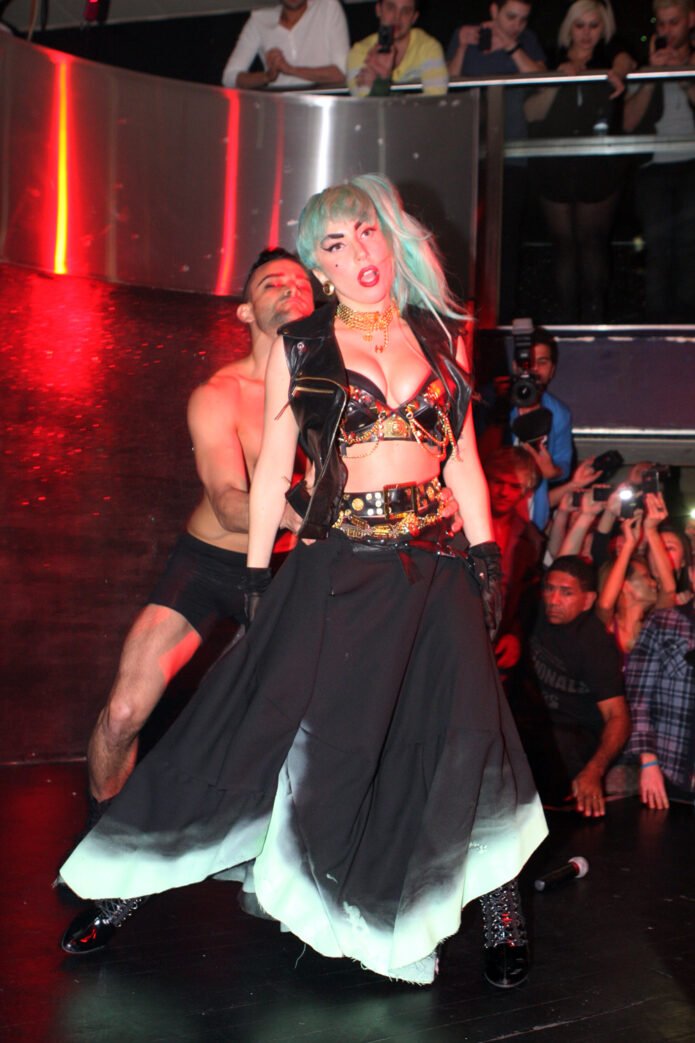
Lady Gaga’s tattoos follow the music, collaborators and visual eras of her career. The collection includes a large rose on her back, musical notation, a trumpet tied to Tony Bennett, a peace symbol and other tributes. Gaga or the artists have explained some pieces; others are known from photographs and published reports.
A clear photo can show a tattoo’s design and location, but it cannot supply a private meaning Gaga has not shared. Some pieces have a direct explanation from her or the artist; others remain visual details or reported associations.
The La Vie en Rose design runs down Gaga’s spine
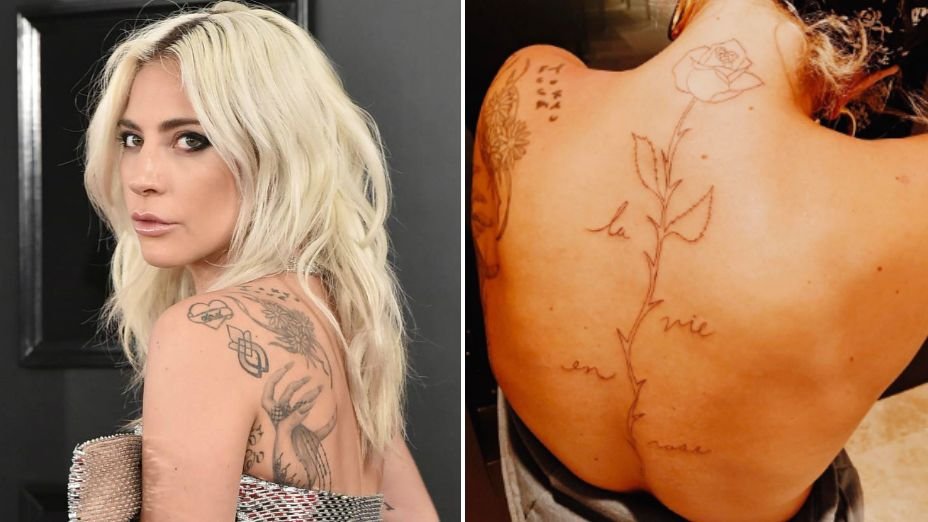
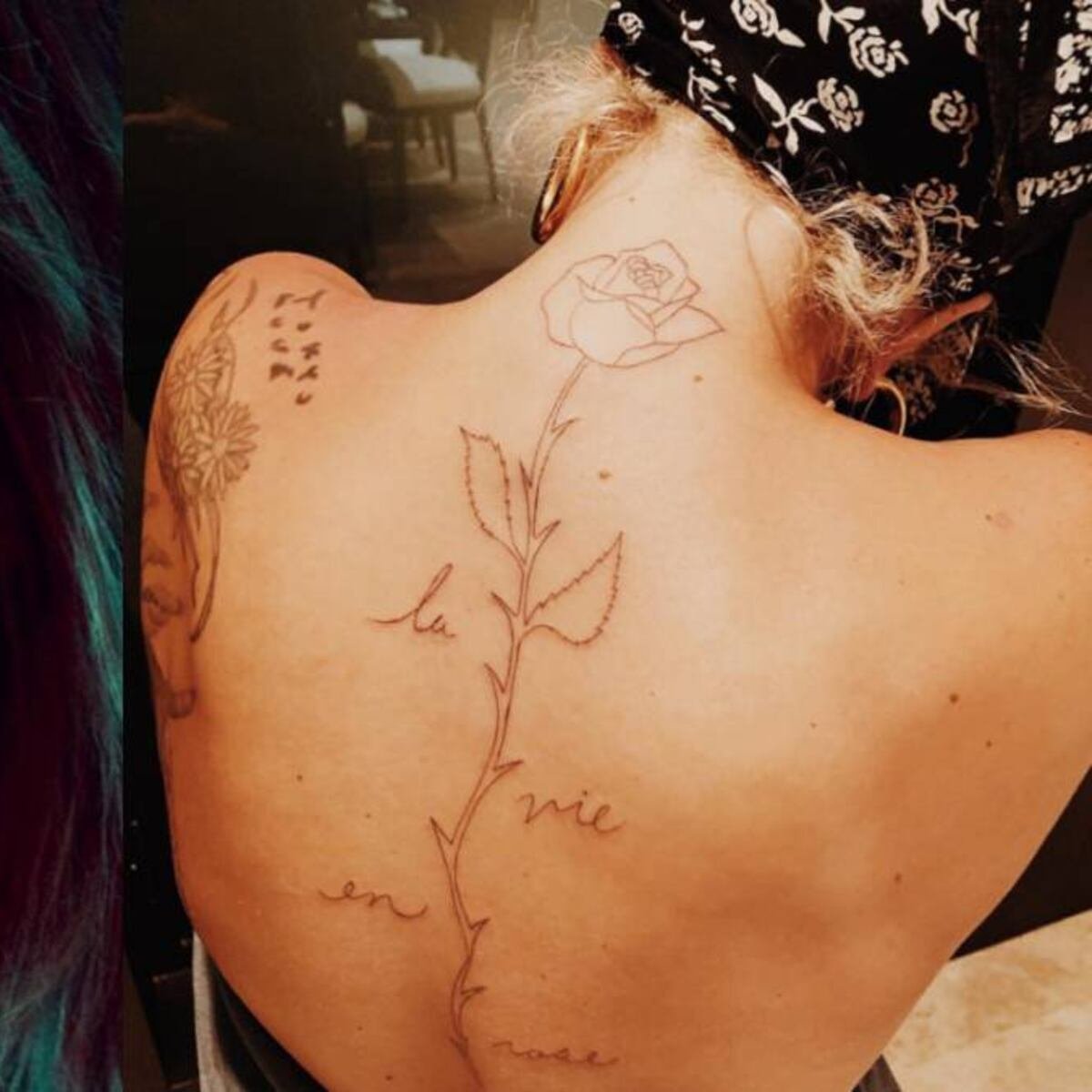
One of Gaga’s most prominent recent tattoos is a large rose running down her spine. Allure discussed it in connection with La Vie en Rose and the song’s history in her work around A Star Is Born. Unlike a small emblem on the arm, the rose forms a central back design, easy to see in photographs taken from behind.
Artist coverage credits Daniel Winter, also known as Winter Stone, with the rose. That credit applies to this piece; it does not establish who made every tattoo Gaga has. Photos show the flower and its linework, while reports connect it to the song and film period. They do not give a single private meaning beyond that association.

Online summaries sometimes call the tattoo a tribute to the film alone. The available account is more specific: Gaga chose a rose and related musical imagery during a period when the song mattered to her professionally and personally. That does not make the design a complete explanation of her inner life.
Her musical staff tattoo had to be corrected
Gaga also has a musical staff tattoo that spells her stage name in notes. Allure reported that the first version was missing the fifth line needed for the notation to read correctly. Gaga and Winter later fixed it, so photos from before and after the correction show different stages of the same design.
The G-A-G-A notes make the tattoo more than a generic music symbol: they spell the name Gaga built as a performer. The staff sits beside the rose, but it remains a separate design—musical notation that needed a correction.
It helps to date the photos. An image from before the correction shows the first version; a later one shows the finished staff. They document the same tattoo at different points in its history.
The Benedetto trumpet is a tribute to Tony Bennett
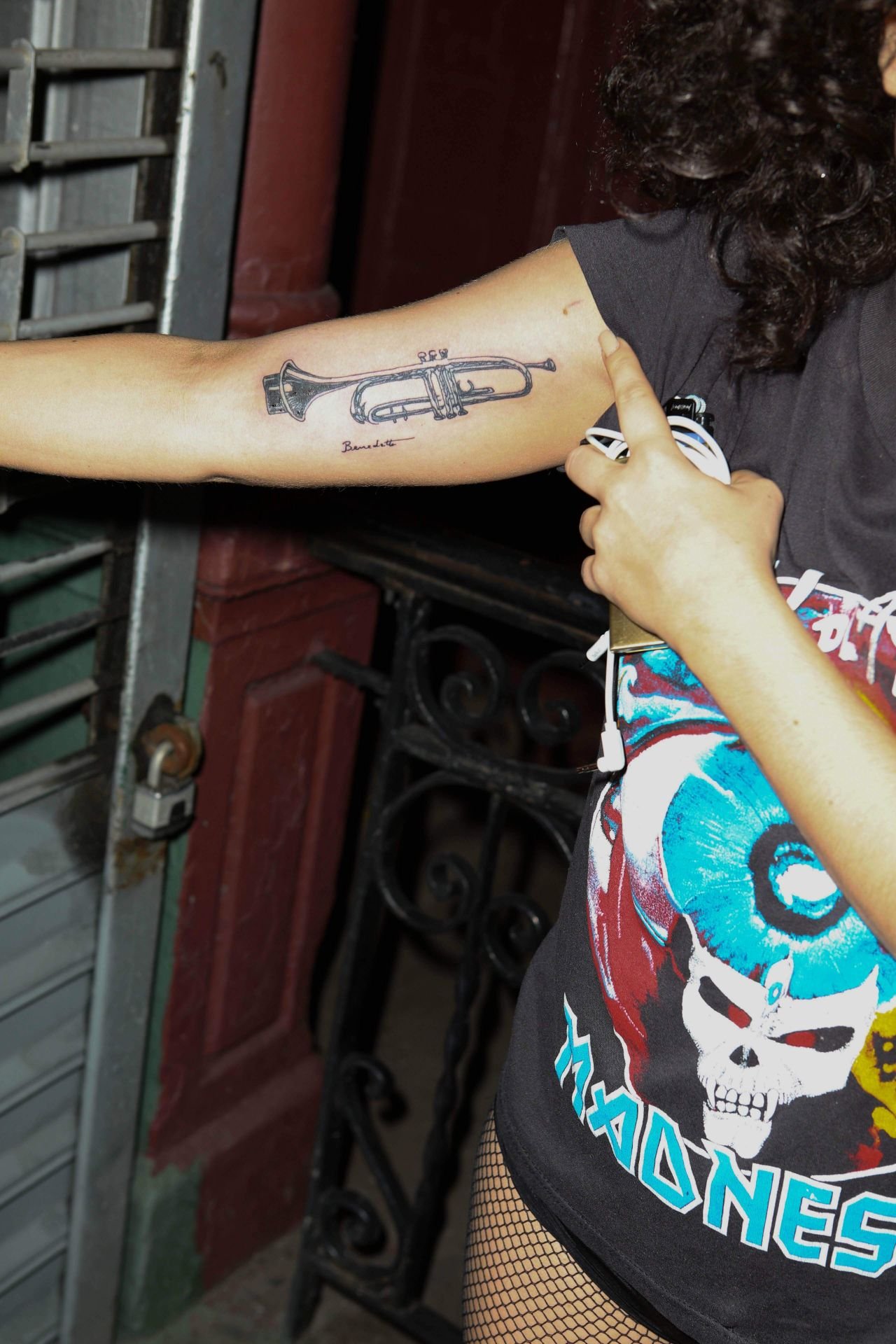
The trumpet on Gaga’s inner right arm has one of the clearest stories. Reports say Tony Bennett drew the instrument for her in connection with their jazz work. The word Benedetto, Bennett’s family name, appears with it. The instrument, signature and collaboration give the tattoo a distinct identity without requiring a guessed meaning.
Gaga showed the tattoo publicly after releasing Cheek to Cheek, her album with Bennett. She and Brian Newman also had a related tattoo moment, which some reports describe through both the jazz collaboration and friendship. At its clearest, this is a trumpet tribute tied to Bennett and Gaga’s music.

The trumpet sits on Gaga’s inner right arm. Close photos show the valves, bell and signature more clearly than a distant red-carpet shot.
The peace symbol belongs to Gaga’s earlier visual vocabulary

A small peace symbol on Gaga’s wrist appears in early photos and entertainment coverage. It is often mentioned when people look back at her first public era. The symbol is easy to recognize when her wrist is visible, but that alone does not establish a political statement or personal explanation.
Gaga’s public work has often included messages of compassion and peace, so people may connect the wrist tattoo with those themes. Unless a source records her explanation, though, that remains an association rather than a confirmed reason for choosing the symbol.
Wrist tattoos can be partly hidden by bracelets, microphone cables or the angle of a hand. The E! image is a useful reference because it shows the mark clearly; heavily edited red-carpet photos may not.

Reading the record
Coverage also mentions other tattoos, lettering and tributes, including a David Bowie design associated with Gaga’s later work. Dates and clear photos matter: a dark shape near the ribs is not automatically a portrait, and a blurred line of text should not be translated as fact.
The Bowie piece is generally described as a tribute to an artist Gaga admired. It has a different history from the trumpet, which is tied to a direct collaboration with Bennett. Reported lettering on her arm is another design whose subject is clearer than its complete personal meaning.
A body-area label alone can miss what makes a tattoo distinctive. The design, location, date and source together give a fuller picture; when one of those details is unknown, it is better to leave it open.
Conclusion
Gaga’s timeline has several clear points tied to music and collaborators. The back rose belongs to her A Star Is Born era and has an artist credit. The staff, trumpet and tributes add other chapters, though their meanings are not all equally well documented.
There is no official final count. Gaga may add new work, while older tattoos can be covered or look different in photos. Tattoo galleries sometimes repeat interpretations without showing where they came from, so dates and direct comments help keep the record straight.
Gaga’s tattoos trace her relationships with music, collaborators and different creative eras. Photos show the designs; interviews and reports add dates, artists and context. Together they make a clearer account of what the tattoos look like and what can be said about them.
One thought on “Lady Gaga’s Tattoo Timeline: Roses, Trumpets and Early Symbols”