
John Mayer’s sleeve gets most of the attention: a Japanese-influenced mix of flowers, geometric shapes and traditional imagery. He also has a 77 on his chest, an SRV tribute and smaller tattoos tied to music and earlier points in his life.
The Japanese-style sleeve
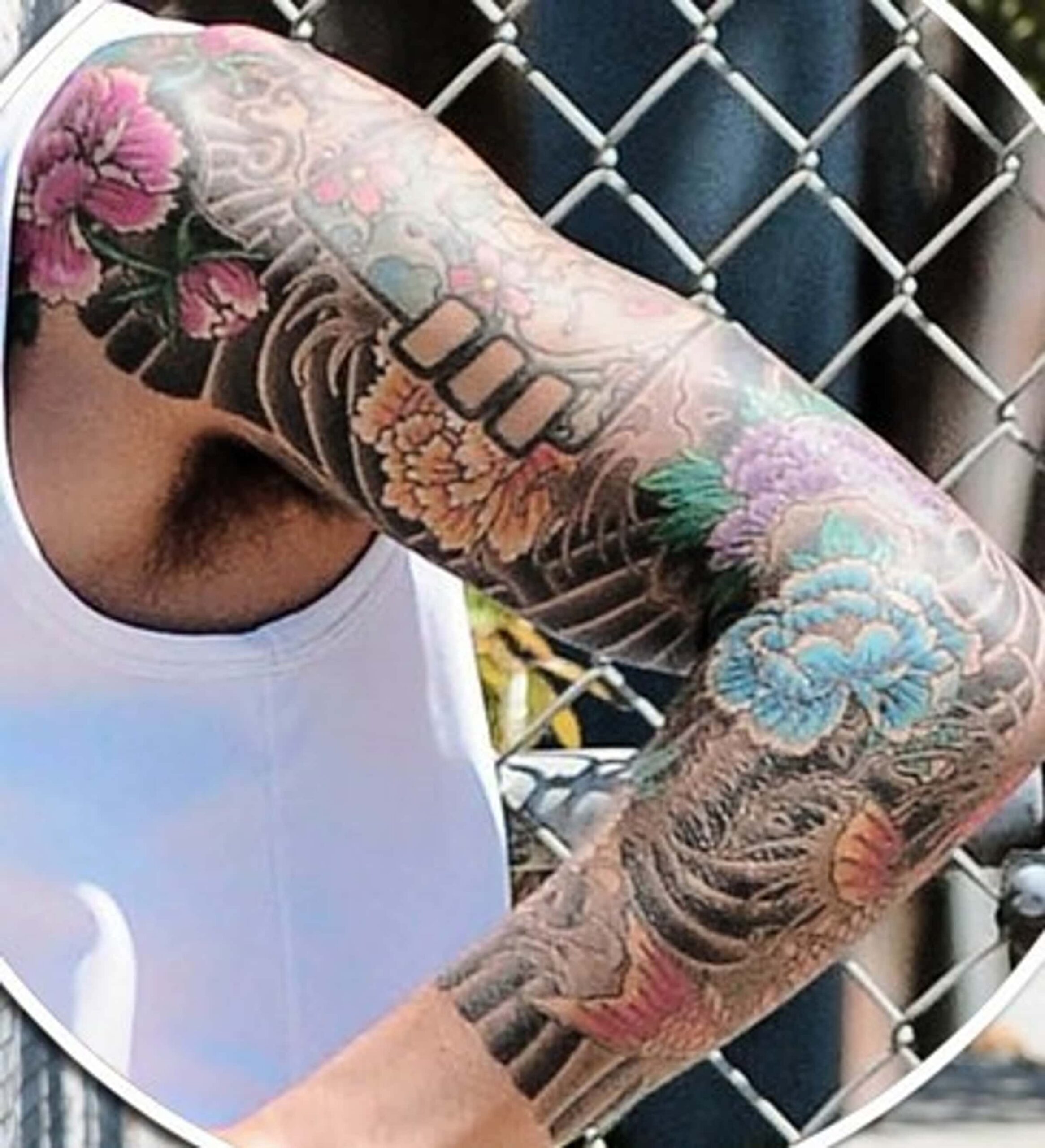
Mayer’s most visible tattoo work covers much of one arm in a Japanese-style composition. Specialist coverage describes a sleeve of flowers, traditional imagery and geometric shapes. Late-2000s performance photos show how prominent it became when he wore sleeveless shirts.
Japanese-style is a fair description of the overall look, but the photos do not establish that every motif follows a specific tradition. Specialist sources offer more detail than the images alone.
The 77 chest tattoo
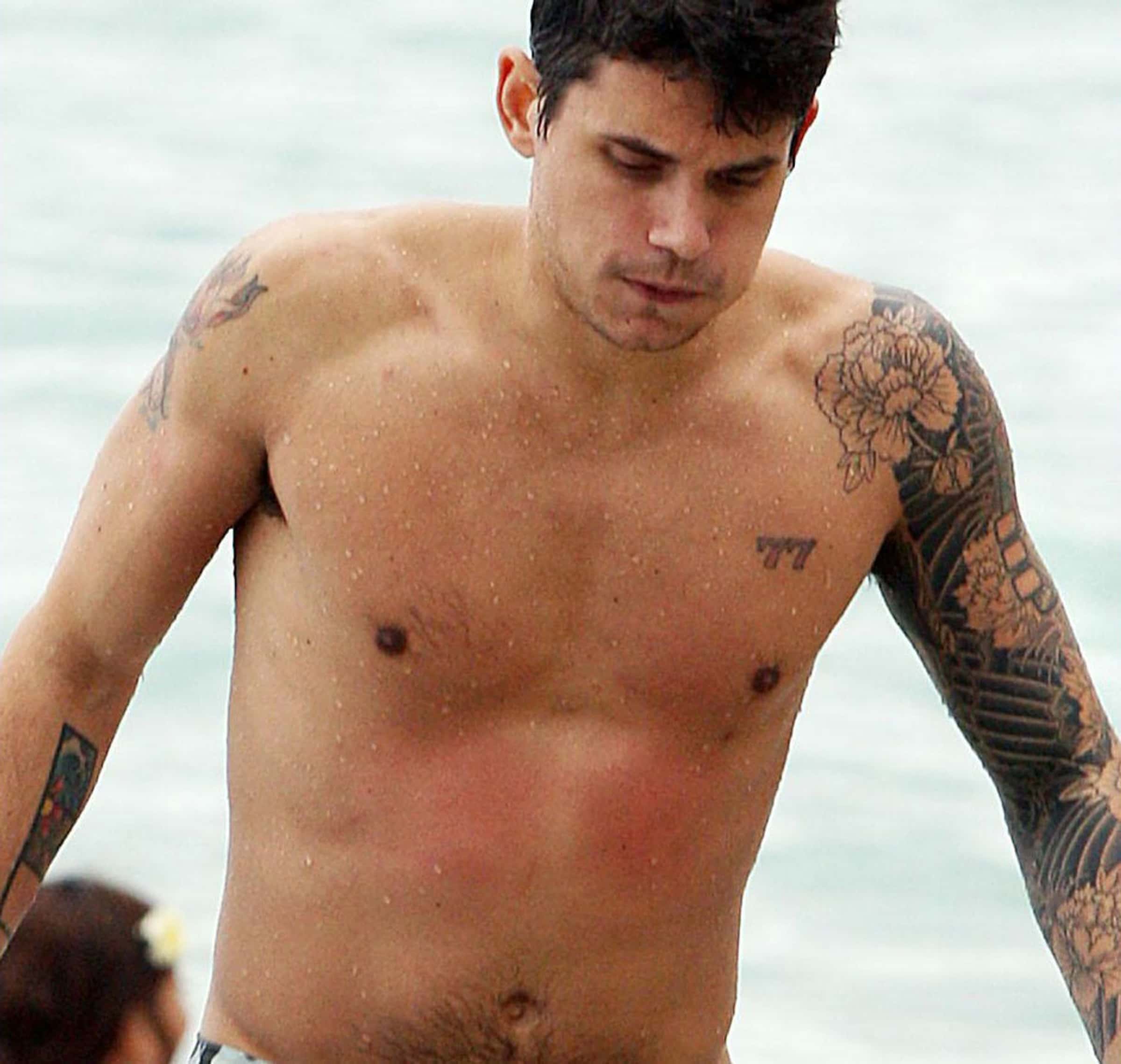
The number 77 is visible on Mayer’s chest. Design Indaba and other tattoo references link it to his birth year, 1977. It is easy to spot when his shirt is open or off, but usually hidden in everyday appearances.
The 1977 reading comes from published coverage, not from the number alone. Numbers can mean anything; in this case, sources connect it to his birth year. That is the explanation worth using.
The SRV tribute
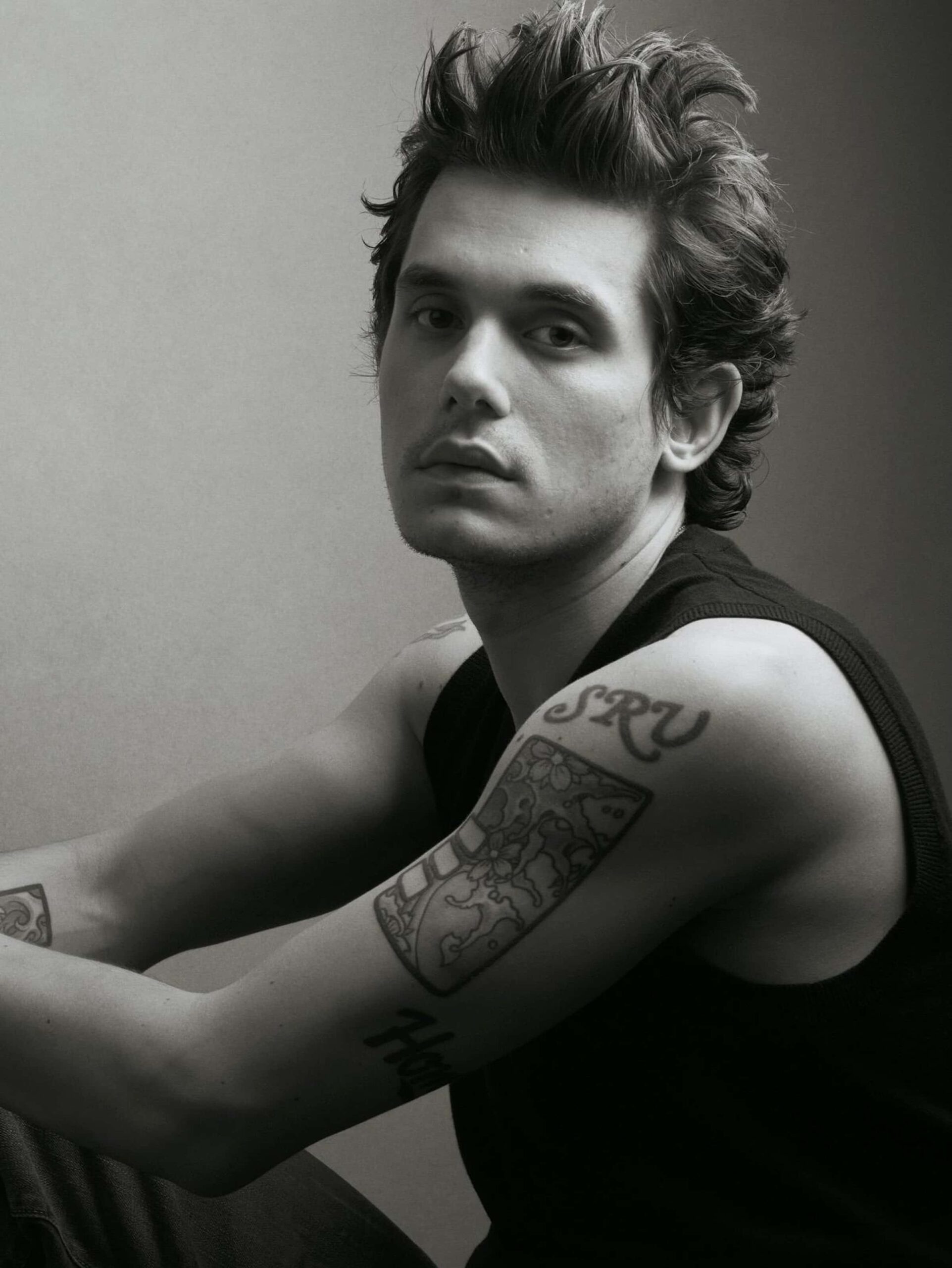
Another prominent mark is SRV, the initials of blues guitarist Stevie Ray Vaughan. Mayer has often spoken about Vaughan’s influence on his guitar playing. Tattoo coverage describes the initials as a tribute, and a separate SRV tattoo feature traces the connection. It is a direct nod to a guitar hero, with no need to read it as a key to the whole sleeve.
Initials can be hard to read in a busy sleeve. A photograph may catch them at an angle or lose them among the colors, so a clear image and a source naming the tribute are more useful than a context-free crop.
The original three squares on his forearm
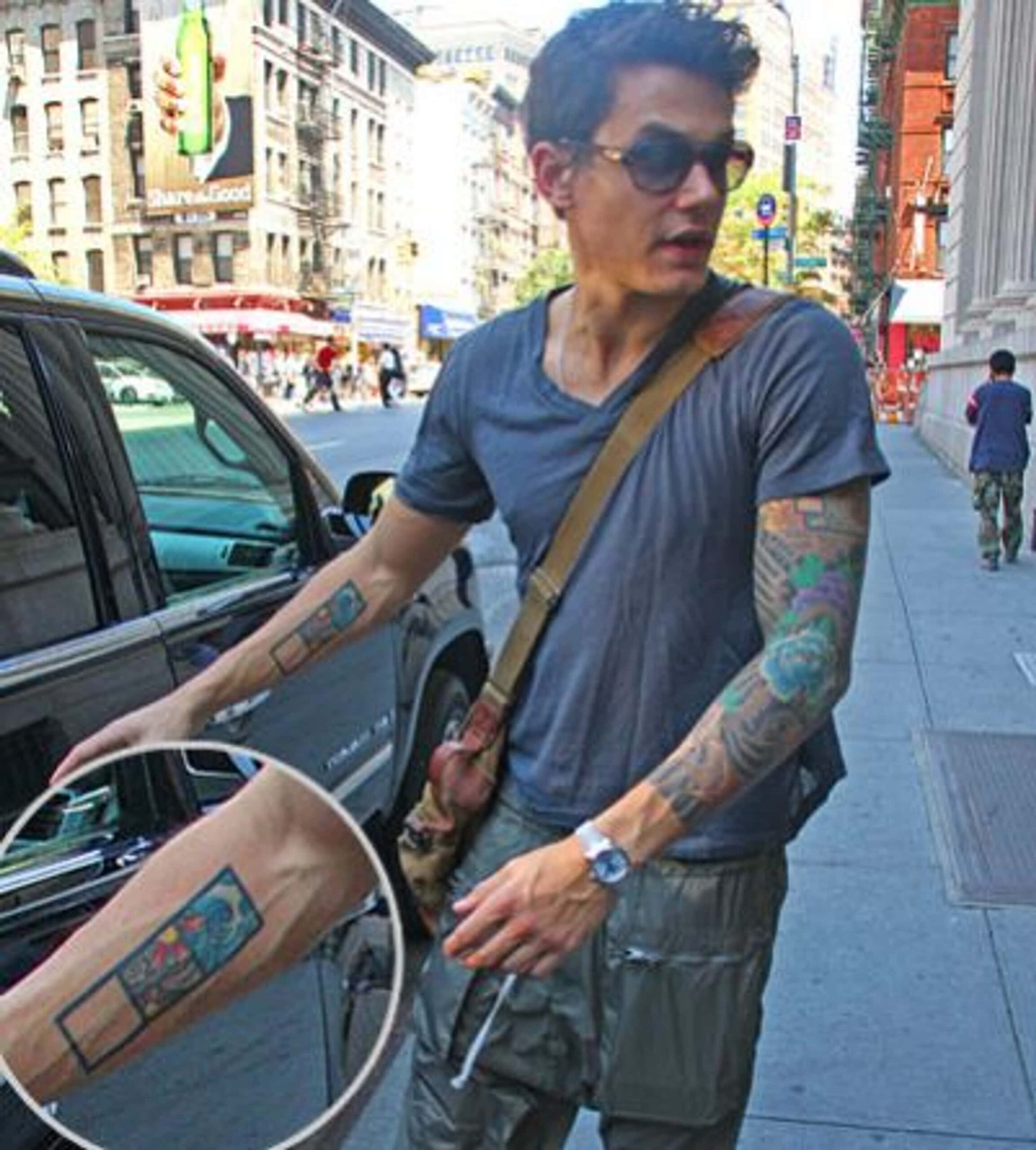
Ranker dates the three squares on Mayer’s right forearm to 2003. The list says he later started filling them with color and additional imagery; the inset here shows the original outlines.
Early koi and Japanese influences

Design Indaba reports that Mayer got an early koi tattoo during a visit to Japan at 18. The article also follows the arm work as it grew and discusses the artist credits attached to it.
A tattoo timeline shows the sleeve taking shape over time rather than appearing at once. The 2008 Wikimedia Commons event pictures show only what was visible that night; they help date the work, but not every later change.
Artists linked with John Mayer’s tattoos
Reports name Horimitsu or Horitomo among the artists connected with Mayer’s Japanese-style work, though summaries disagree about who did which sections. Without an original interview or studio record, it is safer to credit only the parts a source specifically identifies.
A sleeve this large can involve several artists and sessions. Someone who worked on one section should not automatically be credited with the entire design.
How the collection appears in performance photographs
The sleeve shows best in concert and event photos where Mayer’s right arm is bare. Sleeveless shirts reveal it; holding a guitar can turn it away from the camera. Stage lights also change how the colors look.
When the date or event is known, it belongs in the caption. A dated photo helps show placement and scale, but not what the ink looks like today. The 2008 images record that performance, not everything Mayer added later.
What the tattoos mean
Two explanations have solid support: 77 for Mayer’s birth year and SRV for Vaughan. Coverage ties the early koi and later sleeve to his interest in Japanese tattooing. Flowers, waves and dragons may carry familiar meanings in tattoo art, but Mayer has not given each one a personal story.
The sleeve’s Japanese influence and the musical tributes are easy to describe. Generic flower or dragon symbolism is a different matter; it should not be presented as Mayer’s own explanation.
Frequently asked questions
What is the 77 tattoo on John Mayer’s chest?
Tattoo references connect the chest number 77 with Mayer’s birth year, 1977.
What does SRV mean on John Mayer’s arm?
SRV is widely reported as a tribute to blues guitarist Stevie Ray Vaughan, whose playing influenced Mayer.
Does John Mayer have a Japanese tattoo sleeve?
Yes. His most visible work is a large Japanese-influenced sleeve, shown in concert and event photos and described in specialist tattoo coverage.
Who tattooed John Mayer?
Published summaries name Horimitsu or Horitomo in connection with parts of the work. The full artist history remains unclear because the reports do not agree.
The clearest parts of Mayer’s collection are the 77 on his chest, the SRV initials and a Japanese-influenced sleeve that grew over time. Those designs have some public context; the rest is less neatly documented.
What the available record can establish about Japanese-style sleeve
Photos show where the sleeve sits and what it looks like. On their own, they cannot say when each section was finished, who tattooed it or what Mayer meant by it. Those details need a dated source or Mayer’s own words.
Clothes and camera angles hide parts of the arm, and the sleeve changed between appearances. Dated photos can help track additions or cover-ups, but they do not provide a complete count.
Online lists often copy one another, so repeated wording is not new confirmation. A photo can identify a shape without revealing its meaning. The clearest account is simple: describe what is visible, attribute what reports actually say and leave the rest open.
One thought on “John Mayer Tattoos: Japanese Sleeve, 77 and What Is Confirmed”