Bella Hadid’s tattoos are small: a rose on her inner arm, Arabic writing high on her shoulder, and matching wings above her heels. Vogue, Allure and Teen Vogue have covered the designs. JonBoy is credited with the rose and wings; Dr. Woo did the Arabic script, translated as “I love you” and “my love.” Reports have linked the ankle wings to Hadid’s first Victoria’s Secret Angel appearance.
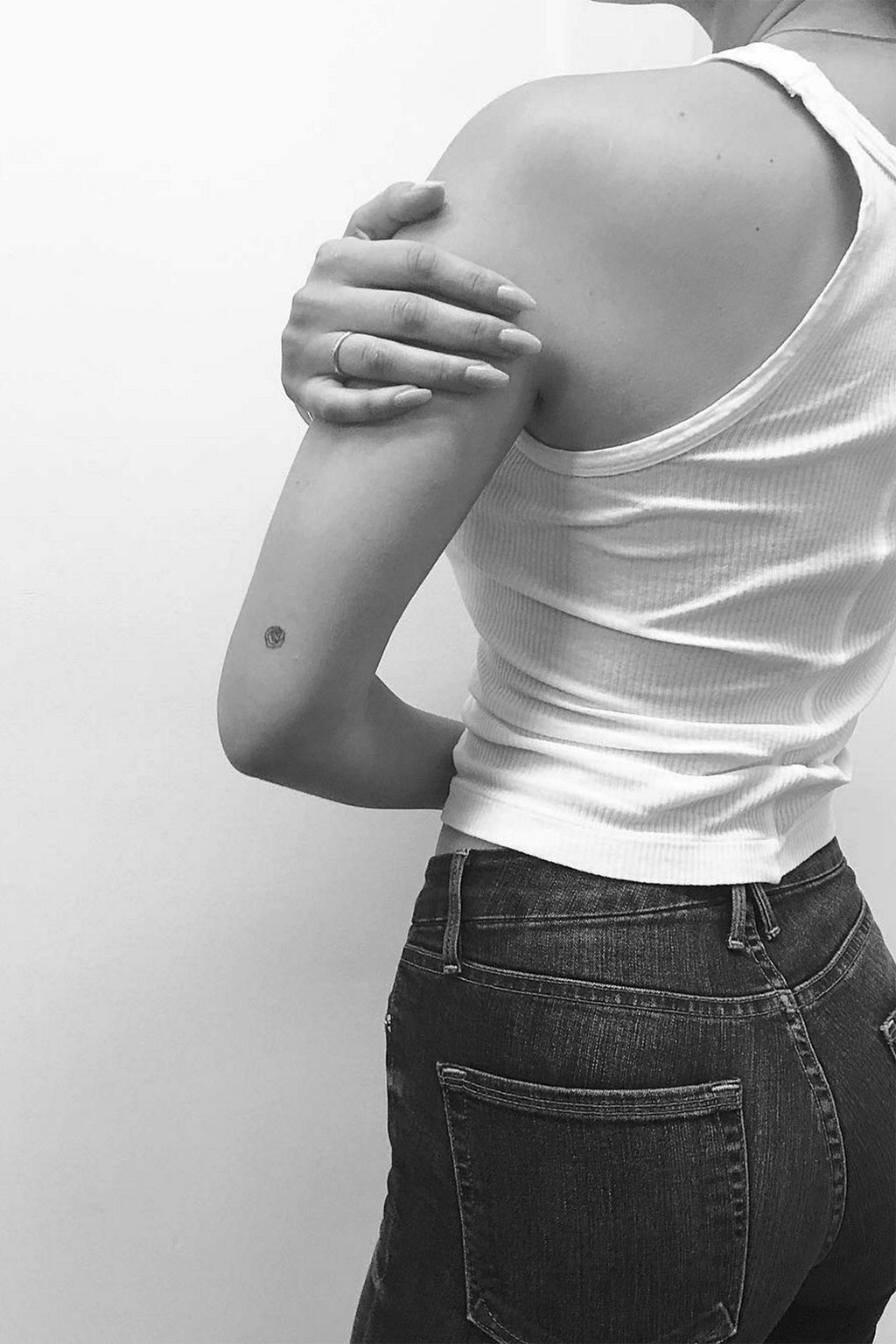
Bella Hadid’s tiny rose tattoo
The rose sits high on Hadid’s inner arm, just above the elbow. It’s a compact outline, without heavy shading or a long stem. A sleeve can cover it, but it also shows when her arm moves.
At this size, too many petal lines can blur together. The design works because it keeps the shape simple and leaves the rose room to read.
If you like the scale, choose a flower or stem that means something to you instead of copying the exact rose. The wrist, upper arm and ankle each change how visible a small tattoo will be and how much friction it gets.
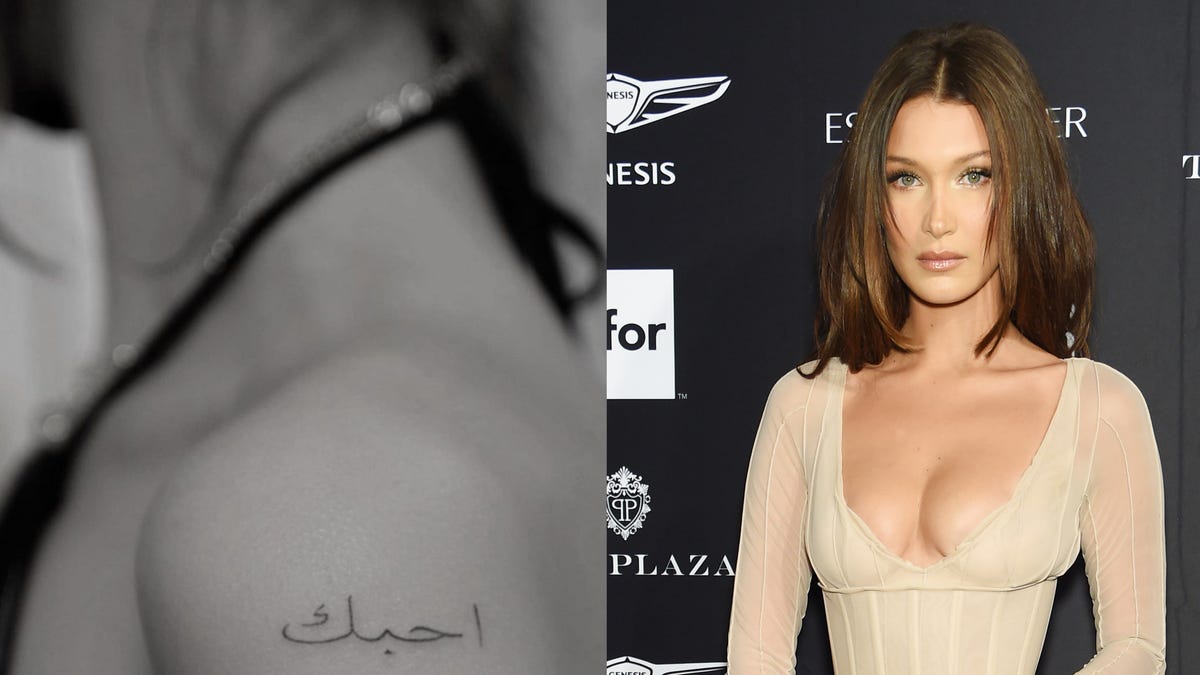
Bella Hadid’s Arabic shoulder writing
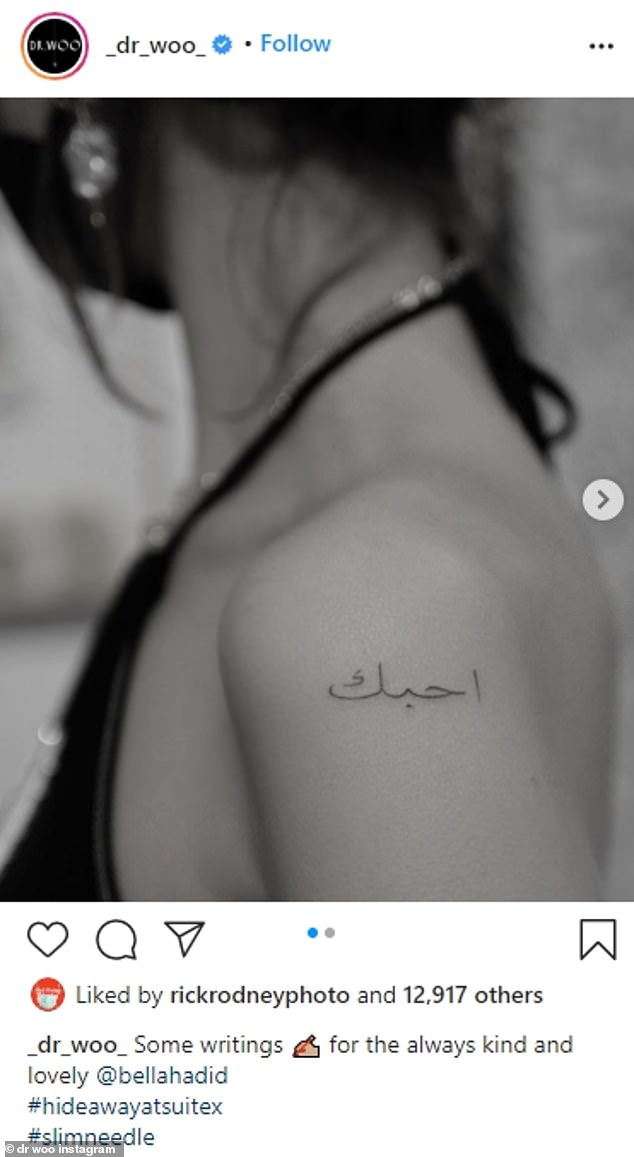
Hadid’s Arabic lettering sits high on her shoulder, close to the collarbone. Coverage of the reveal translated the phrases as “I love you” and “my love” and credited Dr. Woo.
With lettering in another language, check every character, direction and spacing with a fluent reader before the stencil is made. The layout also needs to follow the shoulder’s curve.
The second view shows how light and posture can change the look of fine script. Soft light can make the lines seem faint; a different shoulder angle can make them appear darker.
The high placement lets a neckline hide the words or reveal them. They sit close to the face, while staying off the neck itself.
How the small pieces fit together
The rose, writing and wings have different subjects, but share a small scale and light linework. That can make several tattoos feel related without repeating one motif. Leaving space around each piece keeps them from competing.
Small tattoos still need deliberate placement. A design reads alongside the shape and movement of the arm, shoulder or ankle, so the sketch should account for the body area it’s going on.
The fashion side of the look
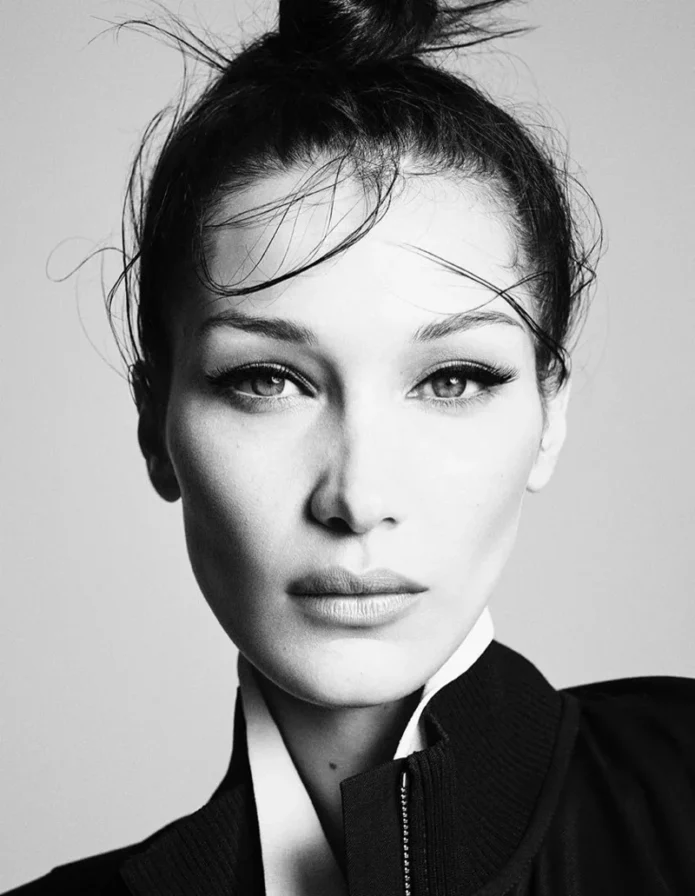
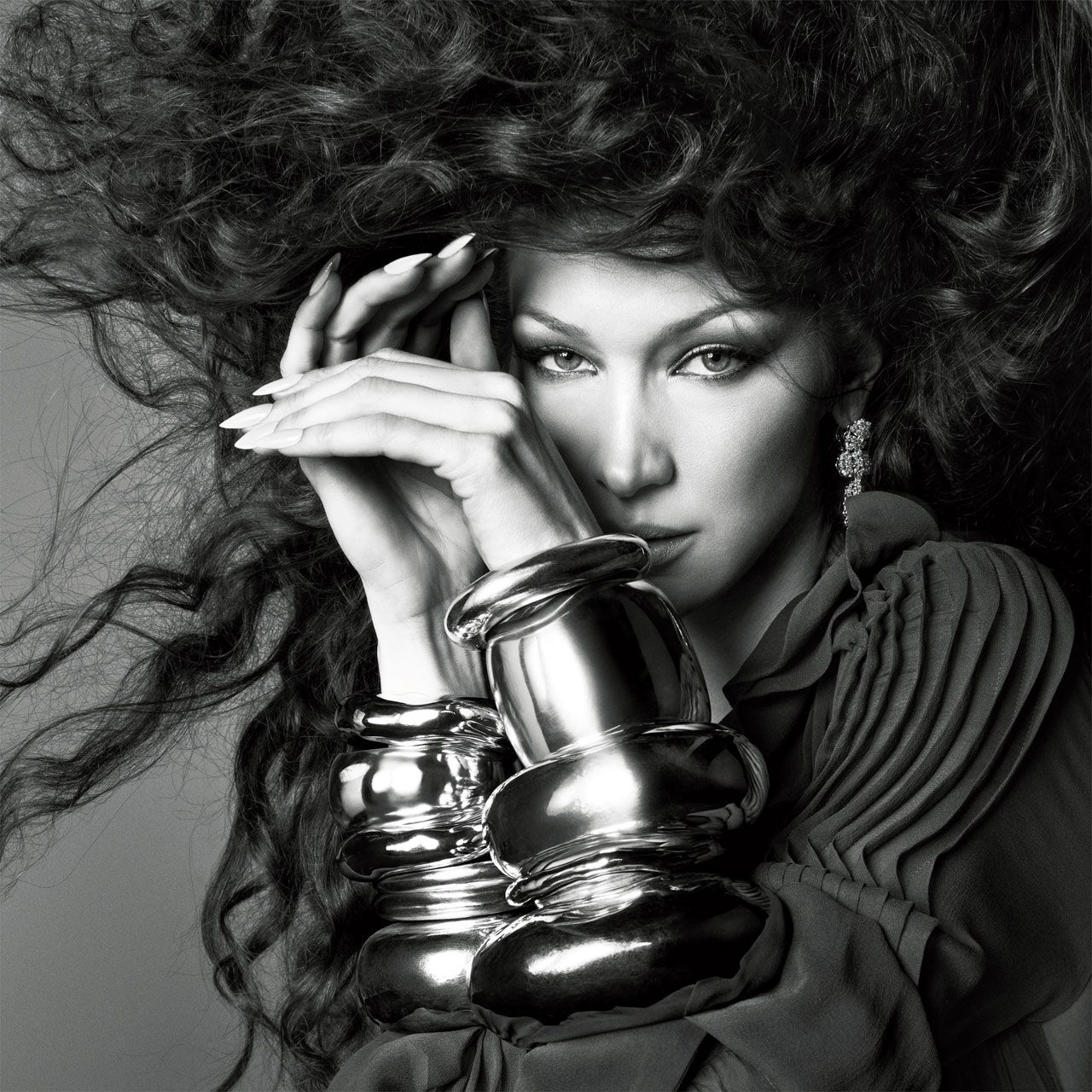
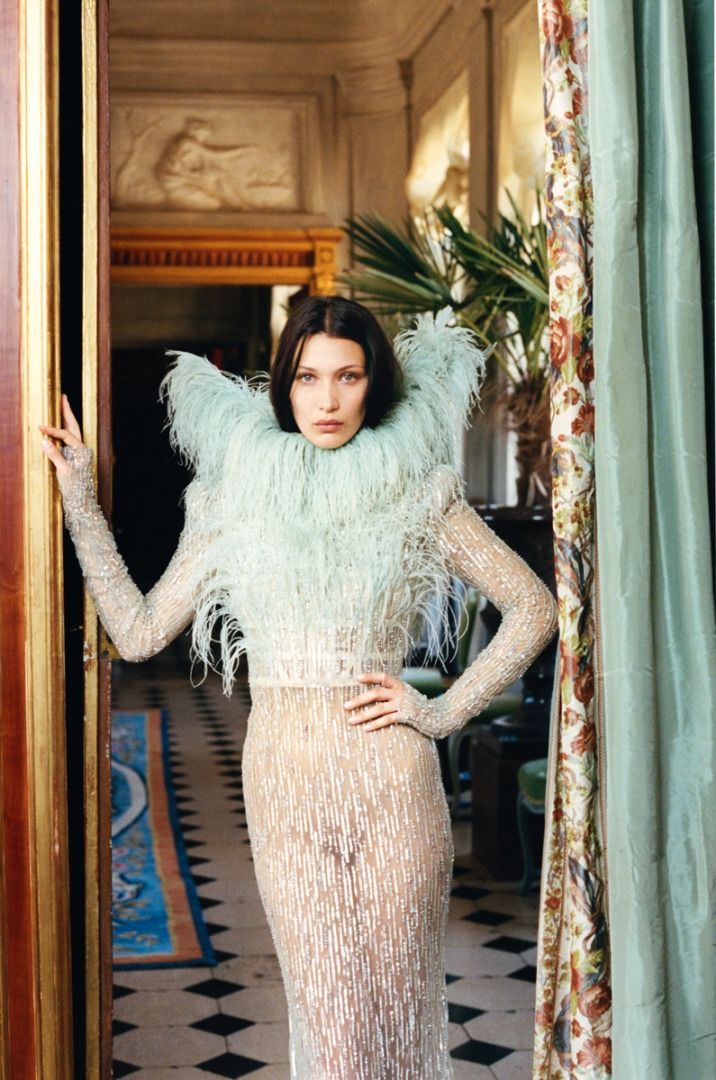
In Hadid’s editorial portraits, the tattoos appear alongside tailored clothes, heels, jewellery and makeup. Their size keeps them from dominating an outfit; a sleeve or neckline can cover them or let them show.
These portraits give a sense of her fashion styling rather than close views of the tattoo designs.
A career moment in the details
The matching wings above Hadid’s heels are among her best-known tattoos. JonBoy shared photos of them, and reports connected the pair with her first Victoria’s Secret Angel appearance. Their mirrored placement makes the idea clear without making the wings large.
Ankles rub against shoes and socks, so a tattoo there may need more care or a touch-up than one in a protected spot. An artist can help place the design around the footwear you actually wear.
What to borrow from her style
Her tattoos offer a few practical ideas: keep a fine-line design simple enough to read, give lettering extra review, and choose a scale you’ll still want to wear. You can take the size or placement as inspiration while choosing a different subject.
Before booking, decide whether you want the tattoo usually visible or easy to cover. For script, verify the full wording; for a small flower, ask the tattooer how the lines will hold at that size.
The takeaway from Bella Hadid’s body art
Hadid’s pieces are linked by their small scale, but each has its own reference: a rose, Arabic phrases and wings associated with her Angel debut. If you use the photos for inspiration, borrow a detail such as the line weight or placement and choose a design that fits your own reason for getting it.
Winnie Harlow’s tattoos are easy to miss at first. Her skin already has its own unmistakable pattern, so a few small pieces of black ink can disappear into a photo unless you know where to look. That’s part of what makes her tattoo collection interesting: it isn’t built around one giant sleeve or a full back piece. The details are quieter, more personal, and often tucked into places that only show up when she turns her hand or pulls her hair back.
Harlow, born Chantelle Brown-Young, became known to a huge audience through modeling, but her style has never been limited to a runway uniform. She’s worn sharp tailoring, swimwear, bright color, low-key street clothes, and the kind of dramatic beauty looks that make a close-up feel like a poster. Her tattoos sit inside that wider visual language. They don’t overpower the image. They add another little layer.
The key thing with celebrity tattoos is separating what’s actually visible from what a caption, fan account, or old list claims. Harlow has a small number of tattoos that have been reported repeatedly, and there are also plenty of photos where body art is hard to read. So the best way to look at her ink is with a bit of patience: focus on the pieces we can genuinely identify, then treat the rest as possible details rather than settled fact.
The seven dots on her middle finger
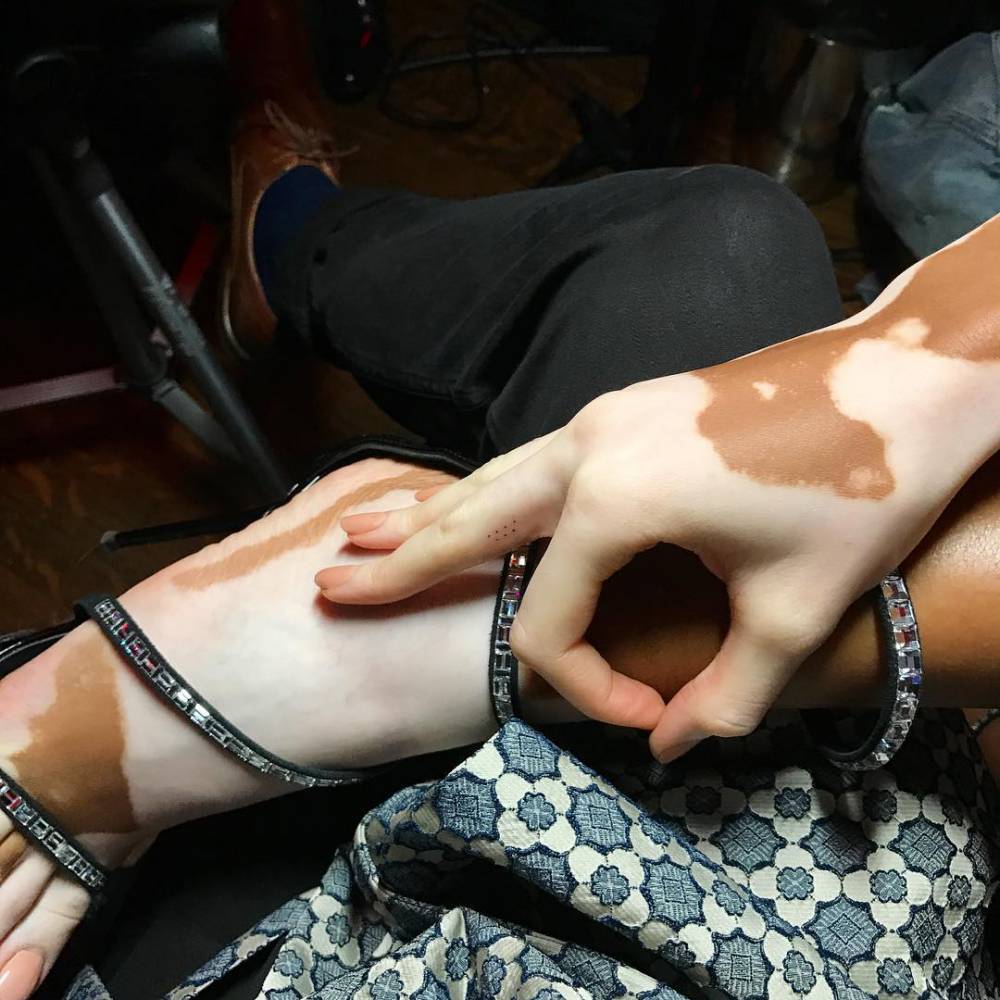
The clearest piece in Harlow’s collection is the line of seven small dots on the middle finger of her right hand. The design is tiny and deliberately simple. There’s no heavy outline, shading, or decorative frame around it. Just seven dark marks placed in a neat vertical rhythm along the finger.
That restraint is what makes the tattoo work. A larger design would compete with the vitiligo patterns across Harlow’s hand, while the seven dots feel almost like a small piece of punctuation. They’re visible in close-ups but don’t demand attention in every outfit photo. From a distance, they can look like a row of freckles or a bit of shadow. Up close, the spacing gives the design away.
TattooFilter credits the piece to artist Balazs Bercsenyi and categorizes it as minimalist and geometric. Those labels fit the image: this is not a sketchy illustration or a fine-line symbol with a complicated backstory attached to it. The appeal is the shape, the spacing, and the way the tattoo sits naturally on the finger.
Some profiles describe the seven dots as representing Harlow’s siblings. That meaning is often repeated, but I’d keep the wording careful unless Harlow herself is directly explaining it in a primary interview. The design is confirmed visually; the personal meaning is best treated as reported rather than absolute. That distinction matters, especially with small celebrity tattoos that get copied from one list to another.
Why the smallest details can work
Finger tattoos have a different energy from the usual celebrity statement pieces. They’re always near the camera, but they’re also easy to hide. Harlow can wear rings, hold a microphone, pose with a phone, or rest her hand against her face and let the tattoo appear without making it the subject of the photograph.
That kind of placement also gives the tattoo a little movement. The dots bend with the finger, and their appearance changes depending on whether her hand is relaxed, curled, or stretched out. It’s a small reminder that tiny designs still live on moving skin, and the simplest marks often show that most clearly.
If you like this style, the useful lesson isn’t simply “get seven dots.” It’s the discipline behind the idea. A minimalist tattoo needs clean spacing and a placement that will still read when the hand is doing something else. The design can be tiny, but the decision about where it goes does a lot of the work.
A model whose skin is part of the picture
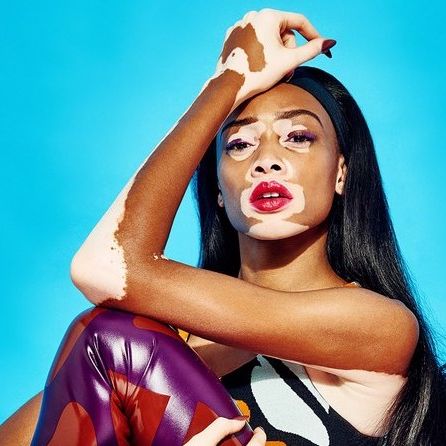
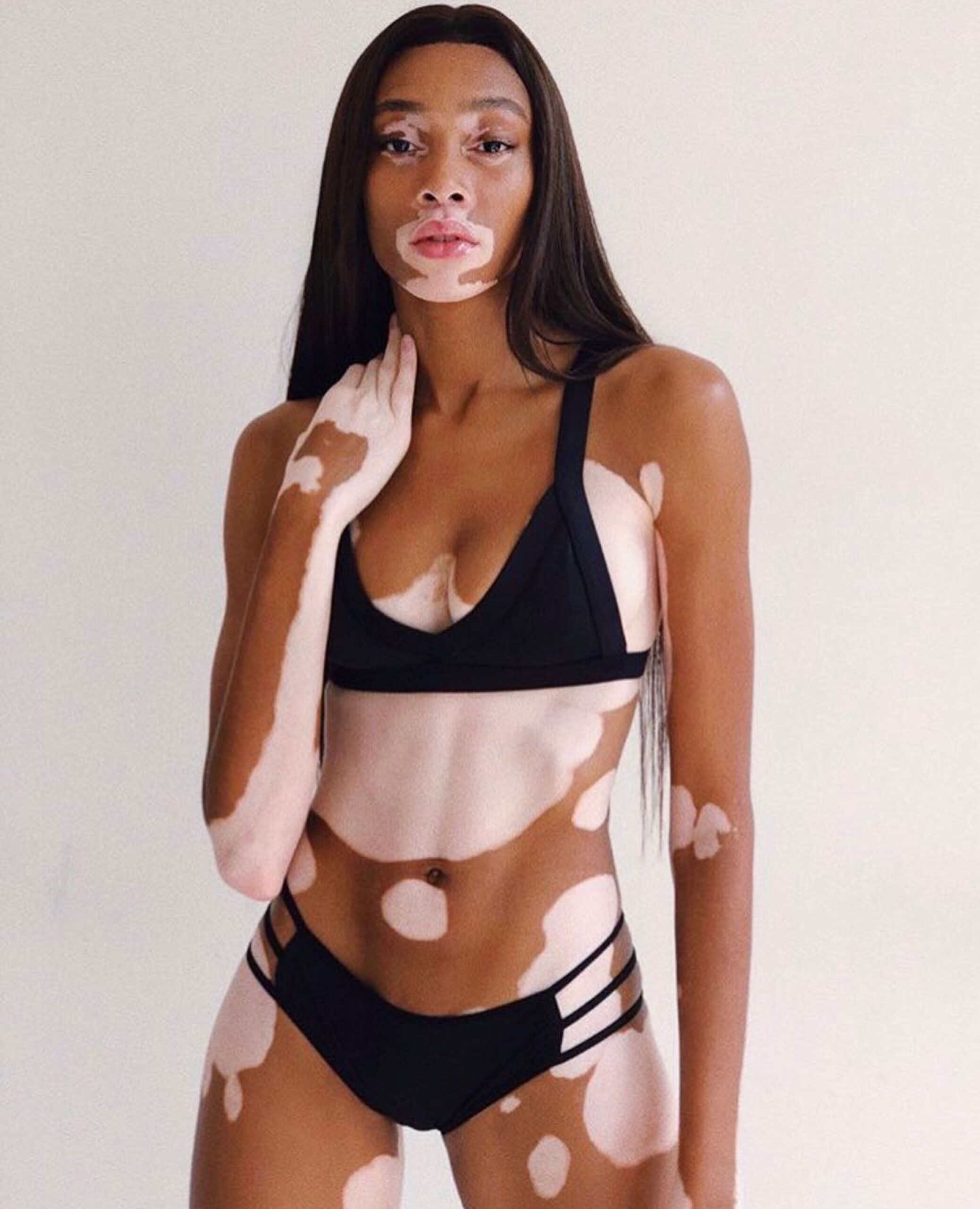
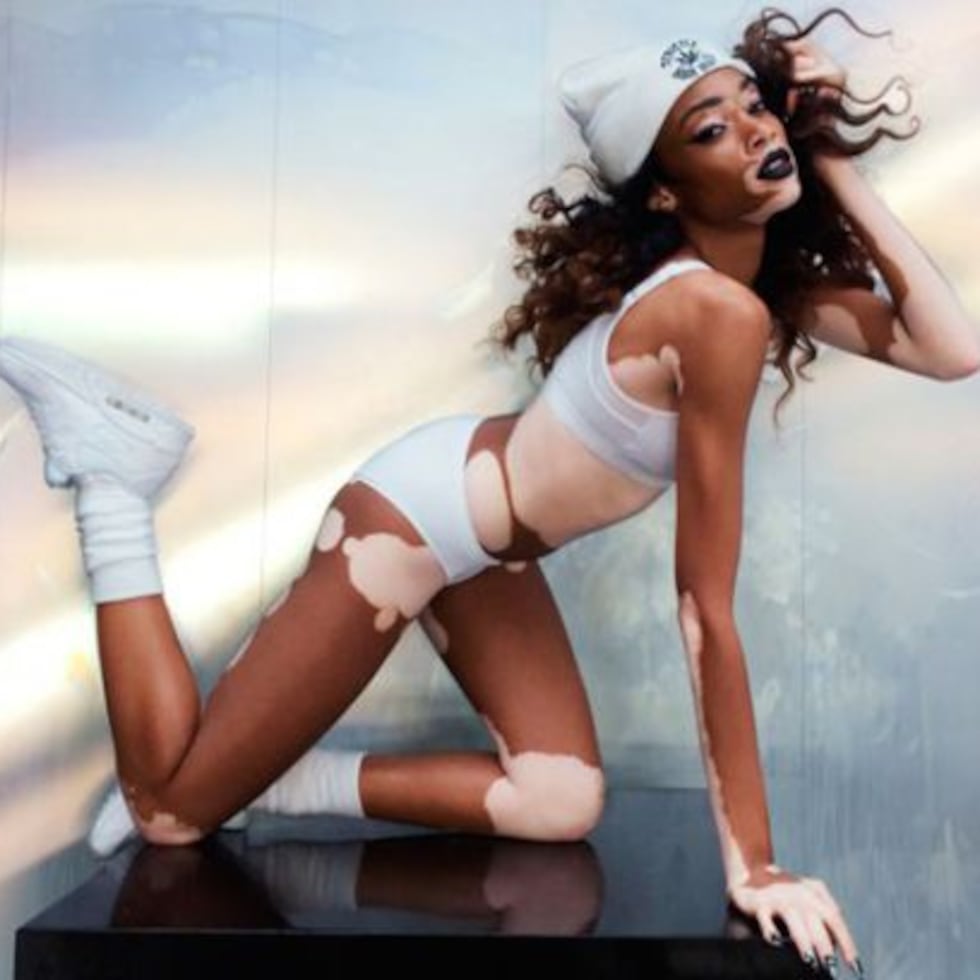
Harlow’s vitiligo is not a tattoo, and it shouldn’t be described as one. It’s a skin condition that changes the distribution of pigment, while tattoo ink is placed into the skin by a needle. The two can appear in the same photograph, but they’re completely different things. Natural skin patterns are not body art.
That difference is worth saying plainly because celebrity tattoo galleries often blur body art, makeup, henna, scars, and natural skin patterns together. With Harlow, the mistake is especially easy to make. A pale patch can sit beside a dark dot tattoo, and a quick crop can make the whole area look like one graphic design. It isn’t. The contrast is part of the photograph, not proof that every mark is ink.
Her best images understand that. The styling tends to leave room for the skin to remain visible rather than trying to smooth it into a blank background. That gives the small tattoos a more honest place in the frame. They’re additions to an already distinctive surface, not the thing that makes her appearance recognizable.
Color, movement, and the way details disappear in photos
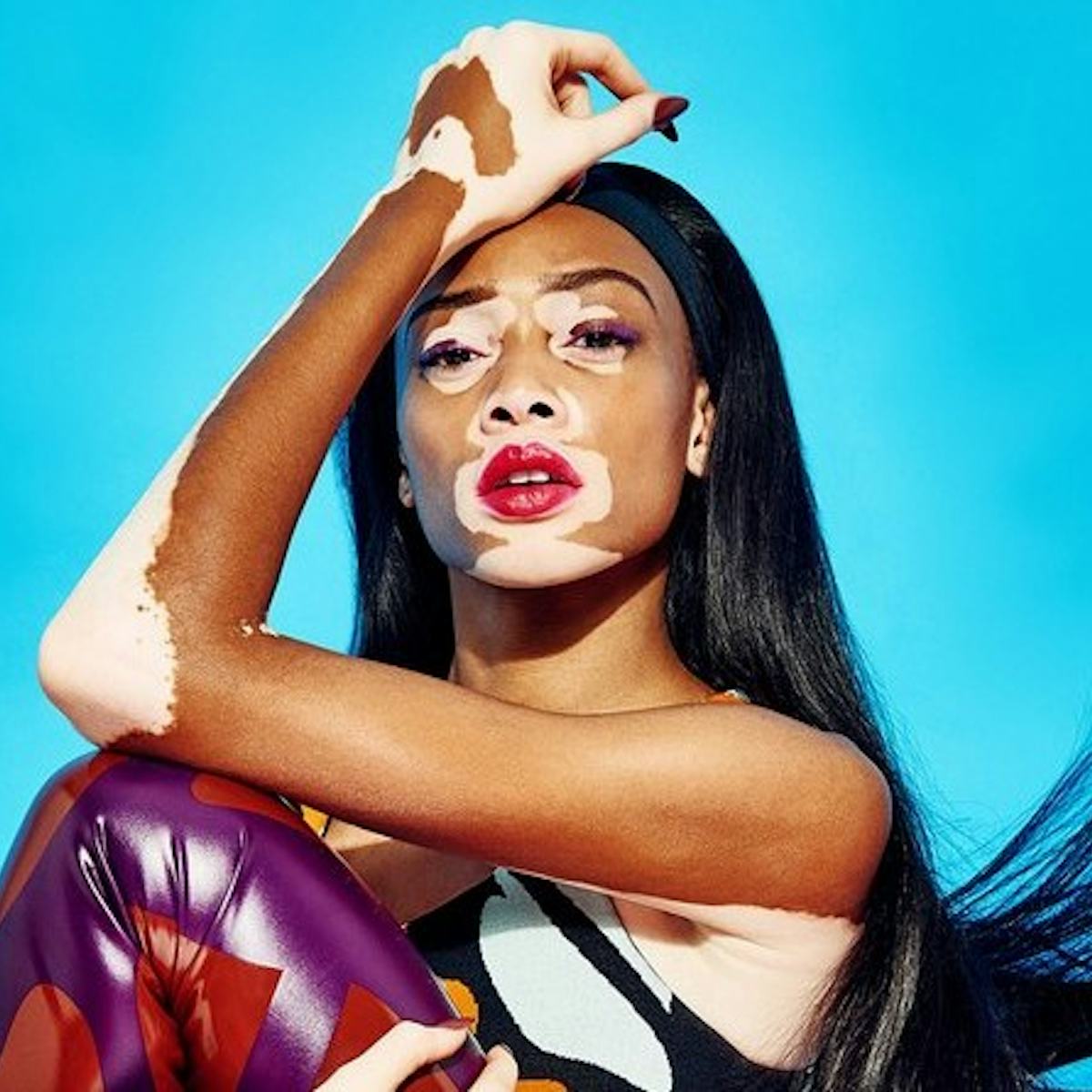
In a bright fashion image, Harlow’s tattoo can vanish completely. Colorful clothes, jewelry, makeup, and strong lighting all compete for attention. That doesn’t mean the tattoo is gone; it just means the photograph is doing something else.
This is useful to remember when looking at tattoo inspiration online. The most dramatic celebrity image isn’t always the best reference for the tattoo itself. A full-body fashion shot might show the mood of a look, but a closer, less polished image is usually better for judging line weight, scale, placement, and whether a mark is permanent at all.
Harlow’s seven dots work because they survive that difference in scale. They don’t need a spotlight. When her hand is visible, they add a tiny graphic accent. When it isn’t, the photo still works without them. That’s a strong quality for anyone who wants body art that feels personal instead of performative.
The reported name behind her ear
There’s another small detail that has been reported around Harlow’s collection: an “Kyle” tattoo behind her right ear, referring to Kyle Kuzma. Coverage in 2023 described it as a subtle tribute to her partner after fans noticed the lettering in a social-media photo dump.
The placement makes sense. Behind the ear is one of those spots that can be completely hidden by hair and then suddenly visible in a side profile. It’s intimate without being invisible, and a short name or word can fit there without turning into a large statement piece.
I’d still be careful with exact lettering when the available image is small or partly covered. Celebrity tattoo photos are often compressed, cropped, or reposted without the original file. It’s better to say a name tattoo was reported than to invent a precise font, size, or artist when the photo doesn’t support that level of detail. That caution doesn’t make the tattoo less interesting. If anything, it keeps the description honest.
Swimwear, close-ups, and the difference between styling and skin
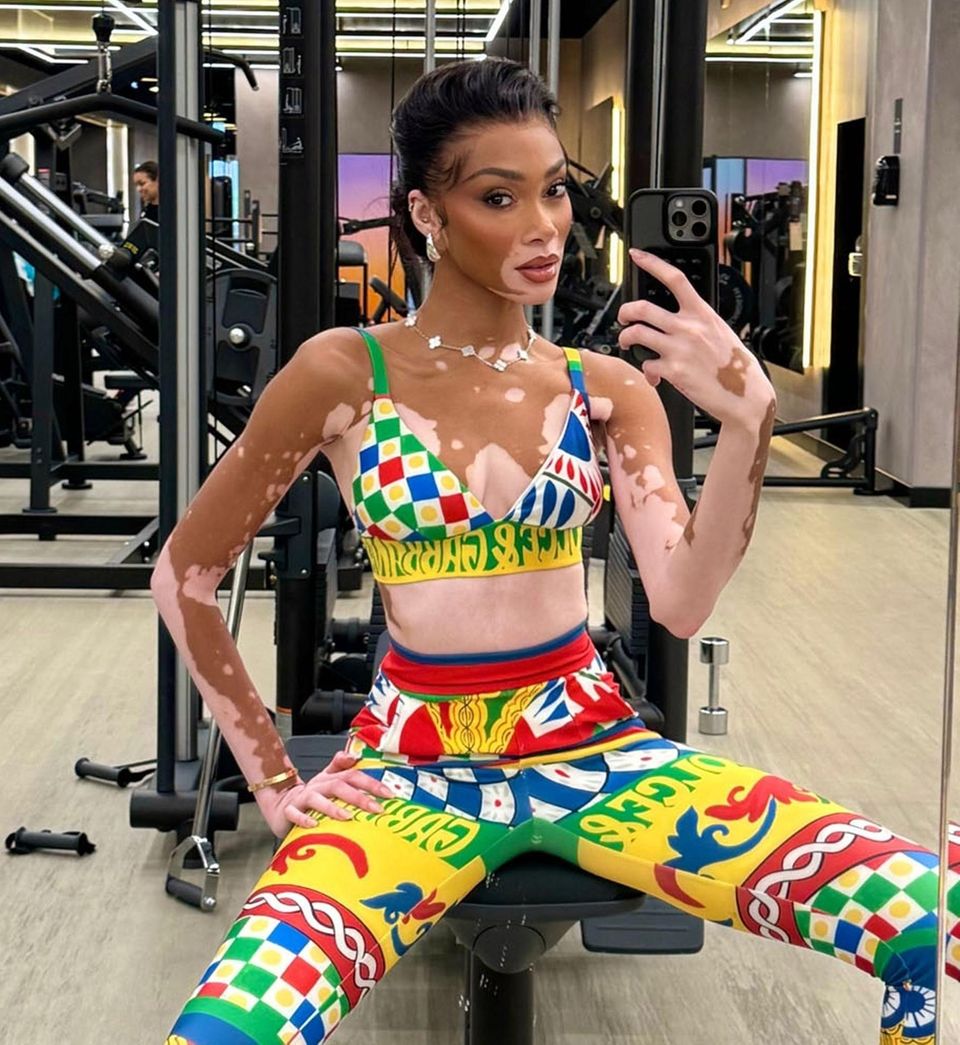
Some of Harlow’s most memorable photos are built around confidence rather than body art. The pose, the lighting, the clothes, and the texture of her skin do the heavy lifting. That’s why her tattoo details work best when they’re treated as accents instead of a complete explanation of her look.
For tattoo inspiration, this is a good place to borrow the attitude without copying the exact image. A tiny hand design can sit inside a much bigger personal style. You can wear it with bright colors, minimal clothes, formal pieces, or nothing more complicated than jeans and a T-shirt. The tattoo doesn’t have to dictate the whole wardrobe.
It also shows why placement should match your real life. A finger tattoo is going to appear in photos, at work, while holding a drink, and every time you reach for your phone. Behind-the-ear ink behaves differently: it’s easy to cover and only shows when the hair and angle line up. Both are discreet, but they’re discreet in different ways.
What small details say about scale
Harlow’s known tattoos are a useful counterpoint to the idea that celebrity ink has to be huge to matter. The seven dots are almost comically small compared with the giant back pieces and full sleeves that dominate tattoo roundups. Still, they’re memorable because the design is clean and the placement is specific.
Small tattoos are not automatically easier tattoos. A tiny design leaves less room for a shaky line, uneven spacing, or a placement that doesn’t follow the body. Dots can spread slightly as they heal, especially on fingers, and finger tattoos often fade faster than ink on areas with less friction. If you’re considering a similar piece, ask your artist how the design will age and whether a touch-up is realistic.
The other lesson is that a tattoo can be meaningful without being visually loud. A short name behind the ear, a family reference in a row of dots, or a small mark that only appears in certain photos can carry plenty of weight. The audience may barely notice it. The wearer doesn’t need the audience to notice.
The stories people project onto her image
Harlow’s public image has always attracted projection. People read her skin, her clothes, her hair, and her tattoos as if each one is a clue they’re entitled to decode. That can be flattering, annoying, or simply exhausting, depending on the day.
Her tattoos don’t need to carry the whole burden of explaining her. The seven dots can be a family reference, a design she liked, or both. The reported name tattoo can be romantic without becoming a public promise for everyone else to analyze. A small mark is allowed to stay small.
That’s probably the most useful takeaway from her collection. Choose something you’ll still like when the trend has moved on. Pick a placement that makes sense for how you dress and work. Be precise about the design, but don’t feel pressured to turn every tattoo into a speech. Sometimes a few dots are enough, and a good tattoo feature can leave room for uncertainty.
A public love story without forcing the evidence
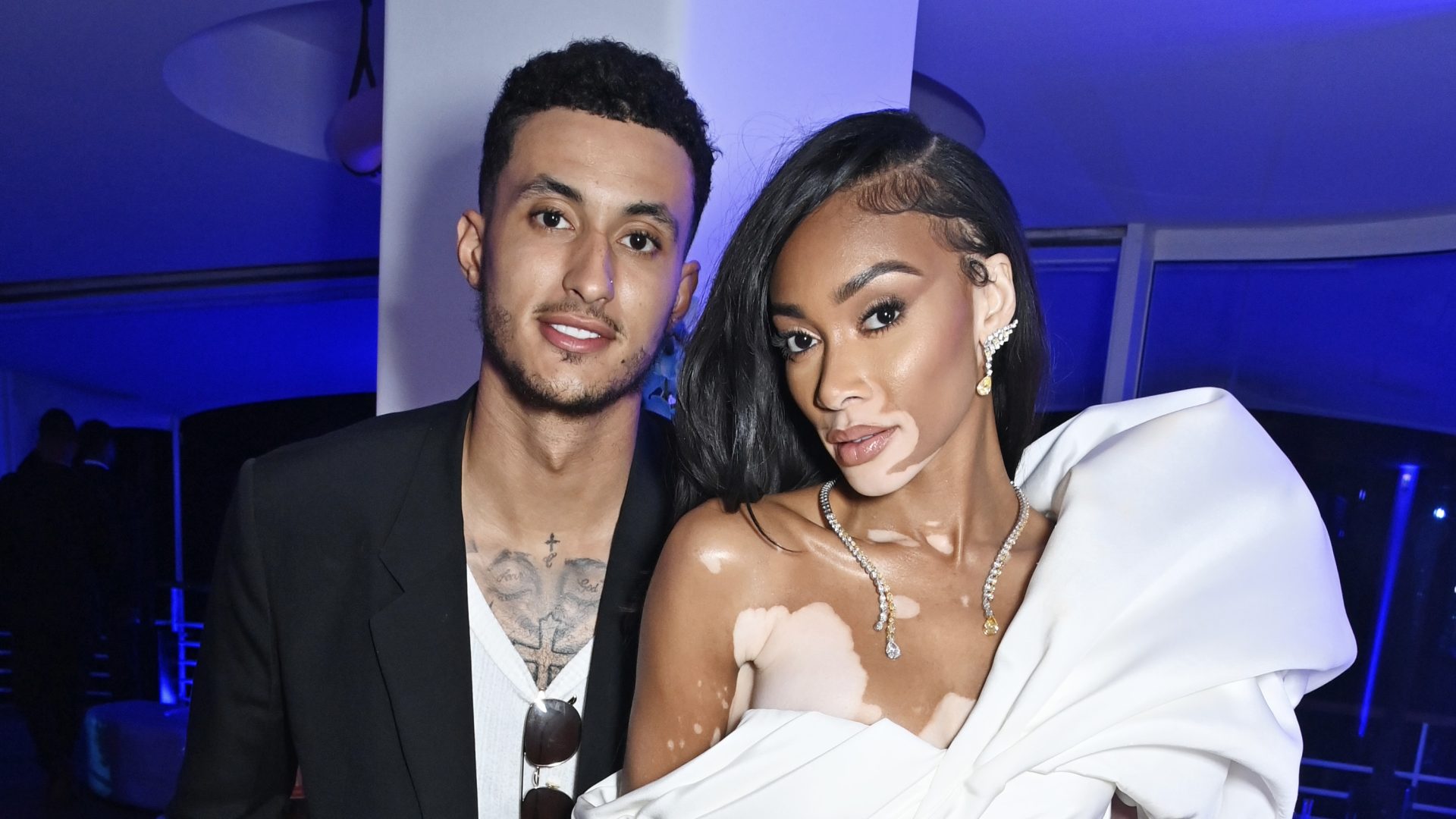
Harlow and Kuzma’s relationship has generated plenty of photos, especially around their engagement. Those images give context for why a small name tattoo might matter to her, but they shouldn’t be used as proof of a particular tattoo unless the ink is actually visible. A romantic photo can support the story around a tattoo without becoming tattoo evidence itself.
That distinction is useful beyond this one celebrity. If you’re building a tattoo gallery, keep the close-up proof separate from the lifestyle images. Use the candid or editorial photos to show the person’s style and personality. Use the genuine tattoo photo to show the design. Mixing those roles makes the page less trustworthy and makes readers work harder to figure out what they’re looking at.
With Harlow, the strongest picture is still the simplest one: a close view of her hand with seven neat dots running along the middle finger. Everything else adds atmosphere, history, or context. That’s enough. A good tattoo feature doesn’t need to claim every blurry mark in every old photo.
Final take on Winnie Harlow’s style
Winnie Harlow’s tattoo style is small, clean, and personal. The seven-dot finger tattoo is the clearest documented piece, while the reported “Kyle” lettering behind her ear adds a more private, relationship-centered detail. Neither tattoo overwhelms her look. Both work because the placement does the talking.
What makes the collection stand out is the restraint. Harlow’s skin already has a visual identity that can’t be duplicated, and the tattoos sit beside it rather than trying to compete. If you’re looking for ideas, start with the practical stuff: how visible do you want the design to be, how much movement will the placement get, and will the tattoo still feel like yours when the original inspiration has faded?
For a tiny design, there’s a lot to learn here. Keep the shape simple. Find an artist who can place it cleanly. Don’t confuse natural skin patterns with ink. And if a tattoo is hard to see in a photo, describe it carefully instead of filling in the blanks. That’s how a small tattoo feature stays useful.