
Chris Daughtry’s tattoos tell a before-and-after story. Older photos show colorful, detailed work across both arms; more recent coverage follows a dramatic blackout redesign. The change has made online tattoo galleries hard to compare: a photo may show pieces that are now covered. Keeping the old sleeves separate from the newer blackwork makes the timeline clear.
Some designs are easy to see in photographs, but their personal meanings have not been explained in detail. A picture shows how a tattoo looked at the time; a report may add context. Neither fills in the story behind every shape in an old image.
The colorful sleeves came before the blackout redesign
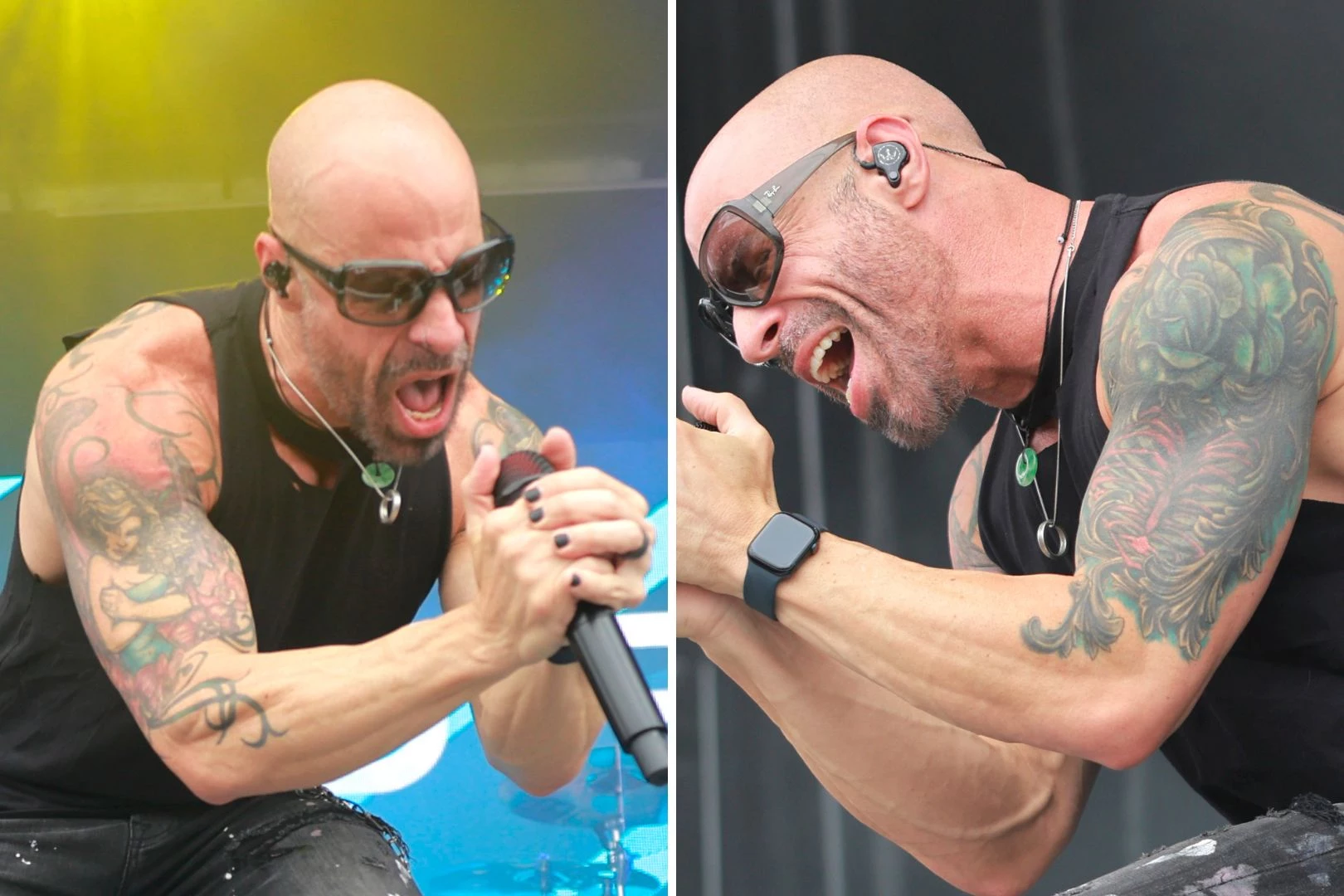
Before the blackout, Daughtry had substantial color and linework on both arms. Photos show sleeves built from several designs rather than one small emblem. Faces, shaded forms and saturated color cover the upper and lower arms, though no photo provides a reliable catalogue of every piece.
The earlier sleeves explain why the newer work looks so different. Blackout ink covers or sits beside existing tattoos, changing the balance of the arms and hiding much of the original artwork. A before photo shows the old designs; it does not show what is visible now.
Older lists sometimes repeat names for individual tattoos without saying where the identification came from. The photographs support a broad description of colorful arm sleeves with portrait-like and illustrative designs. If a small detail cannot be made out, it is better to leave it unnamed than guess.
An angel and portrait imagery survives in the older record
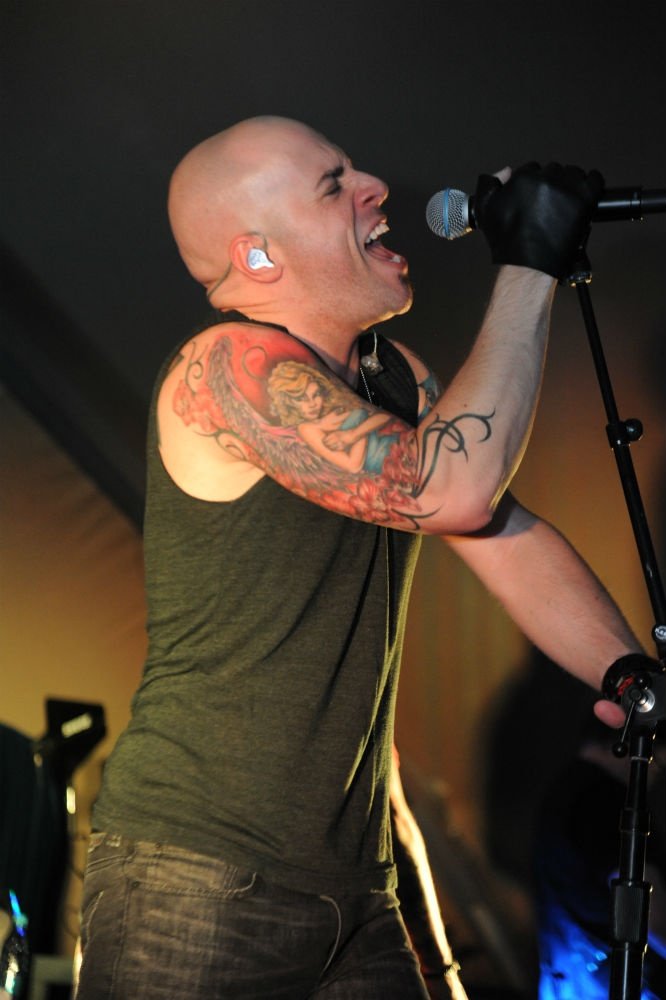
Portrait-style imagery is one of the clearest themes in the older arm photos. An angel-like figure and other faces are visible, but the available reports do not establish a confirmed meaning for each design. Their appearance and placement can be described without assigning a religious, memorial or family story.
Photos from different years can make a detailed sleeve look like a different tattoo. Lighting, clothing and camera angle change what is visible, and a close crop can exaggerate one part of a larger design. The images do not identify every portrait as a particular person.
Daughtry’s tattoo history is often summarized as a collection of colorful designs later covered by blackwork. Older photos show how the pieces fit across his arms and why some of the original work is hard to see now.
The blackout arms use solid ink and negative space
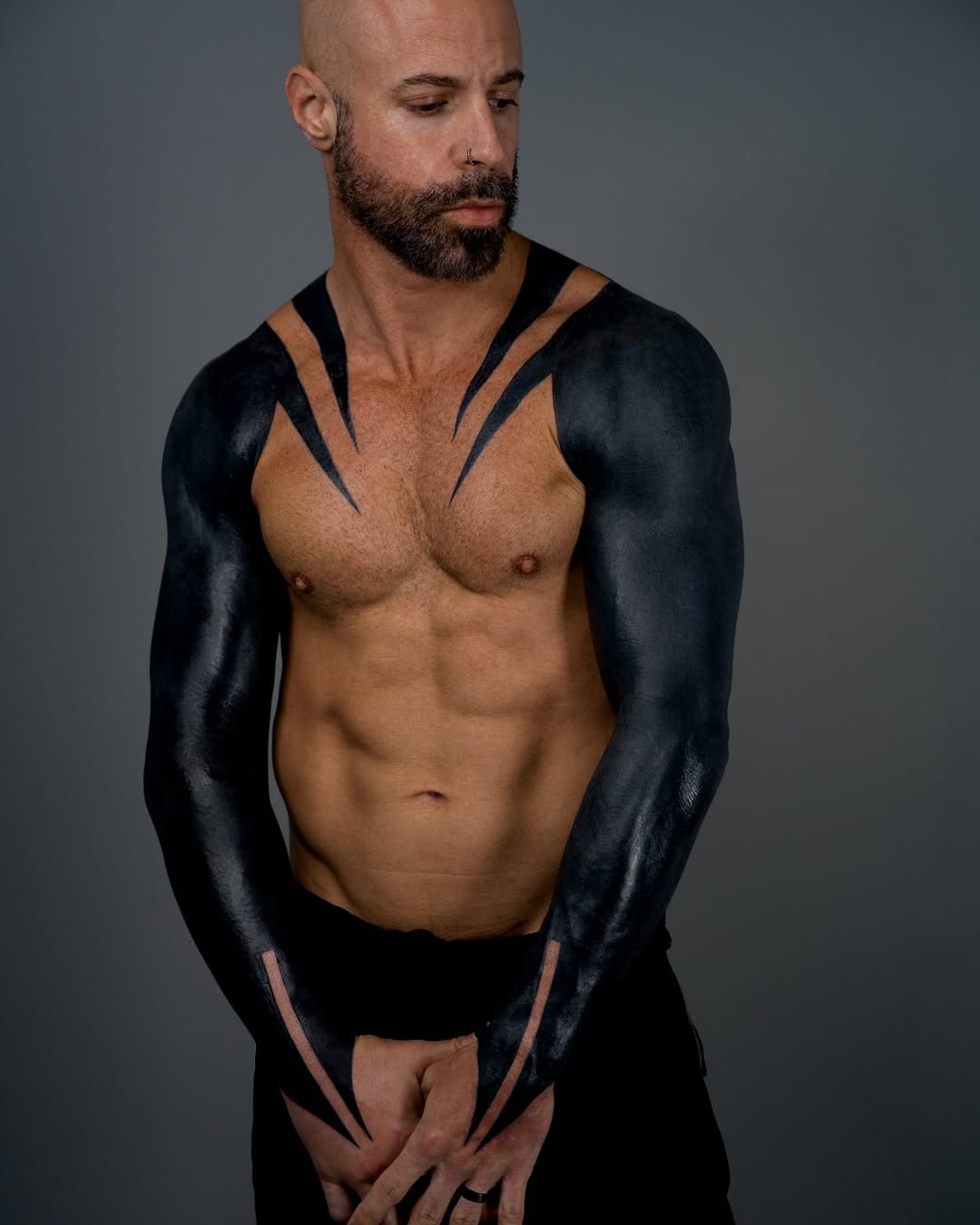
In December 2024, Loudwire reported that Daughtry had new blackout work done by Los Angeles artist Roxx, who has also worked with Machine Gun Kelly. The redesign covers both arms with solid black areas, negative-space stripes and pointed accents near the shoulders.
Blackout tattooing can be a style choice as well as a way to cover older work. For Daughtry, the contrast with the colorful sleeves is striking: solid black fields hide much of the old ink, while untouched skin creates the new pattern. The result is a coordinated blackwork composition, not a single symbol with one fixed meaning.
Reports also place the blackout across Daughtry’s upper back and the back of his neck. Those areas are harder to see clearly in the available photos, so the reports establish their location without showing enough detail to describe their exact shapes. The arms remain the clearest view of the redesign.
The negative-space shapes keep the design from reading as a flat block of black. Reports describe stripes running from the knuckles toward the wrists and pointed accents around the shoulders. Their edges may look different as the tattoos heal or appear under different lighting.
Daughtry has been described as seeing the blackout tattoos as cohesive and intentional, which fits the unified look of the finished work. The redesign changed how the earlier sleeves appear, but the available coverage does not establish a deeper private motive.
How to read Daughtry’s tattoo timeline
The timeline has three clear stages: colorful arm sleeves in older photos, portrait and illustrative designs within that work, and the later blackout by Roxx. Keeping those stages distinct prevents an old photo from being mistaken for a current view.
Tattoo galleries may seem to disagree because they were photographed years apart, before or after the blackout, or from angles that show only part of an arm. The date and viewpoint explain many of the differences.
The arms show the redesign most clearly. Reports also include the upper back and neck, though fewer details are visible there. Those locations can be noted without guessing at the shapes or their meanings.
Daughtry’s tattoos are a record of a major visual change, not a fixed list. The blackout is the latest chapter, and the photographs make the most sense when they are dated and compared with the colorful sleeves that came before.
One thought on “Chris Daughtry’s Tattoos: The Blackout Redesign and the Ink It Replaced”