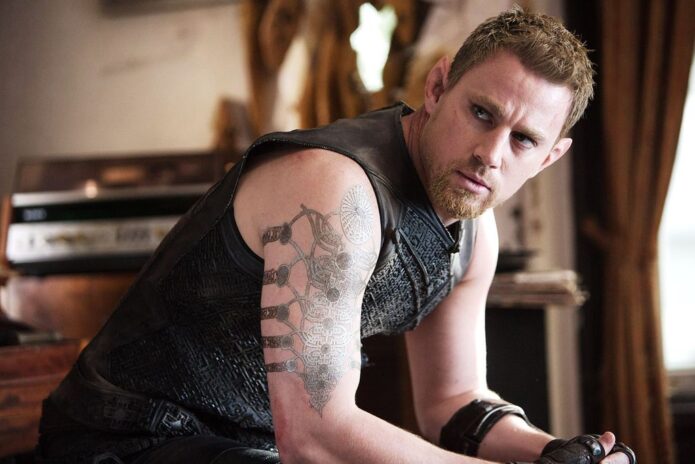
Channing Tatum’s tattoos can be easy to miss because photos often focus on something else: a red carpet suit, a film still covered in temporary ink, or a sleeveless portrait that shows one shoulder and leaves the rest in shadow. The designs are there, but they do not always get a close-up.
His collection mixes older and newer work: tribal-style arm pieces, a chest heart, small linework and a phrase from his honeymoon. More recent reports also point to new leg ink. Dates matter, since an early-career photograph should not be treated as a full picture of what he has today.
The tribal arm work gives Channing’s collection its strongest shape
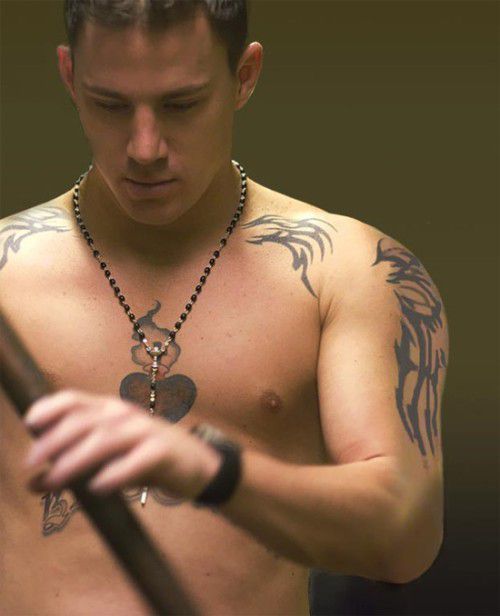
The most recognisable part of Channing’s collection is the dark tribal-style work around his shoulders and upper arms. Broad, graphic curves and pointed sections follow the muscles instead of sitting like small stickers. In a shirtless photo, the arm pieces help frame his chest and make the upper body feel more connected.
Older tattoo coverage links one bicep design to Channing’s uncle and an Alabama ranch. It is a useful detail, but should not be stretched to cover every mark on both shoulders. The photo shows several related-looking pieces; it does not prove they were planned together or that each curve refers to the ranch.
The shapes look different from one angle to another. A dark band may seem narrow when the arm turns and much wider when the elbow lifts. Part of a shoulder tattoo can vanish around the side of the arm, so it is worth checking the pose before deciding a piece has changed or disappeared.
The bold upper-arm designs contrast with Channing’s smaller symbols. The tribal work reads from a distance; the chest heart and small cross need a closer look. That mix keeps the collection from feeling like one uniform sleeve. Some pieces rely on shape and movement, others on a phrase, date or personal association.
A clear photo matters here. A low-resolution event shot can merge the dark shapes into a blur, while a sharper portrait shows the edges, gaps and way the lines follow the muscle. The image establishes the layout, not a meaning Channing has never publicly explained.
It is tempting to treat all tribal-style tattoos as symbolic, but that does not tell readers much. The useful description is direct: dark curved bands on the upper arms, strong contrast and lines that wrap around the body. A ranch or family connection can be included beside the piece the source identifies; the rest should stay visual.
Side by Side rib script is the clearest story in the collection
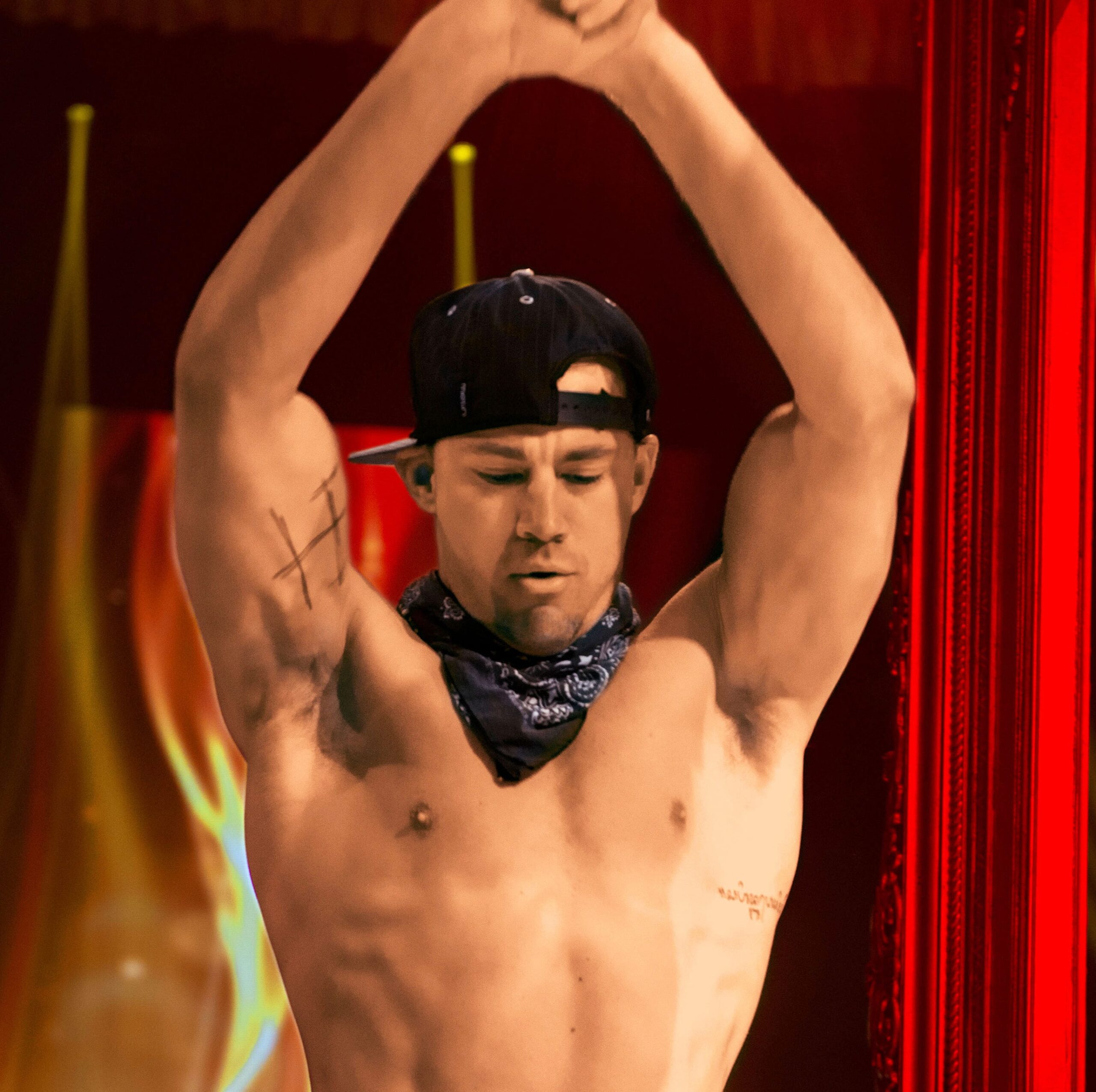
Side by Side is one of Channing’s most clearly documented tattoos. The script sits along his ribs, usually hidden by a shirt but easy to see in a shirtless photo. Compared with the dark arm pieces, its simple lettering stands out when his body is shown from the side.
The phrase is linked to Channing’s honeymoon in Bali with Jenna Dewan. It was a matching or relationship-linked design, and the words are plain enough that they need little interpretation. They state closeness directly, which is why the design and reported story fit without an elaborate explanation.
The tattoo belongs to a particular point in Channing’s timeline. Since it was connected with his marriage, later coverage should be careful with tense: it is accurate to say what it meant then and why it was chosen, but less accurate to present it as a current statement about a relationship after circumstances changed.
Rib tattoos are difficult to photograph well. The skin curves around the body, so a straight-on portrait may show only part of the lettering. An arm’s shadow can also split the phrase visually. A side angle shows the words as one line and gives a better sense of their length.
The script suits the collection because not every tattoo does the same job. The tribal work fills space and frames the body; Side by Side is private text that appears when Channing is shirtless or wearing an open shirt. That difference between bold design and hidden message gives the tattoos their character.
There is no need to add another meaning to the phrase. The honeymoon connection is enough: the words are readable, the placement is clear and the timing belongs to that relationship period. It is a strong tattoo entry when the account stays close to the source.
Small cross and linework show why close-ups matter
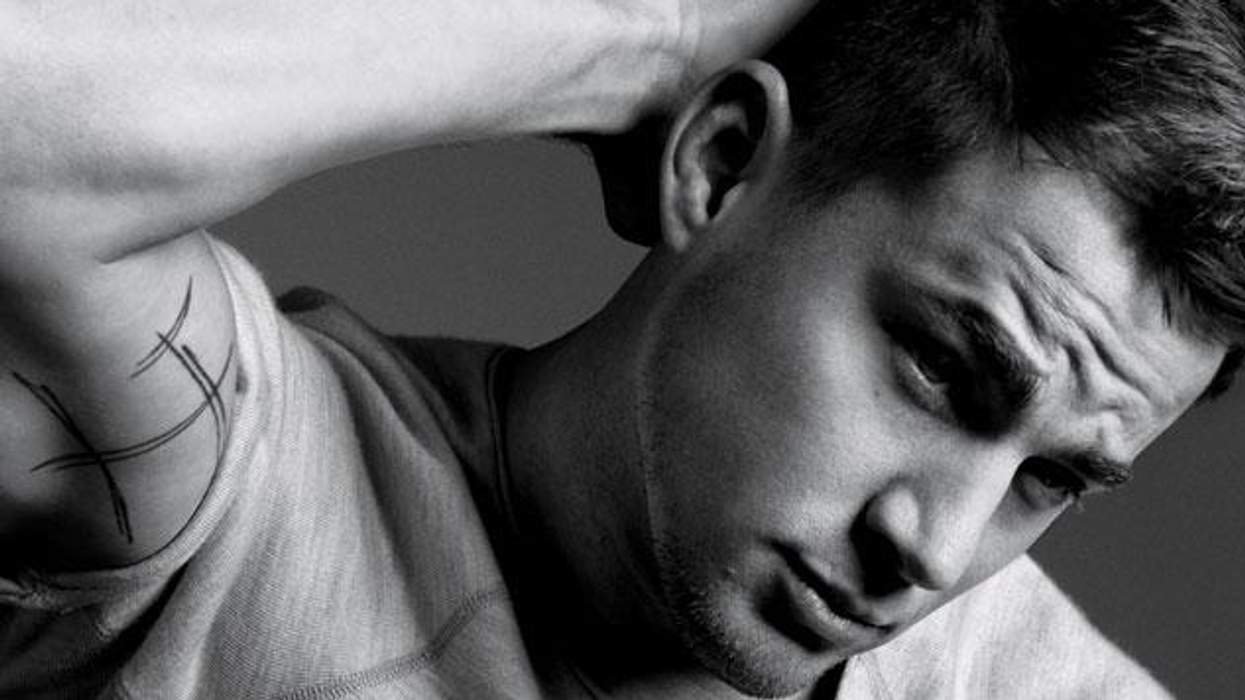
Channing also has smaller tattoos that can vanish in a standard red-carpet photo. A cross has been seen on his inner arm, and close portraits show simple intersecting lines beneath the upper arm. These are less prominent than the tribal work, but they show why one full-body photograph cannot cover the entire collection.
A cross is a familiar shape, but that does not reveal Channing’s personal reason for choosing it. It may have religious or family meaning, or it may simply be a design he liked. Unless he has explained this particular piece, the reliable description is visual: a small cross on the inner arm, photographed with his arm raised.
The lines beneath the arm are even easier to miss. They sit in a shaded area, and the crease can make them look like folds in the skin. A sharp black-and-white portrait separates the ink from the shadow. The image lets readers check the location rather than relying on a vague description.
These small marks give the collection a different rhythm. A tribal band announces itself; a cross or line drawing rewards a closer look. Channing’s public image often centres on his build and film roles, leaving the smaller tattoos out of view until a photographer catches the right angle.
The cross and lines should also stay separate from the chest heart. Their locations differ, and the sources do not give them one shared story. Keeping the entries distinct makes the inventory clearer: upper-arm linework, inner-arm cross and centre-chest heart are separate designs, even if a shirtless photo shows them together.
That approach works across the rest of the collection. When a photo shows a shape but no source names it, describe the shape and placement. When Channing has explained the meaning, include it. When a mark is hidden or too soft to identify, leave the guess out.
The newer leg ink shows the collection is still changing
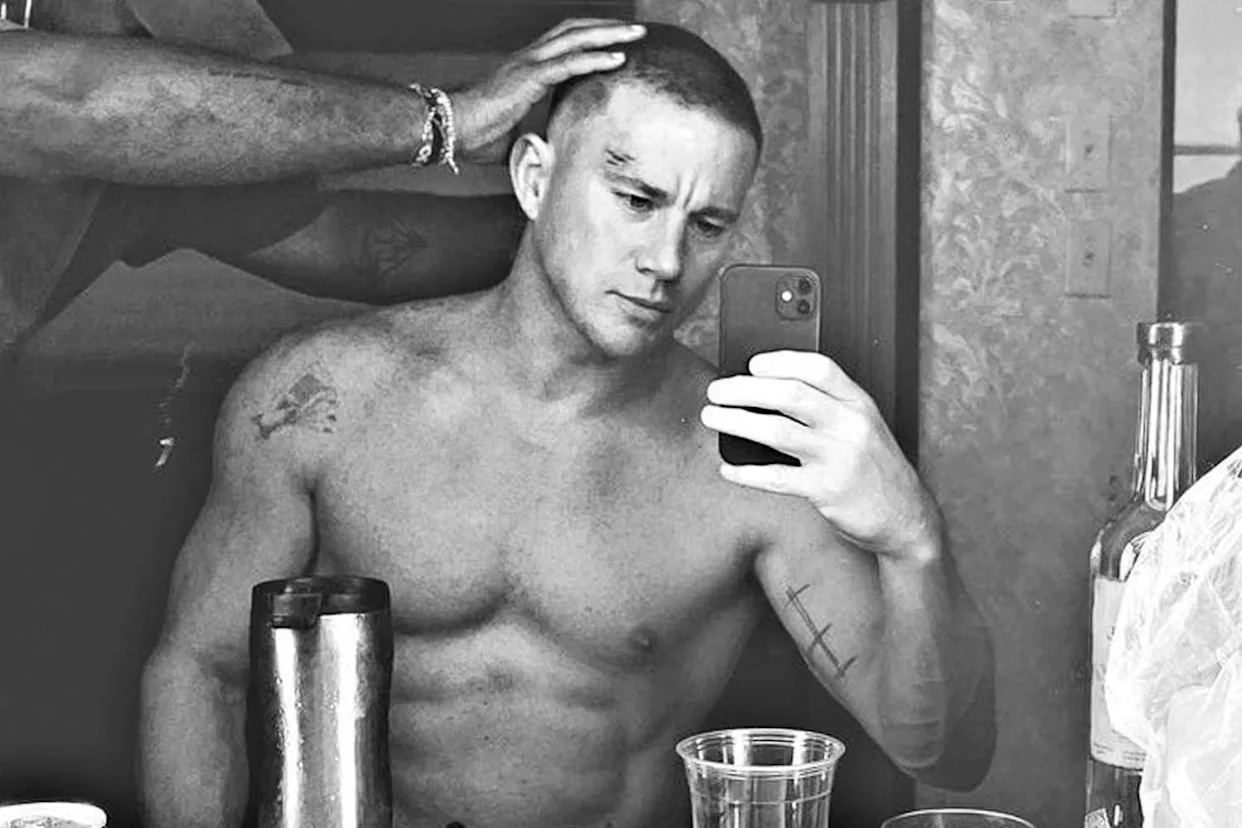
More recent coverage has pointed to tattoos on Channing’s lower leg, including a compact mark reported as L333 beneath the back of his knee. Trousers hide the placement, and a full-body photo can miss it. The reported leg work also shows that the collection continued after the older chest and arm pieces.
There have been reports of Channing getting newer tattoos with friends from his fitness circle. That story differs from the Bali phrase: it appears to be about a shared moment or friendship, rather than a public relationship inscription. Sources have not explained every new mark in the same detail, so the wording should stay measured.
The leg gives him space away from his already busy shoulder and chest. It also keeps a tattoo private when he is dressed for ordinary public appearances: shorts or athletic clothes may show it, while trousers or a suit cover the area.
This calf photo is evidence of newer body art, not a complete current inventory. Tattoo images may come from film preparation, fitness shoots or social posts, and temporary makeup can be used for roles. Real ink and production makeup can appear in the same set of pictures, so the source and date should stay attached to the claim.
That changing timeline is what makes Channing Tatum’s tattoos more than a quick list. The older pieces feel different from the newer additions: broad dark arm work, a readable rib phrase, a small cross that is easy to miss and leg marks that extend the collection more quietly.
The featured portrait is separate from the tattoo images. It gives readers a clear view of Channing’s face, while the four article images show the shoulder, ribs, inner arm and lower leg. A headshot is not tattoo evidence, and a close-up of ink should not be the page’s only portrait.
Overall, Channing’s tattoos balance bold shapes and private words. The tribal pieces create the strongest visual identity; Side by Side carries the clearest personal story. The cross, heart and linework fill in the picture, while newer leg ink shows the map is still changing. A careful guide keeps the entries separate, dates relationship-linked designs where useful, and lets photos show what he has not explained.
5 thoughts on “Channing Tatum’s Tattoos: Tribal Ink, Family Symbols and the Side by Side Script”