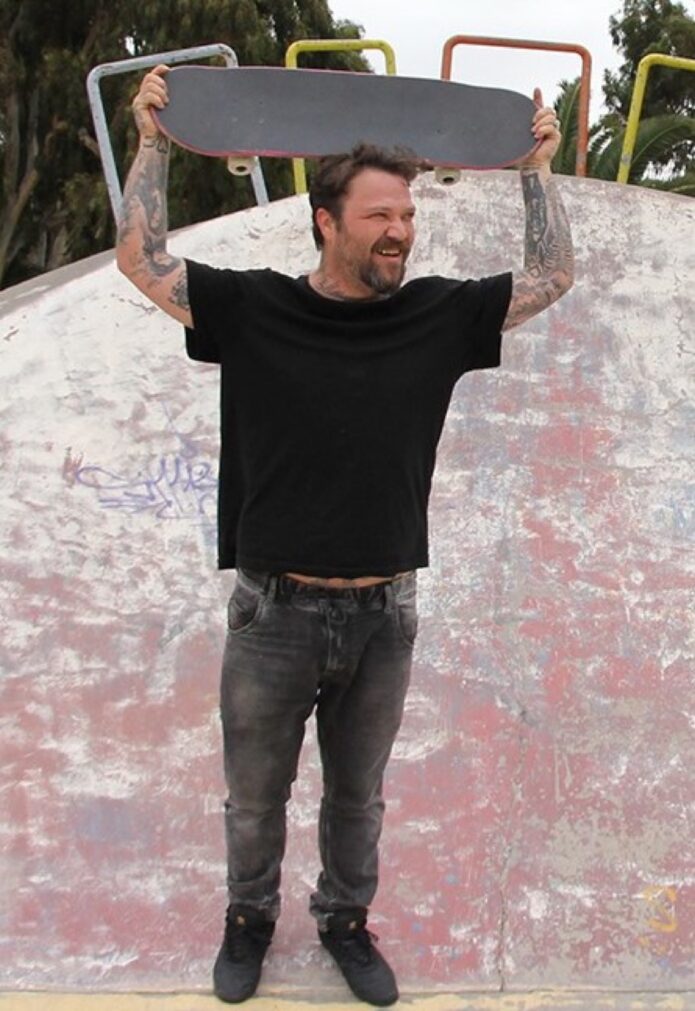
Bam Margera has a much larger tattoo collection than the short lists usually show. Alongside bold symbols and lettering, there are portraits, skate references and hand tattoos that come into view when he raises his sleeves or turns toward the camera. Added over different periods of his life, the pieces feel more like a scrapbook than a planned sleeve.
Tattoo inventories and close-up photos identify Heartagram, Book Worm, Anathema, Sigillum Diaboli and DILLIGAF. Other pieces are easier to recognize than to explain: photographs show portraits, a razorblade or ornamental linework, but say little about what Margera thought of them.
Heartagrams, the first heart and Margera’s HIM connection
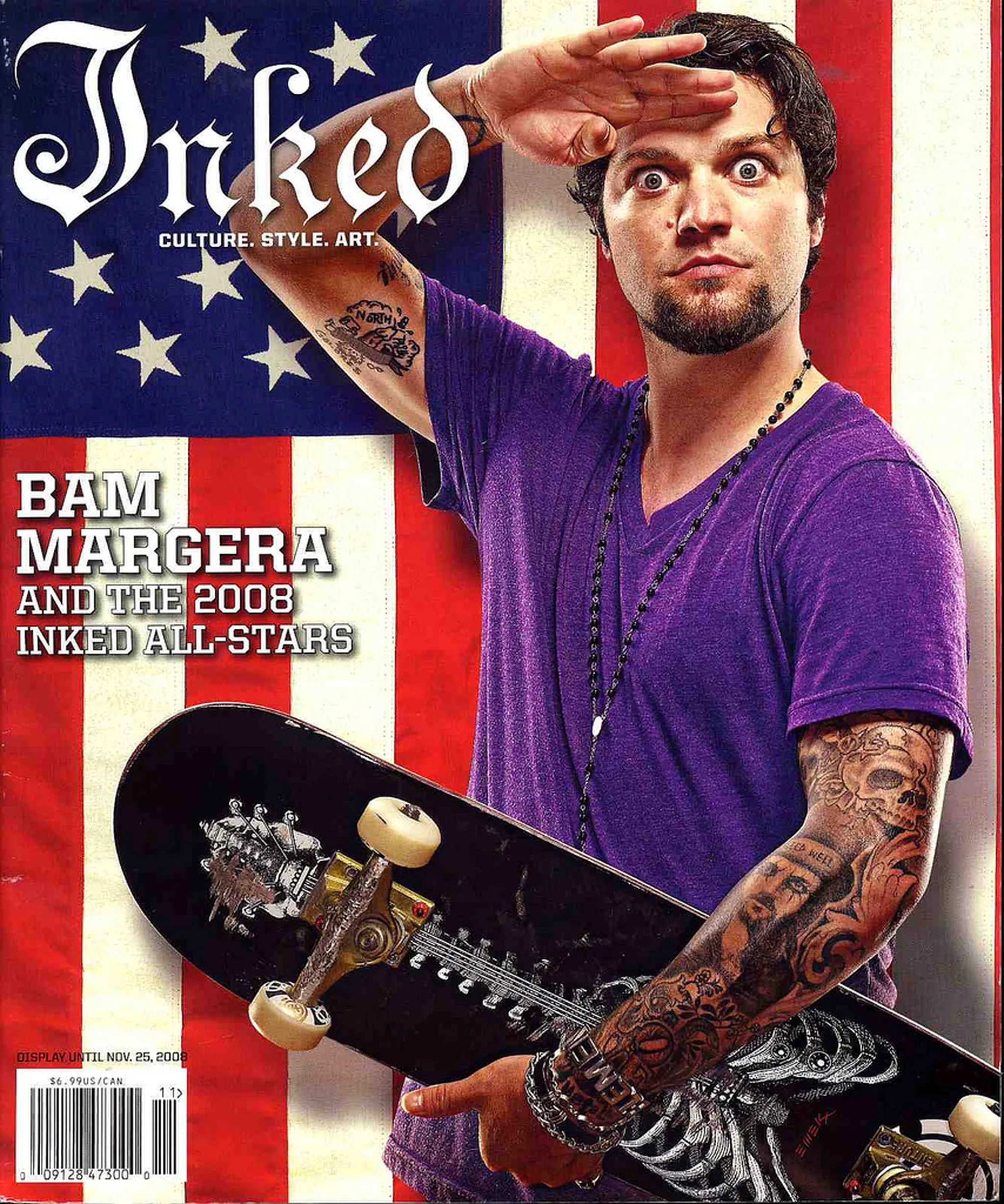
The Heartagram combines a heart with an inverted pentagram. It is HIM’s symbol, and Margera’s friendship with frontman Ville Valo gives it a personal connection. HIM’s imagery also ran through his skate videos, television appearances and music projects.
Tattoo inventories list a small heart as Margera’s first tattoo, followed by a Heartagram. The design later appeared on his wrist and ribs, with a larger version reported low on his abdomen among ornamental work.
In press photos, the wrist design is easy to miss and the ribs are usually covered. When it shows, the heart sits above the symbol’s two sharp points. The placements vary, but the connection stays the same: HIM and Margera’s friendship with Valo.
The Heartagram has an instantly recognizable shape, and accounts consistently connect it to HIM.
“Book Worm” covers both hands
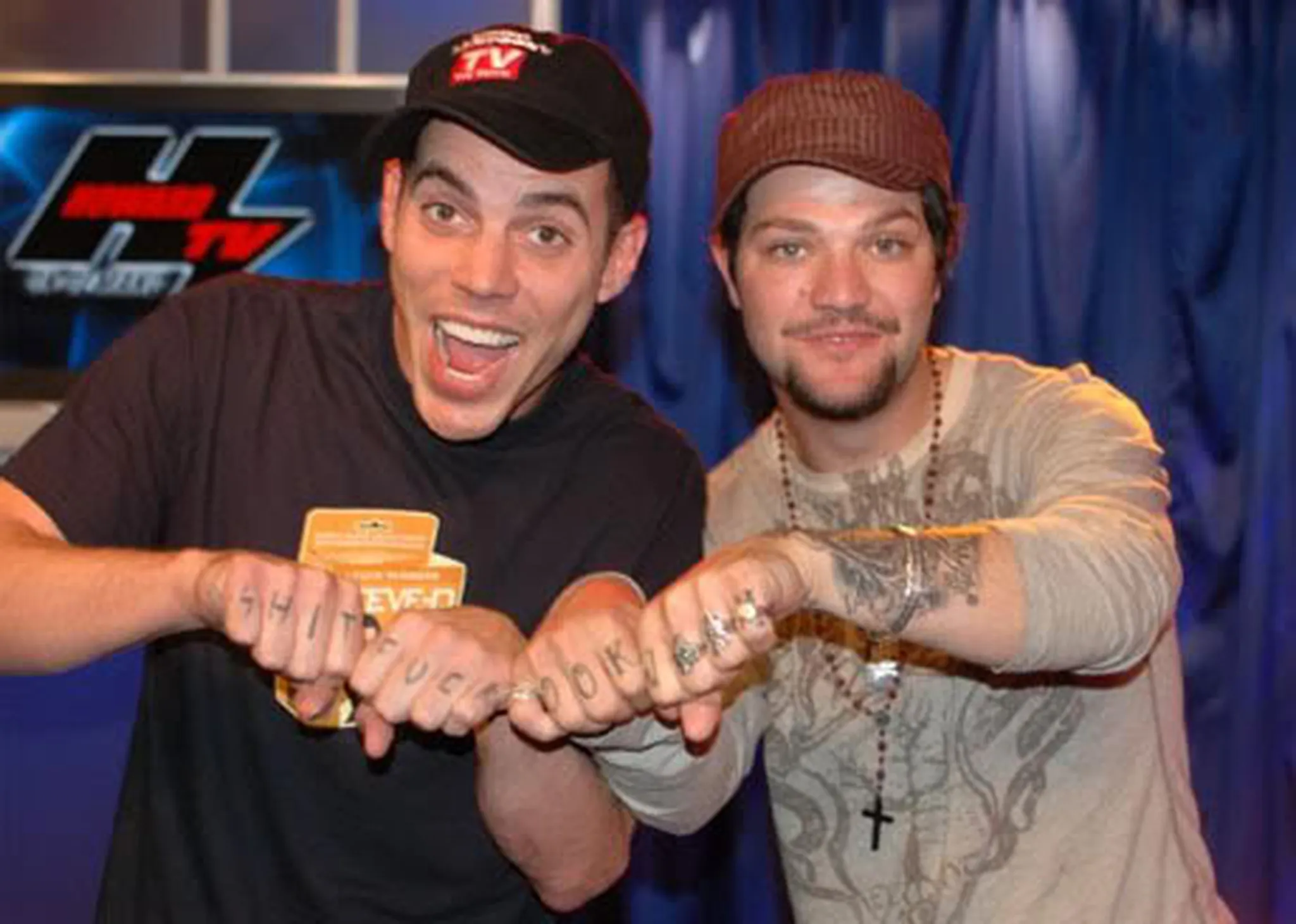
Book Worm runs across Margera’s fingers: “BOOK” on one hand, “WORM” on the other. The words read as one tattoo when he puts his hands side by side; apart, the letters can look like separate knuckle designs.
Small hearts sit inside the O’s, giving the lettering a playful touch that echoes the heart imagery elsewhere in his collection. The phrase sounds like a joke, though no source ties it to a particular book or person.
Like other finger tattoos, the lines can soften with time, and bright light can make them look heavier in one photograph than another.
A close-up makes the layout clear: the hearts inside the O’s are visible, and the two words line up when Margera brings his hands together.
Portraits, blades and skate references fill the arm tattoos
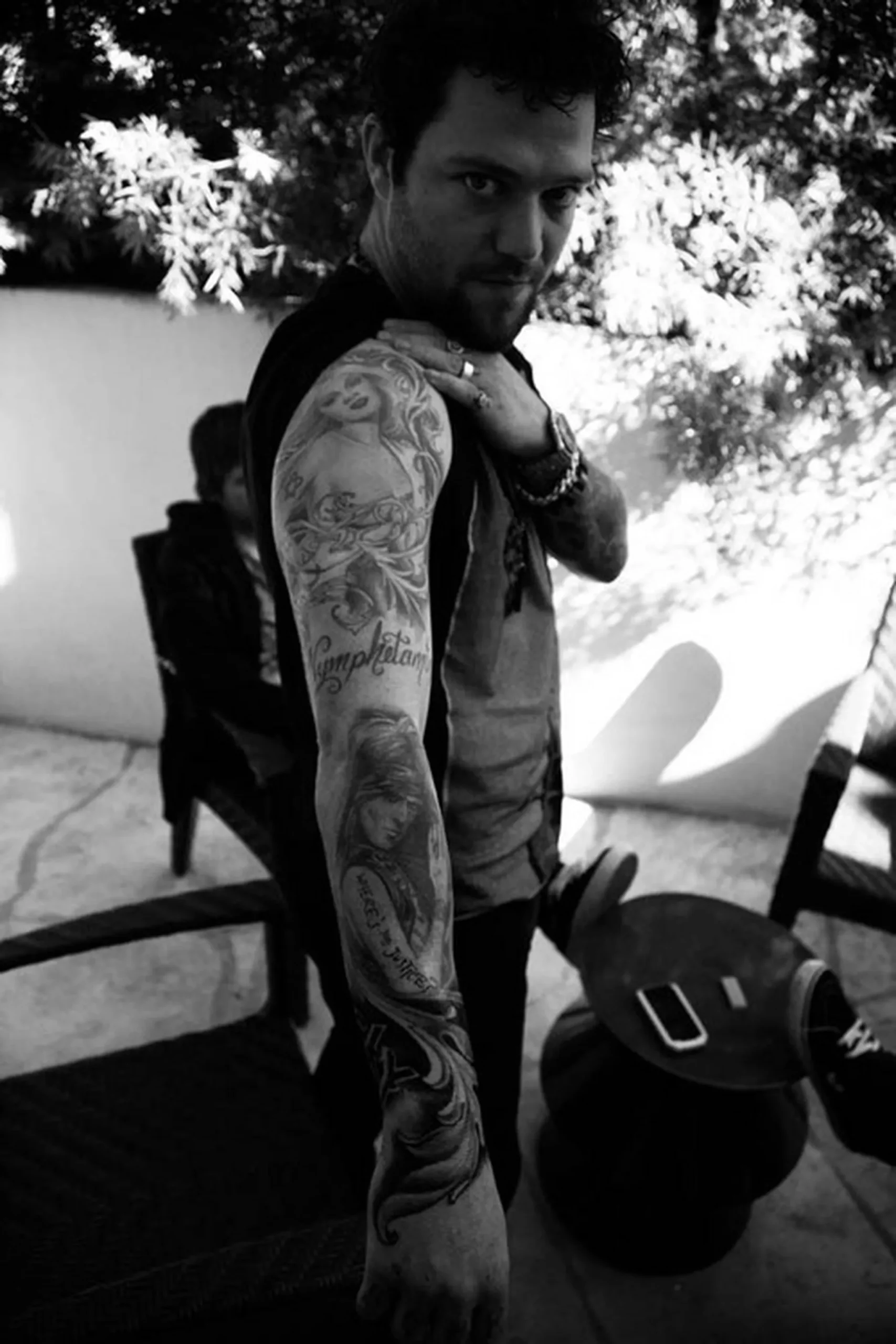
Margera’s arms carry the densest cluster of tattoos. The sleeve layers portraits, scrollwork, traditional shapes and lettering over older pieces. Some of the work, including a large right-arm portrait, is credited to Kat Von D from his Miami Ink years.
A razorblade tattoo on the left arm turns up in older inventories and stands out against the larger portraits nearby. Its sharp shape breaks up the portraits and scrollwork around it in photographs of the sleeve.
Older photographs also show arm portraits, traditional shapes, a skull and other dark motifs. Several are easy to pick out, though the designs do not all have reliable names.
DILLIGAF appears on Margera’s wrist and stands for “Do I Look Like I Give A Fuck.” The precise date is unclear. Its blunt lettering sits apart from the darker portraits higher on the arm.
His sleeve took shape over multiple sessions with different artists. Dated photos show the portraits, lettering, blade and filler accumulating over time; an undated shot captures only one stage.
Anathema and the smaller tattoos around his face
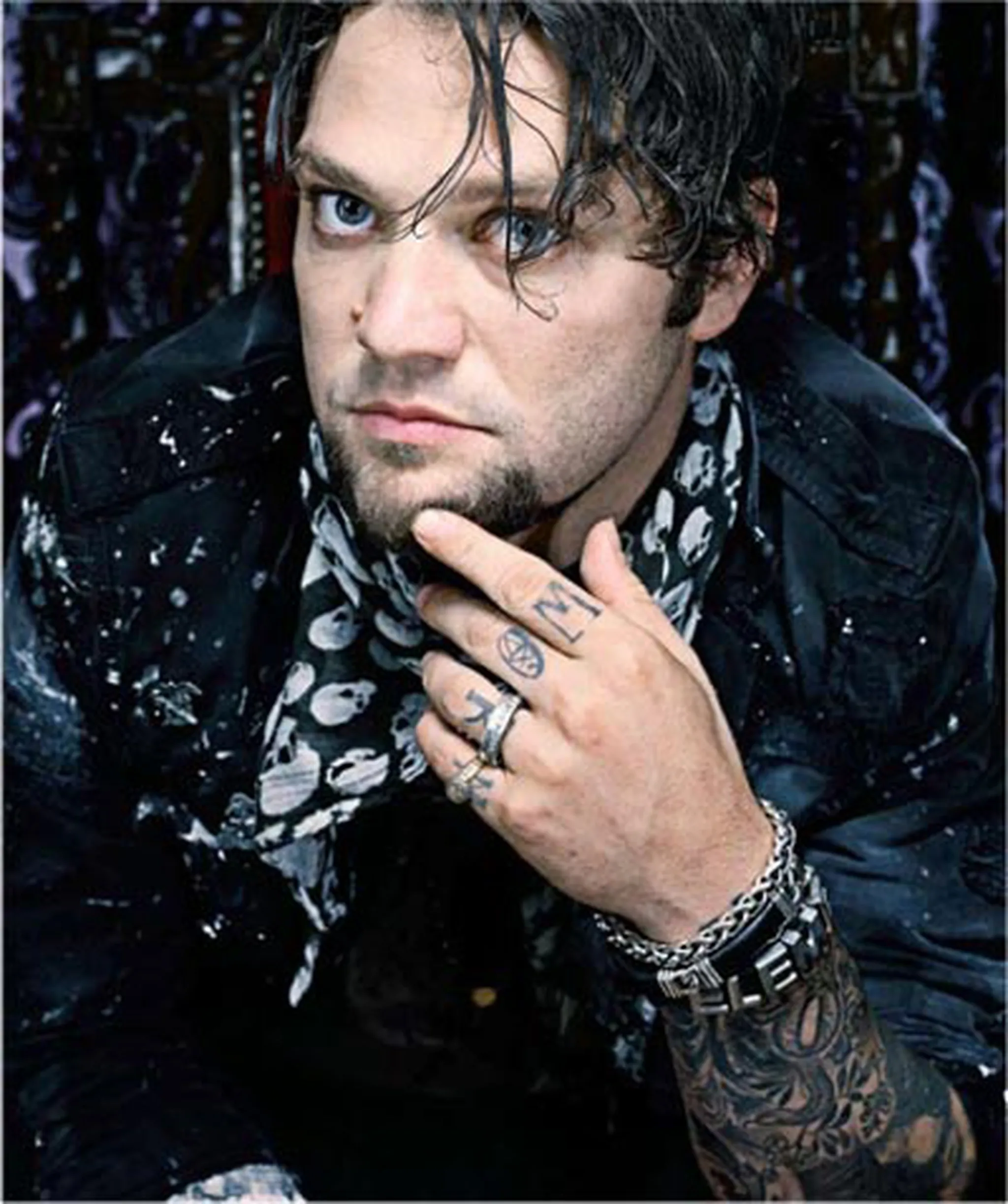
Anathema runs across the front of Margera’s neck, where it is easy to see in interviews and skate footage. The dark lettering has a different feel from the playful Book Worm design.
“Anathema” has a dictionary meaning, but the word alone does not explain why Margera chose it. Tattoo references identify the lettering and its placement, not his reason for getting it.
The small Arabic script above Margera’s right eyebrow is reported to read Phoenix. Because face tattoos can be hard to read in photos, this small piece is easy to miss. It belongs to a later period and is separate from the neck lettering.
Hand photos show more small marks around the fingers and knuckles. Some letters are clear; others are too blurred to identify.
Torso tattoos fill the spaces between larger designs
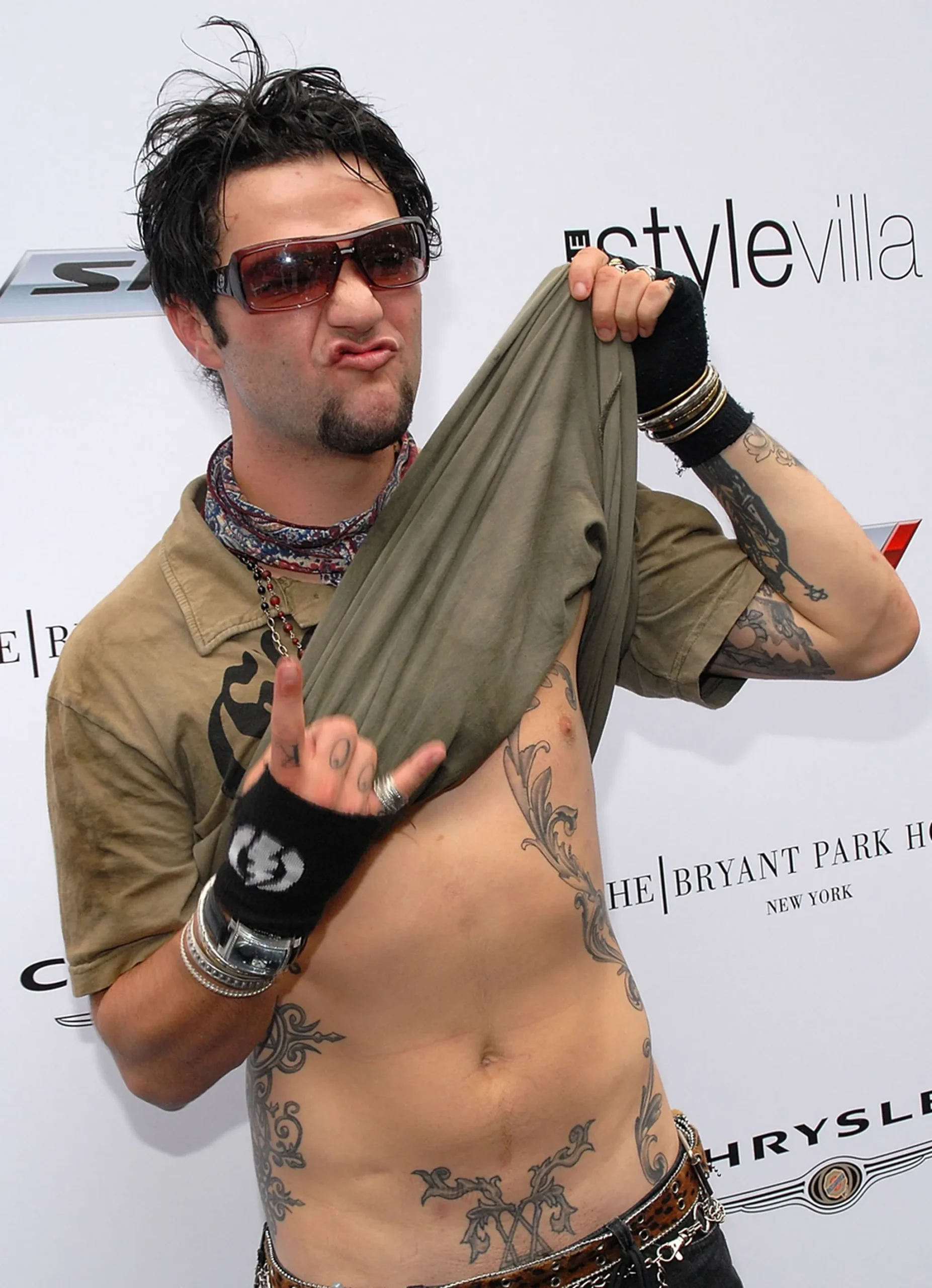
The torso holds the tattoos a T-shirt usually hides. Inventories mention a chest flourish, Heartagrams on the ribs and decorative lines down Margera’s side. Curled lines and dark outlines link the pieces without turning them into one design.
One rib design also appeared on Element skate decks and Filthy Note clothing, tying it to Margera’s skate and production work.
Catalogue descriptions mention a “cosmic pope” or a HIM-related symbol among the chest and torso tattoos. The image is unusual, and the catalogues describe its appearance more clearly than its personal meaning.
Sigillum Diaboli is linked to HIM imagery and Margera’s wedding-era tattoos. Some reports describe it as a replacement for a wedding ring, which places it in that period of his life.
A full-size photograph gives a clearer view of how the rib work sits around the chest and side; in small thumbnails, the details blur together.
Britney Spears and other later additions
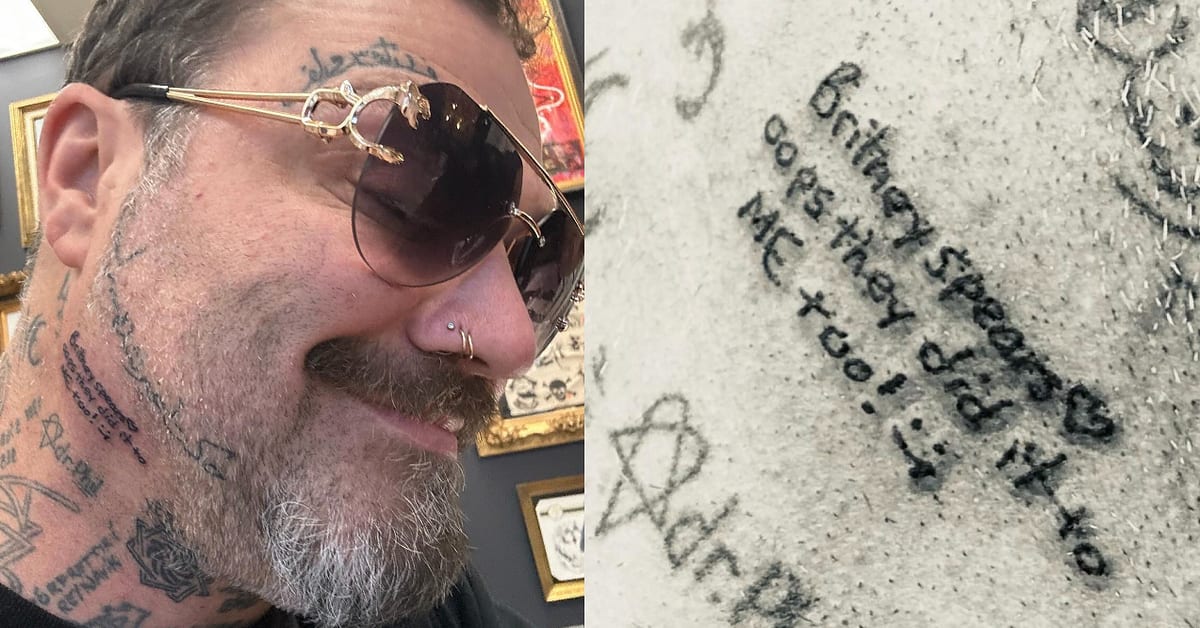
A later neck tattoo references Britney Spears. It is a pop-culture tribute tied to the Oops!… I Did It Again era, apart from the older HIM and skate-era pieces.
The tribute is small and easy to miss in a full portrait; the close-up shows where it sits.
Older tattoo catalogues also list a Don Vito portrait on his leg, along with other portraits and symbols. The records help identify what a design resembles and where it sits, even when they do not explain why Margera chose it.
Family designs and marks visible in just one blurry photograph are harder to confirm. A catalogue entry is a useful lead, but it does not mean Margera has explained the design himself.
How the tattoos fit together
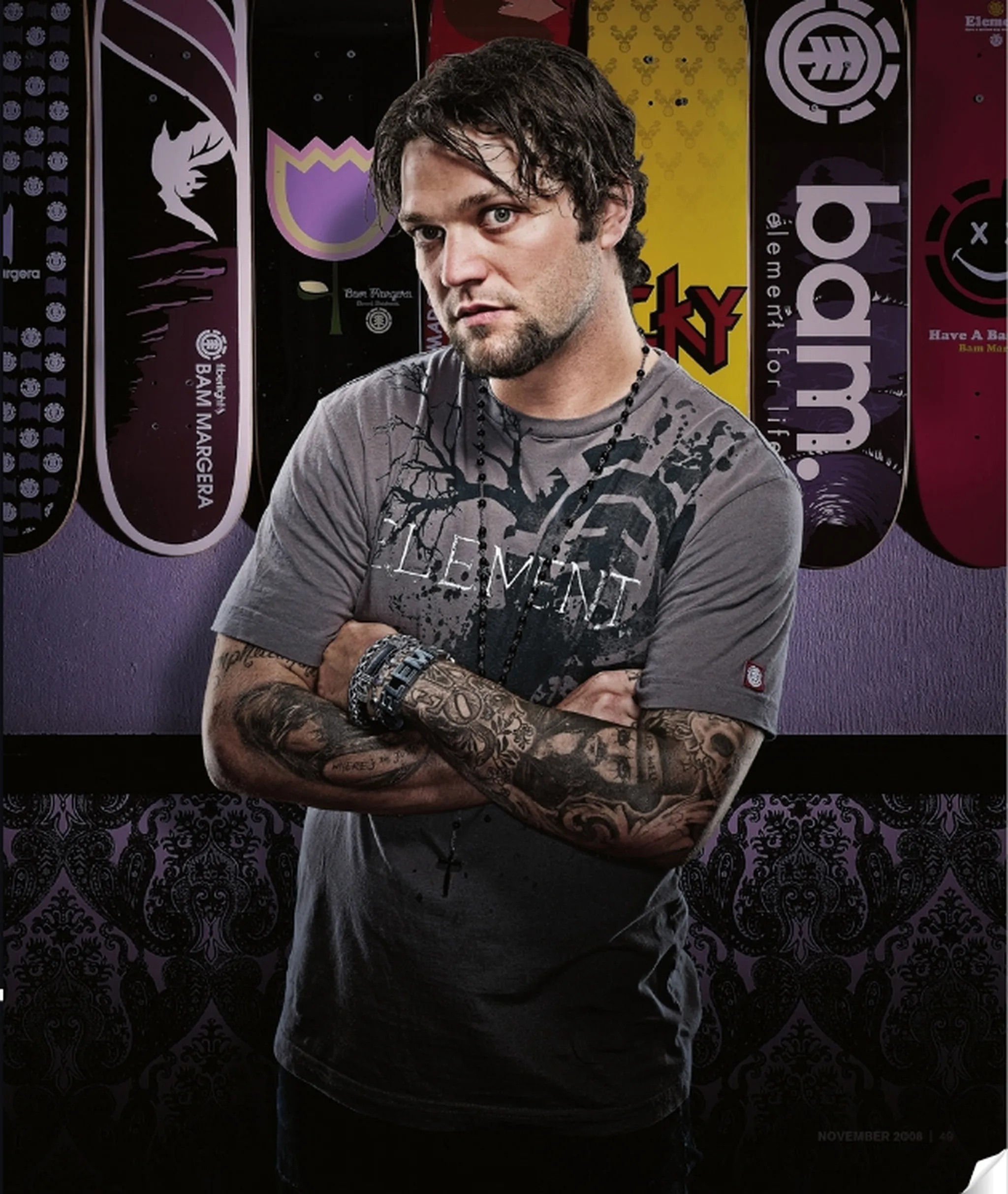
Seen over time, the tattoos show different chapters of Margera’s life. HIM and skate references sit alongside later lettering, portraits and decorative work, with no single style taking over. Even the lettering varies in tone: Book Worm is playful, while Anathema and DILLIGAF are more blunt.
Some designs have a clear name or connection; others are known mainly from photographs. The difference between what can be seen and what has been explained runs through the collection.
That patchwork is the clearest thread: the tattoos accumulated over the years, each in its own style, instead of following one plan.