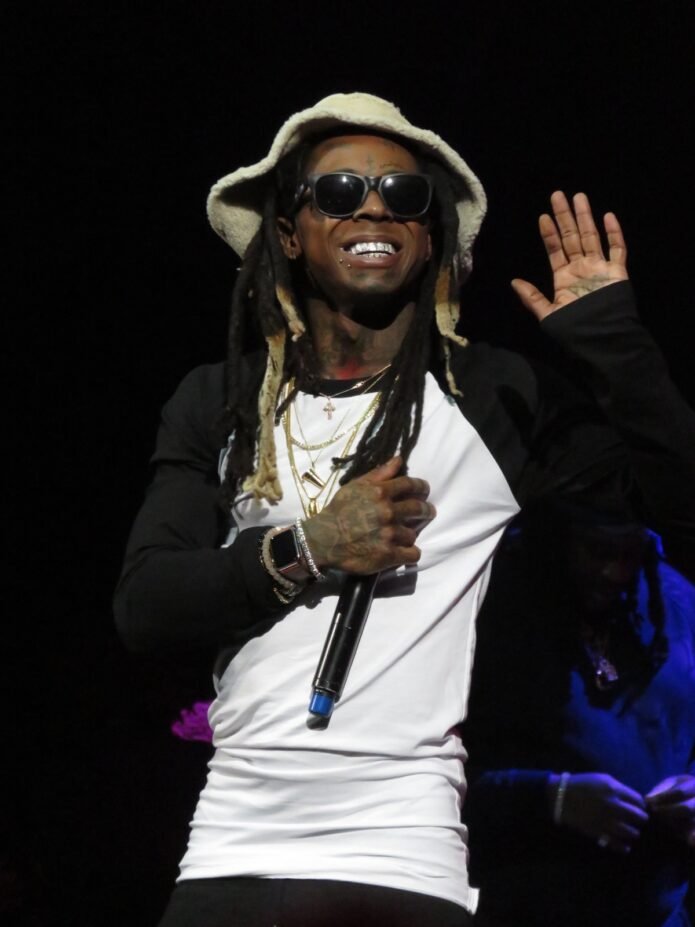
Most people recognize Lil Wayne by a few close-ups: “Fear God” across his eyelids, teardrops under his eyes and “I Am Music” above one eyebrow. His tattoos cover much more, from his face and neck to his chest, arms, hands, back and legs. In a 2017 interview, his former tattoo artist Dow Hokoana said she had done about 300 tattoos on him and helped complete a full-body suit.
Wayne added the work over many years, often in private sessions, and each photograph shows only part of it. Some tattoos have clear explanations; others are visible but remain personal. A neat numbered list would miss that history.
His face holds faith, music and unmistakable lettering
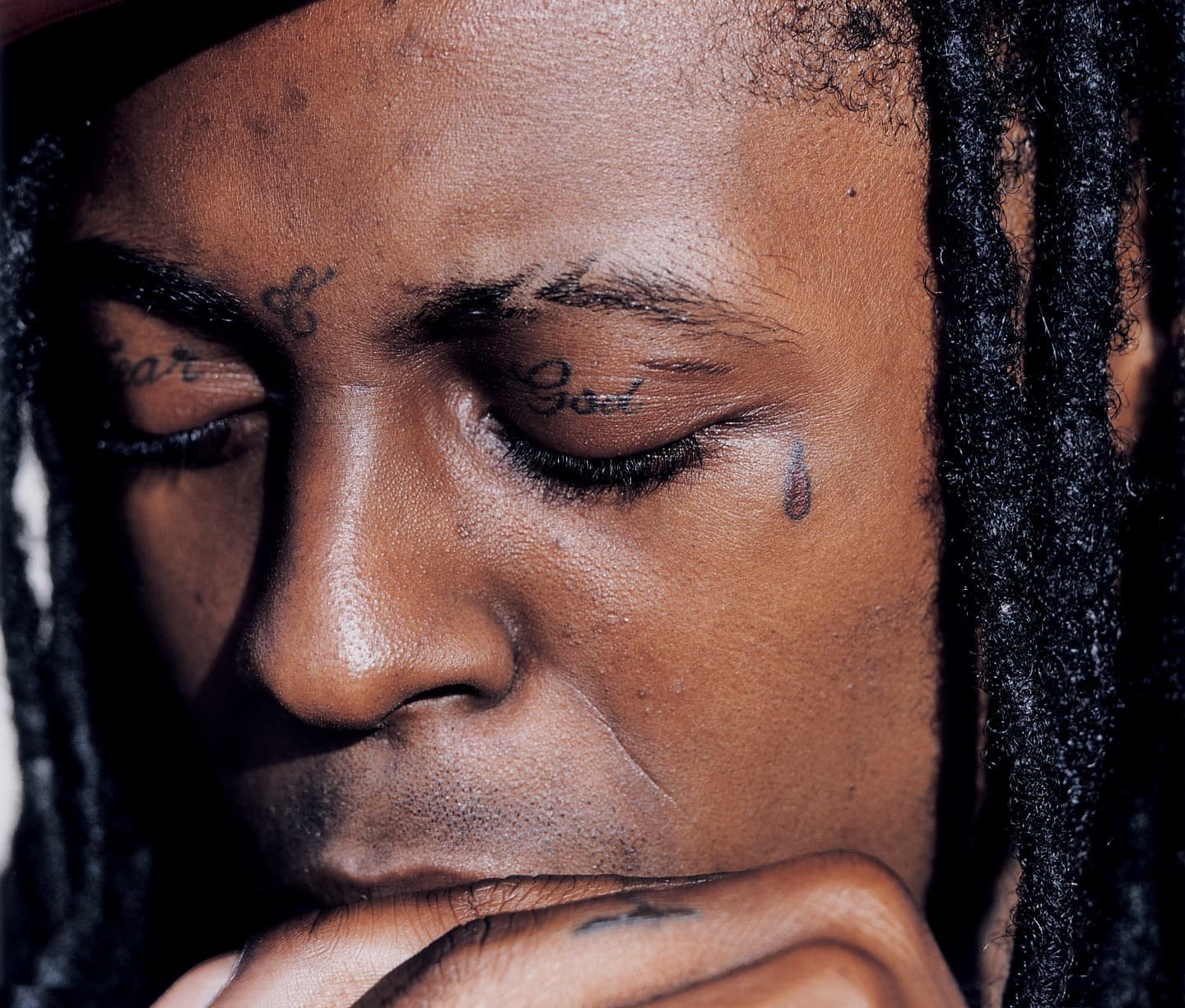
The clearest explanation is “Fear” on the right eyelid and “God” on the left. In a 2008 Guardian interview, Wayne was asked what he feared and answered, “Nothing. Fear, God… That’s it.” The phrase is direct; it needs no extra symbolic theory.
Above his eyebrow, “I Am Music” reads like a statement of identity. In that Guardian profile, Wayne called himself music. The words are part of his public image, not hidden beneath clothing.
Other face tattoos make the area more like a patchwork than a single design. BET’s gallery shows “Misunderstood” running down his face, with stars nearby, a fleur-de-lis on his cheek as a New Orleans reference, “East Side” under his jaw and a C between his eyes. Wayne hasn’t given one explanation for every mark; gallery captions identify what’s visible but don’t settle its private meaning.
The teardrops are recognizable but easy to overread. Some tattoo lists assign them a specific story, but a shape’s conventional meaning isn’t evidence about Wayne. The same applies to the cracks, cross and other marks around his forehead and cheeks. A photo shows where the ink sits, not why he chose it.
In December 2014, Wayne added an Eye of Providence to his chin and Arabic writing above an eyebrow. Early reports translated it as “Momma’s boy.” The FADER later updated its story after Arabic speakers questioned that reading. It’s safer to call it “Arabic lettering,” than repeat the translation as fact. The writing is visible; the first translation was disputed.
Chest and stomach lettering trace the Cash Money years
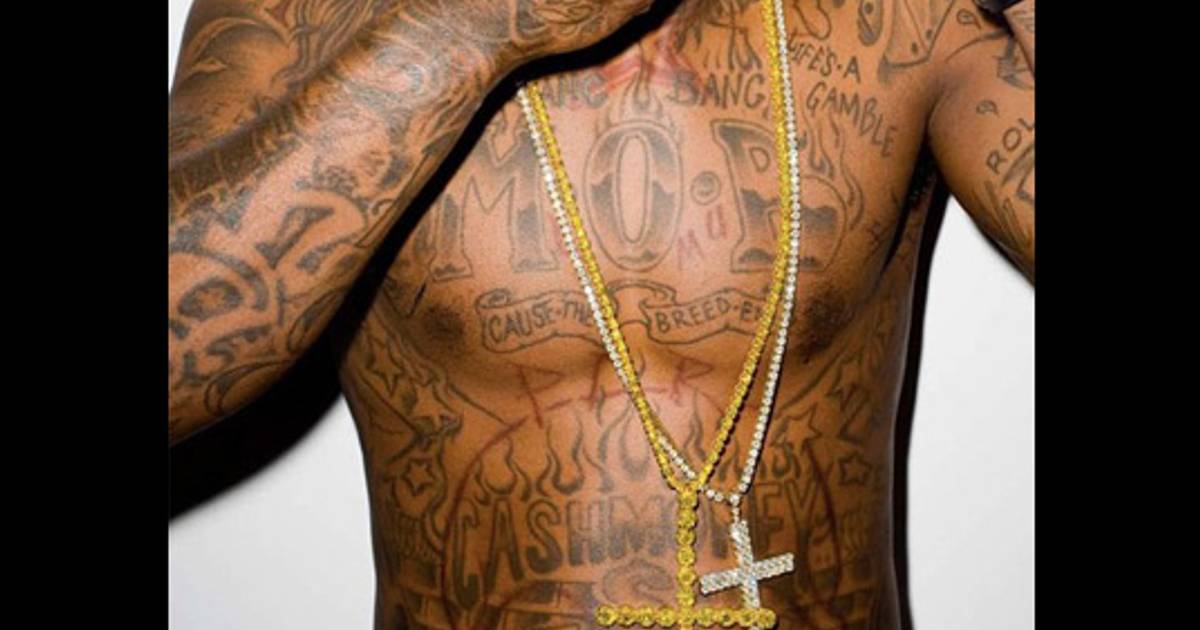
Wayne’s torso carries some of the collection’s largest pieces. BET’s gallery identifies “M.O.B.,” “Cash Money,” “Bang Bang” and “Life’s a Gamble” across his chest and stomach. From a distance, the words form a dense field; closer photos make several phrases readable in the same shot.
“M.O.B.” is often expanded by other tattoo guides, but BET lists the initials without a direct explanation from Wayne. Keep them as printed rather than presenting an unverified expansion as his definition. “Cash Money,” is straightforward label text from the career that made him known.
On his abdomen, 17 refers to New Orleans’ 17th Ward, according to BET. Other catalogues list “Apple Eagle,”, “BM JR,”, “R.I.P. TB,”, red skulls and more lettering low on his stomach. The photos don’t verify every item equally clearly, so keep those entries attributed rather than presenting them as equally certain.
Biographical accounts say Wayne got his father’s name tattooed at 14, then later added “Cash Money” across his stomach. The public reports don’t give a session-by-session record. Still, the names and affiliations link family, New Orleans and the label that launched his career.
His arms and hands carry names, dates and hometown details
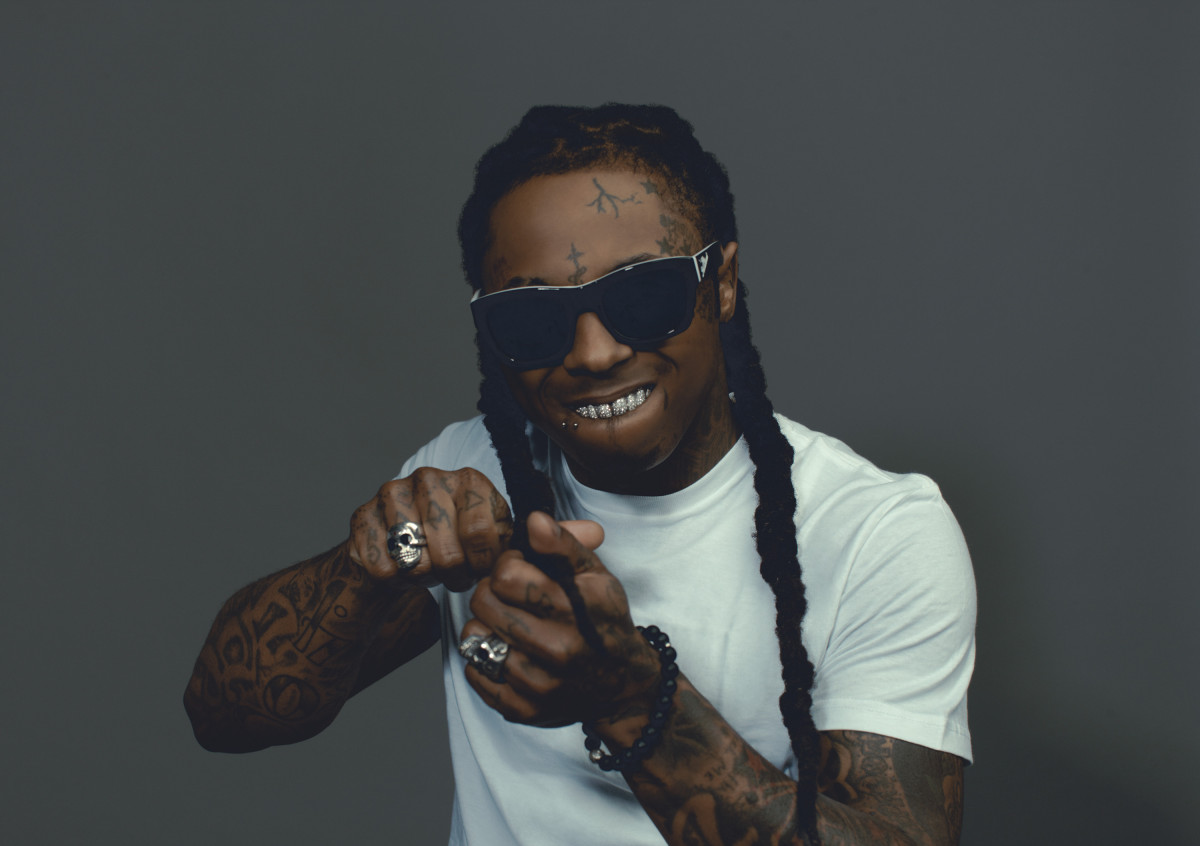
His arms mix names and dates with references to New Orleans and music. The gallery shows “Baby” over a bird on his upper right arm, described as a tribute to Bryan “Birdman” Williams. BET also identifies “9-27-82,” his birth date, on a forearm, plus “Thugged Out” with an alien and a Rolls-Royce logo on the left arm.
Other entries include “Slim,”, “Nae” on each forearm, “504,”, and “In Memory of Rabbit: It’s Up to Me.” Some tattoo catalogues link the last phrase to his stepfather, Reginald “Rabbit” McDonald. Blanket labels such as “gang tattoos” miss the range: names, family tributes, hometown markers, jokes and brand references share the collection.
BET captioned several close-ups of Wayne’s hands. One is “A Gun” on his right palm; another is “The World” on his left. “Concrete Street” runs across both hands, and a small smiley face sits inside his lip. Other catalogues list “HOT” and “BOY” across the hands, “SQAD” and “SHIT” on his fingers, “TRIGGER” on an index finger, plus “Shake Junt” and “Skateboard” designs. These small marks are hard to make out in stage photos; close-ups work better.
Where a tattoo sits changes when it can be seen. Forearm lettering is usually visible; a palm appears only when Wayne turns his hand toward the camera. “The World” and “A Gun” read like short visual jokes, but they don’t explain his beliefs or life. Photos confirm the words and placement; his reasons are another question.
The full-body project includes work most photos never show
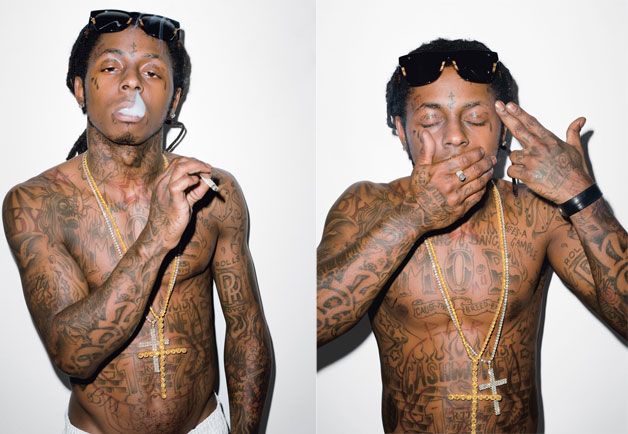
Wayne’s former tattoo artist, Dow Hokoana, told The FADER she completed about 300 tattoos on him over seven years. Her aim was to build a full-body suit. They often started around midnight and worked until morning; on tour, she sometimes met him at a hotel after a show. This was a long-running project, not just a face-tattoo phase or a few memorable chest pieces.
Hokoana named designs that rarely make short lists. One cheek tattoo is a cloud and lightning bolt, chosen after Wayne spotted a bolt on her daughter’s backpack. She said he sometimes wanted a design simply because he liked it, without a grand explanation. That’s a useful counterweight to the habit of assigning life-changing meaning to every mark.
She also described ten Vegas-style showgirls wrapping around his hip, an Andy Warhol Campbell’s soup can, and a colorful checkerboard across his backside. Hokoana said the full-body project was completed, but kept one intimate design private, saying Wayne could discuss it himself if he chose. That boundary should stand.
Catalogues also list a prayer and map of Louisiana on his back, a skull and leg work, including a Jay-Z verse often identified as “Lucky Me.” The available portraits don’t show all these pieces clearly. Keep the descriptions attributed to those catalogues rather than calling them independently verified close-ups.
What the record can say without guessing
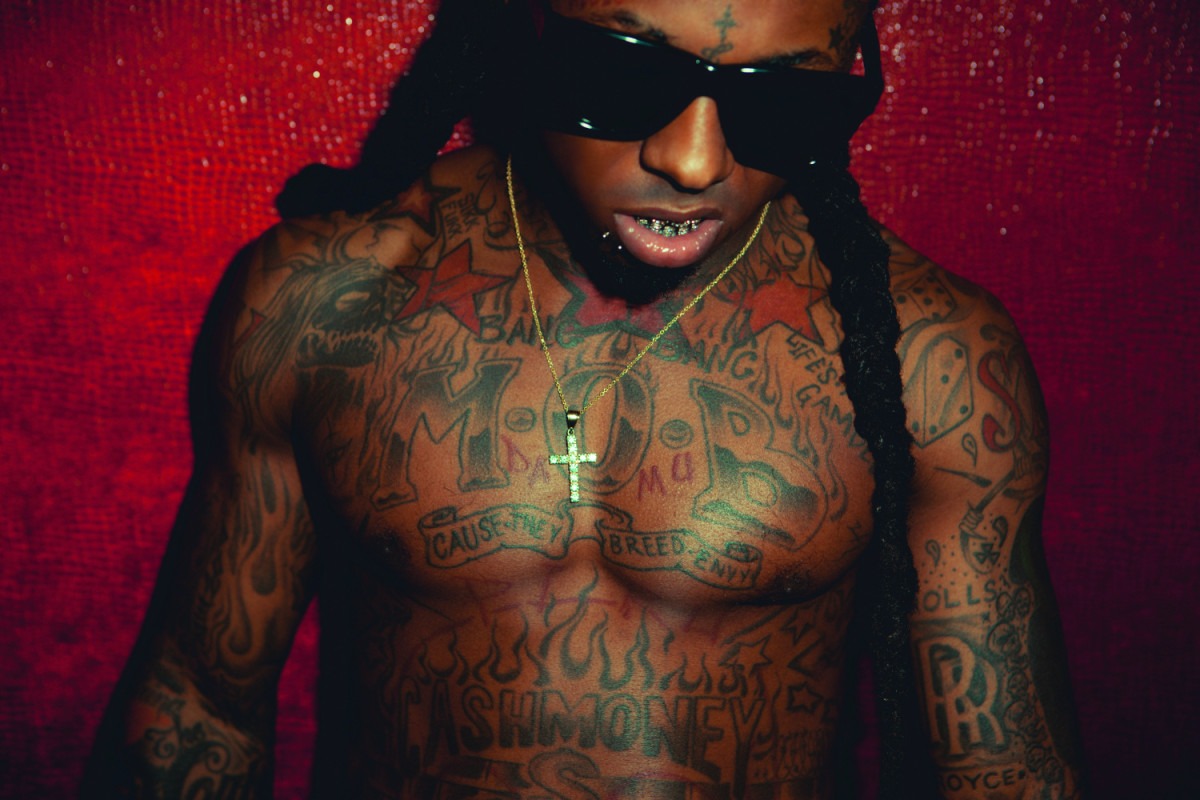
The clearest picture comes from three sources. Wayne’s own words explain “Fear God”. BET’s captions identify words and placements across his face, torso, arms and hands. Hokoana’s interview shows how extensive the body-suit project became and names pieces that rarely make short lists.
Those sources don’t give a current tattoo count or a dated record of every session. Wayne’s tattoos changed over time, and photos may show old, altered or newly added work. No single image captures the whole collection.
His tattoos grew alongside his public identity. The face carries words about music and faith; the chest and stomach reference Cash Money and New Orleans; the hands and arms add names, dates and jokes; the body suit includes work cameras rarely capture. That’s more specific than treating every tattoo as a mystery, and it stays close to what the photos and interviews show.
3 thoughts on “Lil Wayne’s Tattoos Reach From His Eyelids to a Full-Body Suit”