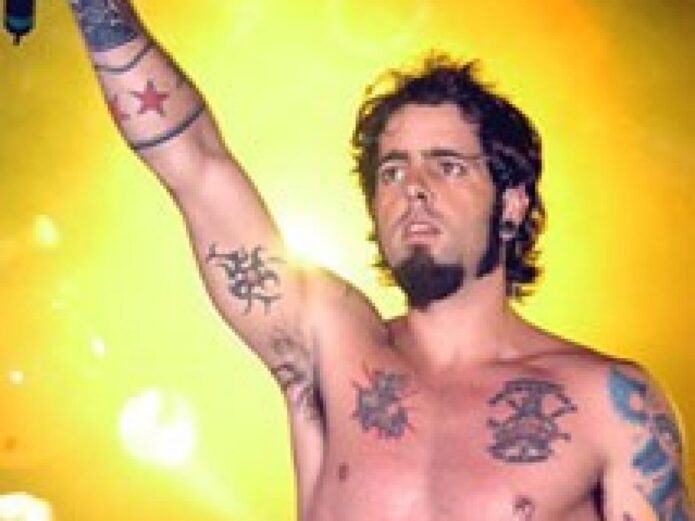
Tico Santa Cruz doesn’t treat tattoos as decoration. The Detonautas singer has described his ink as a record of what he has lived through, believed in and fought for. Reports say tattoos cover around 80 to 90 percent of his body, including his face. The designs range from large chest lettering to tiny marks on his hands.
Some pieces are well documented; others are difficult to make out in concert photos. The clearest include “Respect” across his chest, “Viva SUS” across his fingers, lettering on his face, and religious and personal symbols. Tico has called his tattoos “the scars I chose for my life.”
“Respect” is the tattoo people notice first
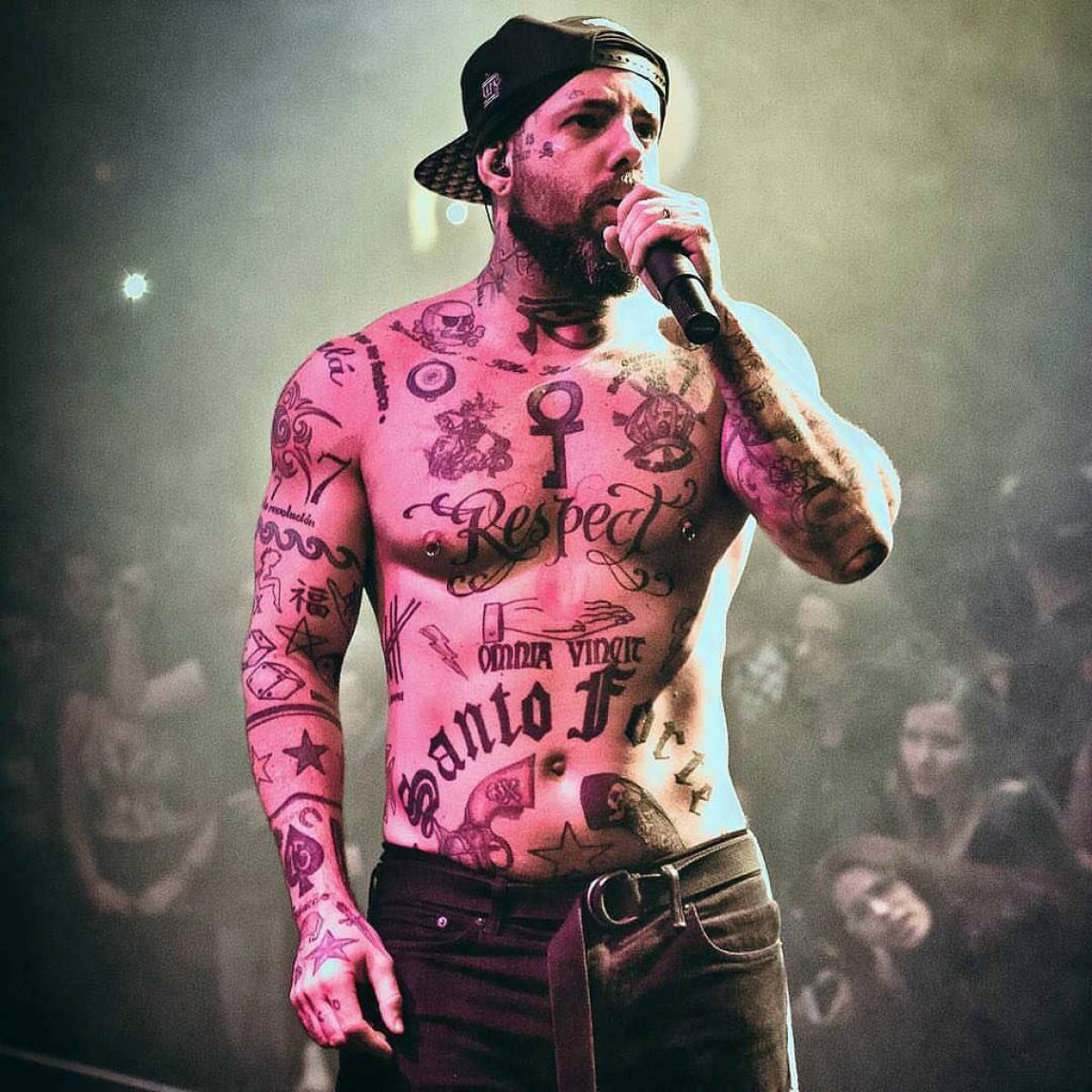
The large Respect tattoo across Tico’s chest is the easiest place to start. It’s dark and hard to miss when he performs shirtless. The lettering sits among symbols, script, small drawings and shaded work, almost like a headline across his torso.
The word also fits how Tico has talked about his collection. He has spoken about prejudice toward tattooed people, including being stopped at borders and asked if he belonged to a gang. “Respect” can be a personal value and a response to people who judge someone by appearance.
Smaller marks crowd around the word, so the chest looks more like a wall of notes than one finished picture. Tico has described his tattoos as chapters of his life; the collection has grown over many years rather than being planned all at once.
“Viva SUS” puts a public message on his hands
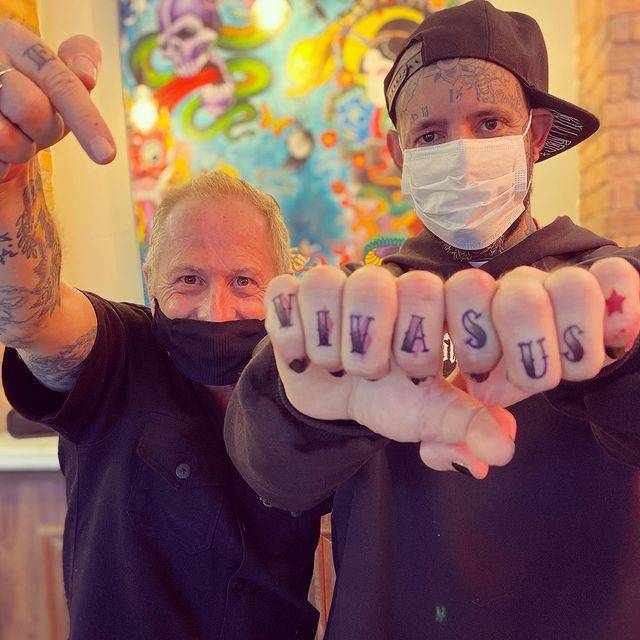
One clear statement tattoo is “Viva SUS” across Tico’s fingers. SUS is Brazil’s public health system. He has said the tattoo pays tribute to a service that saves lives despite limited resources. The message is written on his hands for everyone to see.
Knuckle tattoos are difficult to hide, so the placement feels direct. The words show when Tico reaches for a microphone, shakes hands or gestures on stage. He hasn’t tried to keep his tattoos private or separate them from the social ideas he discusses in interviews.
Like “Respect,” the phrase tells people what matters to him. “Respect” is broad; “Viva SUS” points to a specific institution and belief.
His face tattoos are tied to identity and change
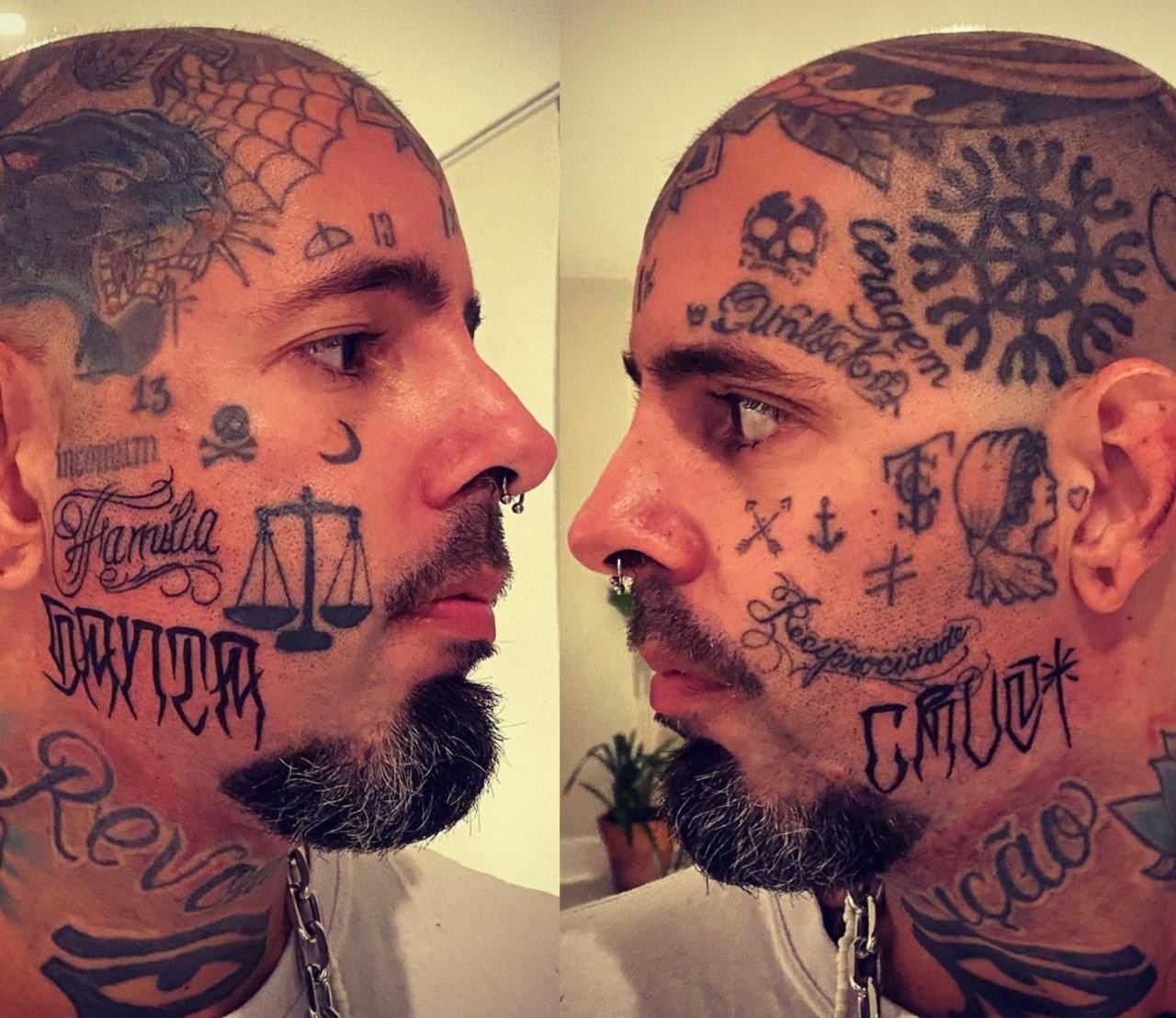
The face tattoos make the collection more personal. Photos show lettering and symbols across Tico’s cheeks, forehead, jaw and temples, including “Familia,” small crosses, scales, an anchor, stars and other marks. They’re close together, so a single photo rarely shows each one clearly. The larger themes include family, balance and faith.
Tico has said he began tattooing his face around 2010 and added more during a difficult period. In an interview, he connected the choice to depression during the pandemic and said changing his face became part of how he understood his identity. He didn’t describe it as a publicity stunt or an album costume.
The face tattoos are part of how he sees himself now. They’re hard to cover in daily life, so strangers, employers, security staff and fans can all have an opinion. Tico has acknowledged his privileges as a public figure while speaking about the stigma other tattooed people face.
“Santo Jorge” gives the torso a protective symbol
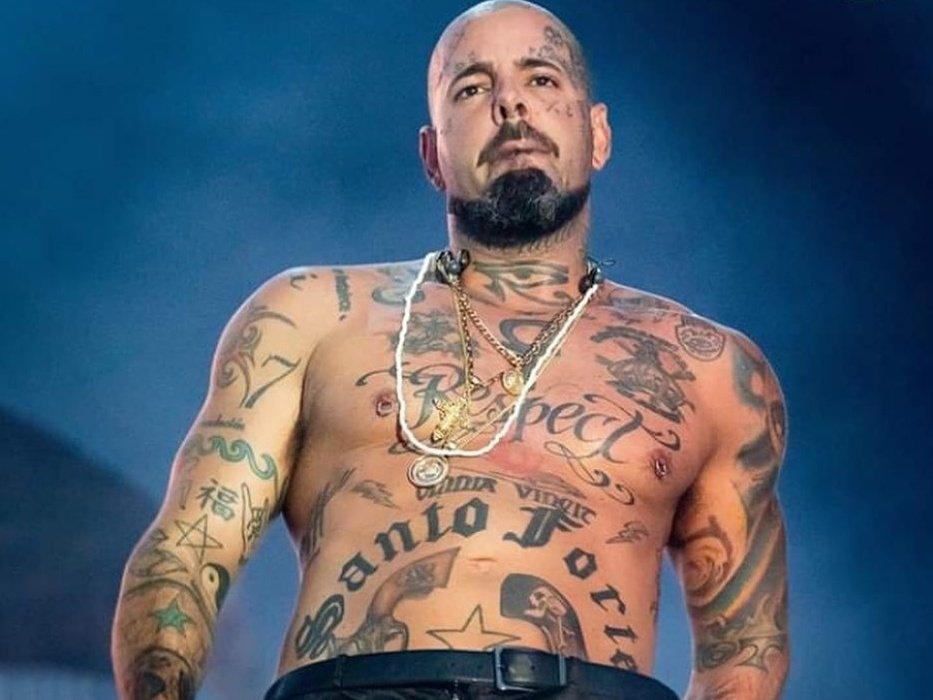
Another prominent piece is the large “Santo Jorge” lettering across Tico’s lower chest and stomach. Saint George is an important figure in Brazilian religious and cultural life, and the words sit among other spiritual imagery. They’re especially visible in stage photos.
The tattoos don’t all have one meaning. Religious words, social messages and smaller symbols overlap, but each can mean something different: protection, faith or simply an idea Tico wanted to keep.
“Respect” fills the upper chest, while “Santo Jorge” draws the eye down. Script and smaller symbols between them make the torso look layered, like a poster covered with notes.
“Santo Forte” and the smaller chest symbols
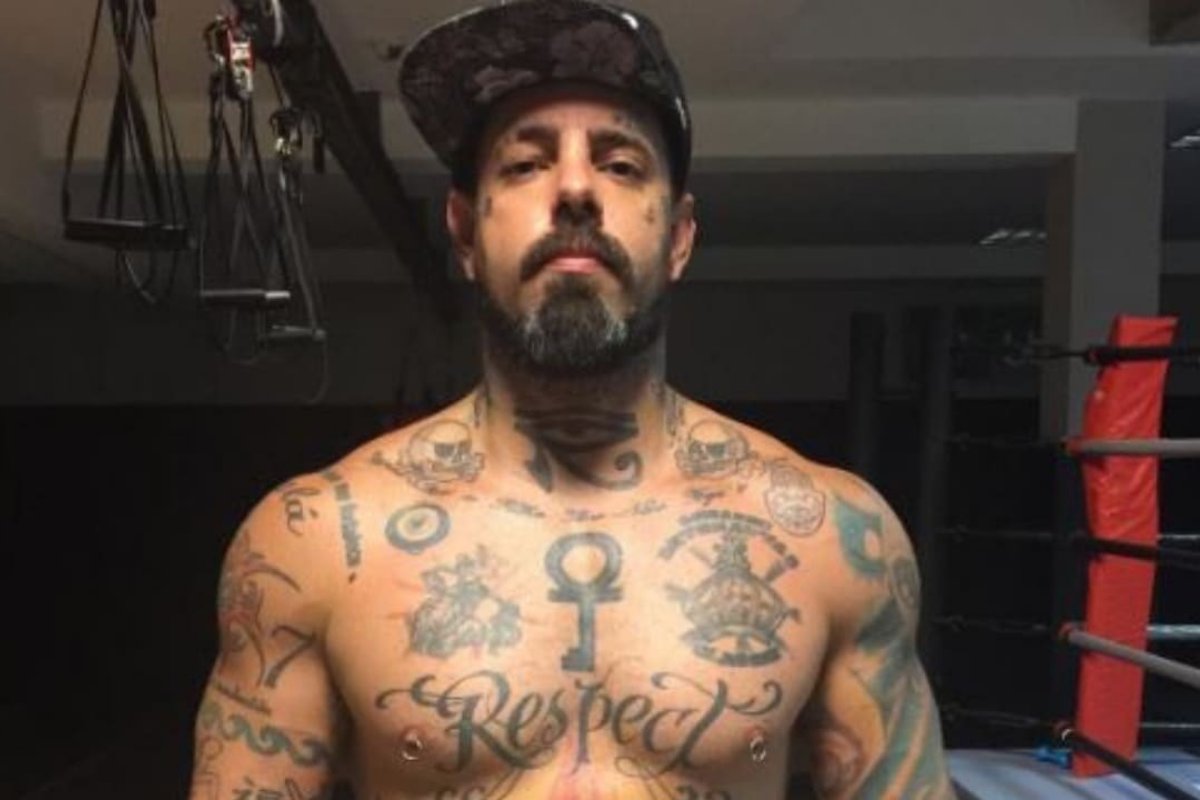
Photos also show “Santo Forte” across Tico’s chest and stomach, along with smaller designs that are hard to identify with certainty. The phrase can be loosely translated as “strong saint.” It fits beside the other spiritual tattoos. Religious lettering can sit next to a star, a number or a design he simply liked.
That variety is why the collection doesn’t fit one style. It includes bold script, old-school shading, blackwork, symbols and what look like personal sketches. Some areas are crowded; others leave space.
The choices seem to follow a personal logic rather than a decorative plan. The designs make more sense when you follow Tico’s life than when you try to put them in one visual category.
His arms are packed with smaller symbols and lettering
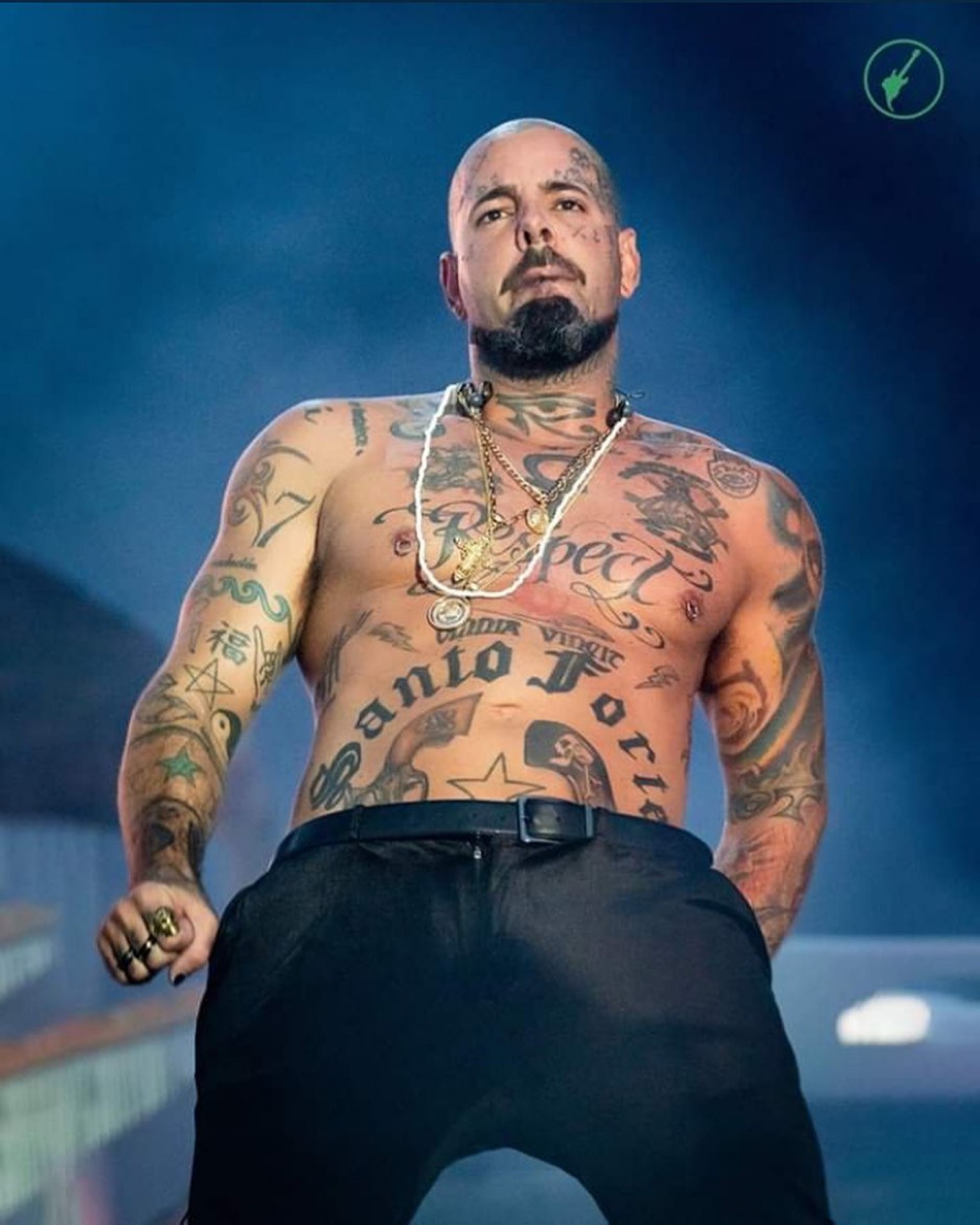
Tico’s arms carry stars, script, curved ornamental shapes, numbers and small illustrations. Stage photos show how much of the collection disappears beneath a shirt. Some designs stand on their own; others blend into the space around them.
He has said that some tattoos no longer mean what they once did and could eventually be covered. That’s a normal part of a long tattoo history, even if people often talk about celebrity ink as though both the design and its meaning stay fixed.
The arm work changes as he moves. Different pieces appear when he raises a hand or grips a microphone. You don’t get one perfect view of everything, which is closer to how a real tattoo collection looks.
The full torso shows how much is still undocumented
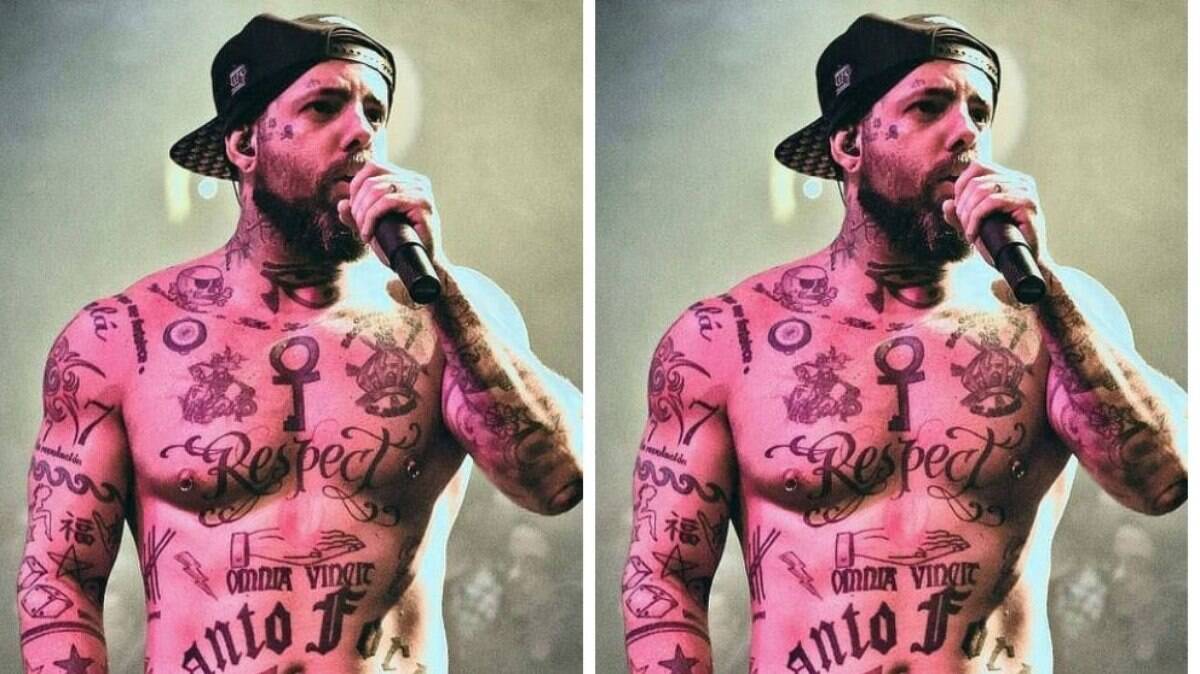
A wider photo shows the scale. Tico has said around 80 to 90 percent of his body is tattooed, and his chest, stomach, arms, neck, face and hands all carry ink. Some designs are readable; others appear only as part of the larger pattern.
A careful guide can discuss “Respect,” “Viva SUS,” “Santo Jorge,” “Santo Forte,” “Familia,” the face symbols and the themes Tico has explained. It can describe stars, lettering and religious imagery visible in photographs, but it shouldn’t invent a story for an unreadable number or sketch.
Tico’s own words give the collection a thread. He has called his tattoos chosen scars and chapters of his life, and connected them with identity, depression, politics, music and the experience of being judged. Not every tattoo needs a dramatic explanation; together, they keep track of change.
Why Tico’s tattoos feel more like a diary than a costume
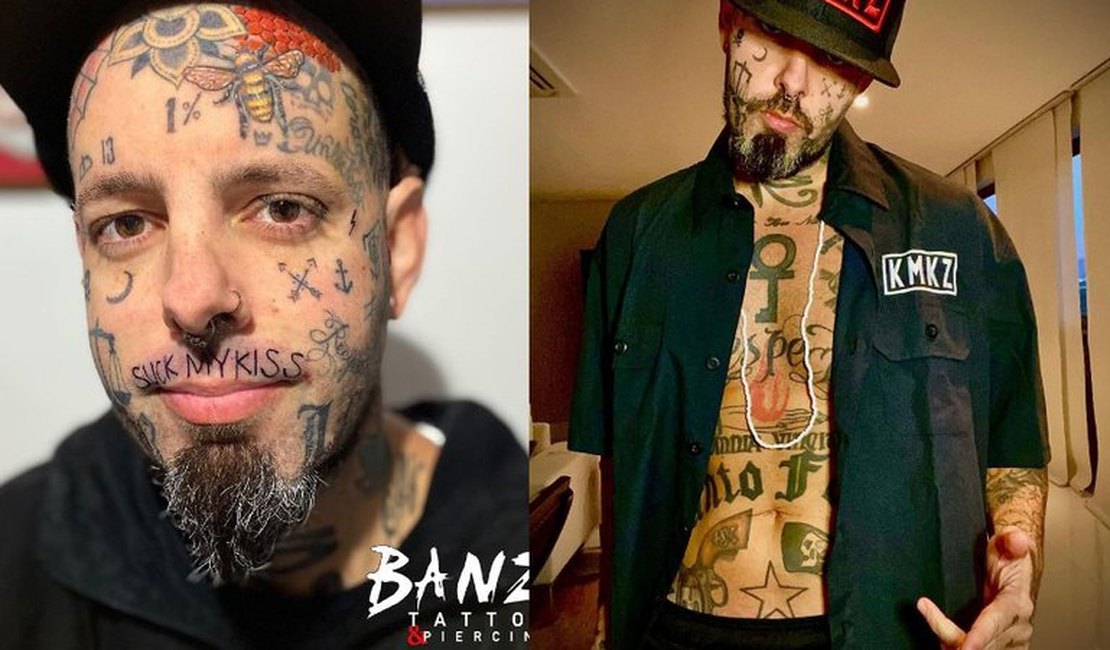
Tico’s collection mixes public statements with smaller, more personal marks. “Respect” speaks to anyone watching him perform. “Viva SUS” makes a social point. “Familia” is part of his face and daily identity. Other pieces are harder to name, but they add to the overall picture.
The tattoos aren’t uniform, and that’s why they work. They look like designs added as life changed: some tied to music, some to faith or social issues, others perhaps to a moment when a particular image felt right.
The easiest way to read them is as a running diary. Not every mark needs a long explanation, and not all of them have to be profound. A few carry a clear message; the rest add texture. That mix of conviction and rough edges is the appeal.
For anyone taking design inspiration from Tico, the point is to choose work that still feels like you. His collection has changed as he has. Some tattoos may be covered, new ones may appear, and the balance will keep shifting. The body art records a story that’s still unfolding.
Watch Tico Santa Cruz talk about his tattoos and the parts of his body he has left uninked