codex

The Kid LAROI tattoos: Saik, “MUM,” Juice WRLD and tour memories

The Kid LAROI’s tattoos make the most sense through the stories he shared on GQ’s Tattoo Tour. He talks about a friend he lost, his mother, Juice WRLD, Post Malone, tour mates and a few impulsive designs that simply looked good at the time. That mix gives the collection its character.

He also makes clear that not every piece has a precise explanation. Some tattoos have a specific story; others came from a drawing on tour, a birthday-party experiment or a picture someone sent him. This guide keeps the designs separate and uses LAROI’s own account for the meaning instead of trying to assign a symbol to every small mark.

The Saik memorial and the sailor-style “MUM” tattoo start the collection
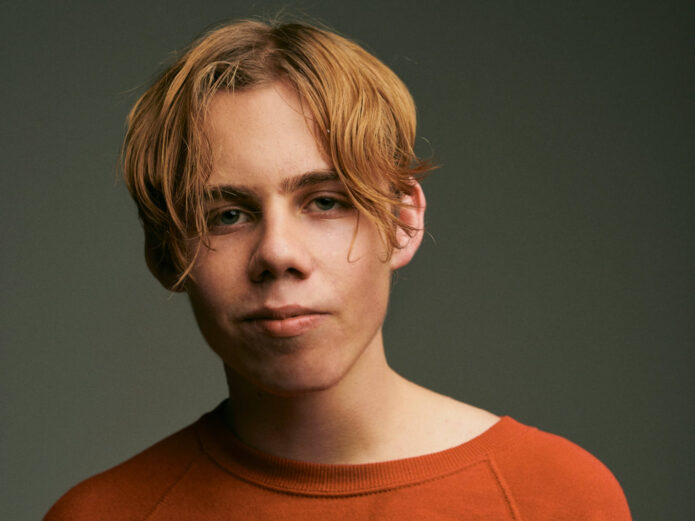
The Kid LAROI showing the Saik memorial tattoo

LAROI says he was 18 when he got his first tattoo, a memorial to his friend Saik, who had died. He wanted his first design to be something he would not regret a few months later, and says he could never regret putting Saik’s name on his skin. That is a much clearer explanation than simply identifying a shape in a fan photo.

He remembers being more nervous about the wait than the needle. People had told him tattoos hurt, so he was surprised to realise the session was already underway while he was still waiting for pain. It is a light story around a serious tattoo: the first piece began his collection and marks a friendship he wanted to keep close.

Beside that memorial story is a sailor-style design that reads “MUM”. LAROI explains the U: he grew up in Australia saying “mum,” while classic American tattoo lettering often reads “MOM.” He picked the Australian spelling without expecting it to become a running joke, then found people noticed it straight away. The word is simple, but the spelling gives the family tattoo an Australian detail.

The Saik memorial and the “MUM” tattoo are separate pieces with different meanings. One honours a friend who died; the other is a direct reference to his mother. They should not be blended into one general family-and-friends tattoo story.

The alien with a cookie, the spider girl and the world for Juice WRLD
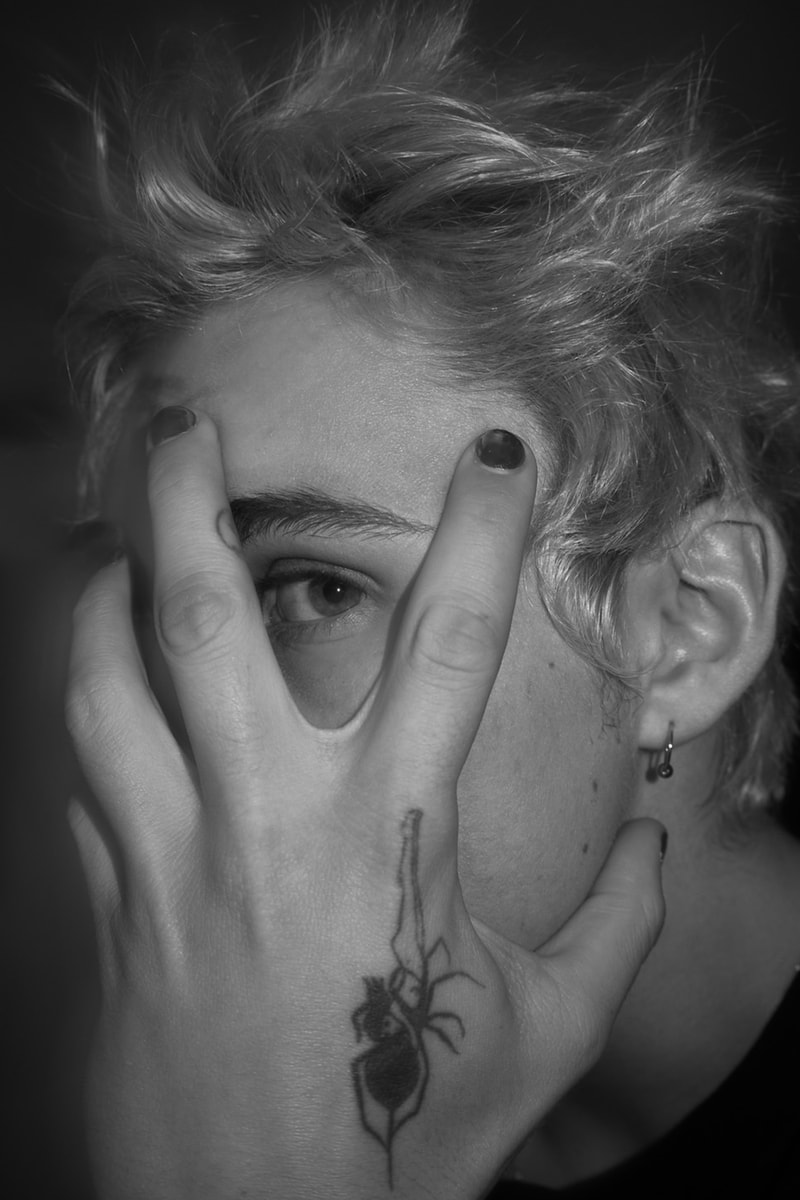
The Kid LAROI showing the spider tattoo on his hand

One of LAROI’s more unusual designs shows an alien returning a chocolate-chip cookie to its UFO. He says his family has long been interested in aliens, conspiracies and similar subjects. His version of the story is playful: the alien visits Earth, decides it is a terrible place, but finds one good thing—the chocolate-chip cookie—and takes it home.

That explanation keeps the tattoo light rather than solemn. It is a family in-joke built around a short science-fiction scene. The UFO, alien and cookie all belong to the same visual gag; calling it just an “alien tattoo” loses the detail that makes it recognisable.

He also shows a girl holding a spider. LAROI says it is the only tattoo on his arm that has no particular meaning. An ex-girlfriend sent him the picture, he thought it looked cool and chose to put it on his hand. That is the whole story. There is no need to add a hidden meaning, and his lack of a deeper explanation is useful context in itself.

The world symbol connected with Juice WRLD has a different role. LAROI says the world shape gives him a way to keep Juice with him without covering his body in portraits of friends. He calls it a symbolic connection to Juice and says it hurt more than tattoos on his hands, knees or ribs. It is both a memorial shorthand and one of the most painful sessions he recalls.

Together, these three designs show the range of his tattoos: a family joke, an image he liked without attaching a particular meaning, and a considered tribute to a mentor and friend. Treating them as if they all carried the same message would flatten their very different stories.

Post Malone’s cowboy and the tour tattoos preserve friendships
The Kid LAROI showing the Post Malone cowboy tattoo

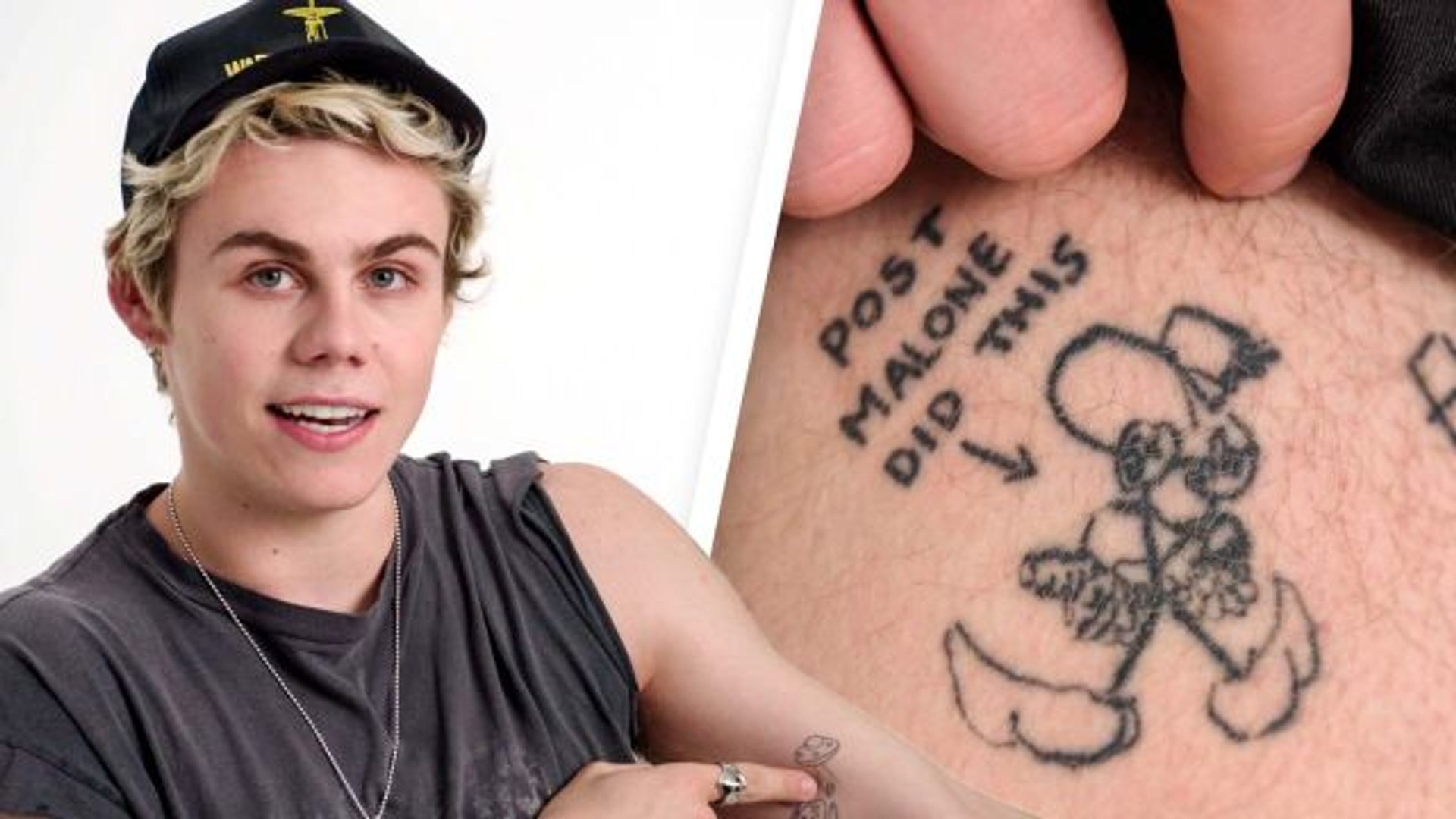
One of the most memorable collaborations is a stick-figure cowboy with angel wings, a cowboy hat and clogs. LAROI says Post Malone drew it while the two were hanging out and decided to tattoo each other. Post made it up as he went, adding the hat and clogs to a simple figure. LAROI liked it and asked for an arrow and wording to identify Post as the artist.

That credit is part of the tattoo, not a small afterthought. LAROI says Post was a major inspiration and he wanted the piece to preserve the night as a permanent memory. Its rough look is part of the appeal: it is a freehand drawing between friends, not a polished studio illustration.

LAROI also tattooed Post Malone, but that mark is on Post’s body, not part of LAROI’s inventory. He says Post was in a hurry to use the bathroom, so LAROI drew a sad face on Post’s kneecap with “I have to shit” underneath. It is a funny story, but attributing that tattoo to LAROI would be a factual mistake.

Several other pieces came from touring. Callie drew a design on paper from LAROI’s End of the World Tour merchandise, and he put it on his knee. He says the group then got matching versions. Central Cee tattooed another design during a music-video shoot. LAROI describes both as records of specific friendships and work moments, not symbols that need to be decoded.

His smaller experiments include a thorn-like design found by his friend Dev and a small love heart he got at a birthday party. LAROI says the heart was partly an experiment to find out what a rib tattoo felt like. It is an unusually direct explanation: curiosity and wanting to try the placement were enough of a reason.

On his ribs, LAROI shows a kitten holding a mushroom. He says it came from his first Europe tour, when people in the group got kittens holding different objects. His kitten has the mushroom; another held clothing, and two kittens were shown playing ping pong. The shared format connects the designs, while each object keeps the person’s version distinct.

Finally, LAROI points out the word “towers”, drawn by Callie, which he says reminds him of home. He does not give a longer private explanation, so the clearest account is the one he provides: it is a home reference in lettering made by a friend.

The Kid LAROI’s tattoo record is most useful when it stays this specific. Saik’s memorial, the Australian “MUM,” the alien and cookie, the girl with a spider, the Juice WRLD world, Post Malone’s cowboy, the tour drawings, the mushroom kitten and the word “towers” all have different origins. Some are memorials, some are jokes and others keep a moment with a friend. Keeping those differences intact makes the collection more interesting than a generic list of ink.
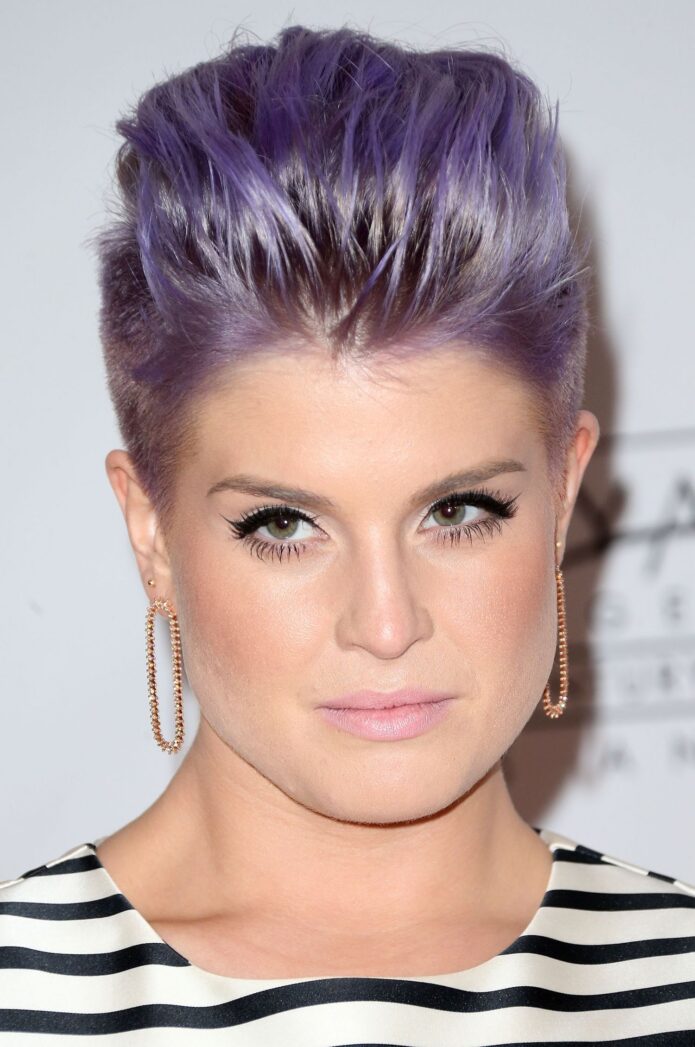
Kelly Osbourne’s tattoos tell stories in ink

Kelly Osbourne’s tattoos range from words on her shaved scalp to small marks on her hands, a colourful anchor on her forearm and older skull designs. Some pieces have a clear public story. Others are visible without a reliable explanation, so designs whose private meaning she hasn’t shared are best described by what can be seen.

She has changed her hair and added tattoos over the years, making older designs difficult to track. Hair can cover the scalp lettering; rings, nail art and camera angles hide marks on her hands. A close-up is more useful than a distant red-carpet photo for details this small.

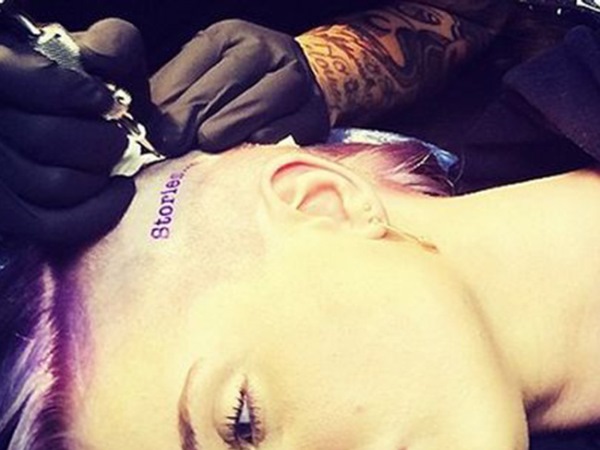
Stories was written across Kelly Osbourne’s shaved scalp

Kelly Osbourne tattoos: Stories head tattoo on Kelly Osbourne’s shaved scalp

In 2014, the word “Stories” appeared on the shaved side of Osbourne’s head. Extra identified it as a Dr Woo tattoo from Shamrock Social Club. The lettering is simple, but its placement makes it striking: with one side of her head exposed, the word becomes part of the haircut as well as her tattoo collection.

Osbourne has described the word as personal but has not given a fuller explanation. The available coverage doesn’t turn the tattoo into a story about her childhood or family; it confirms the wording, the artist and the location. The meaning she has shared is enough without building a biography around it.

Hair can hide the scalp tattoo again as it grows back. A red-carpet photo may show her face without revealing the ink; a closer side profile offers a better look at the tattoo than a general portrait. That is why the shaved-side images are easier to read than an ordinary premiere shot.

Solidarity turned the head tattoo into a public tribute

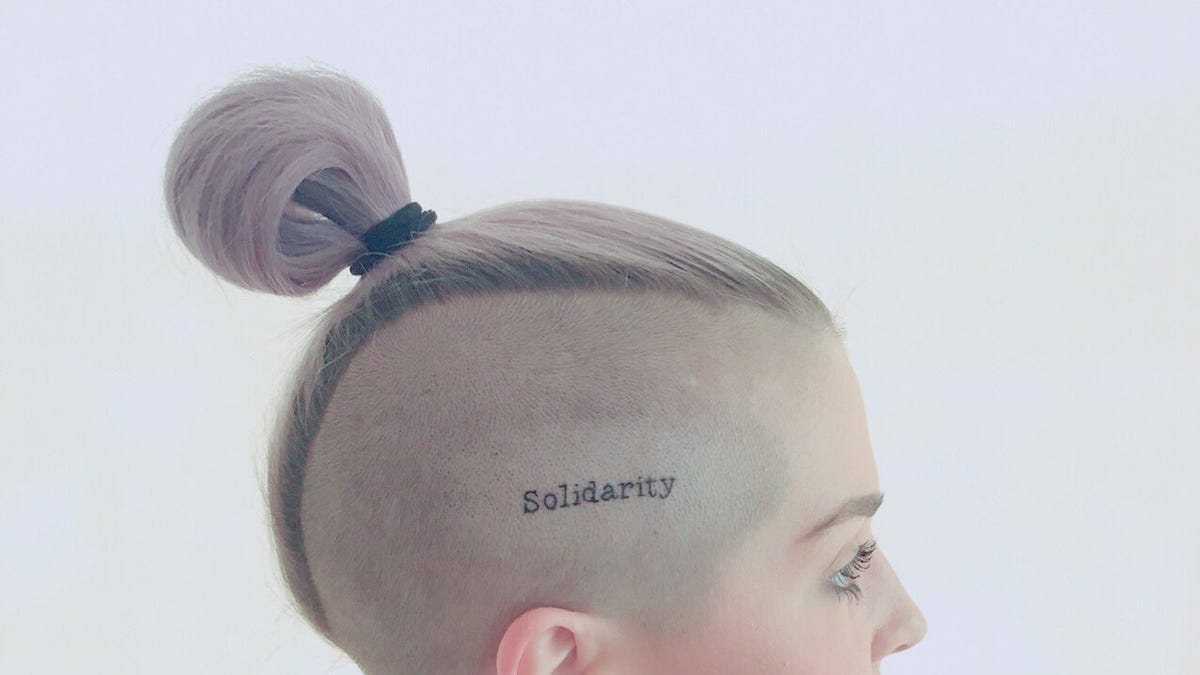
Kelly Osbourne tattoos: Solidarity head tattoo honouring Orlando victims

In 2016, Osbourne showed another scalp tattoo reading “Solidarity”. Digital Spy reported that she chose the word in honour of victims of the Pulse nightclub shooting in Orlando. The plain black letters above her ear make the word and its exposed placement the focus.

Osbourne tied the word to the Orlando shooting, giving it a meaning that is unusually clear in her collection. Solidarity is a public tribute to the victims and an expression of grief. The event supplies its context; no further symbolic reading is needed.

Together, the two scalp tattoos show different sides of her. Stories is personal and open to interpretation; Solidarity refers to a specific tragedy. They share a placement, but the words and dates give each a different tone.

The small hand tattoos sit beside rings and nail art

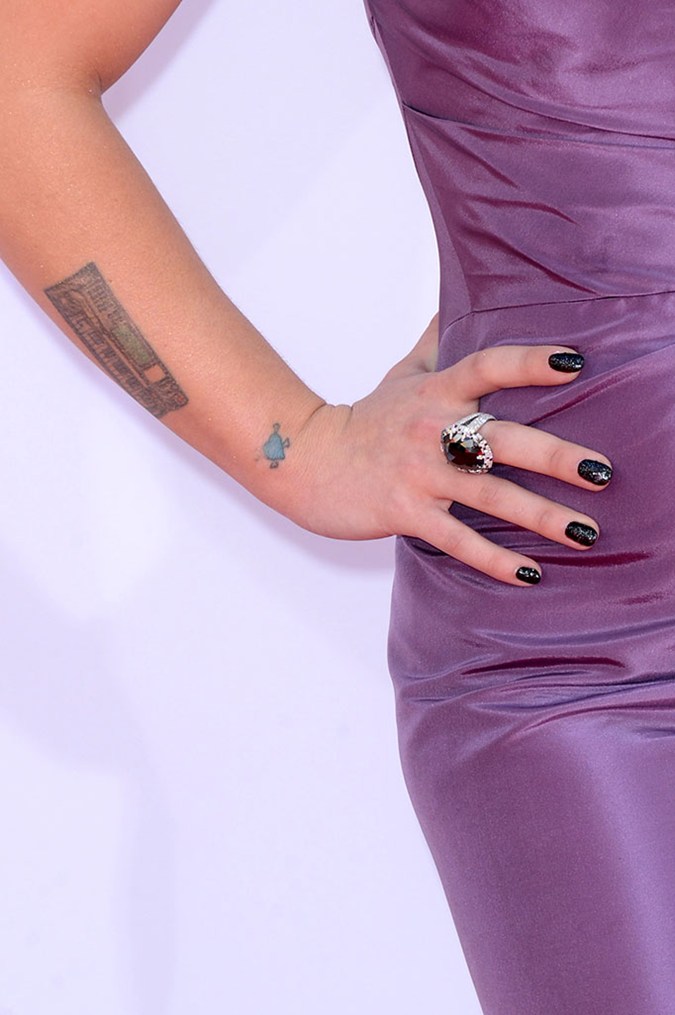
Kelly Osbourne tattoos: Kelly Osbourne’s hand tattoos including the pink heart

Close-up photos show a pink heart on one of Osbourne’s pinkies, along with other small marks near her fingers. The heart can disappear when she turns her hand, wears jewellery or poses against dark clothing. A hand-specific image is the easiest way to see it.

Osbourne has spoken about adding hand tattoos over time. Reports on her Without You lettering also mention an older pink heart, a small cross and a teardrop. Each is a separate mark, not one continuous hand design. Small tattoos can be added, altered or obscured; a later photo doesn’t date every mark it shows.

Scalp lettering reads from a distance; a pinky heart is easy to see only in a close-up or a particular pose. Rings and nail art can hide the smaller marks, while a hand held toward the camera brings them into view. Osbourne can choose how much of the ink appears in a photo.

The anchor and arm lettering add a traditional tattoo note

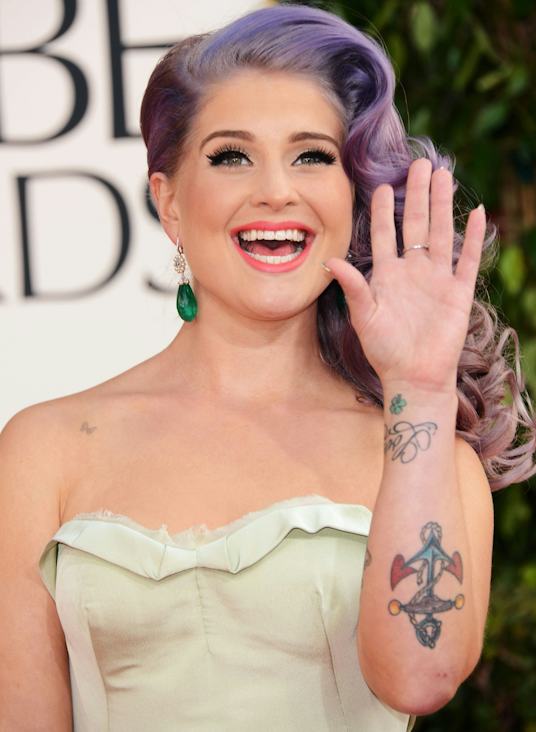
Kelly Osbourne tattoos: Kelly Osbourne’s colourful anchor and arm lettering

PopSugar and Nylon photographs show a colourful anchor on Osbourne’s forearm, beside script and a small clover-like mark. Its compact shape, bold outlines and colour follow traditional tattoo style and stay easy to read in a busy image. It looks very different from her fine scalp lettering or the tiny heart.

The photo shows where the anchor sits and what it looks like; it doesn’t show why Osbourne chose it. Anchors often stand for travel, stability or family, but she hasn’t given this one that explanation. The design can be described simply: a colourful forearm anchor with smaller tattoos around it.

Osbourne’s tattoos do not form one matching sleeve built in a single sitting. They bring together designs from different moods and periods: script next to a traditional picture, with a tiny clover or cross nearby. The variety gives the collection a personal feel, even when photos leave the story behind each shape unclear.

Older inventories also list skull and crossbones on Osbourne’s feet, plus small pieces linked to family, fashion work and changes in her appearance. The dates and visibility of these tattoos vary. Her scalp and hand pieces are easier to place because they appeared in close-up photos and contemporary coverage. The broader collection is a record across time, not one official checklist.

Stories began on her shaved scalp, while Solidarity honours the victims of the Orlando shooting. The pink heart and other hand marks, forearm anchor, script and older skulls round out the collection. Osbourne has shared the story behind some pieces; the rest can be described without assigning meanings she hasn’t given.

More musician tattoo guides

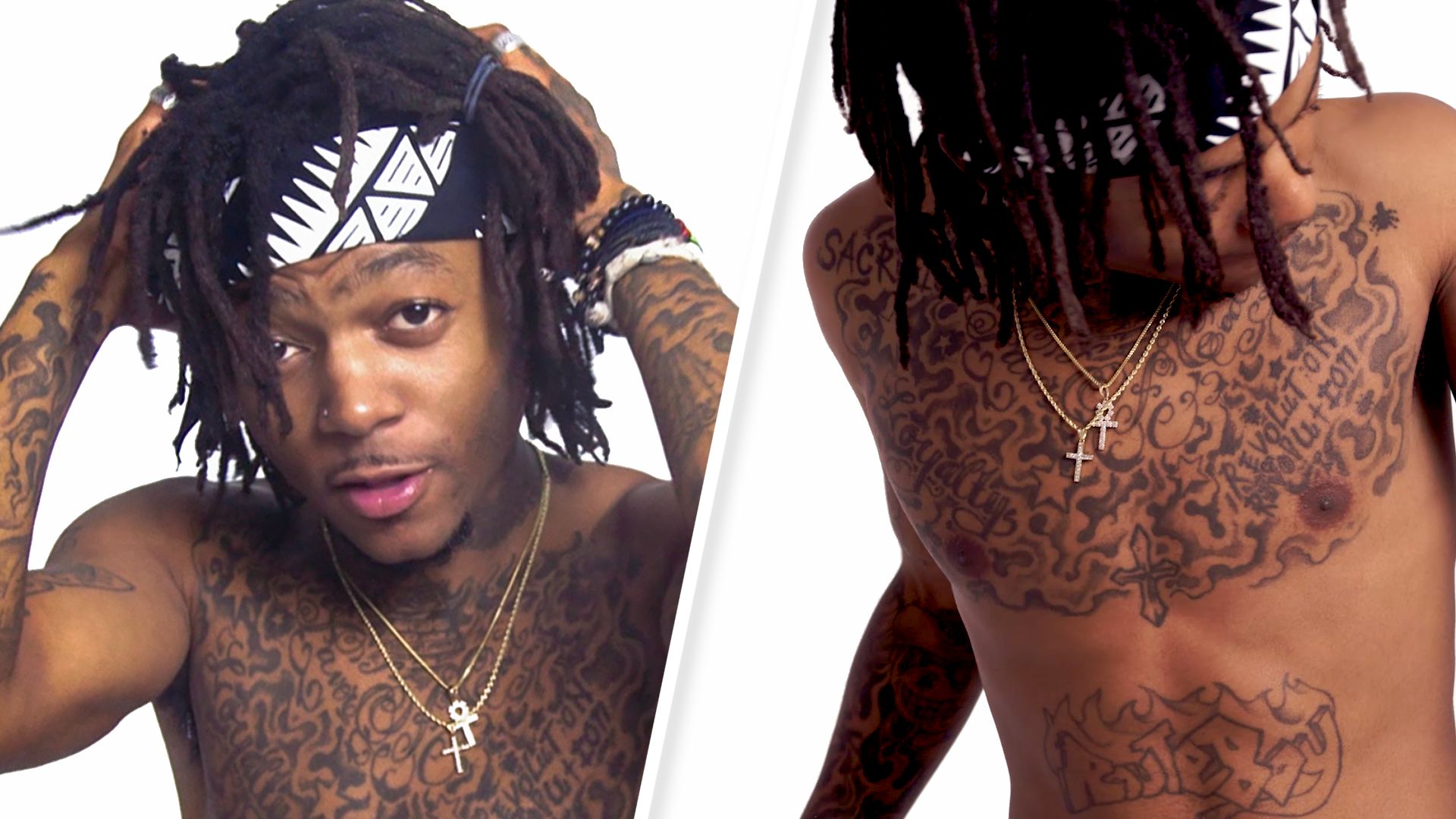
J.I.D’s first tattoo was Routeboy, but the collection grew far beyond it

In GQ’s Tattoo Tour, J.I.D says he got his first tattoo at 13. He had watched his older brothers and sisters get tattooed and wanted one too. He picked a spot his mother wouldn’t notice right away.

Across his lower stomach, he had the word “Routeboy”, framed by flames. Route is his family name, so the lettering links the tattoo to both family identity and the name he was building as a young artist.

After Routeboy, the record gets patchier. Photos show dense ink across his chest, stomach, arms and hands, but only some designs can be named with confidence. A close shot can show where a mark sits; it can’t supply an explanation J.I.D hasn’t shared.

The Routeboy stomach tattoo came first

J.I.D showing the Routeboy lettering and flame design on his stomach

The flames sit above and below the Routeboy lettering, framing it as one broad design. J.I.D chose the lower stomach, where a shirt or jacket could keep it hidden. An early photo that doesn’t show the tattoo can’t establish whether it was already there.

Route is his family name, and Routeboy gave J.I.D a personal label tied to it. The GQ interview confirms that connection; readings about destiny or ambition would go beyond what he said.

The tattoo arrived before his public career, albums and tours. At 13, he was making a decision that felt grown-up; now he says it looks childish. His change in taste doesn’t undo the tattoo’s place in his story.

The flames belong to the same first composition

J.I.D in a GQ portrait with the lower-stomach and chest tattoos visible

Flames are a familiar tattoo motif, but J.I.D’s own account treats them as part of the original Routeboy design. There’s no reliable explanation that they stand for anger, rebirth, danger or a particular event. The tattoo meanings other people attach to fire don’t tell us what he meant. Visually, the flames simply frame the word.

In the GQ close-up, the flames make a border around the lettering and widen the design. Its linework looks rougher than the detailed chest and arm tattoos visible in later photos, fitting a tattoo made at 13. The first piece feels like a young person’s statement of identity, rather than an attempt to match a later sleeve.

Routeboy’s appeal is its simplicity: one word, a family reference and flames. His later tattoos are denser and more varied, but this first piece is straightforward to describe on its own. The rest of the collection is harder to map mark by mark.

Later photographs show a much larger chest and arm collection

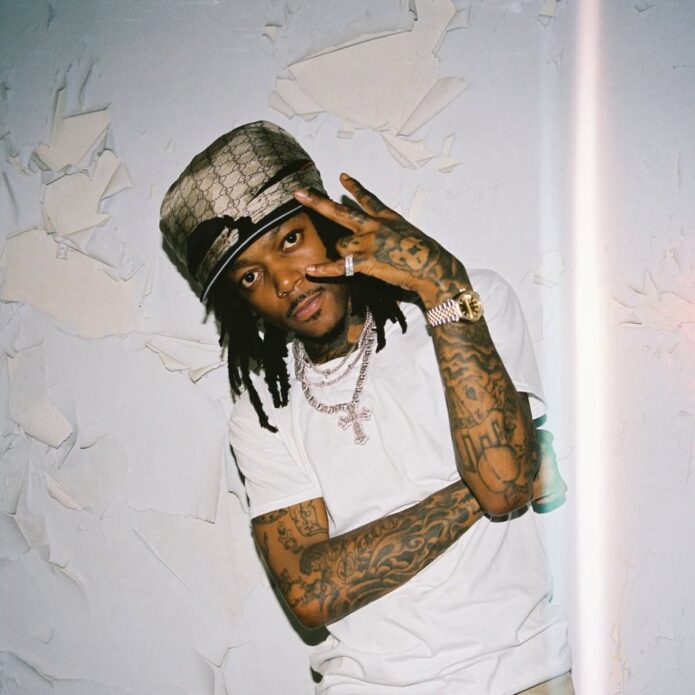
J.I.D showing the dense tattoo work across his chest, arms and stomach

Later work spreads from his chest to his shoulders and arms. Photos show dense linework, script, small figures, abstract shapes and religious imagery close together. Some lines overlap, but differences in scale and weight make the tattoos look like separate designs added over time rather than one sleeve.

The chest is hard to document from one photo. Dreadlocks, necklaces and the angle of the torso can hide the upper edge; clothing may cover the lower stomach. A portrait can reveal the extent of the work without enough detail to name every mark. That’s why the Routeboy tattoo should not be merged with the later chest pieces just because both occupy the same broad area.

His arms carry black-and-grey linework, lettering and small illustrations. No published source gives a complete official list. The photos show extensive work, but they don’t support borrowing a meaning from another rapper’s tattoo collection or naming every shape.

The arm tattoos are visible, but not all are individually named

J.I.D with the tattooed arms and hands visible in a portrait

Public portraits show tattoos from J.I.D’s shoulders down his forearms and onto his hands. Some sections have repeated curves and flame-like outlines; others use lettering or small illustrations. The work is extensive, though a wide shot rarely shows where one tattoo ends and another begins.

The hand tattoos are easy to misread: fingers bend, jewellery covers skin and shadows gather around the knuckles. A mark that looks like a letter in one photo may be a small symbol from another angle. If a word isn’t legible and J.I.D hasn’t identified it, the rest is best described as linework.

Routeboy began as a tattoo J.I.D could hide under a shirt. The later work on his arms and hands is visible in photos, performances and fashion portraits. That shift puts more of the collection into public view, though no precise date is available for every addition.

Chest lettering and religious motifs form separate visual groups

J.I.D showing the chest and torso tattoos in a close portrait

Close torso photos reveal lettering near the shoulders, smaller symbols around the chest’s centre and larger decorative designs reaching toward the stomach. Some portraits also show cross pendants. Those are jewellery, even when they sit close to the tattooed chest.

J.I.D hasn’t given a public meaning for every cross, figure or ornamental mark. When a design is clear, it can be described as religious or symbolic; beyond that, the photographs don’t tell us the personal story.

The first tattoo is a word framed by flames; the later chest work layers many smaller designs across the torso. The photographs show the collection growing over time, and J.I.D has described that gradual buildup himself.

The clearest part of J.I.D’s tattoo story is still where it began.

What the tattoo photographs can and cannot prove

The first tattoo is the best documented: J.I.D has described getting Routeboy at 13, choosing the lower stomach for privacy and taking inspiration from older siblings. Later images clearly show his chest and arm work, but published accounts are thinner on individual names and meanings.

J.I.D’s first-person account anchors the Routeboy story; later photos show how the collection grew. That keeps a useful distinction between a documented tattoo and a guess. Readers can follow the design from age 13 without being told that every line has a private meaning.

More musician tattoo guides

DeMarcus Cousins tattoos: family portraits, tributes and home

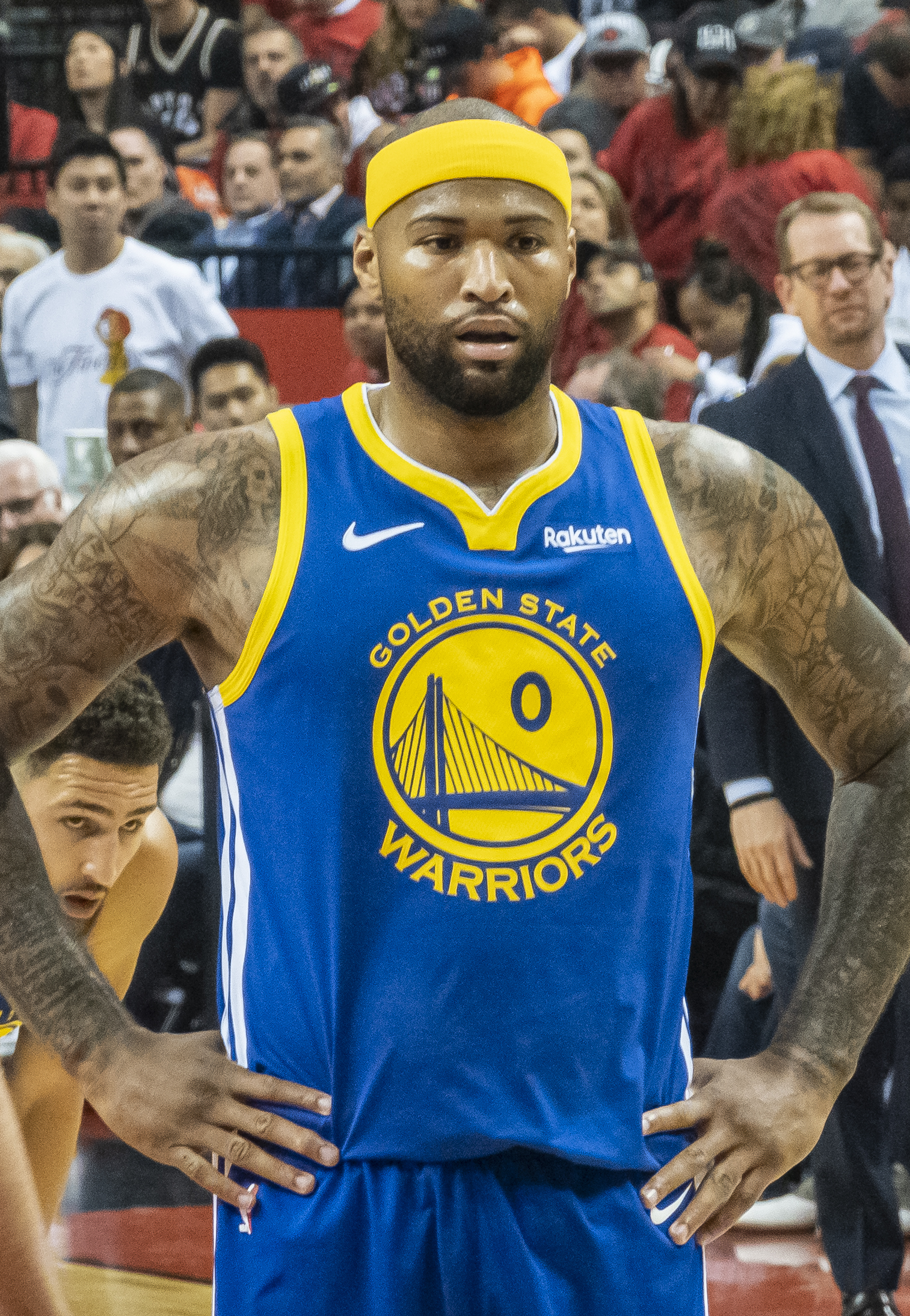
DeMarcus Cousins tells the stories behind several of his tattoos in GQ’s Tattoo Tour. He talks about Danny Pritchett, a friend he considered an older brother, a portrait of his mother, angels with his children’s names and the graffiti phrase Product of My Environment. They reflect family, friendship, basketball and home, with each design tied to a different part of his life.

Family and basketball tributes anchor DeMarcus Cousins’ tattoos

DeMarcus Cousins showing his tattoos during a GQ Tattoo Tour

Some of the clearest stories in Cousins’ tattoo inventory are the tributes he talks through in GQ’s Tattoo Tour. Danny Pritchett was like an older brother to him and died while playing basketball. The memorial brings their friendship and the sport they shared together.

His mother’s portrait honours the work she did for her children. Cousins calls her one of his biggest inspirations. The mama’s boy lettering puts his own bond with her into words.

The Danny Pritchett tribute

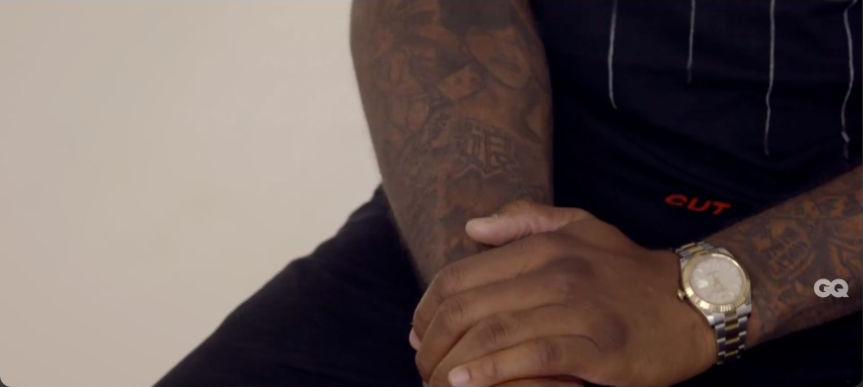
DeMarcus Cousins showing the Danny Pritchett tribute tattoo area

A close-up shows the portrait and where it sits. Cousins says Pritchett was like a big brother and passed out on a basketball court. That loss and their shared connection to basketball make the tattoo meaningful to him.

Cousins hasn’t said exactly when he got the portrait or shared much about Pritchett beyond their relationship and his death. That’s enough to understand the tattoo as a memorial to someone he considered family.

The portrait of his mother

DeMarcus Cousins showing the mother portrait tattoo tattoo area

Cousins says his mother worked hard to build a life for her children. He calls her one of his biggest inspirations, and the portrait honours that effort. It is a straightforward tribute to the woman who raised him.

Beside the portrait, the mama’s boy tattoo puts his relationship with his mother into words. The two pieces share a subject but remain distinct: one is her portrait, the other is how he describes himself.

Angels with his children’s names

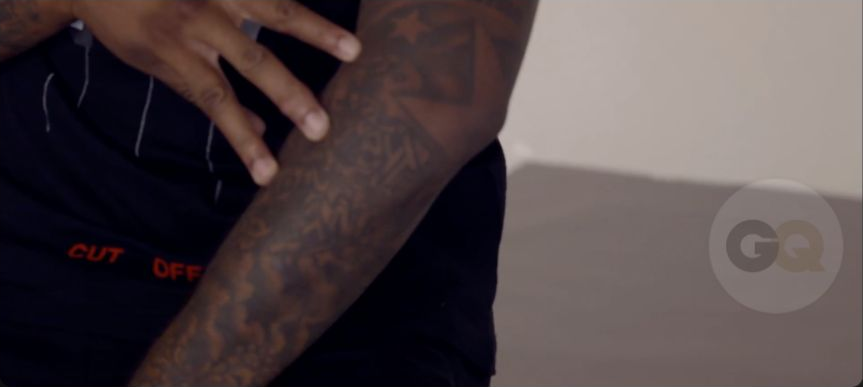
DeMarcus Cousins showing the arm tattoos discussed in the GQ Tattoo Tour

Two angels carry the names Amir and Havannah. Cousins says they are his children and calls the tattoo another way of showing how much he loves them.

He doesn’t attach a separate religious meaning to the angels. The tattoo is best recorded as a tribute to his children, with Amir and Havannah’s names beside the two figures.

Product of My Environment

DeMarcus Cousins showing Product of My Environment graffiti lettering

Cousins describes Product of My Environment as a reminder of where he came from. He says the words bring back the struggles he faced and the things that helped him reach his current position.

The graffiti lettering gives the phrase its visual identity, while Cousins says it keeps his background and the path he took in view. Its meaning is about origin and memory, not just basketball.

Reading Cousins’ tattoos across time

His tattoos were added at different times, so no single game photo shows them all. A jersey or camera angle can hide portraits, names and lettering; newer ink can also change how earlier pieces look together.

When a tattoo disappears from a game photo, it may simply be hidden by a jersey; that isn’t evidence that it was removed. A dated close-up, read with Cousins’ comments, tells more.

What Cousins explains on the GQ tour

In the GQ tour, Cousins explains four designs: the Danny Pritchett tribute, his mother’s portrait, angels with Amir and Havannah, and Product of My Environment. The video also shows that he has many more tattoos, though he doesn’t name every one.

Cousins’ tour offers a detailed tattoo account of his main designs, but doesn’t name everything visible. Each named tattoo can be tied to a person or experience he identified; the rest may remain unclear until a better photo or explanation appears.

Other reported tattoos fill out the wider sleeve. A later inventory mentions a dream catcher inside his left bicep, a spider and cobweb covering an earlier basketball-and-crying-baby tattoo, and MISUNDERSTOOD on his right calf. It also lists WIN SOME LOSE SOME on the inner bicep, a crown with KING OF THE GAME, and a DANNY tribute near the wrist. Cousins doesn’t explain these pieces as fully as the four tattoos discussed on camera.

A secondary inventory says the spider and cobweb cover an older basketball-and-crying-baby design. Photos show the new tattoo but don’t explain why it replaced the earlier one. It is separate from the Danny tribute and his children’s angels, even if all three appear on his arms.

Family and friendship run through Cousins’ best-known designs. The Danny Pritchett tattoo remembers a friend who felt like a brother; his mother’s portrait and mama’s boy words honour her influence. The angels carry Amir and Havannah’s names, while Product of My Environment recalls the struggles and roots he has talked about. These are the stories his own tattoo tour supports with confidence.

The GQ tour moves from a close portrait to readable lettering and wider views of larger designs. Some shots also show pendants, which are jewellery rather than ink. Seen alongside Cousins’ explanations, the footage gives more context than a standalone social-media picture.
Later photos may clarify an older piece or show additions around the family tributes. Cousins’ own comments remain the clearest account of why he chose the designs he has named; new images add detail without replacing those stories.

More athlete tattoo guides

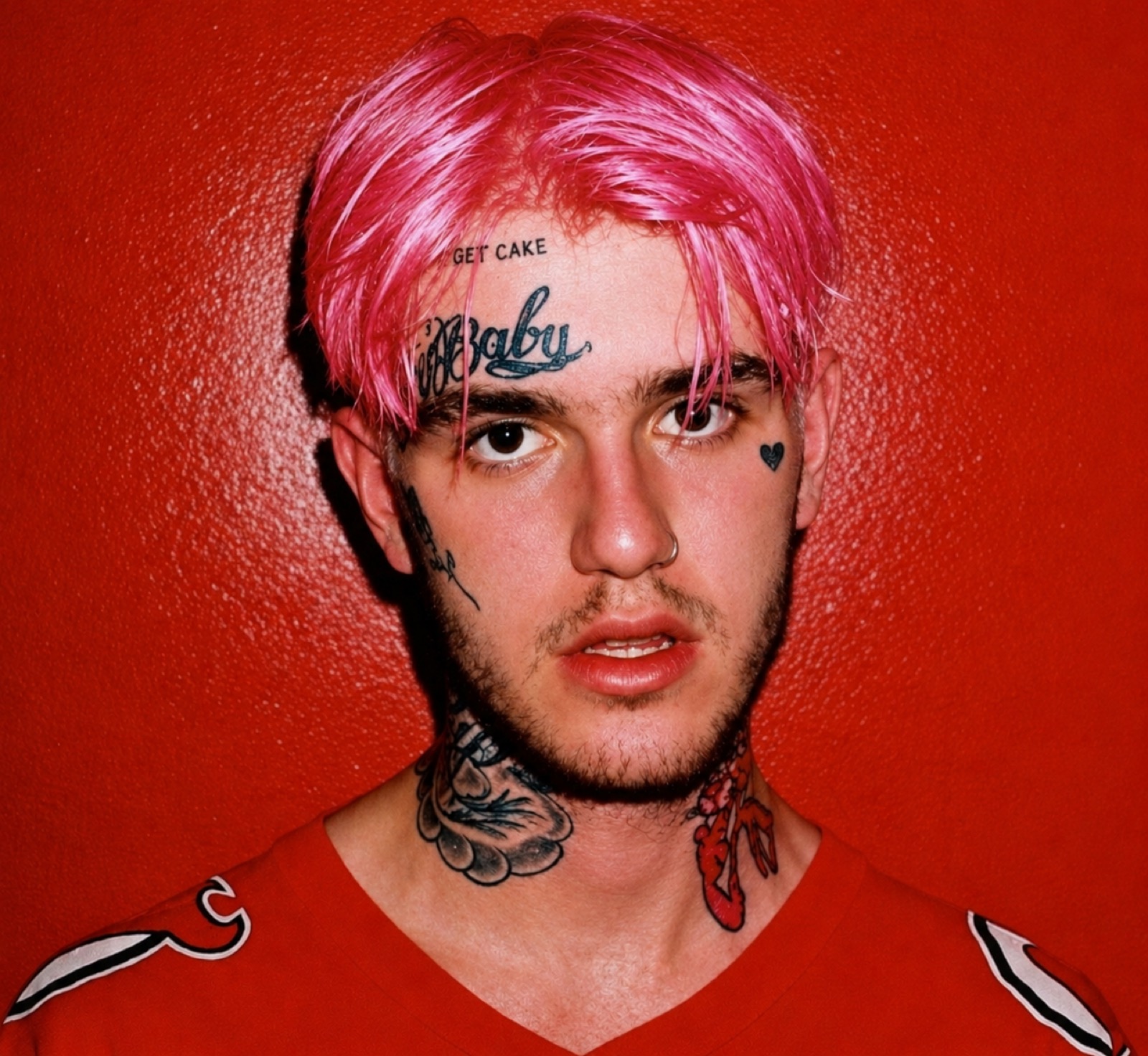
Lil Peep tattoos: “Crybaby,” Hellboy, family ink and a restless face

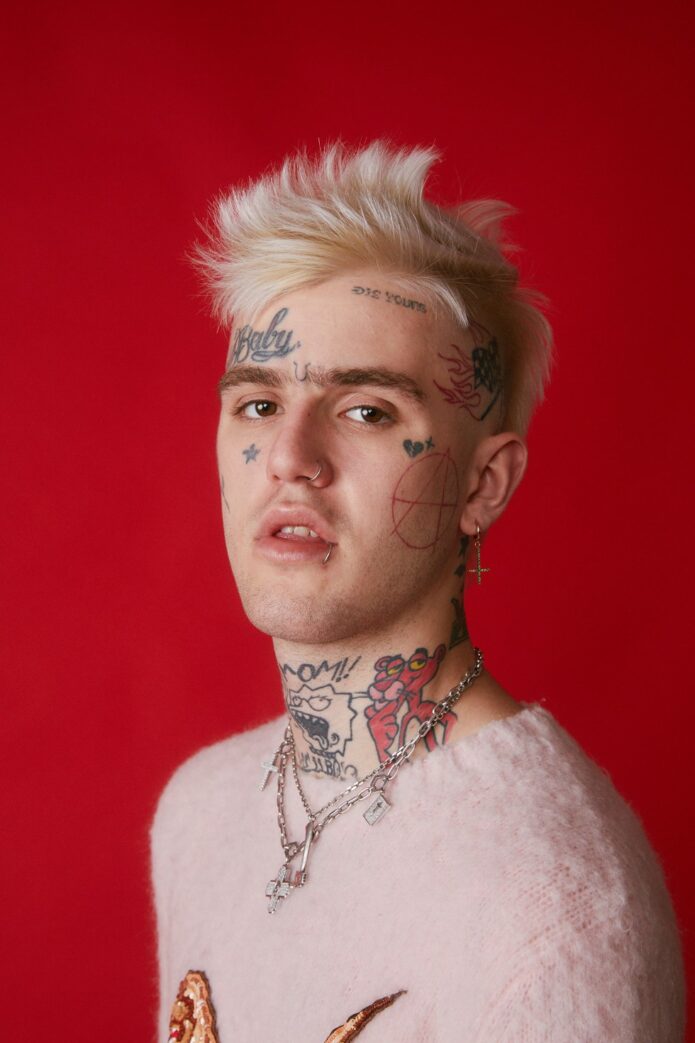
Lil Peep’s tattoos were never a carefully planned image. In GQ’s 2017 Tattoo Tour, he names family pieces, spooky images, music references, a broken heart, a horseshoe and the word “crybaby.” He tells stories about some designs; others were spontaneous or chosen for the joke.

In the footage, Peep often explains the tattoos himself. A photograph shows where the ink sits; his comments tell us whether it was a family reminder, a joke or an impulse. Some designs only make sense once he tells the story.

“Get cake, die young” and the Halloween details made the face a record

Lil Peep showing his face tattoos during the GQ Tattoo Tour

Peep says he sometimes woke with face tattoos and no memory of getting them. One phrase reads “get cake, die young.” After a night of heavy drinking, he woke to find it on his face and accepted it. It’s an absurd story, and shows how some of his face tattoos happened without a plan.

He says “11 1” marks his birthday, November 1, around Halloween. Around that theme are bats and a pumpkin. He also got a centipede after noticing how often they seemed to turn up around him. It bothered him so much that he put one on his body.

The bats and pumpkin point to Halloween. The centipede has its own story: Peep said they kept turning up around him and bothering him, so he put one on his body. The images don’t all belong to one vague “dark” theme.

Family names, Lisa, Meep and Hellboy sit beside the early work

Lil Peep showing his family and face tattoos

At 14, Peep got a large tattoo connected to his mother’s birthday and initials. He said he wanted something that wouldn’t make her angry about his first tattoo. He also mentions tattoos of his grandfather, his mother and a friend, and says family meant more to him than a traditional family tree.

The Lisa shouting “Mom” tattoo captures one of their habits. When Peep felt overwhelmed or things were going wrong, he says, he called his mother and stressed her out. The tattoo is therefore a visual joke about a real family dynamic, not just her name or a portrait.

His leg tattoo of Meep recalls a doll he bought with a former girlfriend. He called the doll his son and wanted the character on his body. It’s playful, but the attachment made it personal to him.

Below Meep, he points out “Hellboy,” the name of his first mixtape to attract wider attention. He also loved the comics and their main character, so the lettering nods to both music and comics.

The broken heart and “crybaby” tattoos turned pain into identity

Lil Peep showing the broken heart and other face tattoos

Peep got the broken heart beneath his eye in 2015 during a period when he wasn’t feeling well. He said he had to succeed in music because visible face tattoos could make ordinary jobs harder to get. The placement was emotional, but it also pointed him toward a career.

The large “crybaby” tattoo came from something Peep noticed about himself. He said he complained often and felt ungrateful despite having opportunities many people wanted. He chose the word to remind himself to appreciate what he had and remember that other people faced harder circumstances. He called it one of his favourites, even knowing some people would regret such visible ink.
He described “mood” as his eternal mood and joked that the image was low quality because his mood was, too. The tattoo does not need a grand explanation; the joke already says a lot about how he viewed the imperfect piece.

The “homesick.” tattoo on his fingers reflected touring while he was young and missing his mother. He carried the word with him whenever he was away from home.

Pink Panther, anarchy, horseshoe and Ed Hardy pieces show his restless style

Lil Peep showing the Crybaby tattoo collection

Peep says he got the Pink Panther after staying awake on mushrooms, taking an Uber to Venice Beach and deciding he should make the night memorable. He walked into a random shop and had the character tattooed. It was an impulsive choice tied to the story of that night.

The red anarchy symbol came from his urge to change his look whenever he felt punk or rebellious. He said his style was hard to pin down and recalled growing frustrated when people copied what he wore in high school on Long Island. The mark fits a shifting visual identity, but the interview gives no reason to read it as a fixed political statement.

Peep called the horseshoe a lucky charm, then joked it worked only sometimes. He also said Ed Hardy drew a design for a London exhibition; after shaving his head, Peep had it tattooed. Together, the artist, place and timing make the design identifiable without requiring a speculative meaning.

Arm and body tattoos complete the Long Island collection

Lil Peep showing his arm and body tattoo collection

Peep described the collection as a work in progress and planned to cover as much of his body as he could tolerate. He talked about how different placements felt, including the back of his head. Over time, the ink became part of his face rather than an accessory he kept evaluating.

Close portraits reveal designs that a performance photo can hide under hair, clothes or a camera angle. Peep’s own list gives names to some of them: Hellboy, Crybaby, homesick, the broken heart, anarchy, horseshoe, bats, pumpkin, centipede and Pink Panther. Some had a story; others were chosen for the image or the moment.

Peep’s tattoo language mixes family, humour, music, horror and deliberate discomfort. The face ink could make conventional work harder to get; other pieces tied him to Hellboy and Crybaby or turned private jokes into words on his skin. He never said every tattoo carried a noble explanation.

Some pieces remembered family. Others reminded him to appreciate what he had; still others came from jokes, sudden ideas or intoxicated nights. Together they chart a young artist who treated tattooing as biography, armour and experiment.

More musician tattoo guides

Ariana Grande Tattoos: Butterflies, Hand Ink and the Manchester Bee

Ariana Grande’s fine-line tattoos have changed over the years. New work appears on her hands, older relationship designs get covered, and sleeves, gloves or stage styling can hide tattoos in photos. Depending on when a picture was taken and what she is wearing, her collection can look quite different.
Her tattoos include butterflies, a Manchester bee, moons and stars, tiny hand lettering, dog tributes, botanical work, matching Wicked tattoos and several cover-ups. Some older designs have changed, so one photograph cannot tell the whole story. Grande or her tattoo artists have explained some pieces; the public record does not provide a private meaning for every small mark.

The butterfly tattoos became a visible marker of Grande’s changing style

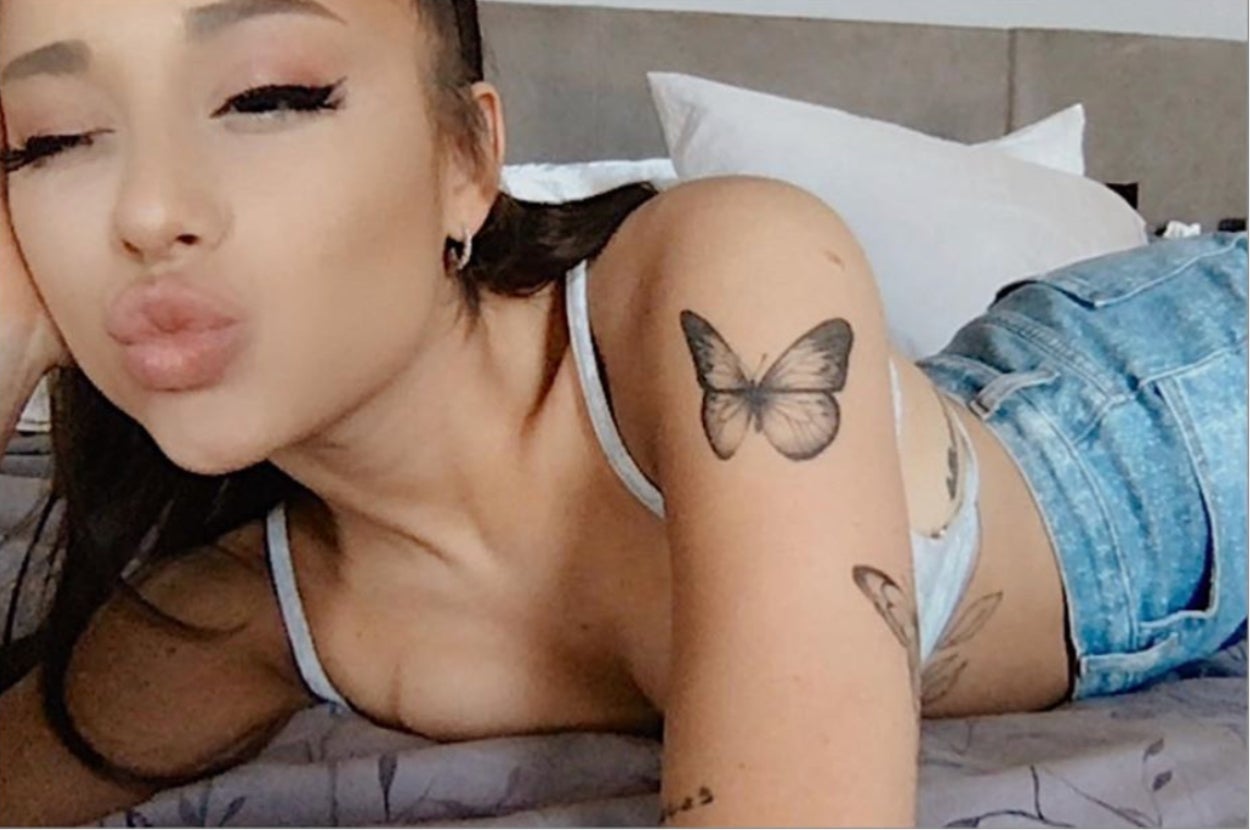
Ariana Grande butterfly tattoo on her upper arm
The butterfly tattoo on Grande’s upper arm stands out in performance photos and portraits. It is fine-lined black ink, set high enough to show when she wears sleeveless clothes. She revealed a new butterfly around the 2020 Grammys, but public reports did not include her own explanation for it.
Fans often read the butterfly as a fresh-start symbol, but Grande has not said that publicly. The photos show where it sits, not what it meant to her. She has more than one butterfly tattoo, so several wings in a picture may belong to separate designs.
Her small Eevee tattoo is a character tribute linked to her interest in Pokémon: Let’s Go, Eevee!. It often appears beside the butterflies in photos; both are fine-line arm tattoos, but one is a Pokémon character and the others are butterfly designs.

The Manchester bee sits behind the ear beside the moon

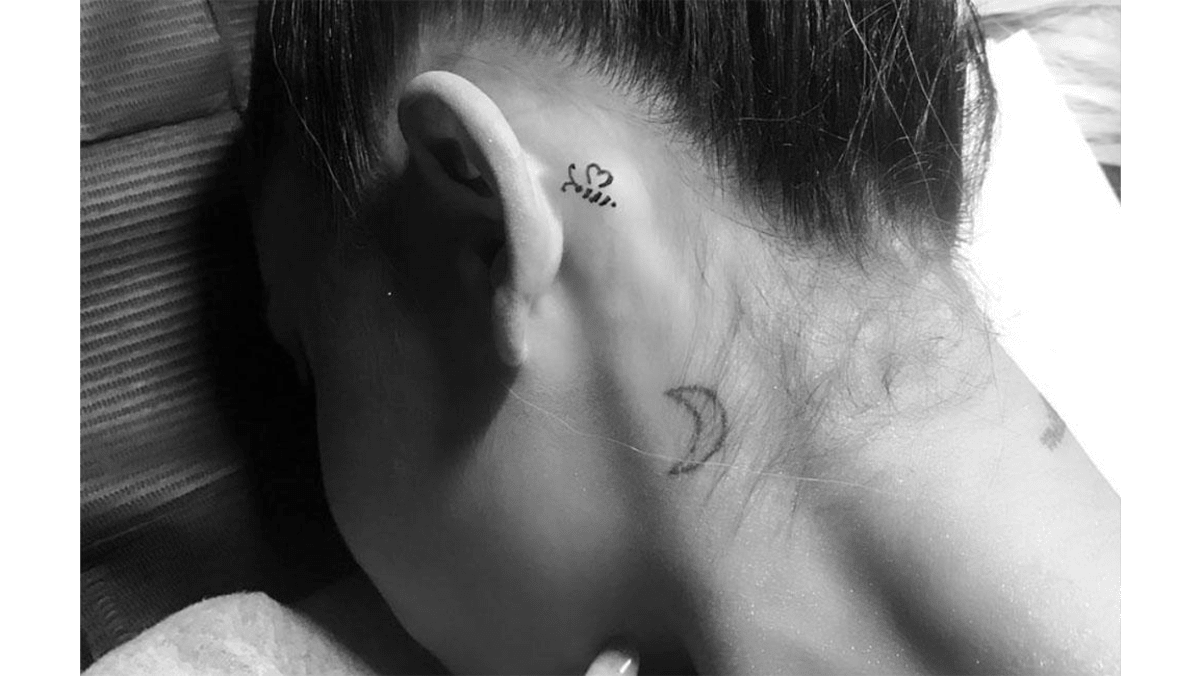
Ariana Grande Manchester bee tattoo behind her ear
Grande’s small Manchester bee appears behind her ear, one of the tattoos with the clearest memorial story. She got it after the 2017 Manchester Arena attack and shared the design with a short message of remembrance. The bee is a familiar Manchester symbol, and she connected the tattoo to the city and the people affected by the bombing.
It is easy to miss in a straight-on photo. The bee sits behind the ear and is close to a crescent moon tattoo, so a front view may catch the moon and hide the insect. A side-on shot shows the bee’s body and wings against her hairline.
The crescent moon has its own, less settled story. Moonlight was the working title and emotional backdrop to Grande’s 2016 album; fans have also linked the tattoo to an old nickname and a past relationship. Those are different theories. The bee has a documented connection to Manchester, while Grande has not explained the moon in the same way.

Sun, moon and stars turn the hand into a small celestial map

Ariana Grande sun moon and stars hand tattoos
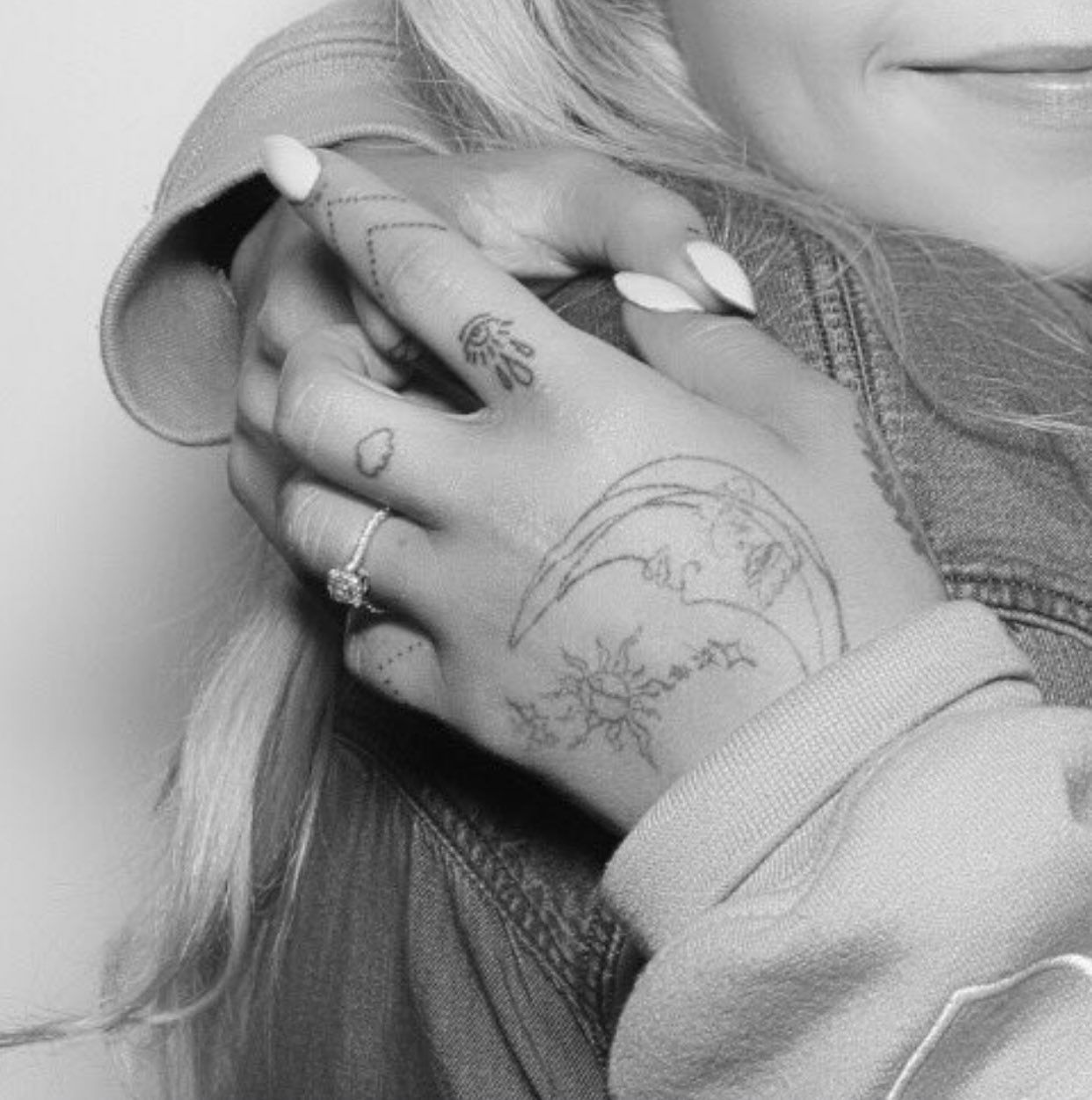
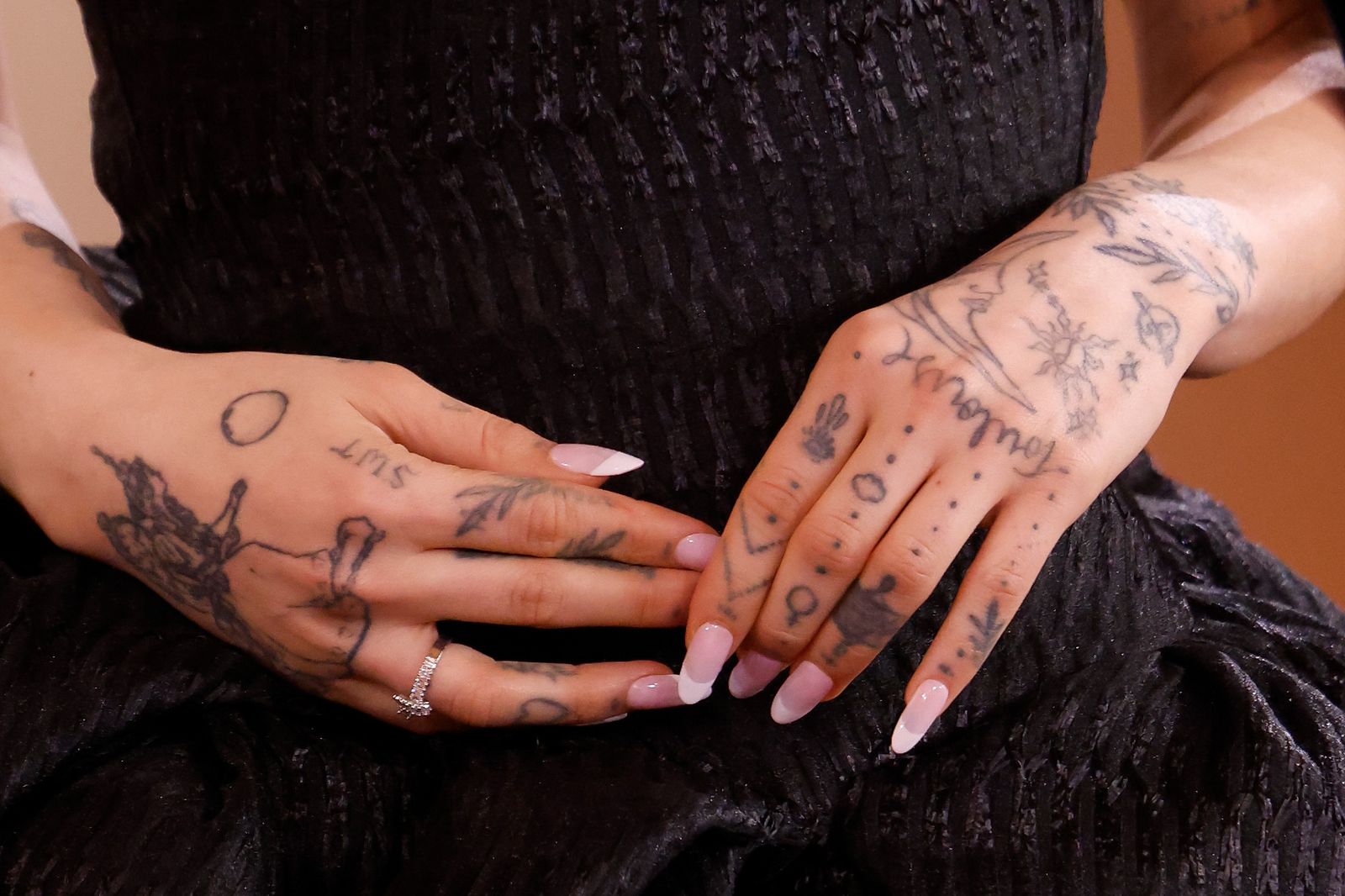
Across the back of Grande’s hand and fingers, the celestial hand work groups a sun, crescent moon and small stars into one fine-line cluster. Reports also place her grandmother at the tattoo session and connect a matching family moment to the nickname Ciccio.
Other hand tattoos often appear together in close-ups: H2GKMO (“honest to God, knock me out”), small symbols and words from earlier relationships, and lettering Grande has since changed. The cluster can look busy because it mixes original pieces, cover-ups and very fine marks that disappear in low-resolution images.
The 7 Rings palm tattoo shows how a design can change. Grande chose Japanese characters meant to reference the song; early coverage said the first version was wrong, and she later altered it. Photos of the original should not be treated as its final form or a reliable translation.

Vines and daisies are the newest layer of Grande’s hand tattoos

Ariana Grande vine and daisy hand tattoos
Recent photos show a run of botanical additions by tattoo artist Mira Mariah, also known as Girl Knew York. The new work includes a vine and daisy group from the thumb toward the palm, daisies on the index and ring fingers, and a smaller flower near the pinky. These fine-line pieces cover more of her hand than the isolated symbols she had before.
Grande called the session an “art girl tattoo party,” and Mariah posted about the vines and flowers. Her comments and the artist’s photos give a direct account of the designs; there is no need to assign a separate story to every flower.
These fine lines can be hard to follow from one photo to another. Rings, nail length, hand position and lighting hide parts of the palm, while stage shots often lose the lighter ink. A close image helps distinguish the new vine from old lettering and a small flower from a faded mark.
Dog tributes and small symbols give the collection its personal details

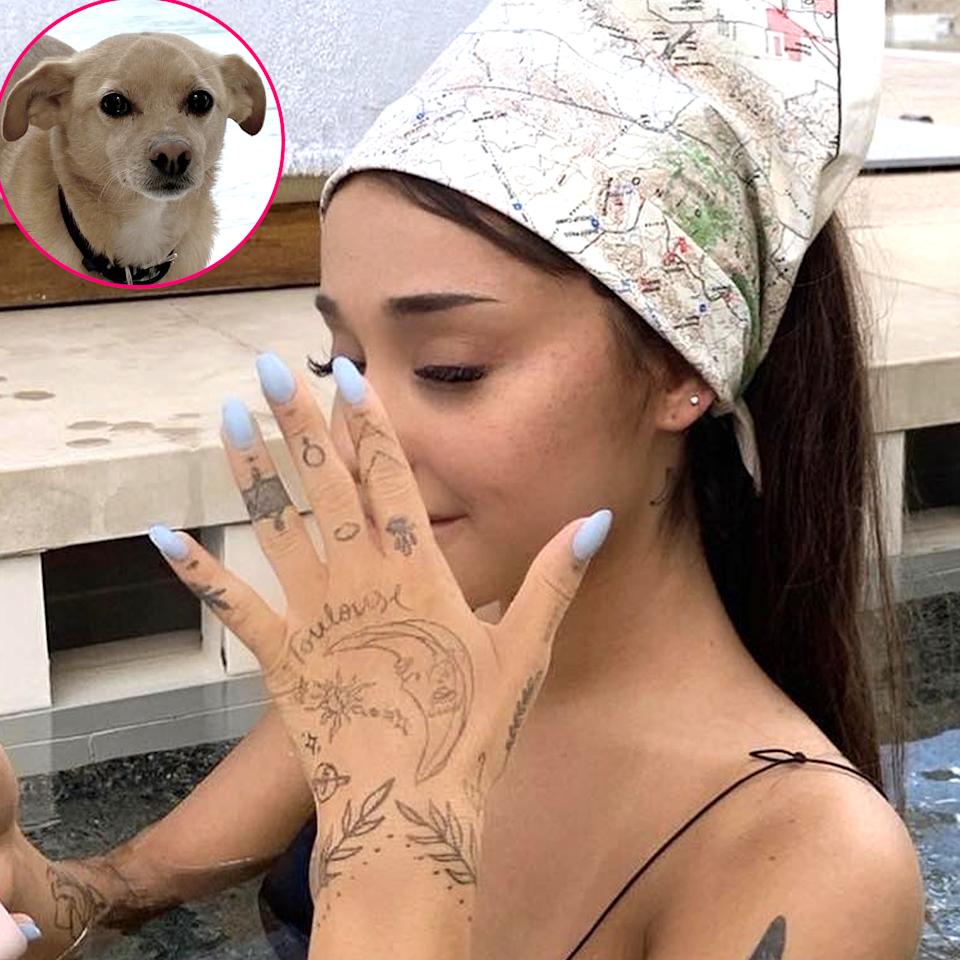
Ariana Grande Toulouse dog tattoo on her hand
Grande has several tattoos tied to her dogs, including small portraits and lettering associated with Toulouse and other pets. Some sit on her hands and fingers beside older symbols. They are affectionate personal tributes, scattered among the smaller pieces rather than part of one large design.
Other reported tattoos include an olive branch, a tiny heart, the French phrase Mille Tendresse, Hebrew lettering and a black heart. The record varies: Grande showed some designs herself, the artist identified others, and the rest have been catalogued from photographs.
Grande’s Hebrew and Japanese tattoos are easy to misreport: the characters can be visible while the intended wording remains disputed, especially after a cover-up or a quick social-media reveal. It helps to separate what the photo shows from the translation attributed to it.

Wicked tattoos and cover-ups changed the map over time

Ariana Grande For Good palm tattoo with Cynthia Erivo
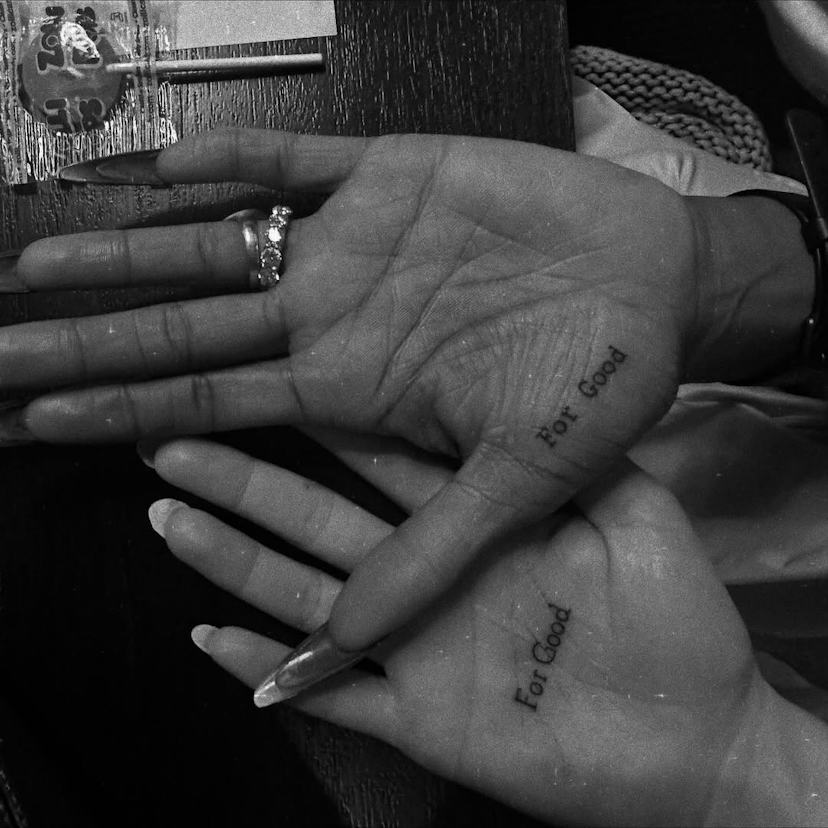
During Wicked, Grande and Cynthia Erivo revealed matching For Good tattoos tied to the film’s closing duet. Reports also connect them with poppies from the story. These pieces belong to the film period and were added later in Grande’s tattoo timeline.

Matching poppies mark the friendship behind the film

Ariana Grande matching Wicked poppy tattoo
The matching poppy tattoos are separate from the words For Good. The women showed matching flowers on their hands, drawn from the poppy fields in the Wicked story. In a photo, the blooms may sit beside the palm lettering, but they are a different design.
Before that, Grande and Pete Davidson got matching symbols and phrases during their engagement, including tattoos tied to the number 9¾. After they split, some were covered or changed. Those earlier versions remain part of the timeline even though they no longer look the same.
Dates make a difference with Grande’s tattoos. The collection runs from small early pieces to denser hand work, from relationship designs that later changed to newer family and dog tributes, and from one-off symbols to matching work with collaborators. Photos show how the mix developed; interviews and posts fill in some of the stories.
The short version: Grande’s tattoos are a changing mix of fine-line hand work, memorial, family and dog tributes, music and film references, and cover-ups. The butterfly, Manchester bee, celestial cluster and newer vines are distinct designs, visible in different photos and at different points in her life.

More musician tattoo guides

Dua Lipa’s small tattoos carry a surprisingly detailed travel diary

Dua Lipa’s tattoos are mostly small, but many point to places and memories. Some lead back to Pristina or Los Angeles; others are short phrases, personal references or shapes chosen for how they look on the skin. Rather than one large style statement, the collection reads like a little travel diary.
Published tattoo coverage names the designs and their placements; a later Allure report adds the matching star she got with Seth Meyers. The photos and interviews fill in some of the story, though not every tiny mark comes with an explanation.

Sunny Hill puts Dua Lipa’s family home on her arm

Dua Lipa’s Sunny Hill tattoo on her inner arm

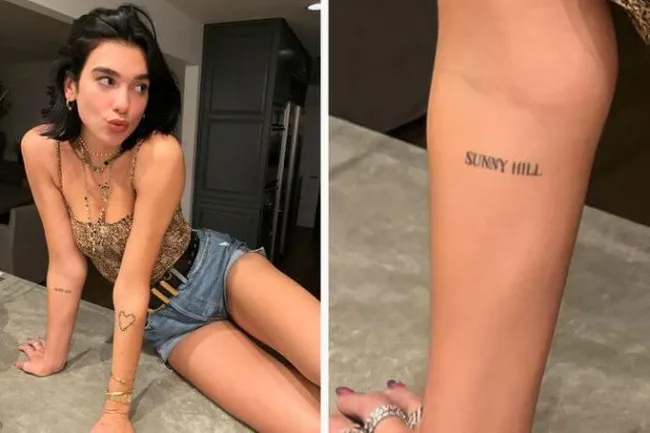
The Sunny Hill lettering is on the inside Dua Lipa’s right arm. ELLE Australia translates it as the name of the Pristina district where her family is from. Born in London, she wears the words as a direct link to Kosovo and the place her family calls home.
It is small text, without an elaborate illustration around it. “Sunny Hill” does not need extra decoration to suggest home. And unlike a flag or abstract symbol, the words point to a particular place.
Photos of the inner arm vary; angle and focus can make the lettering look faint. What stays constant is the wording and where it sits. There is no firm source for a particular font or the date of the appointment.
Sunny Hill is not a tour stop or a date. It names the Pristina neighborhood tied to her family. That gives four small words more weight than a souvenir tattoo.

The words This Means Nothing keep the early collection deliberately blunt

Dua Lipa’s This Means Nothing forearm tattoo

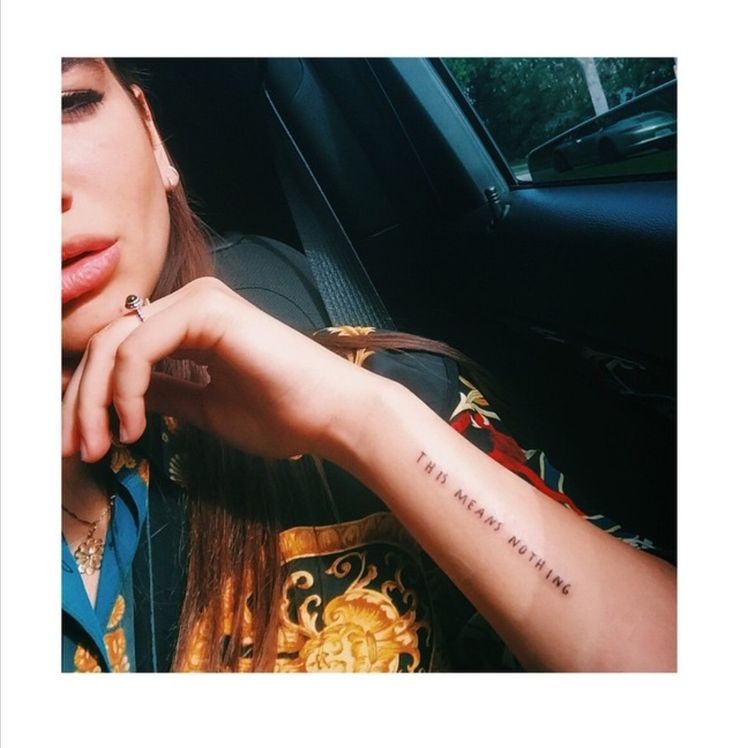
Dua reportedly got This Means Nothing on her left forearm as her second tattoo. The joke is right there in the words: they refuse the usual demand that a celebrity tattoo come with a grand explanation. The published account does not add a deeper meaning.
A close-up shows the capital letters and their placement; a wider portrait shows how the phrase sits among her other tattoos. Each view gives a different sense of scale.
A single phrase does not make every other tattoo in the collection ironic. This one is deliberately plain, and it sits apart from family references elsewhere in her collection.
The four words are readable and almost conversational. Their dry tone is the point; they leave little room for a grand interpretation.

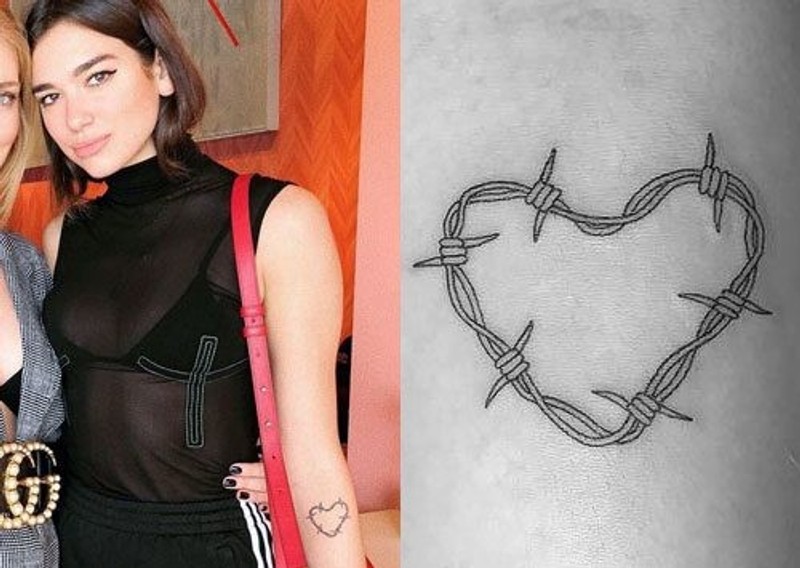
A barbed-wire heart became one of Dua’s most recognisable designs

Dua Lipa’s barbed-wire heart tattoo

The barbed-wire heart on Dua’s left forearm is one of the tattoos most likely to appear in everyday photos. ELLE Australia calls it one of her iconic designs, and its outline still reads from a distance.
The shape pairs a familiar heart with a jagged wire border. The contrast is easy to see, even though published sources do not tie every loop of wire to a personal story.
The forearm often faces the camera, but lighting can flatten the heart or make the wire look heavier. A full shot shows the design better than a cropped portrait.
It may not be her largest tattoo, but its forearm placement keeps it in view. The heart shows up often enough that many fans recognize it before they notice the smaller lettering.

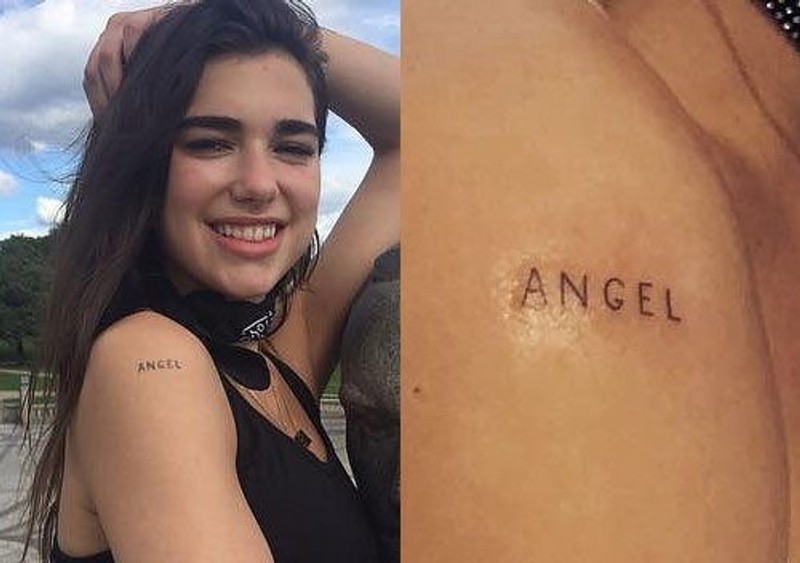
The rose and angel show two different kinds of arm placement

Dua Lipa’s Angel tattoo on her shoulder

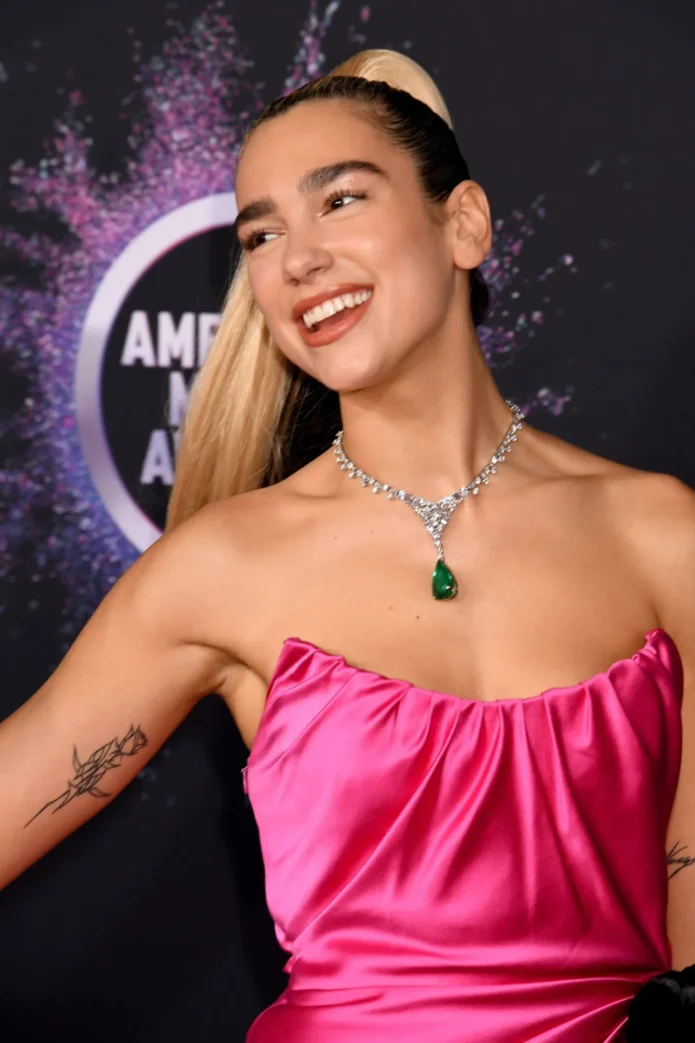
A rose outline sits on the inner side of Dua’s right bicep. Published coverage links it to a late-night Paris visit with tattoo artist Madame Buraka. It is easier to miss than the forearm lettering, so it appears more often in tattoo photos than on red carpets.
An angel sits higher, on her right shoulder; reports tie it to a 2016 session with Sean From Texas. Both designs use delicate lines, but they occupy different spots: the rose is tucked inside the bicep and the angel sits near the shoulder.
Reports identify the rose and angel but do not name every mark nearby. Their locations are visible in the photos, so each is easier to pick out when the description says where to look.
The rose is tucked inside her bicep, while the angel sits near her shoulder; calling them simply “arm tattoos” would blur that difference. Their locations also make it easier to identify each design in later photos.

A small matching star arrived during Dua’s Late Night appearance

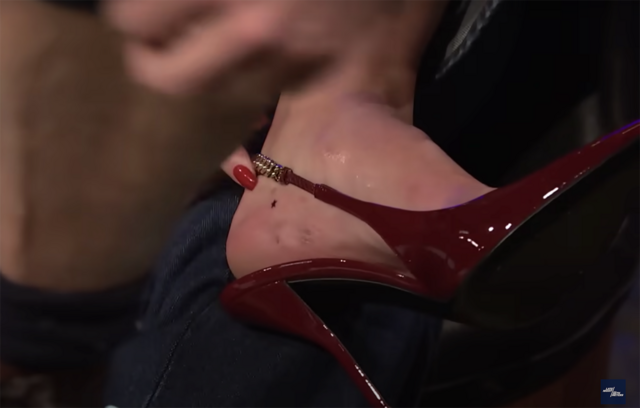
Dua Lipa’s matching star tattoo on her foot

In January 2024, Dua and Seth Meyers got matching small star tattoos during a Late Night appearance. Allure and Uproxx report that Bang Bang did the work. Dua’s star is on her ankle; Meyers’s is on his calf.
Unlike Sunny Hill or the barbed-wire heart, the star came out of a shared TV moment. They got the same small design on camera, so its date, artist and counterpart are unusually clear.
Together, the small tattoos tell different stories: a family place, deadpan words, simple symbols and a friendship marked on TV. You do not need a sleeve to make the collection personal.
The star is easier to date than the older designs: it was done in front of a studio audience, and reports name both Bang Bang and Seth Meyers. That does not make it more important than Sunny Hill. It simply comes with a clearer origin story.

More musician tattoo guides

Jayson Tatum’s Tattoos Tell a Story in Numbers, Names and Faith

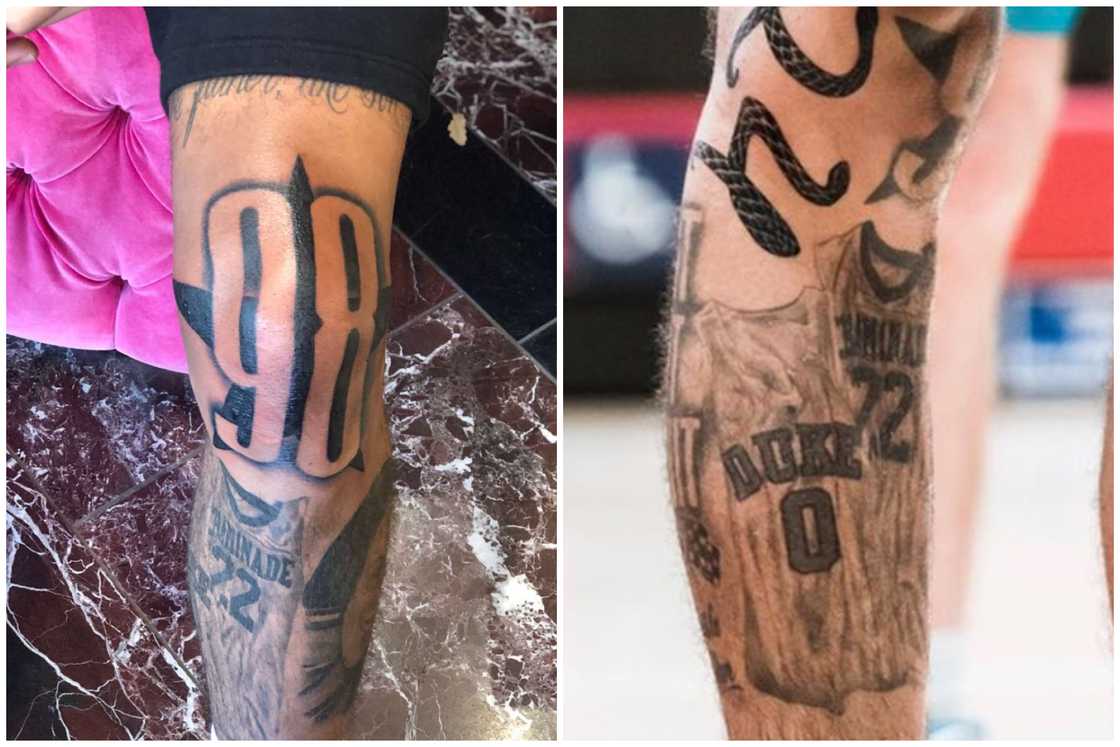
Jayson Tatum’s tattoos reflect a few parts of his life: family, basketball and persistence. The clearest designs are on his legs: I Just Didn’t Quit, Hustle Man, 98, plus Duke and Celtics references. Photos also show portraits and lettering, though some smaller marks are difficult to identify.

Some tattoos are easy to read in court photos; others need context Tatum has shared in interviews. His calf tribute is one design with a reported story behind it.

The I Just Didn’t Quit calf tribute is about persistence

Jayson Tatum tattoo detail 1

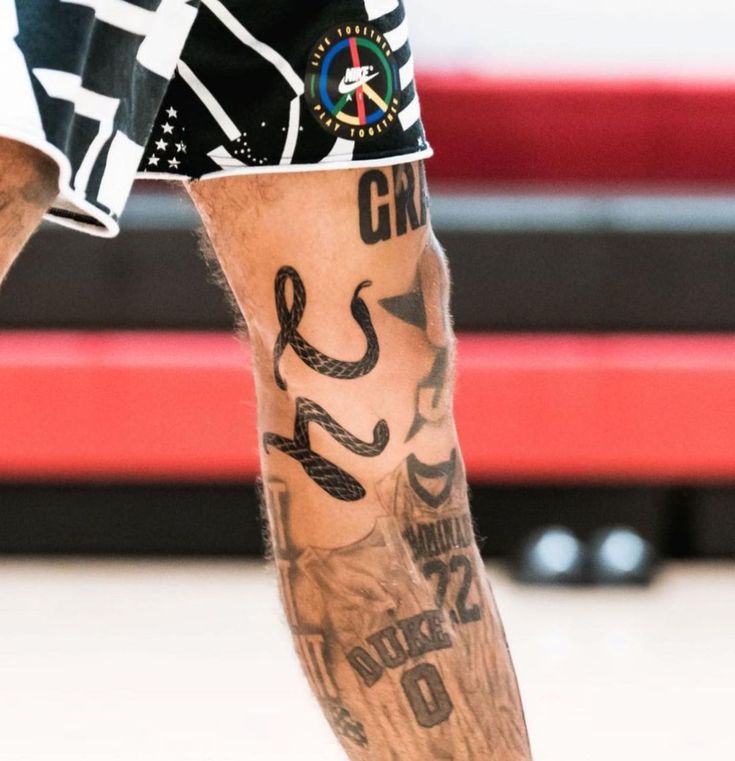
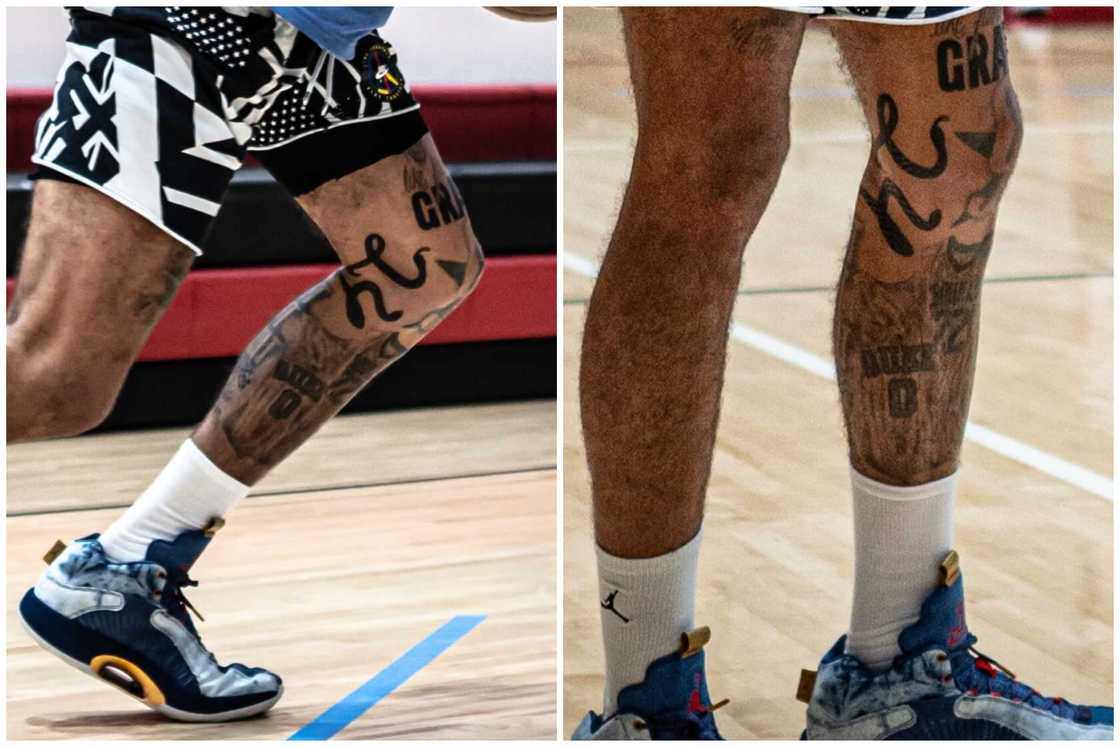
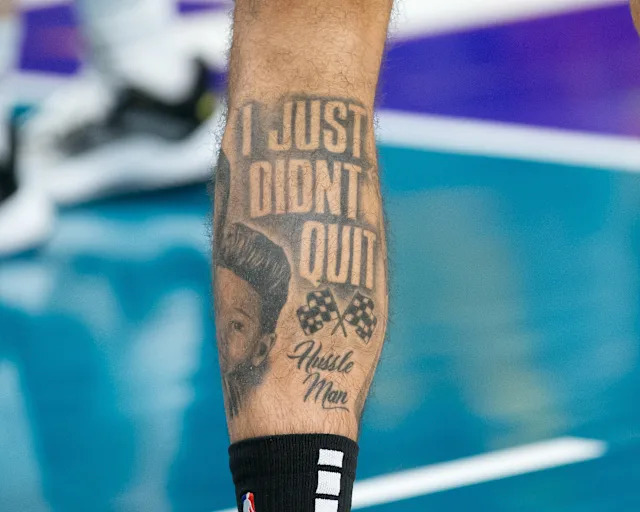
The clearest calf piece pairs the bold words I Just Didn’t Quit with Hustle Man underneath. Coverage describes the design as a tribute to a person who was killed and a reminder to keep going. Its heavy black lettering and checkered flags make it easy to spot in game photos.

That message gives the calf tattoo a personal edge; it is more than a generic motivational line. Coverage connects it to someone from Tatum’s life, and the two lines read as one design in the photos.

The 98 design turns a birth year into a visible marker

Jayson Tatum tattoo detail 2

The number 98 appears in a bold graphic on Tatum’s leg. It is widely reported as a reference to his 1998 birth year; photographs show the number and its placement, while tattoo coverage supplies that explanation.

Numbers can point to different things in a basketball player’s life: a birth year, jersey number or college connection. The established explanation for 98 is Tatum’s birth year. Stars and lines nearby are visible, but their individual meanings have not been confirmed.

Duke and 0 connect the leg sleeve to basketball identity

Jayson Tatum tattoo detail 3

DUKE and the number 0 appear among the wider leg designs. DUKE points to his college years, while zero is the number he has carried on court. A close-up also catches a snake-like design and smaller marks around them, though the details blur in some shots.

The letters and numbers are easy to pick out. The shaded work around them is less clear, and there is no confirmed meaning for every shape beside DUKE or 0. Together, the two references tie this part of the collection to Duke and basketball.

Portrait work brings family into the collection

Jayson Tatum tattoo detail 4

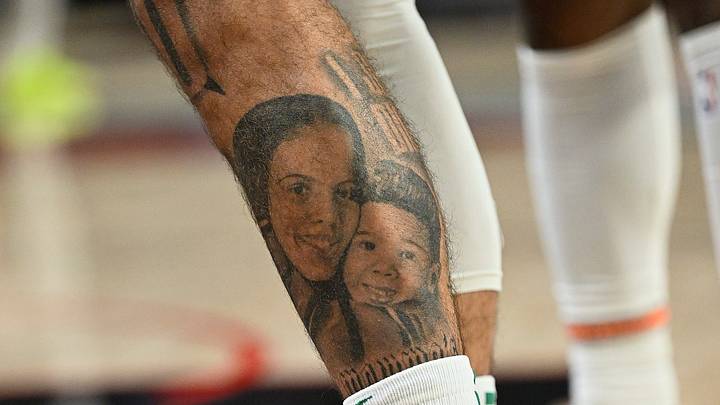
Some sports photos show portrait work on Tatum’s calf. Coverage connects the faces to family. Rendered in black and gray, the portraits look different from the bold letters and numbers; a fairly close view is needed to make out their features.

The family connection comes from reporting, but not every face is clearly identified. A blurry action shot may show the portrait without revealing who it depicts. Socks, movement and camera angle can cut off part of it, so the available images do not show everyone in the collection.

Faith and family lettering fill out the wider map

Jayson Tatum tattoo detail 5

Tatum’s wider tattoo collection includes faith and family elements, along with the word LIFE and other lettering. They show up in different poses and camera angles, so there is no single photo that gives a complete count. The designs run across his arms and legs rather than one mapped-out sleeve.

The faith-related words appear in several photos, but the fine script is not always readable. It helps to keep reported wording separate from marks that are too distant or blurred to identify.

Taken together, the main themes are clear: calf tributes, his birth year and basketball history, family portraits, and faith-related lettering. A sharper photo could reveal more. For now, the clearest designs are the ones with a readable shape, location or reported story.

Some details remain fuzzy in old game photos; others come with context Tatum has shared. That leaves room for the picture to fill out over time without turning every shadow into a tattoo.

Still photos make lettering easier to inspect, while game footage shows the designs in motion. A sock can cover a calf tattoo and movement can blur fine lines. One specific tattoo design is easier to discuss than the whole collection from a single frame.

A birth year, a team name and a jersey number can sit close together in the same photograph, but they do not all mean the same thing.

Placement matters, too. When Tatum runs or jumps, socks and movement change how much of a calf design you can see. Arm lettering is easier to catch in a portrait, while leg work can blur into a dark patch on the court. A clear photo makes it easier to tell the confirmed words from the surrounding shapes.

More musician tattoo guides

Macklemore’s Tattoos, One Story at a Time

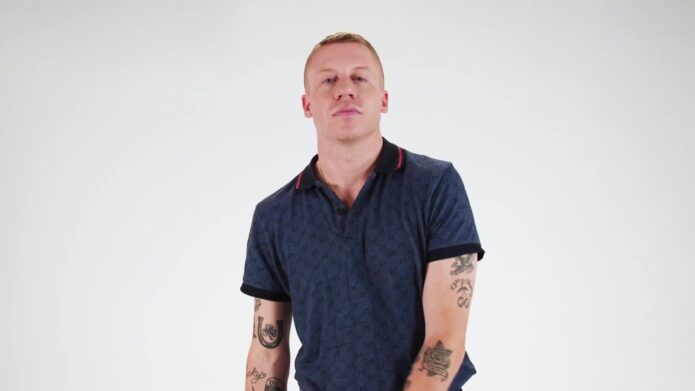
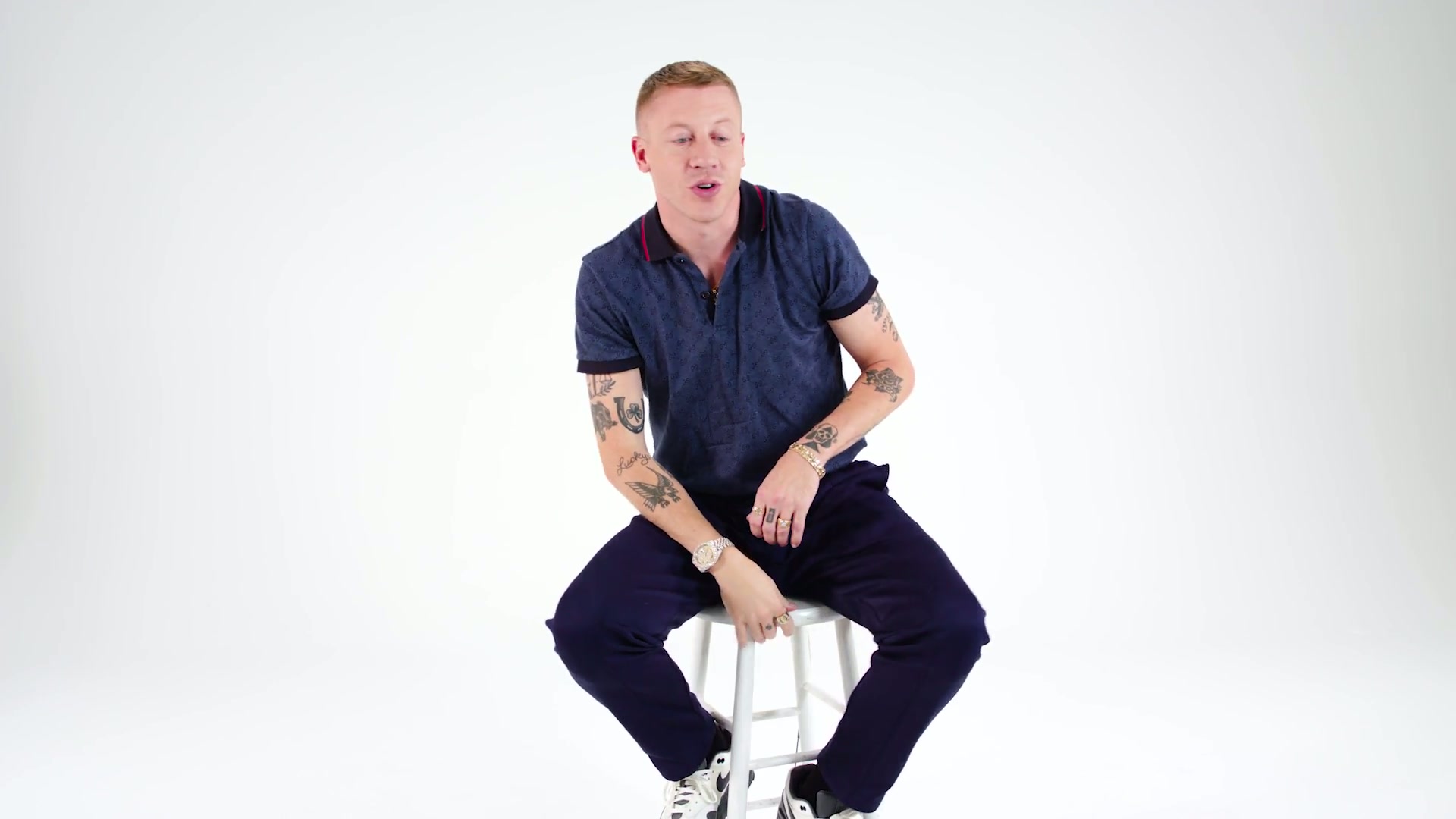
Macklemore waited until his thirties to get tattooed. What started with a small clover on one finger grew into a bold mix of traditional animals, lettering, portraits and family tributes. In GQ’s Tattoo Tour, he explains several choices himself. Some tattoos come with explanations from Macklemore; for others, the photographs are all that is available.

Chest and stomach tattoos, from Sloane’s name to the leopard

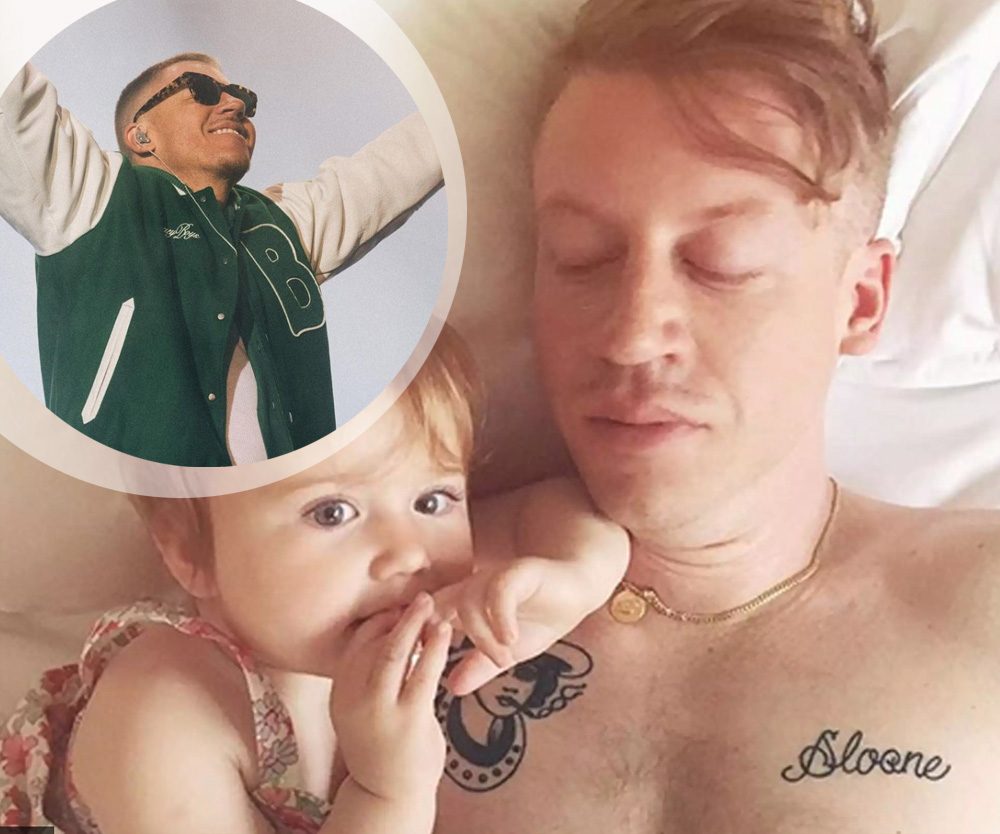
Macklemore holding his daughter, with the Sloane lettering tattoo visible on his chest
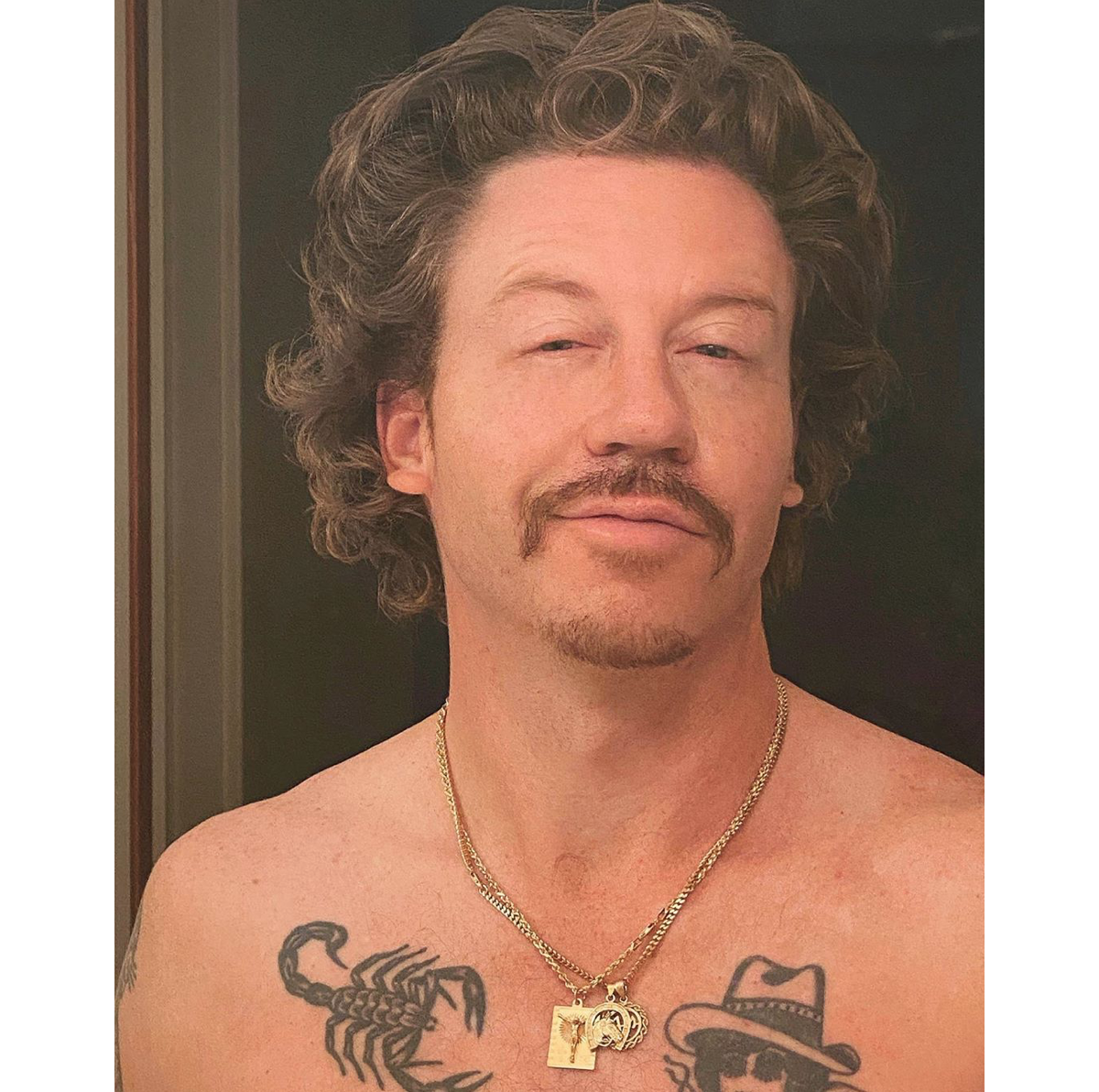
Close view of Macklemore’s chest tattoos, including traditional-style illustrated designs
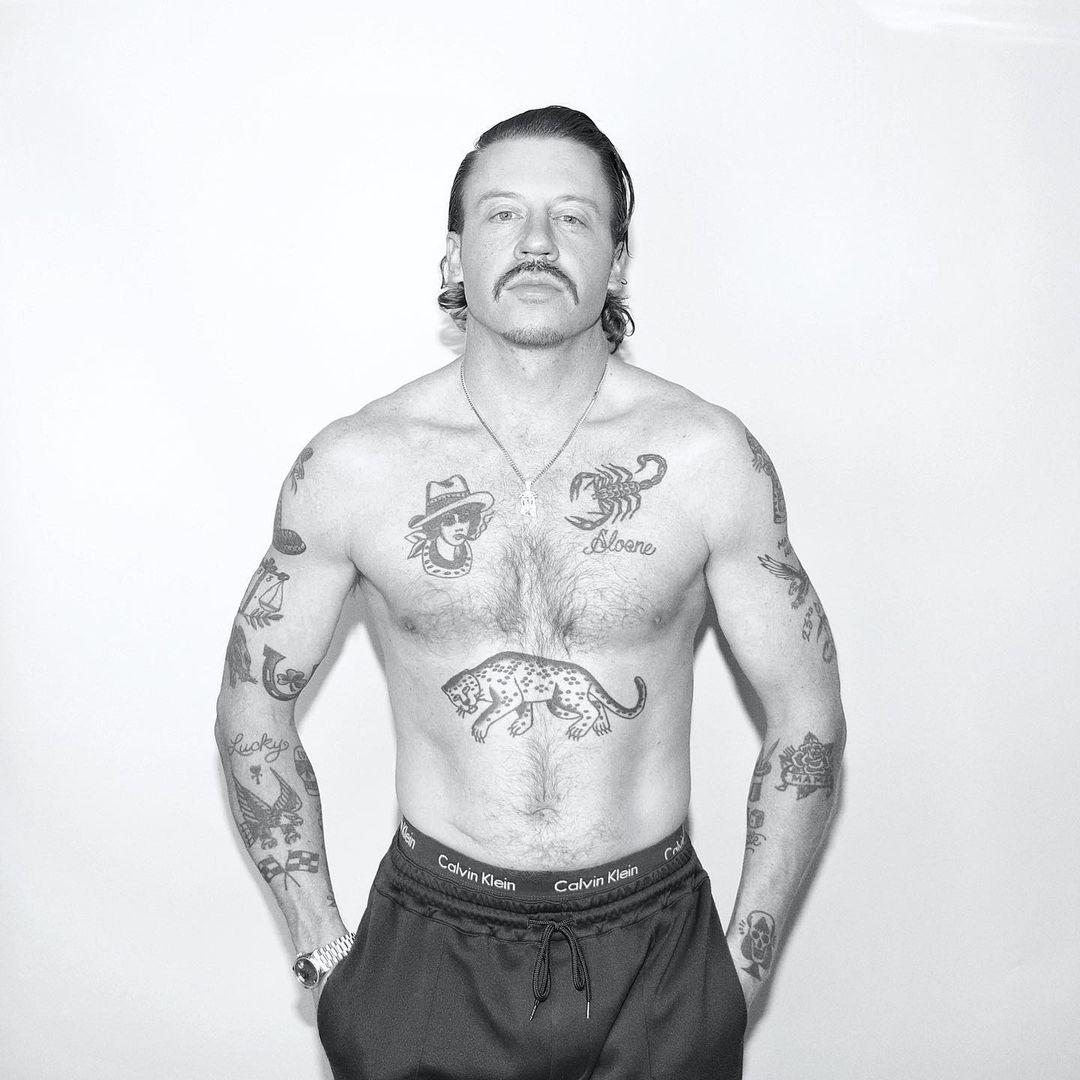
Macklemore’s leopard tattoo across his abdomen, shown in a clear shirtless photograph

The name Sloane is one of the easiest family tattoos to read. In the GQ video, Macklemore points out his daughter’s name written across his chest. It is a straightforward dedication in a prominent place. From farther away, the script shrinks to a few dark strokes, so a close photo makes a difference.

A scorpion on the left side of his chest sits near Sloane’s lettering. Its compact, illustrated shape contrasts with the open script. Macklemore has not shared a personal meaning for it, but its placement is clear.

On the other side is the woman smoking a cigarette that Macklemore points out in the GQ tour. A second account describes her in a hat and scarf. The cigarette and clothing give the small portrait its character, but Macklemore has not said who she represents.

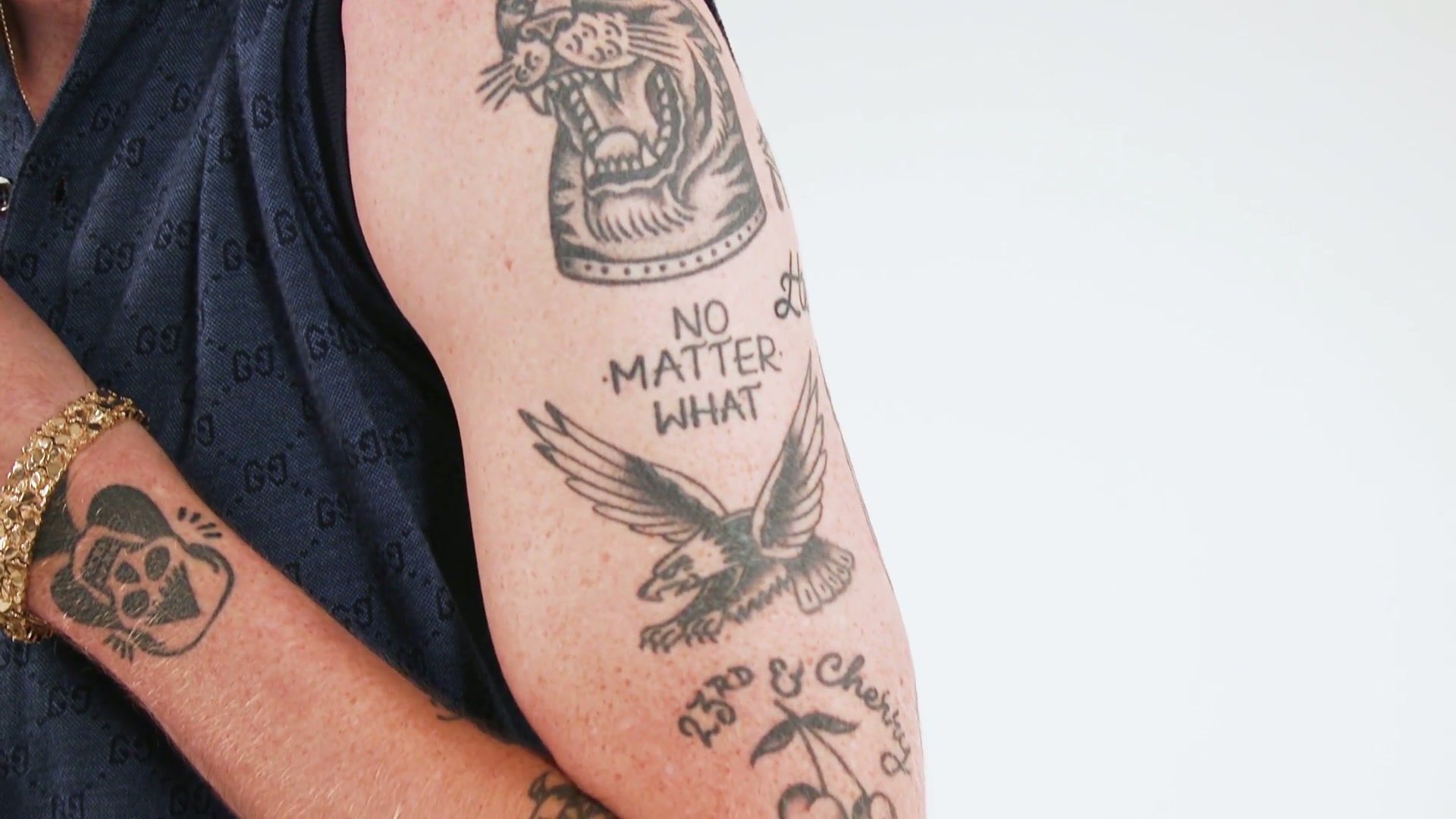
The leopard across his abdomen is a good example of meaning arriving after the design. Macklemore says he chose it because it looked tough, then later connected it to “don’t play with death, don’t do drugs.” That is his own reading, not a universal meaning of leopard tattoos. The big cat spans his stomach and is usually hidden by clothes.

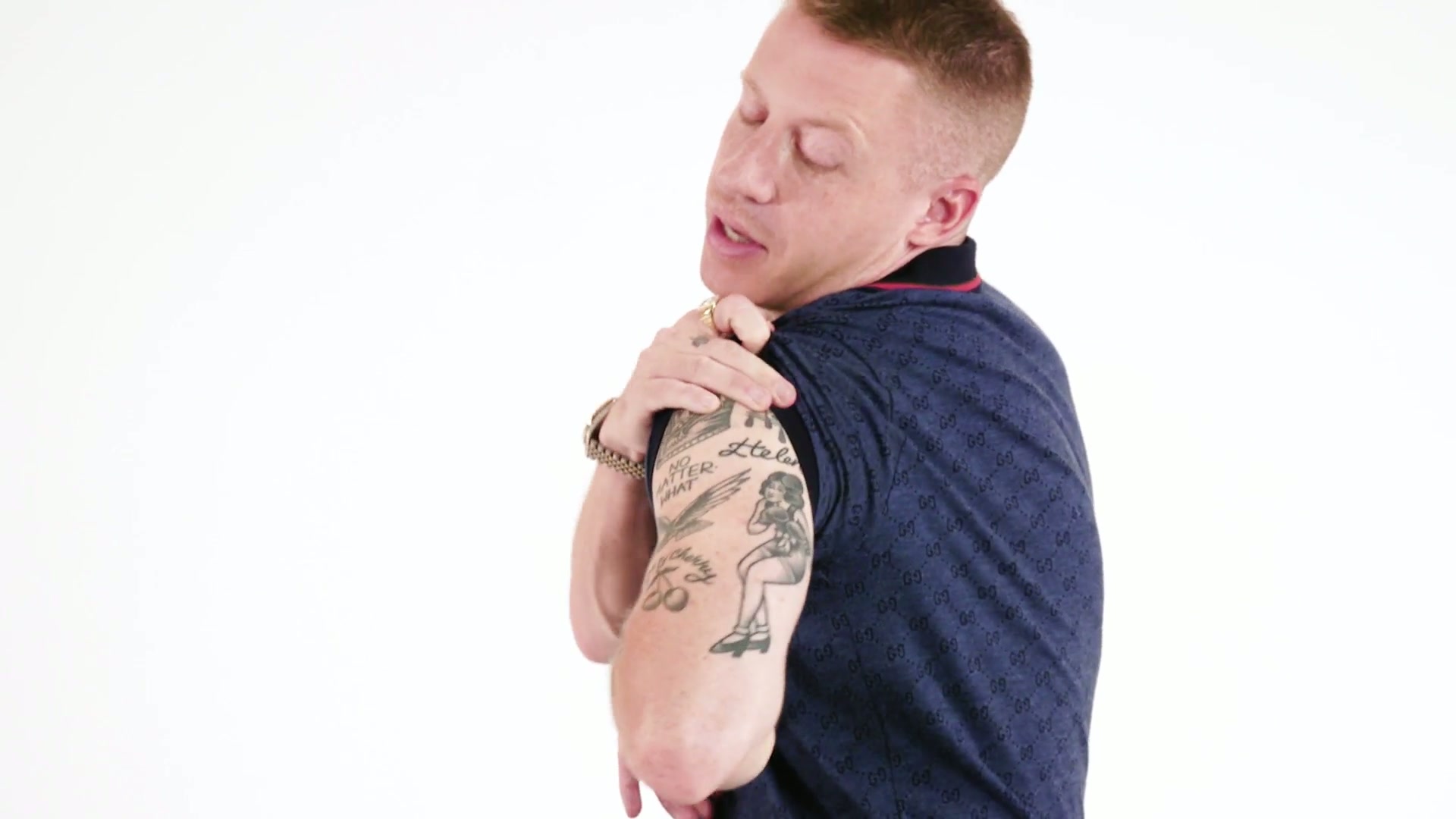
There is also a stacked piece with a tiger, an eagle and the words “NO MATTER WHAT” on the left shoulder. The tiger sits above the eagle, with the words between them. Macklemore has not explained the phrase’s private meaning.

Arm, wrist and hand pieces carry the stories he has told

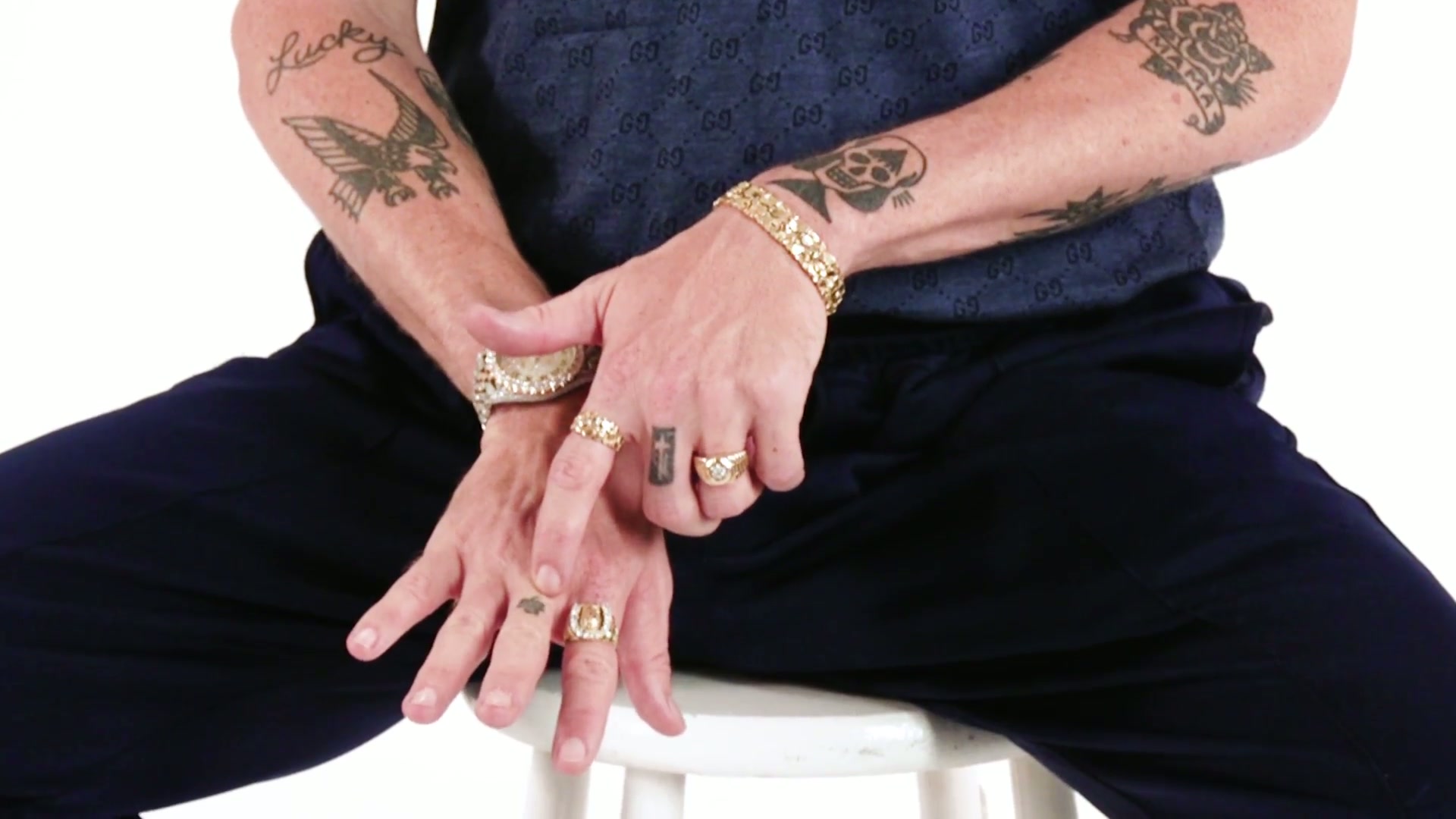
Macklemore finger and hand tattoos shown in the GQ Tattoo Tour

Macklemore has said he liked “American traditional” tattoos and wanted to keep that style when he started. On tour, he might set out to get one and return with several—about fifteen in all, by his account. That helps explain why his arms feel like a collection of separate pictures rather than one planned sleeve.

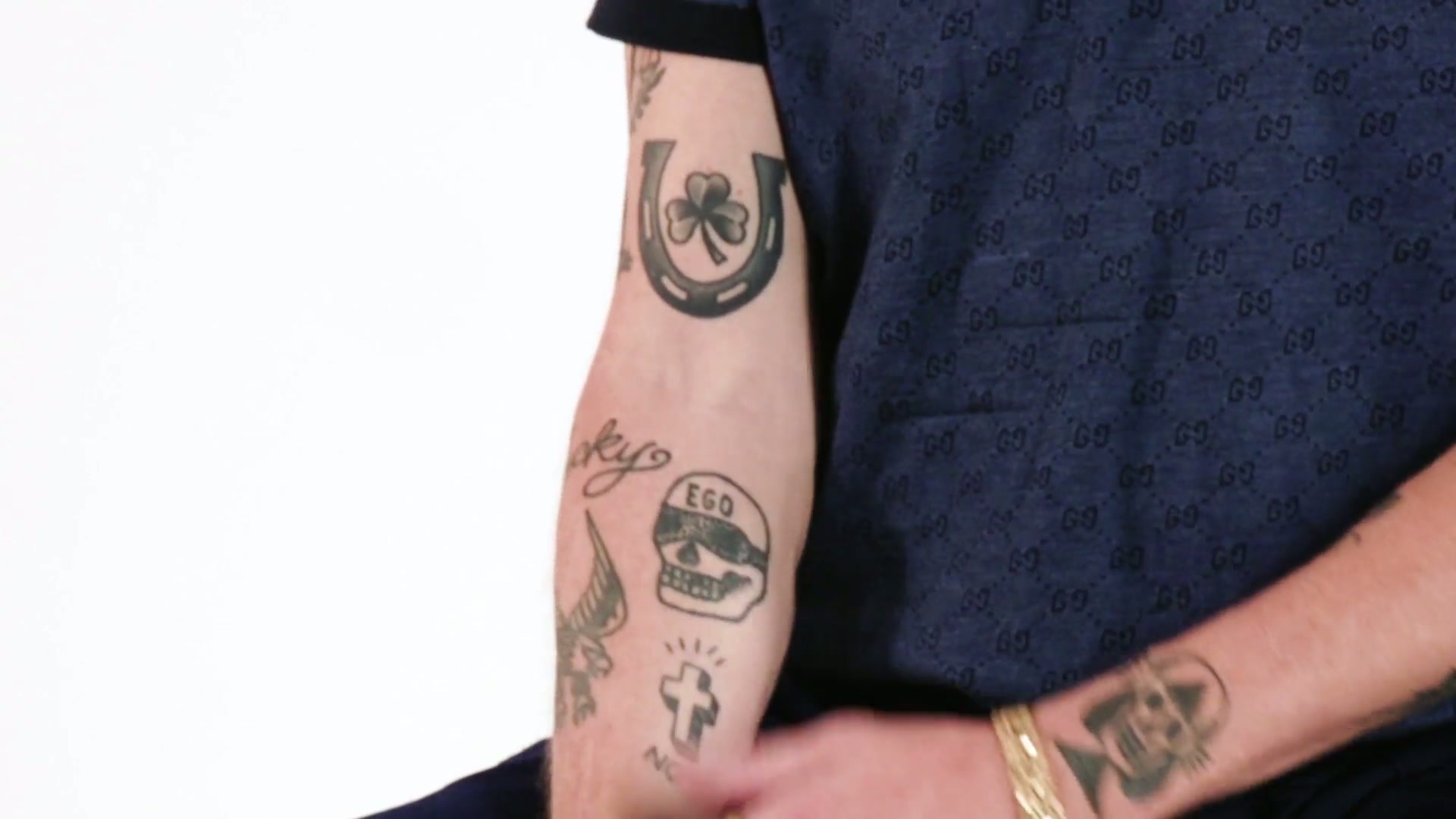
The first tattoo was a three-leaf clover on a finger. He got it while Ryan Lewis was getting tattooed and joked that it was off-centre. Macklemore links it to his Irish background but never gave it a grand meaning. He later said he stopped worrying about the placement. A separate list also shows a clover beside a horseshoe on his right bicep, though he has not explained that one. The small finger piece is part of the story he tells.

The flower with a “MAMA” banner has a clear family connection. Macklemore says he meant it for both his mother and his wife, Tricia, whom he jokes is his child’s mama. He chose that shared word instead of tattooing his wife’s name, which he says is a bad idea for a marriage. He has not assigned a separate meaning to the flower itself.

Macklemore’s flower tattoo with the MAMA banner, shown in GQ’s Tattoo Tour.

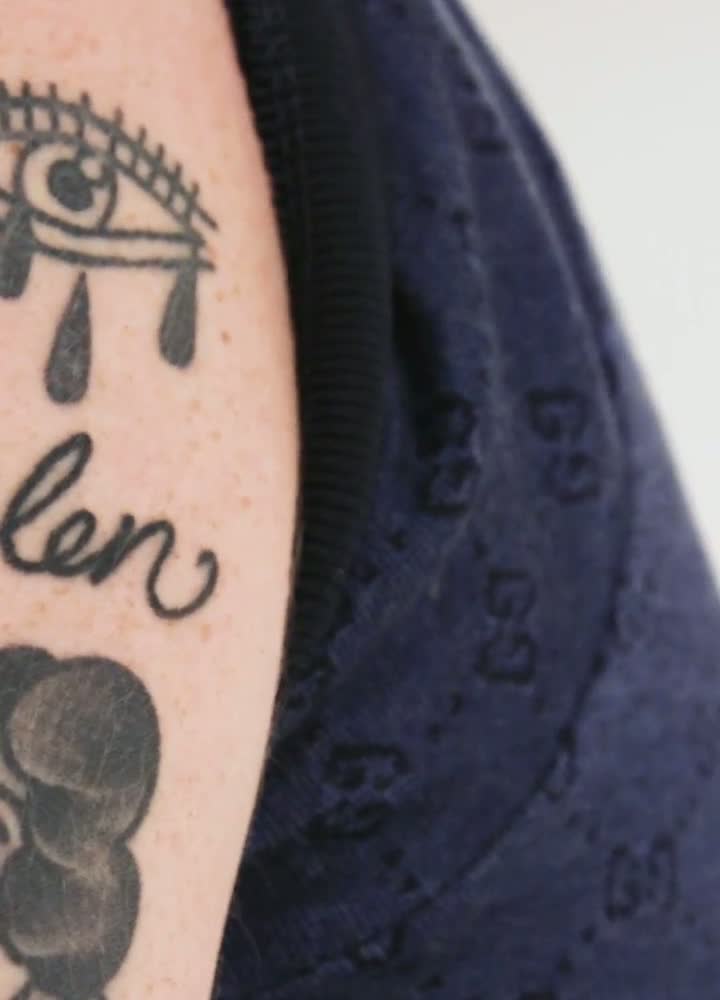
The Helen tattoo came from a day with his grandmother while filming the “Glorious” video. Helen picked the font, and Macklemore got the lettering tattoo while they were together. GQ confirms her role in choosing it. A secondary tattoo catalogue also describes a woman’s portrait as Helen, but does not say whether it is the same tattoo or a separate one. The lettering has a clear story; the portrait remains a reported visual entry.

Macklemore Helen portrait tattoo on his upper arm

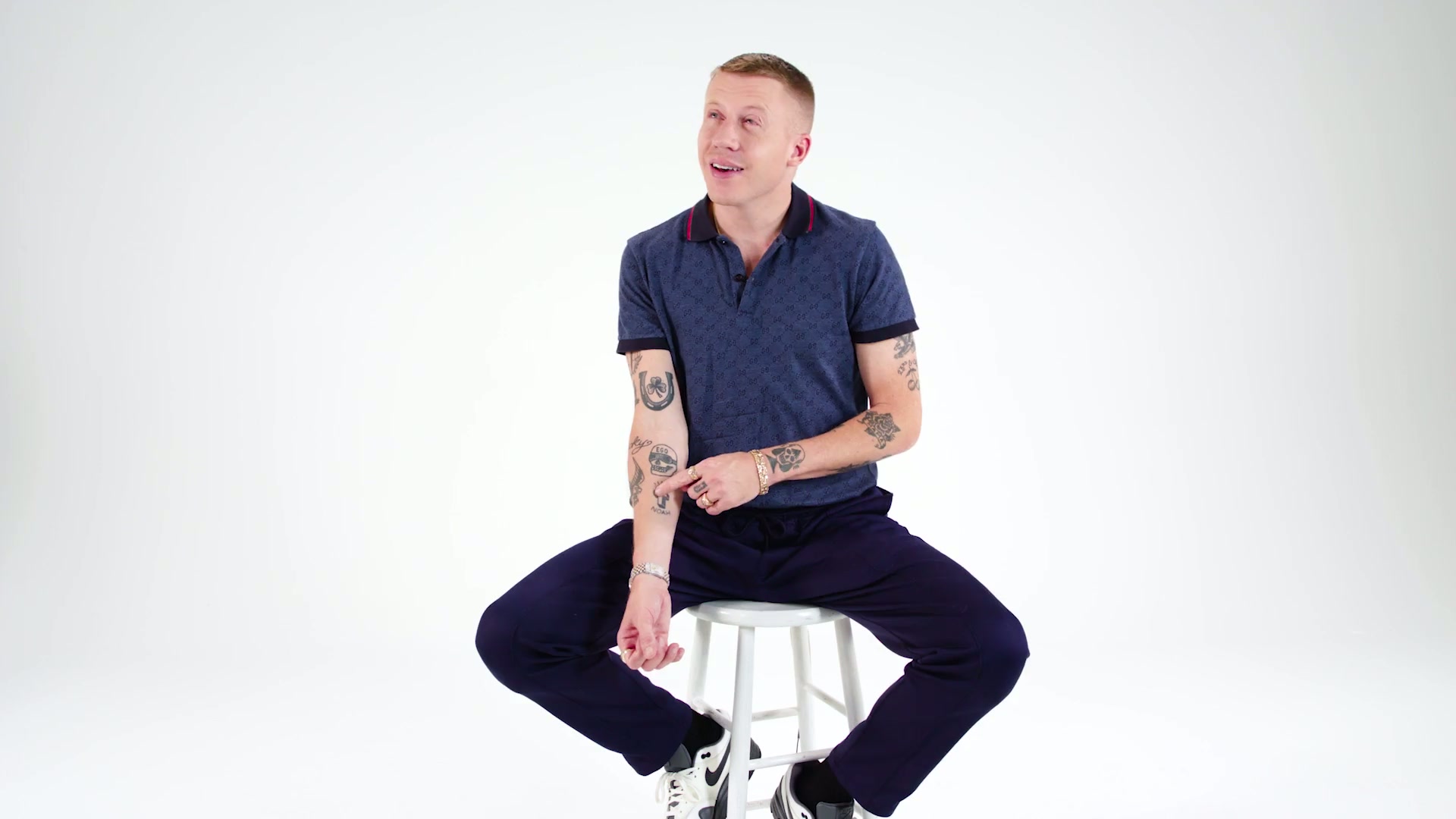
The Noah tribute is another story Macklemore has told himself. Noah was a close childhood friend, painter and community activist who died. Macklemore says the tattoo keeps his friend’s memory close. A separate listing places a cross and the name Noah on the inner right forearm, near a skull marked “EGO.” Macklemore confirms the memorial, but does not identify every nearby detail.

Macklemore Noah memorial and EGO skull tattoos

“23rd & Cherry” ties a place to his recovery. Macklemore identifies it as the Seattle street and fellowship hall where he got sober. He calls it home and says the tattoo helps him stay sober. The inventory places the words with cherry imagery on his upper arm; GQ supplies the personal story. It is both an address and a turning point he has chosen to keep close.

Macklemore 23rd and Cherry forearm tattoo

The rest of the arm designs are clearer in photographs than in Macklemore’s own explanations. The inventory lists a parrot on the left forearm, a skull pierced by a spade on the left wrist, and a small cross inside a square on the left middle finger. They sit among traditional-style pictures rather than forming one continuous sleeve. His line about death and drugs came with the leopard story, not the skull.

Macklemore EGO skull and cross forearm tattoos
Macklemore forearm tattoos shown in a GQ Tattoo Tour close-up

On the right arm, the same list shows a woman on the outer forearm, checkered flags near the wrist, and an eagle with a small heart and the word “Lucky” above it. It also records a horseshoe beside a three-leaf clover on the right bicep, and a serpent above scales, the number 33 and branches on the right shoulder. The designs are visible; Macklemore has not given a specific meaning for each one.

Another entry pairs dice with the word “Seattle” on the inner left forearm. It is described as a hometown tribute. Macklemore’s GQ sobriety story, though, is about “23rd & Cherry,” not necessarily the dice. Both may point to Seattle without carrying the same story.

One list also labels a right-upper-arm design a rat, but its description is vague. Without a clear photo or Macklemore’s own identification, the label is uncertain. It notes a shark above the left kneecap as well; that placement is reported, but he has not given the shark a meaning.

No single grand theory ties all of Macklemore’s tattoos together. He has talked about the traditional style, getting several tattoos on tour, the crooked clover he learned to accept, and pieces connected to family, friendship and recovery. Some designs come with stories in his own words; others are known mainly from photos. That mix is part of what makes the collection feel personal.

More musician tattoo guides

Chris Brown’s tattoos span faith, family, and bold art

Chris Brown says he was 13 when he got his first tattoo: Jesus with musical notes, a design he connected to singing as a gift from God. He told the story in an interview with Music Times, drawing on an earlier Urban Ink conversation. The idea was small, but it set a pattern that runs through much of his collection: faith and music.

Brown has added new work, covered older pieces and shown the collection in stages, so there is no final count. Some meanings come from interviews or the artists; others are simply what a clear photo reveals.

Arm, hand, and chest ink is where the collection reads like a diary

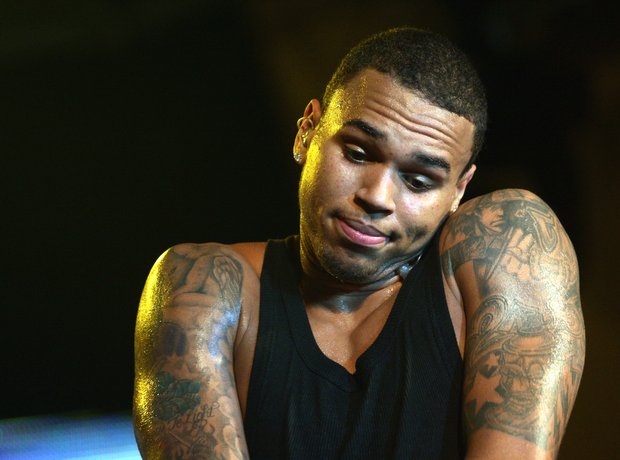
Chris Brown performing with his tattooed arms visible
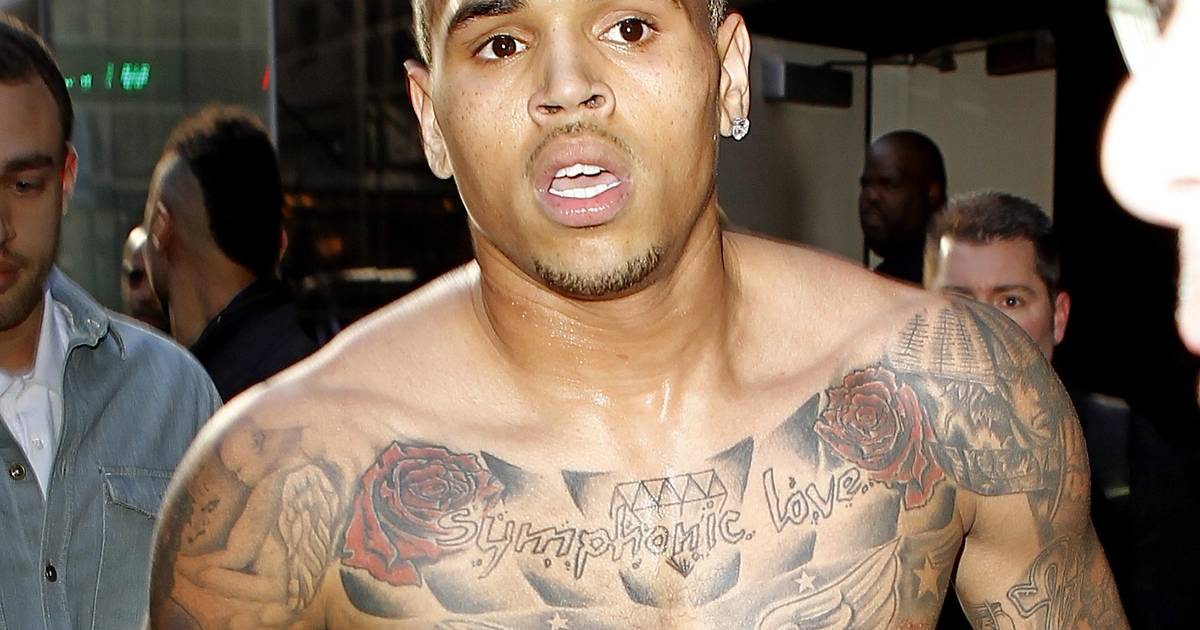
Chris Brown's Symphonic Love lettering, roses, and wings across his chest

The arm tattoos mix portraits, lettering, stars and playful designs rather than forming one continuous sleeve. In BET’s gallery, Brown says the two ninja figures and the words “Darkness to Light” refer to leaving the wrong crowd and choosing his own direction. That story gives the phrase more weight than a general label like “transformation.” Photos show how densely the sleeve is filled; Brown explains what the words mean.

Wide shots can hide the smaller details. BET notes black-and-white stars on his arms and wrist, as well as a colorful sleeve. A tattoo list identifies the name Joyce on his inner wrist, a reference to his mother. Brown has also described a hand design tied to Virginia: two “ups” and two “downs”, a spray can from his graffiti years, and a “B” for Brown. He has explained these details himself.

The chest is more composed. BET’s 2013 gallery identifies “Symphonic Love” across his chest, framed by wings and roses. The phrase also became the name of Brown’s children’s charity. The eye catches the lettering first, then follows the wings and flowers outward into one sweeping design.

Brown’s upper body is layered, with newer pieces partly covering older ones. A photo from one year may not show what is there now. His first Jesus-and-music tattoo belongs to the same thread of faith and music, though its exact placement is hard to make out in a distant performance shot.

The neck artwork changed, then became a public argument

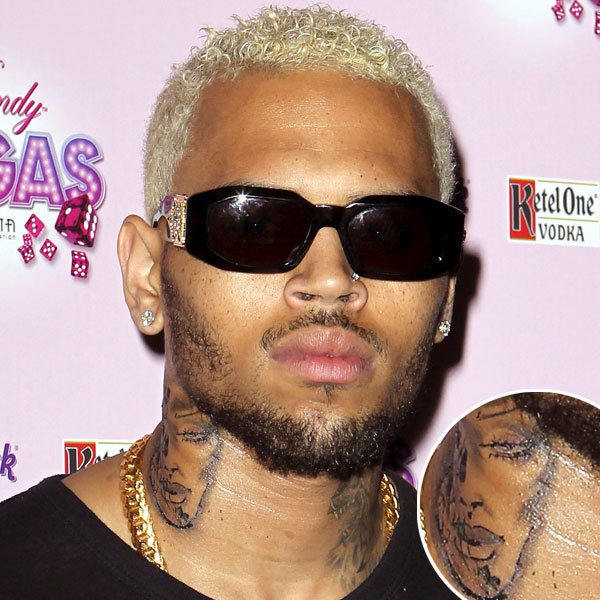
Close view of Chris Brown's 2012 sugar-skull design on his neck

In 2012, a new face tattoo on Brown’s neck drew immediate attention. Some viewers saw a resemblance to Rihanna after the 2009 assault. The timing became the story, but neither the resemblance nor the timing proves what the image was meant to depict.

Brown’s representative called it a sugar skull associated with Día de los Muertos, inspired by a cosmetics design he had seen. Tattoo artist Peter Koskela also denied that he had tattooed a battered woman or Rihanna. E! News reported their explanations, while The Guardian covered the strong reaction. The two accounts can sit side by side: that is how Brown’s camp described the tattoo, and the perceived resemblance explains why it drew backlash. A photo cannot settle intent.

Brown has added more around his neck since then. Reports later noted a lion, and stars behind the ear appear in tattoo galleries. An older close-up is only one moment in a changing design.

King Rico’s head piece pairs a bull with a woman’s face

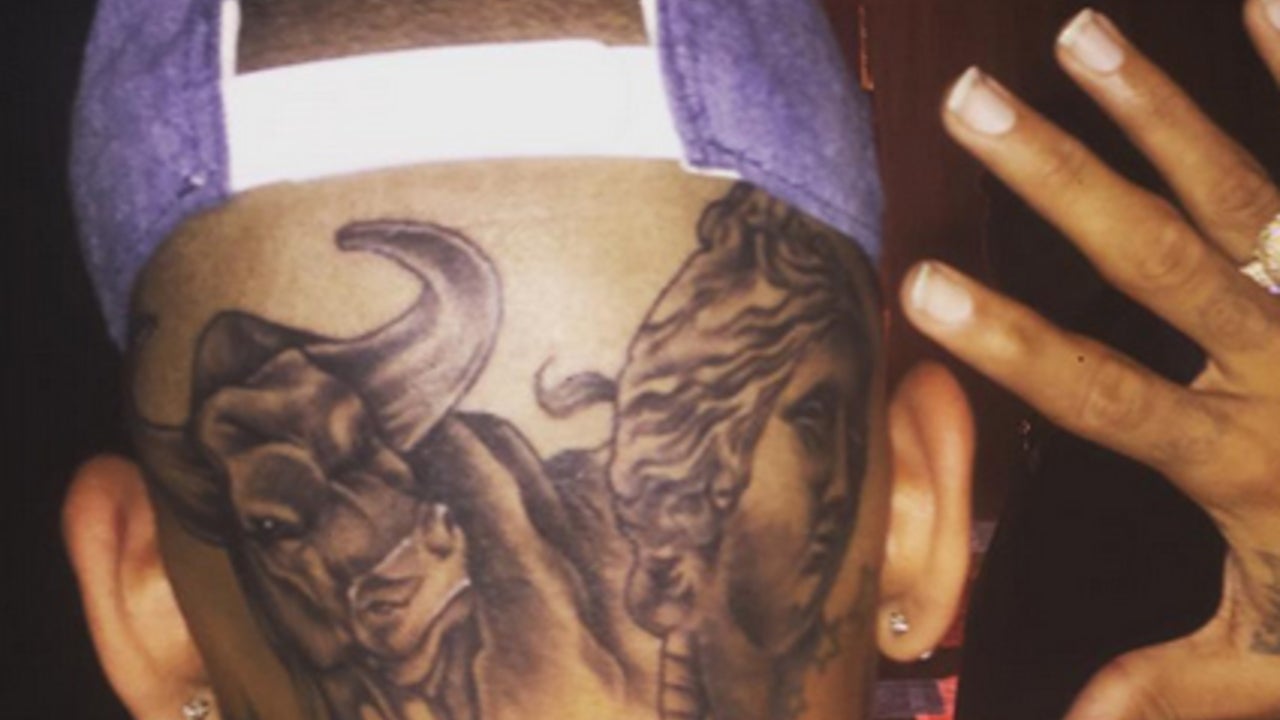
Chris Brown showing the bull and woman's-face tattoo across the back of his head

In August 2015, Brown showed a large black-and-gray tattoo across the shaved back and side of his head. Entertainment Tonight identified a bull and a woman’s face and named Bronx tattoo artist King Rico. The design extends into star work behind the ear, linking it to a wider composition.

Brown’s post around the reveal linked the bull to his Taurus sign and the woman’s face to Venus. That is the explanation he shared; the image alone cannot tell us why he chose those subjects. There is no need to add claims about protection, romance or spirituality that he has not made.

The woman’s face is sometimes confused with the 2012 neck tattoo, but they are separate pieces, made three years apart by different artists. Koskela was credited with the neck work; King Rico did the later head tattoo.

Royalty’s portrait on his back is different from the later name tattoos

Chris Brown's black-and-gray portrait tattoo of his daughter Royalty on his back

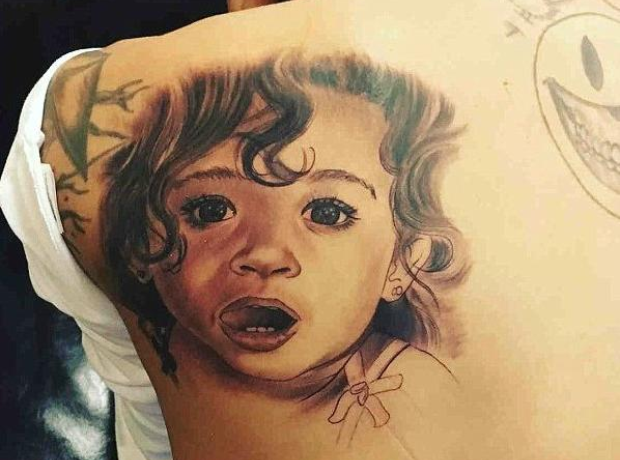
In June 2016, Brown shared a work-in-progress portrait of his daughter Royalty across his back. Inked reported that Fred Tattoo began the portrait; The Source placed the session in Copenhagen and identified the artist as Fred of Exotic Tattoo Murcia. Brown’s caption said it was not finished yet, which explains why later photos can look different.

This is a portrait, not the same tattoo as the large “ROYALTY” lettering added to a shin years later. The back piece turns a photograph of his daughter into a black-and-gray image; the leg work pairs names with illustrations. Both are family tattoos, but they were separate projects by different artists.

Royalty and Aeko’s names take up both shins

Chris Brown's Royalty lettering and illustrated tattoo on one shin
Chris Brown's Aeko lettering and character tattoo on the other shin

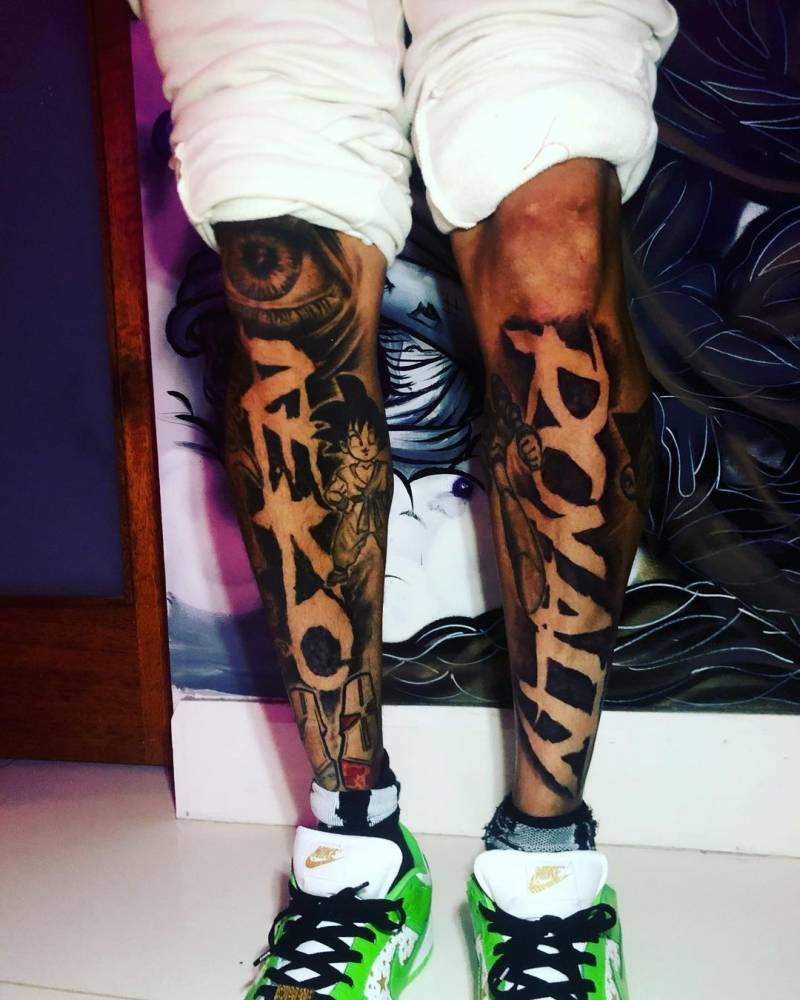
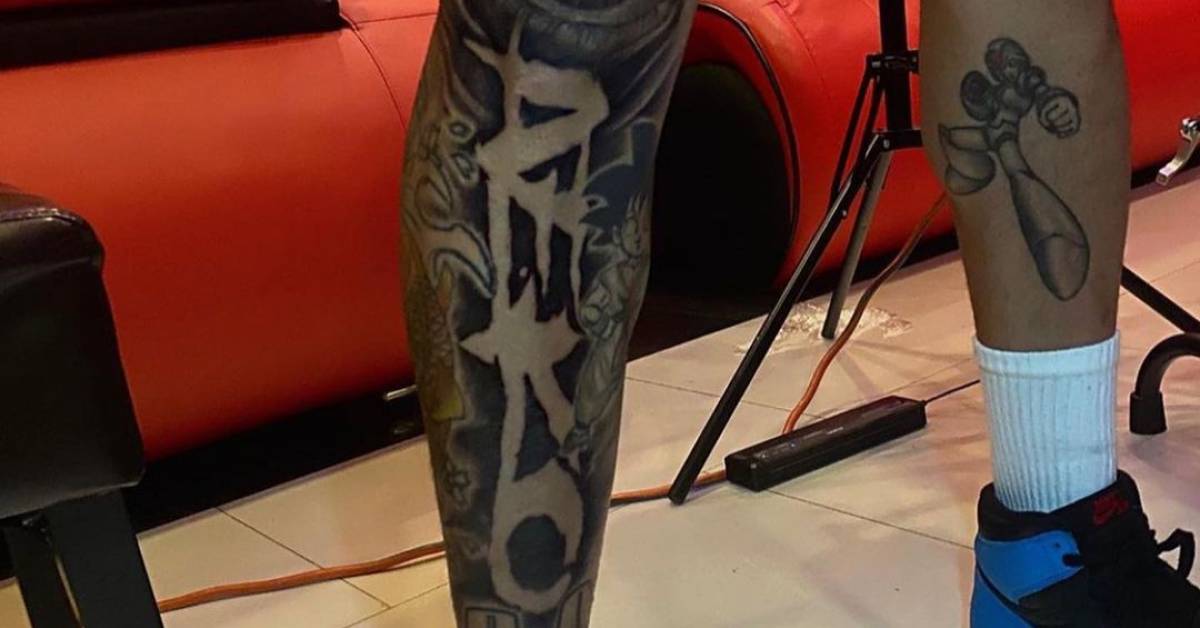
In March 2021, Brown showed the paired designs running down both shins: Royalty on one leg and Aeko on the other. He captioned the reveal “My world on my legs”. Complex credited tattoo artist Ganga, who had also worked on Brown’s Air Jordan face tattoo.

The names are only part of the designs. Photos show the Royalty lettering alongside an illustrated character and the Aeko lettering with a large eye and anime-style figure. The pair reflects Brown’s interest in animated characters, and both legs need to be seen to understand the layout.

Brown introduced the leg pieces together; that does not make them a finished set.

The Air Jordan on his face is an unmistakable design choice

Close-up of Chris Brown's Air Jordan sneaker tattoo on the right side of his face

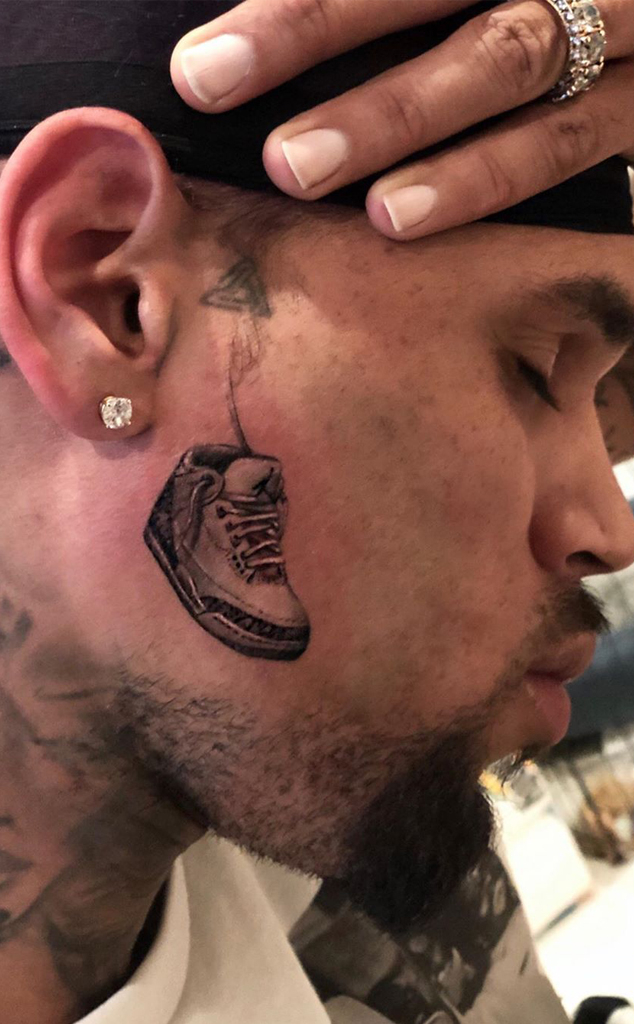
In February 2020, Brown added an Air Jordan 3 sneaker to the right side of his face, below a small Black Pyramid logo. Artist Joaquin “Ganga” Lopez shared the work, and reports connect him with Brown’s earlier Darth Vader tattoo on his stomach. E! News also noted the shoe design and artist credit.

The sneaker is one of Brown’s most recognizable tattoos, but it is separate from the small logo above it and the larger head and neck work. Ganga identified it as an Air Jordan 3 and shared a close photo, making the design easy to confirm.

Brown’s collection is huge, and its meanings come from a mix of his own comments, artists’ accounts and dated photos. Each reveal captures one point in a changing set. Where he has not offered an explanation, the design can speak for itself.

More musician tattoo guides