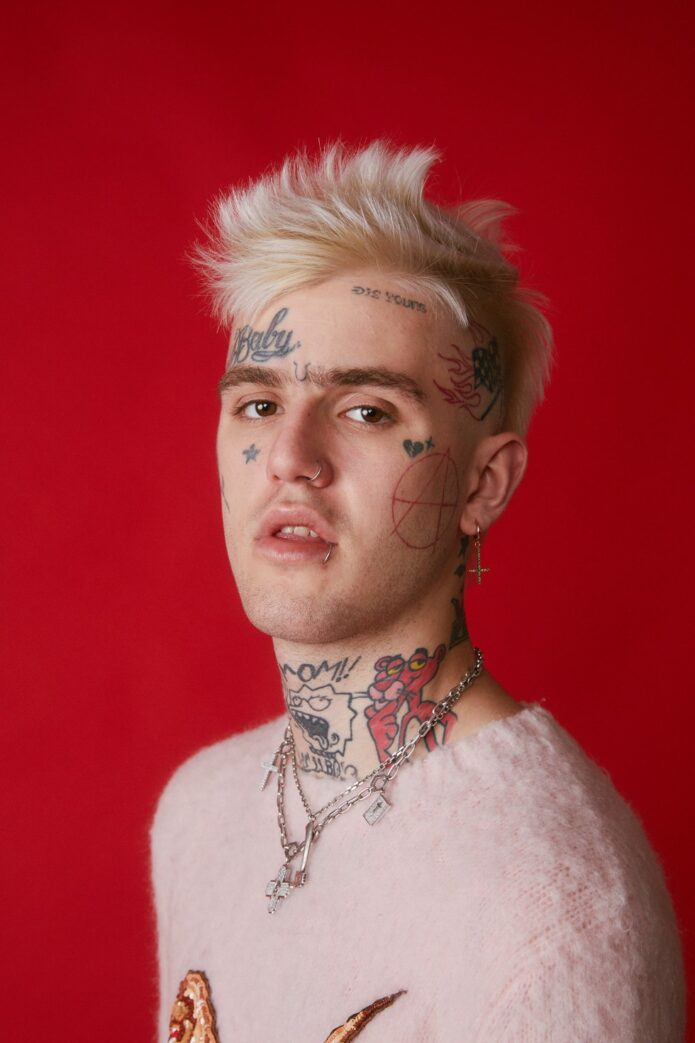
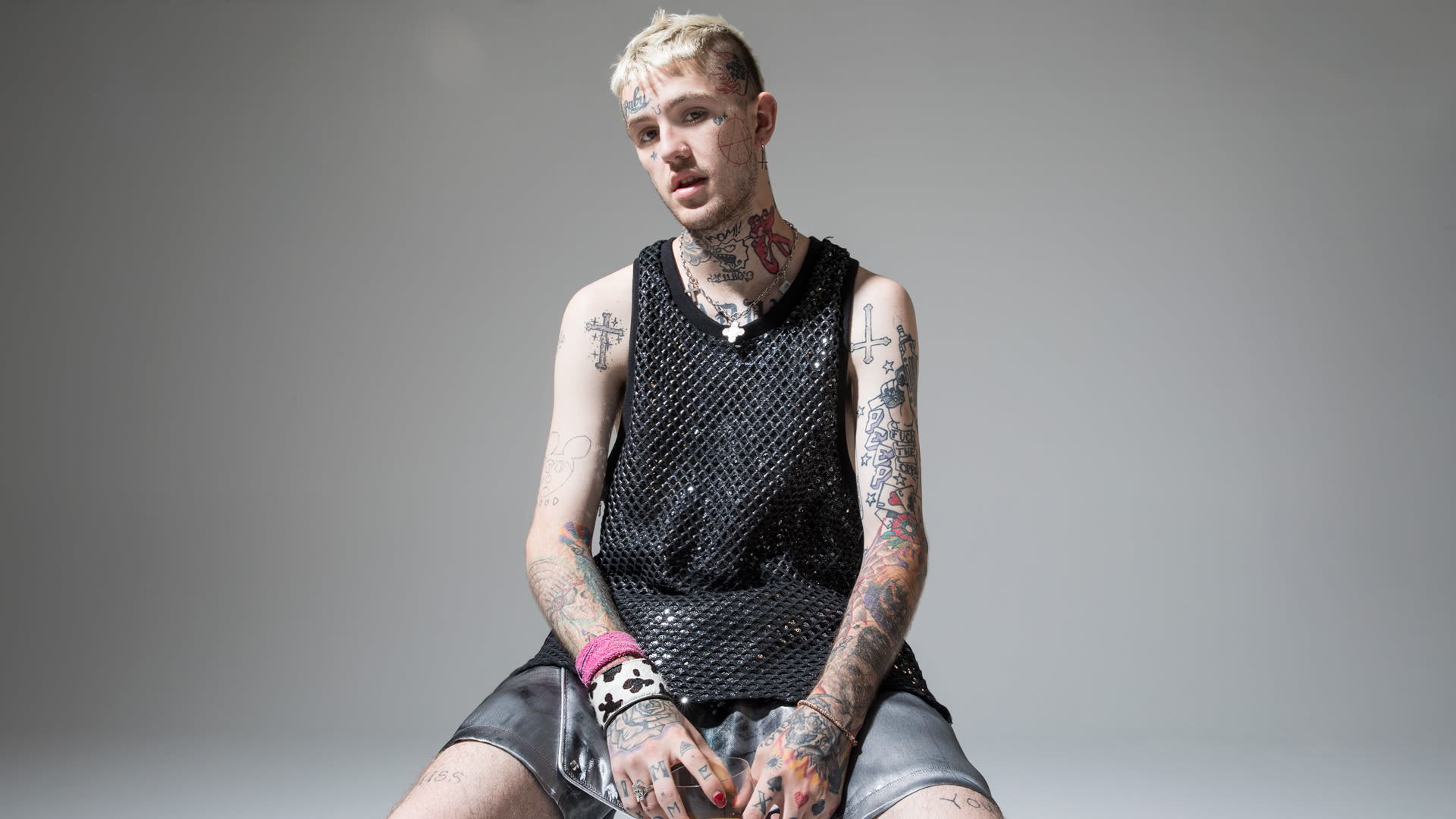
Lil Peep’s tattoos were never a carefully planned image. In GQ’s 2017 Tattoo Tour, he names family pieces, spooky images, music references, a broken heart, a horseshoe and the word “crybaby.” He tells stories about some designs; others were spontaneous or chosen for the joke.
In the footage, Peep often explains the tattoos himself. A photograph shows where the ink sits; his comments tell us whether it was a family reminder, a joke or an impulse. Some designs only make sense once he tells the story.
“Get cake, die young” and the Halloween details made the face a record
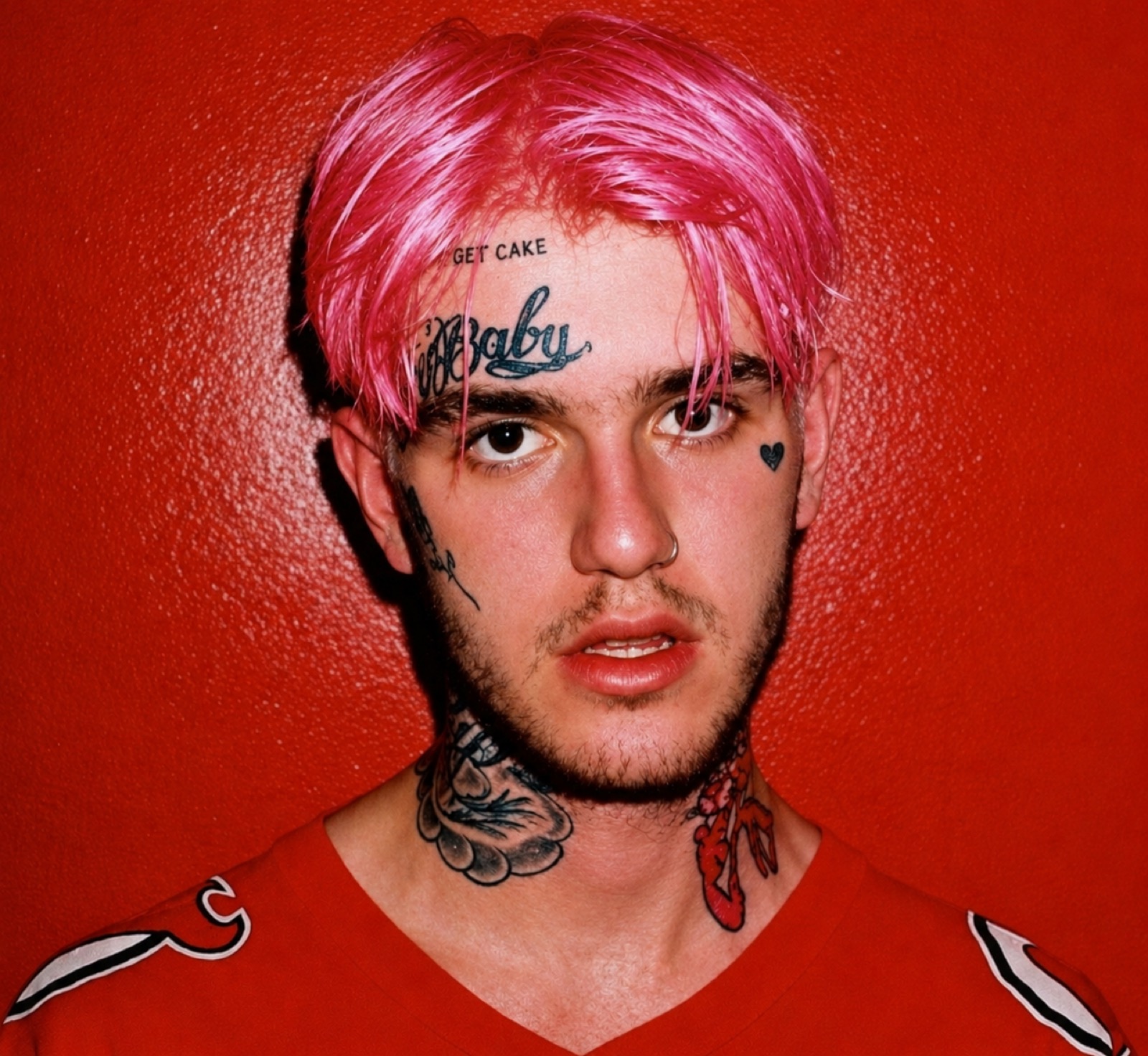
Peep says he sometimes woke with face tattoos and no memory of getting them. One phrase reads “get cake, die young.” After a night of heavy drinking, he woke to find it on his face and accepted it. It’s an absurd story, and shows how some of his face tattoos happened without a plan.
He says “11 1” marks his birthday, November 1, around Halloween. Around that theme are bats and a pumpkin. He also got a centipede after noticing how often they seemed to turn up around him. It bothered him so much that he put one on his body.
The bats and pumpkin point to Halloween. The centipede has its own story: Peep said they kept turning up around him and bothering him, so he put one on his body. The images don’t all belong to one vague “dark” theme.
Family names, Lisa, Meep and Hellboy sit beside the early work
At 14, Peep got a large tattoo connected to his mother’s birthday and initials. He said he wanted something that wouldn’t make her angry about his first tattoo. He also mentions tattoos of his grandfather, his mother and a friend, and says family meant more to him than a traditional family tree.
The Lisa shouting “Mom” tattoo captures one of their habits. When Peep felt overwhelmed or things were going wrong, he says, he called his mother and stressed her out. The tattoo is therefore a visual joke about a real family dynamic, not just her name or a portrait.
His leg tattoo of Meep recalls a doll he bought with a former girlfriend. He called the doll his son and wanted the character on his body. It’s playful, but the attachment made it personal to him.
Below Meep, he points out “Hellboy,” the name of his first mixtape to attract wider attention. He also loved the comics and their main character, so the lettering nods to both music and comics.
The broken heart and “crybaby” tattoos turned pain into identity
Peep got the broken heart beneath his eye in 2015 during a period when he wasn’t feeling well. He said he had to succeed in music because visible face tattoos could make ordinary jobs harder to get. The placement was emotional, but it also pointed him toward a career.
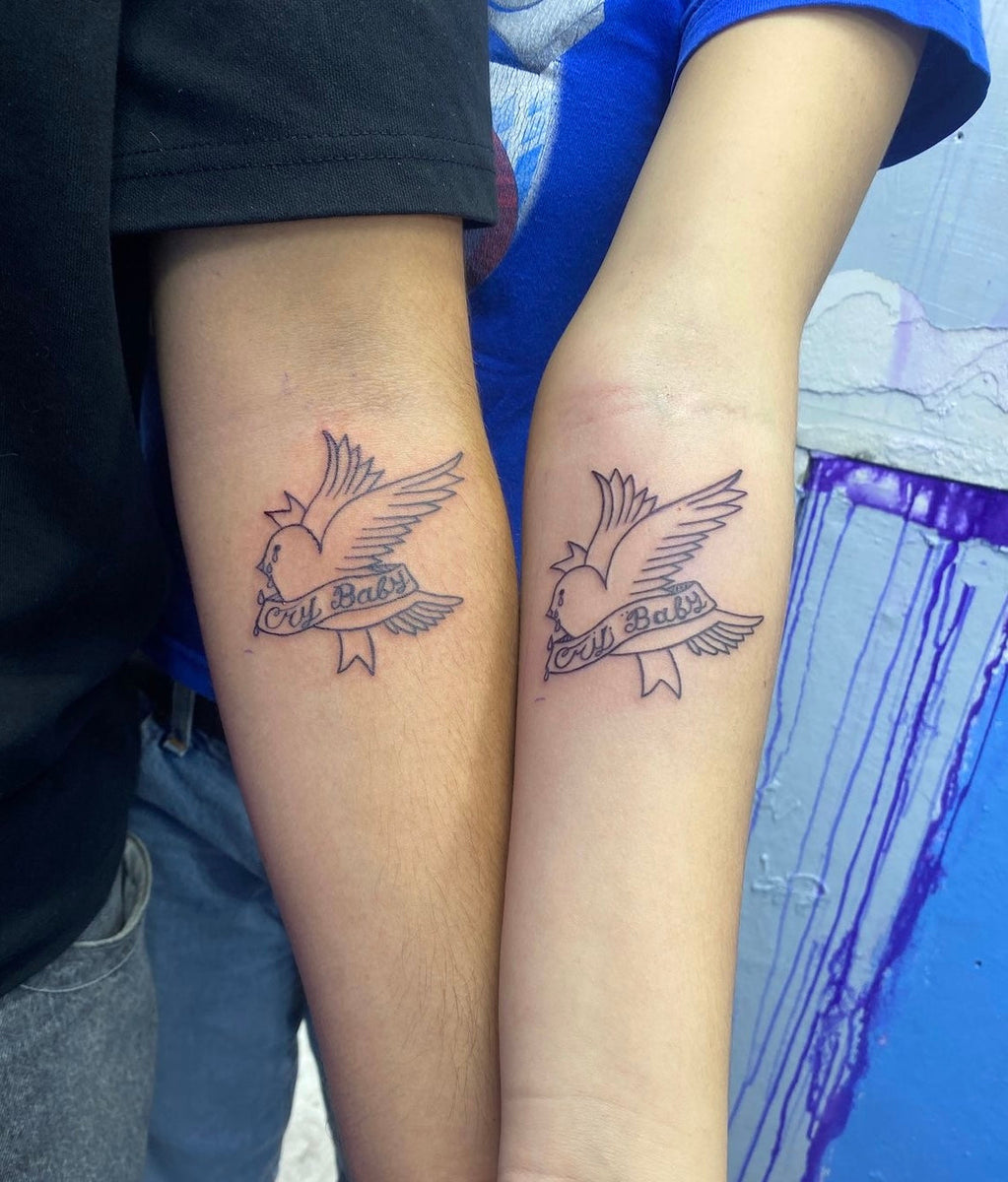
The large “crybaby” tattoo came from something Peep noticed about himself. He said he complained often and felt ungrateful despite having opportunities many people wanted. He chose the word to remind himself to appreciate what he had and remember that other people faced harder circumstances. He called it one of his favourites, even knowing some people would regret such visible ink.
He described “mood” as his eternal mood and joked that the image was low quality because his mood was, too. The tattoo does not need a grand explanation; the joke already says a lot about how he viewed the imperfect piece.
The “homesick.” tattoo on his fingers reflected touring while he was young and missing his mother. He carried the word with him whenever he was away from home.
Pink Panther, anarchy, horseshoe and Ed Hardy pieces show his restless style
Peep says he got the Pink Panther after staying awake on mushrooms, taking an Uber to Venice Beach and deciding he should make the night memorable. He walked into a random shop and had the character tattooed. It was an impulsive choice tied to the story of that night.
The red anarchy symbol came from his urge to change his look whenever he felt punk or rebellious. He said his style was hard to pin down and recalled growing frustrated when people copied what he wore in high school on Long Island. The mark fits a shifting visual identity, but the interview gives no reason to read it as a fixed political statement.
Peep called the horseshoe a lucky charm, then joked it worked only sometimes. He also said Ed Hardy drew a design for a London exhibition; after shaving his head, Peep had it tattooed. Together, the artist, place and timing make the design identifiable without requiring a speculative meaning.
Arm and body tattoos complete the Long Island collection
Peep described the collection as a work in progress and planned to cover as much of his body as he could tolerate. He talked about how different placements felt, including the back of his head. Over time, the ink became part of his face rather than an accessory he kept evaluating.
Close portraits reveal designs that a performance photo can hide under hair, clothes or a camera angle. Peep’s own list gives names to some of them: Hellboy, Crybaby, homesick, the broken heart, anarchy, horseshoe, bats, pumpkin, centipede and Pink Panther. Some had a story; others were chosen for the image or the moment.
Peep’s tattoo language mixes family, humour, music, horror and deliberate discomfort. The face ink could make conventional work harder to get; other pieces tied him to Hellboy and Crybaby or turned private jokes into words on his skin. He never said every tattoo carried a noble explanation.
Some pieces remembered family. Others reminded him to appreciate what he had; still others came from jokes, sudden ideas or intoxicated nights. Together they chart a young artist who treated tattooing as biography, armour and experiment.
2 thoughts on “Lil Peep tattoos: “Crybaby,” Hellboy, family ink and a restless face”