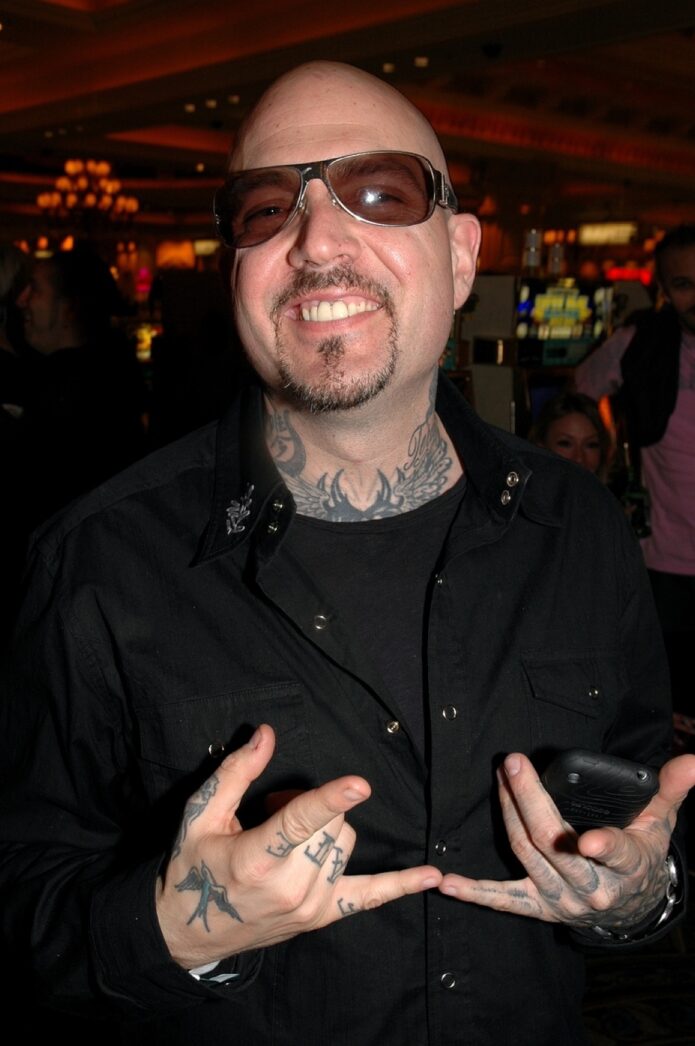
Evan Seinfeld’s tattoos cover his chest, neck, arms, hands and head. There are blackwork panels, lettering, skulls, monsters, animals and portraits, and the collection has changed over time. Much of it is visible in stage photos, though those images don’t explain every design.
Some pieces have been discussed publicly; others are only identifiable by their shapes. This guide keeps those apart. A knuckle word or a small mark near the eye may be easier to interpret than a large chest panel, but it still doesn’t tell the whole story on its own.
How Evan Seinfeld started collecting ink
Seinfeld has said his first tattoo was a small Biohazard design on his shoulder, done when he was 17. The early piece connects the collection to the band that shaped much of his life.
He is best known as a founding member of Biohazard, but his work has also included acting, photography, writing, directing and business. The tattoos touch on different parts of that life: music references, portraits, monsters, animals, lettering and symbols. They’ve accumulated in different styles rather than being planned as a matching set.
The chest and neck pieces are the first thing you notice
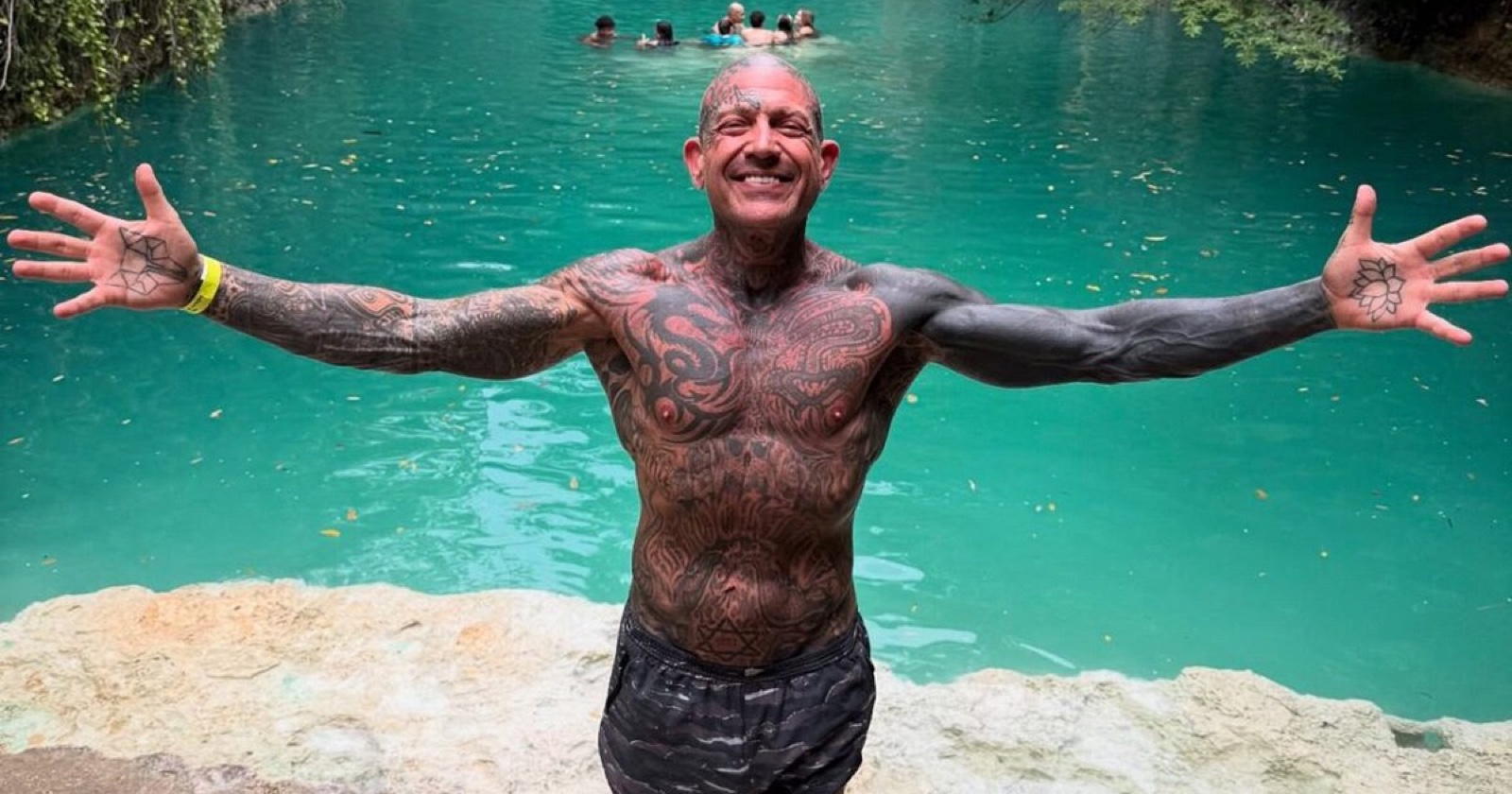
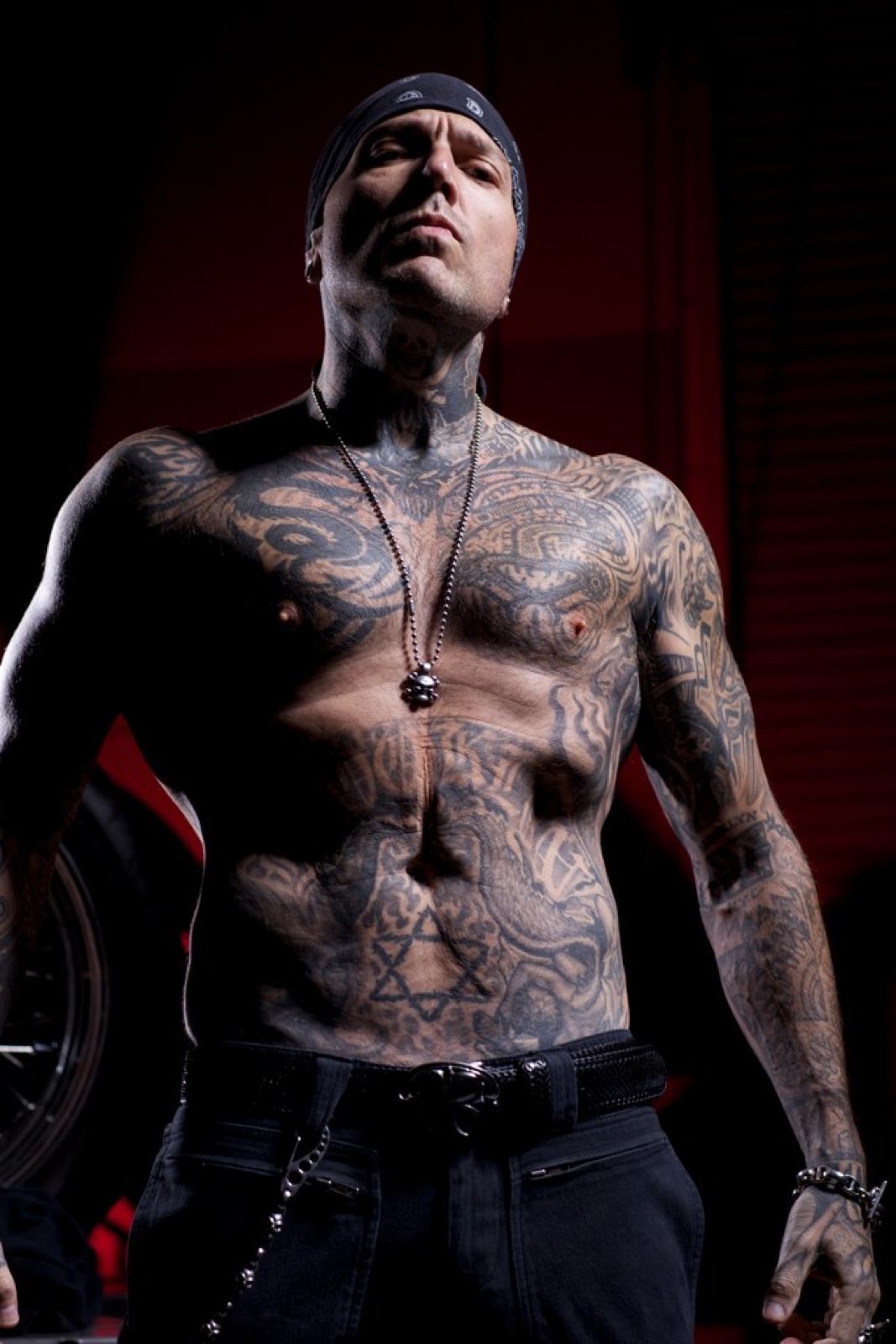
In clear live photos, Seinfeld’s chest is almost covered. The designs run from the collarbones toward his stomach, with swirling lines, faces, skull-like shapes and dense black sections reaching into the shoulders. From a distance, it reads as a layered composition rather than one simple symbol.
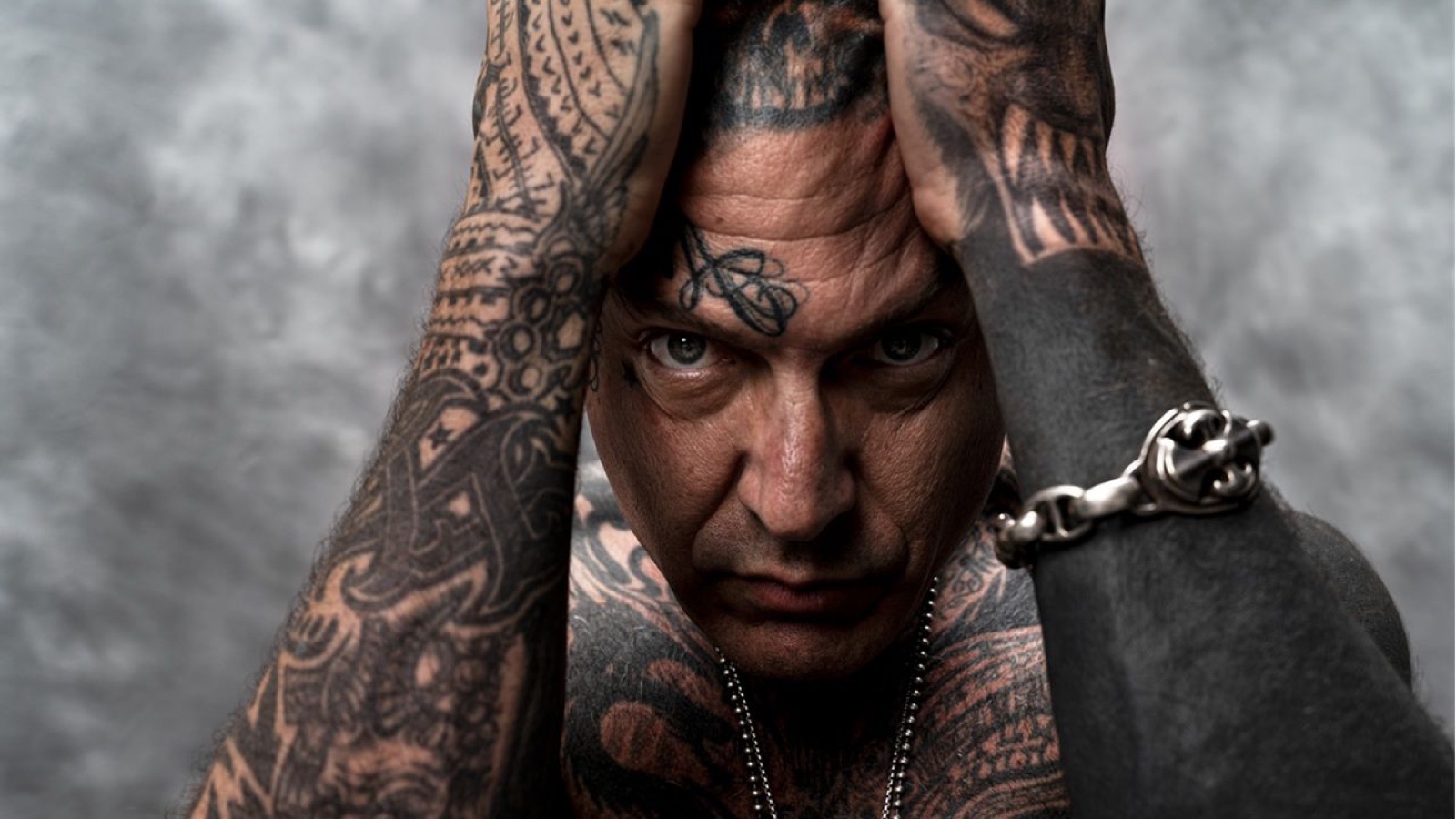
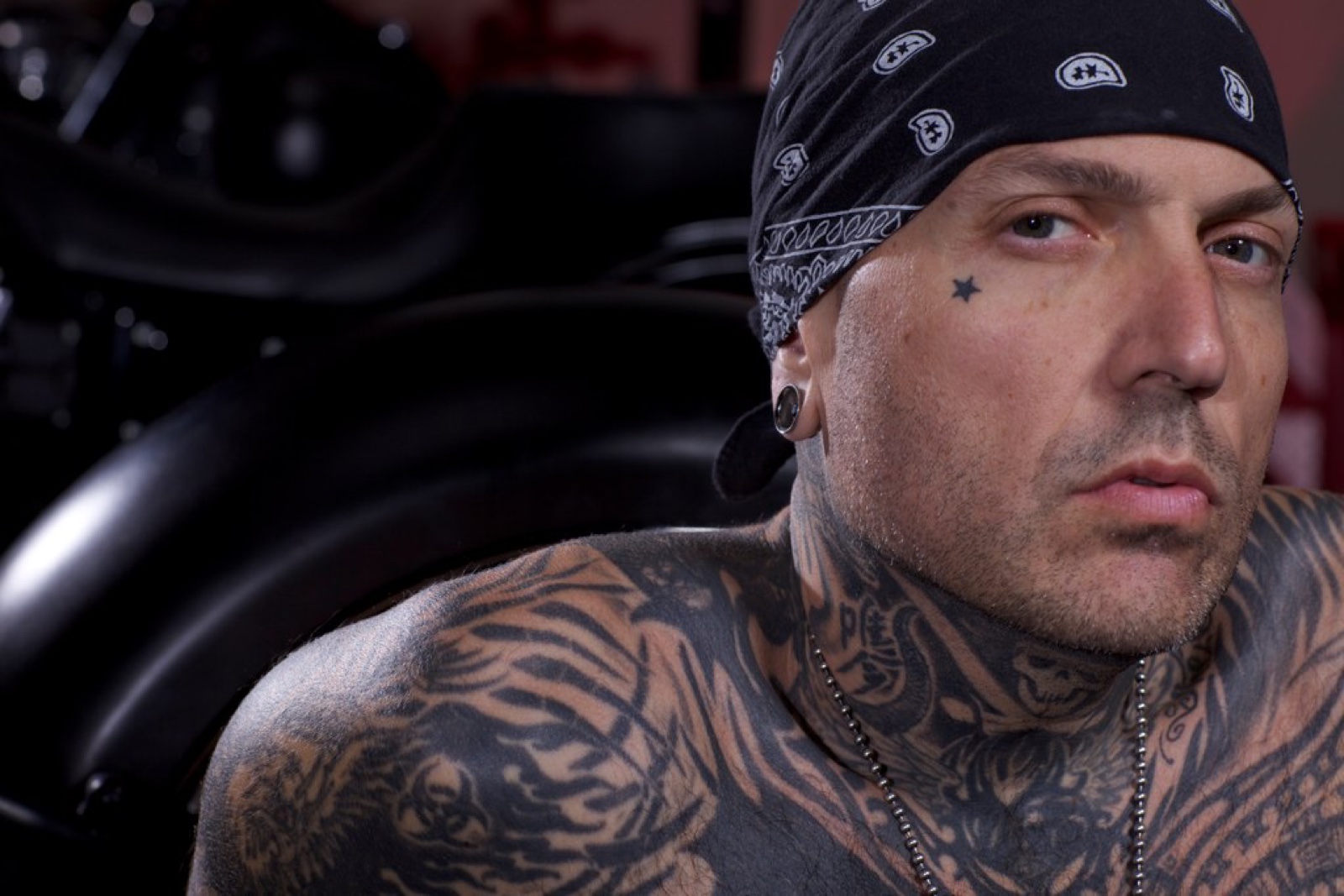
The neck work makes the upper body look even denser. Dark faces, a skull-and-crossbones-style image, an owl-like shape and other shaded forms run into the chest. Some designs have been named in tattoo galleries, but the photos don’t confirm a story for every line.
Public tattoo coverage has identified his son’s name on his neck. The lettering sits among the monsters and skulls, and gives the design a more personal detail.
The head and face tattoos bring a different kind of edge
Seinfeld has tattoos across his scalp and around the sides of his head, with patterns continuing into his neck and face. Close-up photos also show a small star-like mark under the eye. These pieces change his silhouette and are easy to see under stage lights.
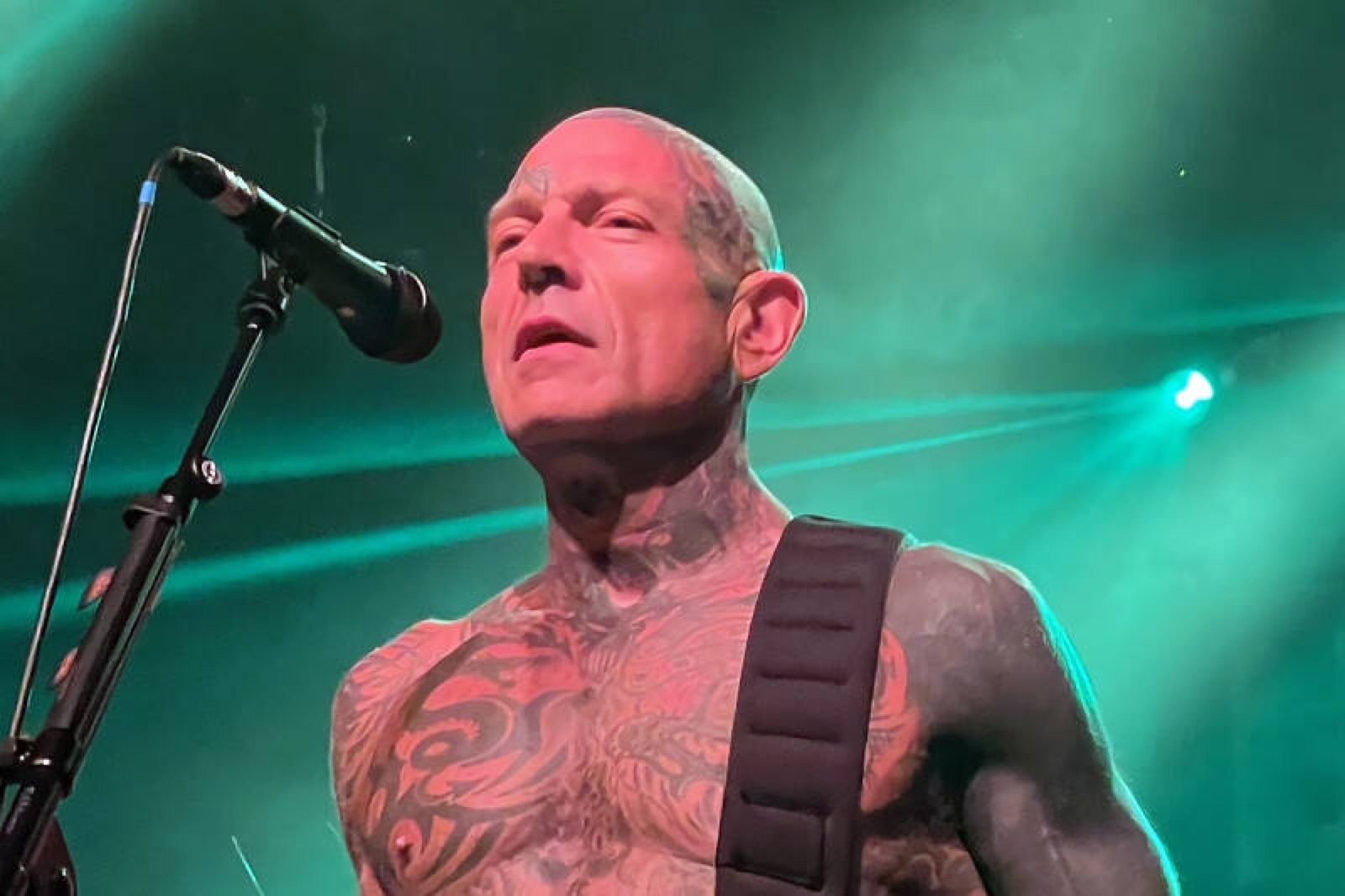
Tattoo coverage identifies the writing near his ear as “Vengeance.” The phrase “the spyder” has been linked to an old professional nickname and appears near his shoulder blade in the same public catalog. Short lettering can be more specific than a large graphic: it may point to a name or identity from a particular period.
Arms, cover-ups and the blackwork effect
Seinfeld’s arms combine creatures, faces, band references and lettering. He has spoken about tattoos he later wanted to change; one cover-up replaced an ex-girlfriend’s name with a demon head. The new design became part of the darker work around it.
The older ink still affects the shape of the arm. In some places, a new design covers an outline; elsewhere the darker sections shift the balance of the sleeve. The result looks like work added in stages rather than a clean reset.
Close photos also show words and marks on his hands. “FATE” has been identified across his right-hand knuckles, and tattoo coverage describes the name “Lupe” across the other hand. Finger patterns, small stars and dark wrist ink fill the spaces between them.
Portraits, animals and the pieces with a personal feel
The collection includes more than skulls and demons. Photos and tattoo catalogs point to portraits, birds, dragons, snakes, an eagle, a spider and fantasy or cartoon-like creatures. A portrait of Lupe Fuentes has been described on Seinfeld’s ribs, along with the Spanish phrase “mi amor mi vida,” or “my love, my life.”
Other reports describe a large spider across his back, a fierce eagle on his shoulder and dragons on his legs and chest. Older photos aren’t sharp enough to map every detail, but they show the range: names, creatures, music references and images chosen at different times.
What Evan’s tattoos seem to say about his style
The collection reads more like a timeline than a matching set. The Biohazard tattoo points to his music roots; lettering records names and identities; portraits refer to relationships; and cover-ups show how designs can change. The monsters and dark faces give the different pieces a shared visual mood.
That doesn’t mean every skull has a hidden story. Some designs may have been chosen because Seinfeld liked the image or the artist’s work. The clearest accounts are those tied to his own comments, including the first Biohazard tattoo and the cover-up. Other pieces are best left as visible details unless he has explained them.
For comparison, Lemmy Kilmister’s tattoos use simpler rock-and-roll symbols, while Mick Thomson’s tattoos have a colder metal look. Machine Gun Kelly’s tattoos show another way a musician’s image can change when the ink becomes part of the performance.
Quick Evan Seinfeld tattoo guide
- Most visible areas: chest, neck, head, shoulders, arms and hands.
- Common motifs: skulls, demon faces, reptiles, birds, dragons, lettering, portraits and heavy blackwork.
- Personal details reported in public coverage: his first Biohazard tattoo, his son’s name, Lupe’s name, a Lupe portrait and “mi amor mi vida.”
- Best way to view the collection: start with the full torso, then look at the neck, hands, head and cover-up areas.
Final take
Seinfeld’s tattoos don’t follow one tidy theme. They include music history, family, relationships, old nicknames, cover-ups and darker imagery, all added over time. From a distance, the chest and neck dominate; close photos show the smaller choices that make the collection personal.
The video below shows Seinfeld getting a flaming-skull tattoo in a Miami Ink segment. It gives a closer look at how one piece was made, under studio lighting.