Jayson Tatum’s tattoos reflect a few parts of his life: family, basketball and persistence. The clearest designs are on his legs: I Just Didn’t Quit, Hustle Man, 98, plus Duke and Celtics references. Photos also show portraits and lettering, though some smaller marks are difficult to identify.
Some tattoos are easy to read in court photos; others need context Tatum has shared in interviews. His calf tribute is one design with a reported story behind it.
The I Just Didn’t Quit calf tribute is about persistence
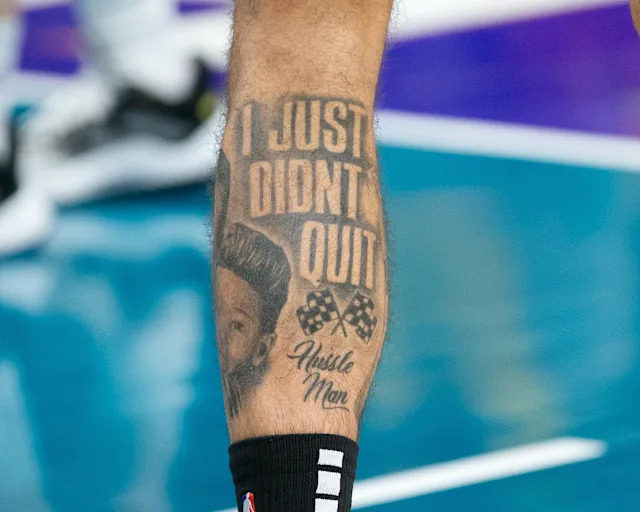
The clearest calf piece pairs the bold words I Just Didn’t Quit with Hustle Man underneath. Coverage describes the design as a tribute to a person who was killed and a reminder to keep going. Its heavy black lettering and checkered flags make it easy to spot in game photos.
That message gives the calf tattoo a personal edge; it is more than a generic motivational line. Coverage connects it to someone from Tatum’s life, and the two lines read as one design in the photos.
The 98 design turns a birth year into a visible marker
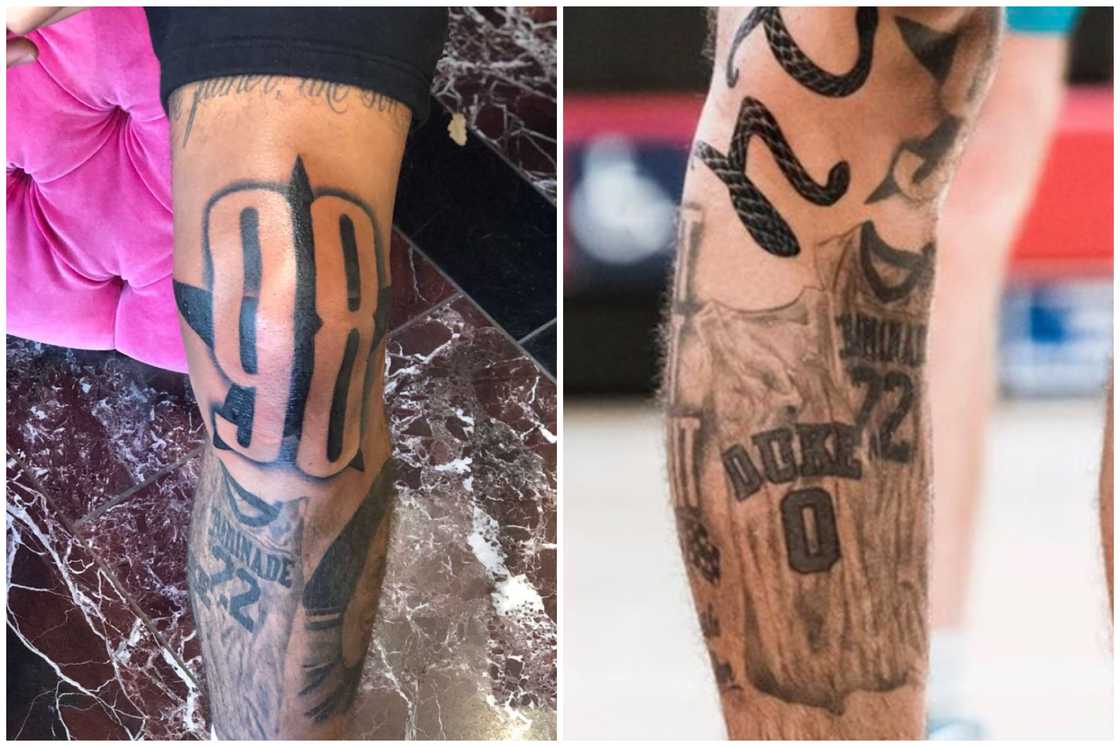
The number 98 appears in a bold graphic on Tatum’s leg. It is widely reported as a reference to his 1998 birth year; photographs show the number and its placement, while tattoo coverage supplies that explanation.
Numbers can point to different things in a basketball player’s life: a birth year, jersey number or college connection. The established explanation for 98 is Tatum’s birth year. Stars and lines nearby are visible, but their individual meanings have not been confirmed.
Duke and 0 connect the leg sleeve to basketball identity
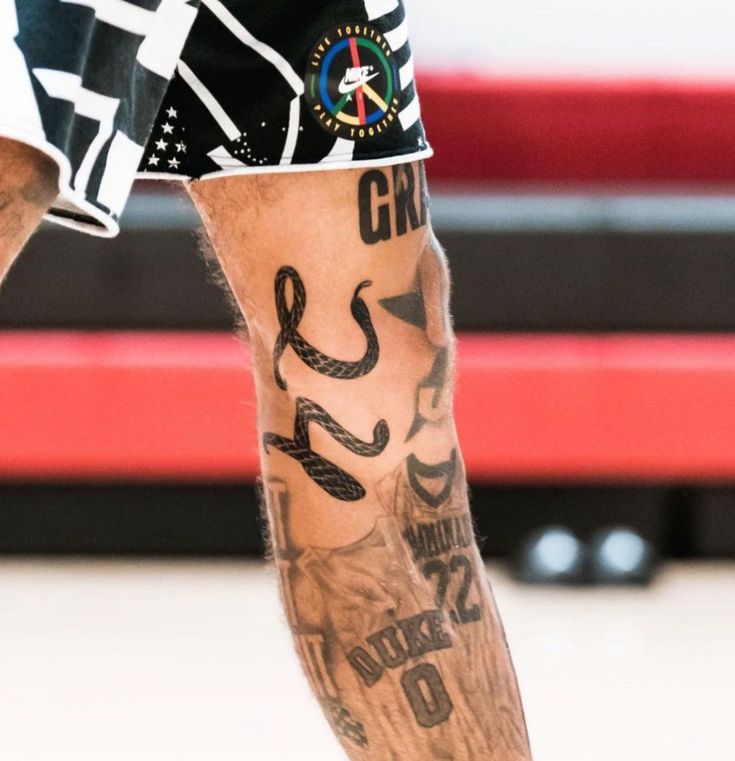
DUKE and the number 0 appear among the wider leg designs. DUKE points to his college years, while zero is the number he has carried on court. A close-up also catches a snake-like design and smaller marks around them, though the details blur in some shots.
The letters and numbers are easy to pick out. The shaded work around them is less clear, and there is no confirmed meaning for every shape beside DUKE or 0. Together, the two references tie this part of the collection to Duke and basketball.
Portrait work brings family into the collection
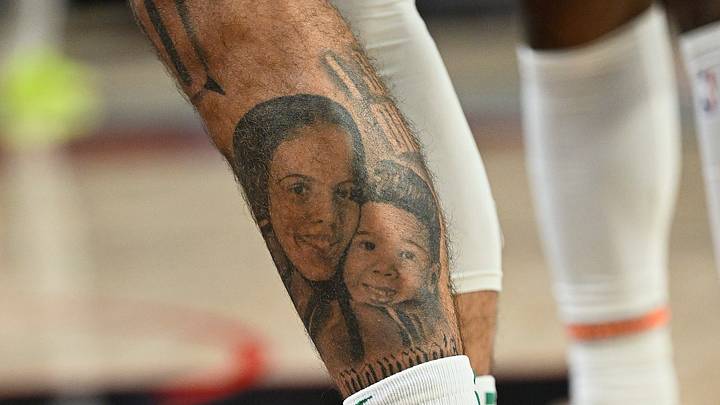
Some sports photos show portrait work on Tatum’s calf. Coverage connects the faces to family. Rendered in black and gray, the portraits look different from the bold letters and numbers; a fairly close view is needed to make out their features.
The family connection comes from reporting, but not every face is clearly identified. A blurry action shot may show the portrait without revealing who it depicts. Socks, movement and camera angle can cut off part of it, so the available images do not show everyone in the collection.
Faith and family lettering fill out the wider map
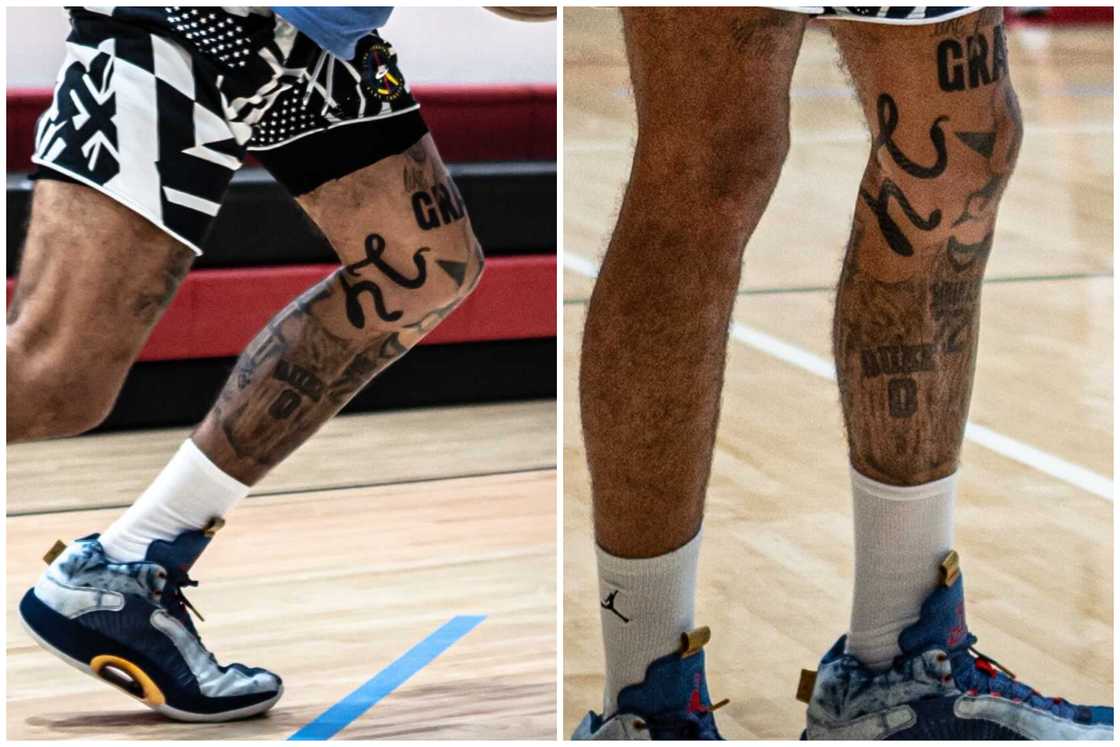
Tatum’s wider tattoo collection includes faith and family elements, along with the word LIFE and other lettering. They show up in different poses and camera angles, so there is no single photo that gives a complete count. The designs run across his arms and legs rather than one mapped-out sleeve.
The faith-related words appear in several photos, but the fine script is not always readable. It helps to keep reported wording separate from marks that are too distant or blurred to identify.
Taken together, the main themes are clear: calf tributes, his birth year and basketball history, family portraits, and faith-related lettering. A sharper photo could reveal more. For now, the clearest designs are the ones with a readable shape, location or reported story.
Some details remain fuzzy in old game photos; others come with context Tatum has shared. That leaves room for the picture to fill out over time without turning every shadow into a tattoo.
Still photos make lettering easier to inspect, while game footage shows the designs in motion. A sock can cover a calf tattoo and movement can blur fine lines. One specific tattoo design is easier to discuss than the whole collection from a single frame.
A birth year, a team name and a jersey number can sit close together in the same photograph, but they do not all mean the same thing.
Placement matters, too. When Tatum runs or jumps, socks and movement change how much of a calf design you can see. Arm lettering is easier to catch in a portrait, while leg work can blur into a dark patch on the court. A clear photo makes it easier to tell the confirmed words from the surrounding shapes.
15 thoughts on “Jayson Tatum’s Tattoos Tell a Story in Numbers, Names and Faith”