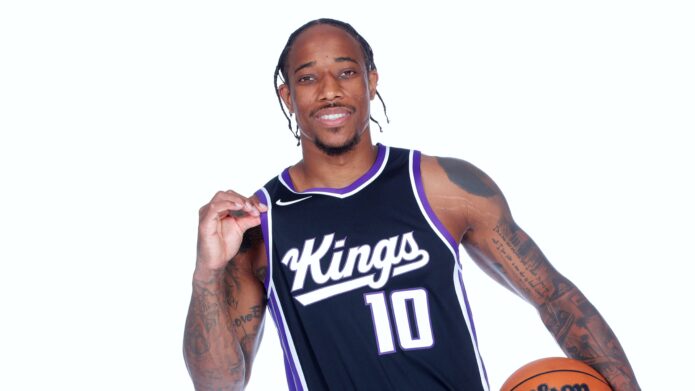
DeMar DeRozan’s tattoos bring together family portraits, reminders about struggle and ambition, and images of people he admires. His arms show his father and grandmother, Malcolm X, and Heath Ledger’s Joker. During a game, a jersey or moving camera can make those separate pieces look like one mass of ink.
It helps to look at DeMar DeRozan’s tattoos one area at a time. A jersey and courtside angle can hide some lettering or make portraits run together. Across the collection, family, Compton, Chicago, pressure and the people closest to him keep coming up.
DeMar DeRozan tattoos at a glance
- Malcolm X portrait: a detailed tribute on his left bicep, done by tattoo artist Steve Wiebe.
- Father tribute: a portrait of Frank DeRozan on his left shoulder, added after his father died.
- Grandmother tattoo: a portrait of Barbara with the words “Blessed One” on his forearm.
- Blue City and motivation: text such as “Blue City,” “Loyalty,” “Struggle,” and “Dedication” runs through the arm work.
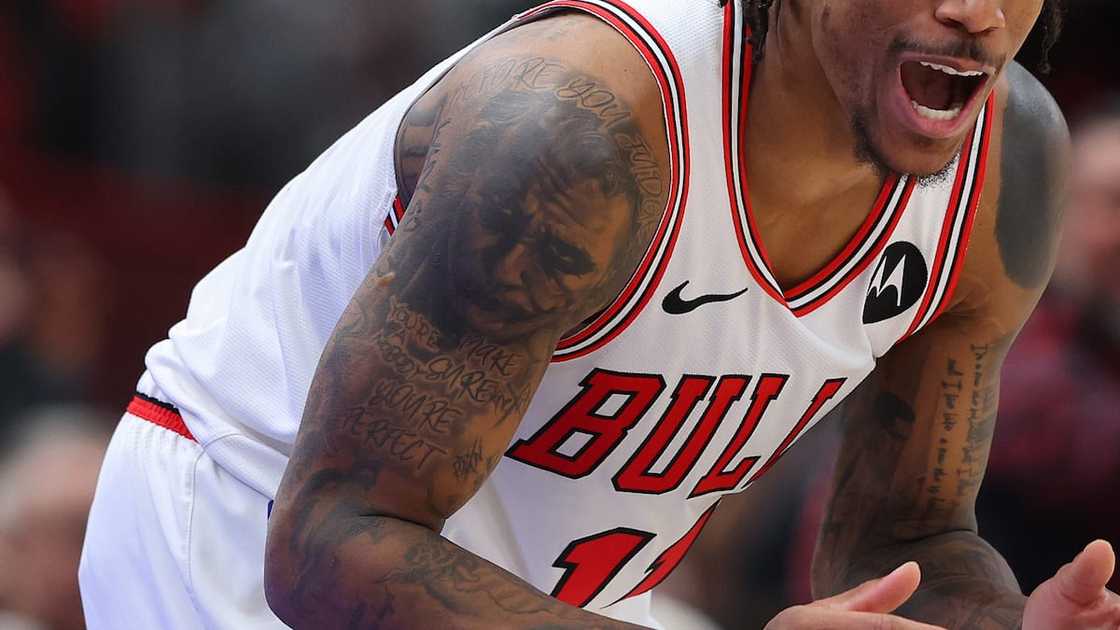
- Heath Ledger Joker: a dramatic character portrait that brings a darker note to the collection.
- Why So Serious?: a phrase that stands out in game photos and sits with the Joker imagery.
The full arm work is more than one sleeve
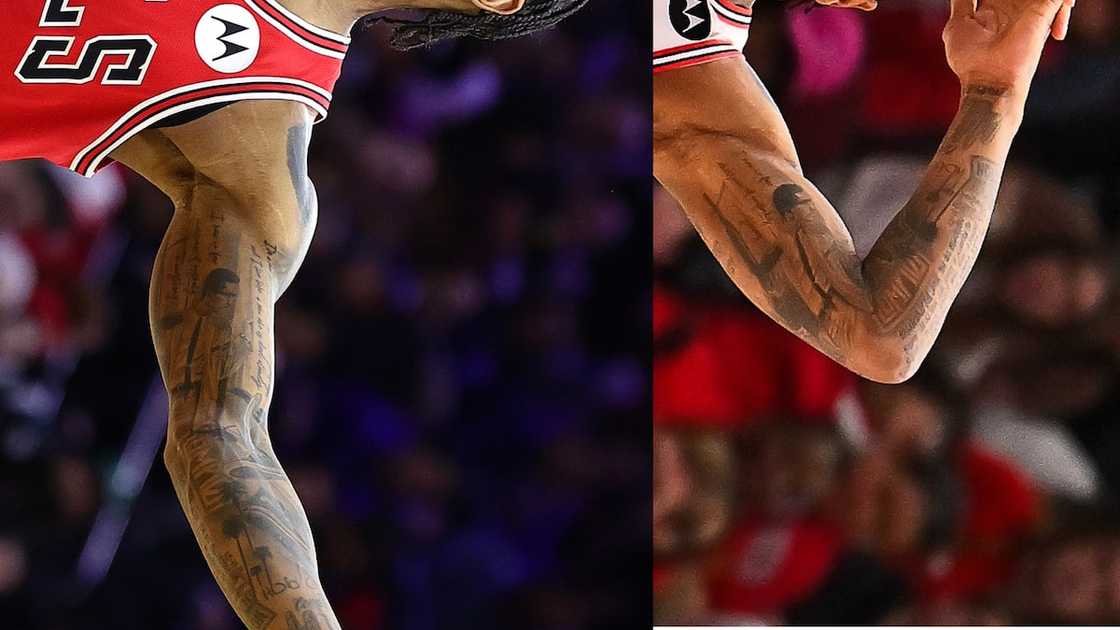
Photos often flatten DeMar’s arm work into one giant sleeve. Closer views show separate portraits, lettering, symbols and shaded sections beside one another. No single design covers the whole arm.
The mix is easier to read up close: script, portrait shading, larger dark areas and smaller marks tucked between them. The pieces appear to have been added over time, but their placement still leaves each design room to breathe.
Clothes and camera angle change what shows. A jersey strap can cover a shoulder tattoo, while the forearm lettering comes into view when he reaches for a shot. One game photo is not a complete inventory.
For a similar example of separate pieces building a larger look, compare Jayson Tatum’s tattoos with the more theatrical work in Dennis Rodman’s tattoos.
His father Frank is part of the story
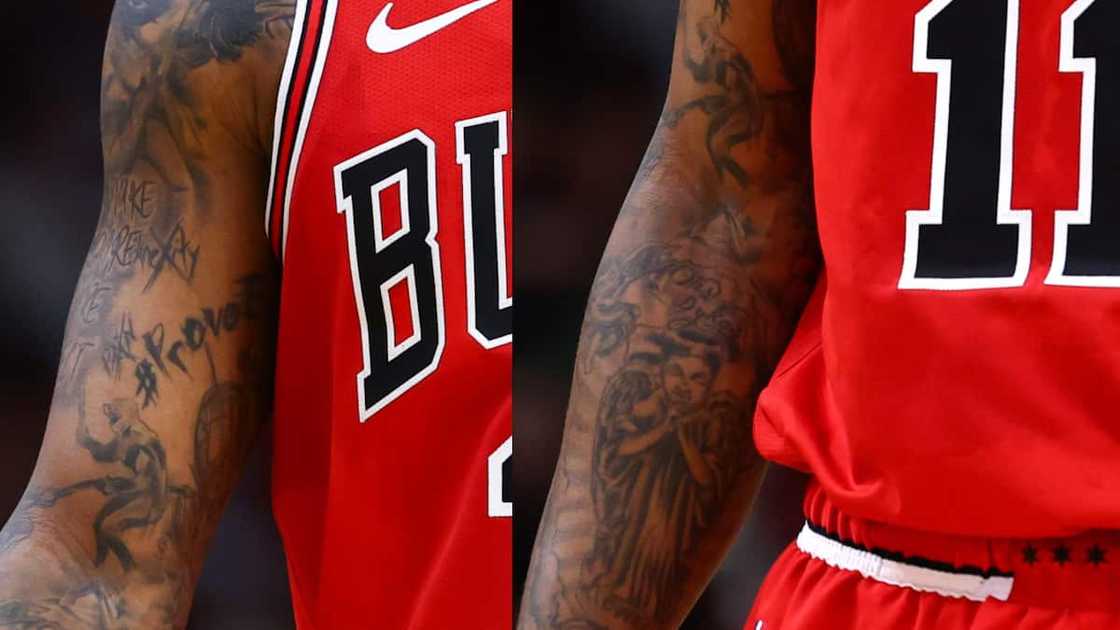
One of DeMar’s most personal pieces is the portrait of his late father, Frank DeRozan, on his left shoulder. Reports describe it as a memorial and a way to keep that connection close. It is family history placed where it can show during training, games or everyday life.
A shoulder portrait can sit under a jersey, then show when he wears something that leaves the area uncovered. It sits among the other tattoos, as one of several family pieces on his arm.
DeRozan has spoken openly about pressure, anxiety and mental health. Those conversations give context to the memorial, but they do not tell us exactly what he was feeling when he got it. The portraits and phrases give some of those experiences faces and names; the full account stays with him.
This also helps explain why the portrait looks different from one photo to the next. A media-day image may show it clearly, while a game photo catches only the edge. Pictures with both the shoulder and arm in view give the best sense of how it fits with the rest.
The Barbara portrait and the words “Blessed One”
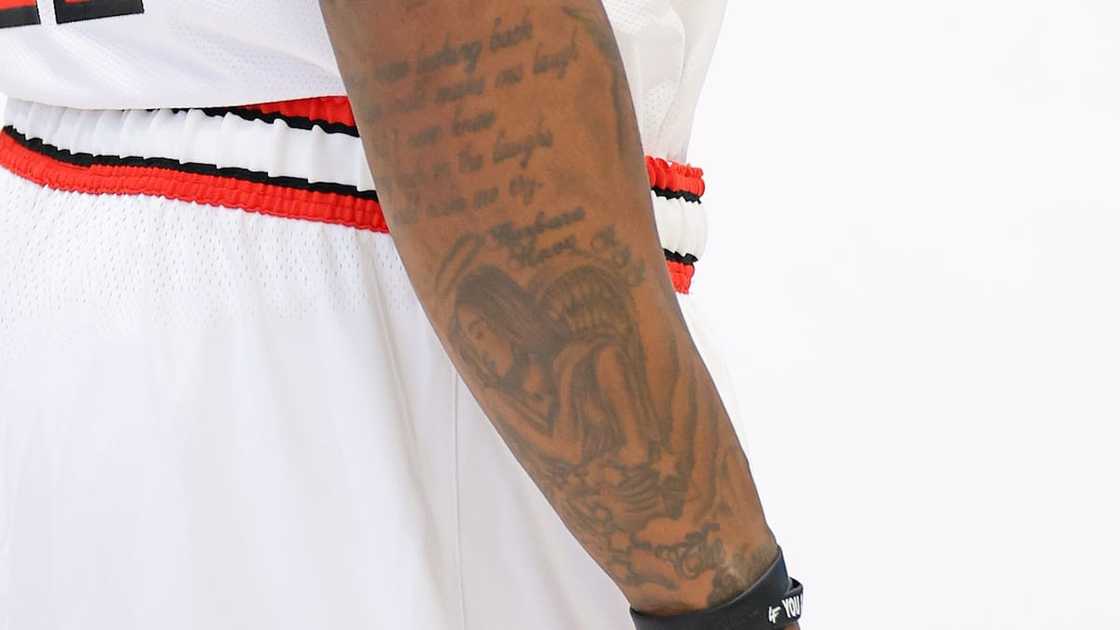
Another family tattoo honors his grandmother Barbara. Her portrait sits on DeRozan’s forearm with “Blessed One” beneath it, a phrase tied to the nickname she gave him. The face and lettering give it a softer feel than the Malcolm X portrait.
It makes the collection feel less like a highlight reel and more like a timeline. The wording is short; the family connection does most of the explaining. Names and portraits turn a public career into something personal.
The forearm keeps the message in view during warmups, while driving and in the pauses between plays. Fans see it when he reaches for the ball, too.
“Blue City,” “Loyalty,” “Struggle,” and “Dedication”
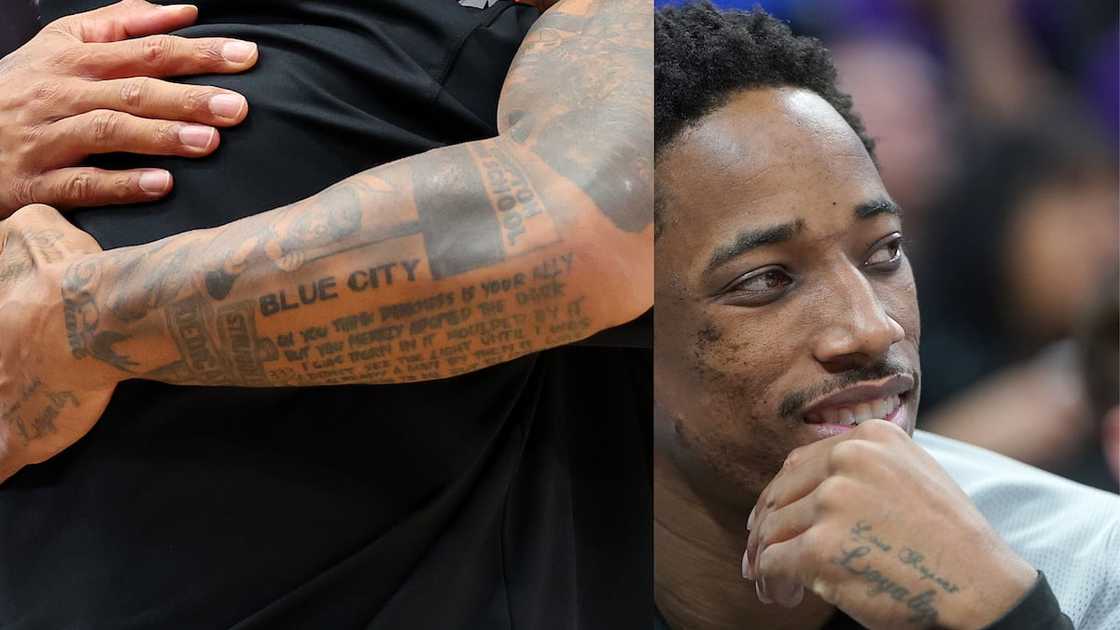
The lettering matters as much as the portraits. “Blue City” points to Chicago, while “Loyalty,” “Struggle” and “Dedication” connect to DeRozan’s path from Compton to the NBA. They are bold phrases that show clearly in photos.
The words also change how the darker portrait work reads. A Joker or shaded figure can look intense on its own; alongside phrases about loyalty and dedication, the arm starts to feel like a personal code. The wording is direct, closer to a short list of reminders than a polished motivational poster.
One clear photo shows the forearm text in blocks, wrapping around the arm. Low-resolution screenshots blur those letters, making it easy to guess at meanings that are not actually visible.
The Malcolm X tattoo on his left bicep
DeRozan’s Malcolm X portrait is one of the pieces with a clear public identification. It is based on the well-known photograph of Malcolm X looking through a window with a rifle. Tattoo artist Steve Wiebe worked on it, using close black-and-gray shading to keep the face recognizable.
The image has a specific place in Black history and carries associations with self-protection and pride. That context matters, though it does not tell us everything DeRozan sees in it.
The portrait sits among the other tattoos, surrounded by lettering and shaded pieces. On court, the bicep can look like a dark patch; a close-up makes the face, hair and outline easier to distinguish from the surrounding ink.
The reported details are clear: it is Malcolm X, the photo reference has been identified, and Wiebe has been named as the artist. The exact meaning of every nearby symbol is not public, so those are best left undescribed.
The Joker, “Why So Serious?” and the darker arm pieces
DeRozan also has a Heath Ledger Joker portrait, with “Why So Serious?” visible in game photos. The character changes the mood of the arm: the family portraits feel grounded, while the Joker brings in a more chaotic image. Some readers connect it with pressure or the public mask athletes wear, but that is an interpretation.
DeRozan has not given a public explanation for every detail. The photos show the Joker clearly, and the nearby lettering makes a visual connection. Beyond that, the meaning is his to explain.
The phrase is short and easy to read where the camera catches it, especially when his arm is extended toward the basket. A close-up helps show how it fits among the other work, but it is visible in game photos, too.
What DeMar DeRozan’s tattoos have in common
People, places and pressure run through the collection. His father and grandmother represent family; Malcolm X connects the work to a historical figure he admires; the Chicago phrases point to home and identity. The motivational words recall the effort behind his career.
The Joker adds a pop-culture image beside those family portraits and personal reminders. From a distance the arms can look busy. Closer photos show different subjects and phrases; no single theme explains every piece.
A full-body image shows where the ink sits, an arm close-up lets you read the lettering, and a tattoo-session photo shows more of the shading. Together they give a clearer view than any one shot.
If you like sports tattoos that stay personal, see Michael Phelps’s tattoos. His collection is smaller, but it also uses ink to mark identity, memory and the path to major moments.
Watch DeMar talk about his tattoos
In this interview, DeRozan talks about basketball, the Joker tattoo and playing alongside Nikola Jokic. He gives his own context for the character piece.