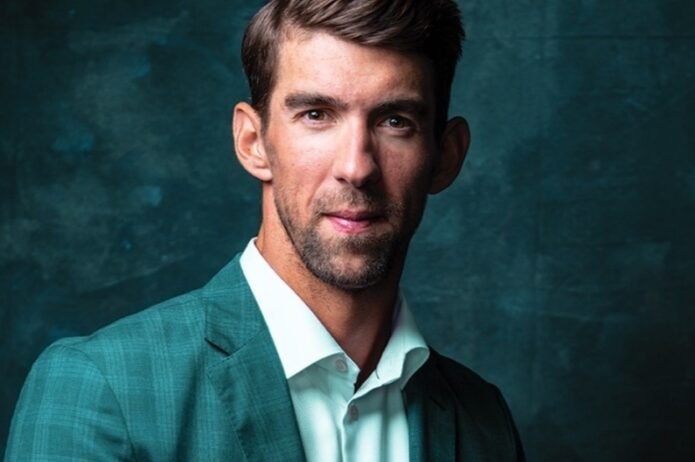
Michael Phelps has two documented tattoos: the Olympic rings on his right hip and an outlined M on his left. Both sit low on his hips, usually beneath swimwear. Swimming photos show the marks, while published accounts offer different explanations for the letter.
The large purple circles on Phelps’s back and shoulders during the 2016 Rio Olympics were often mistaken for new tattoos. They were temporary marks from cupping therapy, a recovery treatment.
The Olympic rings sit on Phelps’s right hip
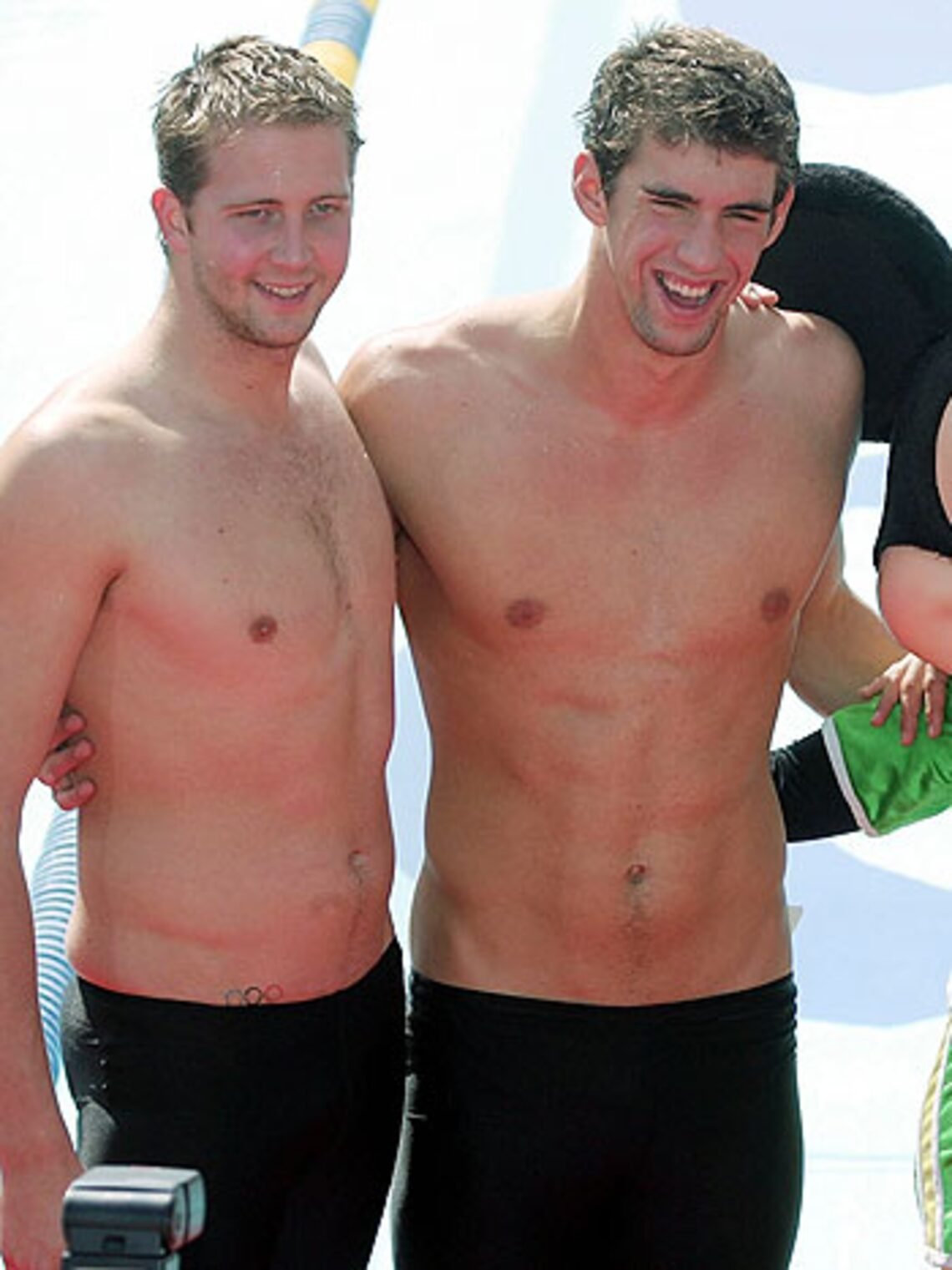
Phelps’s Olympic rings tattoo sits on his right hipbone, just above the line of his swimwear. The Guardian’s 2008 Olympic photo gallery identified the rings in a training image; later coverage connected the design to athletes marking their Olympic participation. The tattoo stays hidden under everyday clothes and appears when a racing suit sits lower on the body.
Phelps competed at five Olympic Games, so the rings mark the event at the center of his career. In distant photos the interlocking circles can blur into a dark oval; closer images show the design clearly.
Romper noted that an athlete could claim the design after completing an Olympic Games, tying it to participation rather than the ambition to compete. It does not mark a particular medal count.
It turns up most often in poolside and training photos, where the suit leaves the hip exposed. A waistband can cover part of it, but its placement is consistent across the images.
The outlined M on his left hip has no confirmed meaning
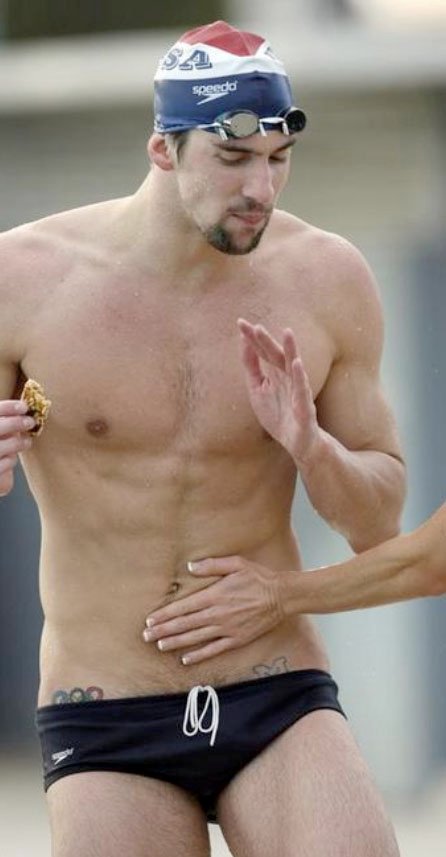
An outlined M appears on Phelps’s left hip. Some coverage reads it as Maryland, where he was born and raised; other accounts connect it to the University of Michigan, where he trained earlier in his career.
Neither explanation appears in a direct comment from Phelps, so the safest description is simply the outlined letter on his left hip. A photograph shows its shape and position, but not what it stands for.

The Vanishing Tattoo poolside photo shows both hip tattoos together. The M sits close to the suit line and is too small for detail beyond its shape and location.
Some tattoo guides call it the Maryland M. That is a common reading, but Phelps has not confirmed it.
The famous circles on Phelps’s back were cupping, not tattoos
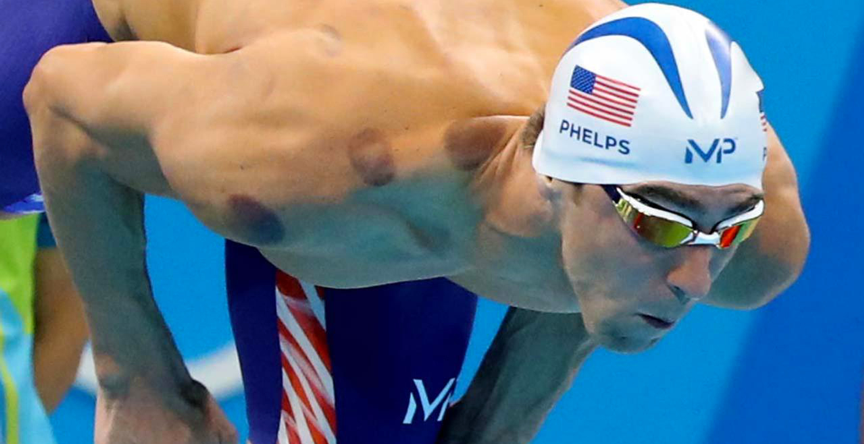
During the 2016 Rio Olympics, the large red and purple circles on Phelps’s back and shoulders were mistaken for tattoos. Coverage of the moment explains that they came from cupping therapy, not ink. AS and Scripps News reported that suction cups can leave temporary circular bruises.
Their size and color made the marks striking against a swimmer’s bare skin, especially at a high-profile event.
That leaves two tattoos in the published record: the Olympic rings and the M. The cupping photos explain the Rio images, but they add no ink.
Both tattoos are small and easy to miss: one is a clear Olympic emblem, the other a letter whose meaning Phelps has not confirmed.
Their placement also shapes which photographs document them. Racing suits expose the hips; everyday portraits rarely do. An early Olympic gallery and a later family photo of Phelps holding his newborn son happen to catch the tattoos clearly.
The rings appear in Beijing-era coverage; the M drew renewed attention around Rio. That dates its public appearance, not when it was inked. The timeline needs that distinction to avoid making an older tattoo look like a new Olympic-era addition.

14 thoughts on “Michael Phelps Keeps His Two Documented Tattoos Close to the Pool”