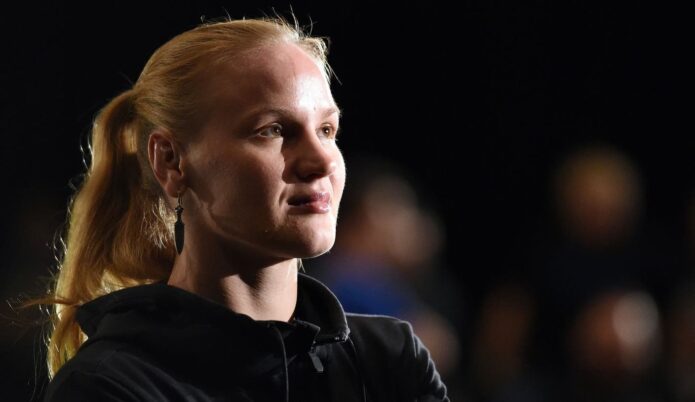
Valentina Shevchenko’s tattoos point to several parts of her life: Muay Thai, Kyrgyz identity, her coach and competitive shooting. She has explained some designs herself; others are easier to describe by what the photos show than by what they mean. A cropped weigh-in shot can hide one piece and make another look larger than it is.
The clearest way to read Valentina Shevchenko’s tattoos is to look at each design from more than one angle. Most of her ink sits around her shoulder, side, waist and back. Here’s what the photos show, and where Valentina has spoken about their meaning.
Valentina Shevchenko tattoos at a glance
- Glock 19: a lower-abdomen tattoo tied to her interest in shooting and the “Bullet” nickname.
- Muay Thai shoulder emblem: a design connected to her Kyrgyz federation, coach Pavel Fedotov and training academy.
- Snow leopard imagery: part of the shoulder emblem; the motif connects it to Kyrgyz national style and combat sports.
- Hanuman Sak Yant: a Thai spiritual tattoo tied to Muay Thai and ideas of strength, courage and protection.
- Back and side script: smaller writing and symbols visible in beach, training and weigh-in photos.
The Glock 19 tattoo on her lower abdomen
The easiest tattoo to recognize is the black Glock 19 on Valentina’s lower abdomen. It sits low on her side, so fight kit can cover it; bikini and training photos show more of it. She has said she likes shooting and sees the Glock as something universal, much like MMA itself.
She has competed in shooting events outside the cage and talks about firearms with the same calm focus she brings to fighting. Her longtime coach gave her the nickname “Bullet” because of her speed, which makes the gun an easy visual match for the name. The shooting connection comes from her own explanation; the nickname adds another link people may notice.
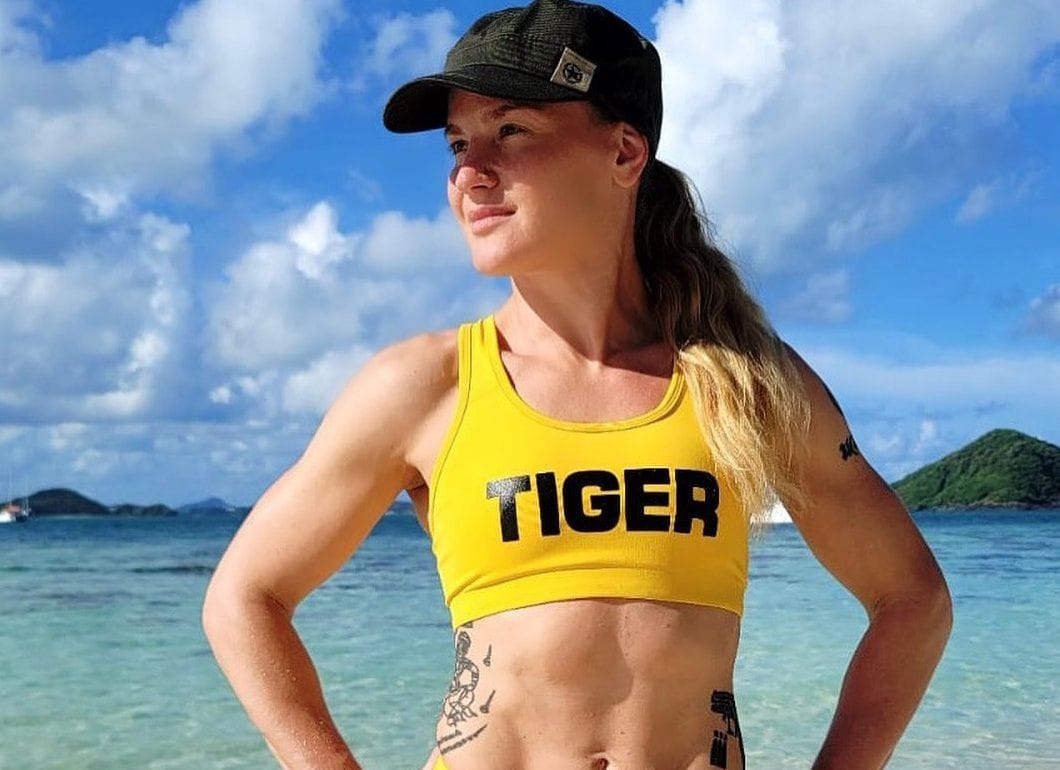
The black outline and magazine sit low on the side of her body, which is why a sports top can hide the design. A LowKick MMA breakdown also connects it to her shooting background and her comments about choosing that model.
Her shoulder emblem and the snow leopard design
In a 2015 interview, Valentina said she got the shoulder piece after a Muay Thai world championship in Thailand. It combines the Kyrgyz Republic’s Muay Thai federation emblem with the club of her coach Pavel Fedotov, who helped train her from childhood.
The design includes two snow leopards, a fist and Kyrgyz-inspired pattern work. It’s easy to read the snow leopard as a match for her fighting style—fast, watchful and at home in rough terrain—while the pattern points back to Kyrgyz identity. That keeps the design tied to home instead of generic fight branding. It wraps around the shoulder and upper arm, but it is not a full sleeve. Tight crops can make the piece look larger than it is.
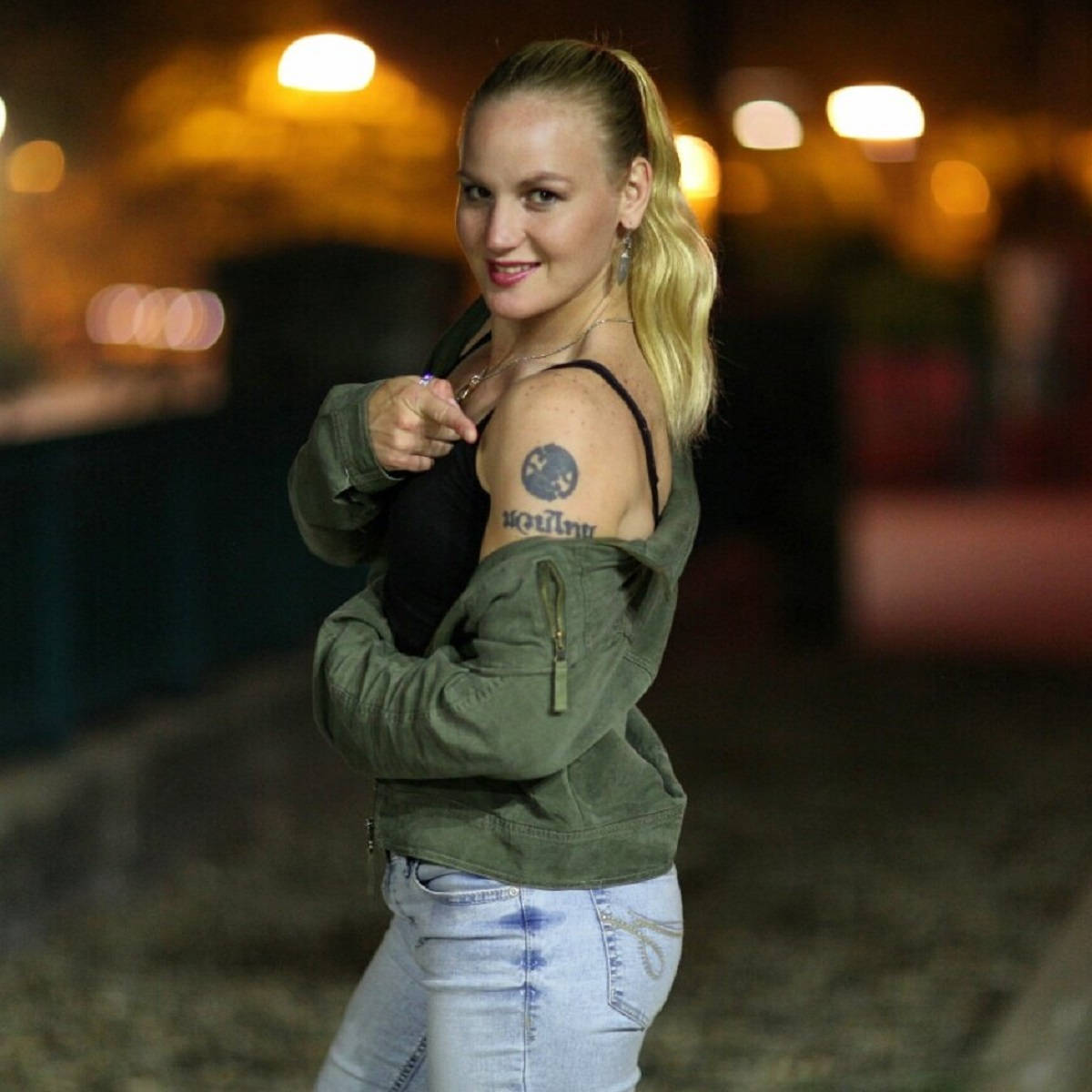
The upper-arm view makes the layout easier to follow: the circular tattoo, dark animal shapes and text beneath it are all visible. Valentina has described the piece as connected to her career and family. That account adds more than the impression that she chose it simply because it looked fierce.
The Hanuman Sak Yant and her Muay Thai roots
In the same interview, Valentina said she added the Thai deity Hanuman after the 2009 IFMA world championship. Hanuman is associated with strength, courage, loyalty, devotion and protection, which gives the tattoo a natural place in her Muay Thai story.
Sak Yant tattoos have a spiritual side that can get lost when they are reduced to “fighter tattoos.” Traditional versions are associated with blessings and rules for the person who receives them. LowKick notes that those rules can draw on Buddhist ethics, including avoiding killing, stealing, lying, intoxication and sexual misconduct. That tradition has its own cultural context; it deserves more than a quick caption calling it a trendy graphic.
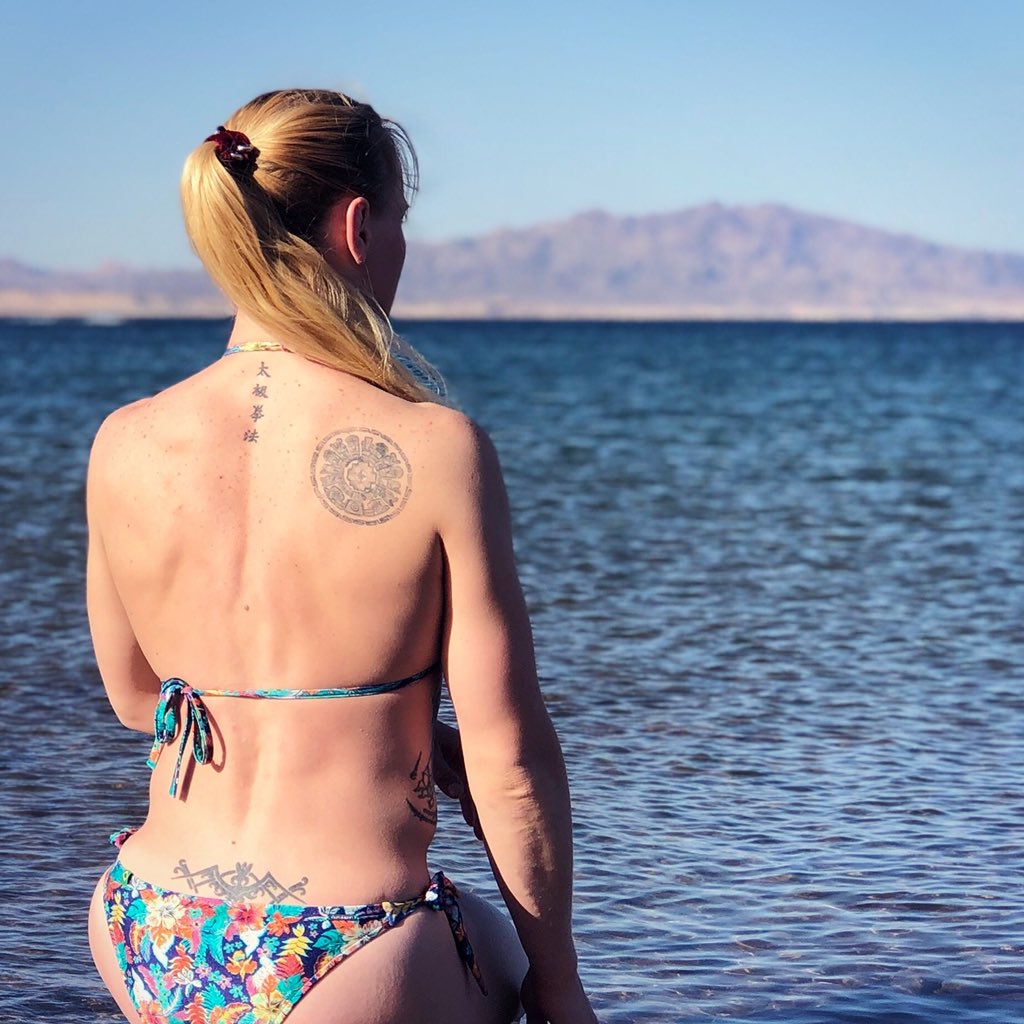
This photo shows the circular upper-back design, vertical script, side piece and lower-back writing in one frame. They sit far enough apart to read as separate tattoos. The sharp image and even lighting make the details easier to see without a tight crop.
Side tattoos, waist ink, and the details people miss
Valentina also has smaller marks around the side of her torso. Reliable accounts do not name all of them, so it is safer to describe what is visible: a darker vertical piece along her side, smaller marks near the waist, and writing or symbols that show more clearly when she turns away.
That is why two swimwear photos can appear to show different collections. One catches the side piece and lower-waist marks; another shows the upper arm and how the shoulder emblem sits in relation to the rest of her ink.
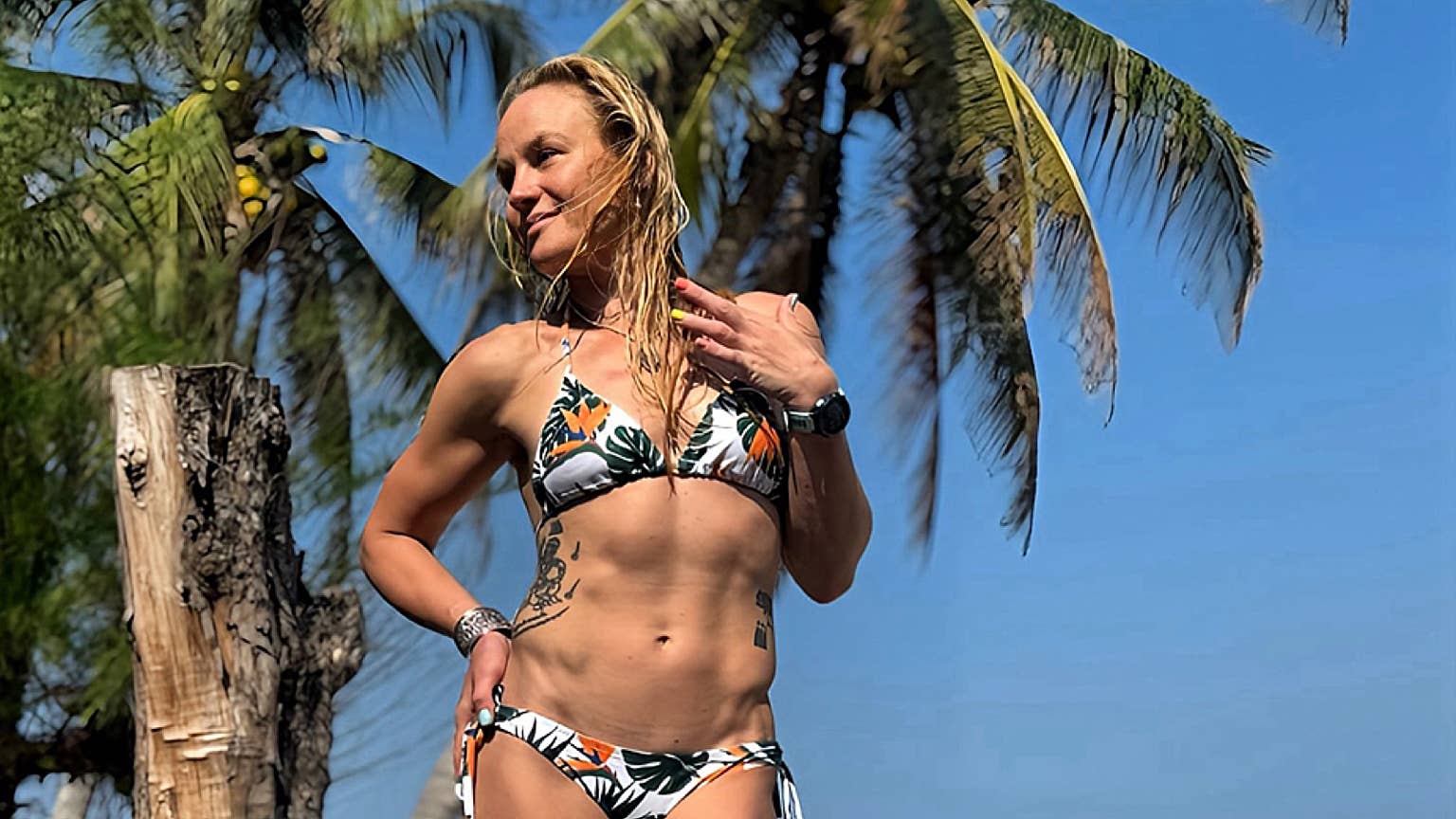
The wider side view lets you follow the black line work from the waist upward and see the smaller marks near her abdomen. The full placement makes more sense than it does in a close-up, where separate pieces can blur together.
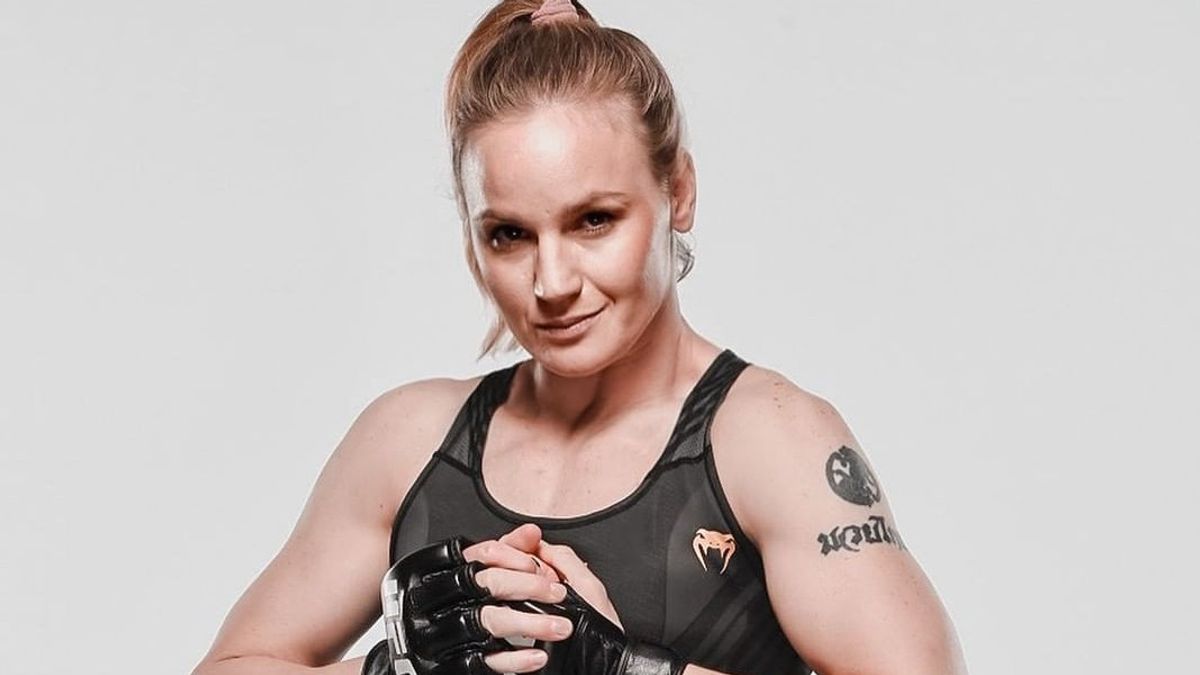
This upper-body view gives another look at the shoulder and the lettering beneath the circular design. The piece is not huge, but it is readable in the full photo. Her fight kit can cover or reveal it depending on the cut, so the ink’s visibility changes from one image to another.
What Valentina’s tattoos have in common
The named designs point to different parts of Valentina’s life. The shoulder emblem connects her to Kyrgyz Muay Thai and her coach; Hanuman connects the collection to Thai spiritual tradition; the Glock reflects her interest in shooting and her “Bullet” nickname. The smaller marks around her back and waist are harder to explain from photos alone.
This is not an all-over collection. A few well-placed designs carry most of the documented story, each tied to a person, a championship or a part of her life. Together, they make a partial timeline rather than a full inventory.
For other athlete tattoos, compare Michael Phelps’ tattoos with the more performance-driven ink in Jayson Tatum’s collection. For a very different wrestling-era look, Dennis Rodman’s tattoos are louder and more experimental.
Watch Valentina explain the stories behind her ink
In this video, Valentina talks about her designs, her interest in shooting and life as a fighter. She explains the designs in her own words.
Final take
Valentina Shevchenko’s tattoos connect to shooting, Muay Thai, Kyrgyz identity, Thai spiritual tradition and the coach who helped shape her career. The Glock is easiest to recognize, while the shoulder emblem and Hanuman piece show other parts of that story. Clear photos make the placement easier to follow. Where Valentina has not explained a design, its personal meaning remains hers.