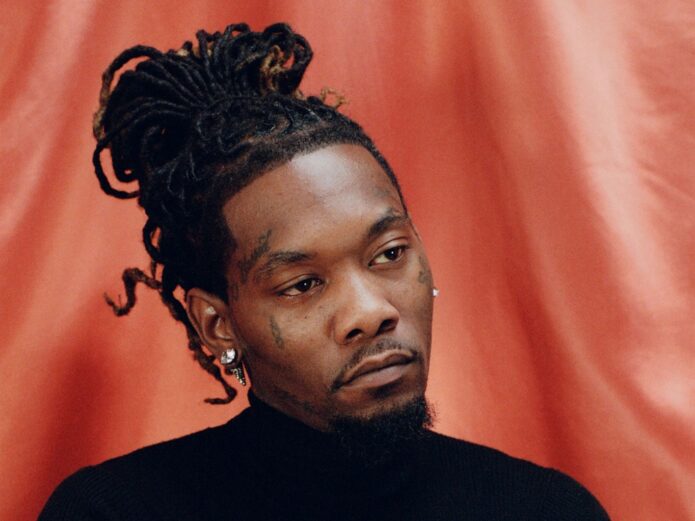
A GQ Tattoo Tour gives the clearest account of Offset’s ink. He says he started getting heavily tattooed at 15, has ten face tattoos and spent eight hours having Takeoff’s portrait done across his back. He also talks about portraits of his children on the backs of his legs. The rest of his collection covers his arms and hands.
The Takeoff portrait is the emotional centre of Offset’s collection
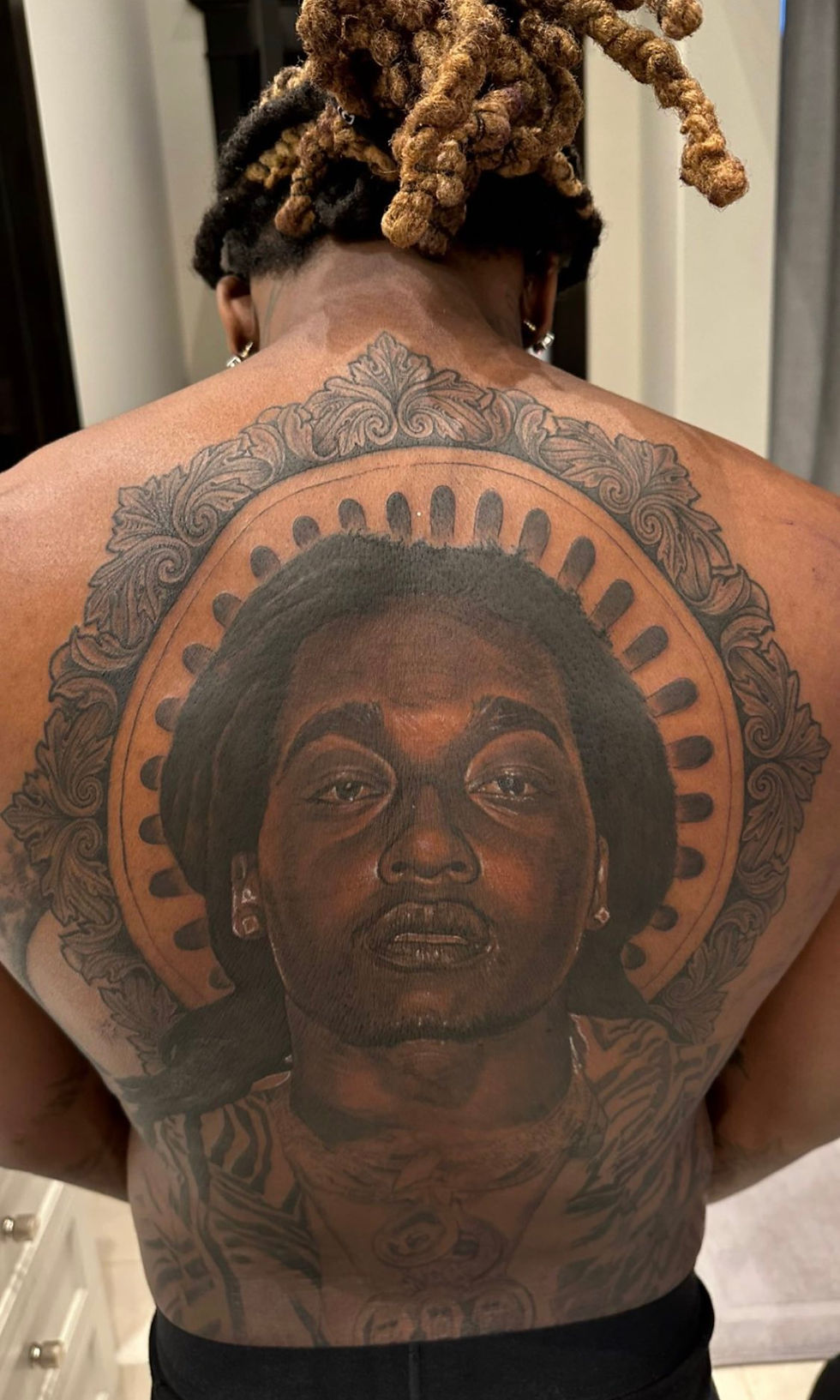
Offset says the Takeoff portrait across his back took eight hours in one session. It honours his late best friend and former collaborator. The time gives a sense of its scale: this is a full back portrait, not a small symbol that disappears in a crowd shot.
The portrait has a specific story: it honours Takeoff. Offset has explained how long it took, while photos show how it fills his back. That is enough to understand the tattoo without adding a private message he has not shared.
Why the back portrait needs dated images
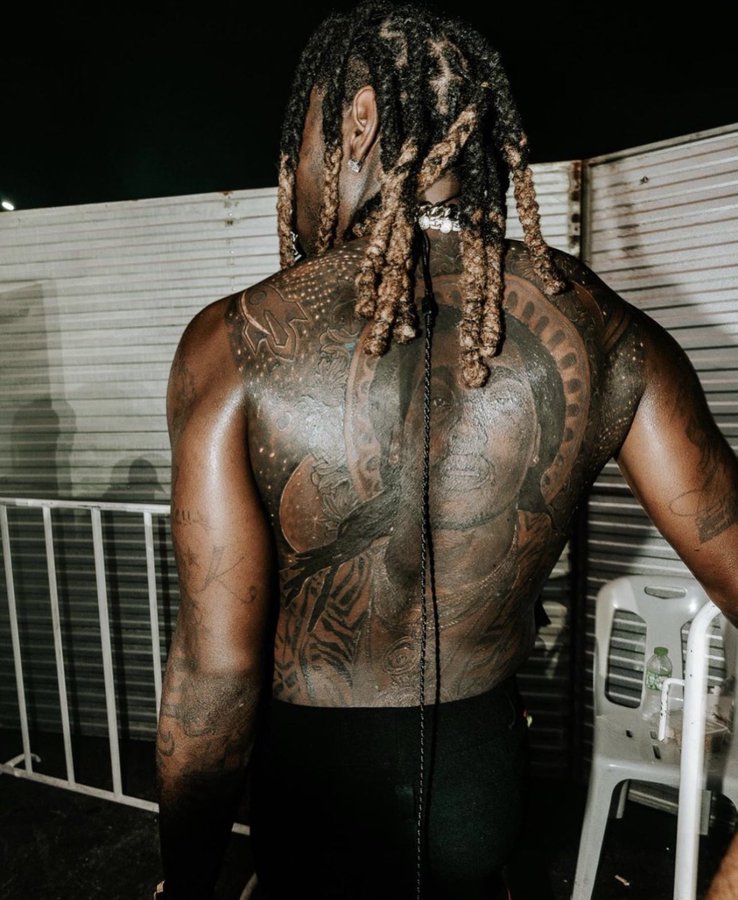
Back tattoos are hard to catch because clothes cover them and interviews rarely show the wearer’s back. Onstage, a photo may show one shoulder; shirtless shots reveal the whole portrait. The GQ episode gives the design room and shows it clearly.
Lighting and distance can hide detail, and later photos may catch changes around the portrait. The central facts remain the same: it is a large portrait of Takeoff, and Offset says it took eight hours.
Offset’s ten face tattoos developed young
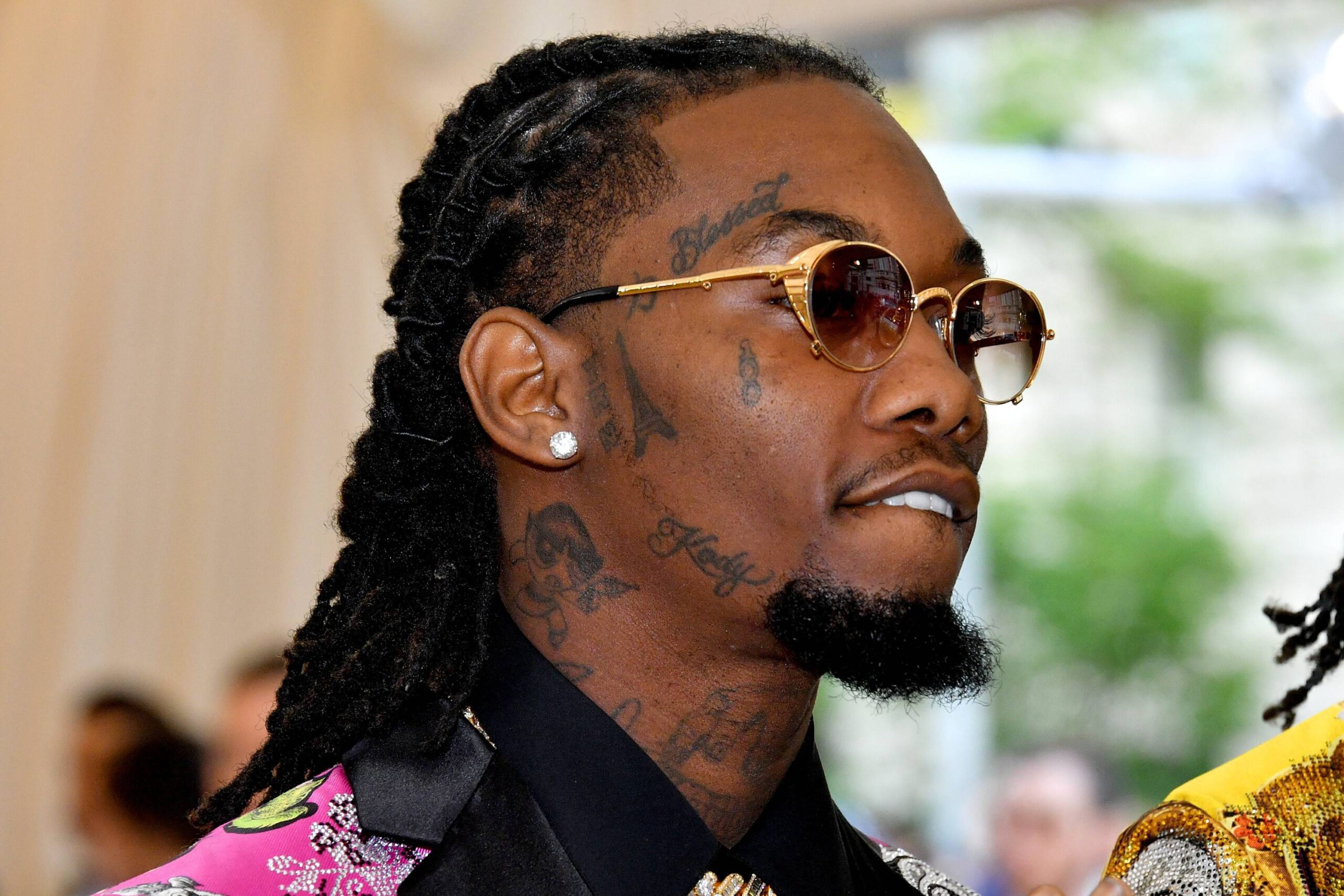
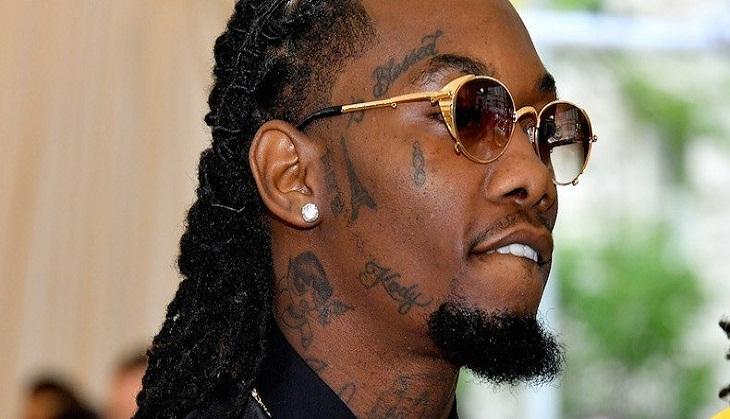
Offset says he started getting tattoos at 15 and has ten tattoos on his face. That was his count in the GQ interview, not an official total for every later year. Face tattoos can be added, covered or changed, so the number belongs to the time he gave it.
His mother objected. Offset remembers she slapped him when he got face tattoos and told him his face was too beautiful. That reaction is part of his story: it was a family response to his choice, not a judgment about anyone else’s tattoos. It also shows he knew the facial work would change how people saw him.
What the face tattoos can and cannot tell us
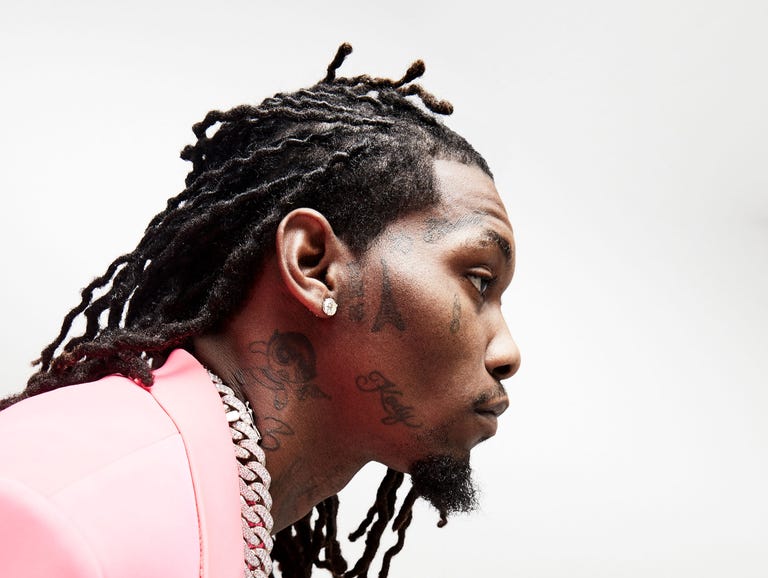
A close photo can show several designs, but tiny marks around the eyes, cheeks and hairline are easy to misread. Stick to the names Offset gives directly; the number ten offers context, not a meaning for every symbol.
The camera catches different parts of Offset’s face from each angle. Turning his head brings one cheek into view while hiding the other; makeup, facial hair and stage lighting can blur the lines. A front-facing interview and a profile shot reveal different details.
Portraits of his children
Offset says he has his children’s faces tattooed on the backs of his legs. Those portraits belong beside the family pieces, not the Takeoff memorial: both are portraits, but one honours his children and the other his friend and collaborator.
Trousers hide leg tattoos in everyday photos. Offset’s account confirms the portraits even when a picture shows only his upper body; a clear image would be needed to describe each child’s design.
Arm and hand work fills the wider collection
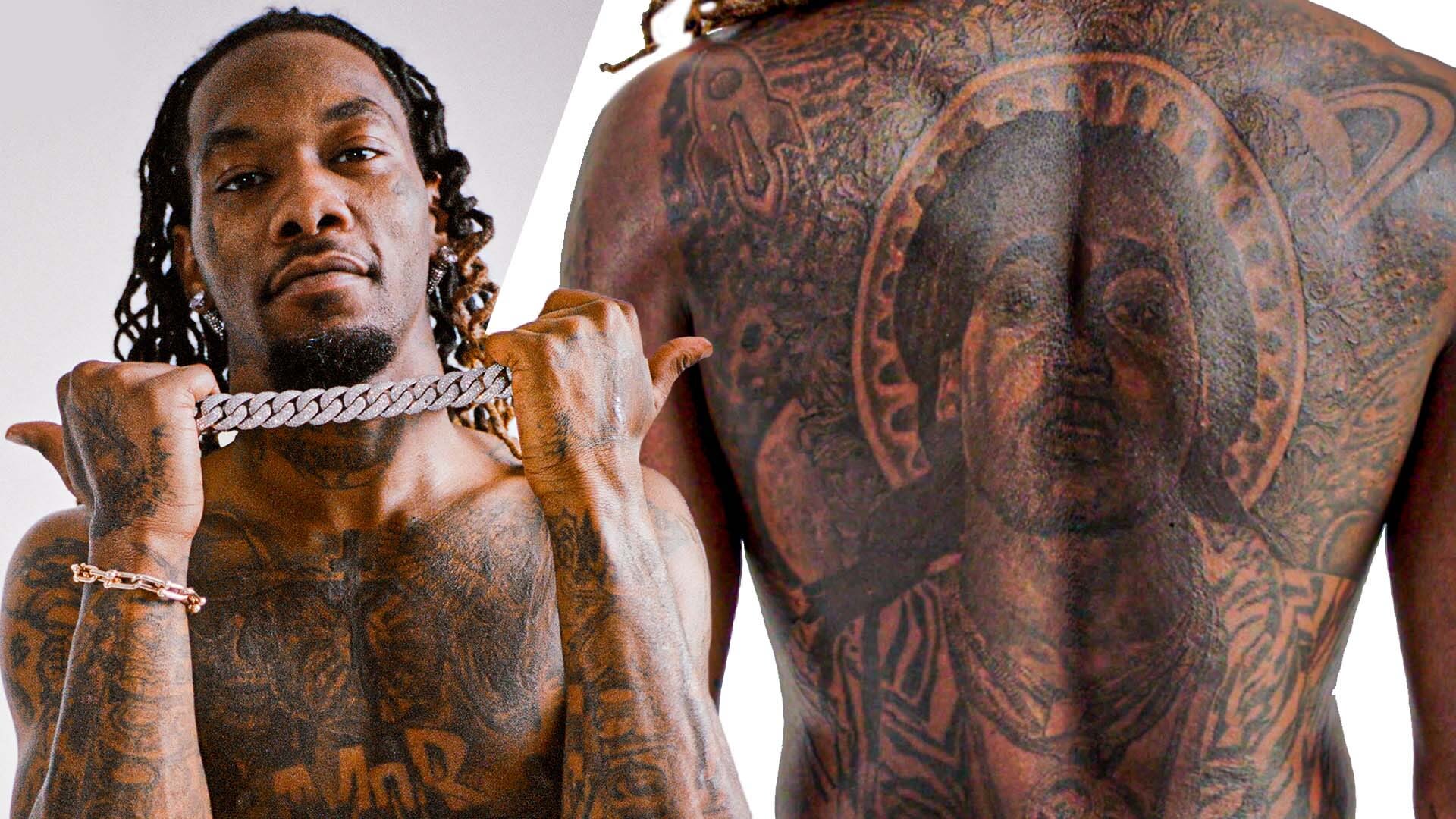
Offset’s arms and hands carry more work, visible in the Tattoo Tour and public photos. Some smaller pieces can be named from what he says; others are hard to make out. His narration fills in details the images alone cannot show.
There is plenty beyond the face and back: arm and hand pieces, the Takeoff portrait and his children’s faces. Some dark shapes could be mistaken for separate tattoos. The clearest sections are the memorial, the face work, the family portraits and the wider arm-and-hand collection.
How the collection changed over time
The collection grew in stages. Offset began young with facial tattoos; later photos show the large portraits and family pieces. A patch of skin visible in one picture may be covered in another, while a design can simply be hidden by clothing or angle.
Dates matter most for the face-tattoo count. Offset gave the number ten in the GQ episode, so it belongs to that interview. Later photos may show changes, but a new count needs a clear source.
What Offset’s Tattoo Tour confirms
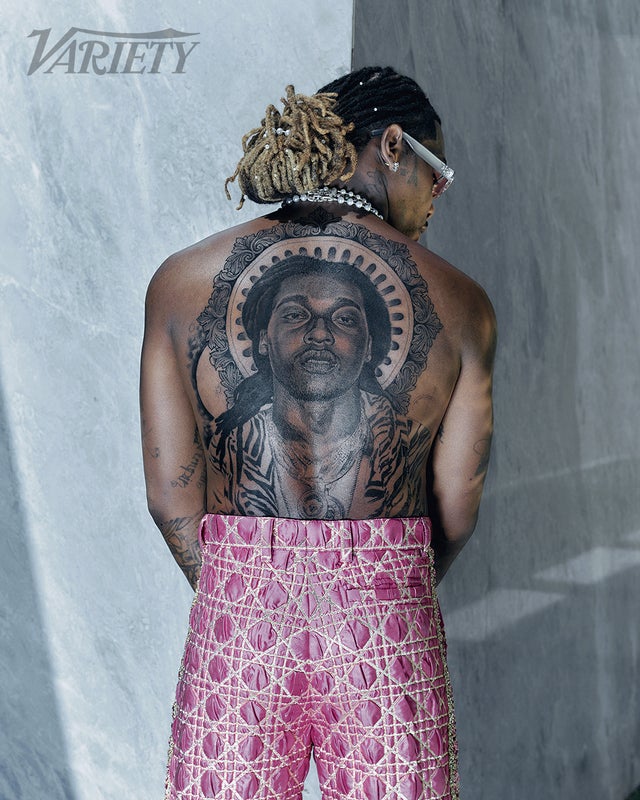
Offset’s GQ Tattoo Tour names the eight-hour Takeoff portrait, dates his face-tattoo period to age 15 and shows the portraits of his children on the backs of his legs. He also describes ten face tattoos and broader work on his arms and hands. Together, the pieces connect friendship, family and the public image he has built through ink. Smaller marks are harder to identify without a clear photo or his own description.
Each part of the collection is photographed differently. The back needs a full view, the face needs more than one angle, and the legs need a photo without trousers. That is why the Tattoo Tour fills in details everyday pictures miss.
The collection runs through loyalty, family and public image. The Takeoff portrait anchors it; the face tattoos record an early decision that changed how he was seen. The portraits of his children and the arm work round out the story, even when smaller designs are hard to identify.
One thought on “Offset’s Takeoff portrait and the tattoos he got young”