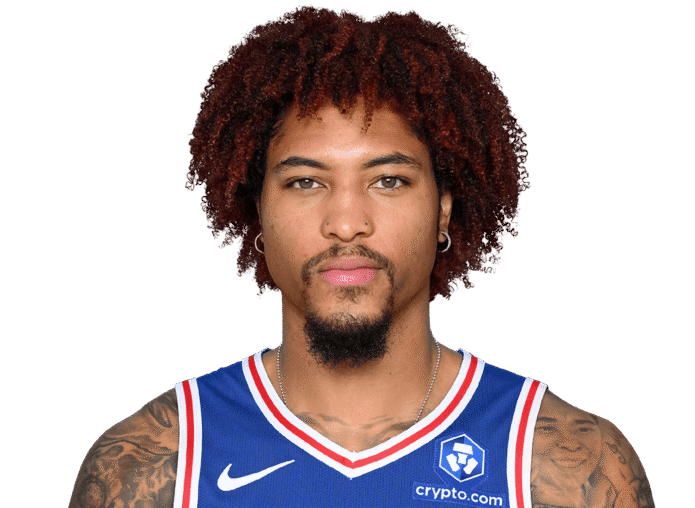
Kelly Oubre Jr. never seemed likely to stop at one tattoo. He got his first in high school, liked the feeling of having something new on his skin, then kept finding more room. A few years later, much of his body was covered, and the collection had begun to read like a scrapbook of portraits, hometown symbols, faith, words and music.
Oubre has said the tattoos help tell his story. The collection can look chaotic at first: a huge chest piece, “SACRIFICE” across his stomach, musician portraits, New Orleans references, religious images, family details and a guitar on his hand. They’re not all trying to make the same point.
Some designs are about faith or people he admires; others connect to where he grew up or remind him who he wants to be. Here’s a closer look at the best-documented pieces in Kelly Oubre Jr.’s collection.
The first tattoo started with a basketball and a little faith
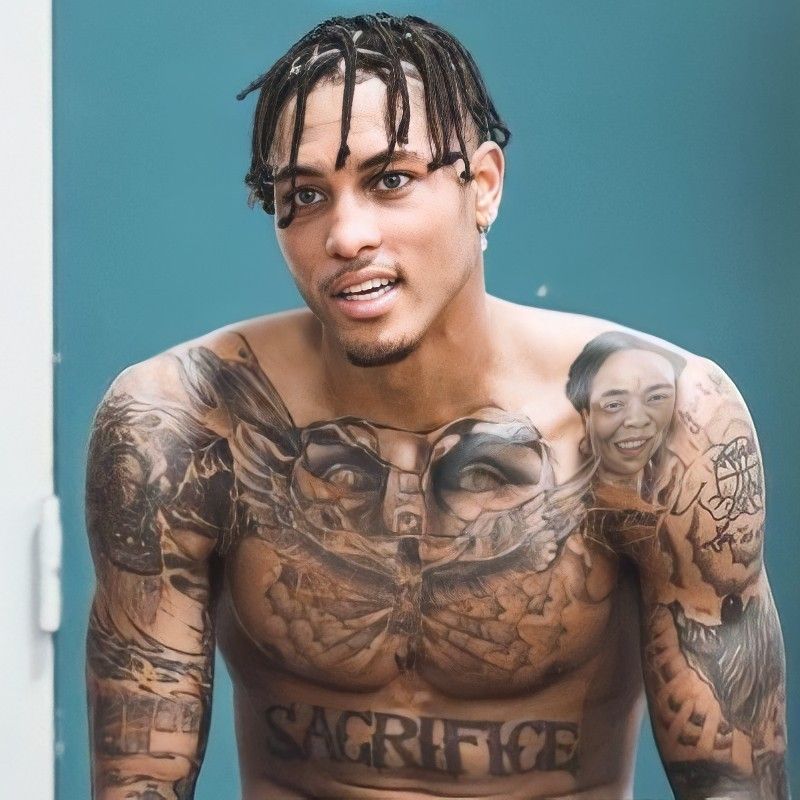
Oubre got his first tattoo as a sophomore at high school in Texas. He has said he left during a free period, went to a shop and came home with a basketball ringed by thorns. The design also carried the words “I do it for God because He is my savior.” That was a big step for a teenager, especially for a tattoo that wasn’t small or hidden under a sleeve.
The story sounds like Oubre. Inspired by another heavily tattooed basketball player, he went back to school with his shirt rolled up so everyone could see the new work. Later, he decided the tattoo looked lonely. Once there was one large piece, the blank skin around it started to feel unfinished, and he wanted to keep adding to the collection.
That first design helps explain why faith and basketball continue to show up together in his tattoos. The sport is part of how Oubre thinks about discipline, identity and the chance to make something out of a difficult start.
The owl and sacrifice design became the centrepiece
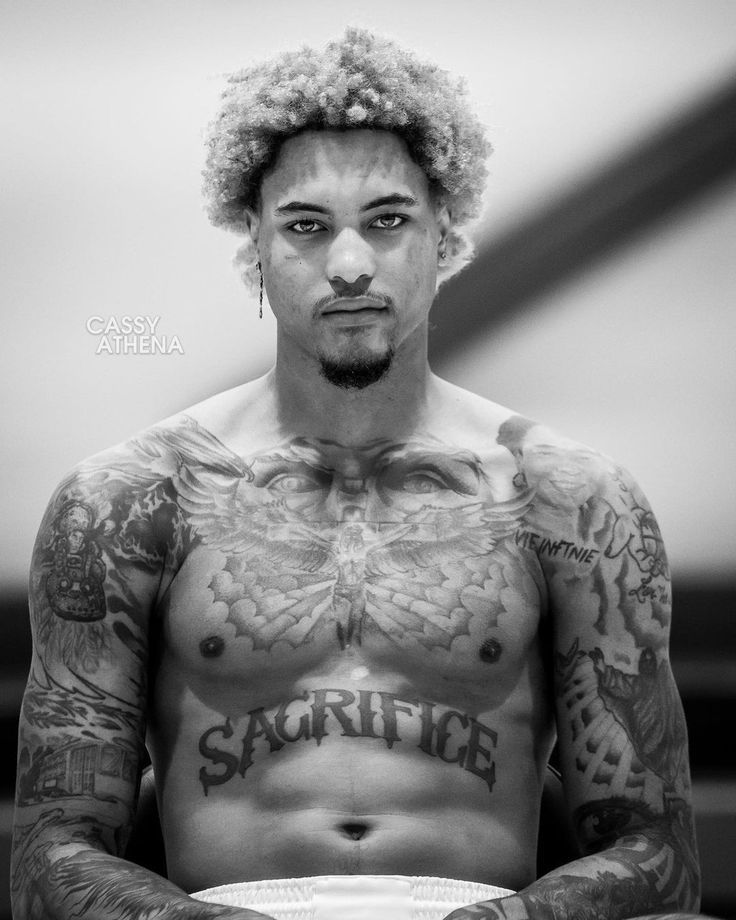
The biggest visual anchor is a large winged design across Oubre’s chest and stomach, with “SACRIFICE” written below. In some photos, the image reads as an owl; in others, its outstretched wings look more like a symbolic bird. Either way, it dominates his torso and gives the other tattoos a centre to build around.
Oubre has called the sacrifice piece his favourite tattoo. The word is simple, but it carries plenty of weight for an athlete. A basketball career is made of repetition, travel, injuries, competition and showing up again. The tattoo puts that idea right in the middle of his body.
Its appearance shifts with each photo. A straight-on portrait shows the wings and lettering as one design; a training shot breaks the piece into parts as Oubre moves, sometimes bringing the lower word into sharper view. Several clear angles help show how the tattoo works as a whole.
New Orleans is written into the smaller designs
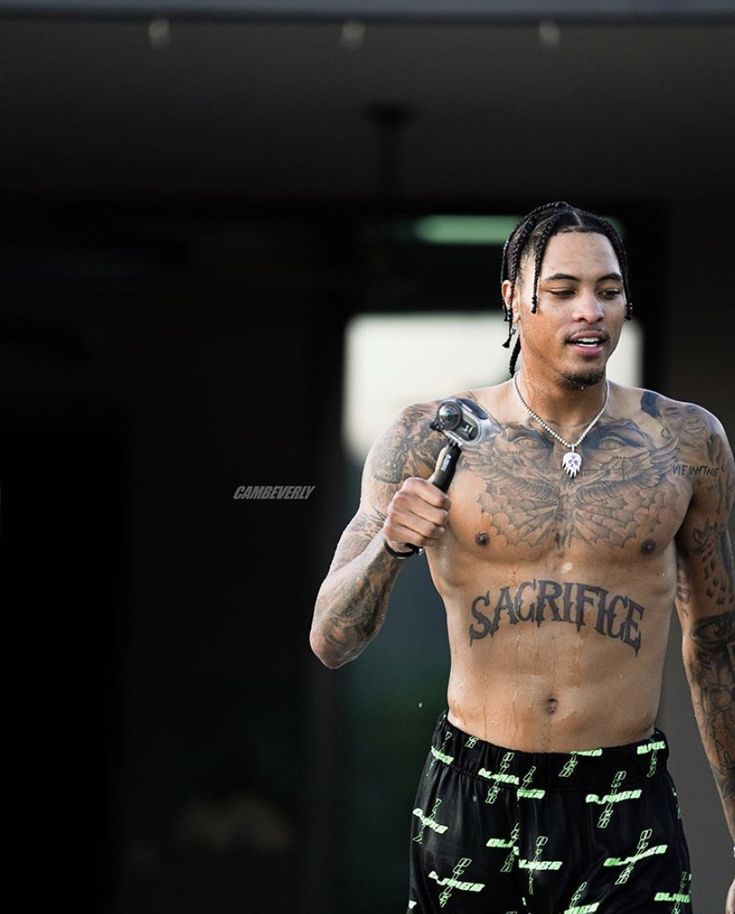
Oubre was born in New Orleans, and the city appears throughout his ink: fleur-de-lis symbols, a streetcar, the Superdome, St. Louis Cathedral, Mardi Gras beads, an alligator and a brown pelican. These details bring his hometown into the collection rather than treating the tattoos as a set of fashionable images.
He has spoken about leaving New Orleans after Hurricane Katrina and moving to Houston. That history gives the hometown designs extra meaning. They aren’t souvenirs from a visit; they keep him connected to a place that shaped his childhood after life took him somewhere else.
The New Orleans references are spread across the collection rather than gathered in one sleeve. That feels right for memories that don’t need a matching border. A fleur-de-lis can sit beside a portrait, a phrase or a religious image and still say where Oubre came from.
Music portraits bring Prince, Hendrix and Michael Jackson close
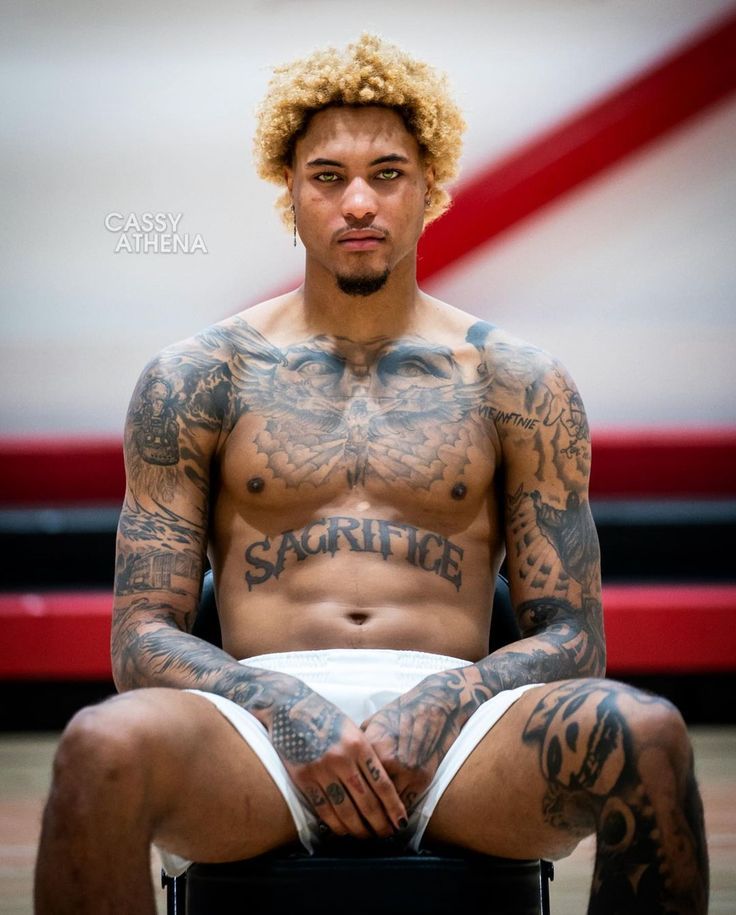
Oubre’s left leg carries portraits of Jimi Hendrix, Michael Jackson and Prince, as well as Nipsey Hussle. These aren’t random celebrity faces. Oubre has described the musicians as inspirations, people whose work, style or attitude mattered to him.
The Prince tattoo includes the musician’s famous symbol. Oubre has talked about how Prince turned his name into an image, and that detail fits his own taste: he likes the picture, but he’s interested in the story behind it too. The symbol points to a whole creative identity, not just a portrait.
Putting these portraits on his leg gives them a little more privacy than the central chest piece. They still show in shorts and training gear, but they don’t take over every photo. The leg works like a gallery wall that people see a piece at a time as Oubre moves.
The hand guitar says the soul never dies
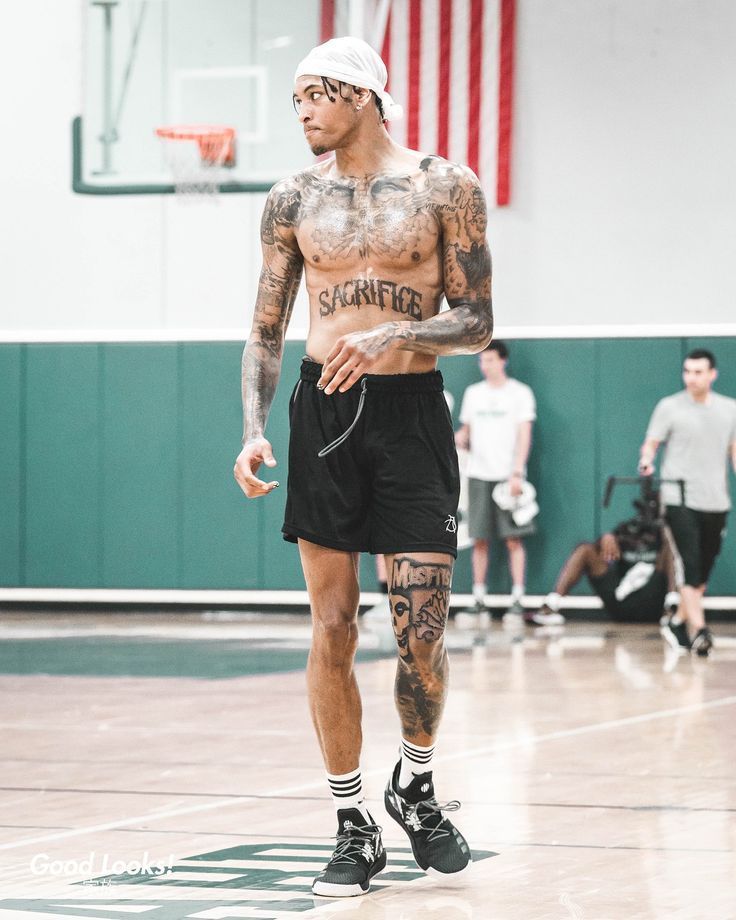
One of Oubre’s most memorable small designs sits on his hand: a guitar with the words “the soul never dies.” It brings together two of the collection’s recurring ideas: music and the thought that what people create or leave behind can outlast the moment.
A hand tattoo is hard to hide. It shows when Oubre handles a basketball, adjusts his clothes or reaches for something, making the words an everyday reminder instead of a message he sees only on special occasions.
There’s also a separate “Love” tattoo among the writing on his hand and arm. Together, the words soften some of the tougher imagery nearby. A skull, religious portrait or fierce animal can sit close to a simple message about love or endurance.
Faith, family and the Papi identity fill the arms
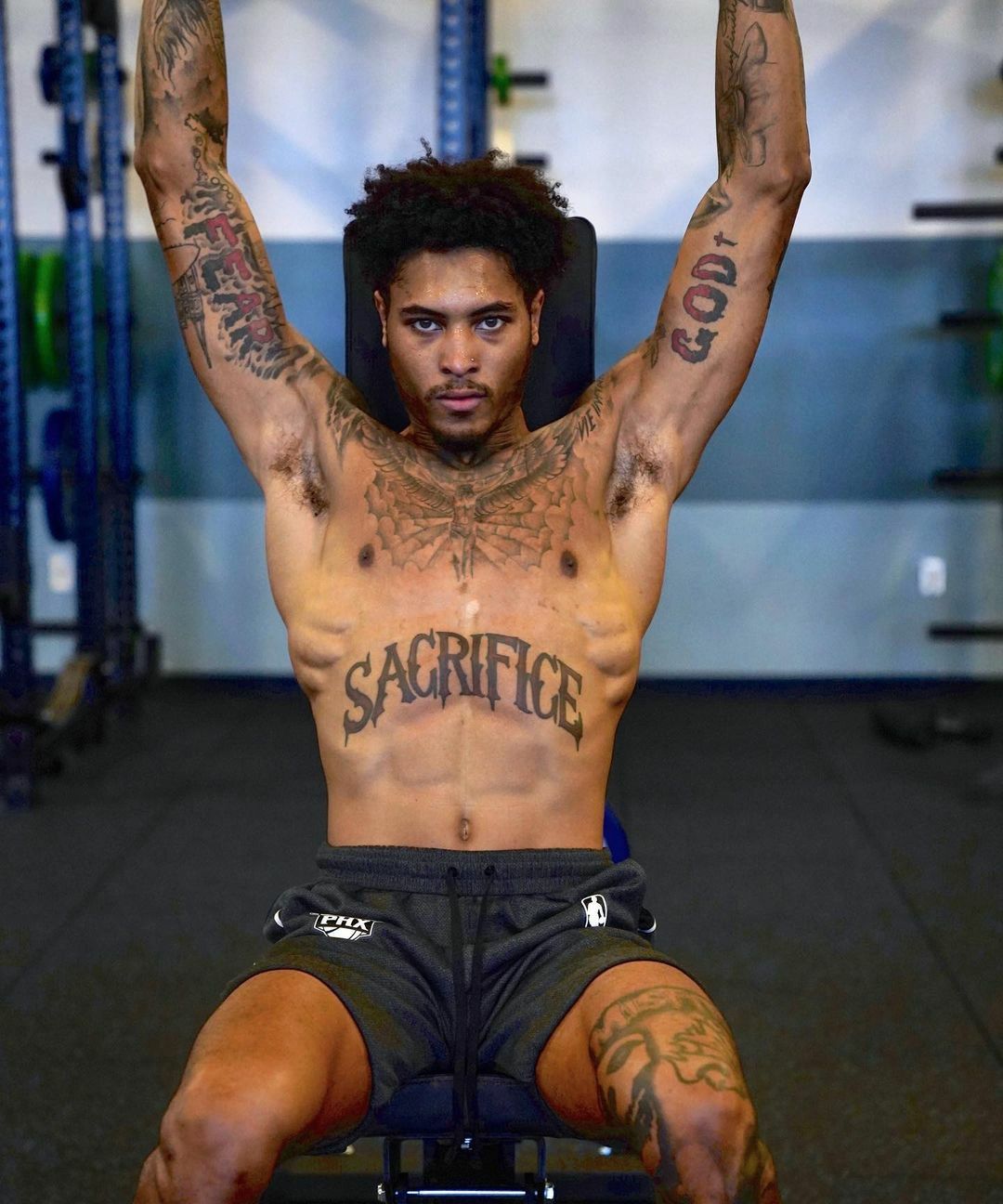
Oubre’s arms hold many of the smaller pieces that make the collection feel busy. One shoulder carries a message about doing it for God; other areas show religious portraits of God and Jesus, an eye with a cross inside it, and words including “Infamous dope soul.”
On his left arm, “love,” “wins” and “Shylyn” are woven into the lettering. The name refers to his fiancée, and the phrase serves as a reminder that love can get through hard stretches. It’s a more intimate tattoo than the huge chest design, aimed at one person and their relationship.
“Papi” is another important part of Oubre’s identity. He has described it as a tribute to a version of himself that is confident, stylish and a little larger than life. It’s more than a nickname: it’s a persona he carries through basketball, fashion and public life.
There is still room for the strange and playful pieces
Not every tattoo is a solemn tribute. Oubre’s collection also includes a samurai, a tsunami wave, a unicorn, a phoenix, an alligator and a guitar. He has named Jet Li and Bruce Lee among the people he admires, so martial arts imagery sits naturally beside the music portraits and New Orleans symbols.
That variety keeps the collection from feeling overplanned. A tattoo can mean something and still look cool; it can honour family one day and come from a favourite film or artist the next. Oubre’s choices feel more like an ongoing conversation with himself than a formal design scheme.
Oubre has also talked about being judged for his tattoos. People can see a heavily inked player and decide they know him before he speaks. He isn’t the only inked athlete to deal with that kind of assumption. For Oubre, the collection pushes back on the snap judgment: it reflects taste, faith, loss, hometown pride, ambition and affection, far more than a stereotype can capture.
The ink doesn’t hide his story; it asks you to look at all of it.
Why the collection keeps growing
Oubre has described the feeling after his first tattoo as a kind of domino effect. Once the basketball design was there, the blank skin around it felt unfinished. That simple reaction helps explain how the collection came to cover so much of his body: each new piece changes the space around it.
The process lets him mark different chapters without starting over. A portrait remembers an artist he loves; a fleur-de-lis points back to New Orleans; “Sacrifice” stands for the work behind a career; and a word for his fiancée stays close to his hand. Each tattoo has its own purpose, but they all belong to the same scrapbook.
Kelly Oubre Jr.’s tattoos make the most sense when read that way. They aren’t one themed sleeve. They’re an open record of the places, people and ideas he continues to choose to carry.
The tattoo interview
Oubre has talked about his body art in basketball interviews, including his first teenage tattoo and the stories behind his most personal designs. The video below focuses on that journey.