
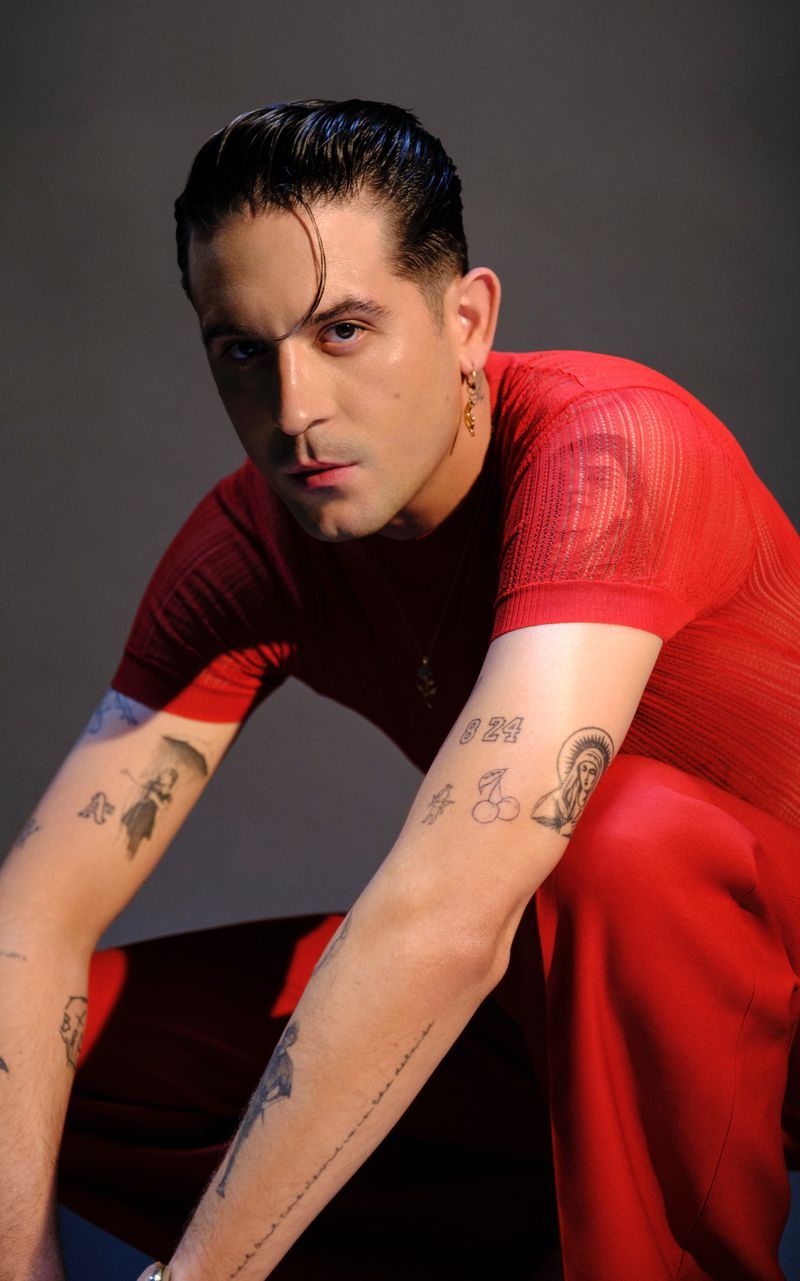
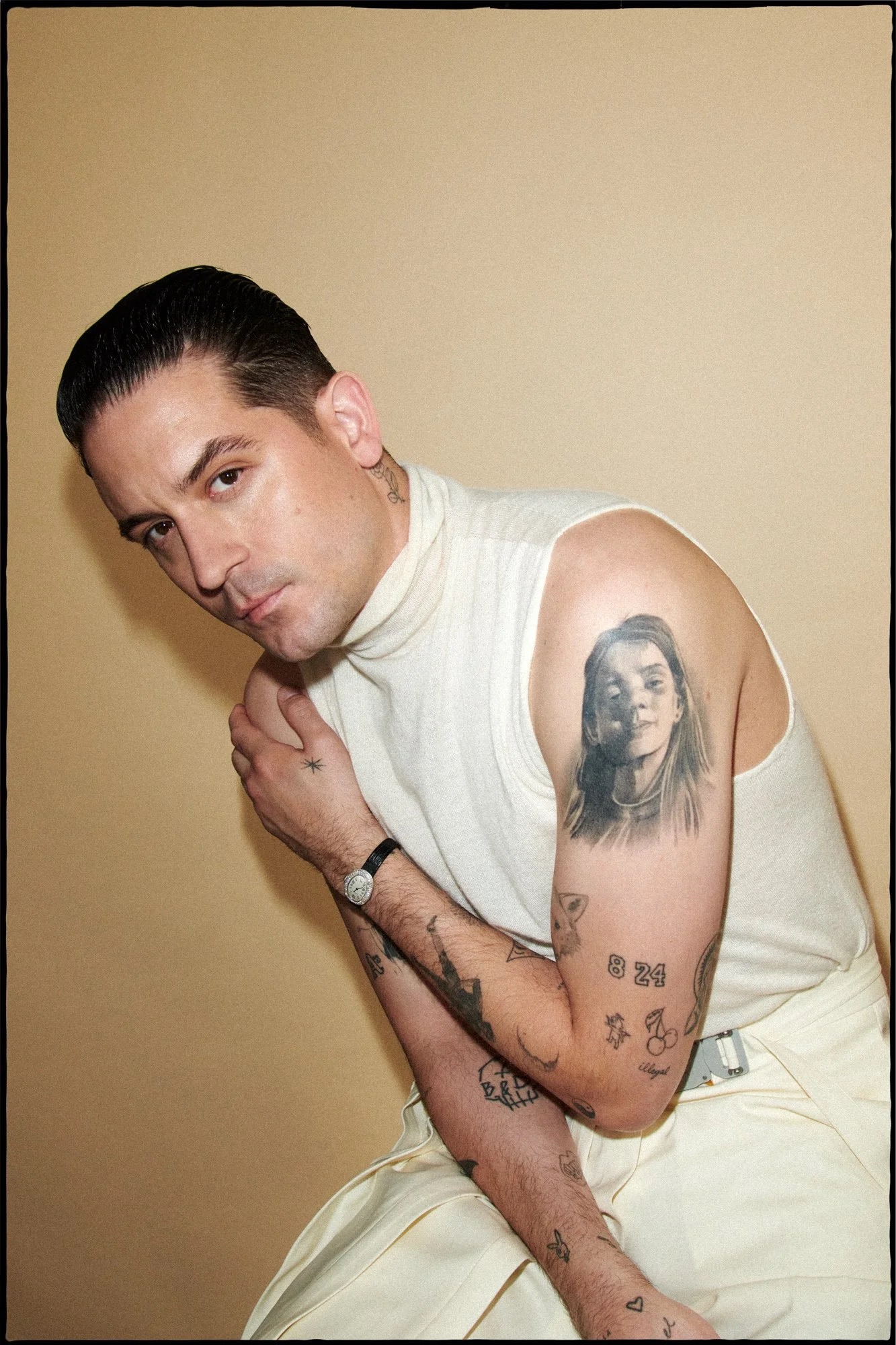
G-Eazy’s tattoos are easy to read as a collection because so many sit on his arms, neck and forearms. The pieces are small enough to stand on their own, yet together they make a recognisable map when he wears short sleeves. There is a thorned rose on his neck, a wolf on his bicep, theatre masks, an Oakland area code, lettering and a skull tied to one of his music projects.
Some meanings are well documented. The 510 connects to Oakland and the years G-Eazy spent around Berkeley and North Oakland. The “LIFE IS GRAND” lettering is described as a reminder to enjoy life through difficult periods. Other pieces, including the rose and sword, are easier to describe visually than to explain personally. A reliable guide separates what a photo shows from what the artist has said about it.
The rose on G-Eazy’s neck is small but impossible to miss

The rose on the left side of G-Eazy’s neck is among the first tattoos people notice because it sits close to his face. It has a stem, two leaves and visible thorns, reading clearly as a flower rather than an indistinct dark mark. The design is compact, but the placement makes it part of his public silhouette. A collar may cover its lower edge; with a bare neck, the full shape stands out.
Rose tattoos often carry broad associations with beauty, love or new beginnings. Those are general readings, not automatically G-Eazy’s reason. The tattoo inventory describes the thorned flower but does not offer a detailed first-person explanation from him. It is enough to name the rose, describe its stem and leave the private meaning open.
The neck placement changes how the rose sits beside the rest of his look. G-Eazy often wears dark jackets and shirts, so the tattoo becomes a small break in a mostly monochrome style. It is not a large rose covering his throat; it is a neat mark on the side of his neck that can disappear under a high collar or when his hair falls forward.
The rose also shows why one portrait cannot stand in for a full tattoo inventory. A red-carpet image may show the neck clearly but lose the forearm designs; a performance photo may catch his hands and arms while leaving his neck in shadow. Photographs from different years reveal different parts of the collection.
LIFE IS GRAND turns a forearm quote into a daily reminder
The words LIFE IS GRAND run along the inside of G-Eazy’s left forearm, near the elbow crease. The phrase is direct and easy to recognise, without a complex illustration or hidden reference. When his arm bends, the letters can break across the crease; with it straight, they read as one short statement.
Body Art Guru describes the quote as a reminder that, even through setbacks, life is worth enjoying. That makes this one of the clearer pieces in the collection: the visible words and the reported meaning line up. It is not a guess from a blurry photo; the lettering is readable and the explanation is connected to the phrase.
Forearm lettering is practical for a performer. A sleeve can cover it, or he can show it by rolling up his shirt. That gives the quote both a private and public side: it is visible enough to become part of his image, but less exposed than ink across his face or the front of his neck.
The phrase sits beside other small designs without taking over the arm. A nearby moon and figure create a more illustrative area, while LIFE IS GRAND stays simple. That contrast makes the words easy to pick out and keeps the arm from reading as one dense sleeve. Each tattoo keeps its own visual role.
There is no need to build a larger theory around the quote. Its point is already in the words. G-Eazy’s collection also covers place, family and music, while LIFE IS GRAND is the most literal expression of his outlook: a short reminder he can see whenever he looks down at his arm.
The 510 tattoo keeps Oakland close to G-Eazy’s arm
The number 510 is on the back of G-Eazy’s right forearm. It is the area code for Oakland and nearby parts of the East Bay, making it a hometown marker rather than a random number. It shows when he turns his arm without taking over the front of the forearm or competing with larger illustrated pieces.
The story behind the numbers reaches back to his childhood. Coverage says G-Eazy spent part of his early life with his grandparents after his mother left his father, moving between Berkeley and North Oakland. That history gives the area code more weight than a generic city tattoo: it points to the places and people tied to his upbringing, especially the grandparents who helped raise him.
Numbers can be hard to read in a blurred photograph. 510 might be mistaken for a date or private code. Here, the area-code explanation is documented, so the guide can identify it without guessing. It is a small tattoo with a clear geographic reference and a personal history.
Tying Oakland to his tattoos also fits G-Eazy’s public identity as a Bay Area rapper. The mark sits beside his career story without reducing every song or design to a slogan. It simply keeps one part of home close to the skin.
It is useful to distinguish 510 from later number tattoos or sports references that may appear nearby in photos. New ink can be added beside an older design. This entry should stay specific: three digits on the right forearm, Oakland, and the childhood and family context behind them.
The B and D skull connects the smaller arm marks to his music

The cartoon skull on G-Eazy’s inner right forearm has more detail than its small size first suggests. The letters B and D make up the eyes, an ampersand forms the nose and a sword crosses the forehead. It is a playful drawing, but the parts have a purpose: the piece is reported as a reference to his B & D EP.
That connection separates the skull from a generic skeleton tattoo. It works as a music reference, but still looks like a drawing rather than a logo pasted onto his arm. The letters are built into the face, so the EP link becomes clear when someone looks closely.
The design shows how G-Eazy uses small arm tattoos to hold career markers. The 510 points to Oakland; B & D points to a particular release. Both are compact number or letter designs, but one is geographical and the other musical.
Other catalogued tattoos add contrast. The left forearm has comedy and tragedy masks; the right side includes a sword, Batman symbol, angel and devil. A pin-up girl and a figure with an umbrella also appear in broader inventories. Since not all of those have confirmed personal explanations, they are best described by their visible design and location.
The angel-and-devil pairing is often read as a contrast between two sides of a person, though that does not establish a private story. The masks create a similar visual pair, with happy and sad faces. His arms hold several compact opposites: place and project, comedy and tragedy, angel and devil.
The tattoo map is clearest when each entry stays specific. The neck holds a thorned rose; LIFE IS GRAND is forearm lettering; 510 is an Oakland code tied to his childhood and family; and the B-and-D skull turns an EP title into a cartoon face. Those details are enough without claiming every line carries a secret meaning.
Put together, the tattoos give G-Eazy a visual language that feels connected to where he came from and what he makes. They are not one giant sleeve or a single style: lettering, numbers, animals, theatre imagery and music references sit alongside one another. Clear photos show the ink, reliable sources explain the stories, and the rest is best left as an honest description.
One thought on “G-Eazy’s Tattoos: Oakland Codes, Neck Ink and the Stories Behind the Symbols”