
Cuco’s tattoos have the hazy, slightly offbeat feel of his music. The Los Angeles singer, songwriter, and producer has a scorpion, a smiling dog, a snake, a ship, a flower, a mime, and small bits of lettering. Some feel cute, others eerie; together they look more like characters from a sketchbook than a set of flash designs.
The collection moves between playful and serious. The dog feels friendly, while the skulls add a darker note. The ship suggests escape; flowers and a snake bring together beauty and danger. That mixture fits the contrast in Cuco’s bilingual psychedelic pop.
Cuco started making music as a teenager, developing his sound through self-recording, guitar, and experimentation. His tattoos have a similarly personal feel. They don’t look planned as one fixed brand, and many are small enough to feel like individual choices made over time.
The best idea to take from Cuco is the mood, not a particular image. Let different small designs have their own character, then give them a loose connection through linework, tone, or humor. A collection can feel lived in without making every tattoo match.
Cuco’s scorpion tattoo puts a sharp mark on the neck
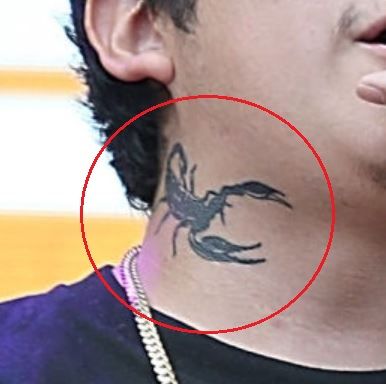
The scorpion on Cuco’s neck gives the collection an edge. It’s compact, but the curled tail, narrow legs, and distinct body make the shape easy to read. Because it’s on the neck, people see it when his collar opens or he turns toward the camera.
Scorpions are often associated with self-protection, control, and surviving difficult conditions. Here, the image sits alongside the softer side of Cuco’s music, with a bit of bite. It doesn’t need to be large to change the feel of his appearance; the silhouette does the work.
The neck moves constantly and gets a lot of sun, so line clarity and a steady hand matter. A simple animal can read better than a crowded miniature scene. The scorpion makes its point quickly and leaves the other designs room to add detail.
The smiling dog tattoo keeps the collection warm and personal
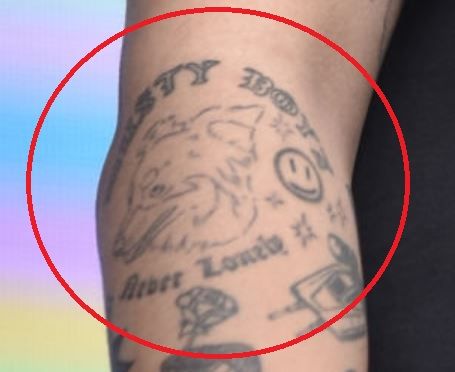
The dog tattoo brings a softer mood. It sits on Cuco’s forearm with a friendly expression, and a small smiley nearby makes the design feel a little cartoonish. The stars around it and the placement give it more character than a generic dog image.
A pet tattoo can be straightforward, but a cartoon style leaves room for personality. Instead of aiming for a formal portrait, the drawing turns affection into a symbol. It can suggest a memory or a companion, or simply keep a playful image close.
The forearm is a practical spot for a design like this. Cuco can see it while working, playing guitar, or reaching for a microphone, and other people can read the expression without knowing the backstory. The smile is clear before you know what inspired it.
Snake and flower imagery brings beauty with a little danger
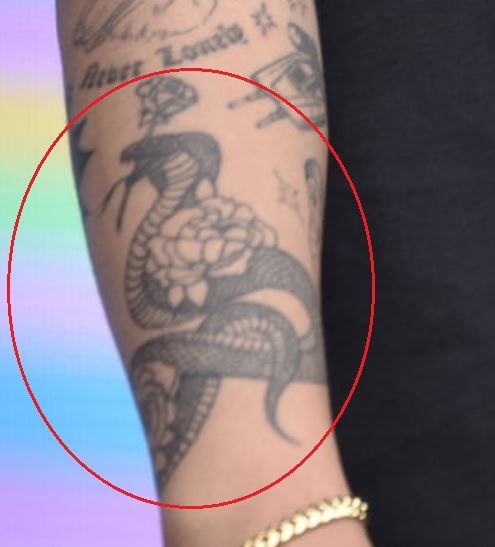
A snake winding through flowers is a familiar combination, but the two shapes change each other’s mood. The flowers soften the design; the snake adds movement and a hint of danger. Its presence keeps the tattoo from becoming too delicate.
That mix suits Cuco’s visual style. His songs can sound hazy and romantic, with an odd or unsettled detail beneath the surface. A snake and flowers carry both sides: attraction and growth alongside change, danger, and instinct.
The image needs a clear path across the arm. The snake should remain distinct from the petals, and the flowers need enough space to stay readable as the tattoo settles. Contrast keeps a pretty design from blurring together. Each organic shape has its own job.
The ship and diver tattoo turns the arm into a small escape story
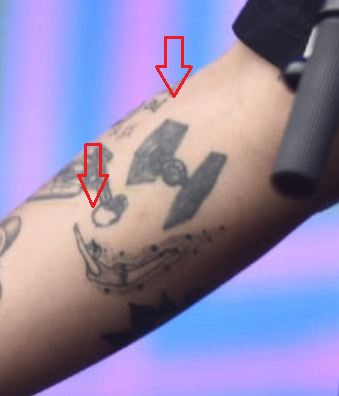
The ship and diver bring a sense of travel to the collection. A ship can suggest leaving, searching, or drifting into a private world. The diver makes the scene more active: instead of watching the water from above, someone goes beneath it.
That feeling of escape also runs through Cuco’s music, where nostalgia, romance, and daydreaming sit together. The tattoo gives that mood a shape without needing to refer to one specific event.
Illustrative tattoos need a clear focal point. The ship, diver, and water should have a visual order, so the details don’t compete. The curve of an arm can lead the eye from the boat to the figure below. The body becomes part of the scene.
The mime tattoo adds a theatrical face to the lineup
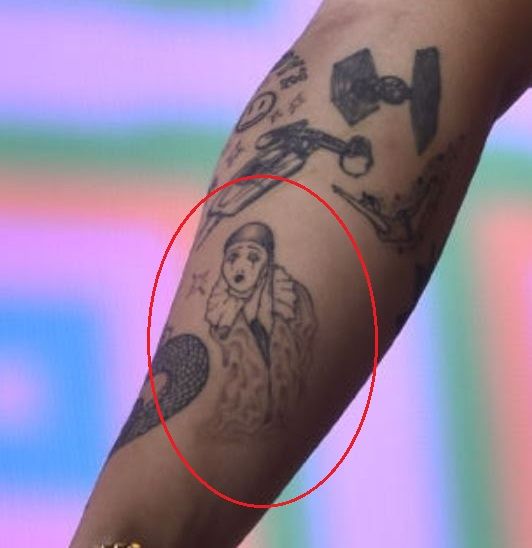
The mime gives the collection a human character without looking like a standard portrait. Mime depends on performance, silence, and expression, so even a small face can carry a distinct mood. It also suits Cuco’s work as a performer: music conveys feeling through sound, while a mime does it through gesture and appearance.
There’s a tension between the mime’s quietness and the energy of a live show. The image can suggest a role, something held back, or a person saying plenty without words. A theatrical tattoo might be a private joke, a stage reference, or a reminder that identity has more than one side.
The mime sits naturally beside the other designs. The dog feels warm, the scorpion guarded, the snake restless, and the ship searching. The face gives the collection another mood. It adds a character to a group that’s already full of objects and scenes.
Skulls and hand lettering bring in a rougher edge. A skull can add mortality or dark humor; words on the fingers feel immediate beside the larger illustrations. Those smaller marks keep the flowers, stars, and dog from making the whole collection feel too cute.
Cuco’s finger tattoos spell “AMOR” and “BESO,” words tied to his Mexican heritage, romantic writing, and bilingual identity. They’re short and easy to recognize, and sit close to the hands he uses to make music. The placement gives them a bit of movement when he plays or gestures.
The mix of sweet and dark imagery gives the collection its range. Contrast is what keeps the tattoos from settling into one mood. The skulls and lettering add pauses, humor, and rough edges among the more finished scenes.
What makes Cuco’s style feel like a daydream
The tattoos feel as if they belong in the same imaginative neighborhood. Animals, flowers, boats, faces, and words could all come from a dream journal. They don’t need to match exactly; curiosity and the shifts between sweet and strange are enough to connect them.
The collection also gives each design the space it needs. The scorpion is quick and sharp, the dog reads easily on the forearm, and the ship gives the artist room for a scene. Small letters have their own place beside the larger images. Good spacing lets each tattoo keep its own voice.
If you’re building a collection over time, start with the images you keep coming back to and let later pieces respond to them. A flower can sit beside a skull; a cute animal can share space with a darker symbol. The tattoos don’t all have to be serious or use the same style.
If Cuco’s approach appeals to you, focus on the feeling behind it. Choose images that recall people, places, songs, or private jokes. Find an artist who can keep small faces and letters clear, and leave some room for whatever idea comes next. The result should feel like your own world.
Cuco’s tattoos echo the shifts in his music: soft at the edges, a little surreal, and full of turns in mood. The scorpion gives his neck some bite, the dog brings warmth, the snake and flowers mix their shapes, the ship opens a scene, and the mime adds a human face. That range is what makes the collection distinct.