codex

How Dwayne Johnson’s Tattoos Have Changed Over the Years

Two very different stories shape Dwayne Johnson’s best-known tattoos: a Polynesian design tied to his Samoan heritage and a bull linked to his wrestling years. The bull has grown from its smaller 1990s version into a large skull design. Johnson speaks about the Polynesian piece in terms of family, culture and identity.

The Polynesian tattoo across Dwayne Johnson’s shoulder and chest
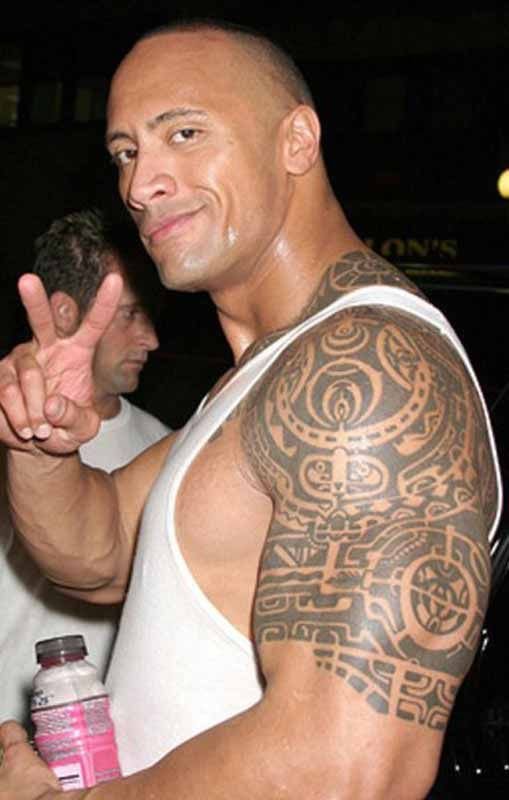
Dwayne Johnson Polynesian shoulder and upper-arm tattoo

The Polynesian tattoo covers Johnson’s left shoulder, upper arm and part of his chest. He has connected it with his Samoan family and the values he hopes to pass on to his children. In a short film about the later bull redesign, he also described bringing his children to Hawaii so they could experience the culture themselves.

Black patterns, curved bands and geometric shapes follow the line of his shoulder and torso. Johnson has discussed the design as a whole in connection with ancestry, family and Polynesian identity. Online explanations often assign a meaning to every motif, but the sources do not support all of those readings as his own.

What is confirmed about its meaning?
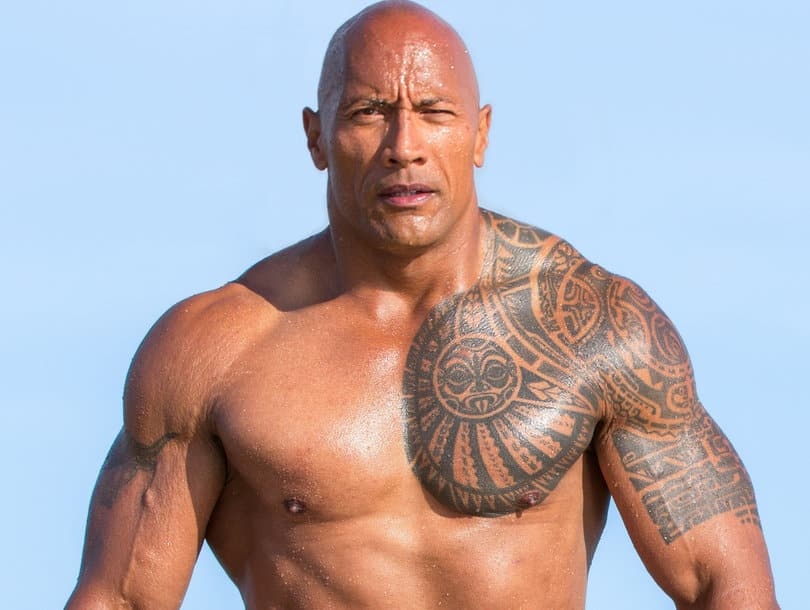
Dwayne Johnson’s Polynesian shoulder and chest tattoo in a clear close view

Johnson has spoken about his Samoan heritage and wanting to carry that connection visibly. That supports describing the tattoo as cultural and family-linked. The meaning of each individual pattern is less certain; broad explanations of Polynesian tattoo traditions should not be mistaken for Johnson’s personal account.

The original Brahma Bull tattoo
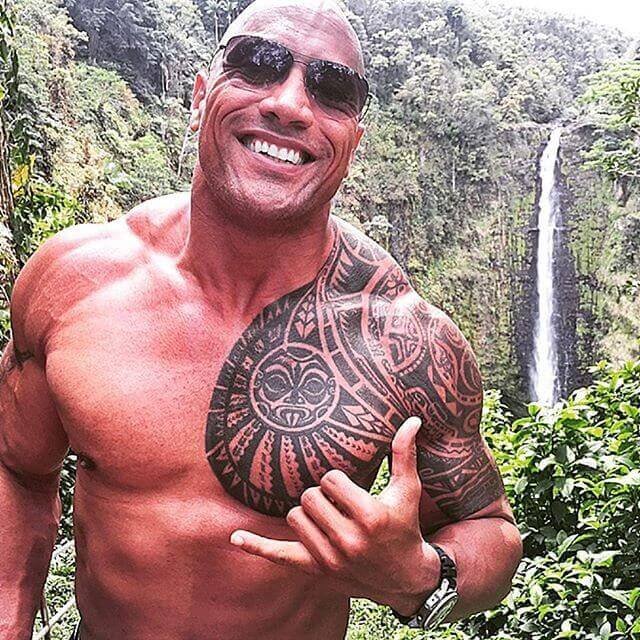
Dwayne Johnson Samoan chest tattoo and Brahma Bull

The smaller bull began as a nod to Johnson’s wrestling nickname, The Rock, and to the bull associated with his zodiac sign. The Wrap reported that he got it on his arm in 1997. Older photos show a compact design high on the arm, before the later skull work expanded it.

The bull was tied to Johnson’s public wrestling identity from the start. That history is documented, but there is no evidence that he had the later skull design planned in 1997.

How the bull tattoo became a larger skull design

Years later, Johnson reworked the bull into a much larger black-and-gray design built around a skull. He documented the project with tattoo artist Yomico Moreno in the short film The Evolution of the Bull. The Wrap reported that Johnson chose the skull as the central image and wanted the piece to connect his personal history with broader ideas about life, death and the mysteries of existence.

Johnson was drawn to Moreno’s detailed, hyperrealistic style. Moreno first contacted him on Instagram, and they developed the design from there.

Why did the redesign take so long?
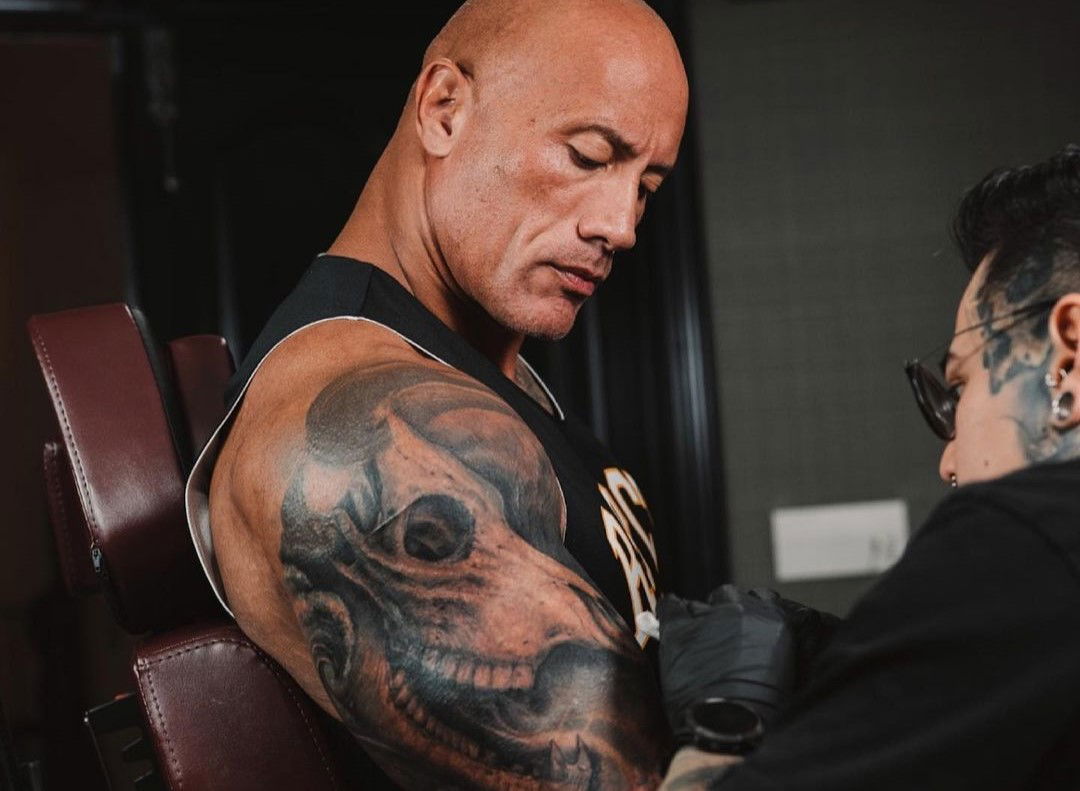
Dwayne Johnson’s Brahma Bull tattoo during the redesign session

Johnson said the redesign took more than thirty hours over several sessions. Moreno had to build around the existing bull, adding detail rather than starting on blank skin. Johnson described the work as challenging because it required precise shading and color on his skin.

The bull tattoo and Johnson’s Polynesian identity are separate stories

The bull and Polynesian design often appear in the same photographs, but they have separate histories. The Polynesian tattoo reflects Samoan heritage and family; the bull began with Johnson’s wrestling identity and was later reworked with Moreno.

The visual difference is clear: repeated patterns and open space shape the shoulder and chest piece, while the bull is a heavily shaded skull illustration. Seeing both in one photo does not make them the same project or give them the same meaning.

Artists linked to Dwayne Johnson’s tattoos

Moreno is documented as the artist behind the later bull redesign. Older coverage gives conflicting credits for the original bull. The Polynesian work is associated with Samoan or broader Polynesian tattoo traditions, but the available sources do not identify one artist for every part of it.

The clearest artist credit belongs to Moreno’s bull transformation. For the older designs, a specific name is harder to establish, so the attribution should stay limited to what a source confirms.

How the collection has changed

Johnson’s tattoo history shows a change over time: the Polynesian shoulder and chest piece, the original bull from his wrestling years, and then the larger skull redesign. The last piece grew out of the first bull rather than replacing its history.

Older photos show the smaller bull; later images document Moreno’s redesign sessions. Together, they show how the tattoo changed without making either image stand in for the whole timeline.

Frequently asked questions

What does Dwayne Johnson’s Polynesian tattoo mean?

Johnson has connected the Polynesian tattoo with his Samoan heritage, his family and the culture he hopes to pass on to his children. Public sources do not confirm a meaning for every individual motif.

What is the Brahma Bull tattoo?

It began as a smaller bull linked to Johnson’s wrestling nickname and identity. Later, tattoo artist Yomico Moreno expanded it into the larger bull-skull design.

Who tattooed the redesigned bull?

Yomico Moreno is the documented artist behind the later bull transformation and the short film about the project.
More actor tattoo guides

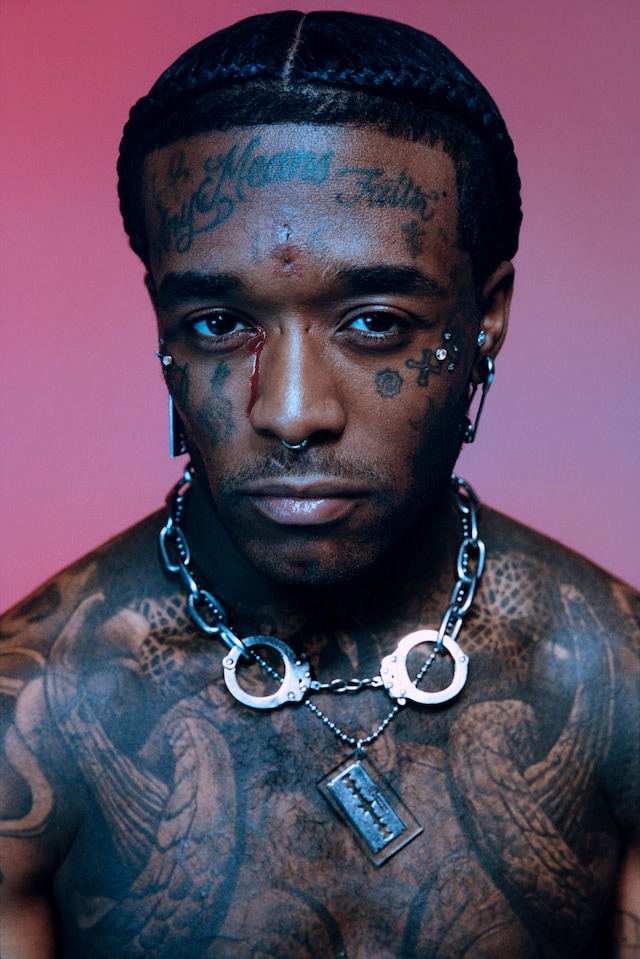
Lil Uzi Vert’s Ink Keeps Changing: Faith, Face Symbols and the Forehead Mandala

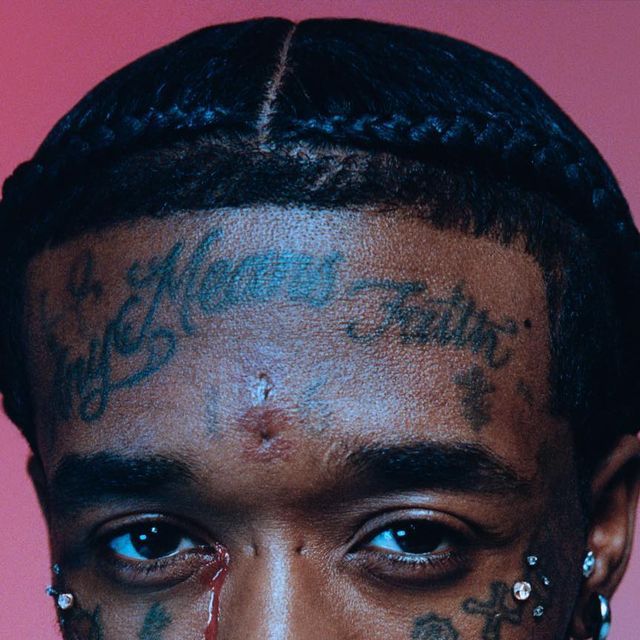
Lil Uzi Vert’s tattoos are tied to a changing look, from the early word “Faith” to later facial symbols and a forehead mandala. The pink diamond attached to his forehead in 2021 was jewelry, not ink. Some designs are easy to identify; others appear in photos without a confirmed meaning.

The chronology helps explain why photos look so different. A close-up may show lettering that is later covered, altered or hidden. Some meanings come directly from Uzi; others are fan interpretations.

Faith was Lil Uzi Vert’s first face tattoo

Lil Uzi Vert Faith and Mommy forehead tattoos

The Faith lettering is often identified as Uzi’s first face tattoo. Biographical accounts tie it to a time when he wanted to take rap more seriously. In early photos, the cursive word sits just below his hairline.

That account gives “Faith” a career context. It does not explain every private reason behind the tattoo or give later symbols the same religious meaning.

The number sixteen belongs to a later visual phase

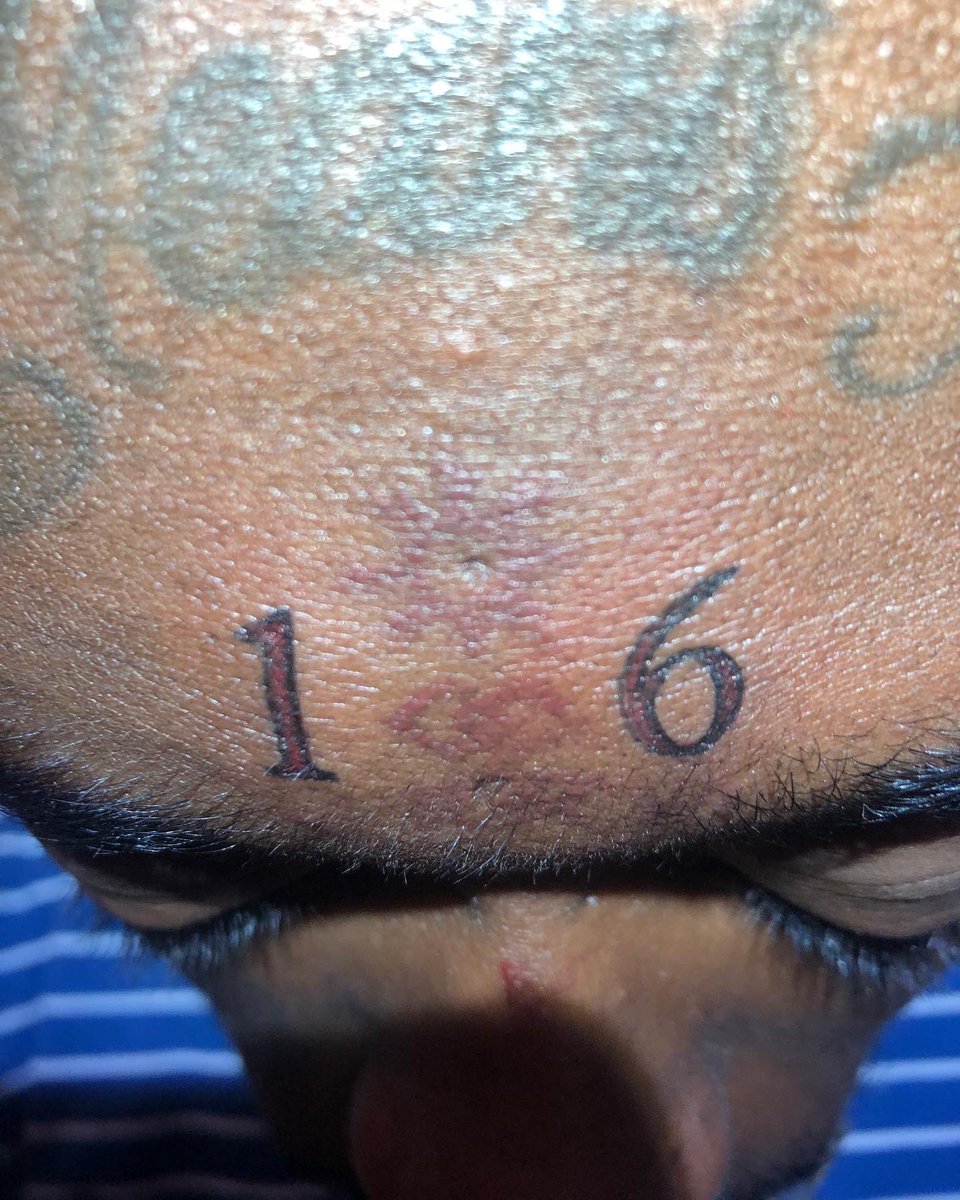
Lil Uzi Vert sixteen forehead tattoo

The number sixteen appears above Uzi’s eyebrows in close-up photos from a later period, separate from the earlier cursive word. The photos show its placement; the sources do not give a definite reason he chose it.

A number can invite guesses about dates or private associations. Without a statement from Uzi, the clearest account is simply that 16 appeared on his forehead in photos from that period.

Small facial symbols are easier to verify in close-up photographs

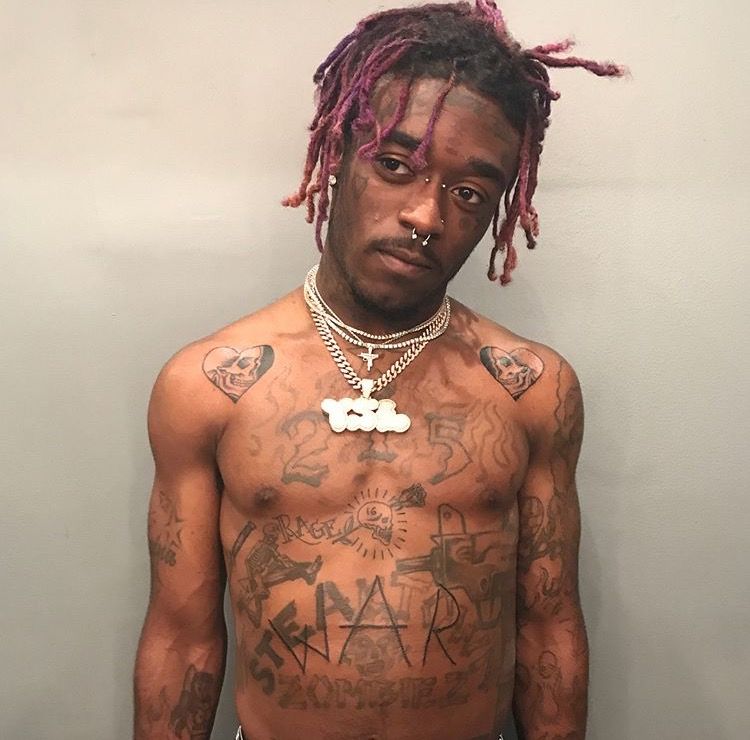
Lil Uzi Vert facial symbols and torso tattoos

A facial symbol tattoo and several other small marks appear in close-up photos. One is a rose, but the sources do not confirm who tattooed it or what it means. It is clearer to describe the image than attach a standard rose symbolism.

Makeup, shadows, piercings and hair can all change how a mark looks in a photo. A sharp image can show where a tattoo appears, but may not establish when it was done or whether later work changed it.

What the dated photos show

The 2023 forehead mandala changed the outline of the collection

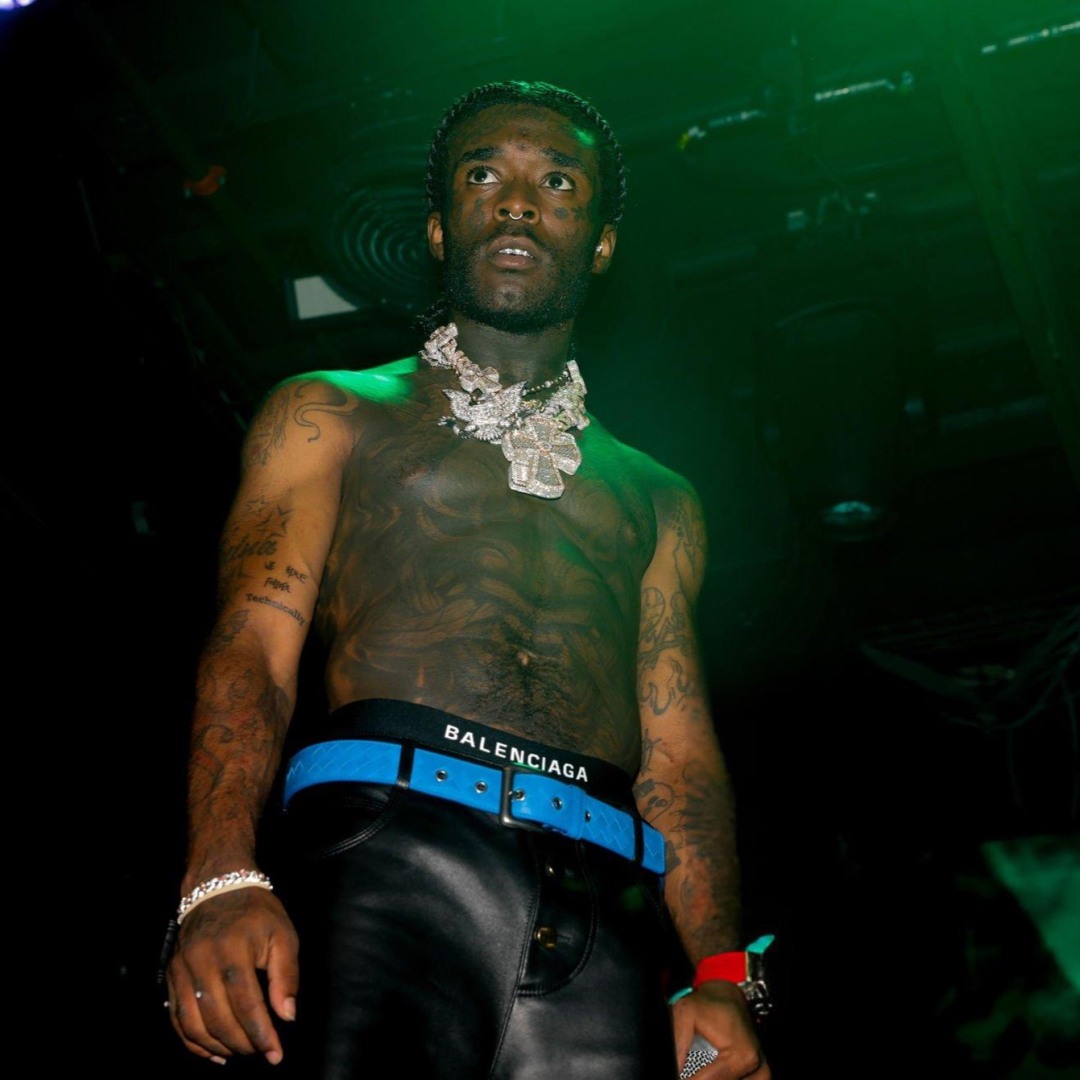
Lil Uzi Vert torso and forehead tattoo details

The 2023 forehead mandala marked a new phase in the collection.

In 2023, coverage from Inked and XXL described a new black-and-grey forehead mandala pattern. The reports linked the work to Los Angeles artist Yatzil Elizalde and said it covered much of Uzi’s forehead. It was a later addition, not a new explanation for the earlier Faith tattoo.

The mandala’s size can be hard to judge in photos cropped at the eyes or hairline. A straight-on close-up makes the pattern’s reach and geometry clearer. Reports tie Yatzil Elizalde to this piece; that credit should not be applied to all of Uzi’s facial tattoos.

The pink diamond was not a tattoo.

Uzi had a pink diamond attached to his forehead in 2021. It was later torn during a performance and removed, according to coverage; GQ described how it was attached and the risks, and later reports said he planned to put it back. It changed how his face looked in photos for a time, but it was jewelry or body modification, separate from his tattoos.

That distinction matters when looking at his tattoo history: ink sits beneath the skin, while the diamond was a separate attachment. Counting the jewelry as a tattoo would blur the timeline.

Frequently asked questions

The record follows Uzi from “Faith” to 16, more facial symbols and later large-scale work. There is no full official inventory, and many marks have no confirmed meaning. Dated photos help show exactly which design was visible.

“Faith” has a reported career context; 16 is visible but unexplained; the rose is identifiable in photos; and the mandala has a reported artist and date. Those details deserve different levels of certainty. Other meanings can stay open.

Uzi’s tattoos continue to change along with his look. New photos or a direct explanation could add to the record. For now, it helps to keep ink separate from jewelry, reporting separate from speculation, and each design tied to its period.

Different outlets may focus on different moments: hairline lettering in one story, a later mandala in another, or the diamond that appeared for part of Uzi’s public life. These can all describe separate stages. Keeping the dates attached makes the sequence clear.

A close-up can show a word or symbol, and an artist’s post can identify who made a piece. Neither proves the tattoo’s emotional meaning. If Uzi has not explained it, the design, location and photographed date are the details we can state.

Future photos can add detail without changing what earlier images showed.

Even face ink can change how a portrait reads: a small word may disappear under stage lighting, makeup or a different camera angle. A photo can confirm the mark; an interview can explain its context.

The number 16 belongs to a later stage of Uzi’s look than the word “Faith.” They may appear together in close portraits, but they are separate designs from different points in the timeline.

Some hand and face marks appear clearly in one image and vanish in another. When a photo is blurry, it is better to leave a line unnamed than build a design around it. The record can stick to what the images actually identify.

Dates matter as the tattoos grow or change. New work may cover, extend or draw attention away from older marks; a later photo cannot prove an earlier tattoo is gone just because it is hidden. Side-by-side images show the sequence better than a single final count.

The clearest entries are “Faith,” 16 and the face work shown in dated photos. Their locations are distinct; the rest can stay descriptive until stronger evidence turns up.

Faith, sixteen and the later marks all shape Uzi’s portraits. Lighting, makeup and surrounding work can make the same tattoo look sharper or softer from one photo to another. Dates help distinguish those changes from a new design.

Exact wording matters too. Keep a phrase in quotation marks as it was reported; a generic paraphrase can erase what makes a small tattoo distinct.

The smaller hand and face pieces deserve their own close-up treatment

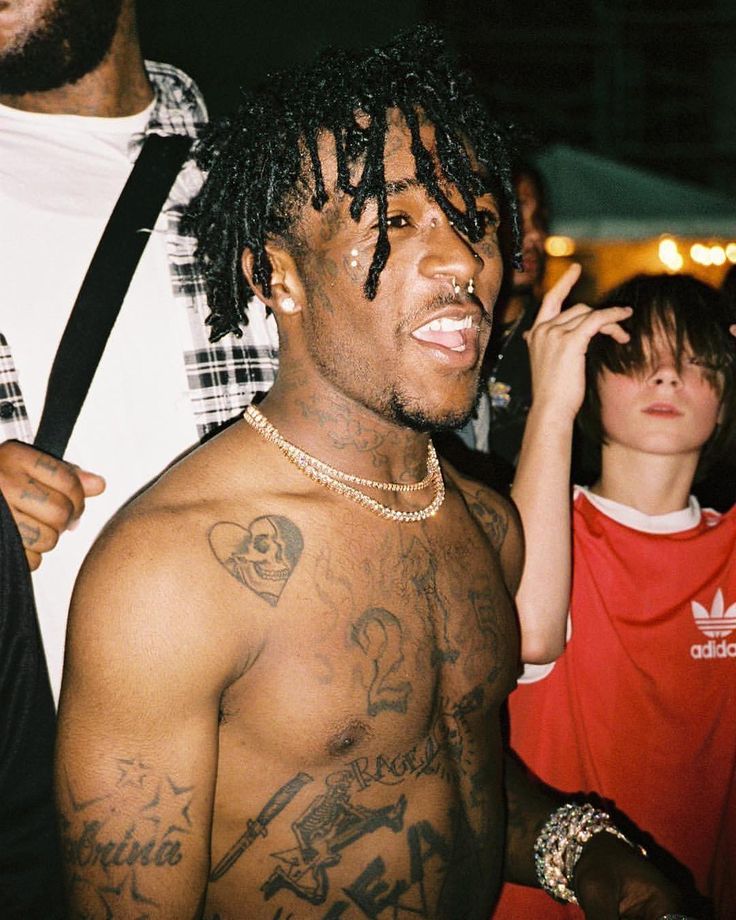
Lil Uzi Vert chest and shoulder tattoos at a party

The smaller hand and face tattoos can be hard to spot in concert photos under coloured lights. A sharp crop shows their outline and placement, while a dated post or interview helps establish when a design appeared.

The number 16 is recognizable, but its meaning should not go beyond what Uzi has shared. The same goes for “Faith”: we can identify the word, but its full personal story is his to tell. Clear descriptions and open questions make a more accurate record.

Uzi’s appearance can shift as old tattoos fade or get covered and new ones appear nearby. These designs make more sense when read across time, without forcing them into one explanation.

More musician tattoo guides

Michael Phelps Keeps His Two Documented Tattoos Close to the Pool

Michael Phelps has two documented tattoos: the Olympic rings on his right hip and an outlined M on his left. Both sit low on his hips, usually beneath swimwear. Swimming photos show the marks, while published accounts offer different explanations for the letter.

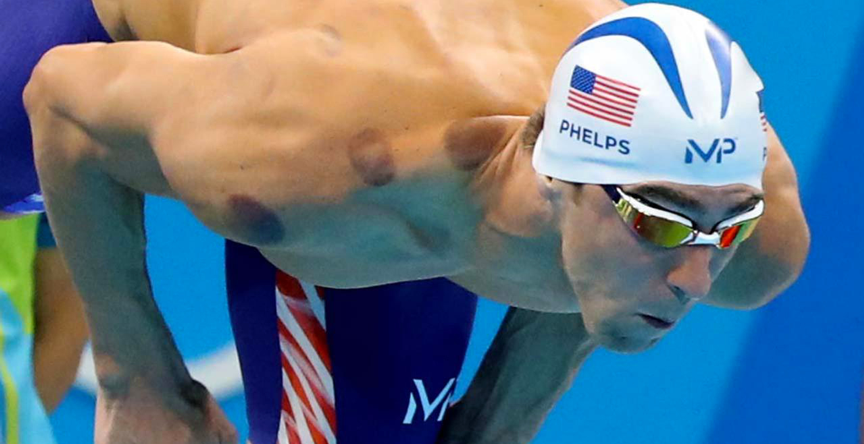
The large purple circles on Phelps’s back and shoulders during the 2016 Rio Olympics were often mistaken for new tattoos. They were temporary marks from cupping therapy, a recovery treatment.

The Olympic rings sit on Phelps’s right hip

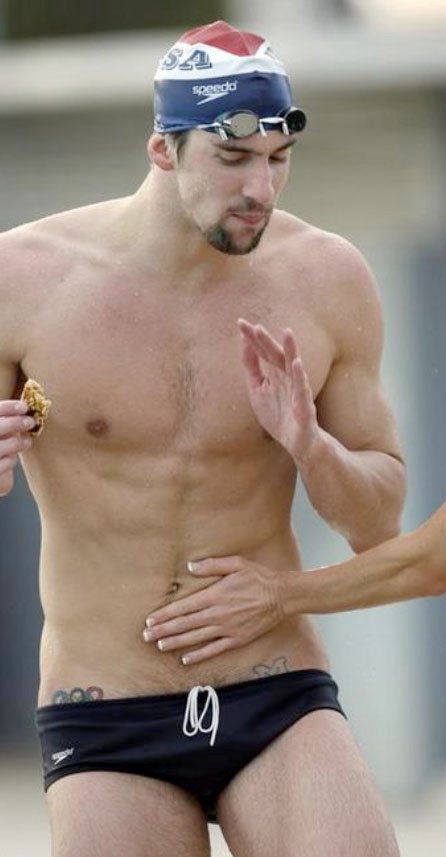
Michael Phelps showing the Olympic rings tattoo on his hip

Phelps’s Olympic rings tattoo sits on his right hipbone, just above the line of his swimwear. The Guardian’s 2008 Olympic photo gallery identified the rings in a training image; later coverage connected the design to athletes marking their Olympic participation. The tattoo stays hidden under everyday clothes and appears when a racing suit sits lower on the body.

Phelps competed at five Olympic Games, so the rings mark the event at the center of his career. In distant photos the interlocking circles can blur into a dark oval; closer images show the design clearly.

Romper noted that an athlete could claim the design after completing an Olympic Games, tying it to participation rather than the ambition to compete. It does not mark a particular medal count.

It turns up most often in poolside and training photos, where the suit leaves the hip exposed. A waistband can cover part of it, but its placement is consistent across the images.

The outlined M on his left hip has no confirmed meaning

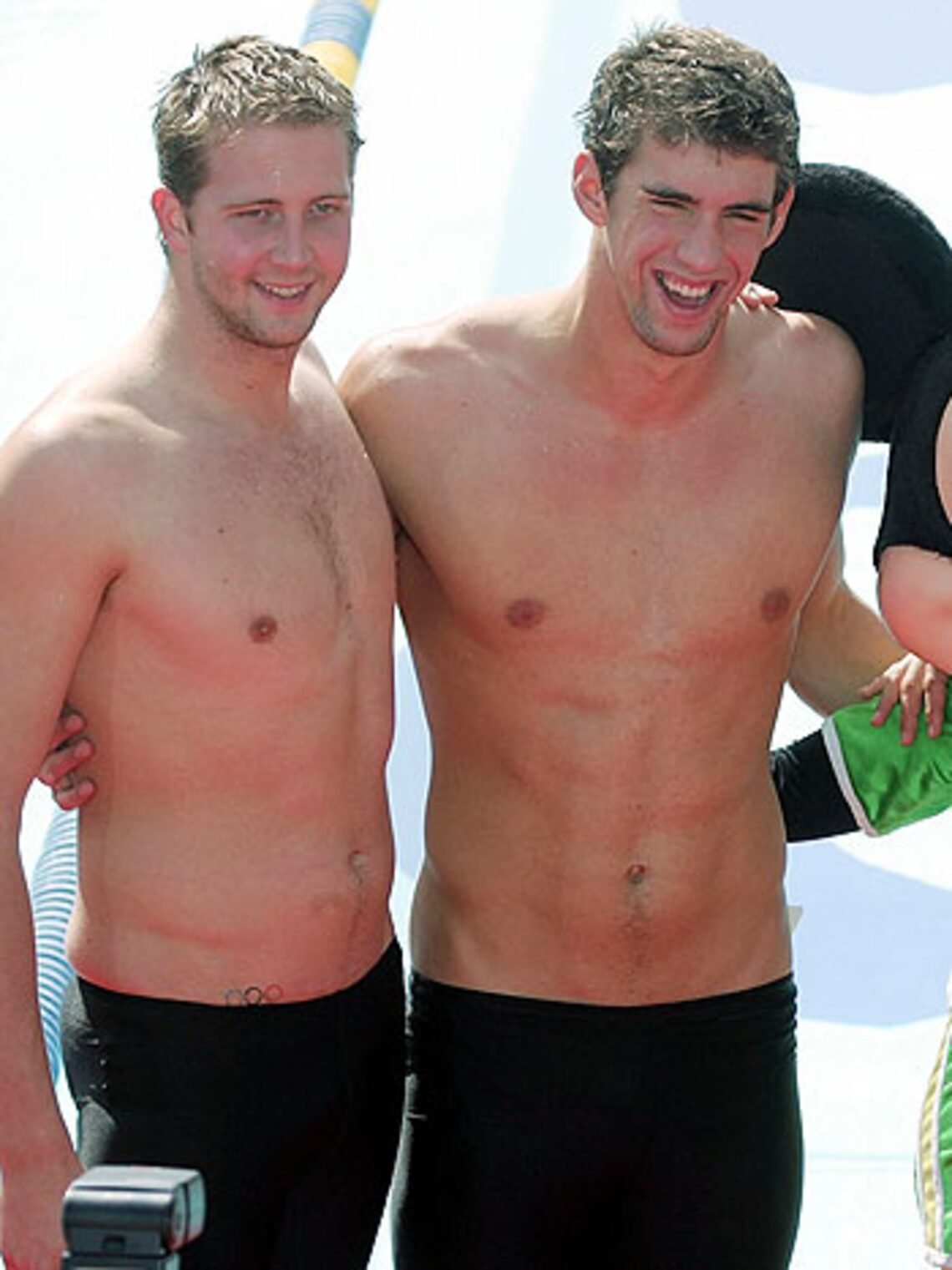
Michael Phelps showing small tattoos on both hips beside a pool

An outlined M appears on Phelps’s left hip. Some coverage reads it as Maryland, where he was born and raised; other accounts connect it to the University of Michigan, where he trained earlier in his career.

Neither explanation appears in a direct comment from Phelps, so the safest description is simply the outlined letter on his left hip. A photograph shows its shape and position, but not what it stands for.

Michael Phelps raising his arm, with Olympic rings visible on his upper arm

The Vanishing Tattoo poolside photo shows both hip tattoos together. The M sits close to the suit line and is too small for detail beyond its shape and location.

Some tattoo guides call it the Maryland M. That is a common reading, but Phelps has not confirmed it.

The famous circles on Phelps’s back were cupping, not tattoos

Michael Phelps showing circular cupping marks on his back

During the 2016 Rio Olympics, the large red and purple circles on Phelps’s back and shoulders were mistaken for tattoos. Coverage of the moment explains that they came from cupping therapy, not ink. AS and Scripps News reported that suction cups can leave temporary circular bruises.

Their size and color made the marks striking against a swimmer’s bare skin, especially at a high-profile event.

That leaves two tattoos in the published record: the Olympic rings and the M. The cupping photos explain the Rio images, but they add no ink.

Both tattoos are small and easy to miss: one is a clear Olympic emblem, the other a letter whose meaning Phelps has not confirmed.

Their placement also shapes which photographs document them. Racing suits expose the hips; everyday portraits rarely do. An early Olympic gallery and a later family photo of Phelps holding his newborn son happen to catch the tattoos clearly.

The rings appear in Beijing-era coverage; the M drew renewed attention around Rio. That dates its public appearance, not when it was inked. The timeline needs that distinction to avoid making an older tattoo look like a new Olympic-era addition.

Olympic rings and the outline of Michigan tattooed on Michael Phelps’s upper arm

More athlete tattoo guides

Norman Reedus’s Tattoos Keep Family, Music and Mystery Close

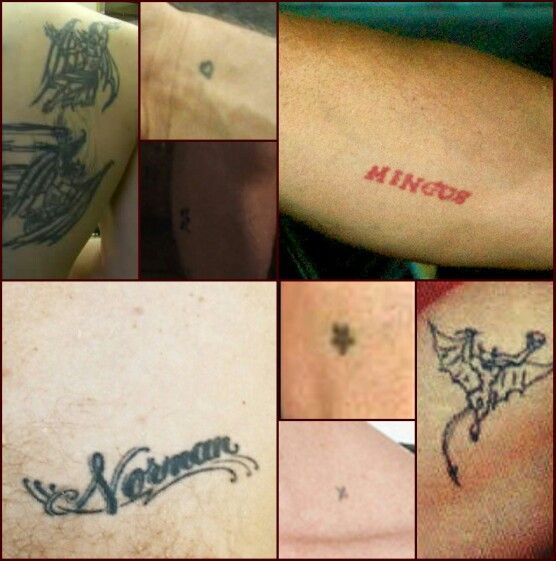
Norman Reedus has several tattoos that are easy to identify but few public explanations for what they mean. The clearest are the name Norman on his chest, Mingus in red on his forearm, dark demon figures on his back and a small Lemmy tribute he got during a motorcycle-and-music shoot. Photos also show smaller pieces on his hand, wrist and leg.

His role as Daryl Dixon on The Walking Dead can make the back designs look like character references. Reedus has described the tattoos as his own, separate from Daryl. He has explained the Lemmy piece, while leaving many of the other images without a public story.

Norman on his chest is a tribute to his father

Norman Reedus Norman chest tattoo and surrounding ink

The script tattoo reading Norman appears on Reedus’s left chest in widely circulated photographs. Tattoo references connect the name to his father, Norman Reedus Sr. The lettering and placement are clear; Reedus has not shared a longer story about it.

A name tattoo on the chest stays close to the heart without needing a large composition. A shirt, leather vest or shoulder angle can partly hide it; over-the-shoulder and mirror photos show the lettering better than distant event shots.

It stays understated in size, but the family connection is plain when the lettering comes into view.

Mingus in red on Reedus’s forearm

Norman Reedus showing the red Mingus forearm tattoo

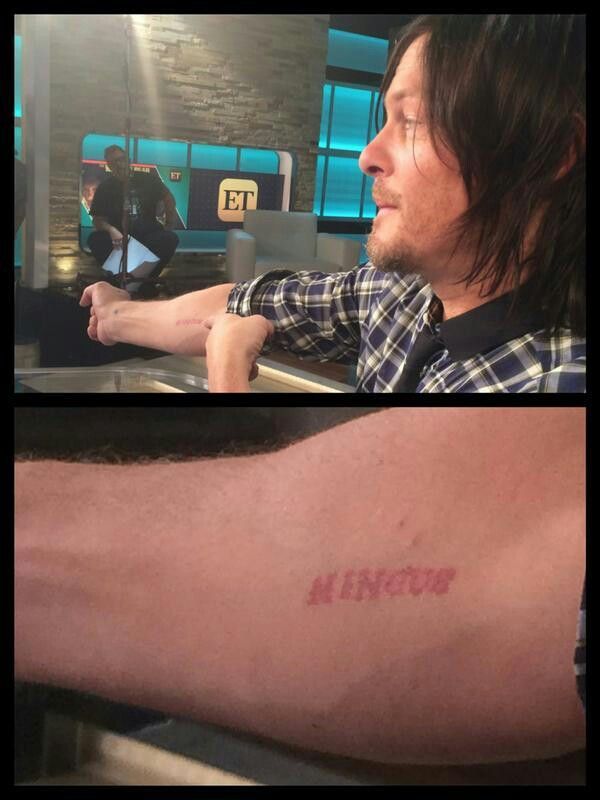
The red script Mingus on Reedus’s forearm refers to his son. Interview footage shows him rolling up his sleeve to reveal the lettering, and reference coverage places it in the same spot. Its red ink stands out against the darker line work elsewhere.

Reedus has told the story of showing the tattoo to Mingus and his son recognizing his own name on his father’s arm. It is a rare glimpse of the family connection behind one of the designs.

The lettering is easy to spot in short sleeves or motorcycle photos and just as easy to cover with a jacket. Its color and repeated appearance in photos make it one of his more recognizable tattoos.

The demon figures across Reedus’s back

Norman Reedus showing a demon back tattoo

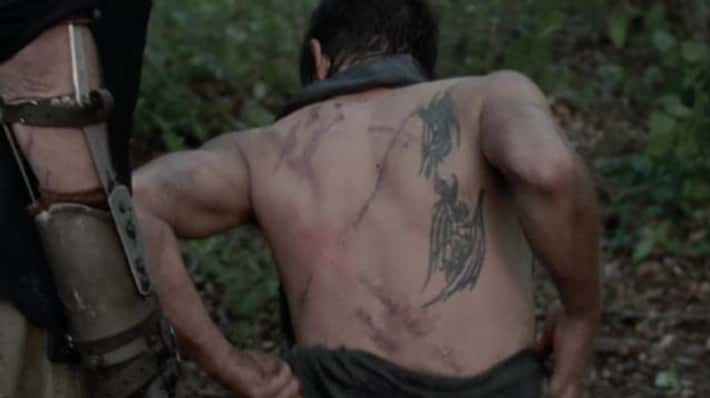
Photographs show dark, demon-like figures across Reedus’s back and shoulder blades. Inked Magazine and fan archives list them among his tattoos, and many viewers first noticed them in Walking Dead-era photos. The figures have wings or horns, depending on the view.

Reedus has tended to keep their meaning private. The tattoos’ symbolism is not established in the available interviews, and the designs are separate from Daryl Dixon’s story.

A front-facing portrait may hide the back ink completely. Shirtless mirror photos show where the figures sit, though the angle can flatten their detail.

A quick Lemmy tattoo became a music tribute

Norman Reedus showing the small Lemmy tribute tattoo

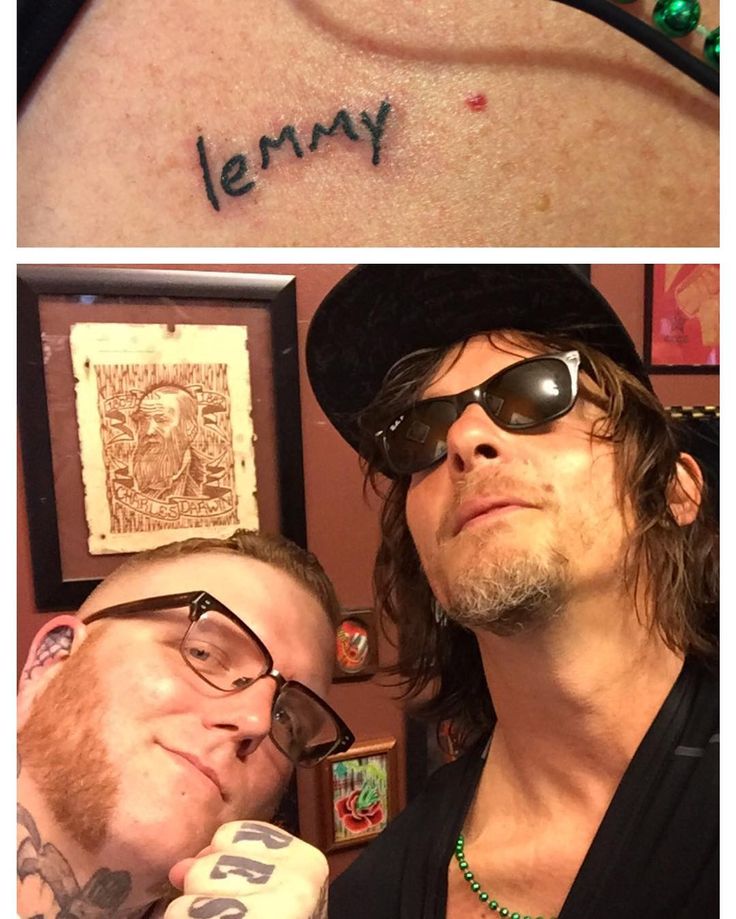
The Lemmy tattoo is one of the few pieces Reedus has explained in detail. While filming Ride with Norman Reedus in New Orleans with Mastodon’s Brent Hinds, he heard that Motörhead frontman Lemmy Kilmister had died. Reedus recalled that they had only a few minutes, ran into a tattoo shop and asked for a tribute. Blabbermouth and Men’s Journal preserve his account.

The story behind the design is part of its meaning. It was a quick response to the news, their friendship and the music; Reedus described the mark as small. That sets it apart from the larger demon figures on his back.

The tribute tattoo is small, but Reedus’s account pins it to a particular day in New Orleans. The short window in which he got it is part of the story.

Small tattoos on his hand, wrist and leg

Norman Reedus showing hand wrist and smaller tattoos

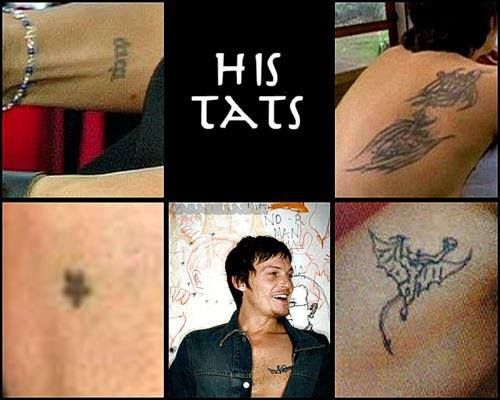
Reference coverage lists a small star on Reedus’s hand and a snake on his left thigh, along with other marks around the wrist and arms. They are easy to miss and seldom come with a public explanation.

The star and snake can be described by their shape and placement. Reedus has not publicly explained these smaller pieces, so their personal meanings remain unknown.

They tend to appear in gestures, motorcycle photos and close-up interviews. A sleeve, pose or camera angle can hide one tattoo while revealing another.

Why Reedus’s tattoos don’t share a single story

The collection spans family names, a music tribute, dark figures and small symbols. The clearest stories belong to the chest name for his father, Mingus on his forearm and the Lemmy tribute. Reedus has left the back figures and smaller marks unexplained.

A name can stay small and close to the body; red lettering sets a family tribute apart from darker work. The Lemmy tattoo carries the story of a particular day, while the back designs keep their mystery. Reedus’s collection is most revealing in the few places where he has chosen to speak.

More actor tattoo guides

Ryan Gosling’s Tattoos Are Funny, Family-Focused and Slightly Homemade

Gosling’s tattoos are a handful of rough, personal designs rather than a planned sleeve: a drawing he tattooed on his own forearm, an image from a childhood book, a woman and skeleton on his inner arm, and Esme across his fingers in a 2015 photograph. The finger lettering was later described as temporary. His stories about the homemade ink are part of the record; he has never claimed every piece was carefully planned.

The monster hand was meant to drop a bleeding heart

Close crop of Ryan Gosling’s homemade forearm tattoo, intended as a monster hand dropping a heart

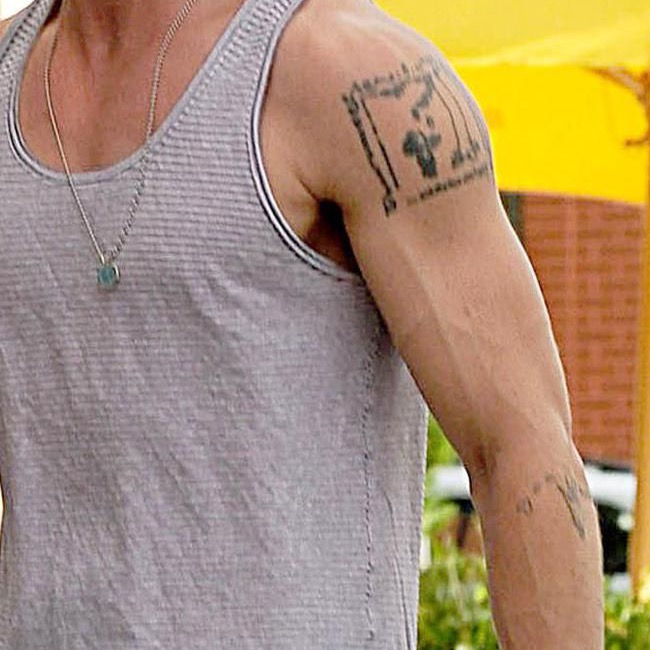
The forearm design is often mistaken for a cactus. Gosling told The Guardian that he meant to draw a monster’s hand dropping a bloody heart, then tattooed the drawing himself with a kit. The result is a loose, spiky shape; once you know the idea, the dangling heart is easier to spot.

The finished tattoo looks as homemade as its origin. Gosling has joked that people see different things in it, and he laughs at the rough result instead of pretending it came out as planned. The gap between the drawing and the tattoo is what gives the story its charm.

Some tattoo inventories identify the letters W.H.R. beside it as Werewolf Heart Records, a reference to Gosling’s band, Dead Man’s Bones. That expansion comes from secondary coverage, not from the Guardian interview. The photo shows the placement and shape, but does not explain the initials.

A barcode-like mark on Gosling’s left wrist is often hidden by his watch, and there is no dependable first-person explanation for it. Theories about identity or commerce are just guesses, so its meaning remains open.

The Giving Tree tattoo recalls childhood and a book he argues with

Ryan Gosling’s upper-arm tattoo inspired by the cover of The Giving Tree

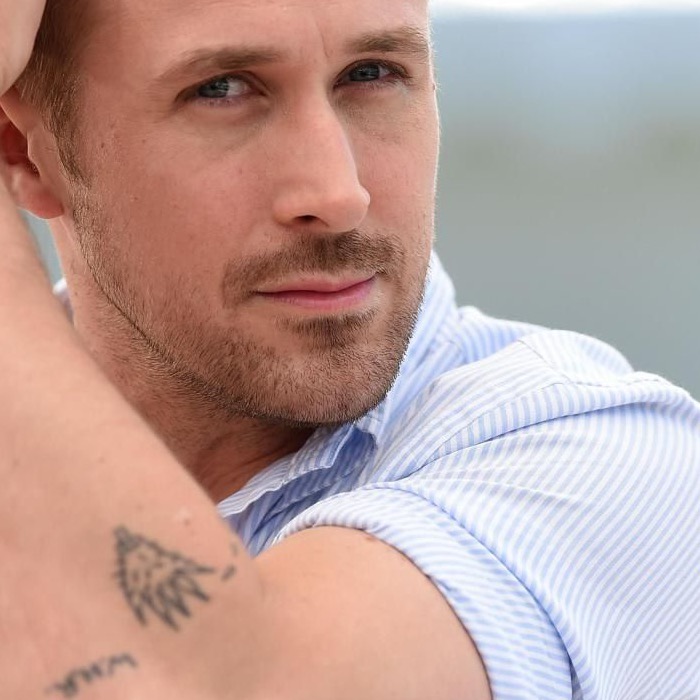
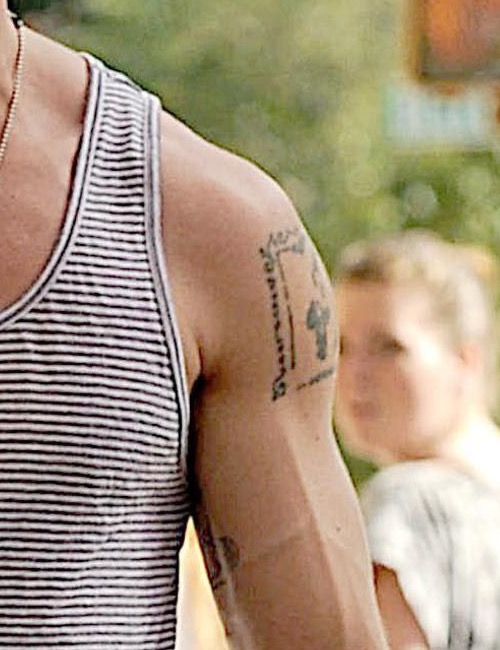
Gosling has an image of The Giving Tree on his upper left arm. His mother read Shel Silverstein’s book to him and his sister when they were young. In a 2010 conversation with Vulture, he pushed back on the story’s familiar lesson: he did not like that the tree gave everything away, and said, “I don’t want to be the tree.”

The tattoo holds both the childhood memory and his later disagreement with the book. Gosling has not presented it as a solemn statement about the story; the image and his comment leave room for both affection and criticism.

The artwork sits high on his arm, easiest to see in a tank top or short sleeves. A close photograph shows the book-cover image better than the distant red-carpet shots where clothing often hides the shoulder.

The woman and skeleton tattoo remains unidentified

Ryan Gosling’s inner-arm tattoo of a woman beside a skeleton

A separate tattoo on Gosling’s inner left upper arm shows a woman beside a skeleton. Tattoo articles often identify the woman as silent-film actor Theda Bara, but Gosling has not confirmed that name or explained why he chose the image. HOLA has also noted how difficult it is to see clearly in ordinary photos.

The piece is less legible than the forearm drawing. It sits on the inside of the arm, turned away from the camera in many photos, and distant shots soften the details. There is no reliable account tying it to a particular film, relationship or loss.

It is easy to confuse the real tattoo with the larger ink Gosling wore as Luke Glanton in The Place Beyond the Pines. The character’s chest, neck and arm designs were largely costume work. The woman-and-skeleton tattoo belongs to Gosling; the rest of the screen sleeve does not.

“Esme” appeared on Gosling’s fingers, but its permanence is unclear

Ryan Gosling’s hand with the letters Esme written across his fingers in 2015

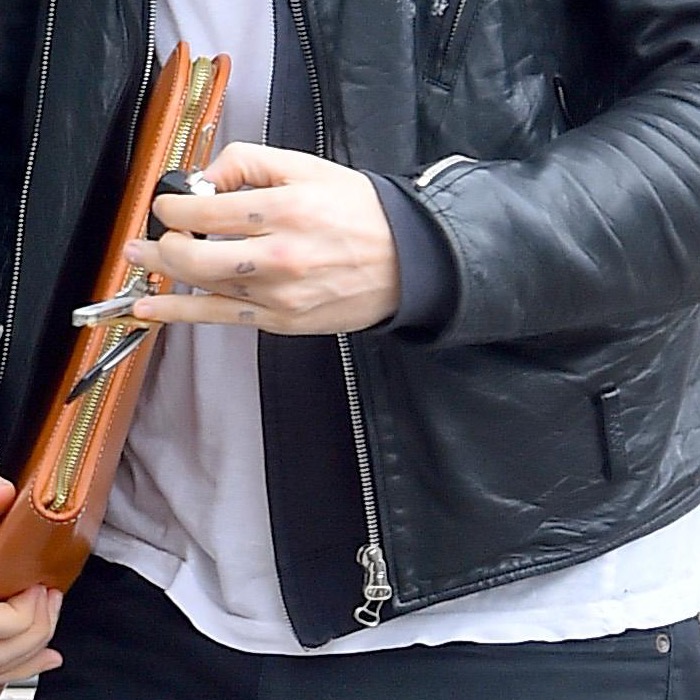
In February 2015, photographers caught Gosling with Esme written across the fingers of his left hand. The name refers to his daughter, Esmeralda. E! News could not tell whether it was tattoo ink or pen; HOLA later described it as temporary.

The photograph documents a tribute, but not a permanent tattoo. A dark mark in one street photo cannot show how long it stayed, and the family has kept the details private.

The image travelled because the name is personal and unusually visible. Gosling had recently become a father, but the mark’s permanence remained uncertain even as the family connection was widely reported.

Gosling’s screen tattoos add another possible mix-up. Sierra Six’s Sisyphus design in The Gray Man belongs to the character, as does Luke’s extensive ink in The Place Beyond the Pines. The real collection is smaller: a rough forearm drawing, a book image, a shadowy figure, a barcode often hidden by his watch, and the photographed name whose permanence was never established.

More actor tattoo guides

A$AP Rocky’s Ink: A$AP LIFE, 1988 and the ANARCHY Knee Tattoo

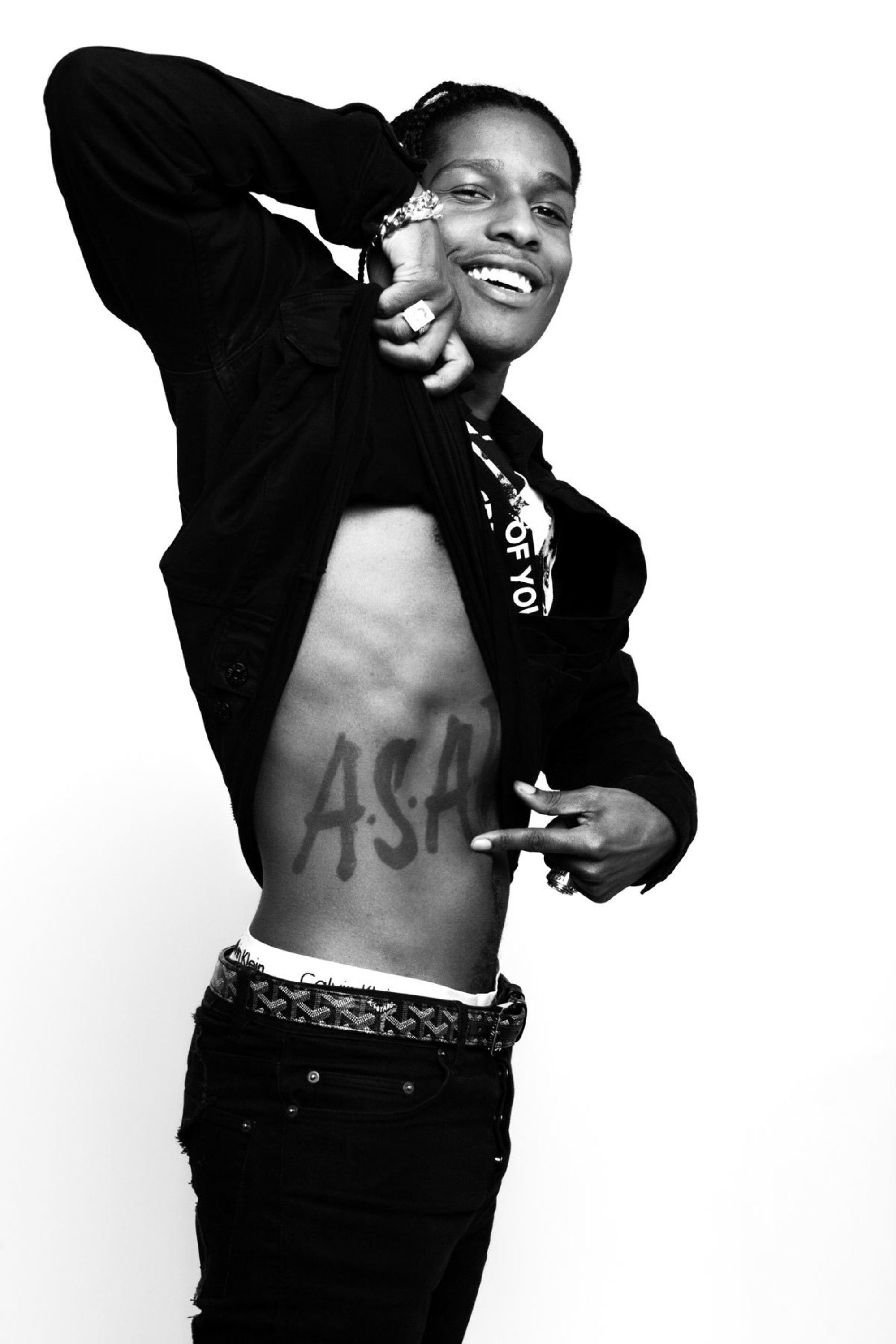
Rocky’s tattoos don’t come with an official checklist. A few are easy to identify: A$AP LIFE across his stomach, 1988 down his spine, ANARCHY above his knee and lettering on his fingers. Photos show plenty of other ink, but these have the clearest reporting behind them. When a picture doesn’t show a mark clearly, there’s no point guessing at a secret meaning.

A$AP LIFE is the big stomach statement

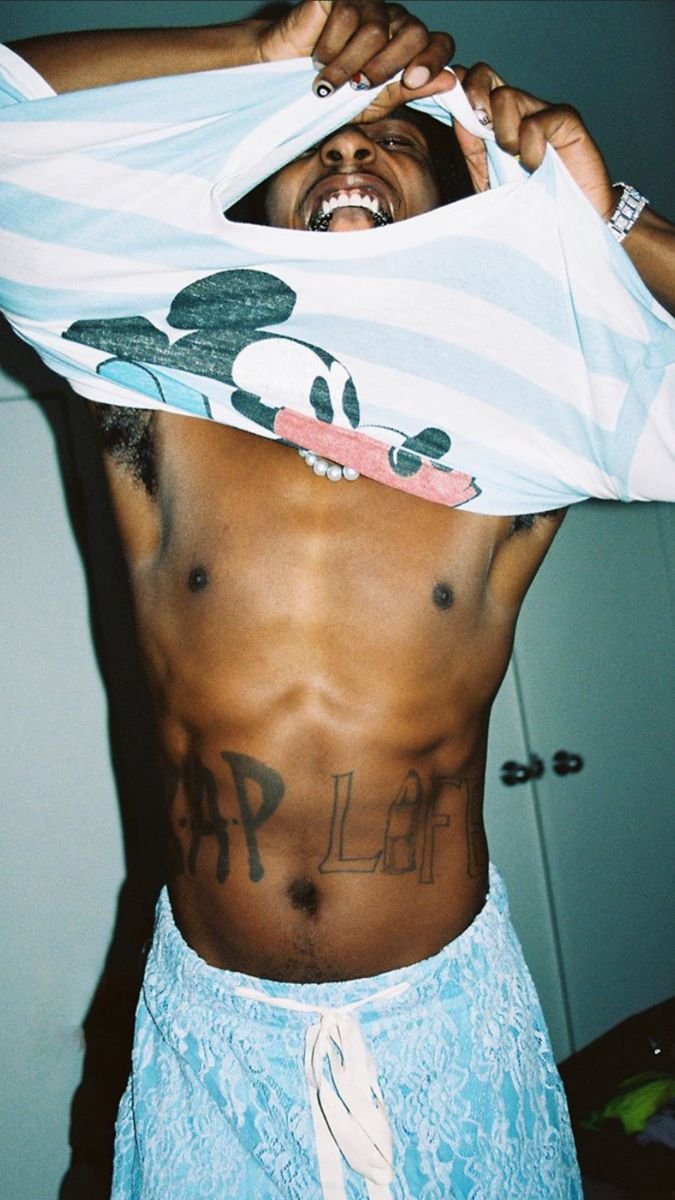
A$AP Rocky showing the A$AP LIFE abdomen tattoo

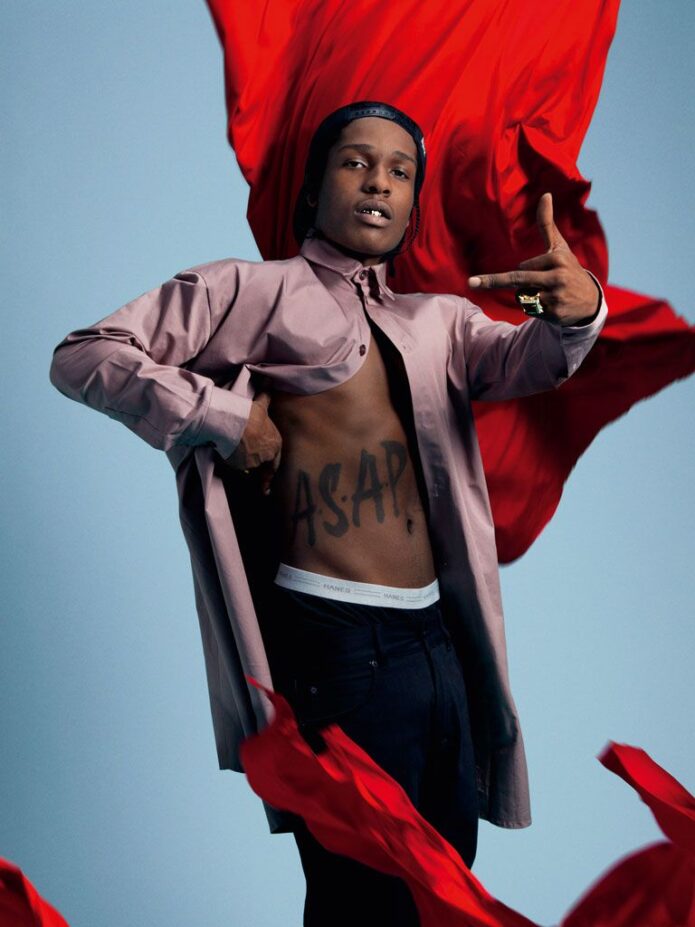
Rocky has talked about this one himself. The words A$AP LIFE stretch across his lower stomach, reworking the idea of Tupac’s “THUG LIFE” into a statement about Rocky and his crew. It’s blunt and personal, joining hip-hop history to his own identity.

The tattoo is easy to miss under clothes. A shirtless photo brings the words straight into view, and a close-up shows their spacing and placement. A distant event shot might show there’s ink on his stomach, but not much about the design.

There are other marks around his torso, but they don’t automatically belong to the A$AP LIFE story. Rocky has publicly connected this piece to Tupac’s influence and his crew. Anything more personal would need to come from Rocky himself, not a guess based on a photograph.

The 1988 spine tattoo is a shared birth-year marker

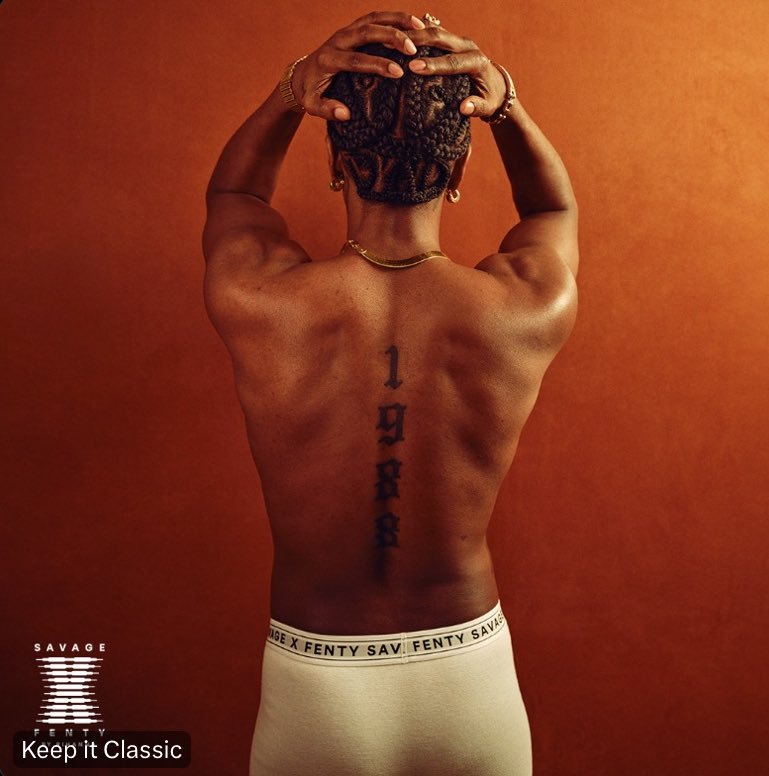
A$AP Rocky showing the vertical 1988 spine tattoo

Rocky and Rihanna were both born in 1988, which gives the vertical number on his spine a clear context. Vogue and Hot 97 reported in 2024 that the couple had matching tattoos. Rocky’s runs down his back; Rihanna’s is in a different spot.

The tattoos aren’t exact copies. Rocky’s follows the centre line of his back, making the placement part of the design. A shirt hides it completely, while a sharp campaign photo shows its direction and scale.

The shared birth year and relationship have been reported; the private story behind the decision hasn’t. There’s no sourced account of a proposal, secret message or exact timeline. What’s clear is a shared year, worn in very different places.

ANARCHY is meant to read quickly

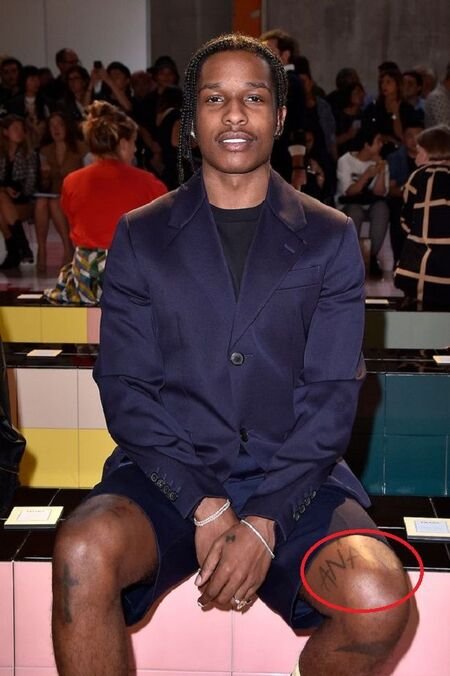
A$AP Rocky showing the ANARCHY knee tattoo

The word ANARCHY sits in large letters above Rocky’s left knee. It shows when he wears shorts, and it fits the anti-authoritarian side of his public image. The message is plain even without a long explanation from Rocky: he chose a word that people will notice.

Trousers hide the tattoo; sitting down or posing in shorts brings it back into view. That gives it an on-off quality. A close photo keeps the lettering sharp, while a wide portrait can leave the word hard to read.

“Rebellious” is a fair description, but one word can’t stand in for Rocky’s whole politics or private life. The contrast with 1988 is clearer: one is a personal number running down his back, the other a blunt word above his knee.

Rocky’s finger lettering is much easier to misread

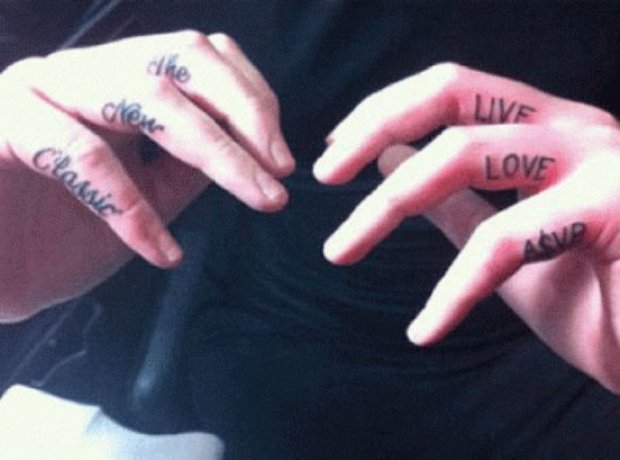
A$AP Rocky showing documented finger lettering tattoos

Older photos connected with Iggy Azalea show lettering across Rocky’s fingers. Hand tattoos are hard to read in ordinary pictures: fingers bend, rings cover letters and compressed images blur the details. A dated close-up tells more than a confident list of guessed letters.

The close-up shows actual lettering, though it doesn’t prove every mark stayed the same over time. Hands fade, pick up new ink and look different from one camera angle to another. This is a record of what appeared in those older photos.

The finger lettering has a quieter effect than the stomach and knee pieces. Those announce themselves; the hand marks make people look twice. Rocky can wear a blunt statement alongside a small detail without either one losing its impact.

Other torso ink shows up, but the details need care

Photos show other marks around the main pieces, including bold A$AP lettering in older fashion and music shots. They make clear that Rocky has more ink across his torso, though some of the smaller symbols are too blurry to identify.

No single portrait captures all of it: the stomach lettering needs a front view, the spine number a back view, and the knee and fingers their own close-ups. A wider torso photo adds context, but it can’t identify a mark it barely shows.

What the photos and reporting actually establish

The clearest records point to four details: Rocky has explained A$AP LIFE and its Tupac connection; the 1988 design runs down his spine and is shared with Rihanna; ANARCHY sits above his left knee; and older photos associated with Iggy Azalea show the finger lettering. Other torso marks appear in pictures, but their names and meanings are less certain.

That’s a distinctive collection already. The tattoos don’t need an invented story for every line; the words, placement and context give them plenty of character.

Dates help make sense of the photos. A tattoo may be there years before a clear picture appears, and a new campaign can make older work look recent. Rocky’s ink turns up in music coverage, fashion shoots and relationship stories, so each design makes more sense alongside the image that actually shows it.

A$AP Rocky showing the large A$AP torso tattoo

Why the placement matters as much as the wording

A$AP LIFE sits low on the stomach, 1988 follows the spine, ANARCHY is above the knee and the finger lettering fits a much smaller space. The placements change how the tattoos appear in photos: some stay under clothes, one shows when Rocky turns around, and the smallest marks need a sharp image to be read.

A single wide portrait can’t show every design well. The stomach lettering ties into Rocky’s crew and music; the spine number marks a shared year; the knee word reads like a declaration; the finger pieces are easy to miss.

Rocky’s tattoos work best as separate personal codes

Some tattoos are obvious straight away; others only show up when the photo is close. The stomach lettering reads like a headline, the number stays hidden until Rocky turns around, the knee word looks like a sign, and the finger marks sit among everyday gestures. Together they feel like separate choices, not one fixed brand image.

The timeline matters too: a 2024 back photo tells a different story from an older hand close-up. Fashion campaigns may show the torso in perfect light; a candid shot may catch a small mark while hiding the larger ones.
Rocky’s ink isn’t one sleeve or one theme. It mixes crew language, a birth year, a defiant word and smaller hand marks, and the pieces sit together without needing a grand explanation.

“ANARCHY” is easy to read, but it doesn’t explain the other tattoos. A$AP LIFE points to Rocky’s crew and music, not every private thought. The words matter, but they don’t have to explain his whole collection.

The photos show where each design sits; interviews and reporting add context to a few of them. Beyond that, the meaning belongs to Rocky. The appeal is in the mix of crew pride, memory and provocation, not in a hidden code that explains every mark.

Finn Bálor’s tattoos, from an astronaut to a hometown seagull

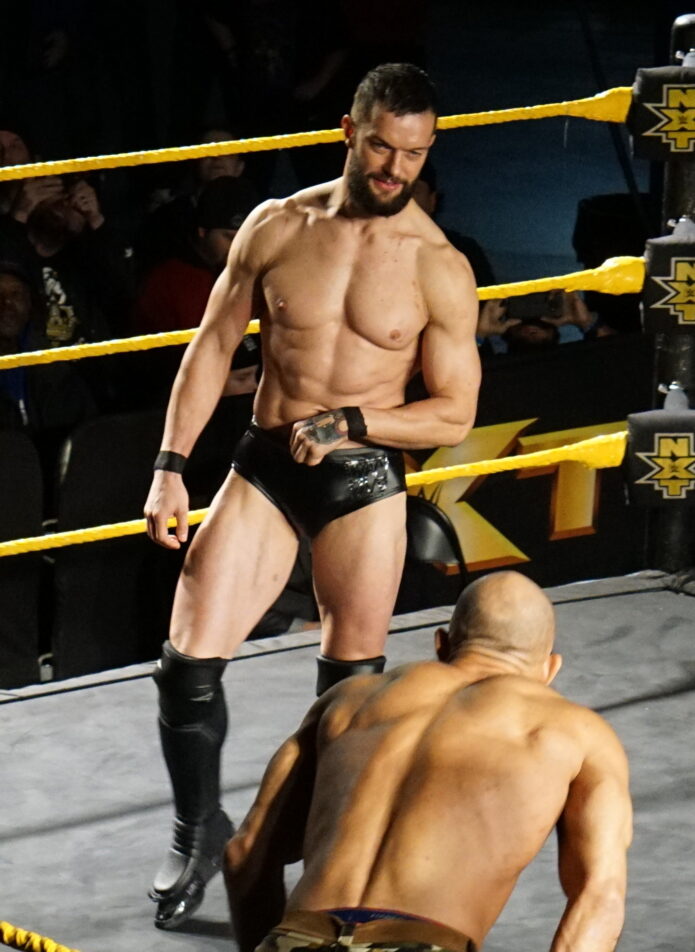
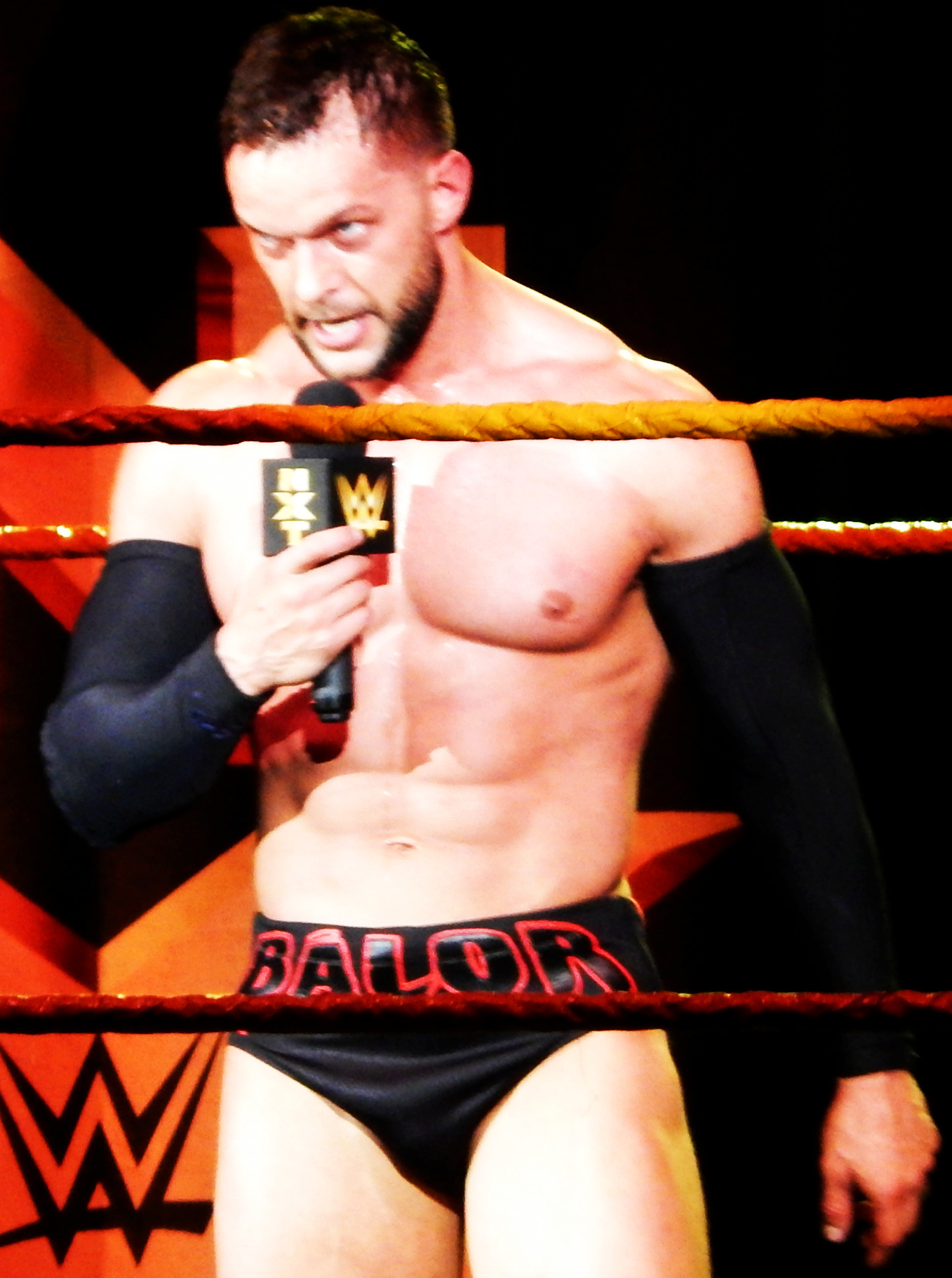
Finn Bálor’s tattoos started with a small astronaut on his hand and grew into a playful mix of drawings, plants, birds and personal lettering. Family and home show up in several of the stories he has shared. Photos show the shape and placement; Bálor’s explanation gives a tattoo its personal meaning.

The astronaut looking toward the moon

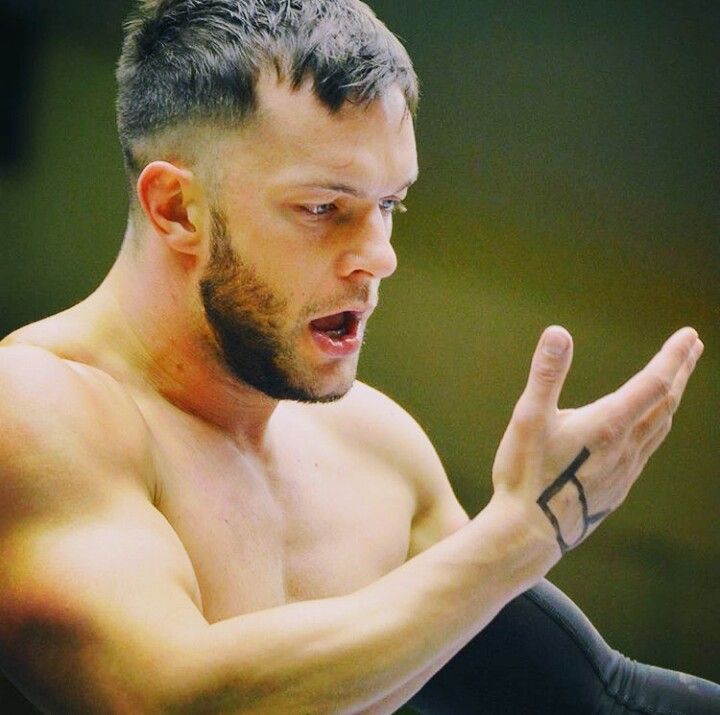
Finn Bálor’s astronaut and moon tattoo on the hand

The little astronaut on the top of Bálor’s left hand is the design that started the public story of his tattoos. In a WWE feature, he described himself holding a space helmet and looking toward the moon. He linked it to the idea of “following your dreams.”

A hand tattoo is hard to hide during a match or interview, but this one is a compact, finely drawn scene. Early ring shots barely show it; a close-up brings out the moon, helmet and tiny figure. Bálor had thought about getting ink for years but worried he might change his mind. As he got older, he became less concerned about permanence, and the astronaut opened the way for a larger collection.

The dinosaur Veronica drew for him

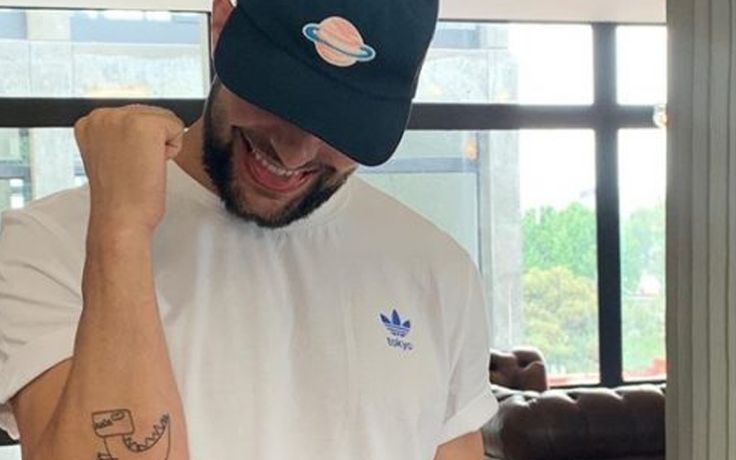
Finn Bálor shows the dinosaur tattoo on his elbow

The cartoon dinosaur near Bálor’s right elbow was drawn by his wife, Veronica. He chose to have her doodle tattooed on his arm, keeping its oversized head and loose outline. Its charm is in that personal origin and sketch-like look.

The elbow bends around the design, so a still photo can flatten it; in a moving clip its shape reads more clearly. The astronaut is finely drawn, while the dinosaur has a looser, hand-sketched feel. That contrast adds to Bálor’s tattoo collection.

Dandelion, cactus and seagull beside the dinosaur

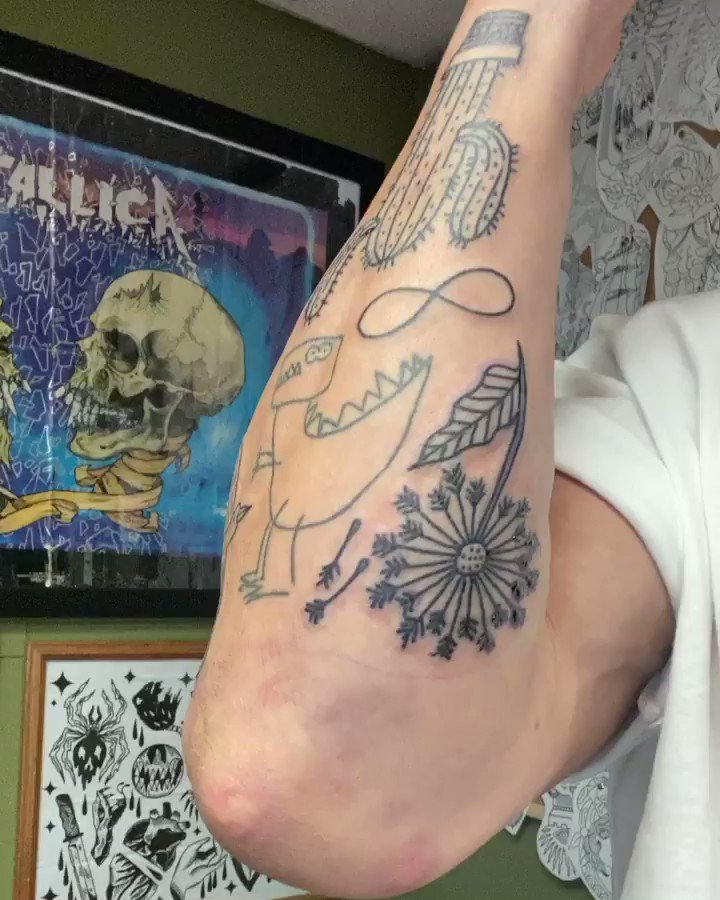
Finn Bálor’s forearm tattoos: dinosaur, dandelion, cactus and seagull

In August 2020, Bálor showed a dandelion, a cactus and a seagull beside the dinosaur. They sit close together on his forearm but read as separate doodles: a round seed head with fine lines, a short upright cactus and a recognizable bird. Together, they make that patch of skin look like a sketchbook page.

Bálor has explained the seagull: it represents his hometown, a small fishing village in Ireland. He hasn’t given the dandelion or cactus a separate meaning. The other two can simply be named and described as visible tattoos, without borrowing internet symbolism about wishes, resilience or survival.

The three additions came after the dinosaur and filled out the same arm. Their scale and linework work well together, but nothing suggests the whole forearm was planned as one composition. Of this group, the seagull is the only design Bálor has publicly connected to a specific meaning.

The matching date and coordinates with Vero Rodríguez

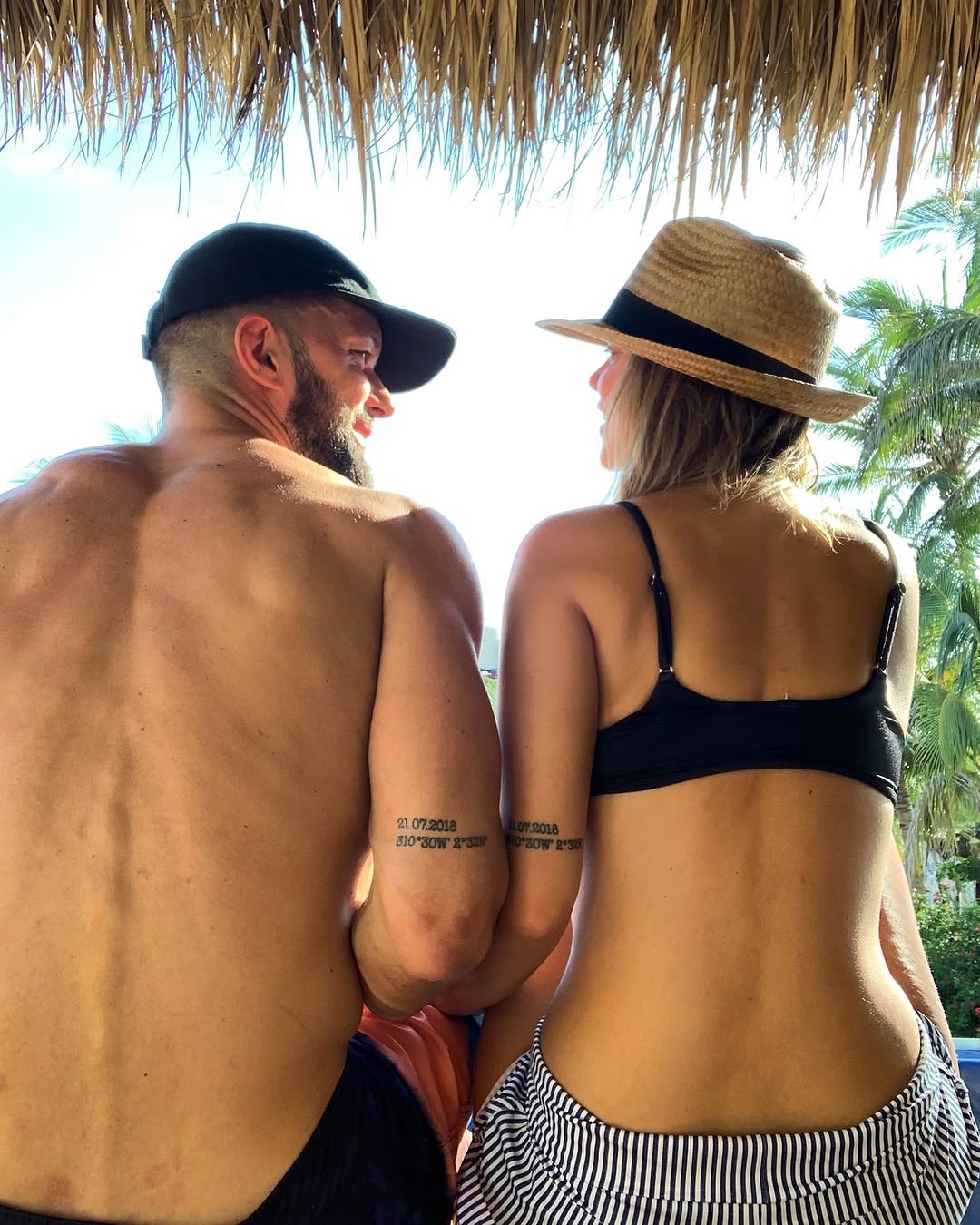
Finn Bálor and Vero Rodríguez show matching date and coordinate tattoos on their arms

Bálor and Vero Rodríguez have matching tattoos on the backs of their arms, just above the elbows. The close-up shows a date and coordinates on each. The date reads 21.07.2018; the coordinate line is smaller, and some digits blur in compressed images.

Reports covered the matching ink in July 2019, before their wedding that August. Some linked the numbers to when and where the couple met, but Bálor hasn’t confirmed that. The reports don’t establish a specific anniversary or proposal; the exact reference remains theirs to explain. The writing is understated on the back of the arm, a different look from the cartoon designs.

His wife’s name on his hand

Finn Bálor inspecting the tattoos on his hand

Bálor has also put his wife’s name on his hand. He calls it the tattoo that opened the floodgates: after getting it, he felt more comfortable adding other designs. It sits naturally in the timeline between the matching couple tattoo and the later illustrated pieces.

The photo shows where the lettering sits; Bálor’s comments explain why it mattered in the timeline. He chose his wife’s name and says that tattoo changed how readily he approached the next ones.

How the collection grew

Bálor has said he was artistic at school and nearly went to art college. He admired tattoos for years but hesitated, worried that his tastes would change after making a permanent choice. With age, he became more relaxed about it. That helps explain the mix on his skin: a dreamlike astronaut, Veronica’s dinosaur, a hometown bird, small plants and personal lettering don’t need to share one style.

Reports placed the matching date and coordinates in 2019; the astronaut and dinosaur followed that year, and the dandelion, cactus and seagull appeared the next summer. In 2021, Bálor described the collection as still growing, not as a finished sleeve. He may have added tattoos since then, so these public reveals aren’t a complete count of what he wears today.

What can be said with confidence

The stories Bálor has shared are the clearest ones: the astronaut is about pursuing dreams, Veronica drew the dinosaur, and the seagull points to his Irish hometown. The matching date and coordinates, along with his wife’s name, document relationship tattoos, though their exact private meaning hasn’t been confirmed. The dandelion and cactus are identifiable, but he hasn’t given them a meaning.

Together, they make a personal tattoo map: an astronaut on the hand, drawings down the forearm, his wife’s name and a shared date-and-coordinate design. The pieces don’t need one grand theme. Bálor has shared the stories behind some of them and left the others as drawings he liked enough to keep.

More athlete tattoo guides