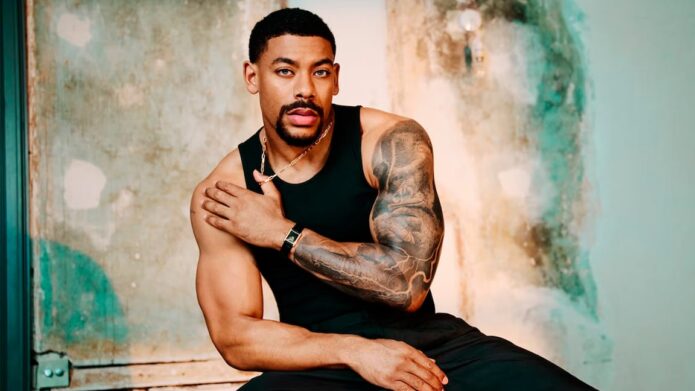
Aaron Pierre’s tattoos are easiest to see in the portraits from his Men’s Health cover interview, relaxed sofa photos and the Rebel Ridge press run. Most of the visible ink is on his right arm: black-and-grey work from shoulder toward wrist, with a smaller crescent-and-star design on the forearm in some images.
The photos show placement, shading and how the pieces connect. They don’t identify every shape or explain what it means, so this article sticks to what can be seen.
Aaron Pierre’s main arm sleeve
The largest piece covers Pierre’s right arm from the shoulder down across the upper arm and forearm. The photos show heavy black shading, grey wash and lighter gaps between the darker areas. The shapes follow the arm instead of sitting as a single rectangular panel.
In the Men’s Health cover photo, the forearm is close to the camera, which makes the contrast easier to see. Other portraits show how the design wraps around the arm. The exact forms aren’t clear enough in every photo to identify, but the sleeve reads as one connected black-and-grey composition.
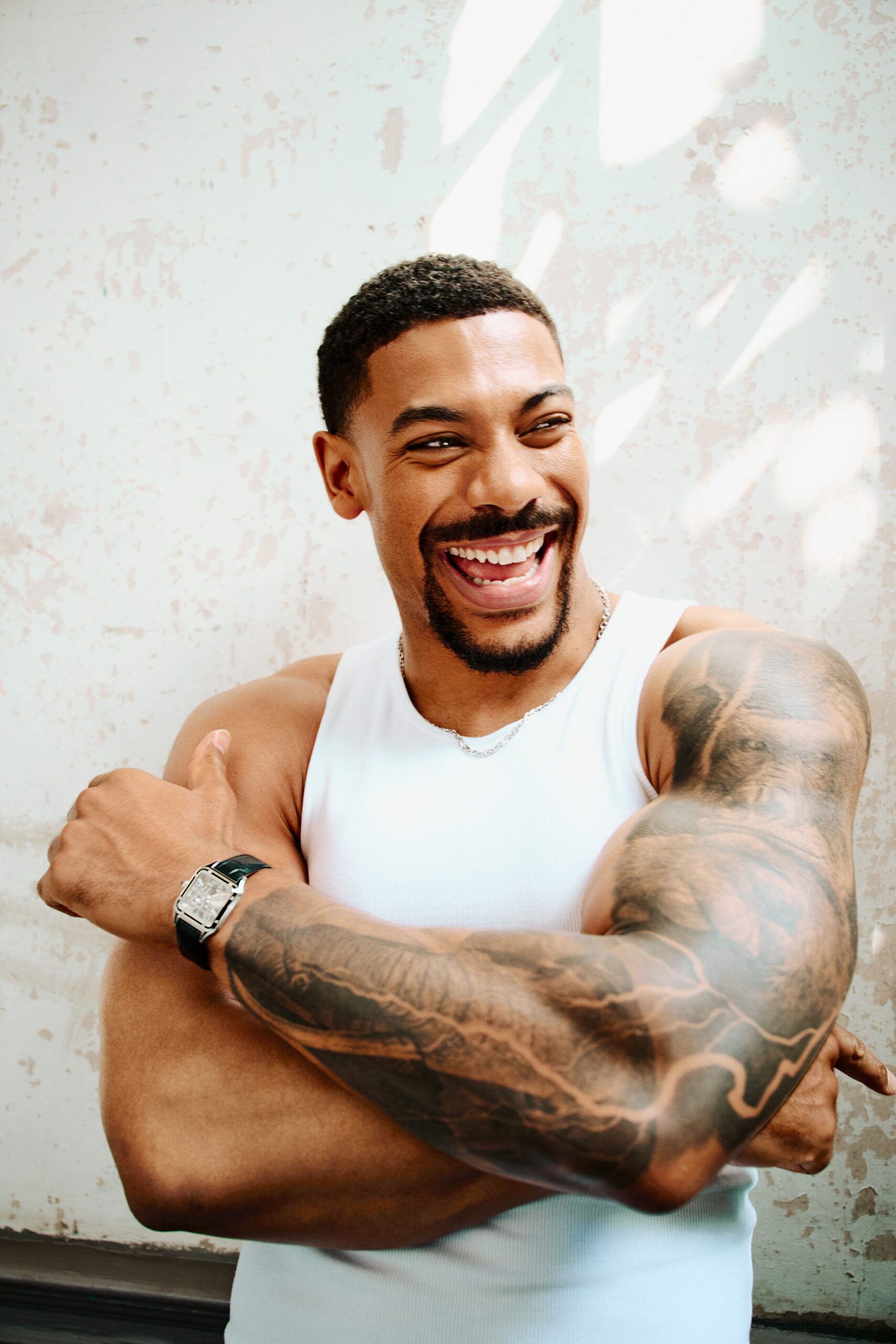
The shoulder and upper-arm detail

The closer portrait gives a better look at the shoulder. Broad shaded shapes cover the rounded shoulder cap, with darker lines and smaller forms toward the centre. It’s still an editorial photograph, not a close-up of healed work, so some details remain indistinct.
Lighting changes how the grey tones read. In brighter photos, lighter wash is visible between the black areas; in darker portraits, the whole section can look almost solid. Both show different parts of the same tattoo.
The forearm section and flowing linework
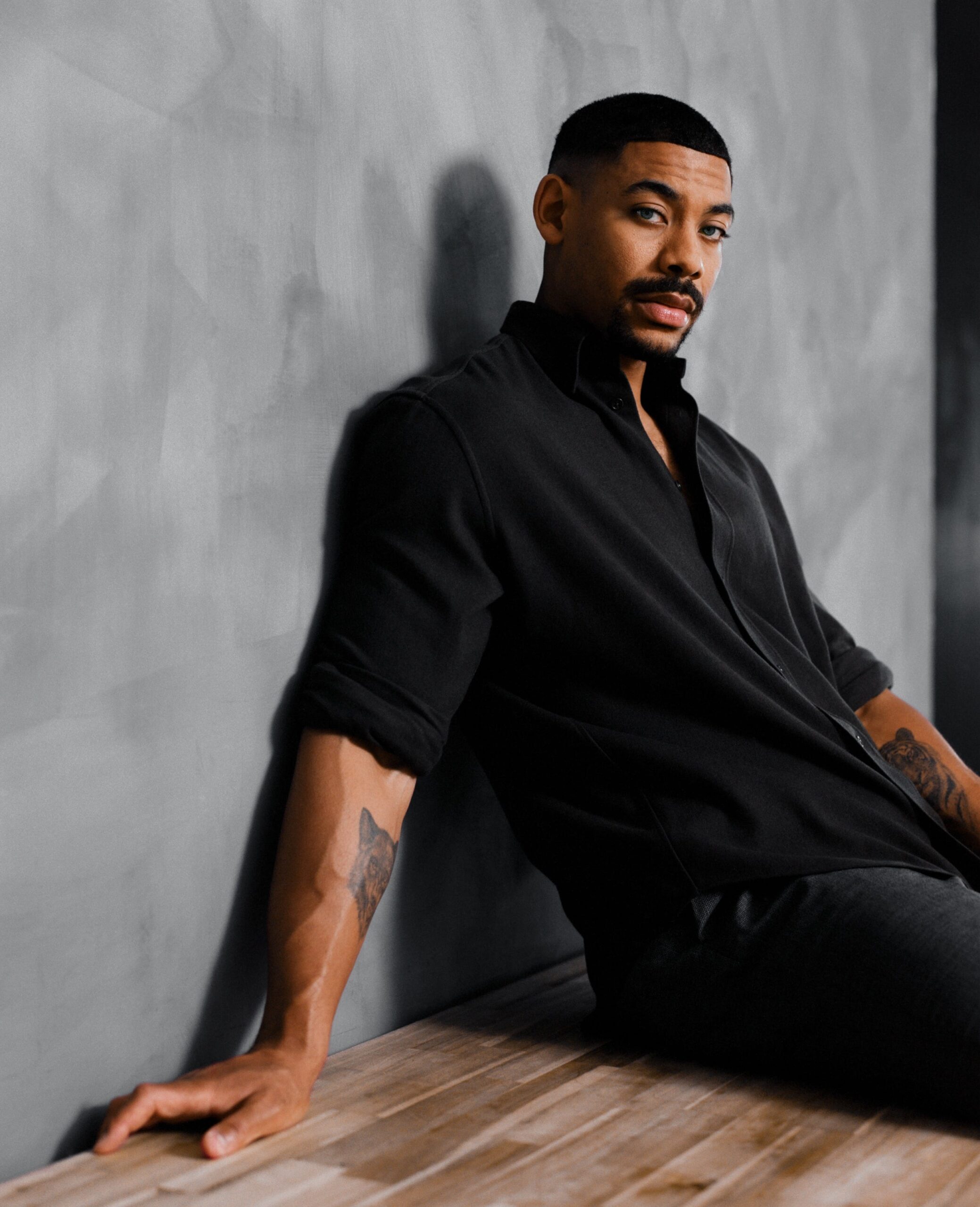
Curved lines cross the forearm and link it visually to the upper sleeve. From a distance they can read as abstract shading; the available photos don’t show enough to name a particular image. Pale breaks in the skin interrupt the darker sections and keep the outline visible.
The forearm is also the most exposed part of the sleeve in short sleeves. It can be covered for a role or formal event, but it’s likely to show in everyday photos. That may matter if you’re planning a large piece in a similar spot.
A relaxed look at the sleeve
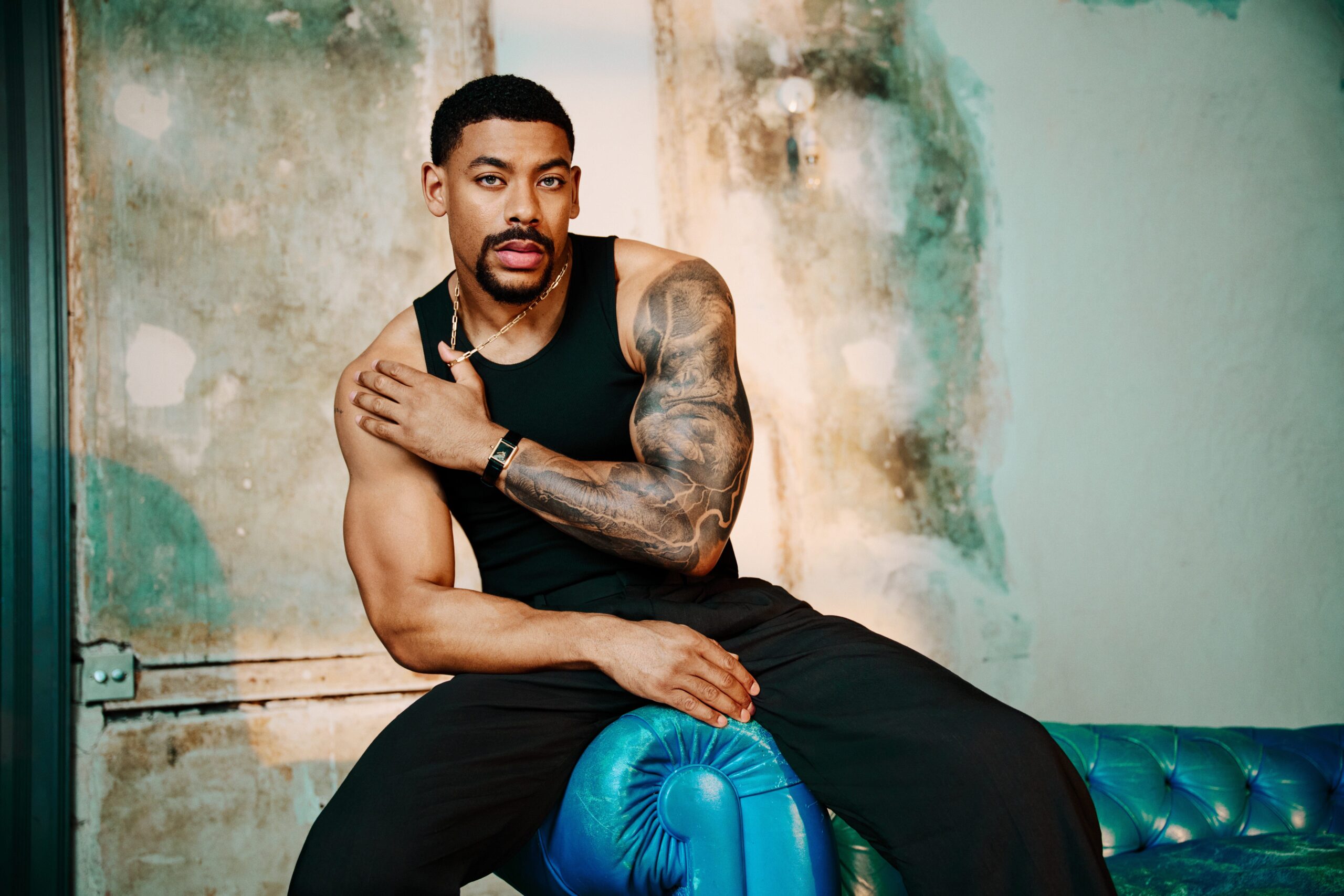
In the sofa photo, Pierre’s arm is bent, so the image shows how the ink crosses the elbow when he sits. Some darker shapes meet around the joint and shift with the angle. The sleeve doesn’t look the same in this pose as it does in a straight-on portrait.
The photo is useful for seeing the overall shape, though it isn’t clear enough to identify every small detail. The main impression is still the dense, shaded work that continues down the arm.
The smaller forearm tattoo
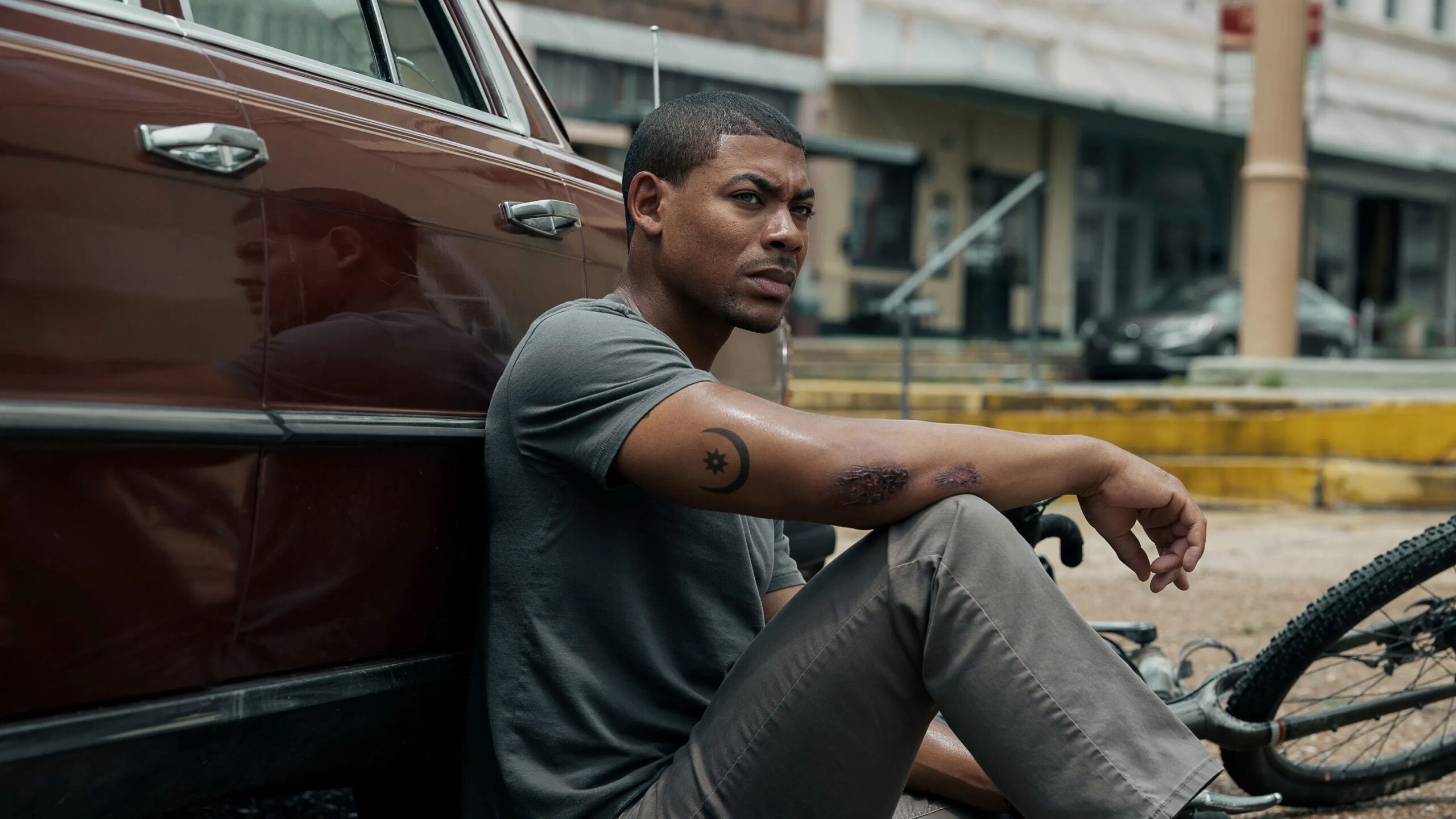
Some photos show a separate crescent-and-star shape on Pierre’s forearm. It sits apart from the larger shaded areas and has a simpler outline, making it easier to distinguish from the rest of the sleeve.
Pierre hasn’t publicly explained its meaning in the sources available here. A crescent and star can have different associations, so there’s no reason to assign one without his account. Visually, the smaller mark leaves a break between the larger sections of ink.
What Aaron Pierre’s tattoos say about his style
Across these images, the clearest pattern is black-and-grey shading and work that follows the shape of the arm. The photos don’t establish when each part was done or whether the sleeve was planned all at once. The available detail supports a description of its style and placement, not a timeline.
Could Aaron’s tattoos affect his acting work?
A large arm tattoo can be covered with makeup or clothing for a role. That takes time and continuity checks, particularly if a scene shows the same area from several angles. Whether to cover it depends on the character and production.
Good ideas to borrow from Aaron’s ink
If you’re planning a large piece, choose an artist whose black-and-grey work has the look you want, then talk through how separate areas will join. Leave some open skin so the design stays readable, and check how it sits with your arm both straight and bent.
Don’t copy a symbol because you think you know what it meant to someone else. Pierre’s crescent-and-star has no confirmed public explanation; your own design can start with a detail that matters to you.
Aaron Pierre discusses his work in this video interview.