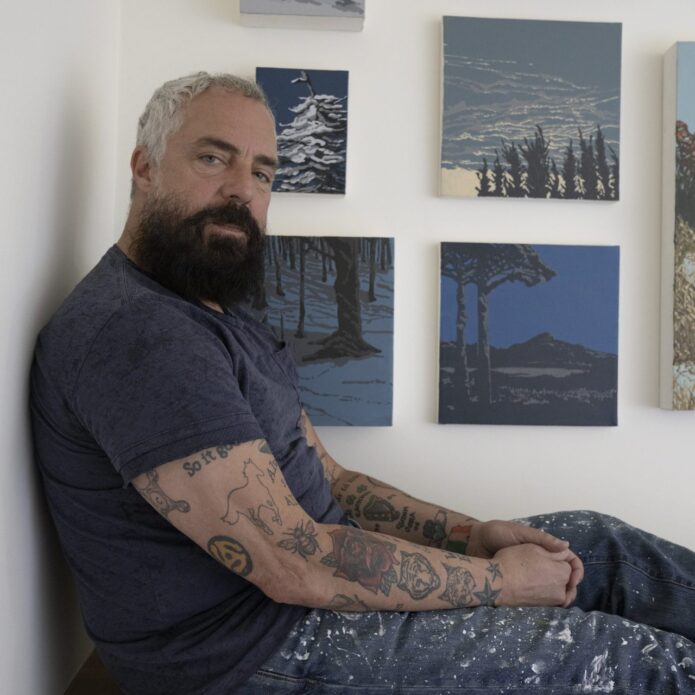
Titus Welliver has nearly thirty tattoos, and they aren’t just there to make him look tougher on screen. He’s been collecting them since he was young, and many connect to family, his background, martial arts, and long-standing interests.
That’s one reason the tattoos work so naturally on Bosch: they look lived-in because they are. When Welliver was cast as Harry Bosch, production could have covered the ink with makeup. He explained that the tattoos were real, and the show chose to leave them visible. The detective’s sleeves feel like part of his history rather than a costume detail.
Welliver has explained some designs clearly; others take a closer look at photographs to identify. This guide sticks to what he has said and what’s visible without inventing a story for every small mark.
The dojo koi were his first tattoo
Welliver told Inked that his first tattoo represents his martial arts dojo: two koi circling a rock. He says the fish stand for strength and fluidity, so the piece means more to him than simply liking Japanese-style tattoos.
The koi sit high near his shoulders and can be covered by a T-shirt. When his arms are bare, they help explain how the sleeves grew. The traditional image gives the collection a solid starting point, alongside later lettering and pop-culture references.
It’s a fitting first tattoo. Koi are often associated with movement, persistence, and pushing against resistance. That fits Welliver’s explanation, but it’s best to stay with what he has said rather than pile on extra symbolism.
Martial arts are also part of the way he carries himself. The koi aren’t a random image hidden under a sleeve; they connect to an important part of his life that began before his best-known television role.
The Silver Surfer brings comic-book colour to the sleeve
Below the koi, Welliver has a Silver Surfer tattoo, one of the collection’s most visible pop-culture references. It sits among flowers, lettering, and other arm designs rather than looking like a sticker on its own.
The Silver Surfer makes a playful contrast with the tougher animals and weapon images elsewhere on his arms. The character’s distinctive shape stands out even when the sleeve is busy. It’s a reminder that Welliver’s tattoos aren’t all family names or solemn personal symbols.
That variety keeps the sleeves interesting. A martial arts design, a comic character, and traditional imagery can all sit together without looking completely out of place. The collection is personal, but it leaves space for things he simply enjoys.
Unlike actors who keep their fandom hidden, Welliver lets these references show. They help the sleeves look like a real person’s arms rather than one matching design made for a photo shoot.
The White Pony tattoo and the words So It Goes
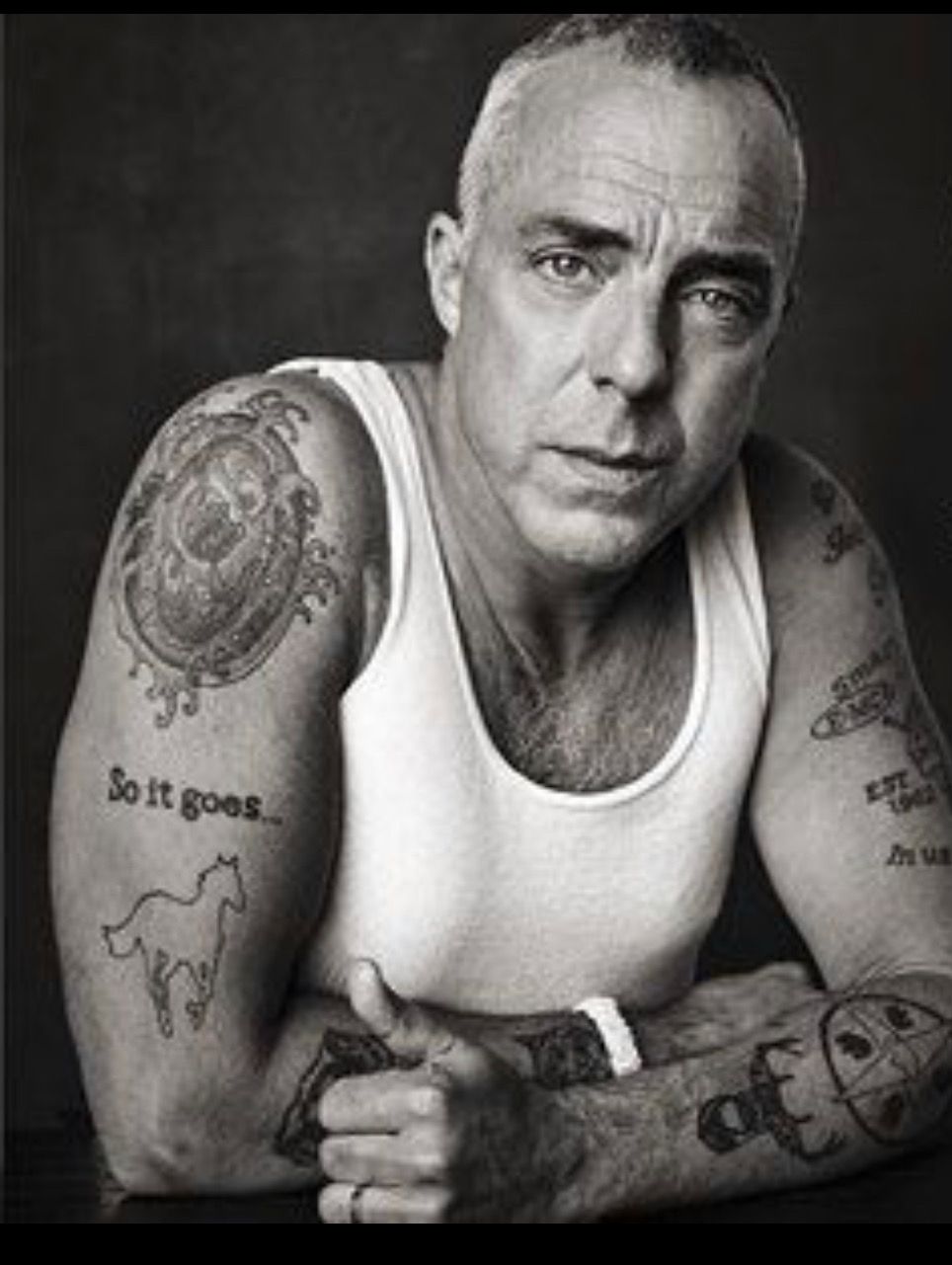
A clear music reference in Welliver’s collection is a white pony on his arm with “So it goes…” above it. He has said the tattoo was inspired by the cover of Deftones’ album White Pony, one of his favourite bands.
The horse is drawn as a simple outline, with the phrase lending it a reflective feel. It’s smaller than a full realistic portrait, and the words give the image a personal connection.
“My first tattoo is the symbol of my martial arts dojo. The two koi circling a rock represents strength and fluidity.” The quote captures how Welliver talks about his ink: he connects the designs to parts of his life instead of describing them as something that merely looks cool.
The White Pony piece also shows why one television still can be misleading. A sleeve may be covered by clothing, flipped by the camera, or partly hidden by a costume. In a clear portrait, the horse and words are much easier to distinguish from the surrounding tattoos.
Roses, wildcats and the bold right forearm work
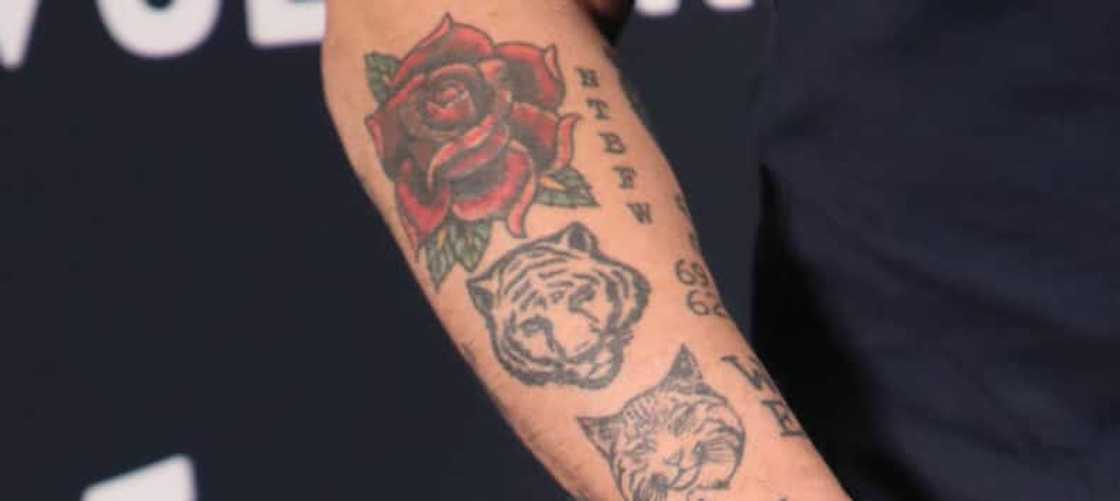
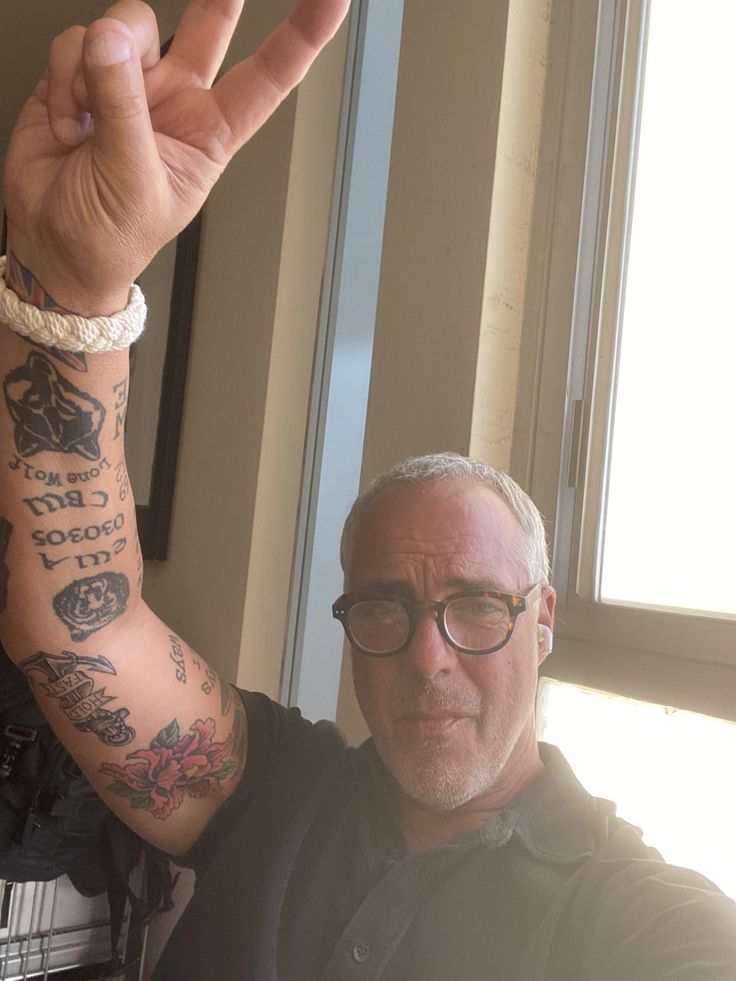
Welliver’s right forearm is packed with recognizable designs: a red rose above three wildcat heads, a lion, tiger, and bobcat. The lion was later covered by the rose, giving this part of the sleeve its own history.
Welliver hasn’t confirmed a personal meaning for each animal, so it’s safest to describe them as wildcat portraits. People may associate lions or tigers with strength, but that doesn’t tell us why he chose them. The rose is easy to see; the more intriguing detail is the story behind the lion cover-up.
The arm also has “NTBFW” and the number 69. The initials are often read as “Not To Be F***ed With,” though Welliver hasn’t given a detailed explanation of the phrase’s personal meaning. The lettering adds an edge beside the softer flower and animal faces.
This is the part of his ink that most resembles a traditional biker-style sleeve. Roses, animals, block letters, and dark outlines bring that old-school toughness, while the rest of the collection keeps it from becoming one-note. His arms feel like a timeline rather than a matching set.
Guns, knives, stars, bears and the Lone Wolf
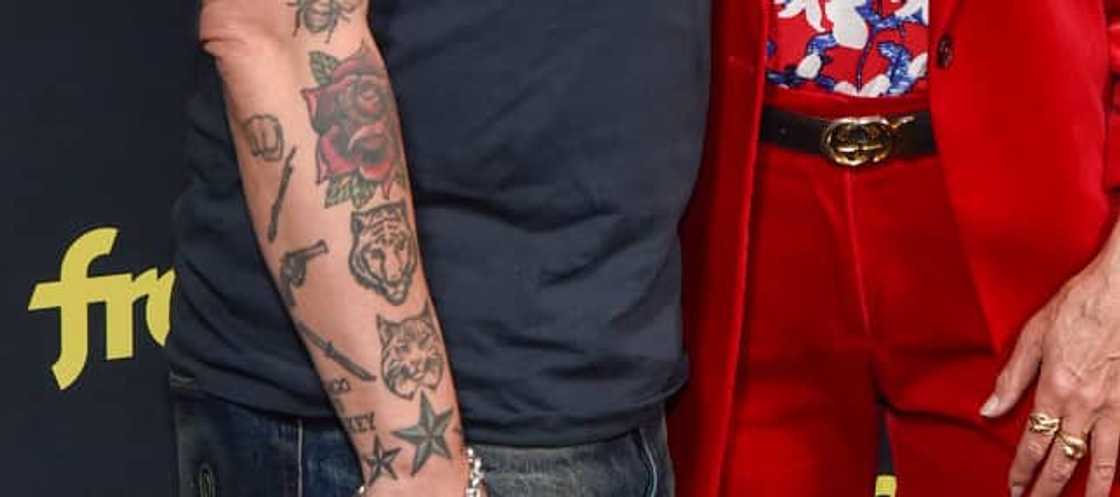
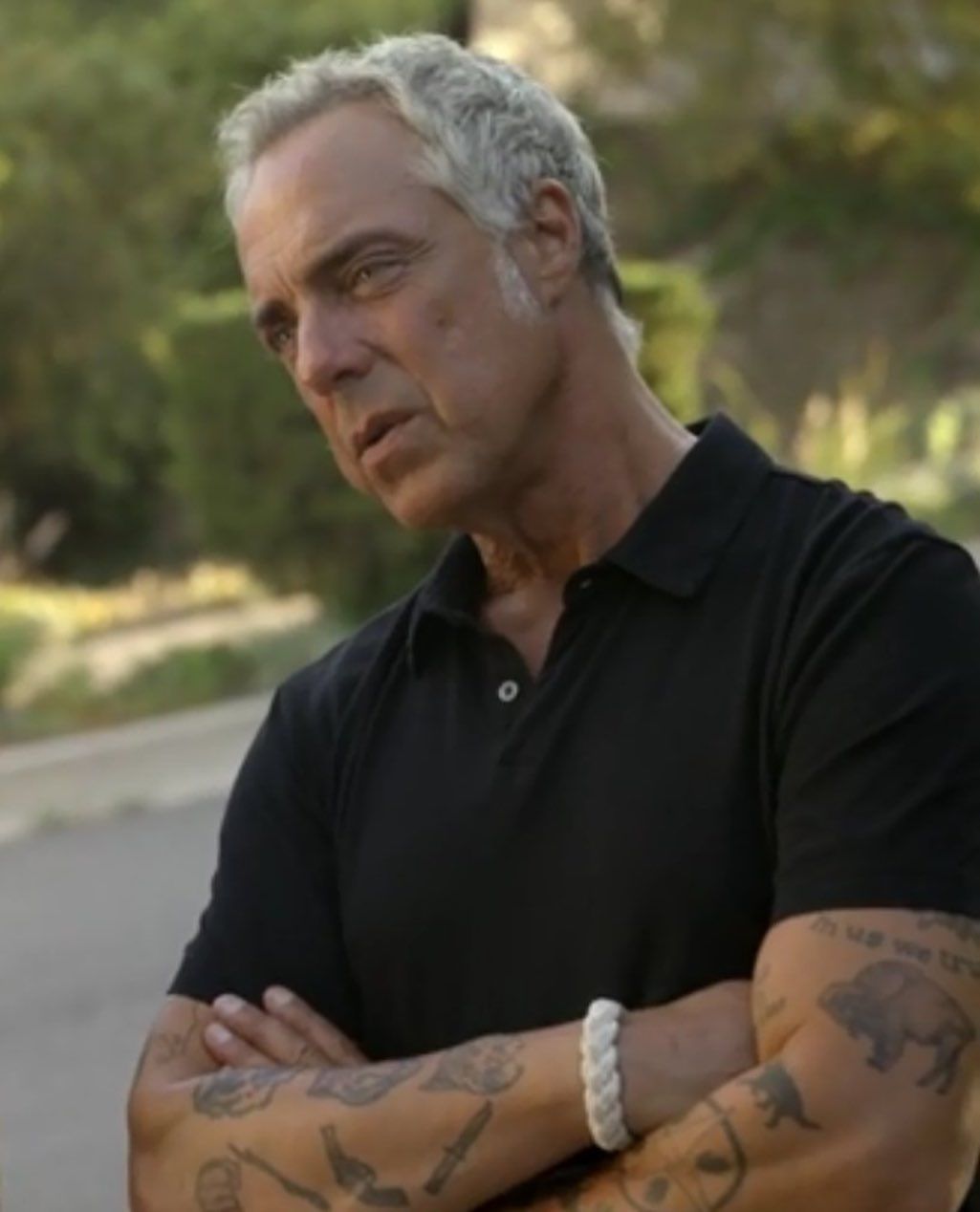
Another part of the sleeve features a closed fist, a stick, a revolver, and a knife, with stars and smaller marks filling the gaps. These tattoos are noticeable in Bosch, when the camera catches Welliver’s forearm as he holds a file, leans on a car, or rolls up his sleeves.
Welliver hasn’t assigned a public meaning to every weapon, so they’re best described as visible objects. Tattoo guides sometimes turn a gun or knife into a statement about violence, even when the wearer hasn’t said that.
On the inside of his arm is a bear with the letters NTBFW, and on his wrist a wolf with “Lone Wolf” above it. Welliver has connected the wolf to loyalty and love for his pack. The bear and lettering sit nearby, making the area a grouping of animal and text designs.
A blue-and-black star appears near the wrist, along with another star inside a circle with footprints. There’s also a logo-style “All Ways” and “Always” design. These smaller pieces break up the large portraits and images.
Family, Irish roots and why Bosch kept the real ink
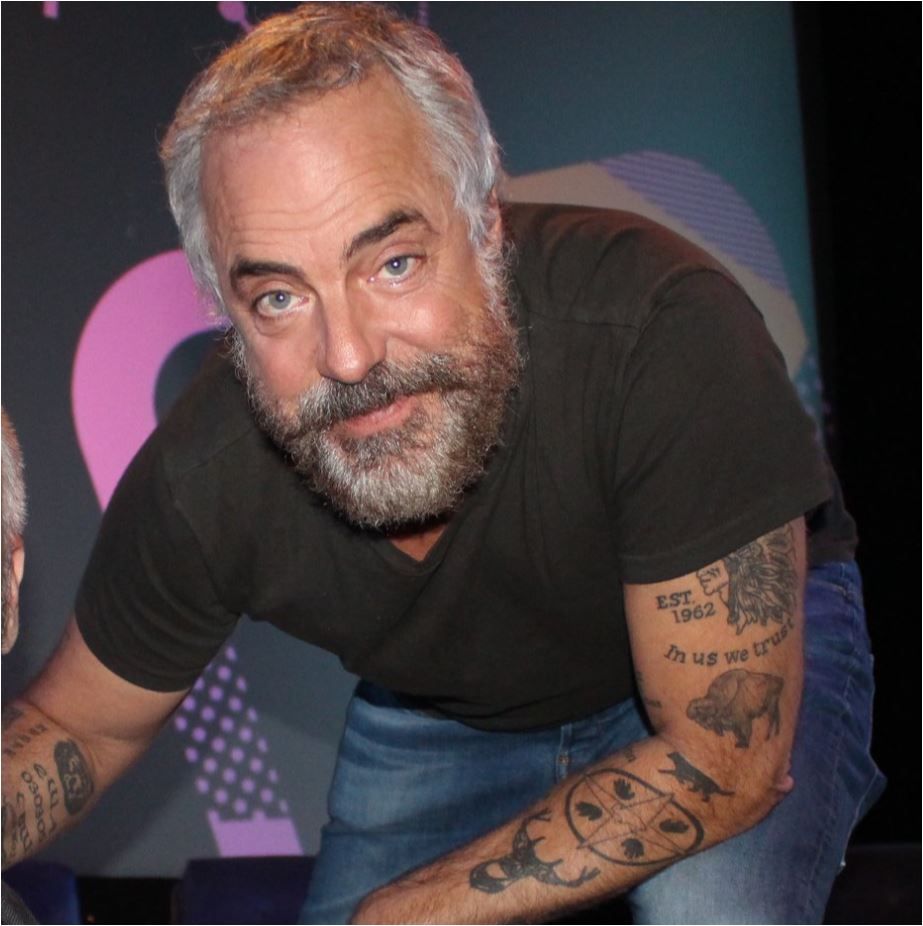
Not every tattoo on Welliver’s arms is an animal, weapon, or comic reference. He has said some are his children’s names and birth dates. Other designs connect to his Irish and Native American background. The variety reflects how the collection grew at different times and for different reasons.
One arm photo shows a buffalo beside “EST. 1962” and the phrase “In us we trust.” Other small designs around his forearm are difficult to make out from a distance. A close-up reveals more than a red-carpet shot.
The tattoos became part of Harry Bosch almost by accident. Welliver told Inked that covering them every day would take extra time, so he spoke with Michael Connelly and production decided to leave them visible. The show incorporated Bosch’s fictional “Hold Fast” knuckle tattoos into that choice, without pausing to explain every mark.
That choice adds texture to the character. The arms don’t look like temporary props, and the tattoos don’t disappear when a scene turns serious. They’re simply part of Welliver’s life and, as a result, part of Bosch’s look.
His collection has something in common with Rag’n’Bone Man’s crowded arm work: both have a rough, collected feel, with different ideas added over time instead of one perfectly planned sleeve.
In the end, Welliver’s tattoos are compelling because they’re real, personal, and a little messy. Koi, the Silver Surfer, the White Pony horse, wildcats, roses, weapons, stars, family details, and lettering sit together without needing one grand explanation. They tell their stories in pieces, which is why another design catches the eye whenever he rolls up his sleeves.
One thought on “Titus Welliver’s Tattoos Tell the Story of His Life”