Jeff Hardy treats tattoos as more than decoration. He has spent long sessions in the chair, designed parts of his own work and talked about getting tattooed with the same restless energy he brings to a match. The collection is large, colourful and a little chaotic, but certain ideas keep coming back: nature, movement, family, danger and personal control.
The clearest explanations come from Hardy. He has discussed the roots spreading up his arm and neck, the Japanese writing on his arm, the dragon he got at eighteen and the small matching mark he shares with his wife. Other pieces are easier to see than to explain. This guide separates the tattoos Hardy has described from designs identified in clear photos, so the details stay useful without inventing private meanings.
The roots climb from Hardy’s right arm toward his neck
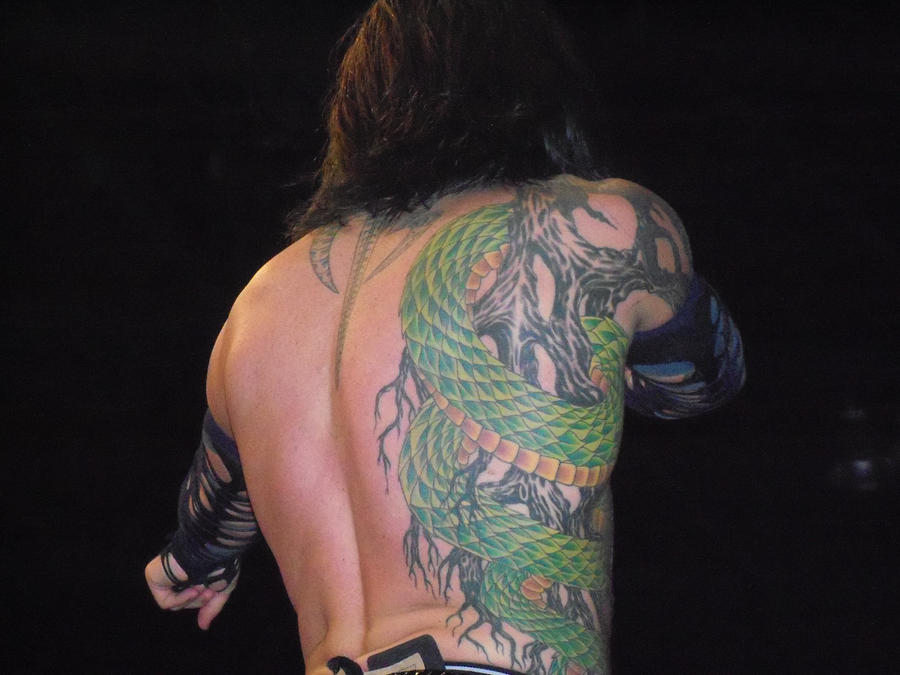
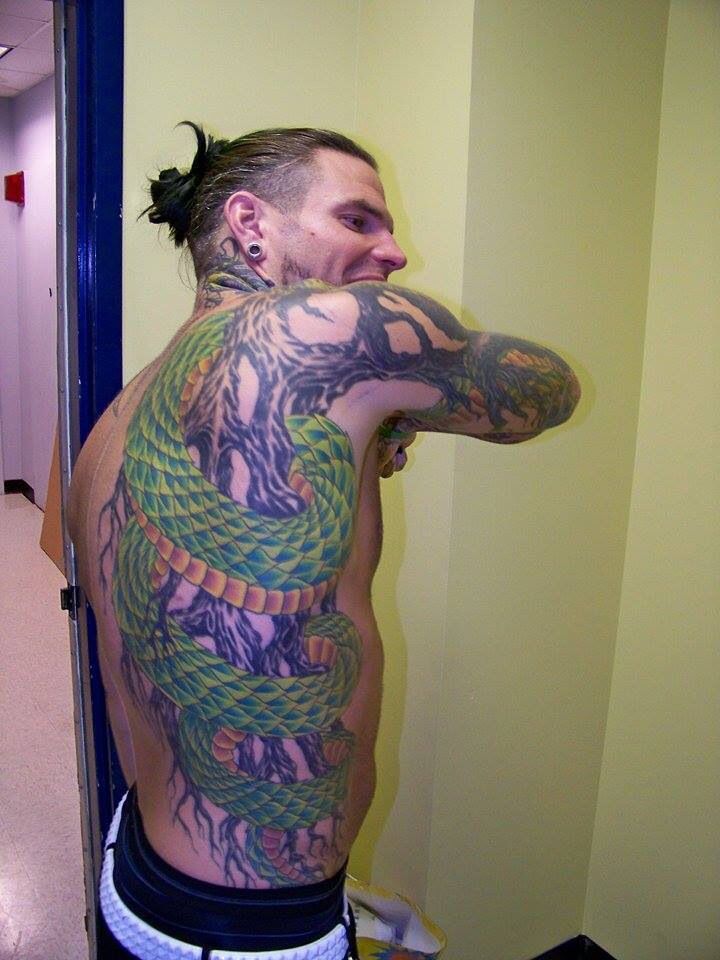
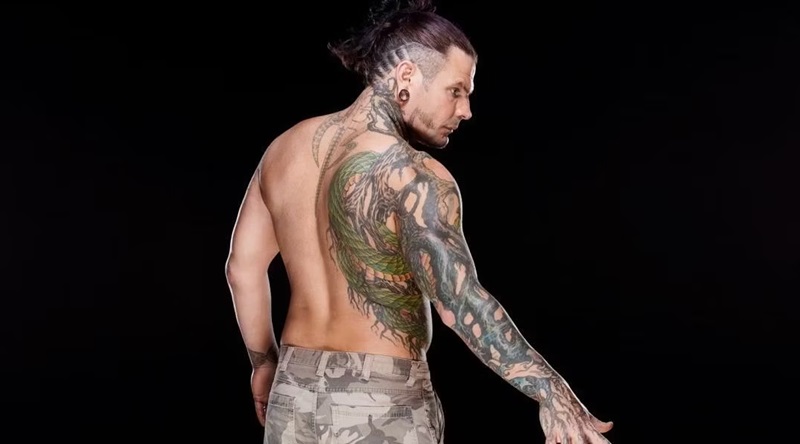
The roots are the most recognisable part of Hardy’s collection. They start around his right hand and arm, spread over the shoulder and continue toward his neck and side. In photos, the dark lines look like twisting branches rather than a uniform sleeve. They curl around the arm and leave patches of skin between the heavier sections, giving the design an uneven, living shape.
Hardy has explained the idea himself. He compares roots with veins: water moves through the ground as blood moves through the body. He has also called himself a landscaper at heart and said he enjoys plant life. The roots are more than a general nature motif; they connect his body to the earth. The design grew outward rather than stopping at a clean border.
The placement changes how the tattoo reads. A front-on wrestling photo may show just a strip on the arm, while a shirtless portrait reveals the lines reaching toward his back and ribs. Hair or a collar can hide the neck section. Several angles help show the full scale, especially because later work overlaps and surrounds the original lines.
Hardy said he wanted something different from the tribal bands many men were getting at the time. That puts the style in context without reducing it to a trend. The roots use heavy outlines, but they are neither a simple band nor a symmetrical emblem. They spread across the skin like a system, which fits Hardy’s interests in drawing, landscaping and making his own art.
Japanese lettering and the unfinished dragon belong to Hardy’s early years
The Japanese writing on Hardy’s right arm is one of the few tattoos he has translated himself. He said it means “health, good or bad, but hopefully good”. It sits in a heavily tattooed area and can be hard to see when his arm turns away. The lettering also shows how Hardy mixes words into larger images rather than keeping text separate.
His first tattoo was a dragon on the outside of his left leg. Hardy has said he got it at eighteen, when he still lived with his father, who disliked tattoos. The story has a humorous edge because Hardy got it behind his father’s back, but it also anchors the tattoo in the collection’s timeline. It came before the famous sleeves and larger designs.
The dragon remains quite different from the roots. Hardy has described it as an outlined design he might colour one day, while the roots expanded into a much larger system. In older photos, the dragon can look plain beside the coloured work on his upper body. That contrast is part of the collection’s history; not every tattoo was planned as a complete visual package.
It is tempting to assign a dragon a stock meaning like strength or fearlessness. Hardy’s own account is more specific: he talked about his age, his father’s reaction and deciding to get the tattoo anyway. The photo confirms the design and location, while his story explains the personal context.
The neck demons sit beside the roots, hands and wrist work
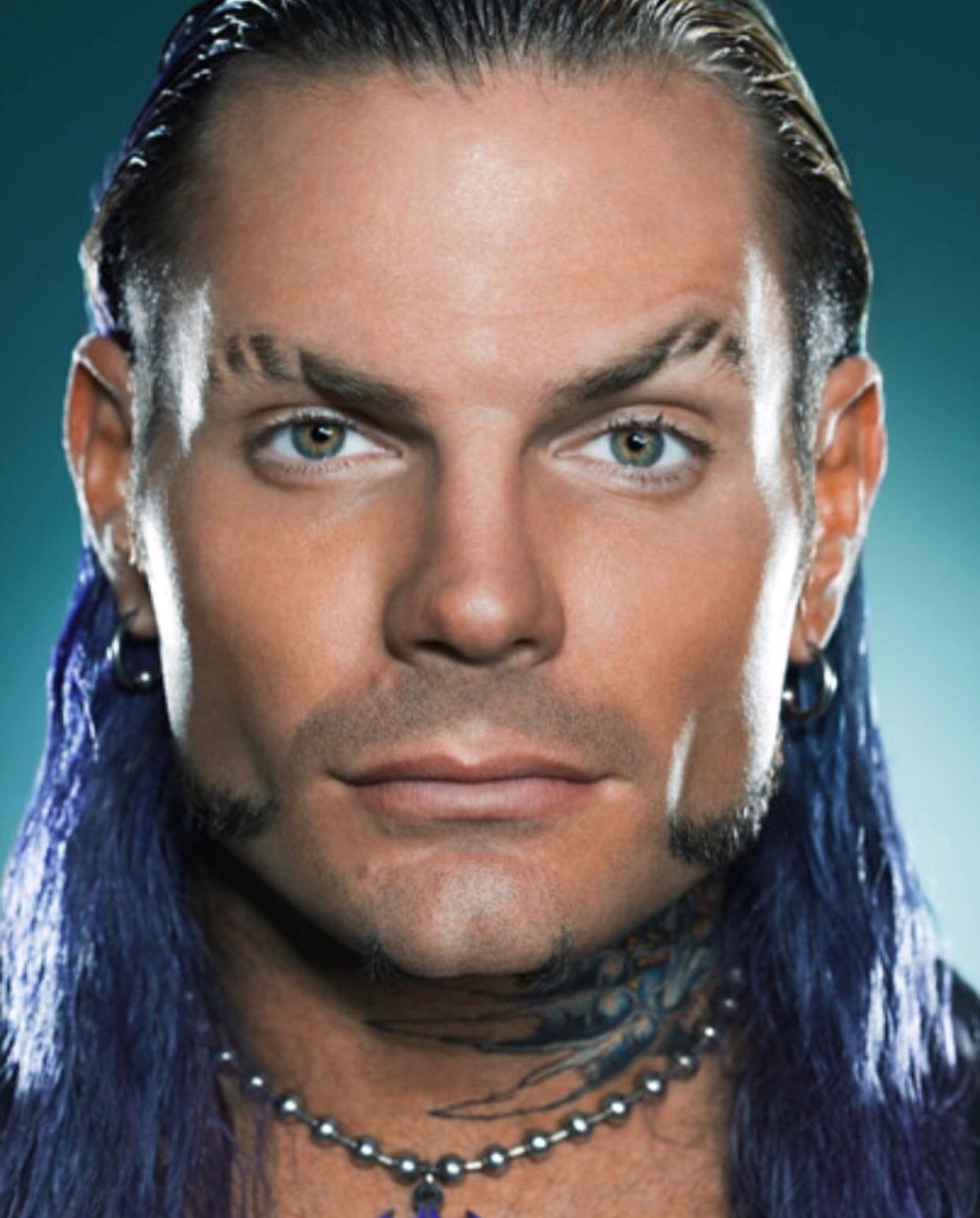
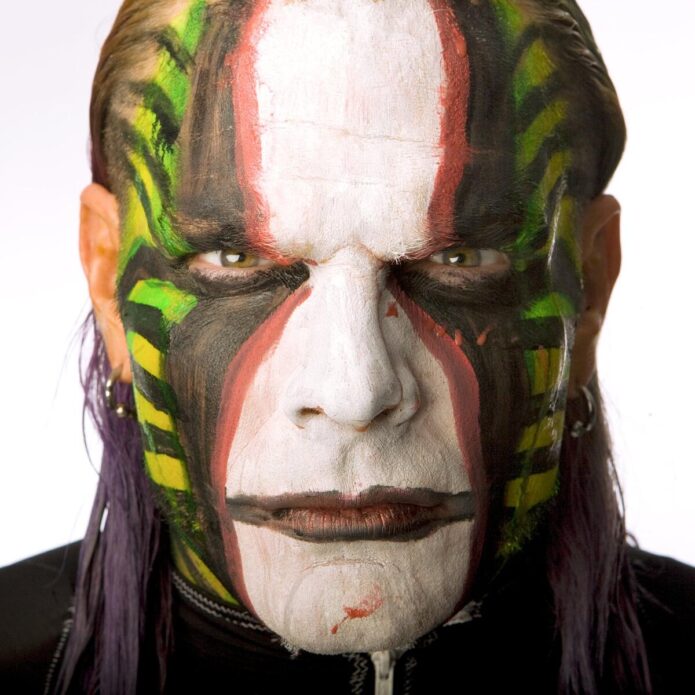
Hardy’s neck tattoos are easy to confuse with his face paint, which has also been part of his look for years. The permanent ink runs along the sides and back of his neck, while the paint changes from match to match. Close portraits reveal darker, demon-like faces beneath the jaw and near the neckline. From far away they can look like shadows, especially when his hair is loose.
Hardy has said the demons were not fully planned in advance. Once both sides of the neck were visible, he began to connect the images with control and the parts of himself he has had to manage. That does not make every later tattoo an addiction symbol; this particular context comes from Hardy’s own comments.
The neck is where his style becomes most theatrical. The roots climb up from his arm, while the darker faces sharpen the outline around his head. Add piercings, long hair and changing face paint, and the overall look is intense even before he enters the ring. It is useful to distinguish the permanent tattoos from the performance makeup.
Photos from different years also show why dates matter. Hair can hide one side, paint can obscure another and lighting can flatten the dark shapes. A close portrait of the neck is more useful than a full-body photo where the same designs shrink to tiny marks.
A close-up earns its place here because it lets readers see the neck work clearly.
Hardy’s back piece brings together the devil, flames, snake and octopus work
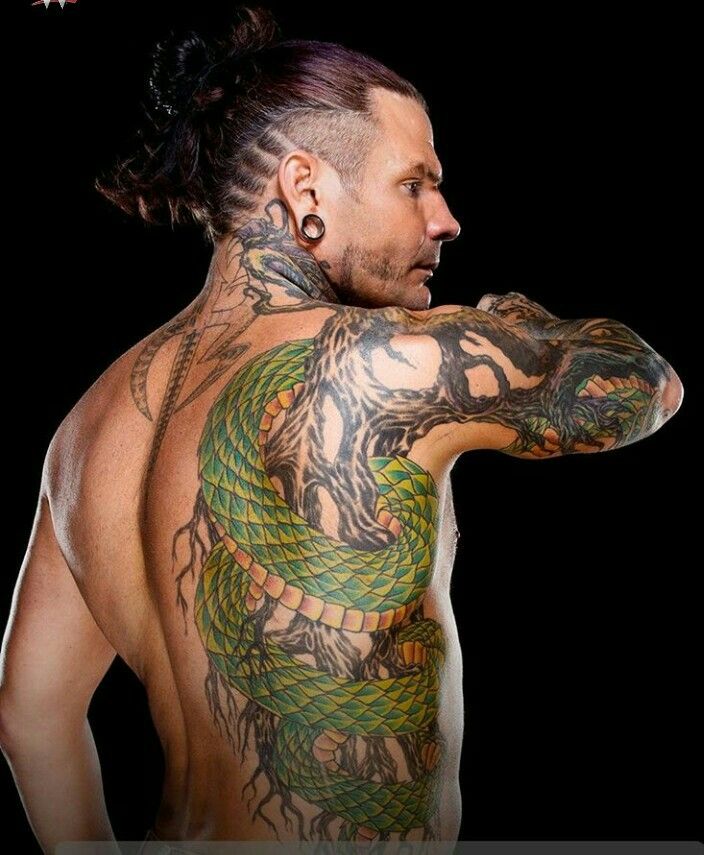
Hardy’s large back work is a later chapter in the collection. It includes a demonic face, blue and grey shading, flames and a green snake winding through the design.
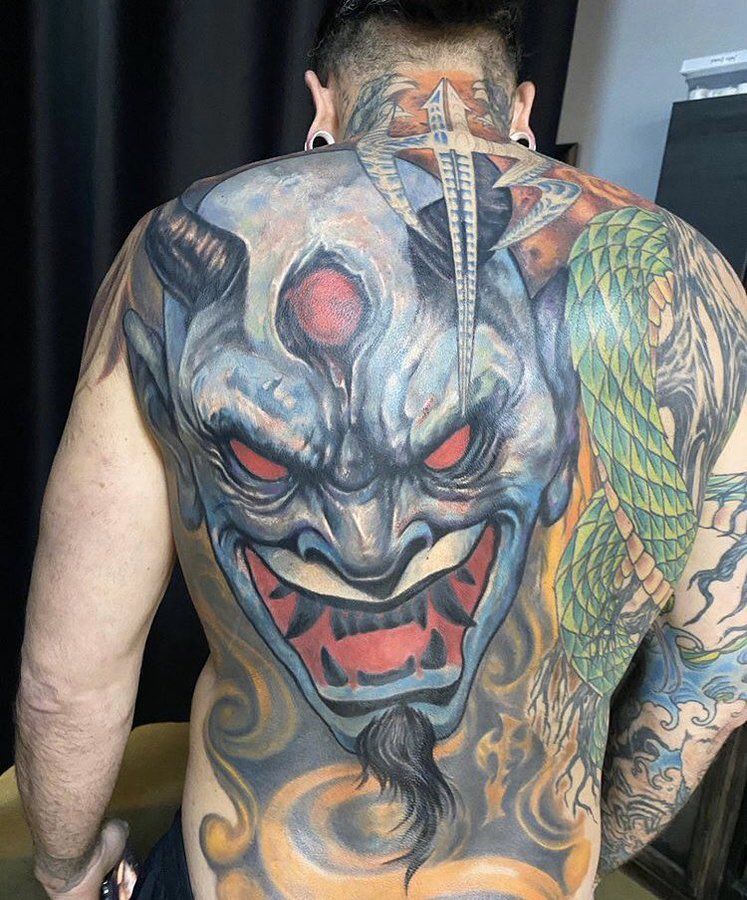
It is denser than the early dragon and much broader than the original roots. The back gives the scene room to read as a full composition instead of another small symbol added to a busy arm.
When Hardy showed the back piece, he described it as a newer version of himself and spoke about how painful the sessions had been. He began the work earlier but could not finish it in one go. That history matters: a big tattoo can look complete in a photo even when it took several sessions.
The snake is connected to the roots on the right side of his body. Hardy said people had mistaken parts of the coloured roots for a snake, which helped inspire him to add a rattlesnake. He has also said he is afraid of snakes, so the design was not simply a favourite-animal tattoo. That tension between fear and fascination gives it some life.
The devil and flames are clear in the image, but that does not establish a biography for every colour or expression. Hardy’s comments support the idea of a major personal artwork and connect the snake to the roots. The description can stay visually detailed while leaving further symbolism open.
Hardy’s hand and wrist tattoos are smaller but more personal.
The marks on Hardy’s hands and wrist are easy to overlook beside the larger work. He has mentioned faint green lines around his right thumb and buying tattoo equipment because he wanted to try tattooing himself. Working on his right hand with his left was difficult, he admitted, giving those pieces a very different origin from professional studio work.
His left wrist has a combined cursive J and lowercase e, matching his wife’s first tattoo. Hardy said she wears the design on the back of her neck and that he put the same idea on his wrist so they would have a shared mark.
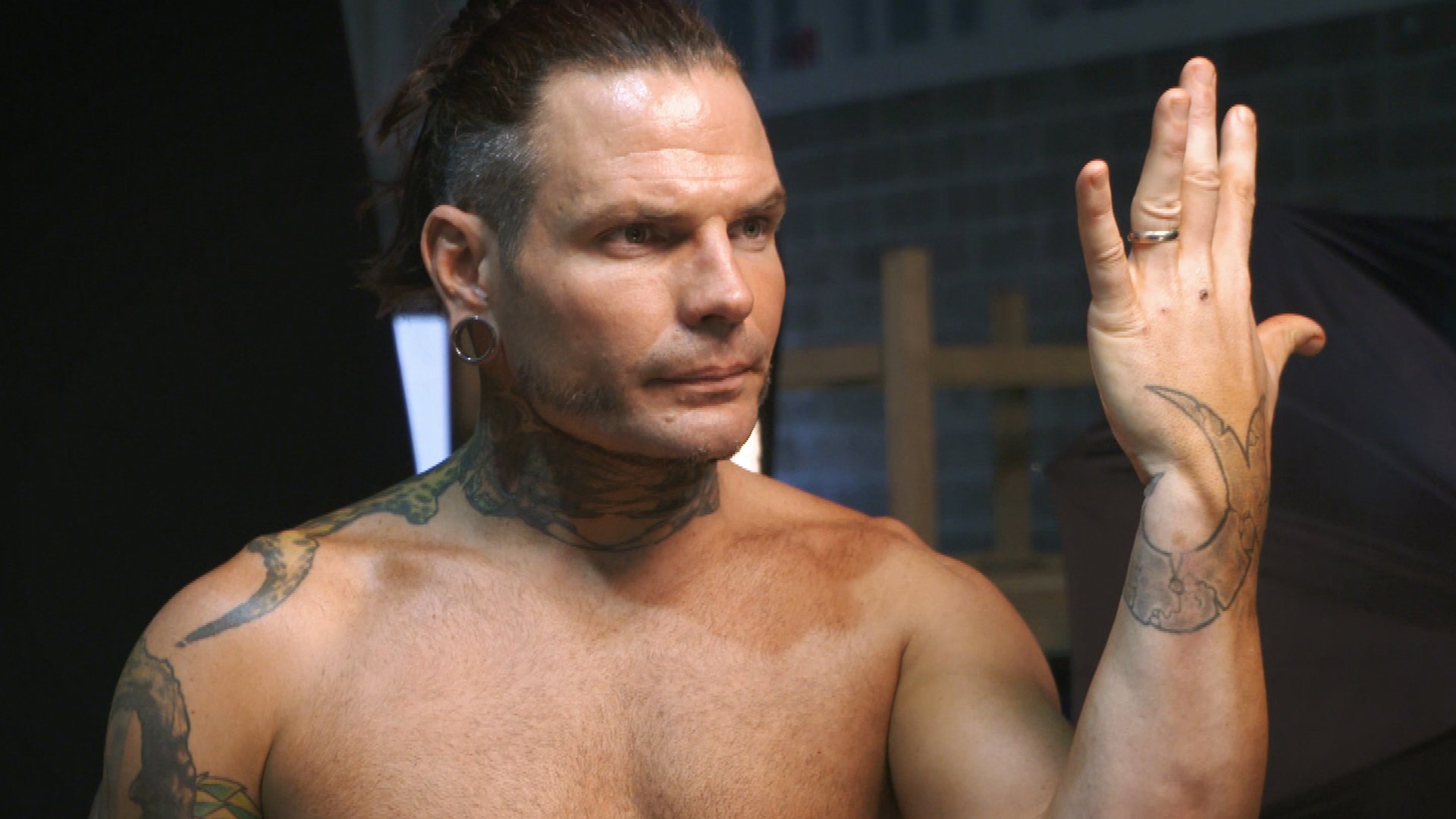
It is one of the clearest relationship tattoos in his collection because Hardy explained both the letters and the matching placement.
The hand tattoos also show how much scale affects visibility. A tiny symbol may be crisp in close-up and disappear when Hardy wears gloves, wrist tape or long sleeves. It should not be treated as a new tattoo every time another photo reveals a line. Dates, angles and image quality all matter for such small designs.
The octopus, bunny and smaller leg work add a stranger edge.
Hardy has also had an octopus tattooed around a bunny on his leg during an Ink Master appearance. It is playful and unsettling at once, fitting his habit of pairing bright colours with darker or surreal subjects. Reports say the session lasted close to six hours and was completed by Jesse Smith. The design is separate from the roots system, so it stands on its own rather than being grouped into a general sleeve.
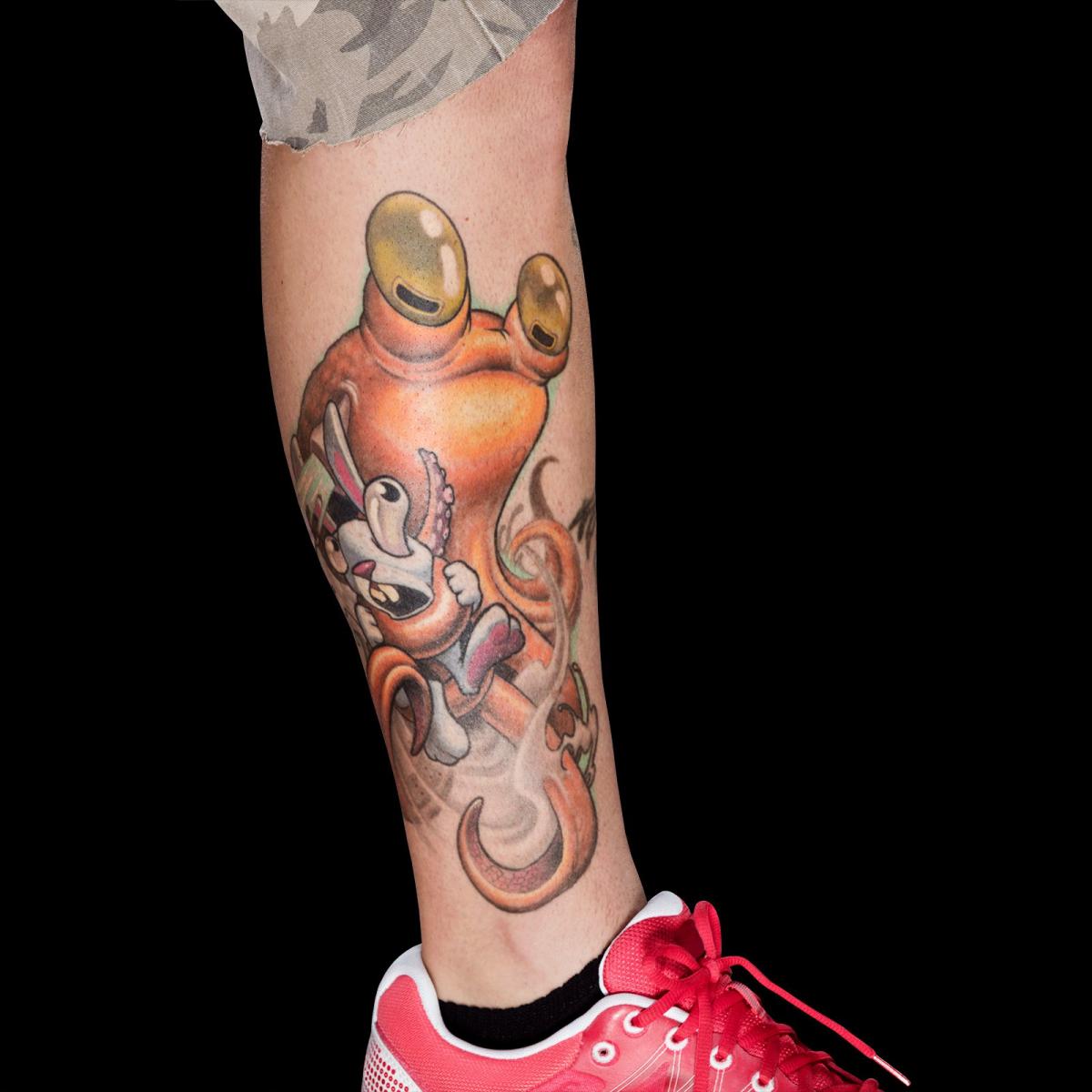
This is where Hardy’s collection gets less predictable. The dragon came early, the roots connect to nature, the Japanese writing carries a clear wish for health, and the octopus and bunny bring a strange storybook quality. There is no reason to force them into one style. Hardy approaches tattooing like drawing on the body, and the designs feel like separate ideas gathered over time.
Together, the tattoos move from a first dragon on the leg to roots on the arm, Japanese lettering, neck demons, a large back scene, a snake and smaller marks linked to his wife and his own experiments. Some meanings are confirmed in interviews; some designs are simply visible in photos. That distinction is useful. Readers can appreciate the artwork without assuming every line has a published explanation.
What makes Jeff Hardy’s tattoo collection different.
Hardy’s tattoos feel personal because he talks about the choices behind them. He remembers getting the dragon at eighteen, explains the roots through veins and water, translates the Japanese writing and describes the matching wrist initials. He has also spoken openly about the pain, time and changes involved.
The photos show what words alone cannot. The back piece needs a full-back view; the roots need an arm or side angle; the neck demons need a close portrait; and the wrist marks need a tighter frame. Repeating one generic shirtless image would flatten the collection and hide the placements that make each tattoo worth discussing.
Some marks still cannot be confidently named from a distant shot, and that is fine. A careful guide can list the roots, dragon, Japanese writing, neck demons, snake, devil, flames, matching wrist letters and octopus scene without turning every shadow into a new design. Hardy’s explanations carry the story; the photos show the work, and remaining uncertainty stays clear rather than dressed up as fact.
One thought on “Jeff Hardy’s Tattoos Tell a Story in Roots, Snakes and Chaos”