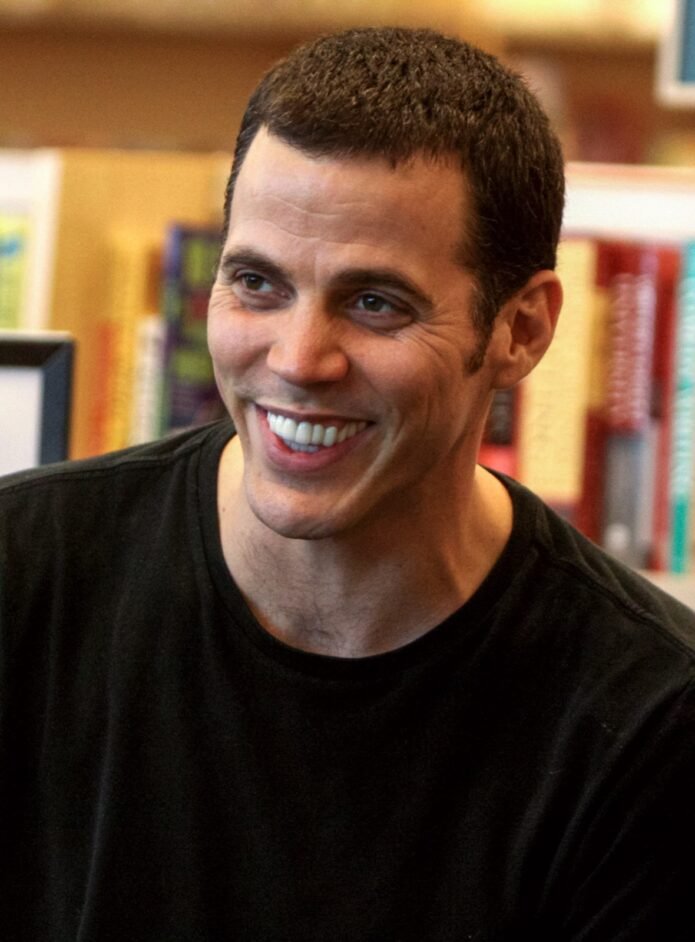
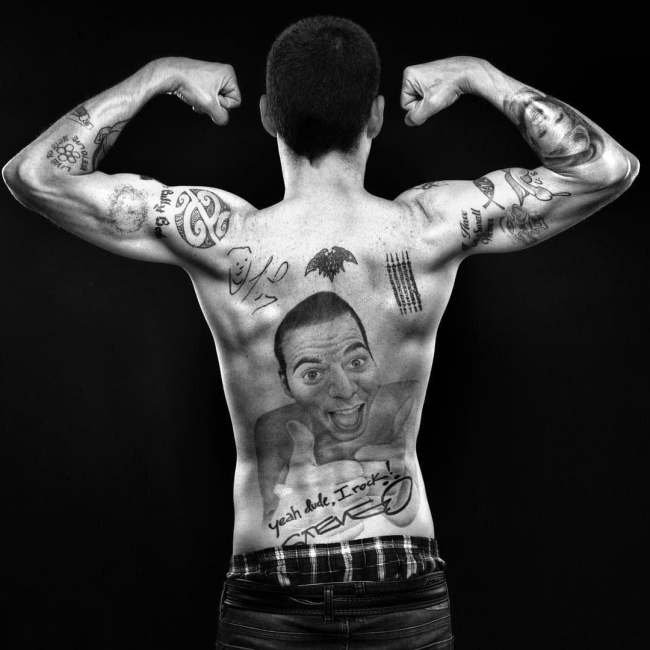
Steve-O has never been one for subtle tattoos. The largest is a huge portrait of himself across his back, smiling and giving a thumbs-up. Lettering, smaller symbols and the phrase yeah dude, I rock! fill the space around it. It looks like a joke made for an audience, which fits a performer who has often used body modification to get a reaction. In interviews, he has talked about making his body part of his comic persona.
There is plenty of ink beyond that portrait, across Steve-O’s hands, face, chest and shoulders. Photos make the scale easy to see, while interviews fill in some of the words and choices. The smaller marks are harder to read, so their meaning is best left open.
The full-back self-portrait is Steve-O’s defining tattoo
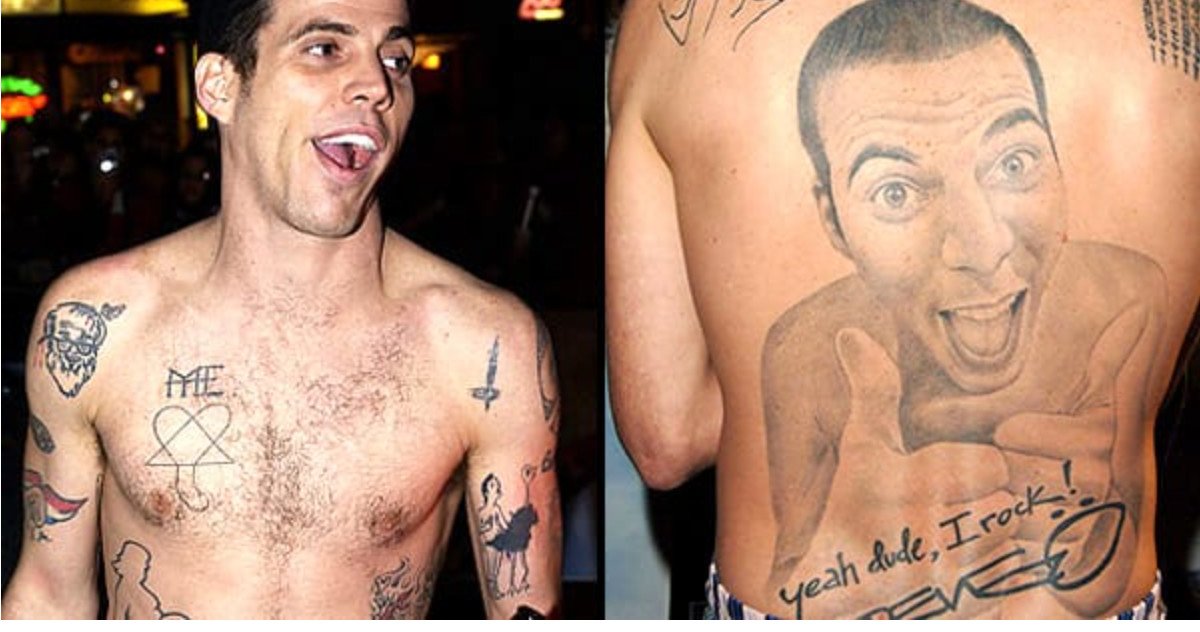
His back tattoo is a photorealistic portrait of Steve-O giving a thumbs-up. It covers most of his back, putting the performer’s own face at the center. The expression is broad, the gesture is easy to read and the surrounding lettering frames the image. The Daily Beast called it a magnificent tattoo of himself, while an earlier BME interview discusses the piece as part of his wider interest in body modification.
At first glance it could look like vanity, but the exaggeration is what makes it funny. Steve-O has always taken things to extremes; putting his own face across his back turns that impulse into the joke. The image needs no decoding: it is simply Steve-O, smiling back at the viewer.
The size changes how the tattoo reads. This is not a small portrait tucked below one shoulder blade; it is a full backpiece with room for shading, expression and handwritten details. The face catches the eye first, while the lettering makes the design feel more like a personal poster than a conventional portrait.
“Yeah dude, I rock!” finishes the backpiece with a punchline
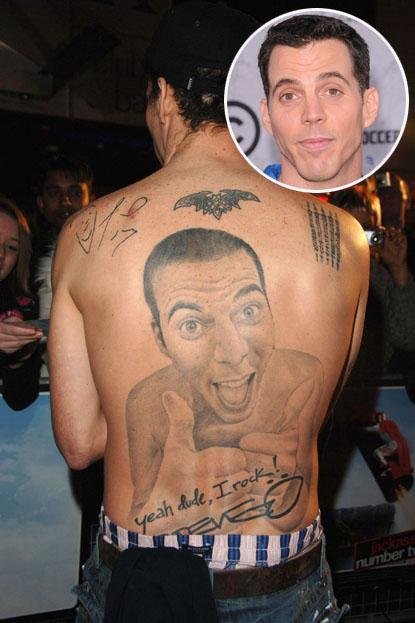
The phrase yeah dude, I rock! sits below the self-portrait beside Steve-O’s signature. It is part of the same composition, not a separate tattoo that happens to be nearby. The thumbs-up is boastful, but the exaggerated wording makes the boast a joke.
That line is the punchline, and its casual wording and punctuation are part of the voice. A tattoo guide should keep it as written; polishing the wording would flatten the joke. The script and signature tie the words to Steve-O’s persona and the portrait.
The lettering does a different job from the portrait: the face supplies the expression, and the words supply the voice. Even without knowing the rest of Steve-O’s body-art history, the tattoo is easy to read. Its subject and tone are clear, which helps explain why profiles keep coming back to it.
Face and knuckle tattoos carry the smaller jokes closer to the camera
Steve-O’s face and hand tattoos are hard to pin down in photos; small lettering blurs and can be misread. In BME interview material, he talks about choosing words for the reaction they’d get. Later coverage also describes added face ink as part of his public look. A single blurred photo can’t tell the full story.
His hands are on show whenever he gestures, and a face tattoo appears in interview close-ups. It suits a performer who often makes his body part of the bit. Still, visibility does not mean every mark comes with a story.
Photos also vary with the years and the lighting. A microphone can hide part of his hand, stage makeup can obscure face ink, and tattoos can be changed or covered. When a word is too blurred to read, it is better to describe where the tattoo is than to guess what it says.
Smaller chest and shoulder ink fills out the larger body-art map
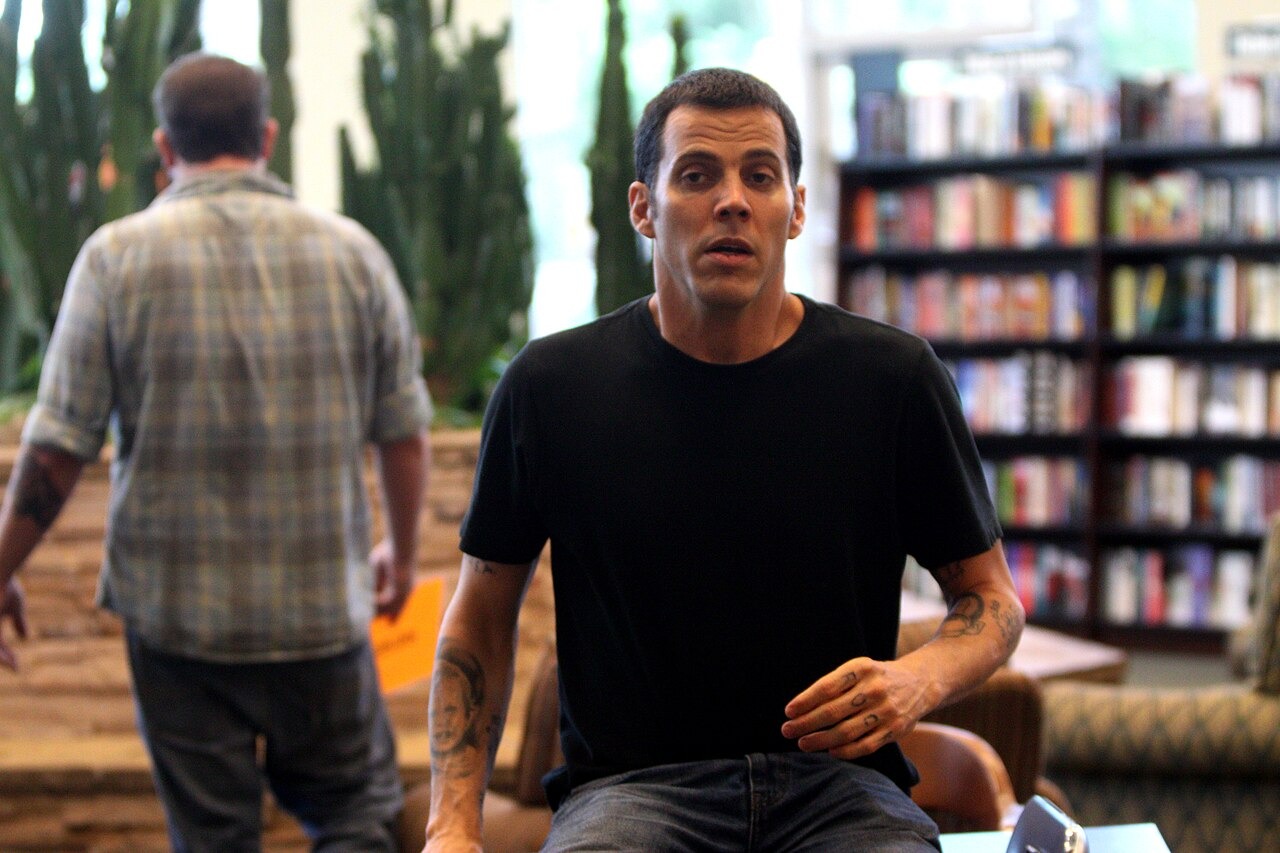
The other tattoos put the back portrait in context. Photos show more symbols and smaller pieces across Steve-O’s shoulders, chest and arms. Some are hard to identify and have no clear published story. Together, though, they make the point: the famous portrait sits among a lot of other work.
This is not one coordinated sleeve. The tattoos vary in size and mood; some are jokes, while others seem more personal. They look like a mix of decisions made for different reasons.
How to read Steve-O’s tattoos without losing the joke
The back portrait draws the eye, and the lettering gives it a voice. Smaller work on Steve-O’s face and hands brings the humor right up close, while the other marks fill out the collection. The sources explain some of his choices, but not every symbol needs decoding to see the through-line: he uses tattoos as part of the performance.
A huge portrait has room for expression, and the lettering is large enough to read. A small face tattoo comes with different limits. Steve-O embraces the contrast and uses it as part of the act. The result is funny, excessive and unmistakably his.
5 thoughts on “Steve-O’s Tattoos Are Built Around One Unmissable Backpiece”