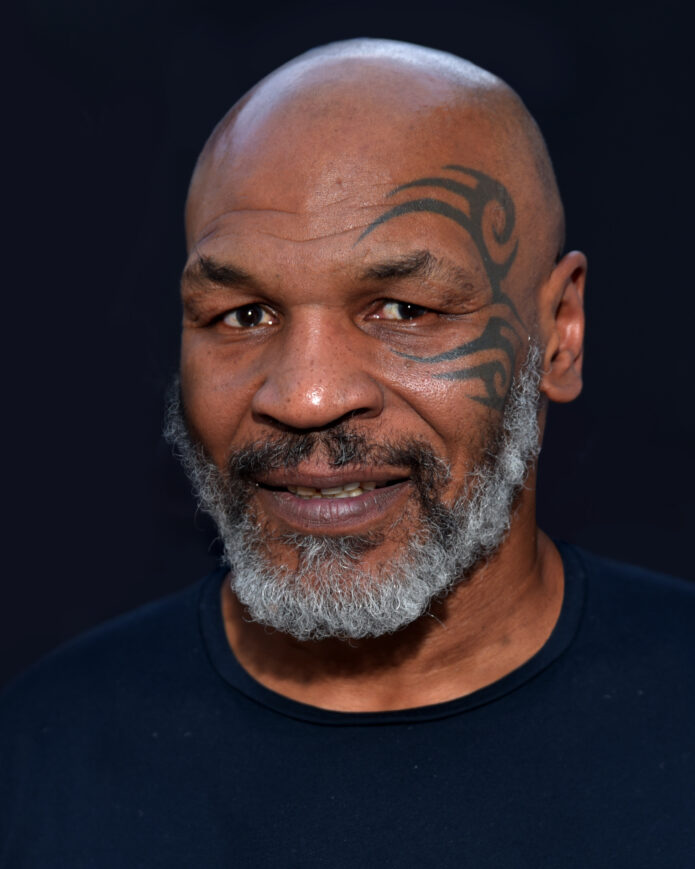
Mike Tyson is often identified by the black tribal-style tattoo around his eye, but it is only one part of his collection. Photos also show portraits of Mao Zedong, Che Guevara and Arthur Ashe, a tiger, a portrait linked to Monica Turner and a later memorial portrait of his daughter Exodus. The designs come from different periods, so dates help show which pieces were visible when.
Tyson has explained some choices in interviews and documentary footage. Other tattoos are known mainly through photographs and contemporaneous reporting. Those sources do not carry the same weight: his own comments tell us what he has said, while a photo shows what was visible at the time.
Tyson’s tribal face tattoo became his warrior mark
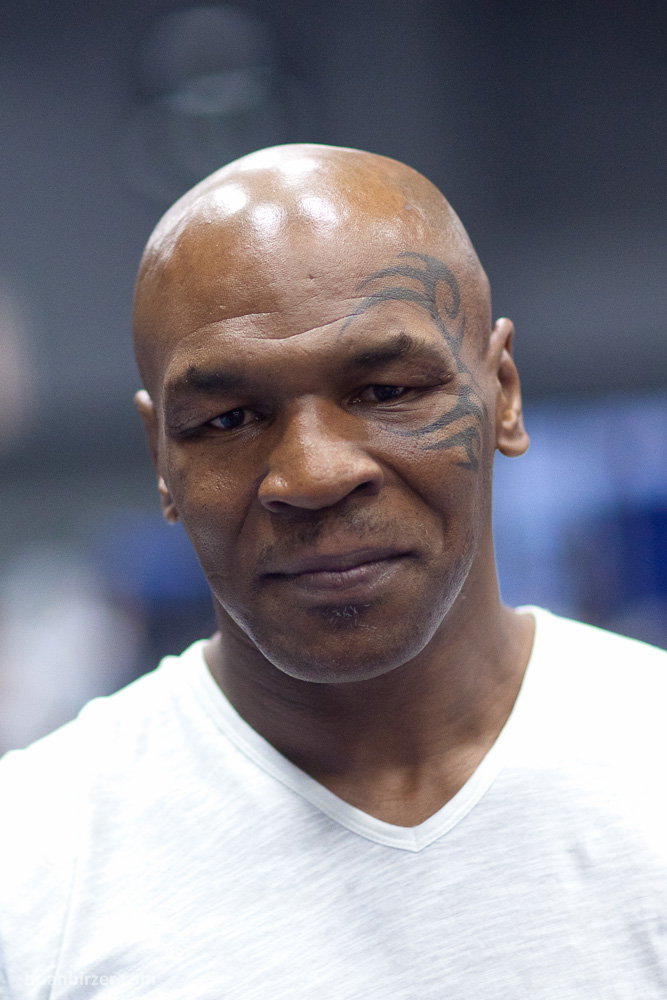
The black curves sit close to Tyson’s eye and temple, so the design stays clear in both profile and front-facing photos. That visibility helped make it a familiar part of his public image. It does not, on its own, explain where the tattoo came from.
Whitmill’s authorship matters to this specific piece. His role later became part of a court dispute over reproducing the artwork in a film; that case did not make every photograph of Tyson free to reuse. For the tattoo’s history, the clearest details are its artist, 2003 date, shape and warrior association.
The tattoo that defines Tyson’s public image is a large tribal-style design around the left side of his face, crossing the temple and framing the eye. S. Victor Whitmill created it in 2003. Contemporary descriptions call the sweeping curves and pointed tendrils a face tattoo with a warrior association, rather than a portrait or a copy of a historical symbol.
Tyson has said he connects the design with being a warrior. Some accounts describe an influence from tā moko, but they do not establish that he received a specific traditional moko. A custom tribal-style face tattoo with a personal warrior association is more precise than calling it simply Māori or assigning it one universal translation.
The design has a documented artist history: Whitmill’s authorship was central to the court dispute over the tattoo’s reproduction in The Hangover Part II. The case concerned copying the artwork, not a right to reuse every photo of Tyson. A tattoo history can document what he wore without implying that the artwork belongs to the photographer.
The Mao Zedong portrait reflects Tyson’s prison-era iconography
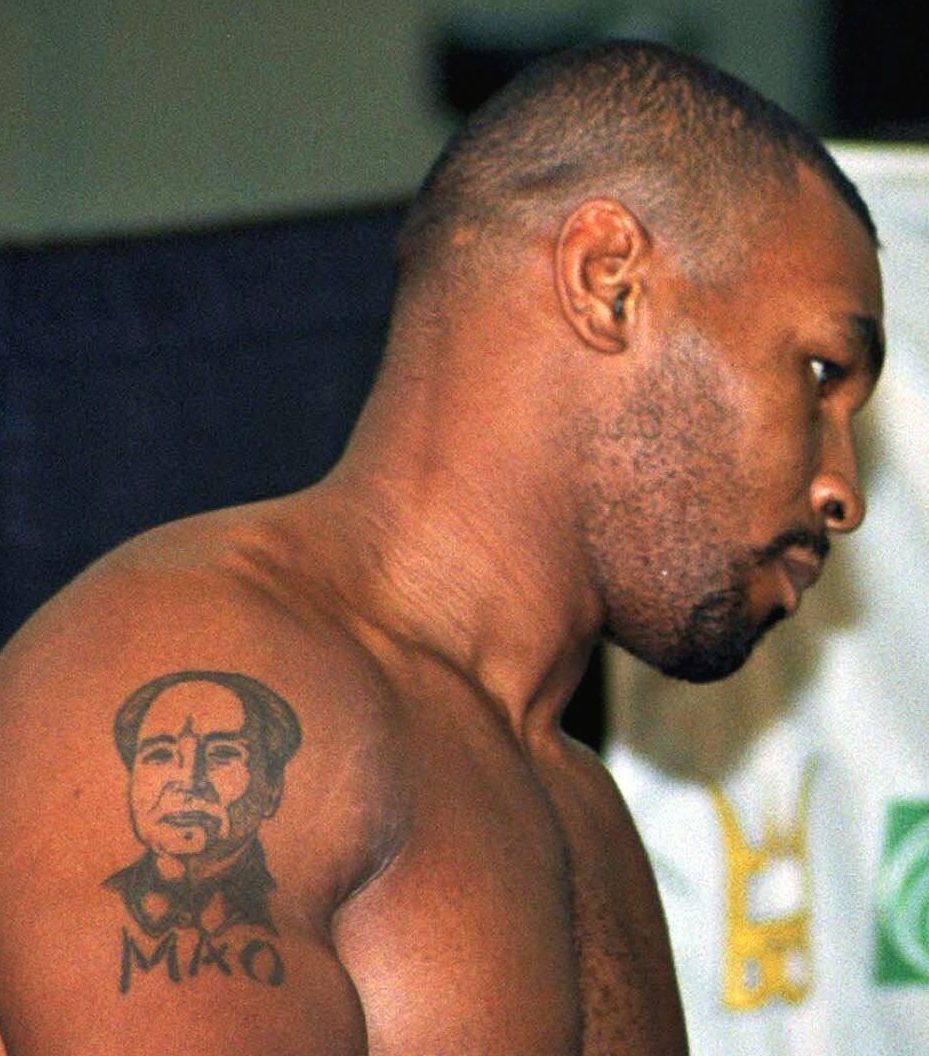
In sleeveless photos, the Mao portrait is easiest to see on Tyson’s upper arm. The lettering below the face can be clearer than the surrounding shading, so it is better to follow what a particular image actually shows than to repeat a caption from an old list.
Tyson’s comments place the portrait in his prison years and give his stated reason for it: anger at society. They provide useful context, but they do not spell out every part of his response to Mao. Admiration, provocation and biography may all be in play; the sources do not reduce them to one settled explanation.
One of Tyson’s named portraits is Mao Zedong’s, on his upper arm. Biographical accounts connect it to his prison years, when he said he was angry with society and government. That background is documented, though it does not establish a separate meaning for every detail in the portrait.
Tyson’s interest in Mao also appears in later public comments and in his visit to the Chairman Mao Memorial Hall. That makes the tattoo look deliberate rather than random, but it is not a complete political statement. The reported details are its subject, placement and the context Tyson has shared.
Che Guevara’s abdomen portrait is clearly documented
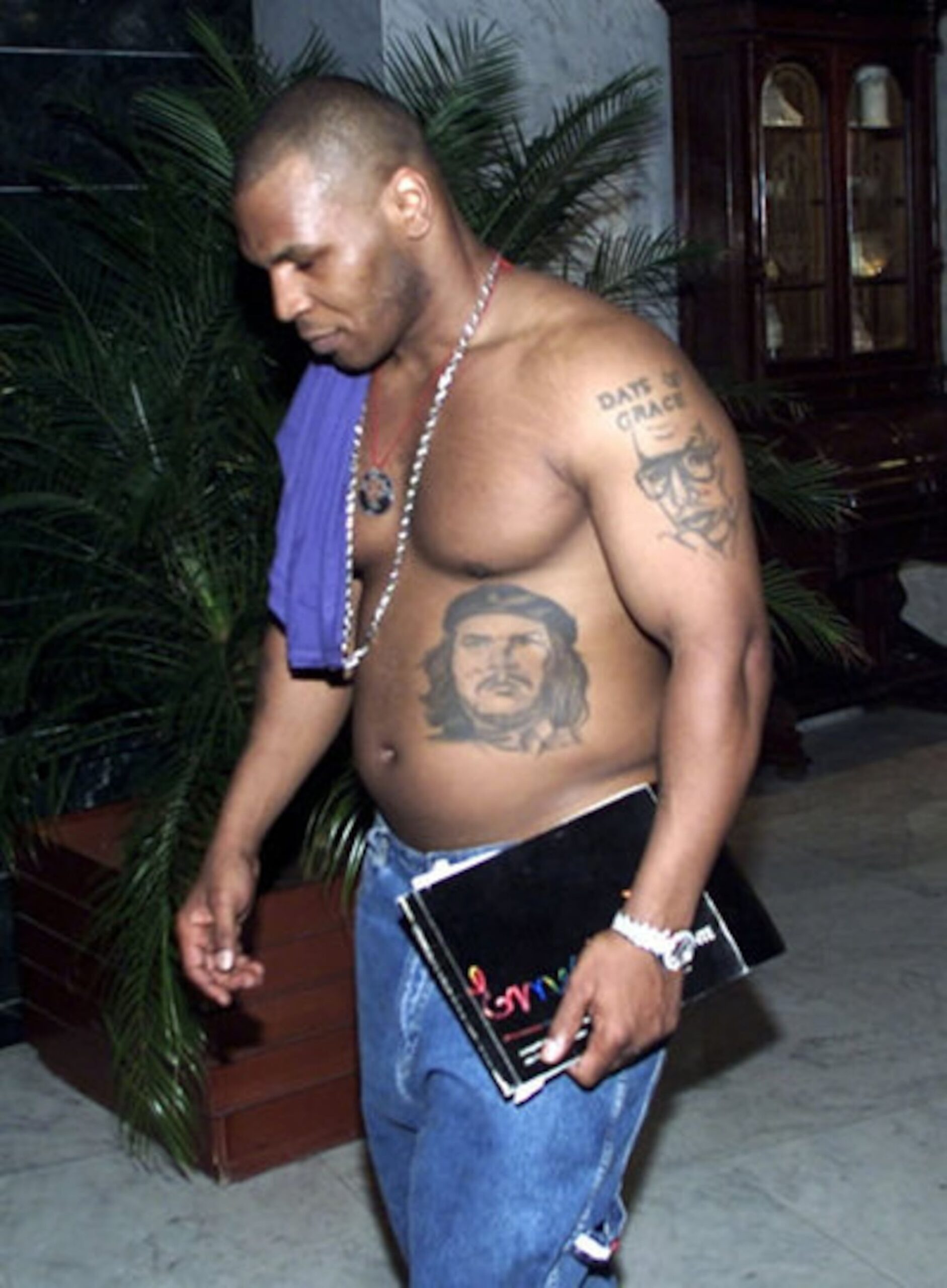
The Che portrait sits on Tyson’s abdomen, so photos show different amounts of it. A shirtless image may reveal the features and shading, while a cropped interview frame can show only the upper edge. Older photos with uneven lighting make small details harder to read.
The portrait belongs to a particular period in Tyson’s life. It can be identified and placed broadly, with his prison-era comments providing context. The sources do not give a complete account of what the image meant to him over time.
Che Guevara is another portrait linked to Tyson’s prison-era collection, usually placed on the left side of his abdomen. Tyson has spoken positively about Guevara’s willingness to sacrifice for others, giving the tattoo some documented context. His full personal interpretation is not on record.
A dated photograph shows the Guevara portrait as an image on Tyson’s body, not just a name repeated in a list. Lighting, clothing and image quality affect what can be seen, and a cropped frame cannot establish details outside the area it shows.
Tyson also has other portraits and family-related tattoos, including the Arthur Ashe, Monica Turner and Exodus pieces mentioned earlier. They are separate designs with their own histories; the Che portrait is easier to describe alongside a photograph that shows it clearly.
Reading the record
The public record is uneven. Interviews explain some tattoos, while others are documented mainly in photos and contemporary reports. Exact dates, changes in the linework and a complete count are not consistently available.
The face tattoo is the clearest identifier in photos. Smaller pieces on Tyson’s arms and torso can be hidden by clothing, camera angle or poor image quality. A dated, clear picture helps separate what is visible from guesses about a blurred shape.
There is no official catalogue of every tattoo. Future interviews, artist credits or clearer photos may fill in some gaps; until then, a precise description is more useful than a list that only looks complete.
One thought on “Mike Tyson’s Tattoos: The Warrior Face Mark and the Portraits Behind It”