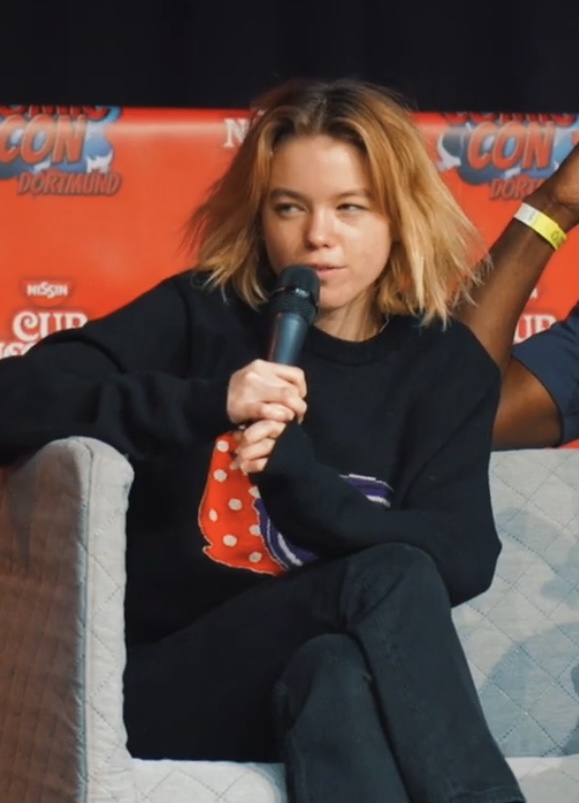
In a 2026 interview around Supergirl, Milly Alcock said she has 20 tattoos and talked about why she keeps getting more, even though acting can require her body to change for a role. That number is a useful snapshot, not a complete public inventory. Some designs are clear in photographs; others show up only briefly or from a distance.
Her explanation says more than a simple list can. Alcock described her body as part of her work, but also as her own once the costume, makeup and character are gone. Tattoos make her skin feel personal and help ground her while travelling and living away from Australia. That gives the collection a shared idea without assigning a hidden story to every flower, key or abstract mark.
The arm tattoos are a visible collage rather than one single style
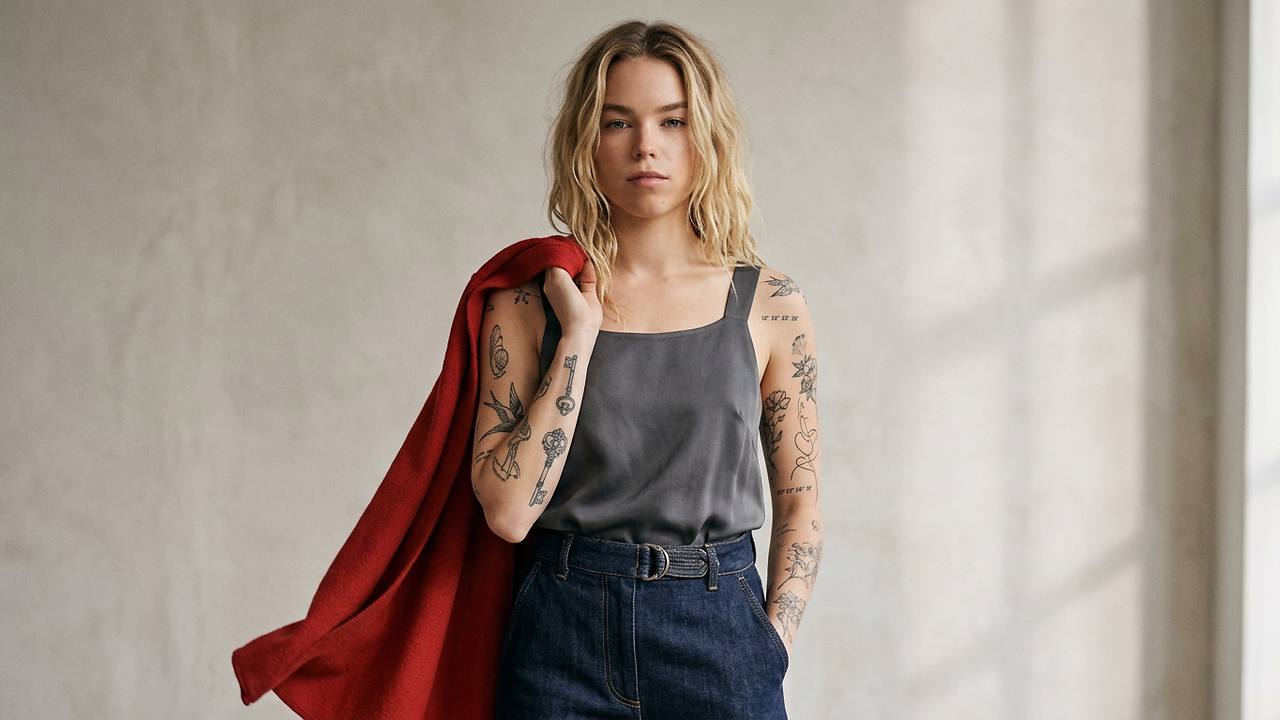
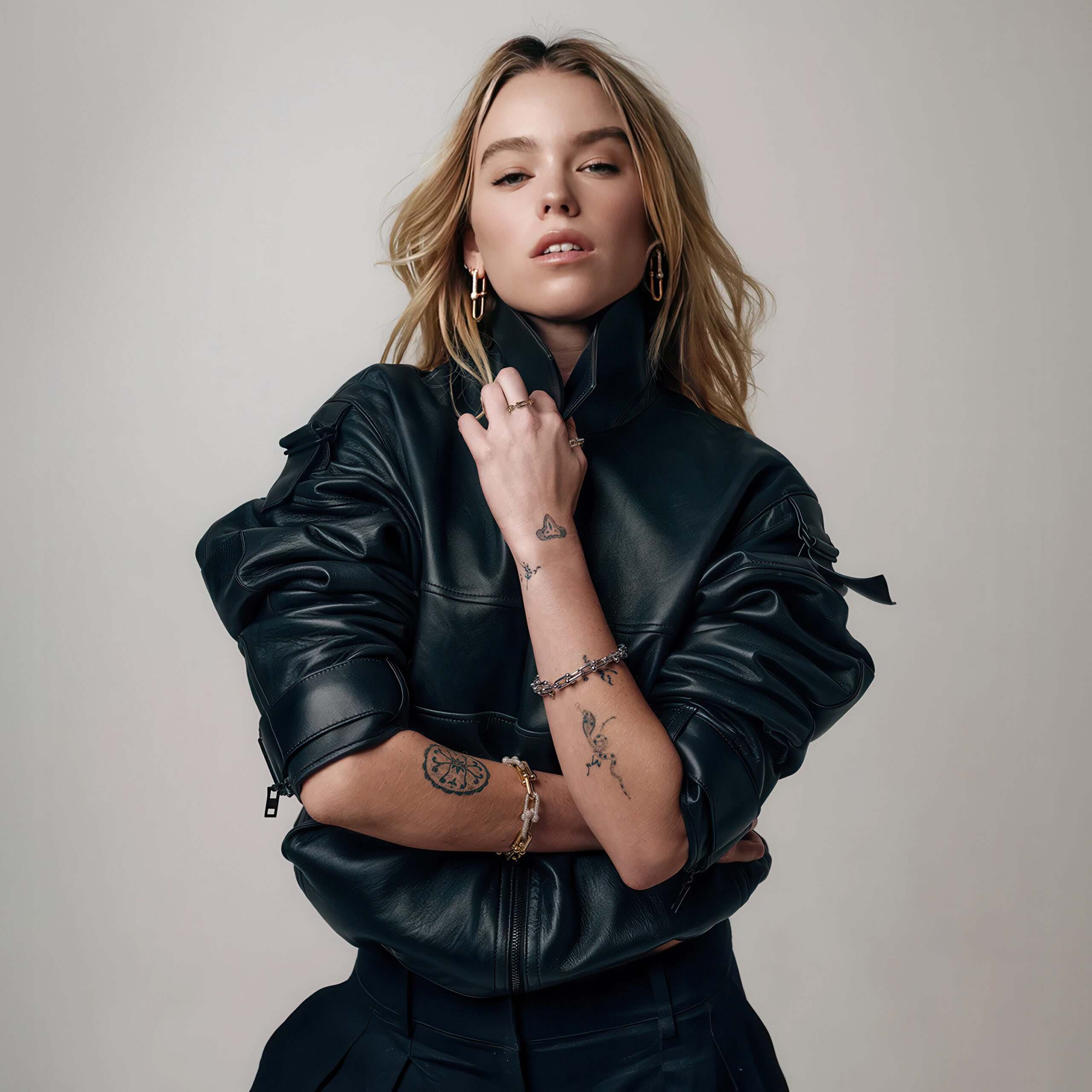
Recent photographs show a group of tattoos across Alcock’s arms: flowers, key-like shapes and small abstract designs beside one another. They do not make a traditional sleeve built around a single central image. The arms read more like a personal collage built up in stages. Some marks are delicate and fine, while others have heavier lines or more unusual shapes.
The flowers are easy to recognise, but Alcock’s broader comments about ownership, identity and feeling grounded should not be mistaken for an explanation of each one. She has not publicly assigned a detailed meaning to every flower. What the photographs establish is that floral designs sit among smaller motifs and give the arm collection a varied look.
The keys deserve the same restraint. They are distinct enough to note, but the image cannot tell us what a key means to its wearer. It could be a personal reference, a design she liked, or part of a story she has not shared. The photograph confirms the motif; it does not tell us what it unlocks.
The interest is also in how the different pieces sit together. A flower, a small key and a darker shape change the visual rhythm without turning the arm into one fixed theme. The collection has room to grow, unlike a tattoo map built around just around famous matching designs. Spacing and contrast are part of what makes the collage feel personal.
Her arms also appear often because they are easy to show in sleeveless portraits. Film and television work can mean covering tattoos for a role, and a red-carpet photo may show only the outline of a design. A closer frame can reveal whether a mark is a flower, a key or an abstract line. Those pictures answer different questions, and a useful guide should treat them accordingly.
The small forearm pieces show why close photographs matter
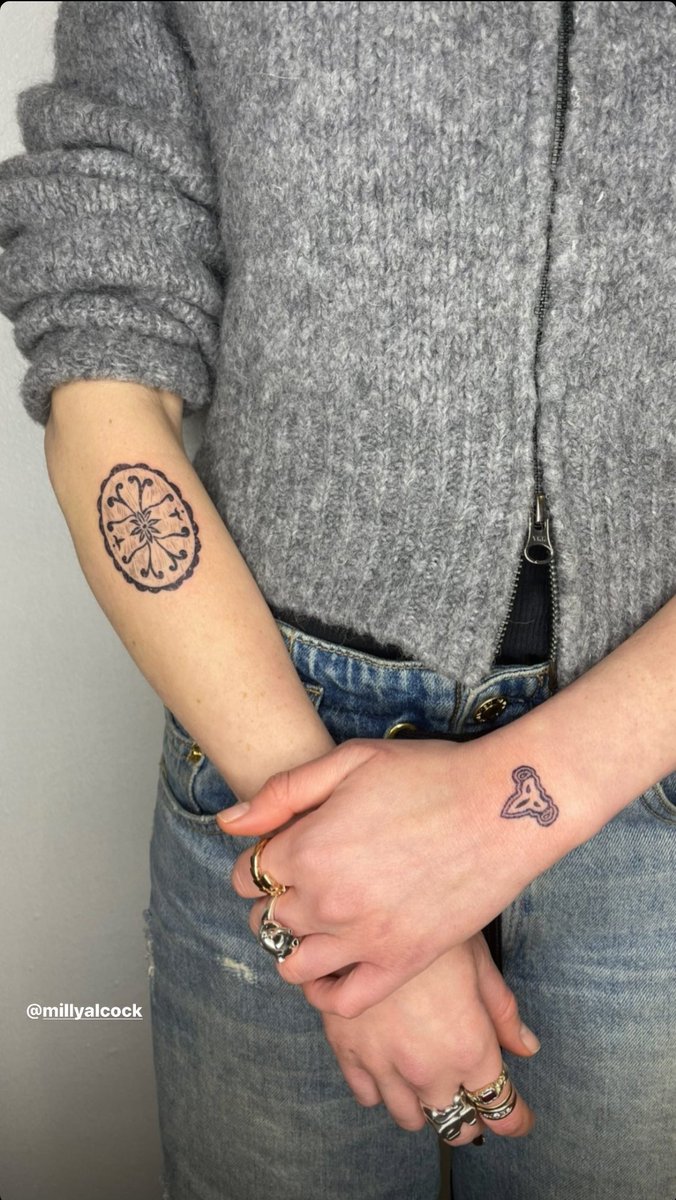
A close photograph shows a small oval floral tattoo on one forearm and a compact knot-like design on the other. Rings, sleeves and changing poses can hide both in a general photo gallery. Up close, the tattoos show how much of Alcock’s collection is made up of small marks rather than large portraits. Their shapes are visible, but their private meanings are not documented.
The oval flower has a contained shape, almost like a little emblem. Its place in an inventory is clear from its design and location, not from a meaning supplied by an anonymous caption. The knot is more sensitive to angle: simple lines can look different when the wrist turns or a bracelet crosses the frame. It is better to name what the image supports and stop there.
These forearm pieces make the collection feel like a record of changing taste. Fine lines keep some designs light, while darker shapes give them weight. The overall effect is less like a finished mural and more like a notebook with new marks added over time. That sits naturally with Alcock’s description of herself as a collage of where she comes from and who she is while living in different places.
It is easy to ask about the meaning of every small tattoo, especially when Alcock says she has twenty. Her own comments point to a broader answer: the collection helps her feel like herself outside the roles she plays. A flower can matter to her without a public explanation, just as a key can be memorable without offering readers a puzzle to solve. The lack of a quote is a boundary, not an empty space to fill.
Close photos also help distinguish today’s tattoos from older pictures. Ink may be covered, extended or shown in different light. A low-resolution shot might make a symbol look solid black, while a clearer one shows open lines inside it. The close-up is the right evidence for small forearm marks; a distant premiere photo cannot support a longer catalogue.
The small upper-back mark is visible but its meaning remains unconfirmed
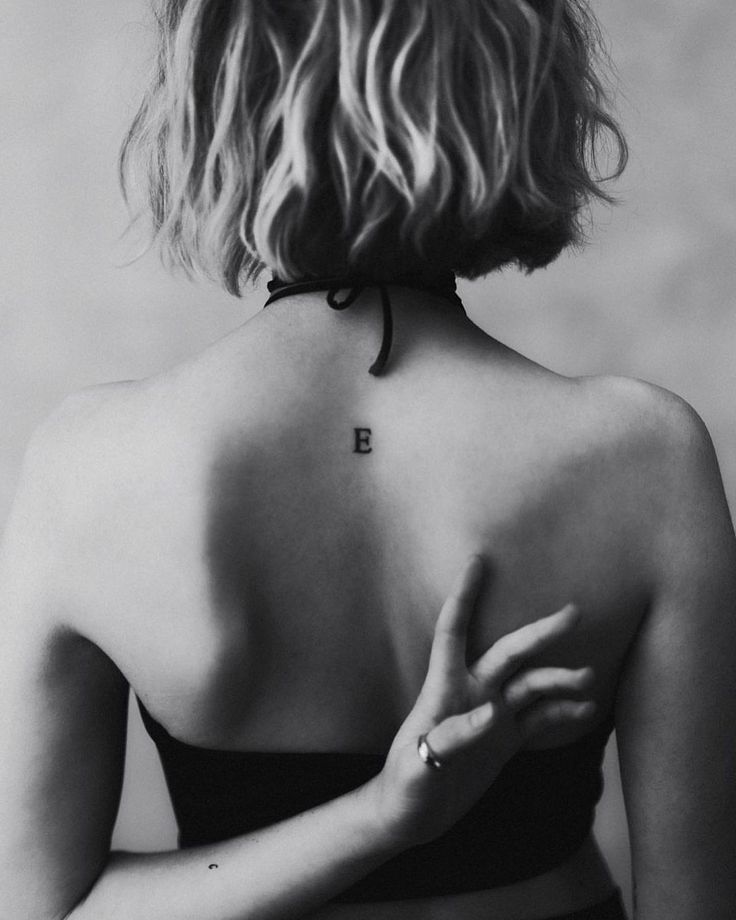
One published photo shows a small E mark on the upper back. It sits where an open-backed outfit can reveal it, but the sources used here do not include a reliable explanation from Alcock. It belongs in the visual record because it is clear enough to see, not because we can safely turn the letter into a person’s name or a relationship.
An upper-back tattoo appears differently in public than an arm design. Everyday clothes can hide it for months, then a fashion shoot or candid photo makes it visible. The date and source matter: the picture tells us the E was visible at that time, but not when Alcock got it or whether it has changed since.
The small letter also adds a quiet contrast. Alcock’s arm tattoos form a busy collage, while the mark on her back is spare and easy to miss. Her collection ranges from tiny lettering to denser groups of designs, and their different placements shape how people see them. It cannot be reduced to one style.
There is no solid basis for identifying what the E stands for. It might refer to a person, a place, a phrase or simply a letter she liked. Without a source, all of those are guesses. The useful description is the visible mark, its upper-back placement and the photograph that records it.
Why Alcock says the tattoos keep her grounded
Alcock’s clearest explanation is about the collection as a whole. She said acting can make her body serve a character, a production and other people’s ideas; tattoos remind her that her skin still belongs to her. That is why the count of twenty should not become a hunt for dramatic symbolism in every design. The point she describes is personal control: the ink stays when the costume comes off.
She also tied the tattoos to movement and identity. Living in another country and travelling for work can leave someone feeling pulled between places. Alcock described herself as a collage of where she is from and who she is at the centre of that movement. Flowers, keys, abstract shapes and a small back letter can all fit that idea without sharing one subject.
That is the most grounded way to read her collection. Some designs are visible but unexplained; others appear in recent photos without a published quote. Alcock has joked that tattoos are addictive and that she wants another, so twenty is a snapshot of a collection that may keep growing, not a final count.
Milly Alcock’s tattoos are best documented in layers. Arm photographs show flowers, keys and other small motifs; a close forearm image makes the oval flower and knot easier to see; and an upper-back photo records the E without guessing at its owner or meaning. Her own comments explain why the collection matters. The result is specific, while leaving her private stories private.
One thought on “Milly Alcock’s 20 Tattoos and the Personal Map Behind Them”