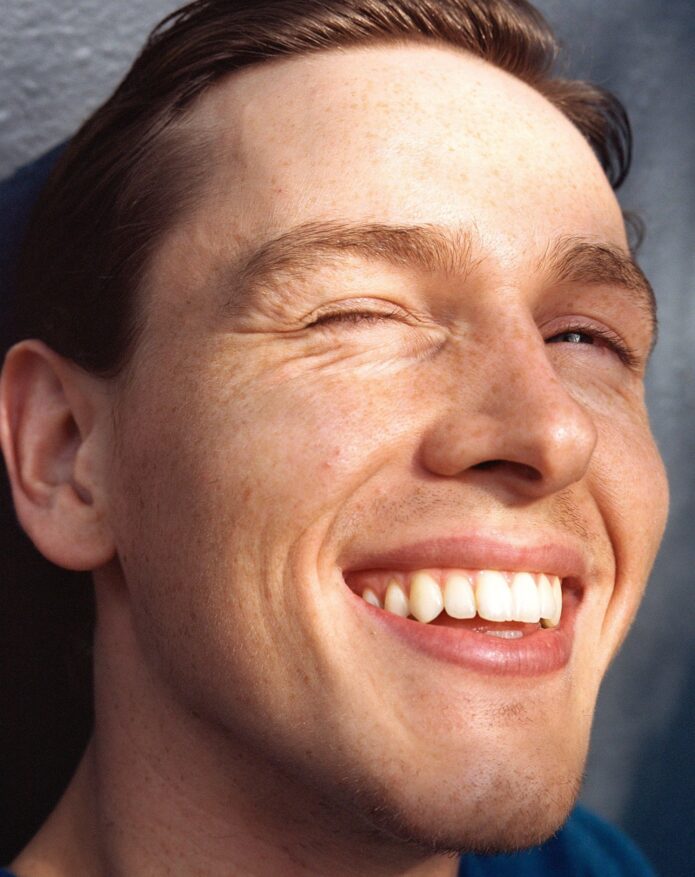
Harris Dickinson’s tattoos sit close to his interests as an actor and filmmaker. Reports connect some designs to films and directors that have shaped him, while other marks are visible without a public explanation. At Cannes, he mentioned a small tattoo linked to Donnie Darko, a larger Kes reference on his arm, and more ink on his legs that he could not bring to mind at the time.
That comment is a reminder that no public list is likely to be complete. Dickinson has enough tattoos for individual details to disappear inside a broader collection that separate photographs show different parts of the collection. His arms, chest, neck and torso rarely appear together in one frame. A useful guide can name the tattoos identified by reliable sources and leave the rest open.
The studio photograph shows the scale of Dickinson’s tattoo work
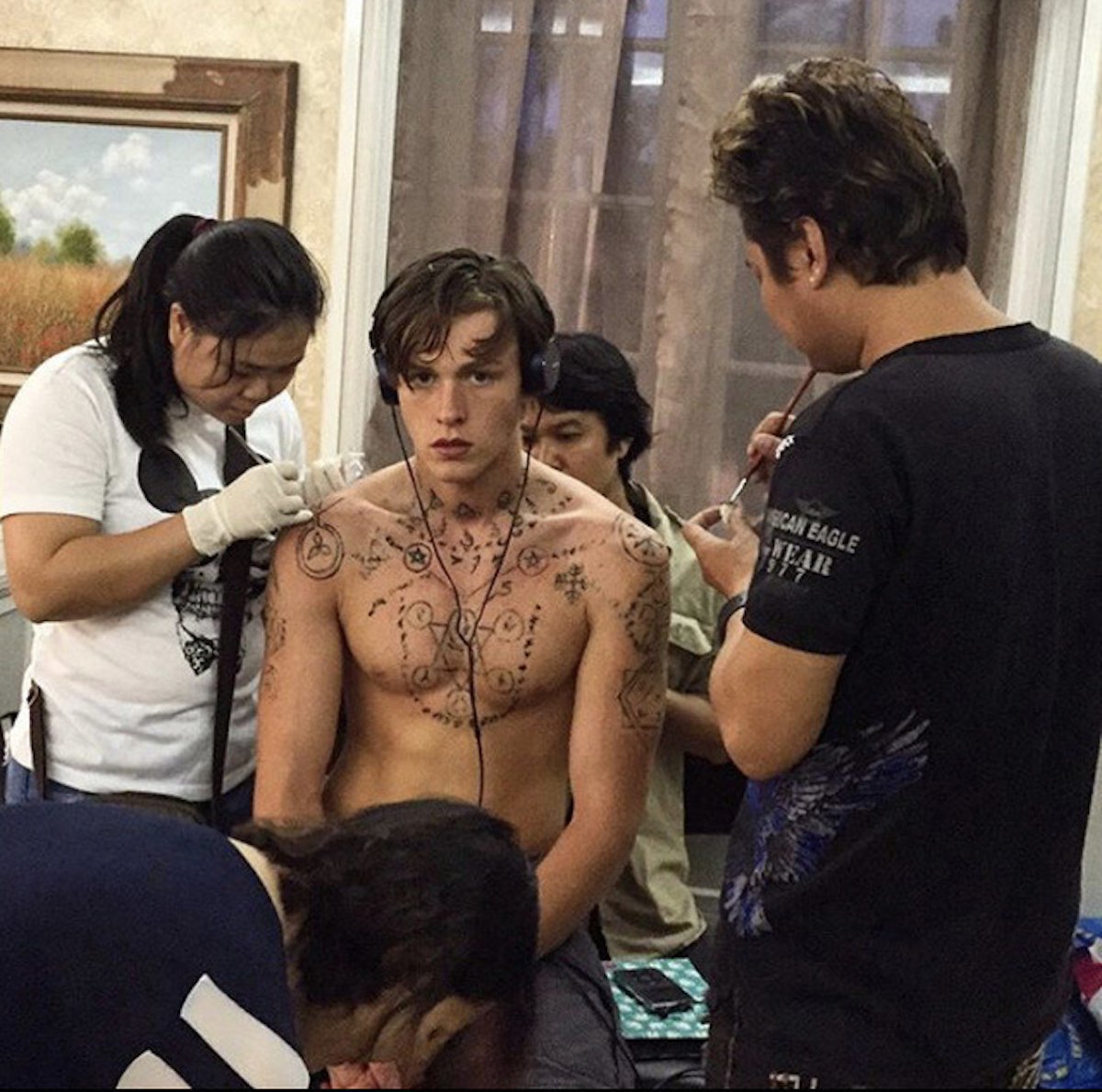
The tattoo-session photograph gives the clearest sense of how much work Dickinson has had done. He is shirtless in a studio as artists work across his chest and shoulders. The image shows geometric patterns, darker patches and smaller symbolic marks, as well as the process of building the designs. It helps establish both their placement and their scale.
A session photo can be hard to read in detail. Fresh ink may be covered with ointment, still partly outlined or blocked by an artist’s hands. A design that looks whole in a later portrait may appear in fragments during the appointment. The photograph shows that Dickinson’s tattoos cover a substantial area, but it cannot explain every shape.
The work has a loose visual rhythm. Some pieces are compact and dark, while others use finer lines and geometric forms, with open skin between them. That spacing makes the collection feel like it grew over time rather than being planned as one continuous design. It also fits with the way Dickinson has described separate tattoos tied to films and influences.
It is important to distinguish real tattoos from the temporary ink. Dickinson has played characters with extensive body art, and promotional pictures do not always make clear what is temporary. The session image shows him outside a role, giving a useful point of reference for the personal tattoos that now span several parts of his body.
The small arm and neck marks are easiest to misread
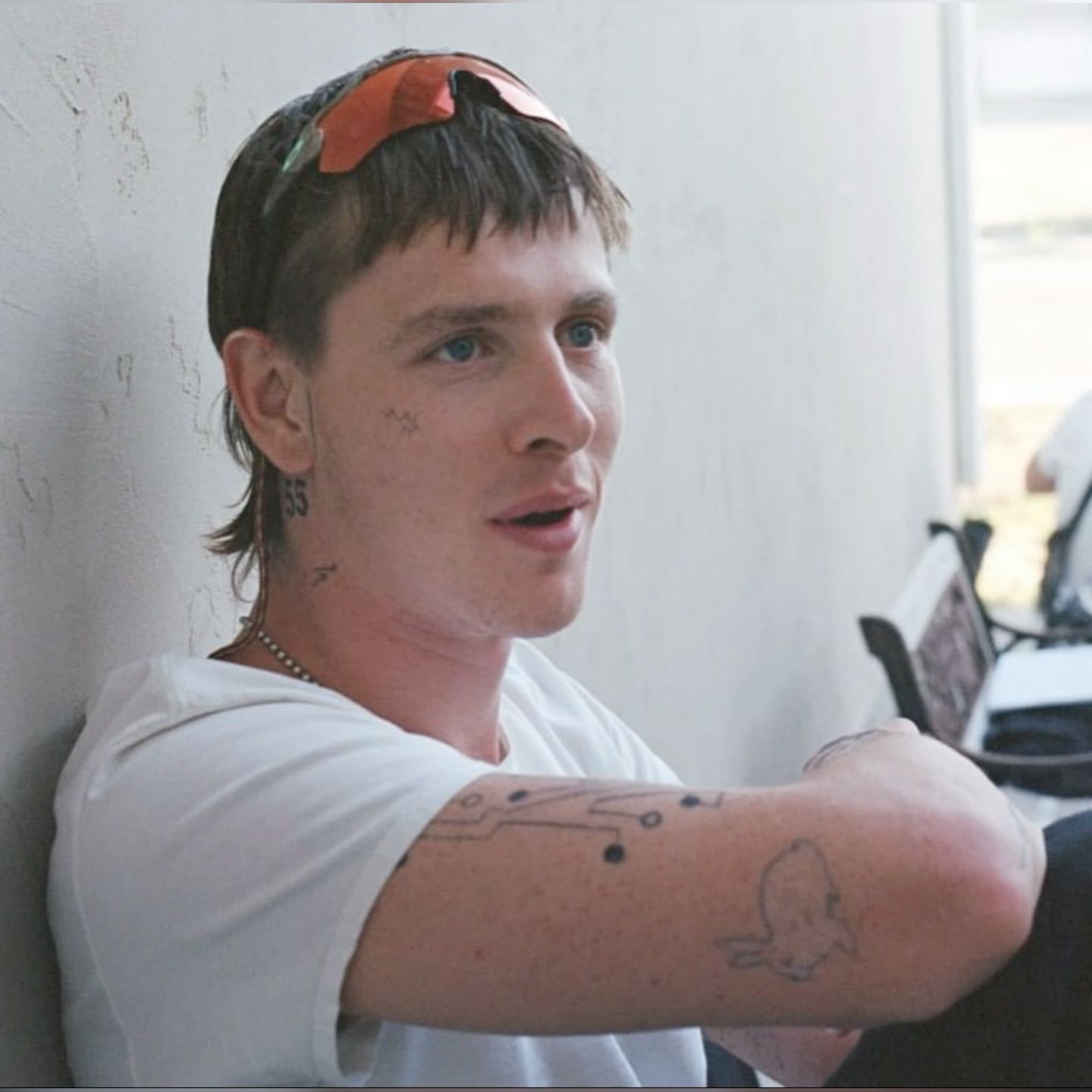
Close-up portraits show small tattoos on Dickinson’s forearm and neck. One line of lettering has been read as I want to; nearby linework and small symbols are harder to identify from the available images. The visible words can be noted, but a partial phrase should not be extended into a quote without stronger evidence.
The marks on his neck are easy to misread. Hair, skin folds, collars and shadows can interrupt a symbol, making one design look like several or the other way around. It is safer to describe what can actually be seen and leave the personal meaning unstated unless Dickinson has explained it.
The forearm tattoos sit near the reported Kes reference, but that does not make every neighbouring mark part of the same design. A tattoo inventory should avoid transferring the meaning of one confirmed piece onto the tattoos around it. The arm may hold film references, private symbols and designs chosen for their shape at the same time.
These smaller tattoos belong in the picture too. They show how a collection appears in everyday life, beyond the dramatic studio shot. A mark on the forearm or neck can become part of someone’s familiar gestures and appearance, the details readers notice in interviews, portraits and red-carpet photographs.
Size alone does not tell us how important a tattoo is to its wearer. A few words may have a private association, just as a large geometric piece may simply appeal visually. Without a first-person explanation, the clearest account is still a visual one: small lettering, linework and symbols on Dickinson’s arm and neck, with their personal stories left private.
My Brother’s Keeper is the clearest chest lettering reference
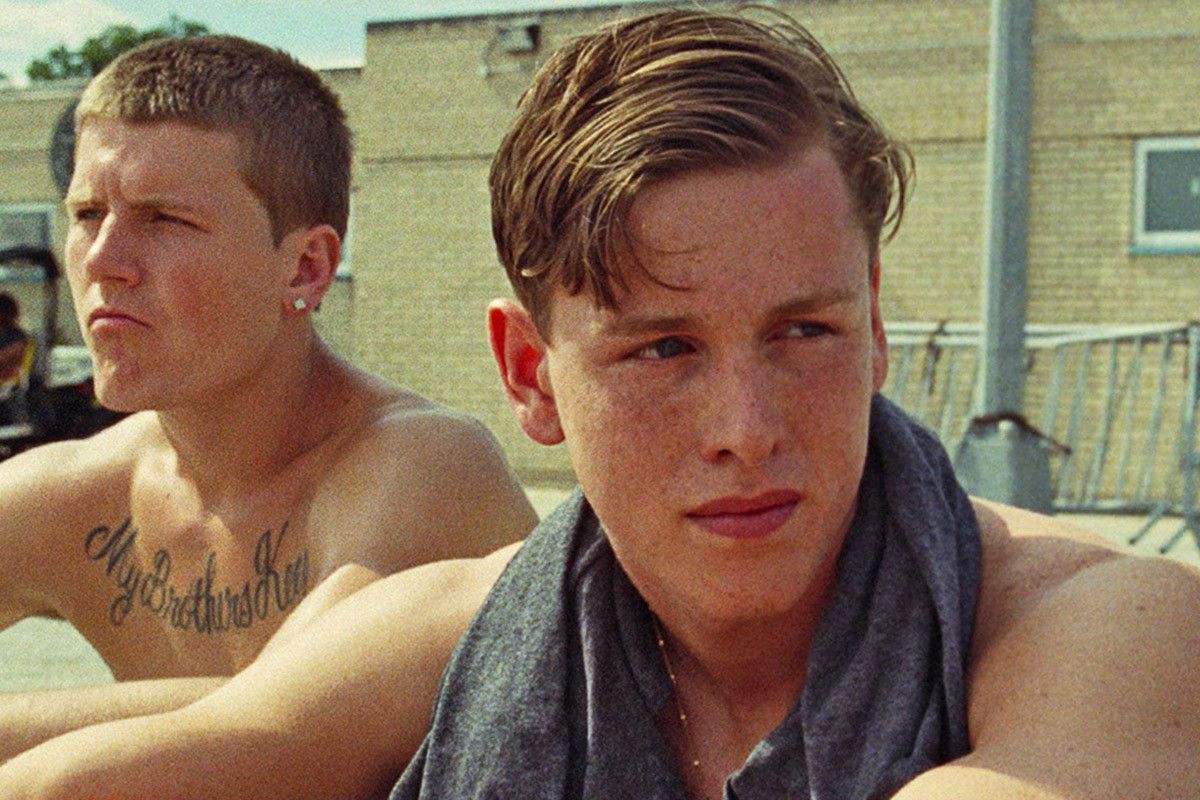
The chest photograph makes the phrase My Brother’s Keeper easy to read and shows where it sits. It is one of the clearest tattoos in the available photographs. The words sound protective, but the image does not tell us which brother, friend or personal experience inspired them. The wording can stand on its own without adding a backstory.
This lettering has a different feel from the film references. Kes points to a director and a movie, while My Brother’s Keeper reads like a message about a relationship. The sources here do not identify the person or event behind it. That mix of movie references and personal-sounding words gives Dickinson’s collection its range.
The setting of the photograph helps, too. Dickinson is shirtless outdoors, so the lettering is not hidden by a costume or shown mid-session. The phrase runs across his chest, and the image gives a better sense of its size than a tightly cropped portrait. It clearly shows the words and their placement.
The image supports those details without telling us when the tattoo was done or what prompted it. Ink and skin can look different across photos, but there is no need to guess at a date or explanation. The readable phrase and its position already make this a striking piece of lettering.
Film-reference tattoos such as Kes and Donnie Darko explain the collection’s theme

The best documented stories in Dickinson’s collection are the film references. The Associated Press reported a small tattoo tied to Donnie Darko and a larger tattoo on his arm connected with Ken Loach’s Kes. Dickinson has spoken warmly about Loach, and Spanish coverage also points to the Kes reference when he lifts his sleeve. These connections come from reporting, not guesses based on his filmography.
The Kes tattoo links Dickinson’s ink to both a movie and its director. Loach’s work has influenced Dickinson’s interest in socially grounded stories, an influence that carries into his own move behind the camera. The tattoo refers to the specific 1969 film while also marking a wider artistic connection.
The smaller Donnie Darko tattoo is less visible in published photos, but it belongs in the record because Dickinson identified it himself. A reference does not need to take up much space to matter. It also points to a film he values as a viewer and artist, rather than one associated with a role he played.
Dazed describes another distinctive design: an AK-47-wielding cherub in a balaclava. That specific description makes the tattoo recognizable; calling it simply an angel would lose the details that set it apart. It is a good example of why written reporting can clarify what a photograph alone might leave uncertain.
There may be more tattoos on Dickinson’s legs and elsewhere. He said he was sure there were additional leg pieces, so the available coverage should be treated as a record of what has been identified, not a final count. More interviews or clearer photographs may add to it over time. For now, the sources support the film references, chest lettering, cherub and visible arm work described here.
The clearest summary may be this: tattoos form a portrait of an actor who carries his influences with him. Kes connects him to Loach, and Donnie Darko records another film he admires. The lettering and cherub make the collection feel more personal and unexpected than a list of career references. Photographs show placement, while interviews give the strongest available account of meaning.
Dickinson’s tattoos are best read as an evolving collection: some honour films, some use words, and others remain visible without a public explanation. There is already more to the story than a quick list can capture, while some details remain unknown. One clear phrase, a named film or an unusual figure is more useful than a confident interpretation of a blurry image.
10 thoughts on “Harris Dickinson’s Tattoos Turn Film History Into Body Art”