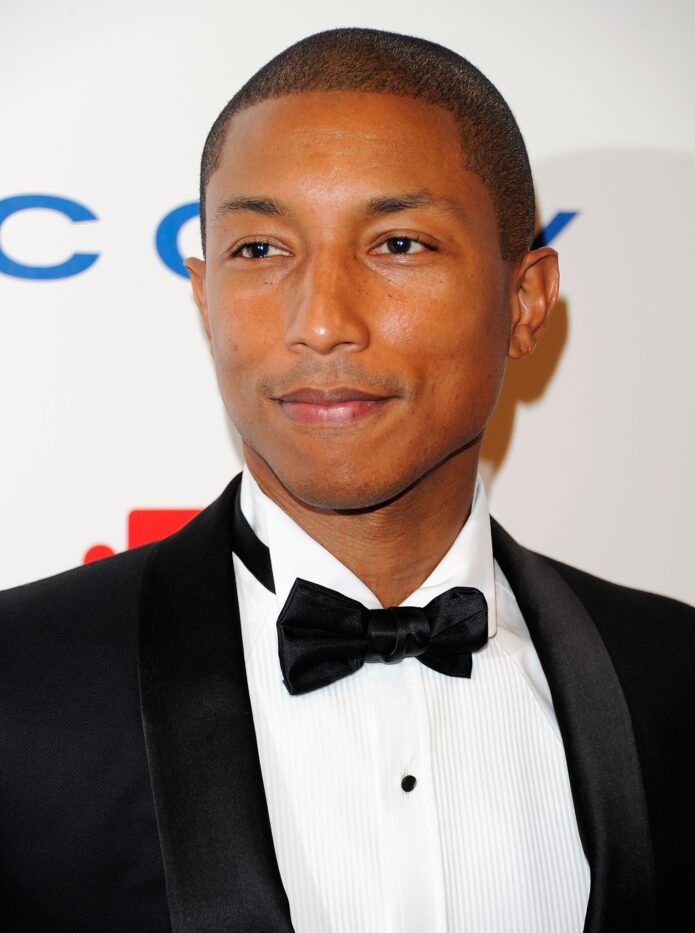
Pharrell Williams once wore extensive tattoos across his arms, neck and upper body. In the early 2000s, they were a big part of his look. Years later, he spoke openly about wanting some of the ink removed. His story is as much about that change as it is about the tattoos themselves.
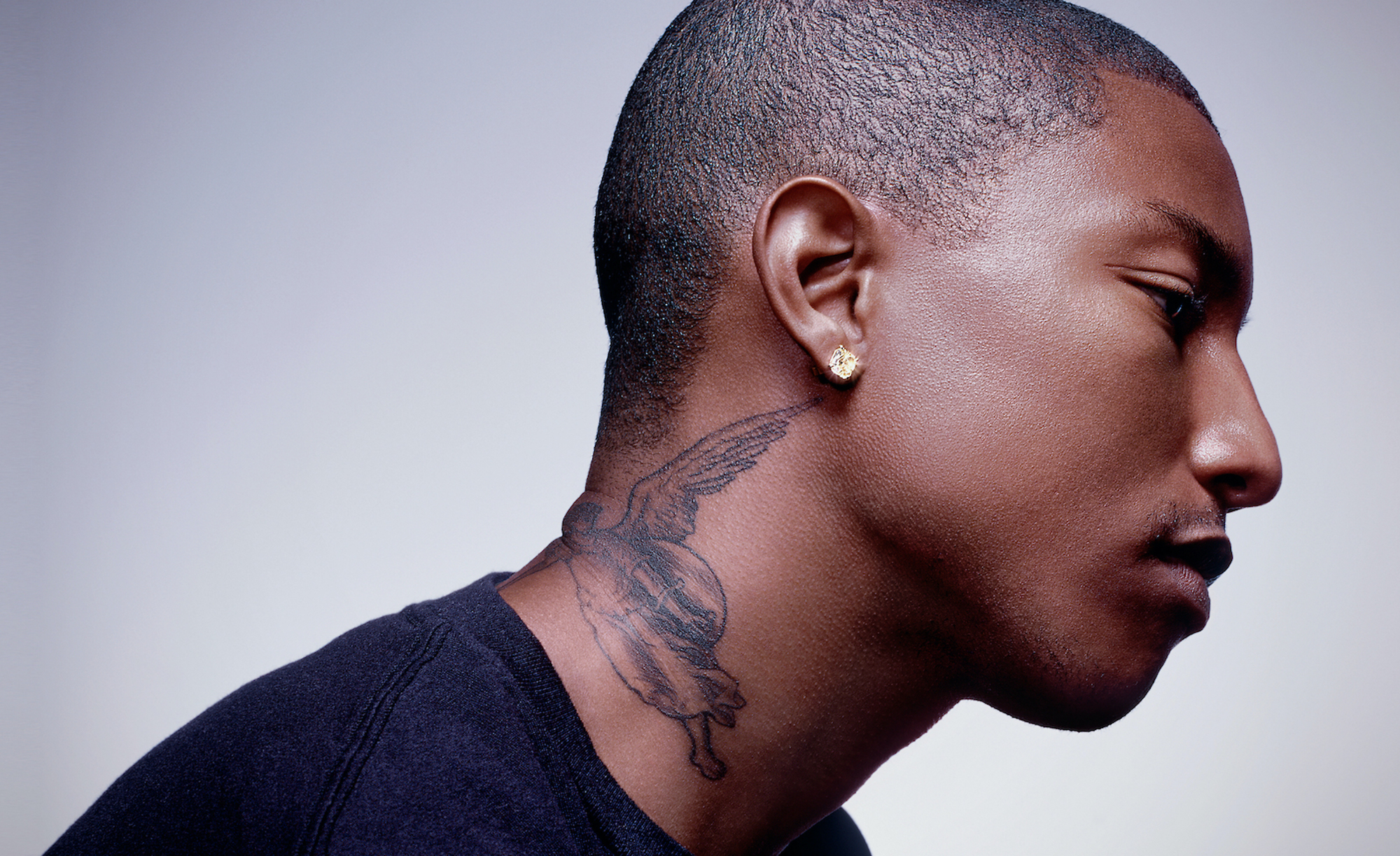
The winged figure on the right side of his neck is the best-known piece. Older photos show heavier work on both arms, including cherub-like figures, flames and dark shading. Pharrell has mentioned an angel on his neck and a cherub on his arm, though a photograph cannot identify every figure or confirm every label used online.
Photos show the neck tattoo clearly, but its exact identity is less certain than some accounts suggest.
The winged angel on Pharrell’s neck stayed when other tattoos were removed
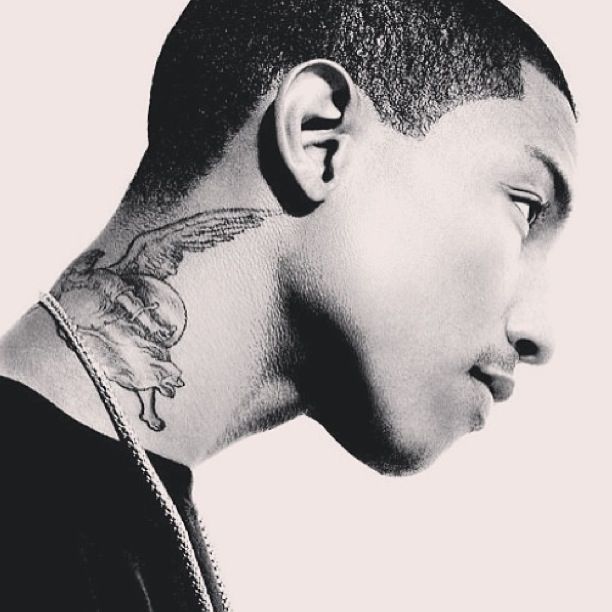
The neck tattoo is a large black-and-grey figure with wings spread around the side and back of his neck. In a side view, the wing is usually the first detail to catch the eye; turn him slightly away and the lower figure and darker shading come into view. Its placement keeps it visible with a short haircut or an open shirt.
Anil Gupta is generally credited as the artist. The figure is often called a guardian angel or Archangel Michael and described as carrying a shield. Pharrell has confirmed that it is an angel, but the specific name comes from tattoo coverage rather than a direct quote that settles its identity.
The neck angel also seems to have survived while much of the arm work was removed. Pharrell spoke about taking off most of his collection, but said the neck piece was not part of that plan. Later photos show his arms looking cleaner while the angel remains a familiar part of his appearance.
Studio portraits bring out the fine lines and shading; red-carpet shots can flatten the darker areas and make the wings look like one solid shape. A side profile may catch only half of it. Since the tattoo wraps around a curved part of the body, the angle changes what you can see.
Pharrell’s arm tattoos included a cherub and heavier fire-inspired work
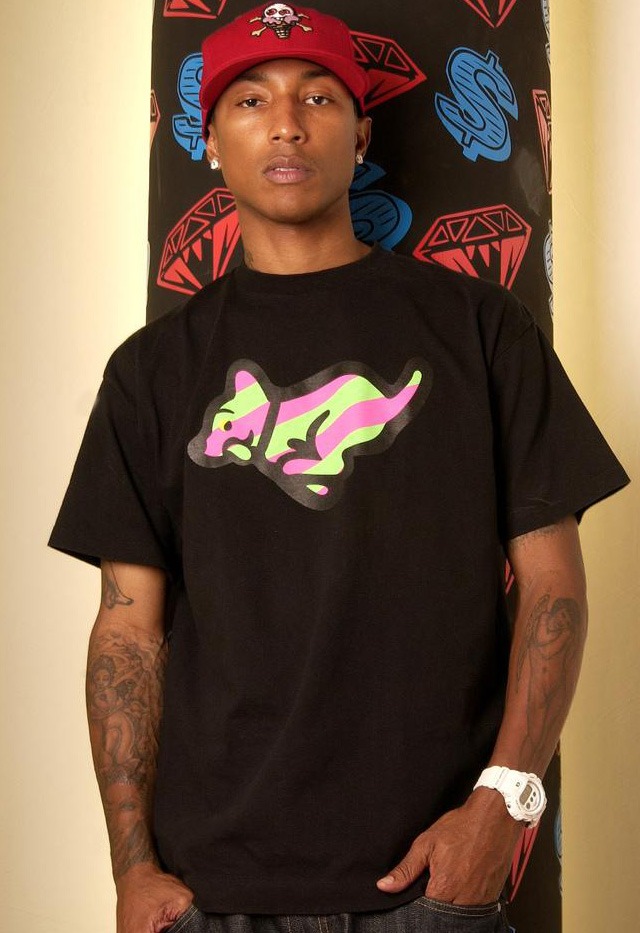
The arm tattoos made up the largest part of Pharrell’s old collection. Older photos show dark, shaded figures and ornamental shapes, some with a cherub-like look. Guides also mention portraits and flames, though the pictures do not always separate every design clearly.
Pharrell has said he had seven tattoos, including a cherub on his arm and an angel on his neck. That is the clearest count from him, and it identifies two designs. It is not a complete map of the old arm work.
In some photographs, the cherub looks like a small angelic portrait inside a larger arm design. In others, its shading blends into the surrounding ink. The face and the softer wing-like or ornamental shapes around it are the details that stand out.
When Pharrell talked about removal, he put it bluntly: “I got fire on my arms”. The line conveys how extensive the arm work felt to him, but it does not mean every tattoo was literally a flame.
Older photographs preserve designs that later faded or disappeared, and they show how much variation there was. A close portrait may make the cherub look like the whole tattoo; a wider shot reveals smaller marks around it. His arms were a busy collection built up over time, not matching sleeves.
A close-up can show one design, but a wider, clear photograph is needed to see how it fits among the rest. When part of a tattoo is hidden, its exact name may remain uncertain.
Why Pharrell wanted some of the tattoos removed
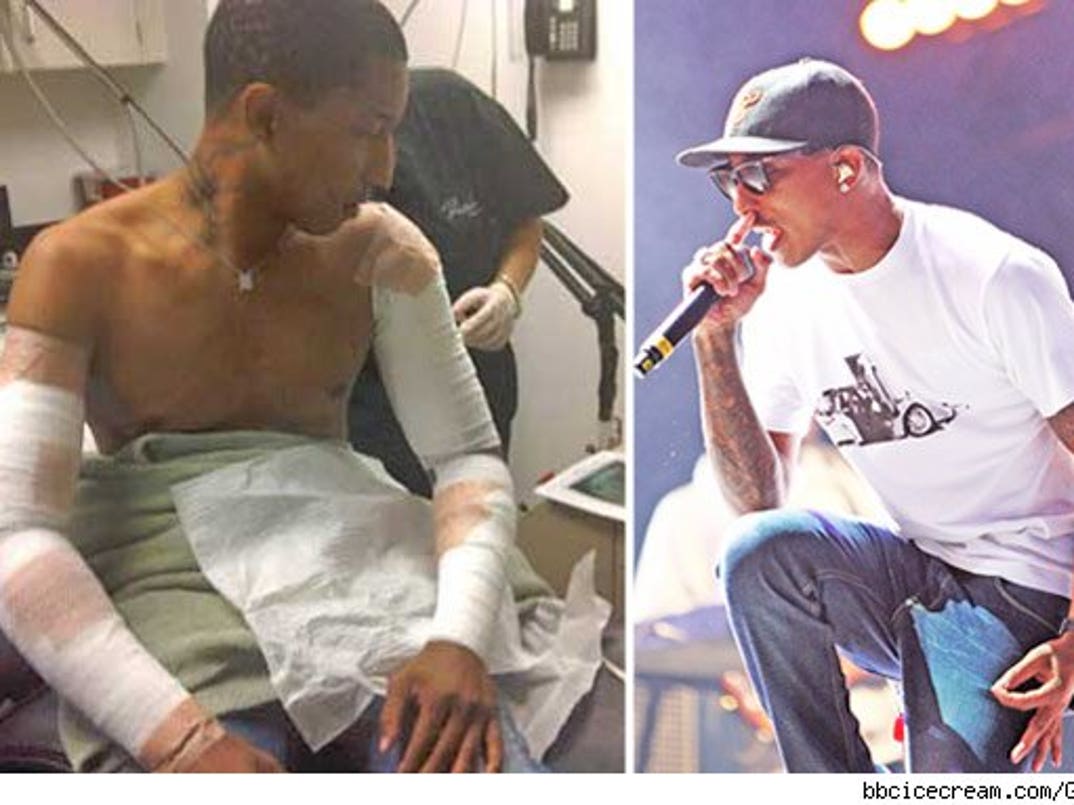
The removal story is just as important as the original tattoos when tracing how Pharrell’s look changed. In 2008, he described a skin-graft idea: growing new skin and placing it over the tattoos. He later said it was a joke based on something he had seen in the news. The treatment he actually pursued was laser removal.
He said the tattoos belonged to an earlier part of his life and that he had started to feel finished with them. His line, “I’m a grown man”, captures the mood better than a polished makeover story. He was talking about his own collection, not saying tattoos were wrong for everyone.
The laser process was painful, and Pharrell did not try to dress it up. He shared photos of his arms wrapped in bandages and joked that they looked “extra crispy.” Those images show the recovery as well as the change in appearance. Large, dark tattoos can take repeated treatments, and results vary by colour and body area.
Photos from the N.E.R.D. years show a dense arm collection that is mostly absent from later fashion portraits. Both sets of pictures are accurate; they capture different moments. Dated tattoo coverage helps make the timeline clear as Pharrell’s body art changed in public.
The neck angel makes the timeline easier to follow: it remained recognisable while the arms changed. Calling Pharrell heavily tattooed fits those earlier years, but may not describe his appearance now in the same way.
Pharrell’s tattoo record is really about change, not a perfect inventory
No set of surviving photographs offers a complete list. What is clear is the winged angel on his neck, the cherub on his arm, the broader arm collection and a later removal process that faded or erased much of the older work.
The remaining details are trickier. In a soft image, a shadow can resemble lettering, an arm crease can look like an outline, and a half-hidden portrait can be mistaken for a cherub. Some parts of the old work are simply hard to make out.
The tattoos fit the experimental image Pharrell carried during the N.E.R.D. years. His style has always moved between music, clothing, jewellery and visual art; the dense arm designs felt at home in that period. The later removal reflected a shift away from that version of himself.
The neck angel is still the easiest tattoo to identify: its placement, shape and artist are all well documented. The arm work belongs in the story too, even if photos make each design harder to separate. It was a substantial collection made up of several pieces, not one simple sleeve.
The headline should not make it sound as though Pharrell disliked all his tattoos or wanted everything removed. He grew tired of the arm work and pursued laser removal because it no longer felt right for him. He kept the angel on his neck; the older designs remain part of a heavily tattooed period in his life.

One thought on “Why Pharrell Williams Wasn’t Happy With His Tattoos”