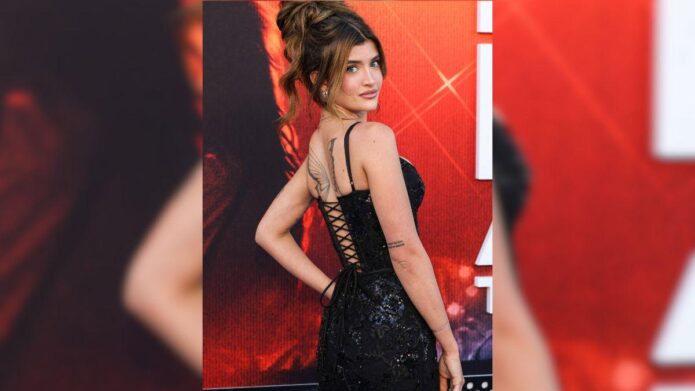
Sami Sheen is being unusually candid about a tattoo collection she no longer feels comfortable with. She has around 18 pieces, most added between ages 16 and 18, and says she wants nearly all of them removed. Her tattoo tour was not a polished showcase of perfect work. It was a walk through decisions made young: some done by a cousin learning to tattoo, some copied from Pinterest, and others that simply seemed like a good idea at the time.
That makes the collection more interesting than a standard celebrity ink list. Sami talks openly about thick lines, awkward placements, pieces she still likes and tattoos she would rather cover. She has estimated the removal process could take about two years. The story holds regret, humour and a very understandable wish to feel comfortable in her own skin again. She isn’t pretending every tattoo has a perfect story. That is the point: the collection shows what can happen when someone starts getting ink before settling into a style.
The first tattoos came when Sami was sixteen
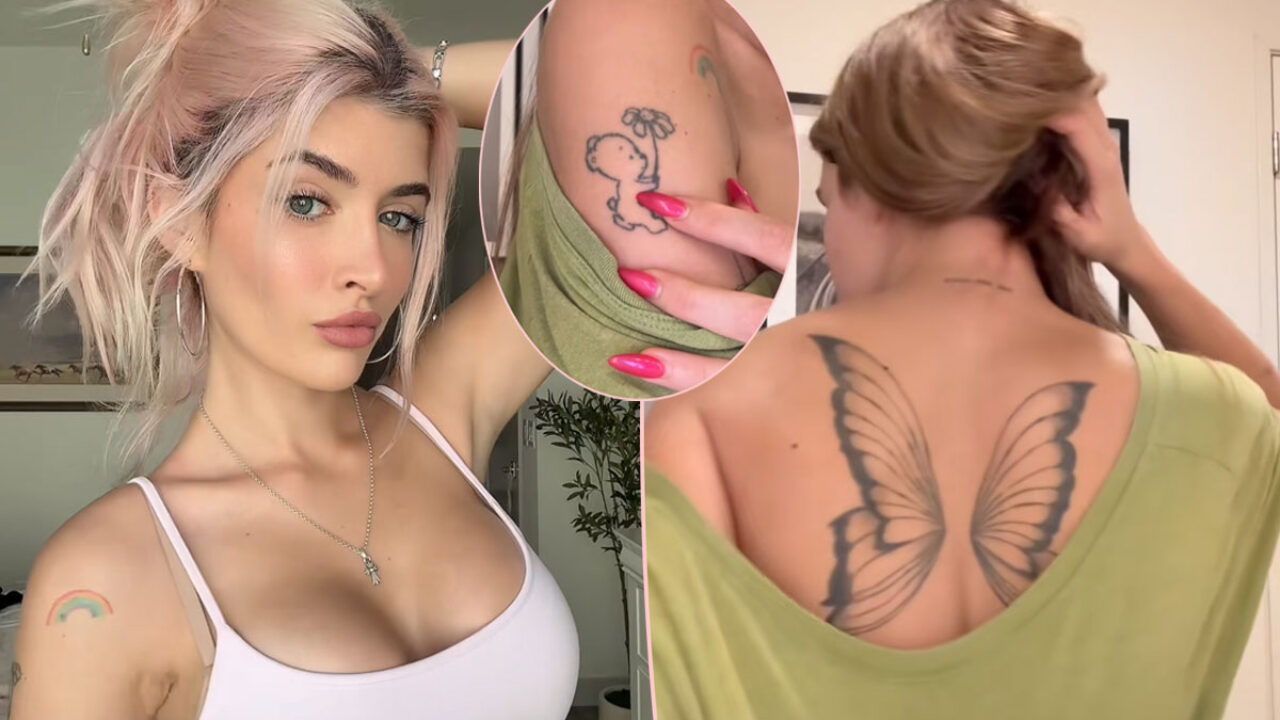
Sami has said she got her first tattoos at 16. One early design combined a butterfly and dominoes to represent the butterfly effect. Another was a teddy bear holding a flower. Looking back, she has joked about the thick lines and how some pieces sit on her arm.
That is a familiar way to begin. Many people choose a first tattoo because they like an image, without thinking much about how it will age. Sami’s early choices were simply documented and later shown to a huge audience. The internet saw the designs, her second thoughts and her decision to move on.
Some of the first pieces came from her cousin, who was practising tattooing. That helps explain the rougher look Sami talks about now, and her mixed feelings about the results. The tattoos were part of being young and experimenting, but they were not all done by artists with the same level of experience.
Her back wings are the tattoo she may keep
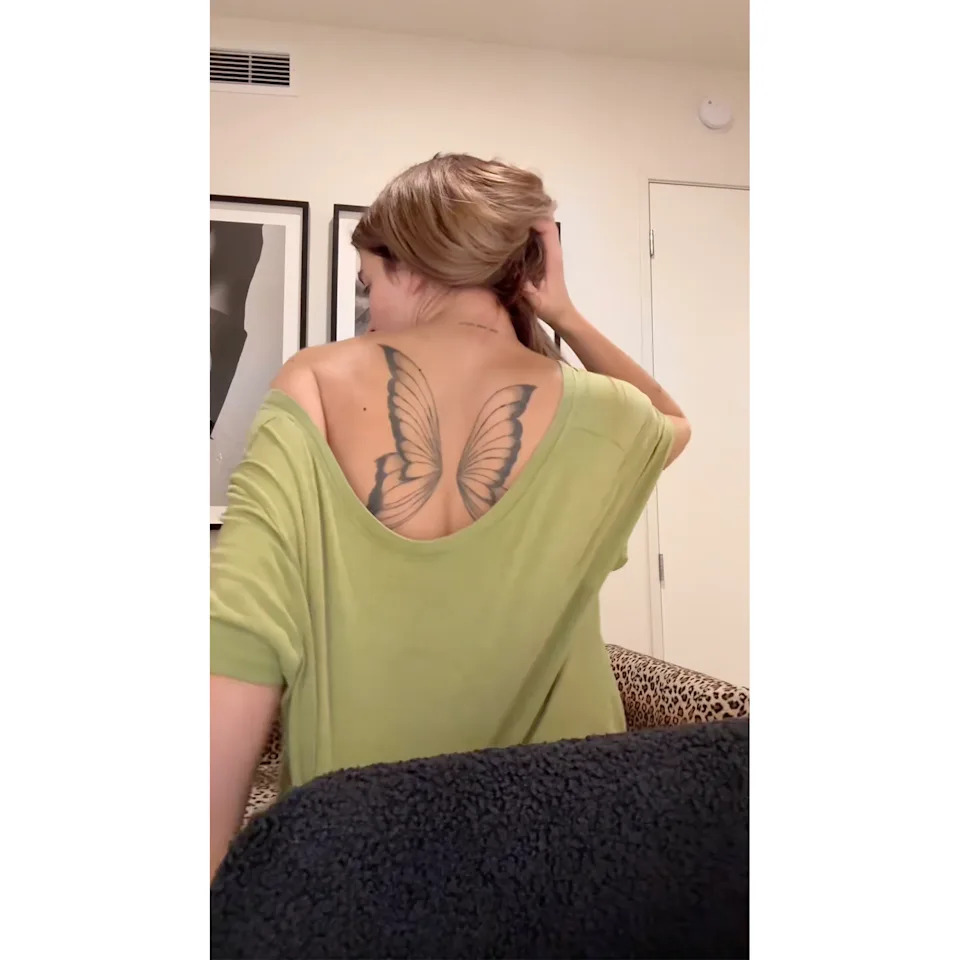
The largest design in Sami’s collection is a butterfly wing tattoo across her upper back. It spreads from her spine toward both shoulder blades and stands out from the smaller pieces on her arms. She has described it as extremely painful, one reason she is not rushing to remove it.
Sami has said she wants every tattoo gone, but the wings are the one design she seems less sure about. Removing a large, dark back piece would take time, money and many uncomfortable sessions. There is also a difference between disliking a small, crooked design and changing a major piece that affects her whole silhouette.
The wings change the way the collection reads. Without them, it would look mostly like scattered small tattoos; with them, there is a clear centrepiece. The design shows up in red-carpet photos and when she wears an open-back outfit.
The disco ball covered a mole and carried a phrase
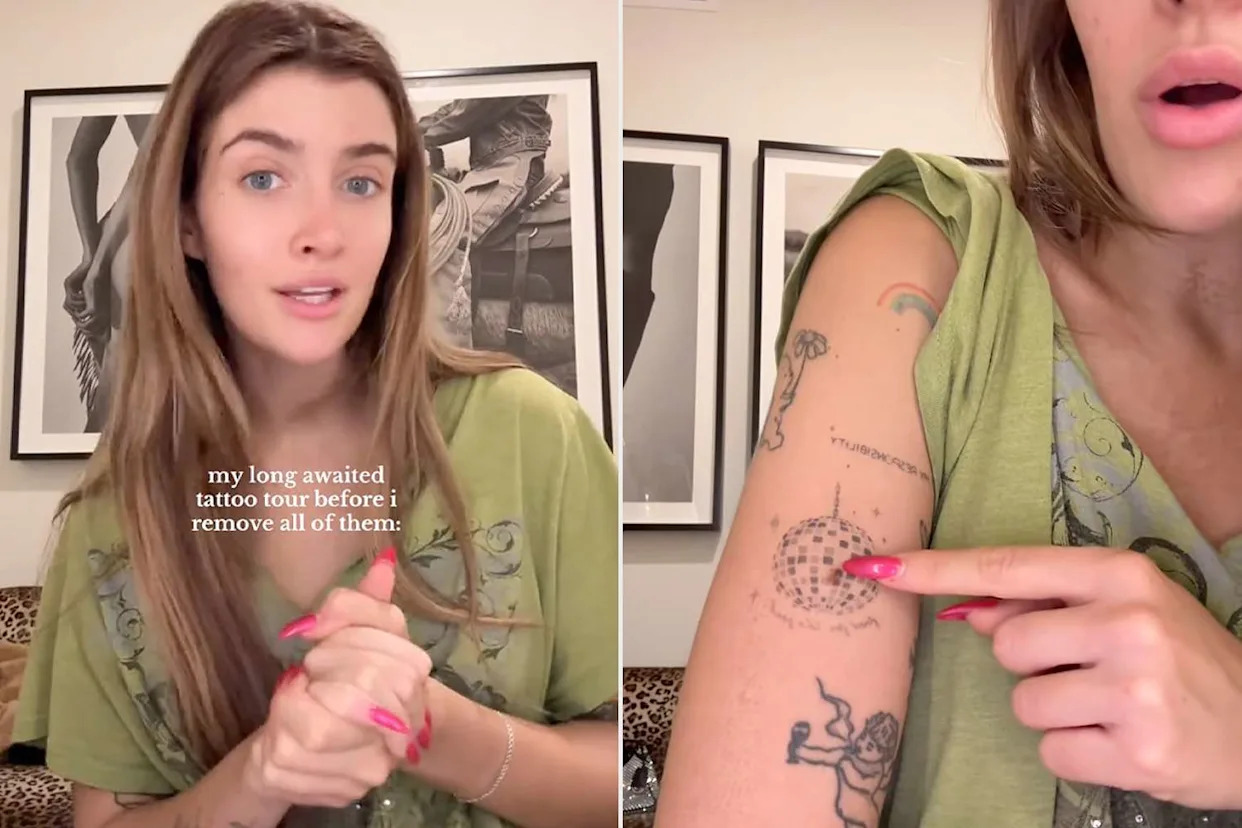
One of Sami’s more unusual pieces is a disco ball on her arm. She has explained that it was originally meant to cover a mole and was connected to the phrase “Food for the soul.” It is a good example of a tattoo that began for a practical reason and picked up another meaning along the way.
The disco ball feels lighter and more playful than the wings, with a slightly kitschy edge. That contrast runs through Sami’s collection: sentimental pieces sit next to funny or impulsive ones, and some only make sense once you know the backstory.
Sami has been honest that some tattoos looked better in her memory than they do on her arm. That does not make a design worthless; it means it belongs to a particular part of her life, and she now sees it differently.
Her arm has cherubs, a cow, a boot and a rainbow
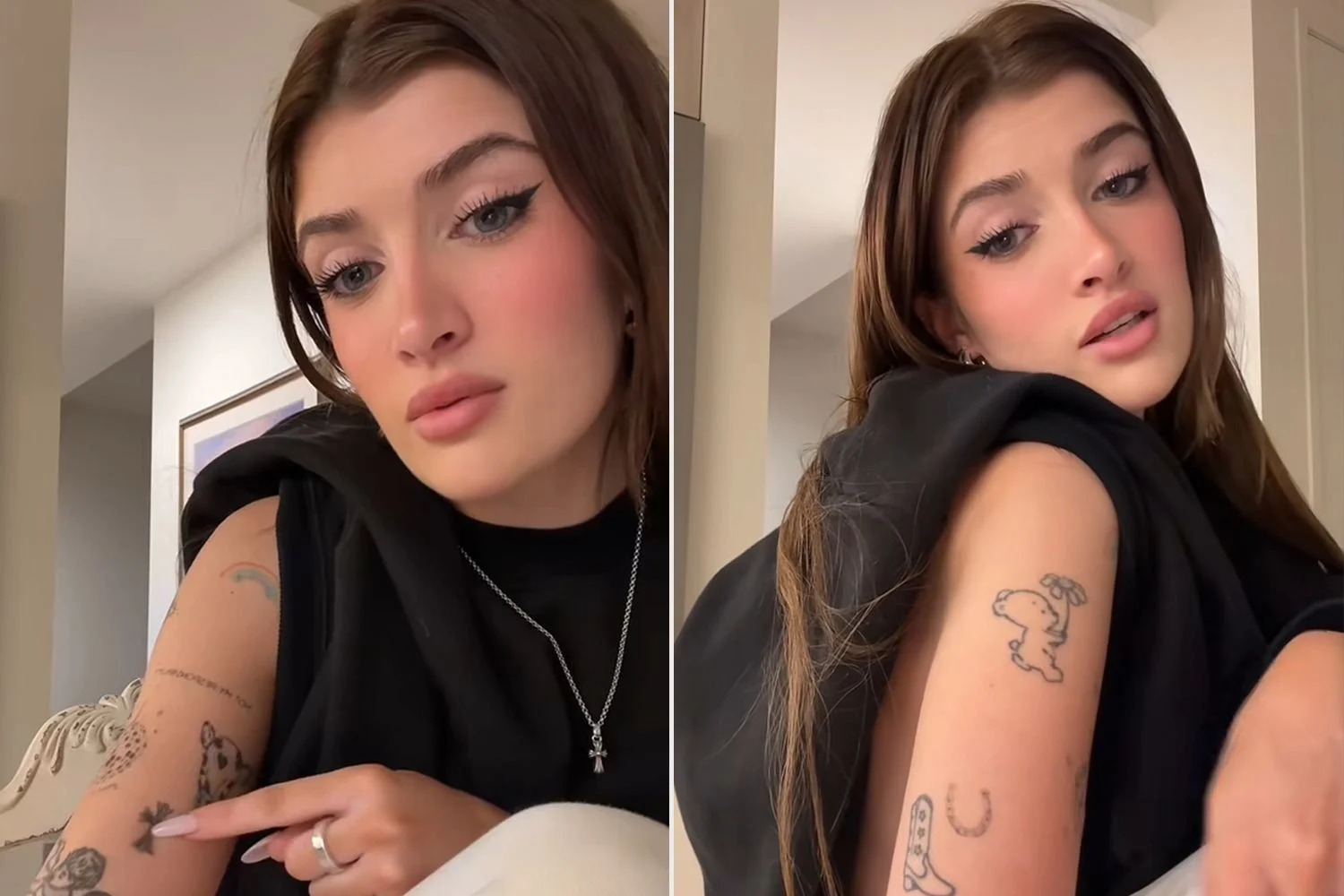
Sami’s tattoo tour also covered a run of smaller arm designs. One shows a cherub smoking a joint and holding a crooked wine glass; she has called it one of her worst tattoos. There is also an outline of a cow with a heart on its forehead, a cowboy boot, fairy imagery and other small drawings chosen at different times.
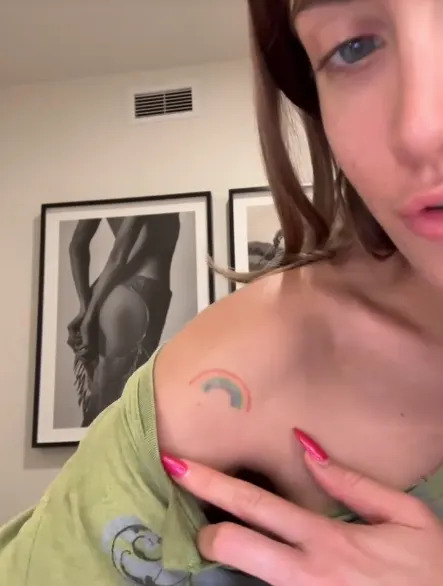
A rainbow tattoo marks her first Pride parade. She got it after turning 18, during a more deliberate period of tattooing. It sits beside older work she now sees as amateurish, so the arm becomes a timeline: one section records a quick teenage choice, another a more considered memory.
She has also shown text reading “We accept the love we think we deserve,” a quote from The Perks of Being a Wallflower. Small numbers and symbols sit among the larger pieces. It is not a perfectly planned sleeve, but that messy quality is part of what she has chosen to show.
Some tattoos are tied to people and old memories
Not all of Sami’s tattoos began with a random image search. She has a photorealistic portrait of her late dog, which gives the collection a more emotional centre. She has also mentioned a matching horseshoe connected to a former friend. That tattoo feels awkward to her now, but it still records a relationship and a moment that have since changed.
The contrast is telling. An imperfect tattoo can still matter because of who or what it represents. A well-placed design can become something you no longer want. Sami’s removal plan is less about rating every piece good or bad than deciding which memories she wants to keep visible.
Her dog’s portrait seems to fall on the meaningful side; the matching horseshoe belongs to a phase she would rather leave behind. That split is familiar to anyone who got tattoos before realising how quickly life can change.
Why Sami wants most of the ink removed
Sami has talked about feeling deeply insecure about her tattoos. She has mentioned the thick lines, designs she no longer connects with and the way some pieces make her want to cover her arms. That is more than simple boredom. She has said the tattoos affect how comfortable she feels in photos and at events.
Laser removal is not a quick reset. Sami has estimated it could take around two years, and she knows it may hurt. The butterfly wings in particular would be a major project. She is excited to see the unwanted ink fade, but has also said she dreads the process.
It helps to separate tattoo regret from shame. People can dislike old work without disliking who they were when they got it. Sami’s first tattoos came from a young person trying things out. Removing them does not erase that version of her; it gives her more say over what she wants people to see now.
Sami Sheen’s tattoo collection is a work in progress
Sami’s tattoos tell a story of growing up faster than her ink could keep up. The butterfly, teddy bear, cherub, disco ball, rainbow, quote, dog portrait, matching horseshoe and back wings all belong to different chapters. Some are funny, some sentimental and some, by her own account, a little embarrassing.
The collection is not a tidy set of matching designs. Sami has already decided she wants a fresh start. Whether she removes every piece or keeps the wings, that process will become another chapter in the story.
If you are looking at her tattoos for ideas, the useful lesson is not to copy one design. It is to think about timing, the artist’s experience and whether a tattoo will still feel like you after the excitement wears off. Sami has learned that the hard way and has been unusually open about showing what it looks like.
The best part of her story is that she leaves room for mixed feelings. She can dislike thick lines and still remember why a tattoo felt exciting at 16. She can want a cleaner arm and still feel attached to the dog portrait or rainbow. That is not inconsistency; it is what happens when a person changes while the ink stays put.
Watch a related Sami Sheen profile
There does not seem to be a dedicated YouTube upload of Sami’s full tattoo tour, so this related profile clip is included instead.