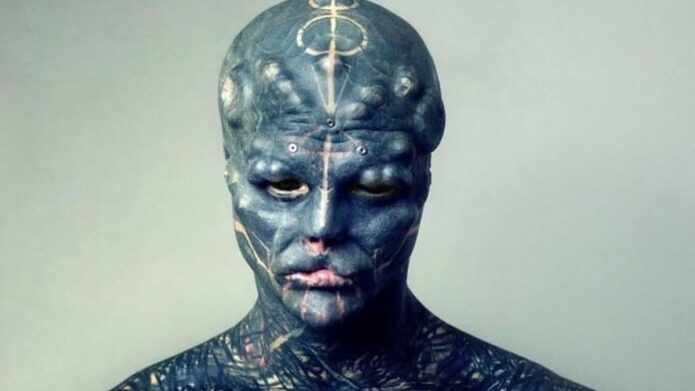
Anthony Loffredo’s Black Alien Project covers his face, scalp, neck, torso, arms and legs in dark tattoo work. Pale lines and geometric marks break up the black fill. In photos, the face draws the eye first, then the ink continues from the neck across the rest of his body.
Loffredo is also known for body modifications, including changes to his nose, ears, lips, tongue and fingers. Those procedures are part of the public project, but they are separate from the tattoos. This guide focuses on the ink that can be identified in the photographs.
The five body images show a close face view, the torso and arms, a side profile, details around the forehead and neck, and a wider view of the full-body coverage. The featured portrait is separate and appears in the post header.
Black Alien’s face tattoos use blackout ink and pale linework
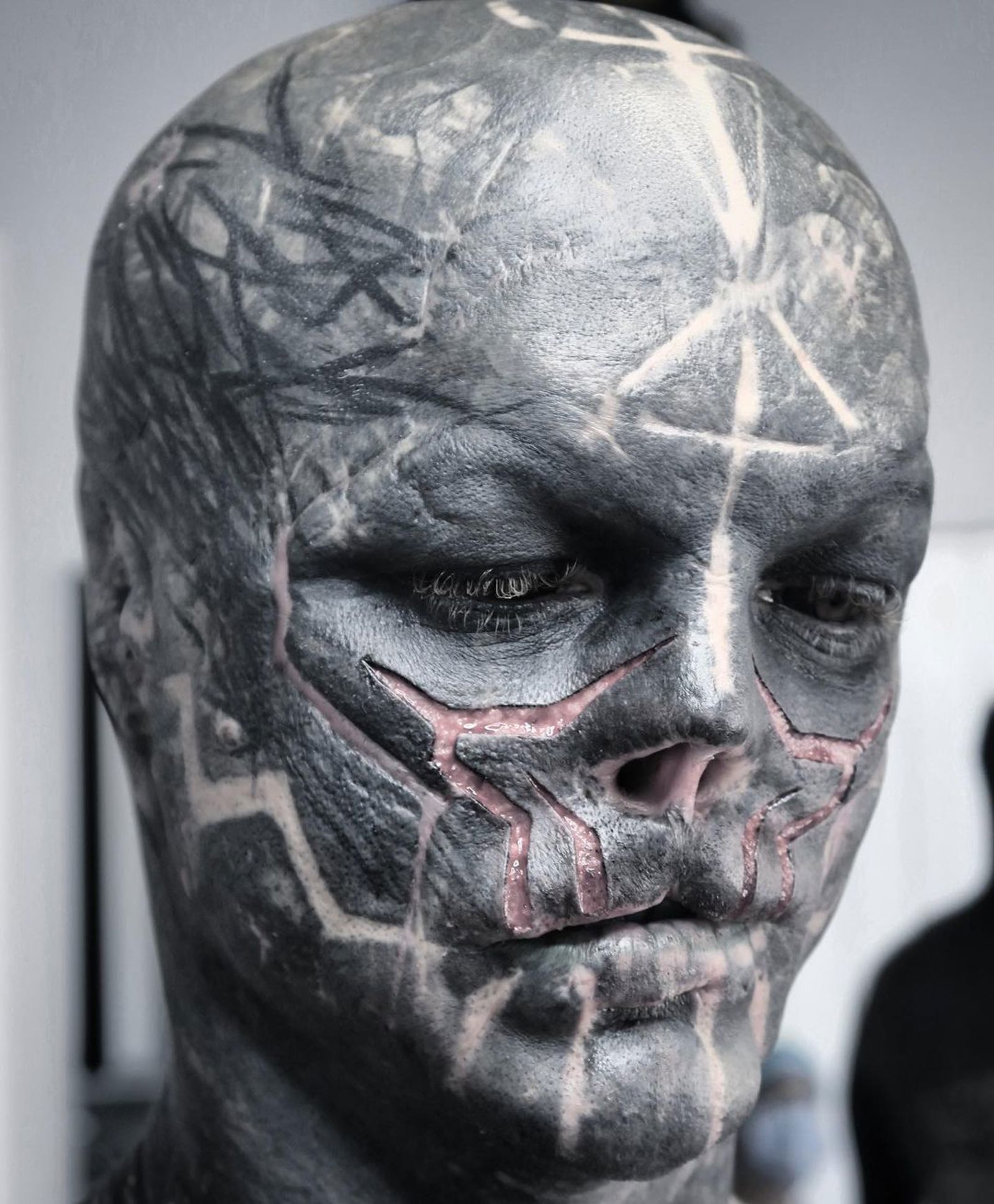
Loffredo, known online as Black Alien, has almost completely covered his face in dark ink. Pale lines cross the cheeks, temples and brow. In a close photo, those marks give the blackout a shape instead of letting it read as one flat field.
The forehead, eyelids, nose area and jaw have different textures. Some sections are smooth and dark; others show fine geometric lines or raised, scar-like detail. The contrast gives the face structure even where the ink is dense.
The face relies on contrast. Broad black areas define its outline, while lighter marks direct the eye across the brow and cheeks. The smaller lines become clearer when you look closely.
Tattoos and body modifications appear together in these portraits, but they are different parts of the project. The face includes pale ink lines as well as changes to the nose, ears, lips and tongue. The photographs show where those details sit; they don’t make them the same procedure.
The torso and arm tattoos make the blackout work feel continuous
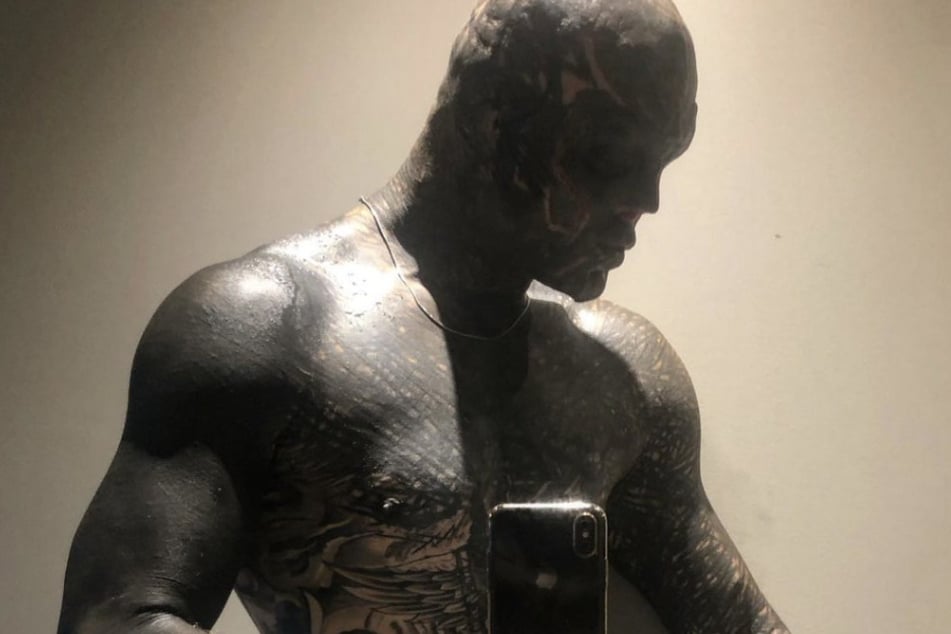
The mirror photo shows the design beyond Loffredo’s face. Dark ink covers the chest, stomach and shoulders, with lighter patterns breaking through the field. His arms use the same visual language, so the torso and head don’t look like separate pieces.
More pattern is visible on the chest than on the forehead. Marks continue down the arms toward the wrists and hands. The phone blocks part of the mirror image, but the surrounding ink still shows how the work is placed.
The edges matter in a blackout project. The shoulder, armpit, wrist and neck all bend and move. The dark fill crosses those areas, while lighter lines help keep the different sections legible.
The fingers and backs of the hands carry the pattern farther down the arms. In this photo, glare and the mirror angle make some of those details hard to see, but the hands clearly extend the design beyond the forearms.
The side profile shows how the ink follows the skull, neck and shoulder
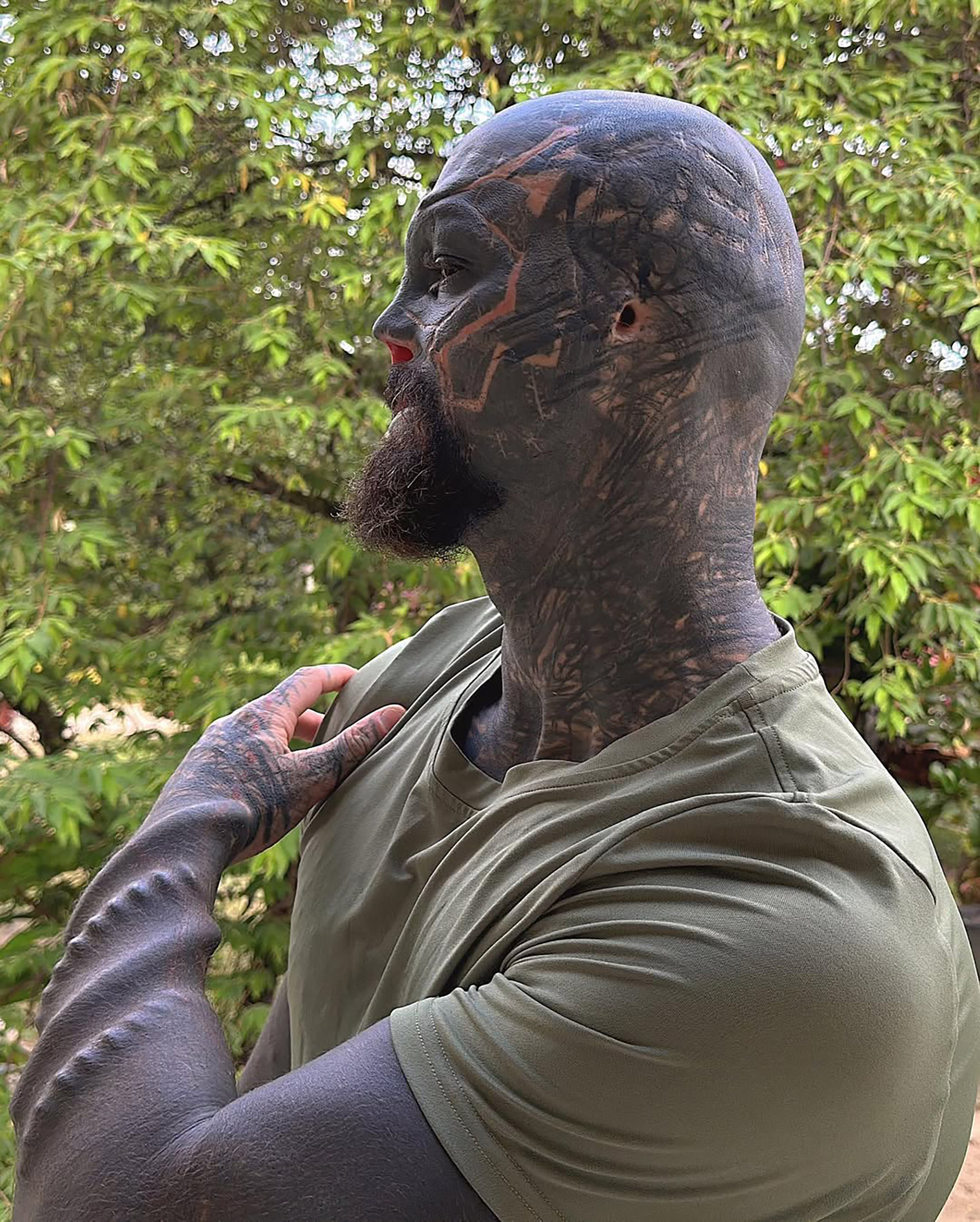
The side profile shows the depth of the coverage. Ink reaches across the forehead, crown and back of the head, then continues down the neck to the shoulder and upper arm. Pale lines curve around the head and help set the direction of the design.
The photograph also separates the scalp from the neck. The head has broad dark coverage; the narrower neck introduces denser marks and different angles before it opens into the shoulder.
The look is dramatic, but the placement follows the body’s shape. The skull is rounded, the neck is narrow and mobile, and the shoulder widens into the arm. Each area needs a different layout even when the palette stays mostly black.
Photos from different dates show the project at different stages. Some areas appear darker or more finished, and lighting changes how much of the pattern comes through. It’s safer to describe what each image shows than to call the design complete.
The forehead and neck details keep the dark tattoo style readable
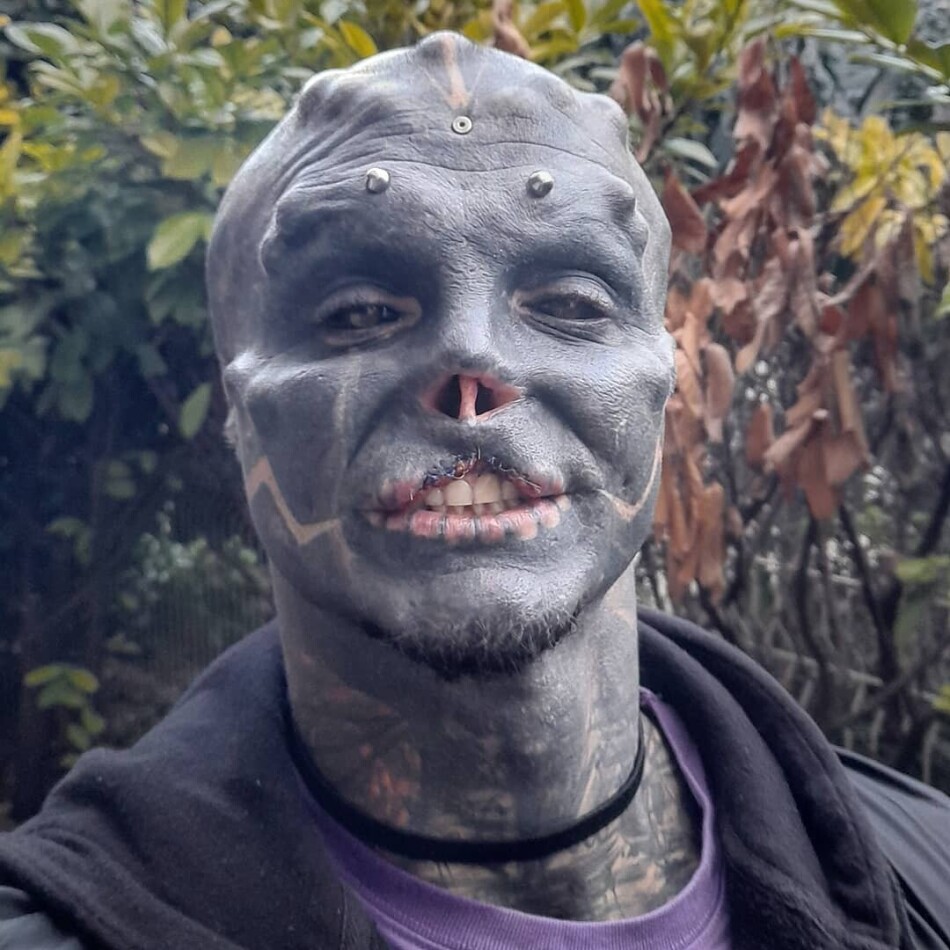
This square portrait brings the smaller face details into view. Raised metal studs sit across the forehead, while pale angular lines mark the cheeks and jaw over dark ink. Clothing and the camera angle partly cover the neck pattern.
The lines around the cheeks add another texture beside the forehead hardware. The studs are body modifications, not tattoos, so the portrait shows several kinds of detail together: dark fill, fine lines and physical changes.
The finer marks give the blackout definition. Lines around the brow, cheekbones, mouth and jaw follow features that already shape the face. Even a small mark can change how the larger dark area reads.
The image doesn’t explain why Loffredo chose each stripe or shape. It does show their placement and contrast, which is enough to describe how they work with the rest of the face.
The full-body tattoo views show the scale of the Black Alien project
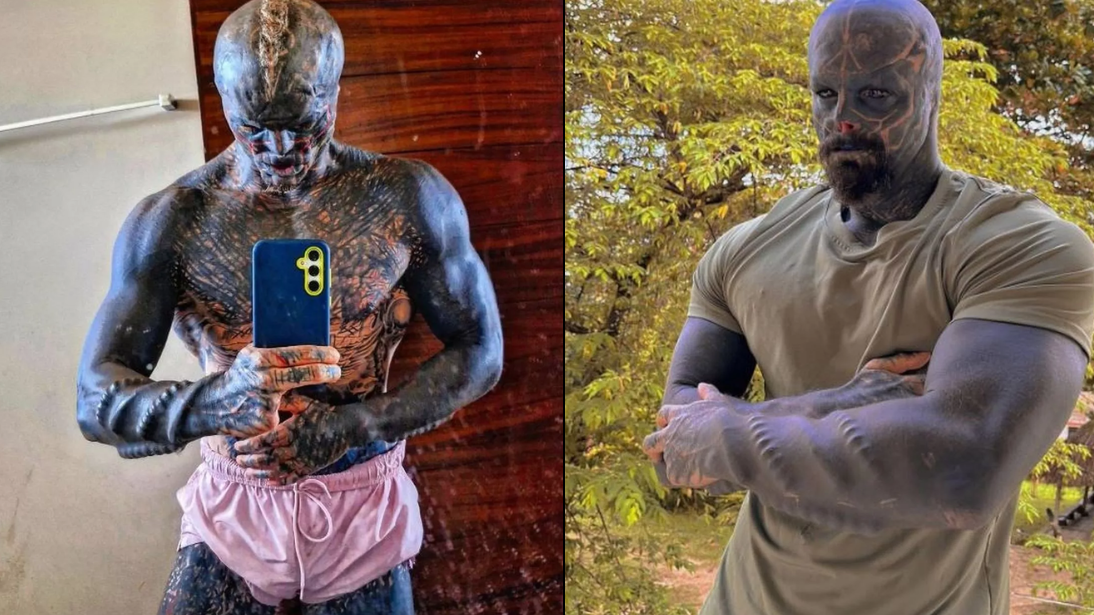
This two-view image shows the coverage from head to legs. The upper body is dark from the head through the chest and arms, and the outdoor view shows the ink continuing down the legs. It’s a full-body project rather than a set of isolated tattoos.
The outdoor frame makes the proportions easier to read. The face is still the first focal point, but the shoulders, torso and limbs carry the same dark weight. The small lines become clearer when the camera moves closer.
The full-body design repeats a few choices across different areas. The blackout palette and geometric marks connect the sections; the body’s curves, poses and changing light keep them from looking identical.
Loffredo has described the work publicly as an ongoing transformation. These photos record particular stages. Later images may show new coverage or modifications, while older ones still show what was there at the time.
The same dark palette appears across very different parts of the body. The face uses blackout fill and pale geometry, the torso has a wider field of ink, and the limbs carry the design as they move. The details change with the placement.
That’s why it helps to look at the photos together. A face close-up shows how dense the head work is, but it can’t show where the shoulder or leg coverage begins. A full-body view gives the scale and loses the small cheek and eye-area marks.
Black Alien is a public name associated with Loffredo and the body-modification project. The tattoos are part of that image, but a photo doesn’t establish a personal meaning for every line. The visible blackout, geometry and placement are clear enough to describe on their own.
Lighting changes how the blackout looks. In sunlight, pale lines and scar-like details can stand out; indoor photos may make the same area appear almost solid. Comparing clear photos helps show which details belong to the pattern.
If you’re using Black Alien tattoos for ideas, pay attention to how the design crosses the head, neck, shoulder and arm. Those areas curve and move, so the line direction and amount of fill change with each surface.
Black is the dominant colour in the visible tattoo work. Pale skin and lighter marks provide contrast. With this much dark coverage, an even fill and legible linework matter as the tattoos age.
The close and wide photographs answer different questions. A face shot shows fine detail; a torso or leg view shows scale and how the ink sits on the body. Together, they give a clearer picture than one dramatic crop.
For more celebrity and public-figure ink, see the site’s celebrity tattoo guides. Use clear tattoo photos and reliable interviews to separate visible details from claims about meaning.