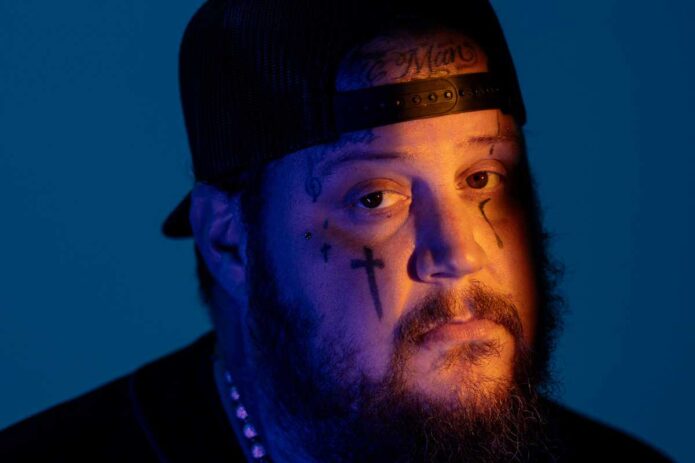
Jelly Roll’s tattoos make the most sense when the face, neck, hands and arms are considered as different parts of a long record. His collection is large, but there is no official count that turns it into a neat catalogue. Some designs are named during his GQ tattoo tour, others can be seen in close portraits, and later coverage sometimes describes pieces without enough detail to confirm every feature.
The GQ conversation is his strongest guide because Jelly Roll points to the tattoos: he names designs, explains several personal connections and admits when a tattoo was excessive or poorly planned. Those comments belong beside the designs they describe. When a photograph shows placement but not meaning, the account should stay with what is actually visible.
His tattoo tour shows how concentrated the collection is
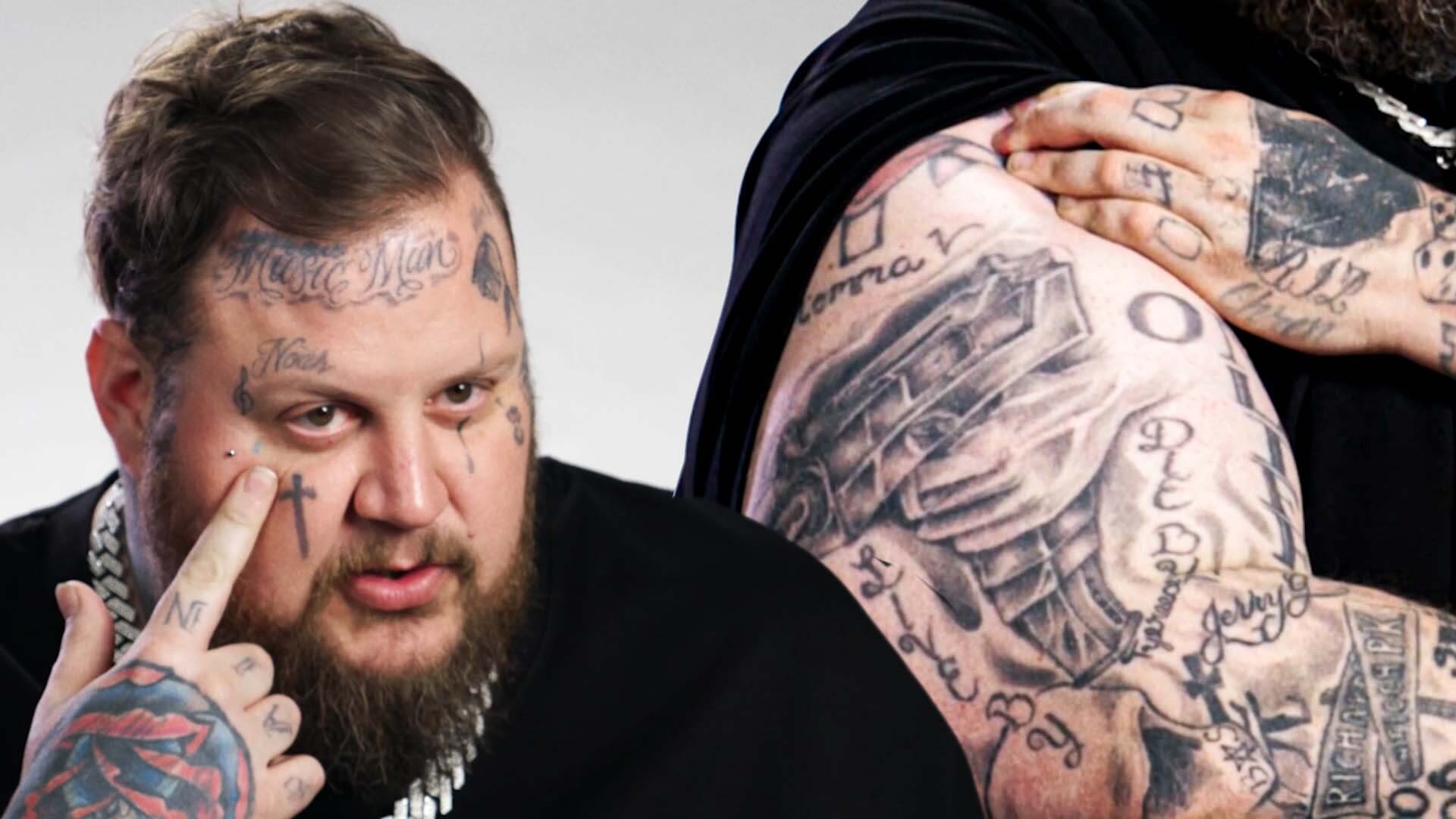
Many of Jelly Roll’s most recognisable tattoos sit high on his body. His forehead, cheeks, neck and hands are visible when he performs, while the larger arm pieces show whenever he wears short sleeves. The close photos reveal many separate designs rather than one continuous tattoo, even though the group shapes how people read his appearance.
The photos also differ in clarity. Some lettering can be read immediately; other marks have softened with age or sit beside newer ink. Stage lights can make black tattoos look heavier than they do in a neutral portrait. A careful inventory records the design, its location and where the identification comes from before assigning meaning.
That care matters because Jelly Roll is open about his past. The fact that a tattoo can be connected to his family or recovery does not mean every nearby symbol has the same explanation. The tattoos are personal, but what can be confirmed publicly still has limits.
Music Man, the cheek cross and the smaller face symbols
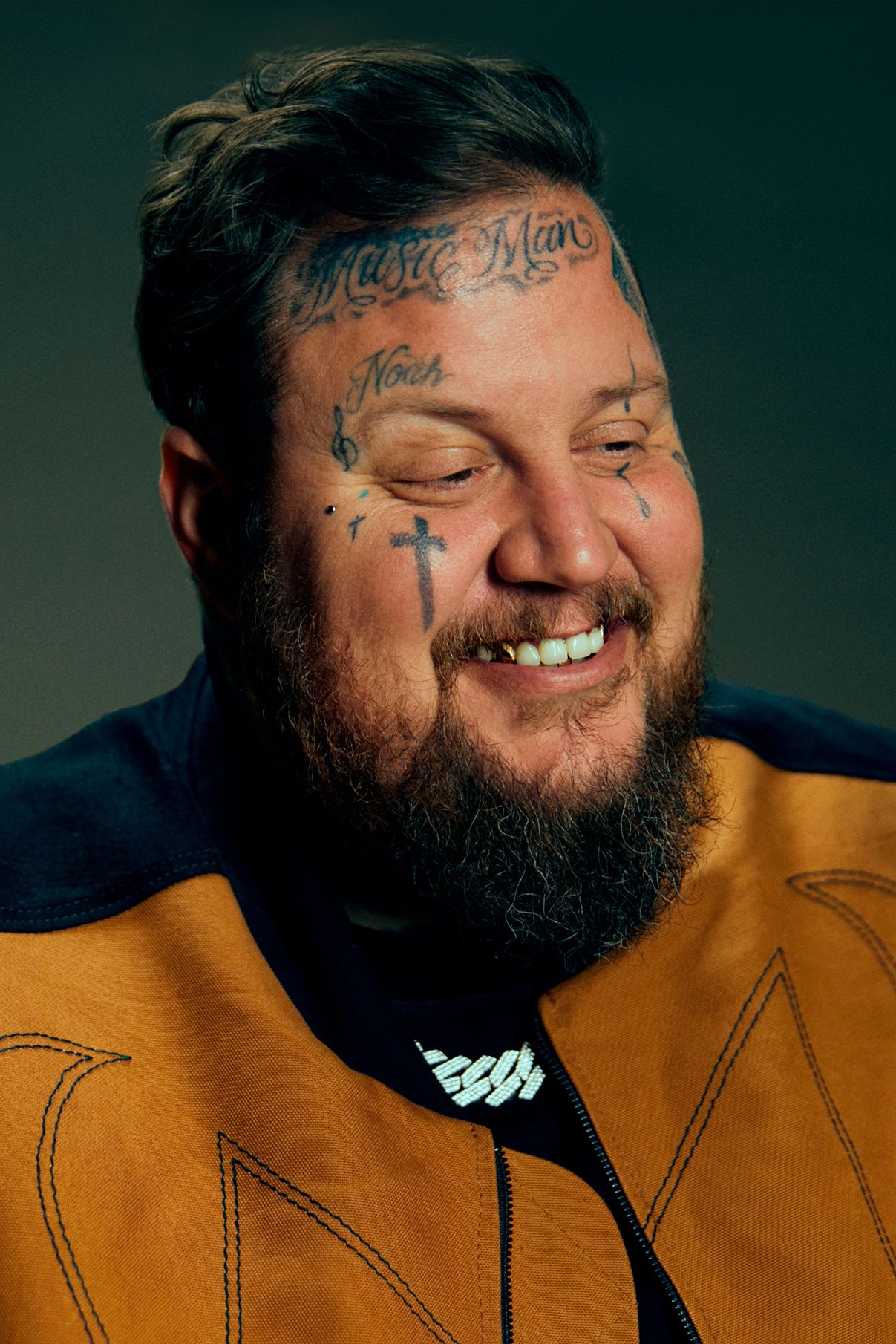
The most noticeable facial lettering is “Music Man” across Jelly Roll’s forehead. It is written in a large, old-style script above the smaller marks around his eyes and cheeks. The words describe his profession plainly, but their placement makes them one of the first things a viewer sees. They are not hidden in a sleeve or visible only in a private photo.
Below the forehead lettering, portraits show a large cross on the cheek, smaller marks near the eyes, a teardrop and compact symbols around his hairline. In the tattoo-tour conversation, Jelly Roll connects the larger cross with a turning point in his life. That comment speaks to the cross’s importance to him; it does not automatically explain every mark nearby.
The face also carries lettering associated with his mother and other small symbols that come into focus when he is photographed straight on. Some edges have softened, so a blurry shape should not be turned into a confidently named object. The portrait is good evidence of placement and general form; his words are the stronger source for meaning.
The Nashville skyline covers an earlier neck mistake
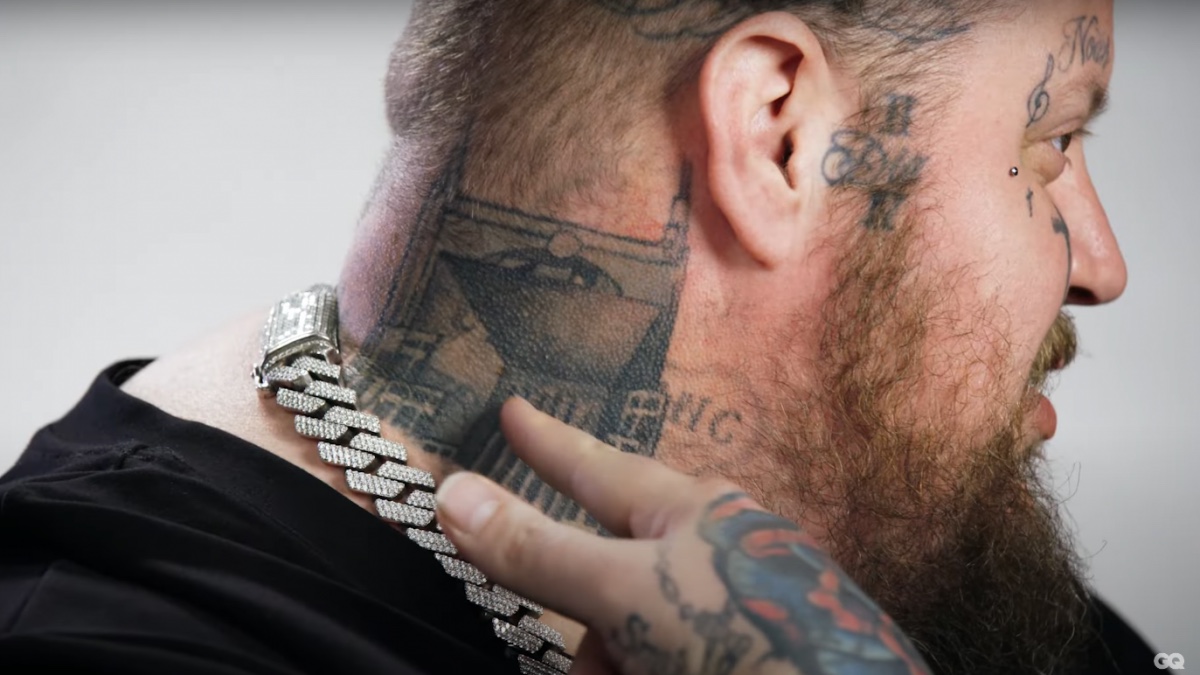
At the back of Jelly Roll’s neck is a dark Nashville skyline, shaped to sit beneath his hairline. It fits his connection to the city, but the story behind the cover-up is even more revealing.
Before the skyline, he had the phrase “Surviving the Sruggle.” The spelling was wrong because the second T in “struggle” was missing. Jelly Roll discusses that mistake as part of the tattoo’s history, so it should not be listed as a second design that remains visible. It is what the skyline replaced.
The side photo makes the change easier to see. The skyline follows the area where the old lettering sat and forms a deliberate horizontal shape on the neck. His face and hand tattoos make it look like one part of a larger group, but the city outline has its own placement and correction story.
Mama V’s cross is an early memorial tattoo
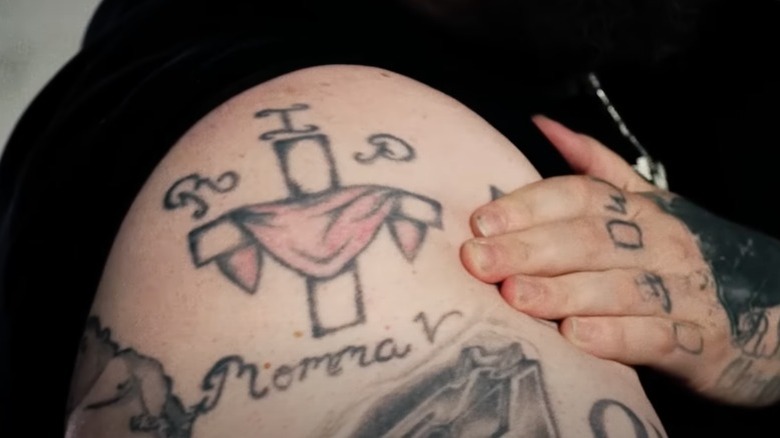
Jelly Roll identifies the cross on his upper arm as a memorial to Veda Newcomb, known around his neighbourhood as Mama V. He says he was 14 when she died and that the tattoo became his first arm piece. In the photograph, the shoulder cross and surrounding lettering give the tribute a clear visual anchor rather than leaving it as a vague reference to faith.
The memorial predates much of his highly visible face work. It comes from an earlier period of his life and honours someone important in his neighbourhood. The cross is a familiar shape, but the name and age give this tattoo a specific story.
In photographs, the shoulder piece sits among newer arm tattoos, so its edges can blend into the larger collection. It is still useful to describe it on its own. The memorial explains why he chose this design; other tattoos on the arm do not automatically share that meaning.
The smoking baby is the tattoo he calls excessive
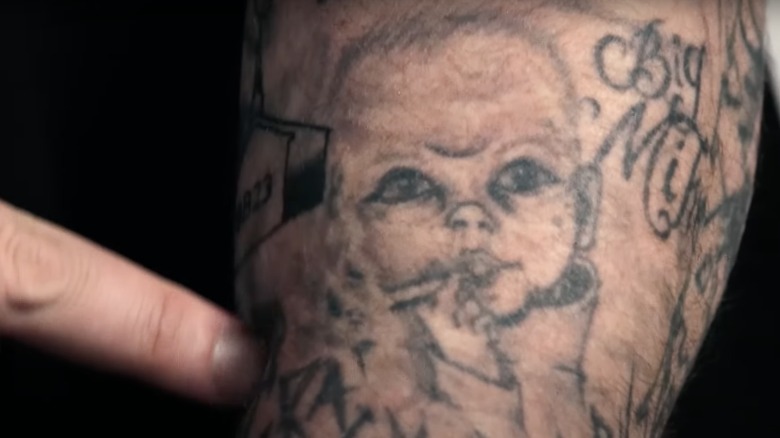
One of the collection’s stranger designs is a baby smoking a blunt on Jelly Roll’s arm. In the tattoo tour, he calls it excessive and treats it as an idea that went too far. That reaction tells us more than an invented symbolic reading would: the tattoo is real, he knows how extreme it looks, and he is not presenting it as a solemn emblem.
A close photo shows the baby’s face, the smoke and enough of the linework to distinguish it from the surrounding arm tattoos. Some reports have suggested it was covered, but the public record does not confirm a finished cover-up. It is accurate to say that he regrets or questions the design, not that it has definitely disappeared.
Tattoos can change in stages. A cover-up may be planned, partially done or shown only in later images. Without a clear before-and-after record, his comment and the photograph are the available evidence.
The quokka tattoo is another design he names. Jelly Roll says he got it with a group in Florida and connects the animal with keeping cheerful when life is difficult. The interview does not make its exact placement clear enough to assign it to his arm based on a distant image, so the location should remain unspecified.
Other arm photos show lettering, numbers, religious designs and family references. It is better to read them one by one than call the whole area an anonymous sleeve. A visible name or word can be recorded, but an unconfirmed story should not be attached just because the tattoo sits near Mama V’s cross or the smoking baby.
The GQ tour also documents The Jesus-on-the-cross tattoo on his back. Jelly Roll calls it a rough pick-and-poke piece and jokes that his wife first thought the face looked like Elvis. The public material used here does not offer a sharp, reliably matched photo of the back design, so the description stays cautious. A generic religious tattoo image would mislead readers about the actual piece.
What the close photographs can and cannot prove
The strongest parts of Jelly Roll’s tattoo record are the ones supported by a clear photo, a specific design and a comment from him. That combination helps describe the forehead “Music Man”, cheek cross, Nashville skyline cover-up, Mama V memorial and smoking baby. It also gives the quokka a reported meaning while leaving its placement open.
The smaller marks around his eyes, fingers and hands need more care. They are real visible tattoos, but a soft concert image is not enough to identify every symbol or claim a private reason for it. The article gets more useful when confirmed details can stand without filler.
Read this way, Jelly Roll’s tattoos form a record of family, place, mistakes, faith and humour. The designs are not all polished or solemn: some honour people, some correct earlier choices, and some are tattoos he now looks back on with regret. That mix is what makes the tattoo tour more revealing than a generic list.
One thought on “Jelly Roll’s tattoos, from Music Man to Mama V”