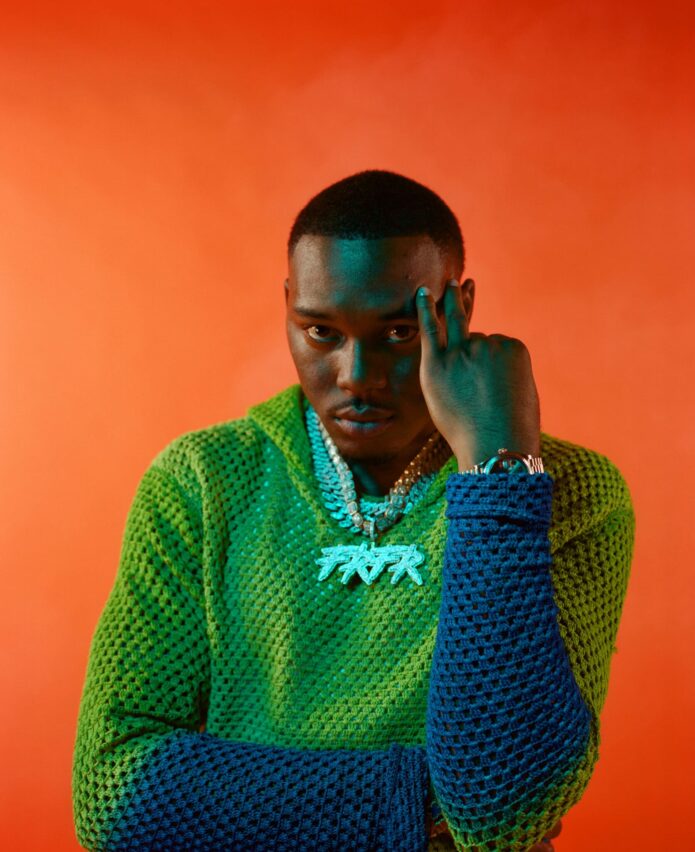
Kalan.FrFr has around 25 tattoos, and he has said most of them mean something to him. Inked has photographed designs across his chest, forearms, hands and shoulders. Some relate to family, others to music, and some record what was on his mind when he got them.
He has also been open about regretting a few. Tattoos connected to people can feel different when those relationships change, especially when the name is still there. Kalan.FrFr does not pretend those pieces never happened; they belong to a particular chapter, which can matter even if he would not make the same choice now.
The clearest record comes from an Inked interview and close-up photos of his chest, arms and stomach. They show the large No Hard Feelings lettering, Arabic script about faith and fear, a tribute to his grandmother and plenty of smaller designs. Here is what he has explained.
No Hard Feelings is the tattoo he wanted everyone to understand
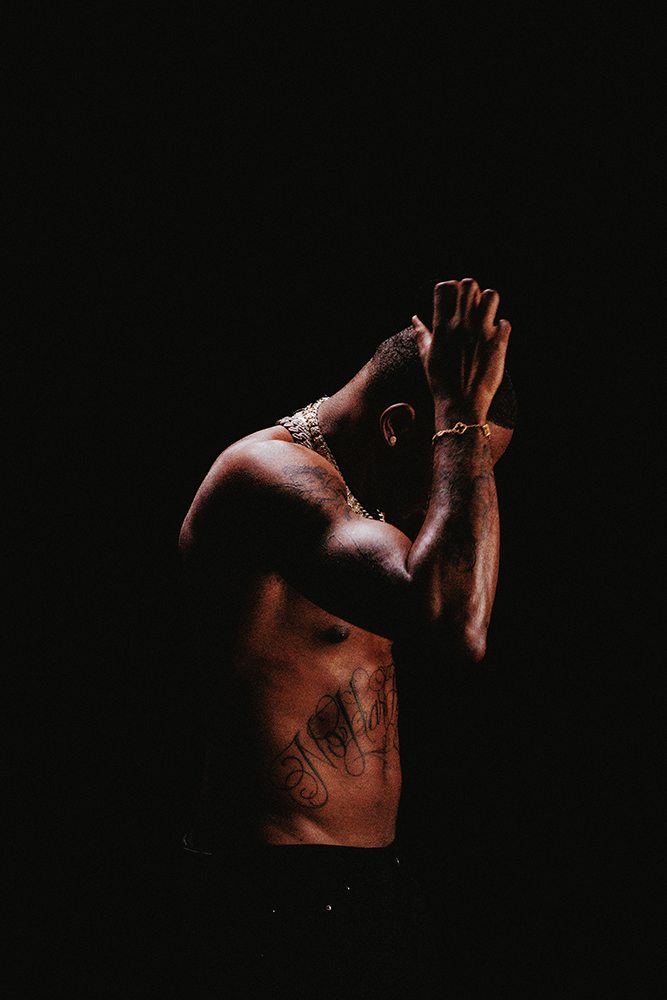
The biggest piece in the photos is No Hard Feelings, lettered across Kalan.FrFr’s upper abdomen. The decorative text is hard to miss, and it connects to the project he was working on at the time, which was also called No Hard Feelings.
For him, the phrase is more than a title. He described it as a way of moving through everything happening around him: losing friends and relationships, and dealing with things outside his control. If he cannot change something, he does not want it to keep him from moving forward.
The placement was deliberate. Kalan.FrFr said the stomach is one of the more painful areas to tattoo, but he chose it so the message would be seen. It is not hidden under a sleeve or reduced to tiny lettering; it sits across his middle as a statement he is willing to stand behind.
He also connects the phrase to confidence. Showing pride in his work does not make him arrogant, he has said. The tattoo gives him room to acknowledge how far he has come without apologising for it or downplaying his accomplishments to make other people more comfortable.
The surrounding arm and chest ink makes the photos look like a glimpse of a much larger collection. Smaller marks run along his forearms and hands, with other designs around his jewellery. He has not explained each one, so it is better to see the image as a map of his tattoos than to guess at every symbol.
His Arabic tattoo puts faith ahead of fear
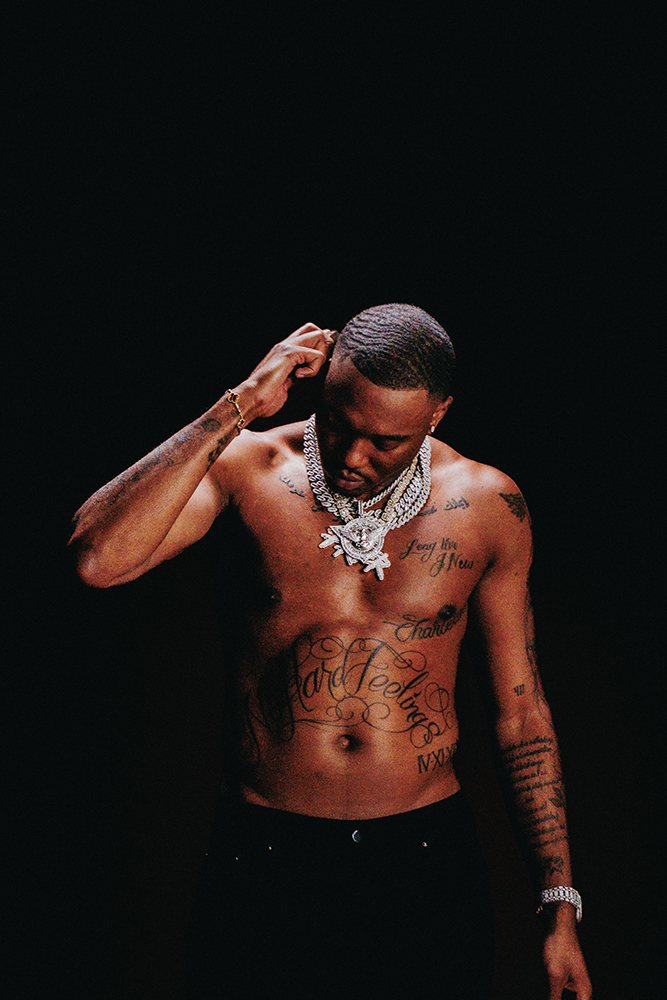
One of Kalan.FrFr’s clearest explanations is for the Arabic writing on his body. He says it means “your faith has to be greater than your fear.” He called the message self-explanatory, but those words still tell us why the design matters to him.
The script sits among the chest and stomach tattoos, close to other lettering and small designs. It is not a separate religious sleeve or a formal quote piece; it is one thought woven into the rest of his life and work.
The phrase fits the way he has talked about his career. Kalan.FrFr has described coming up in South Central Los Angeles, finding his voice and refusing to act like someone else for the music industry. In that context, putting faith ahead of fear is a practical reminder in a career full of uncertainty.
Placement adds to the collection’s rhythm. The chest script shows when he is shirtless, while the arm tattoos appear in short sleeves. The designs vary in size and lettering instead of following one perfectly matched pattern.
That mix gives the tattoos their character. They do not look as though they were planned in one sitting. They have gathered at different times, with the Arabic phrase among the clearest statements.
The arm and hand tattoos carry years of smaller stories
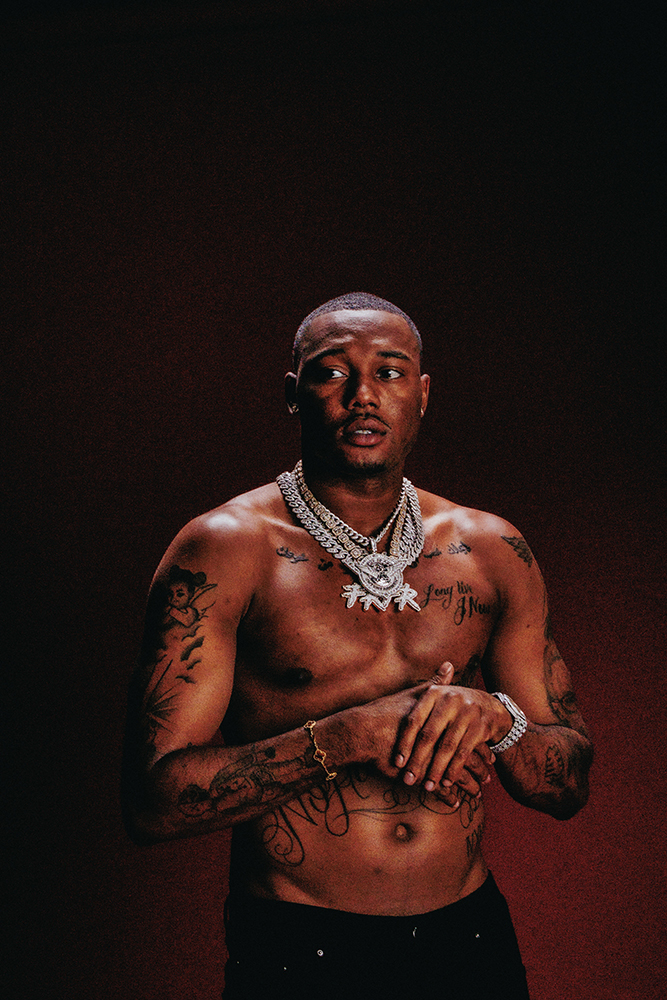
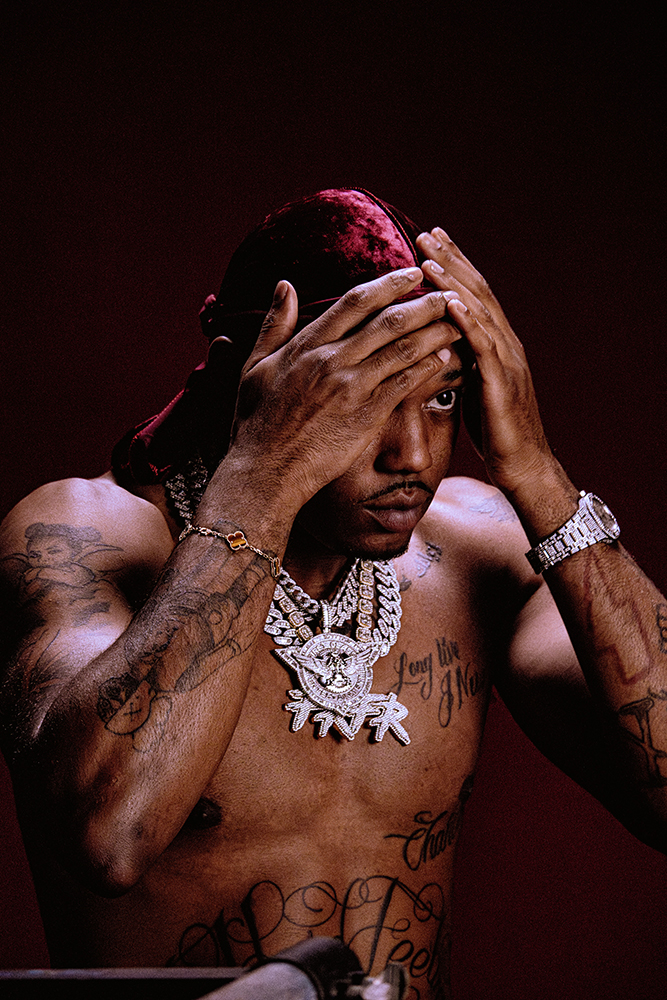
Photos show tattoos on both arms, his hands and upper chest. Kalan.FrFr has not shared a meaning for every mark, but he has said each tattoo connects to something in his life. The collection mixes script, small symbols and larger shaded designs.
His first tattoo has a clear family story. He got it in a trap house in Compton, trading his PlayStation 3 to pay for it. His mother was angry when he came home, but the tattoo honoured his grandmother, which changed the conversation.
That is a revealing place to start. Kalan.FrFr’s first tattoo was not a polished celebrity appointment; it was improvised, local and tied to someone he loved. His process may have become more professional as his career grew, but the personal reason stayed.
His arms show how quickly the collection has grown. Ink runs along his forearms and toward his shoulders, with smaller details on his hands. From a distance it can look like one sleeve; close up, the designs feel more uneven and personal, with separate moments across different areas.
Music has influenced what he notices, too. Asked about iconic music tattoos, Kalan.FrFr mentioned Nipsey Hussle’s The Marathon Continues pieces and Michael Jackson tattoos. That does not mean every image on his own arms is a tribute to either artist, but it shows the kind of tattoo history he follows. Music, memory and identity meet in the collection.
He has also admitted to making some mistakes. His advice is to be careful with names: a relationship may be temporary, while the ink is not. That kind of honesty makes the collection more believable. It does not have to be a highlight reel where every design is presented as perfect.
Why a cover-up is the next chapter
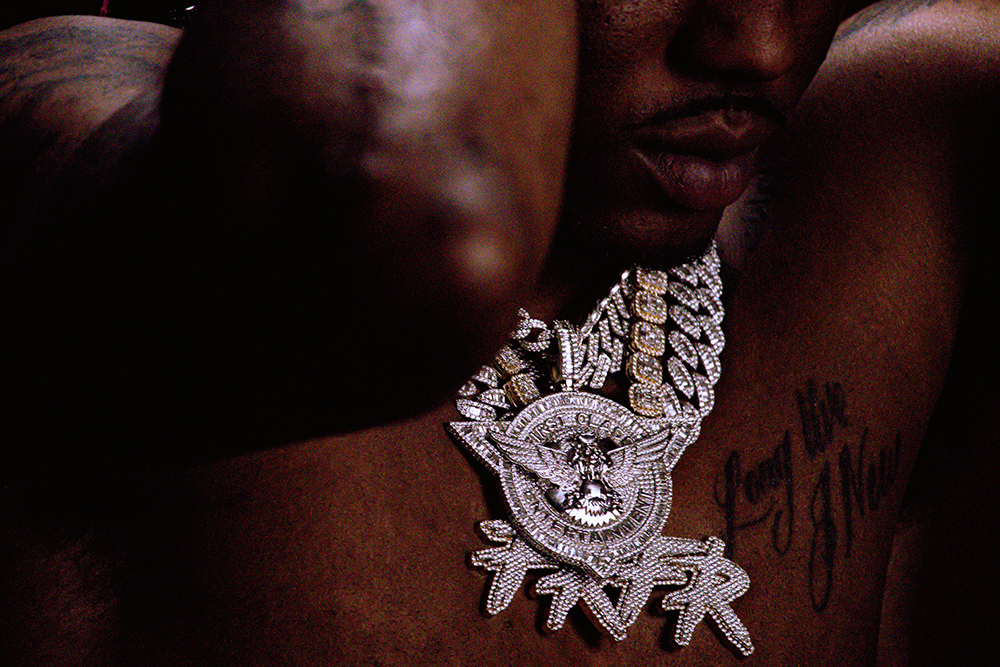
Kalan.FrFr has joked that a cover-up will be his next tattoo. After hearing him talk about regret, the line lands differently. He knows some designs are tied to people or moments that have changed, and he is comfortable admitting that living with permanent ink can be complicated.
A cover-up does not erase the old tattoo’s history. It is closer to editing a page while remembering what was underneath. That suits someone who sees tattoos as snapshots of different stages: the meaning may change, but the experience of getting the piece still happened.
The No hard feelings idea fits here too. It is about accepting what you cannot control and moving on without letting it decide your next step. If one of the older tattoos gets a new life under a cover-up, that would be another version of the same thought.
There is no complete public inventory of all 25 tattoos, and the available photos do not make every small design readable. The documented pieces include the tribute to his grandmother, the Arabic message about faith and fear, and the lettering on his stomach. The rest are best described by placement and appearance unless he has explained them himself.
That restraint makes the known stories stronger. No invented meanings are needed: there is a family tribute, a statement about faith and fear, a project title turned into a painful stomach tattoo, and a collection that holds both pride and regret.
There is a balance between the public and private sides of the ink. The stomach lettering is meant to be seen, especially when Kalan.FrFr is promoting a project or performing. The tribute to his grandmother began as something personal, even if it now appears in photos. The smaller arm and hand tattoos fall somewhere between the two: visible up close, but not explained to everyone.
That keeps the collection from feeling like one long advertisement. Some pieces belong to music; others belong to home, family, fear or old decisions. Even the cover-up he has joked about is part of the story, and it leaves room for the collection to change as he does.
Kalan.FrFr’s ink looks like a running diary: bold when it needs to be, imperfect when life gets messy, and honest about both.