
Tatu Baby’s tattoos are easy to recognise because they work as a collection instead of a single statement. Her neck, chest, hands, arms, stomach and legs all carry different pieces, but the mix still feels connected. You see bold black outlines, soft realism, script, flowers and large areas of colour, with enough open skin to keep the bigger shapes readable.
That variety is part of the appeal. Tatu Baby is known as a tattoo artist as well as an Ink Master and Cartel Crew personality, so her own collection has the feel of someone who understands both the design and the daily reality of living with visible work. The best thing to borrow from her style is the confidence to let different ideas sit together without forcing them into one exact theme.
Her work also shows why placement matters. The same design can feel delicate on the upper chest, loud on the thigh or almost architectural when it wraps around an arm. Here is a relaxed look at the areas that stand out most, plus a few practical ideas for anyone building a collection of their own.
Tatu Baby full-body tattoo layout
The full-body view makes the overall plan clear. Tatu Baby’s upper body is packed with visible work, while the legs add large images and lettering that continue the same visual energy. The collection does not depend on one perfect matching sleeve. Instead, it grows in sections, with each area keeping its own identity.
There is a useful lesson here for anyone who likes a heavily tattooed look. You do not need to draw the whole body on day one. Start with the spots that matter most, then live with the result for a while. Clothing, movement and changing taste will tell you what the next area actually needs. A straight-on mirror can hide gaps that become obvious from the side.
Her layout also uses scale well. Small lettering and hand details sit near larger arm and leg subjects, so the eye has somewhere to move. Good spacing is not empty space waiting to be filled. It is what lets a portrait, flower or script line stay readable instead of turning into one dark blur.
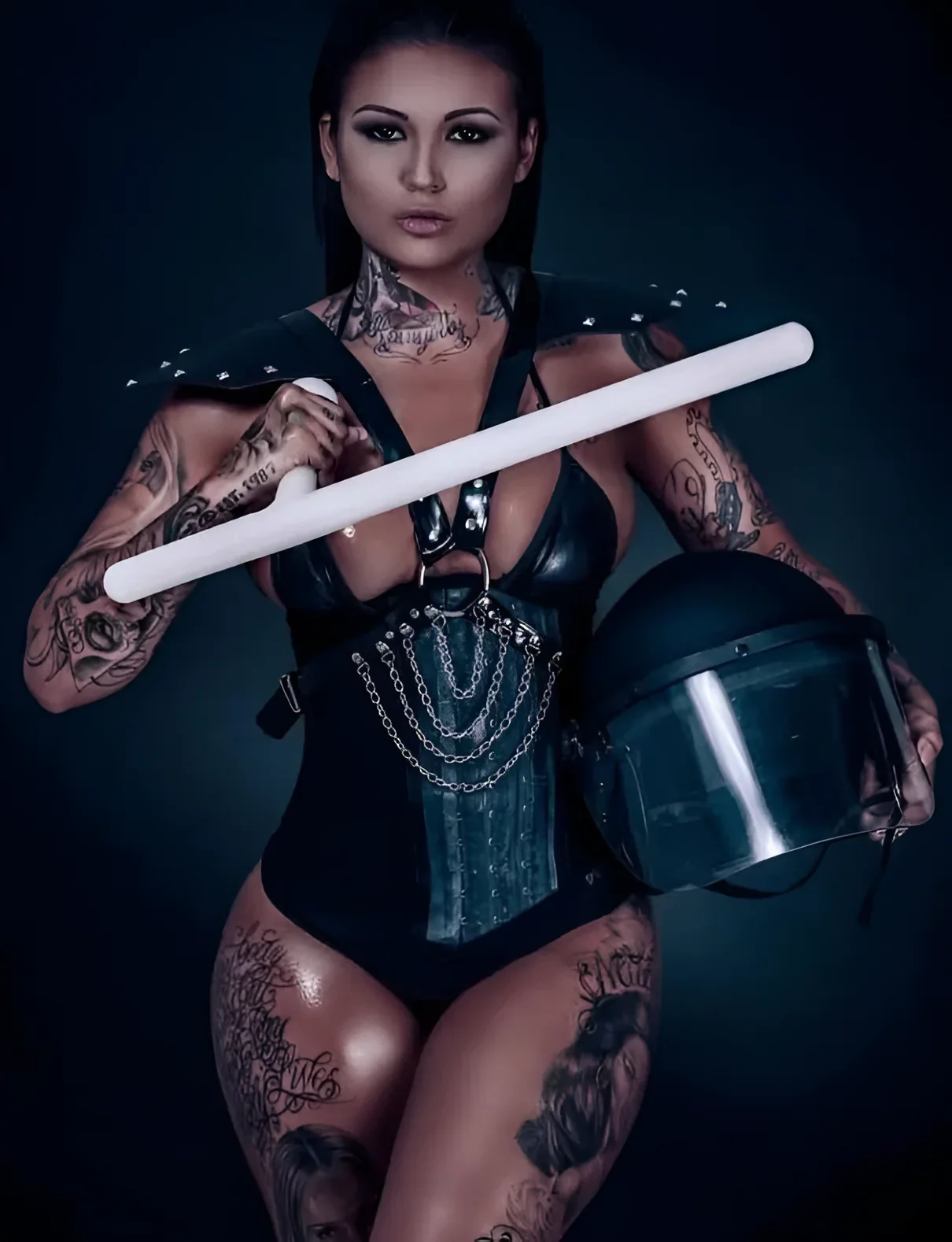
Tatu Baby thigh and lower-body tattoos
The lower-body photographs show why the thigh is such a strong canvas. It gives a large image room to breathe, and the shape of the leg lets the design follow a natural curve. Tatu Baby uses that space for bold, high-contrast pieces and larger lettering that would lose impact on a small patch of skin.
Thigh work can look very different while sitting, standing or walking, so a stencil check is worth the extra time. Look at it with the leg relaxed, then bend the knee and turn the hip. The design should still feel balanced when the body changes shape. That simple check can prevent a face, word or central symbol from landing at an awkward angle.
The area is also easier to cover than the neck or hand. That makes it a practical place for a first large piece if you want room to experiment without making every outfit a conversation. Think about the direction of the design too. Tall subjects can follow the leg, while wider compositions may look better across the upper thigh. Size should follow the subject, not the other way around.

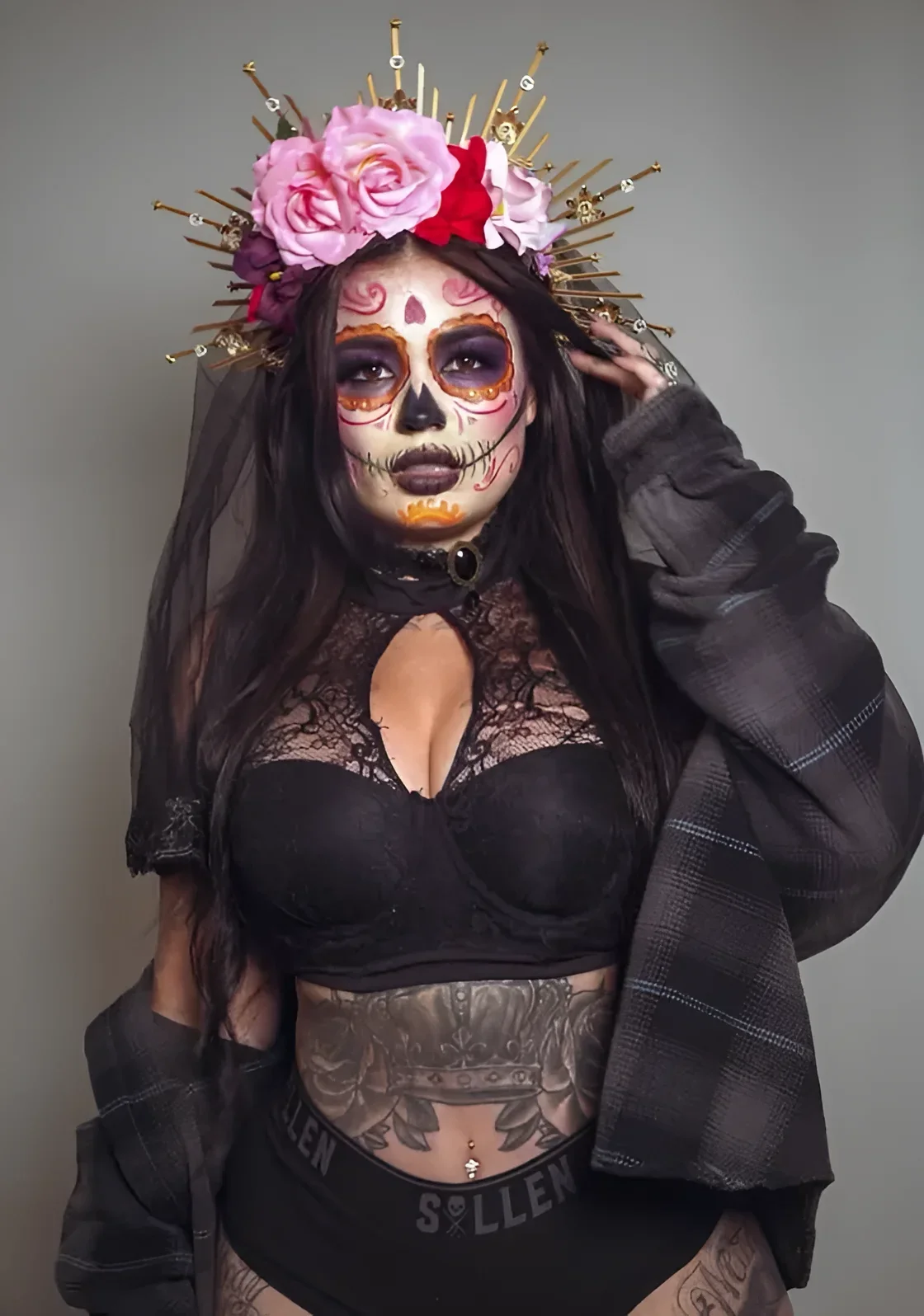
Tatu Baby sugar-skull makeup and stomach tattoos
One of the most striking photographs shows Tatu Baby in sugar-skull makeup, with the stomach and surrounding work visible beneath it. The temporary face design is not the same thing as permanent face ink, but it creates an interesting contrast with the real collection. Her permanent neck and body pieces stay recognisable while the makeup changes the mood for the photograph.
The stomach area is a demanding canvas because it moves with breathing, sitting and weight changes. Large curved designs can follow the ribs and waist beautifully, but tiny details need enough room to age. If you like the layered look in this image, ask an artist to plan the main shape first and add smaller accents only where the skin gives them space.
This is also a good reminder to separate costume from commitment. Sugar-skull styling, heavy makeup and dramatic clothing can make a photograph feel like a complete character. You can enjoy that atmosphere without copying every part of it. A small skull, a floral frame or a piece of lettering can carry the same feeling in a way that suits your own life.
Tatu Baby hand, chest and shoulder tattoos
Tatu Baby’s hand and arm work is especially visible in the close portraits. The fingers and backs of the hands carry small details that stay in view when she is posing, working or simply lifting a drink. Her chest and shoulders then give those details a larger frame, with heavier lines and shaded forms that can be read from farther away.
Hand tattoos need realistic expectations. Hands are washed, exposed to sunlight and constantly moving, so fine lines can soften sooner than they would on the upper arm. A skilled artist can suggest a simpler version that will age better. Clarity beats cramming when the canvas is small. Leave enough skin around each mark so it does not disappear into the next one.
The shoulder and chest give you more flexibility. A design can follow the collarbone, turn toward the upper arm or stay centred as a standalone piece. Before settling on one direction, check how it looks in the clothes you actually wear. A tattoo that looks great in a low-cut photo may feel different under a T-shirt or work shirt.

Tatu Baby neck lettering and upper-arm tattoos
The neck lettering is one of the first details people notice in Tatu Baby’s portraits. It sits close to the face, so it becomes part of the expression rather than a separate decoration. The upper-arm pieces then add more room for linework, shading and colour, creating a transition from the compact neck area to a larger body surface.
Neck lettering needs careful sizing and a very honest conversation about visibility. Hair and collars may cover it sometimes, but it will still appear in most close photos and introductions. Test the shape with a temporary marker, look at it in ordinary daylight and turn your head from side to side. The design should feel right when you are relaxed, not only when you are posing.
For the upper arm, it helps to think about future additions. A single portrait or flower can be framed now and connected later, while a piece that fills every edge leaves fewer choices. Tatu Baby’s collection shows how separate designs can still share a visual rhythm through repeated dark lines, warm colour and confident scale.

How to borrow the look without copying it
Tatu Baby’s collection is a useful reference because it is personal, visible and varied. There are ideas for people who love large colour pieces, people who prefer black and gray, and people who want a small hand detail beside a bigger arm project. The common thread is not one symbol. It is the willingness to choose placement deliberately.
Start with a short list of subjects you would still care about in five years. Then separate the parts you like about a reference: maybe it is the heavy outline, the soft portrait shading, the way a word curves around the body or the contrast between a dark shape and open skin. Tell your artist those things instead of asking for an exact copy of someone else’s photograph.
Choose the artist for the job. Realism, lettering, blackwork, colour and large body layouts each need different experience. Look at healed examples, ask how the design will age and listen when the artist recommends making a piece larger or simpler. A good reference should start a conversation, not end it.
Visibility matters just as much as style. Neck and hand work can be part of every outfit, while thigh and stomach pieces give you more control over when they are seen. Neither choice is automatically more serious. They simply carry different everyday trade-offs. Pick the placement that fits your work, family life and comfort level.
Finally, let the collection grow. Photograph each finished piece from several angles, notice how it sits with your clothes and wait before filling every gap. Tatu Baby’s look works because the designs have room to be themselves. Give your own collection that same breathing room.
After each appointment, follow the artist’s aftercare instructions and judge the result when it is healed, not only when it is bright and fresh. Protect the skin from strong sun, do not pick at it and ask the studio if something looks unusual. Clear, healthy skin gives every style a better chance to stay sharp.
The lasting takeaway from Tatu Baby’s tattoos is simple: a strong collection can be colourful, dark, delicate and bold at the same time. Build it around stories and placements that feel natural to you, then let the details develop over time. That is how inspiration turns into something personal.