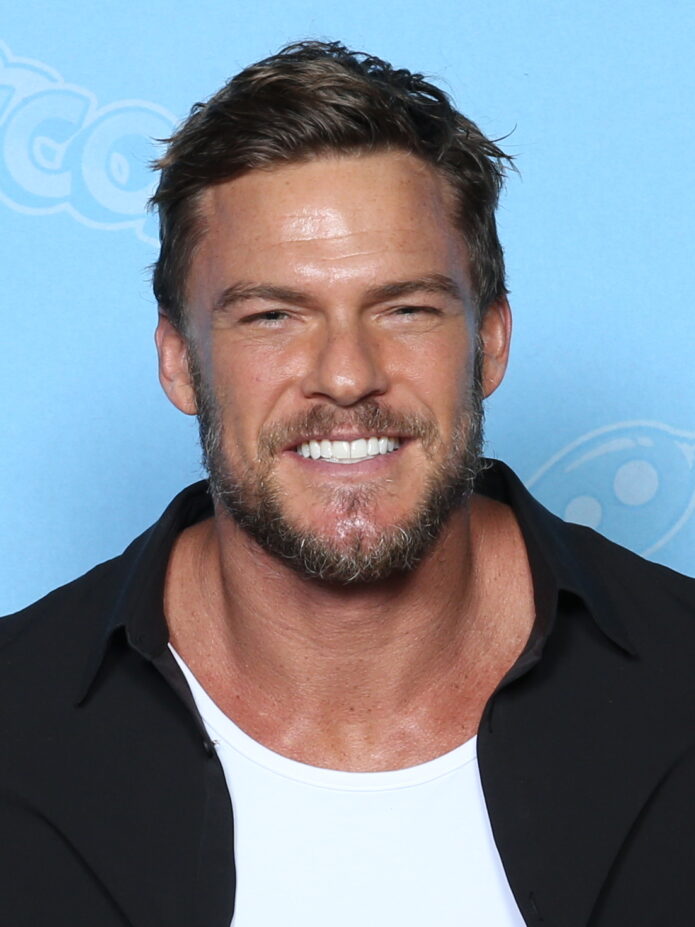
In GQ’s tattoo tour, Alan Ritchson said he had 23 tattoos and talked through several of them. The first was a matching piece with his wife Catherine; later additions include “81” on his ribs and a large forearm project. He has also explained tattoos for his children, though not every mark has a public story.
What the GQ tattoo tour documents about Alan Ritchson’s tattoos
GQ places the first tattoo in Ritchson’s tattoo history, early in his relationship with Catherine; they got matching designs together. It was a shared decision, not a tattoo for a film role. His later work grew larger, but the matching piece still marks the start of the collection.
Reports confirm the matching origin, but do not describe every line or give a private meaning. A symbolic reading beyond what Ritchson has said would be guesswork. Photos show the size and placement; the GQ account explains why it was his first tattoo.
The matching piece began the collection. Ritchson later added larger designs, turning a shared tattoo into the first point in a much broader story.
Forearm lettering and the matching Hachiko tattoo
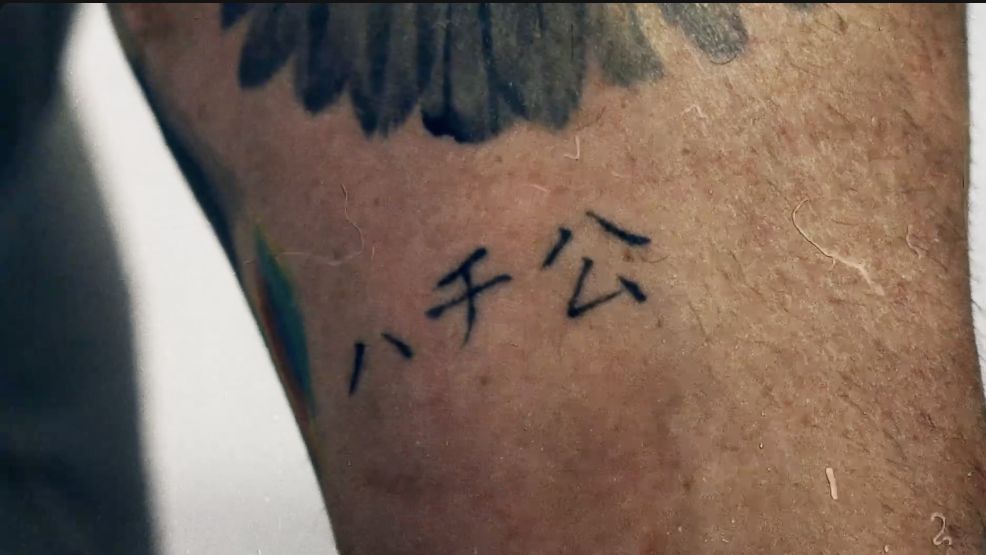
GQ identifies tiny Japanese characters as Ritchson’s first tattoo, a matching Hachiko design he shares with Catherine. He connects Hachiko with loyalty and lasting love. The tour also shows a cross and nearby handwriting, which he reads as “boundaries, devotion and winter storms.” The photo gives a close view of the lettering, though not every mark is legible.
Dove, flame and shield designs honour his sons
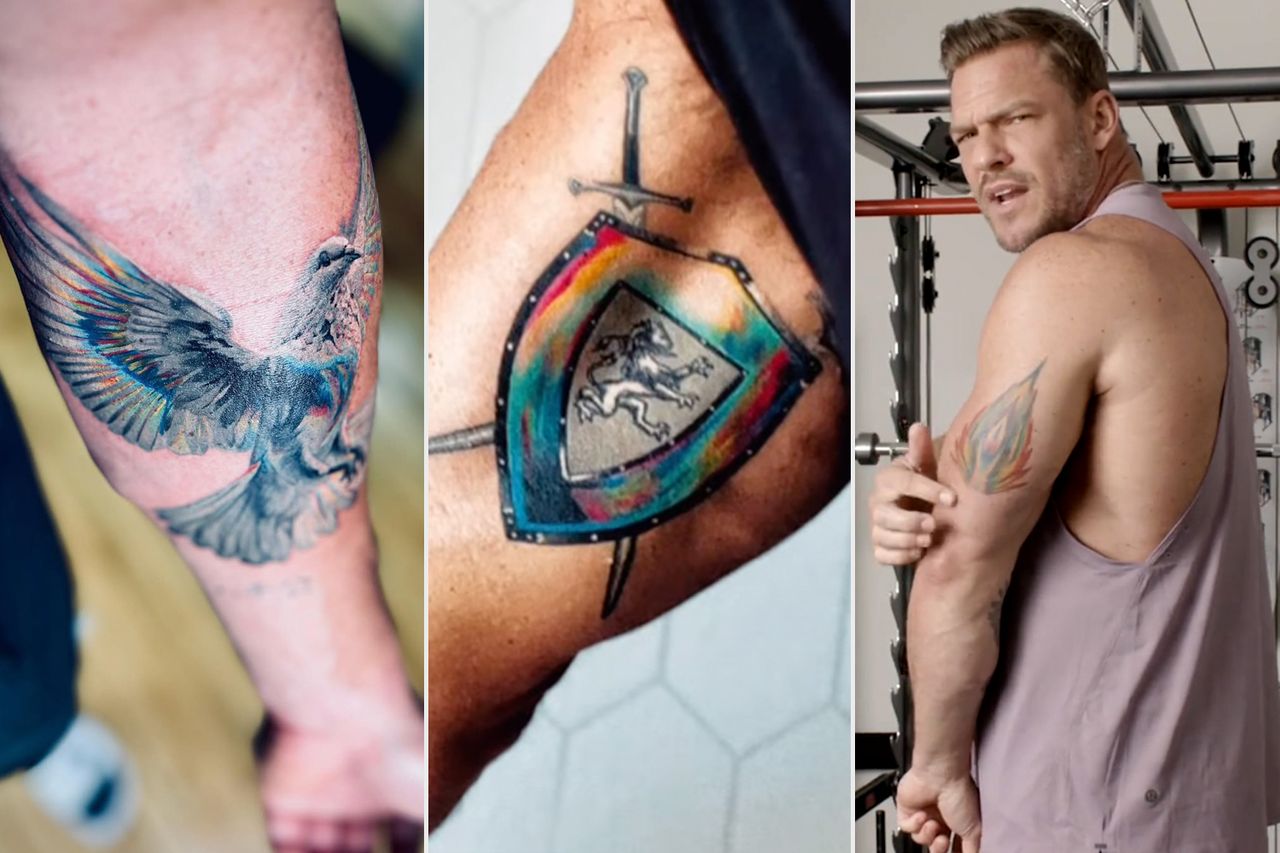
The family tattoos include a dove for his eldest son, Calem; an abstract flame for Edan; and a sword-and-shield crest for Amory. Ritchson explains the dove and flame in GQ, while People identifies the crest as a tribute to Amory. Each design has a specific connection to one of his sons.
The “81” on Ritchson’s ribs
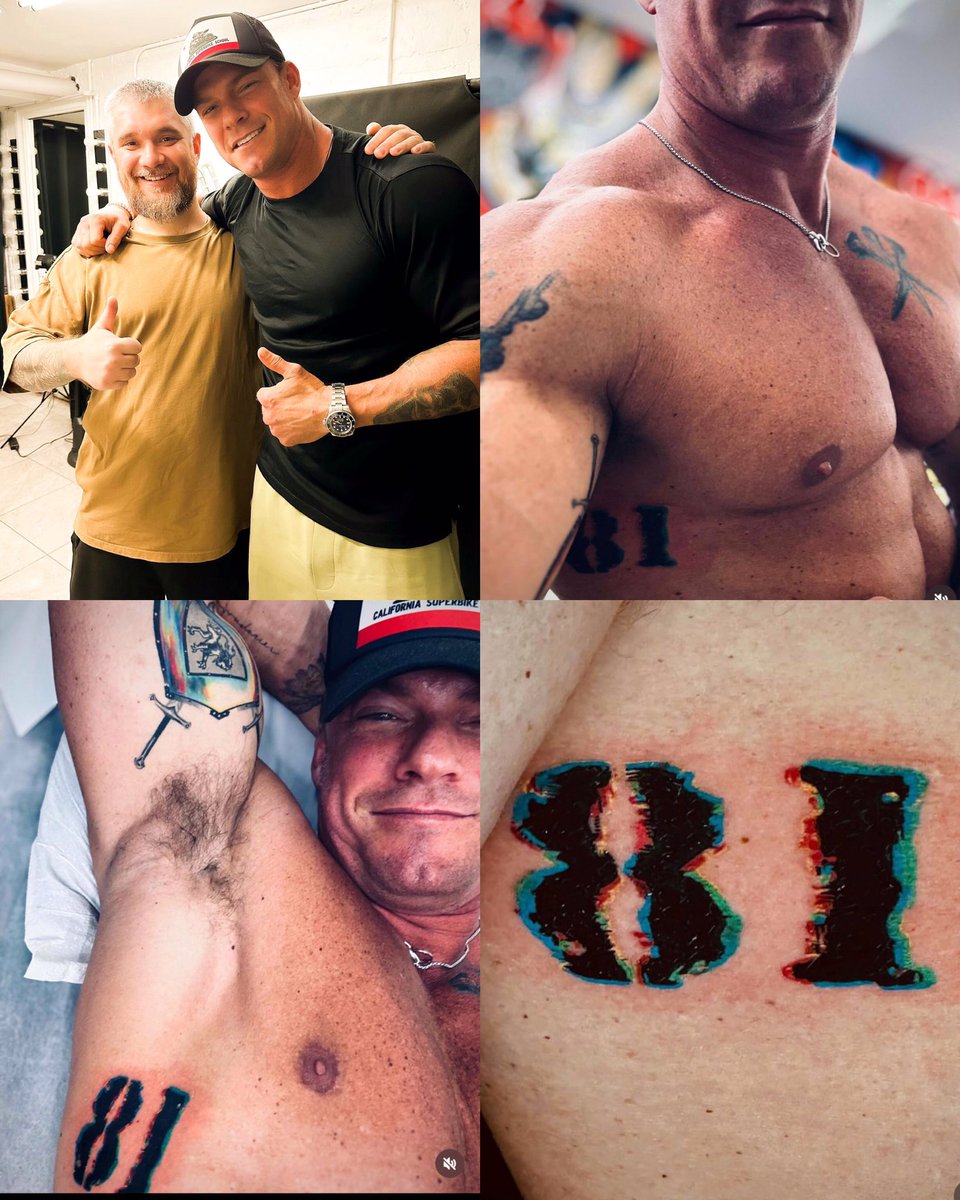
Coverage also documents a separate tattoo: “81” on Ritchson’s ribs, a piece he added after the matching design. The number appears in later discussions of his collection, though older photos often hide the ribs under clothing.
Earlier coverage identified the number and its placement without a clear explanation. Ritchson later discussed the tattoo tour and tied “81” to a film project. A close-up shows the marking, but the GQ interview supplies the context.
On its own, “81” could be a date or a private reference. Ritchson’s explanation connects it to the film War Machine and the character he played, rather than to an address or a birthday.
GQ connects the number to the making of War Machine: Ritchson says the story moved him enough to mark 81 on his ribs, and he wanted to embody the character.
The large forearm project and the tattoo-tour era
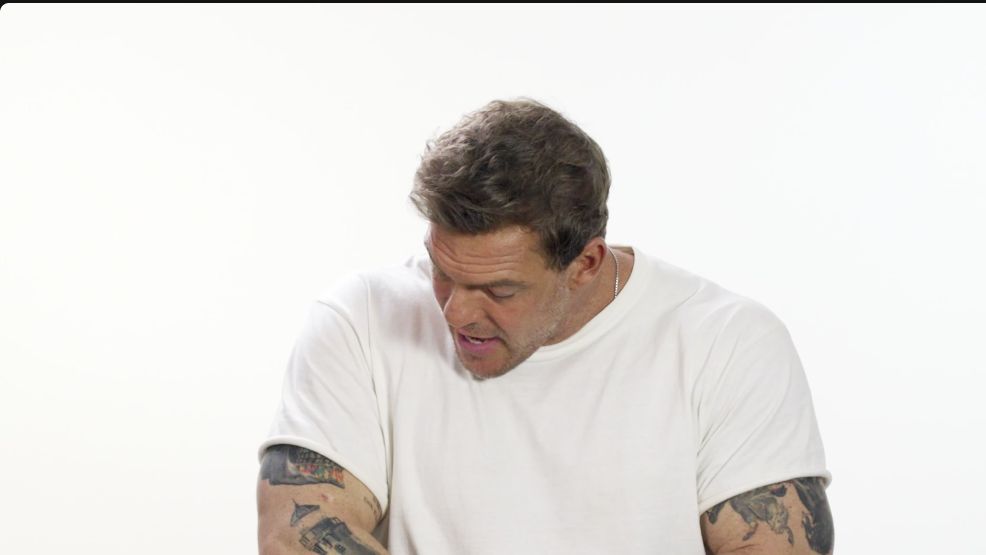
Ritchson’s forearm became the largest visible expansion of his collection. British GQ and other coverage say the artist spent about 16 hours on the work. He also had to let it heal before filming a demanding water sequence for Reacher, tying the tattoo to a particular production period.
The 16 hours describe the size and process, not a single named design. Photos show black-and-grey work and lettering across the forearm, but they do not identify who created every part or what each mark means.
Photos can show different stages of the forearm work. While it healed, wardrobe or bandages may have hidden it; later images reveal more of the finished piece. GQ gives Ritchson’s account, while production coverage explains why the timing mattered on set.
GQ points out a lighthouse on the arm and describes the unfinished forearm as Zeus throwing a lightning bolt. A mountain and horses were still to be added. The feature says Pasha Ink did most of Ritchson’s tattoos.
How the documented tattoos fit together
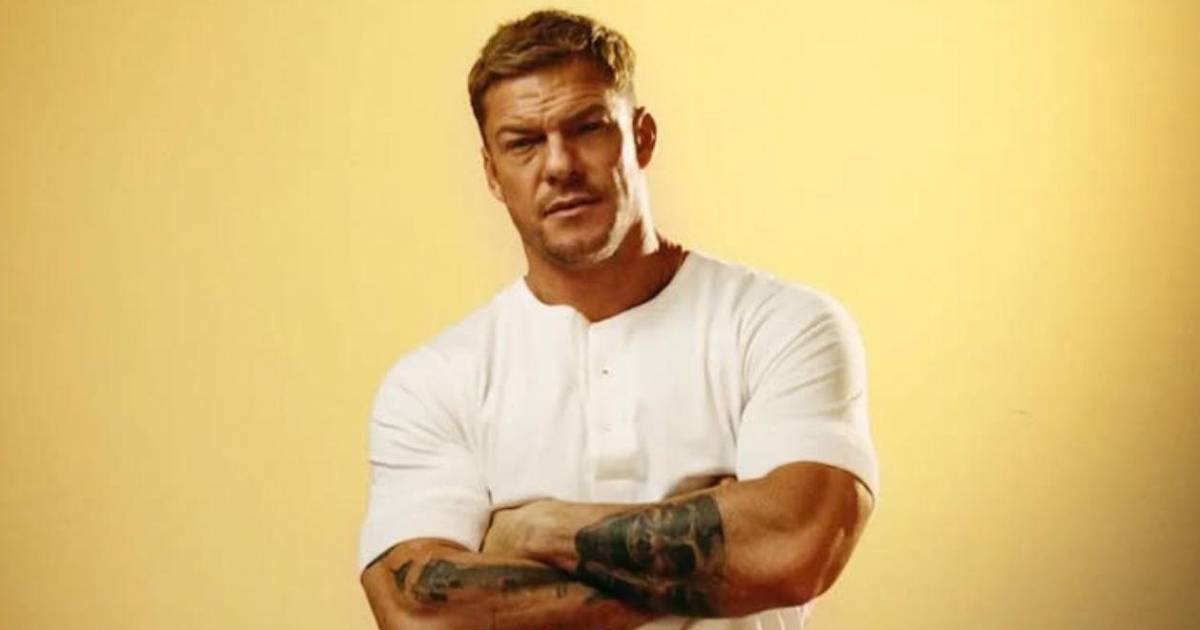
The timeline starts with the matching Hachiko tattoo, then moves to “81” and the forearm work around the Reacher filming period. That sequence helps make sense of photographs taken at different stages.
Ritchson’s total of 23 comes from his own tattoo-tour conversation. The feature does not identify every one with the same precision: some are small or private, and others disappear in event photos. The number is his estimate, not a complete visual inventory.
The dates help separate the designs. The matching tattoo belongs to the early part of his relationship with Catherine; the rib number and large forearm project came later. A recent close-up should not be mistaken for proof that every part was present in earlier photos.
A count and a design-by-design list are different things. Ritchson gave a total, but only some tattoos have a clear name, location and explanation. The documented pieces make a useful record without filling in what the interviews leave out.
What remains unconfirmed
The reports do not identify every meaning, artist or location in Ritchson’s collection. A dark shape in a distant photograph is not automatically a named tattoo. The clearest entries are the matching Hachiko, the “81” rib tattoo and the forearm project; a future interview or sharper image may add more.