
David Harbour’s most detailed tattoo story belongs to Alexei Shostakov, the Red Guardian he plays in Black Widow. The designs were created for the character, and Harbour has discussed several in interviews. They are screen tattoos, not evidence that he wears the same ink in his everyday life.
Alexei’s ink tells you who he is before he opens his mouth: a Soviet super-soldier who spent years in prison and still claims Natasha and Yelena as his daughters, though the family began as a cover. The artists put that history on his skin through names, portraits, political figures and prison-style decoration.
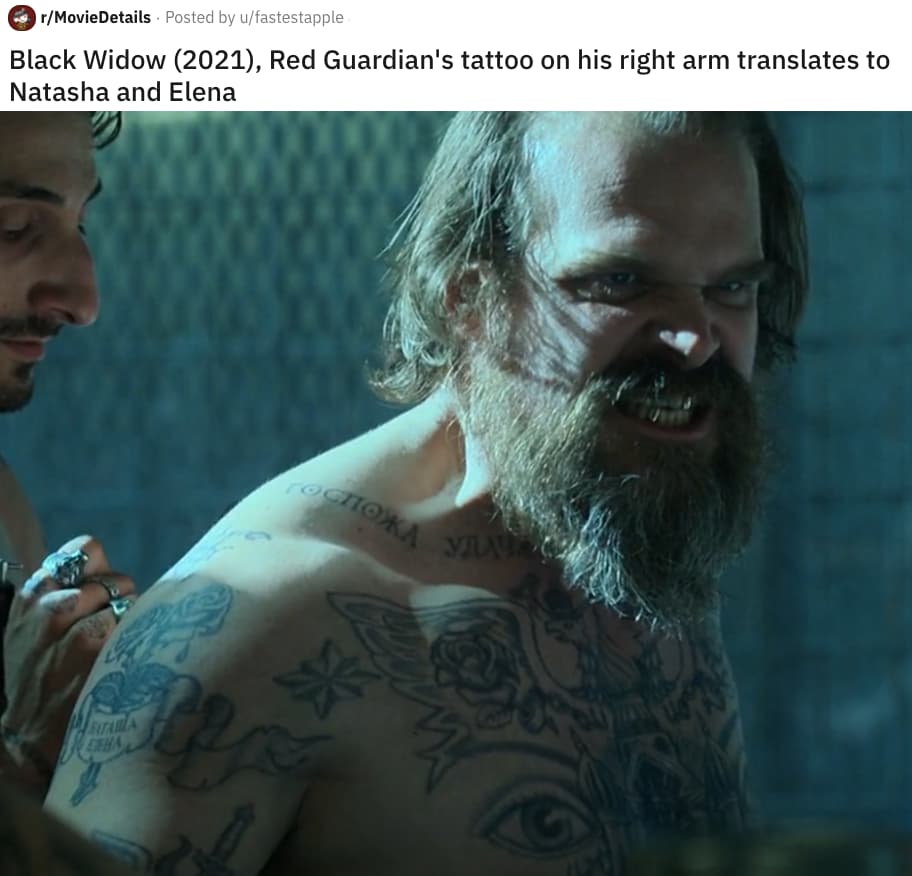
Natasha and Yelena are named beside Melina’s portrait
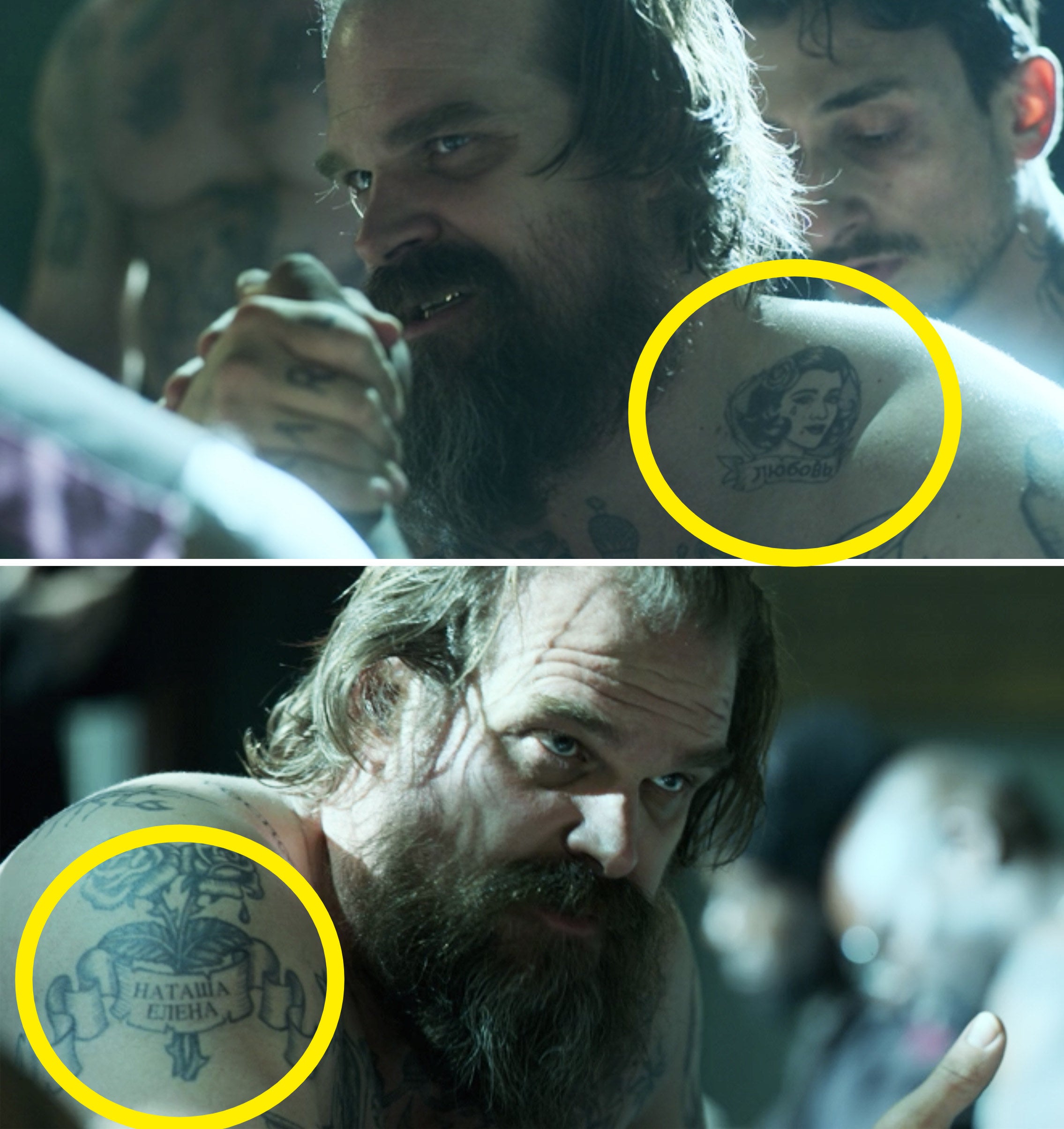
On Alexei’s upper arm and shoulder, the family tribute pairs a portrait of Melina (played by Rachel Weisz) with Natasha and Yelena’s names in Cyrillic nearby. The image and lettering say what a line of dialogue might not: Alexei still considers the people he treated as family part of his life.
Harbour said the portrait uses a younger image of Weisz and named it his favourite tattoo. The reference is specific to Alexei’s story: Melina was his wife in the undercover cover story and part of the family the four agents built together.
The names are more than decoration around a rose. They identify Natasha and Yelena, making Alexei’s attachment to them explicit. In a wide shot the Cyrillic can blend into a dark band; a close-up separates the words from the portrait.
KARL MARX and the knuckle lettering make the politics impossible to miss
The words KARL and MARX run across Alexei’s knuckles. Harbour called them one of his favourite details: blunt, funny and impossible to hide when Alexei raises his hands. Instead of the familiar “love” and “hate” prison lettering, he wears the name of the communist philosopher.
The English lettering is deliberate: Alexei is Soviet, but the audience can read KARL MARX at a glance. The words are also visible in close-up. Whenever he gestures, his politics arrive before his speech about Captain America or the Soviet glory days.
Harbour has discussed the knuckles in interviews, so both the placement and the joke are clear. The other marks on Alexei’s body are different: buildings, symbols and ornament rather than readable words.
Lenin’s portrait turns the abdomen into a Soviet political panel
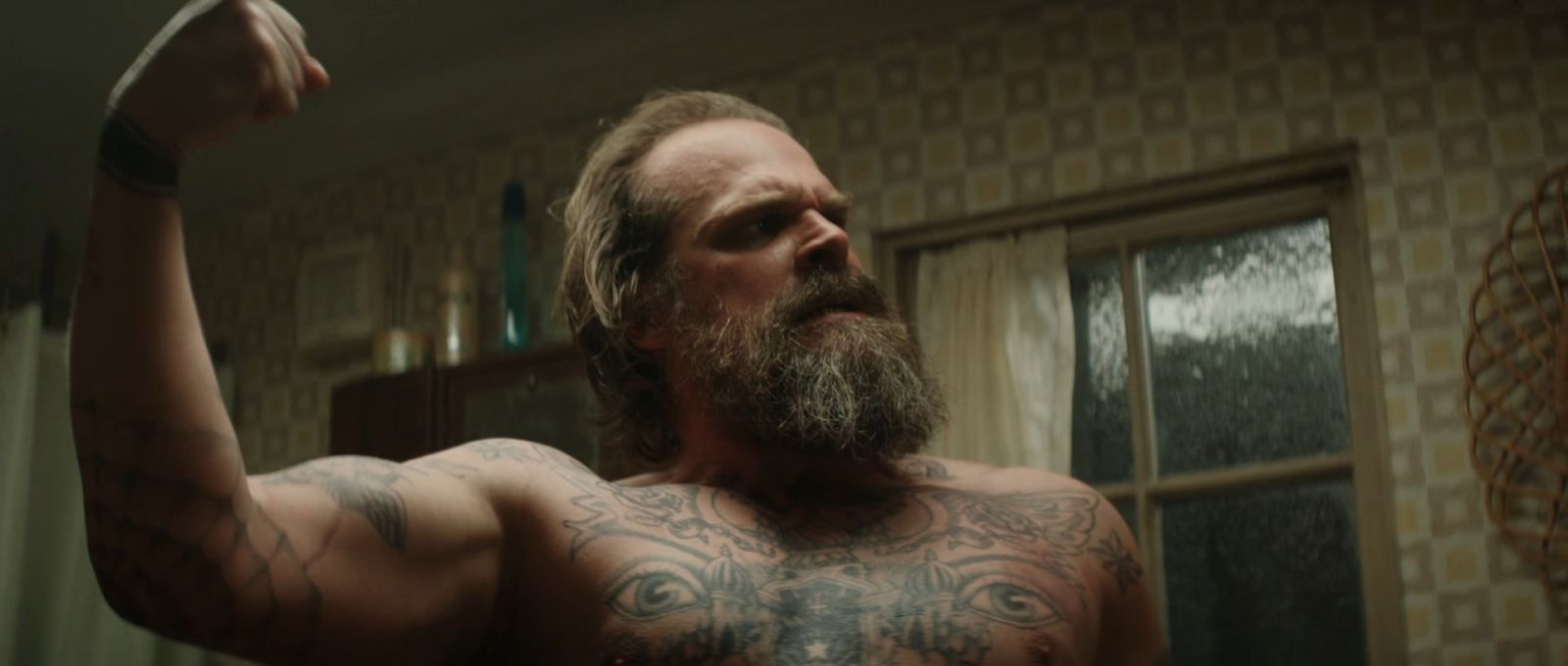
Lenin’s portrait takes up space on Alexei’s abdomen. Harbour identified him in interviews, and the scale gives the Soviet leader more weight than a small political emblem. It sits among chest decoration and dense prison-style marks, adding to the character’s Soviet identity.
The Red Guardian suit hides the portrait; prison scenes and shirtless shots reveal it. Against the surrounding ink, Lenin stands out as a deliberate image, matching Alexei’s old-fashioned politics and theatrical belief that he should be remembered as a national hero.
Harbour has discussed the design, but it belongs to Alexei on screen. That interview does not turn the fictional Lenin tattoo into part of Harbour’s permanent collection.
The Melina neck portrait is a separate tattoo from the family names
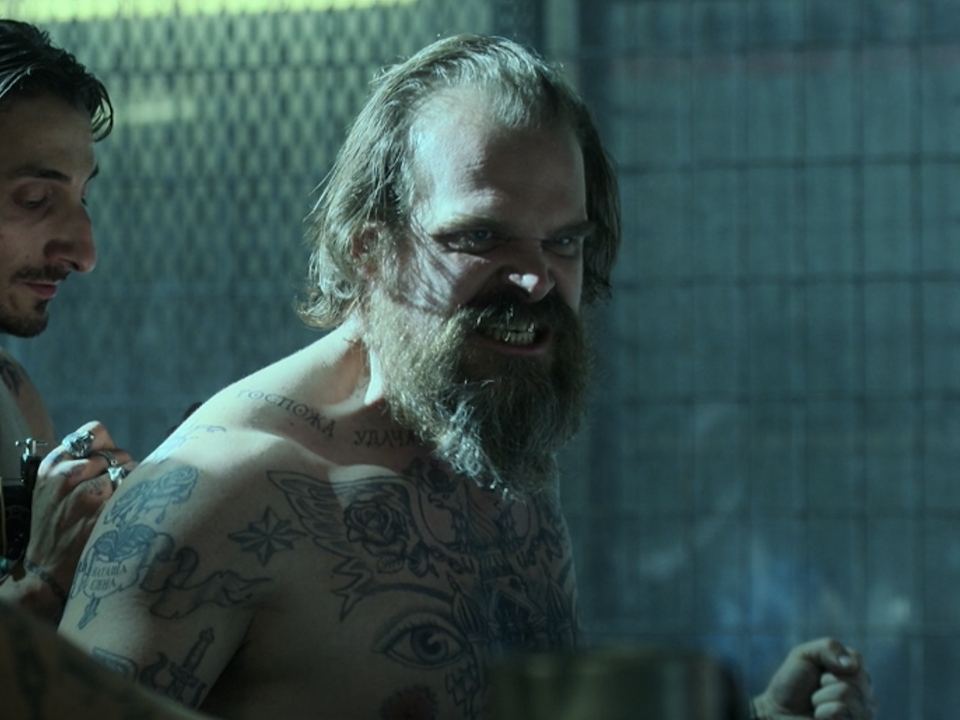
On Alexei’s neck, another portrait shows Melina’s face with Melina written below. Harbour said it was based on a younger photo of Rachel Weisz. Set beside his face, it is easy to catch in profile and feels more intimate than the Soviet imagery across his chest.
The neck portrait and the shoulder tribute are two different designs. One names Melina; the other pairs her face with Natasha and Yelena’s names. Together they show the family Alexei loved and the daughters he kept claiming.
The close production shot catches details a headshot cannot: the tattoo is small, and beard shadow and lighting can hide its edge. The angle helps separate Melina’s face and name from the prison-style markings around it.
Prison and Russian gang symbols fill the spaces between the named tattoos
The portraits sit among layers of Russian prison-style artwork: buildings, lettering, crests, birds and decorative shapes. Harbour said the design team researched Russian gang tattoos, then adjusted some imagery so it would not read as a Nazi eagle. Small fortress-like details gave Alexei’s ink its own visual language.
The surrounding markings do not share a single meaning. Some suggest status, ideology or confinement; others make Alexei’s skin look lived-in. Production notes explain the research behind the designs, but not what every individual symbol is meant to signify.
In some frames, a falcon-like tattoo and a large double-headed eagle or crest appear across the arms and chest. These are details of Alexei’s character, not signs of Harbour’s own politics or prison history. Beside the named tattoos, they make his body look like a record of Soviet power and years behind bars.
Alexei boasts about the Soviet Union as if it might restore his old status. The family tattoos show what matters after that status fades: Natasha, Yelena and Melina. The knuckle lettering is loud and ideological; the names and faces are quieter and more personal. That contrast gives the makeup its weight.
The placement lets the film reveal each detail in motion. Karl Marx appears when Alexei gestures; the abdomen shows when the prison scenes remove his suit; Melina appears in profile; and the shoulder tribute comes into view when he wrestles or lifts an arm. The tattoos tell parts of his story without stopping the film to explain them.
On screen, the references are clear: Karl Marx, Lenin, Melina, Natasha and Yelena are all identified through Harbour’s comments or production accounts. The prison-style marks draw on research, but their individual symbols do not all have a confirmed translation. Together, the pieces make Alexei’s body part of the story, not just a collection of fake tattoos.
5 thoughts on “David Harbour’s Red Guardian Tattoos, Design by Design”