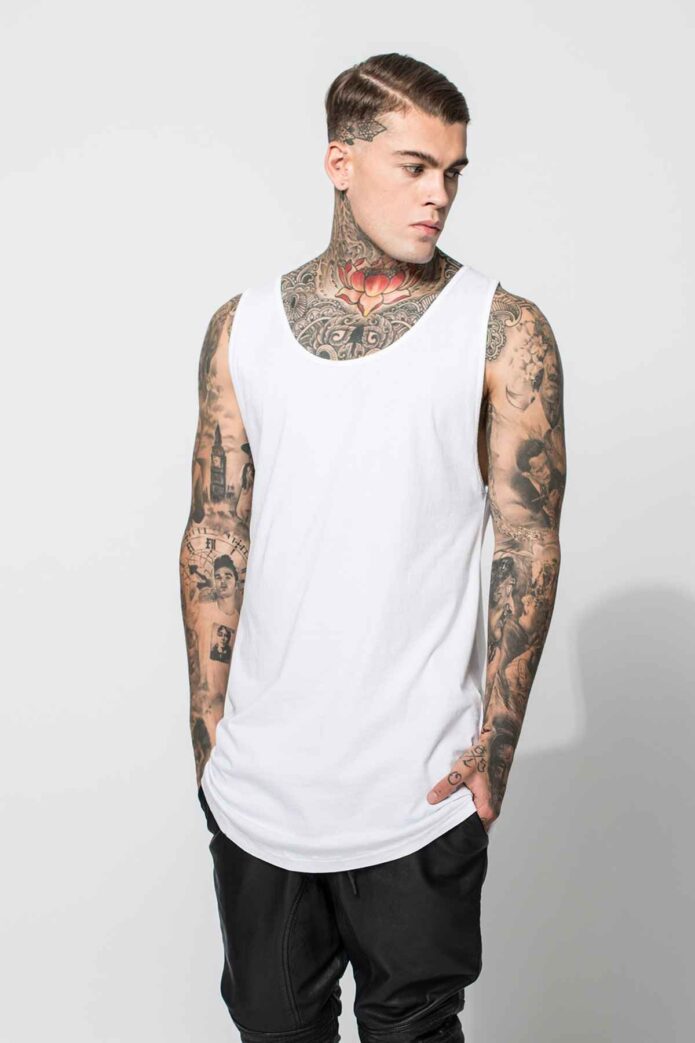
Stephen James’ tattoos are easy to recognise even when you only catch part of a photo. There’s the red lotus at his throat, the portraits running down his arms, and the huge skull across his back. Up close, though, the smaller details are just as interesting. Fine dots, curved borders, tiny symbols, and patches of bare skin stop all that ink from blending into one dark shape.
The British model and former footballer doesn’t stick to one tattoo style. His collection brings together portraits, ornamental patterns, flowers, and bold black areas. What holds it together is how those pieces sit next to each other. The arms feel like picture collections, while the neck and torso have a more flowing, patterned look.
His first tattoo was a Star of David on his right elbow, done in Prague. The collection grew far beyond that small starting point. Here are five parts worth a closer look, from the most familiar neck piece to the back tattoo you don’t see in every fashion shoot.
The red lotus and patterned neck tattoos
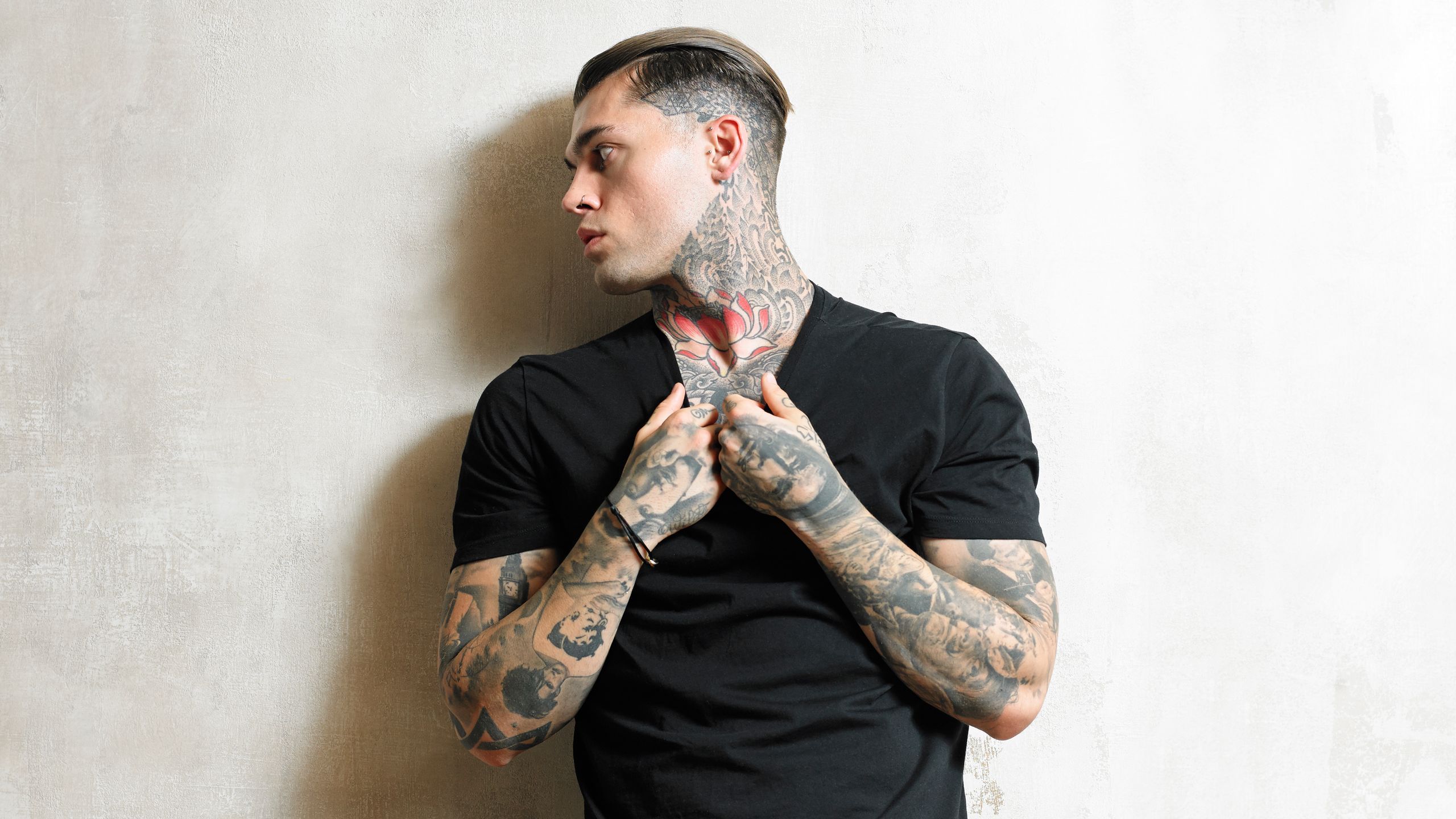
The red lotus tattoo at the front of his neck is one of James’ clearest visual signatures. Its petals open across his throat, with pale areas near the edges and warmer red shading toward the middle. Black outlines keep the petals separate. Even with a black T-shirt covering most of his chest, the flower still shows above the collar.
There’s a nice change of pace between the lotus and the ink around it. The flower has broad, easy-to-follow shapes. The sides of his neck are much busier, with small repeated forms, pointed leaves, and curved lines. That difference gives your eye somewhere to settle. You can pick out the flower first, then follow the finer work around his jaw and toward the back of his head.
From the side, the pattern doesn’t end in a straight line under his ear. It climbs upward and sits close to the hairline, while the lower part meets the ornament on his upper chest. That makes the neck feel like a bridge between two larger areas. The lotus occupies the front, and the dark patterned sections carry the design around the sides.
It’s tempting to attach a big story to a lotus. Flowers can mean different things to different people, though, and James hasn’t given a clear personal explanation for this particular piece in the interviews discussed here. The visible design is enough to enjoy: a warm patch of colour surrounded by detailed black and grey work.
The placement also explains why the tattoo shows up so often in his pictures. A sleeve can disappear under a jacket. This flower stays visible with plenty of ordinary necklines. You don’t need a shirtless photo to recognise it, which makes it one of the strongest starting points for understanding his collection.
The British portraits and Dali arm tattoos
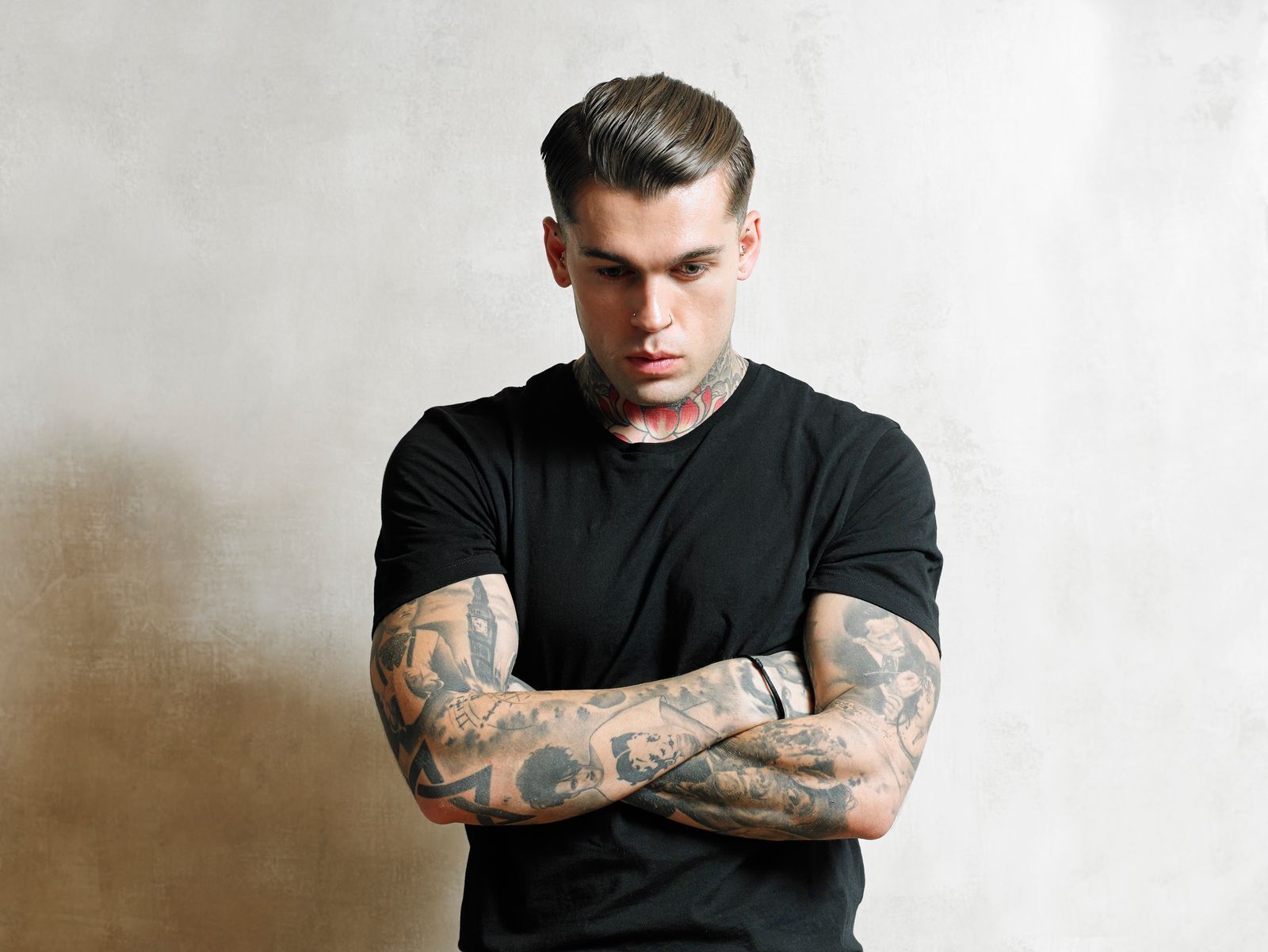
James has described two different themes for his arms: British references on his right and Salvador Dali-inspired art on his left. That helps make sense of the sleeves. They aren’t simply rows of faces chosen at random. Each side has its own thread, even though the black and grey shading gives both arms a similar overall feel.
The right arm includes British musicians he grew up listening to. He named Morrissey, Robert Smith, Siouxsie Sioux, and Ian Dury when talking about the collection with Vogue. His short explanation was “the music I listened to growing up”. Big Ben adds an architectural reference among the portraits. It’s a different kind of subject, but it still belongs to the British theme.
Look at the way the faces are handled. Some have soft shading through the cheeks and hair; others use stronger black shapes and lighter skin to make the features readable. That variation keeps the sleeve from looking like the same portrait repeated with a different hairstyle. The clock-like circular lines and smoky areas around the pictures also help them sit together on a curved arm.
The left side has a looser, more dreamlike feel. Faces and unusual shapes appear among flowing patches of grey. Dali’s influence fits that visual mood, but it’s useful to distinguish a sleeve inspired by an artist from a neat catalogue of named paintings. You can appreciate the surreal look without trying to assign a title to every small shape.
Both sleeves work at two distances. From across a room, you notice the coverage and the contrast. Closer up, individual faces and small details come forward. In the crossed-arm photo, the different subjects remain readable even where the forearms overlap. The bare gaps and lighter shading matter as much as the darkest parts. They give the portraits room instead of letting one face run straight into the next.
The ornamental chest and stomach tattoos
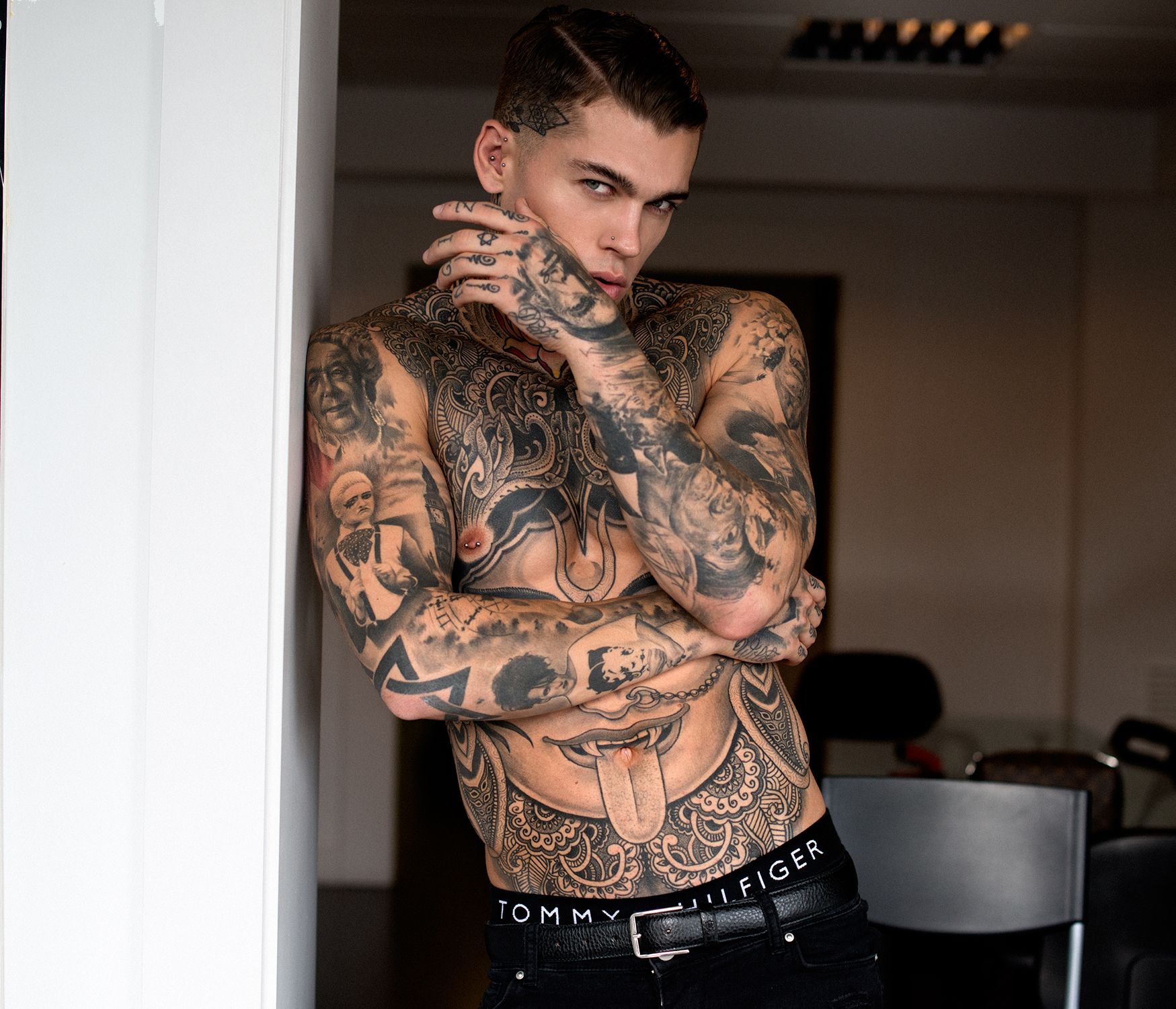
The arms have recognisable people and places. His torso takes a different approach, with ornamental chest work and a large face-like stomach design. Curves, loops, and repeated borders spread across the upper chest. Below them, the abdomen has a broad mouth shape, exposed teeth, and a long tongue stretching toward the waist.
That large stomach piece gives the torso a very different mood from the quiet portrait shading on his arms. The mouth is exaggerated and graphic. You can spot it quickly, even before you’ve worked out all the smaller shapes above it. The long central tongue also draws your eye down the middle, making the abdomen feel organised around one clear feature.
On either side, patterned borders curl around the larger shapes. Some areas are densely filled with small loops, while others leave more skin showing. Those changes are easy to miss in a quick scroll through a photo, but they do a lot of work. The open patches let the teeth, tongue, and dark areas stand apart.
The upper chest is particularly busy. Rather than a single isolated emblem in the centre, it has layers of ornament that spread toward the shoulders. The design follows the width of the chest and narrows as it moves downward. That change in shape helps connect the broad upper section to the narrower stomach without making everything look like a flat rectangle placed on the body.
There’s also a difference between identifying a visible face-like design and naming a specific religious figure. James’ collection is often discussed in terms of religious and cultural imagery, but the exact identity and personal meaning of every torso detail aren’t clear. Calling this section ornamental describes what you can actually see without forcing a story onto it.
With the sleeves beside it, the torso creates a useful contrast: small portraits around the arms, larger shapes through the centre. It makes the whole collection feel varied while keeping a steady black and grey base.
The head patterns, hand portrait and finger symbols
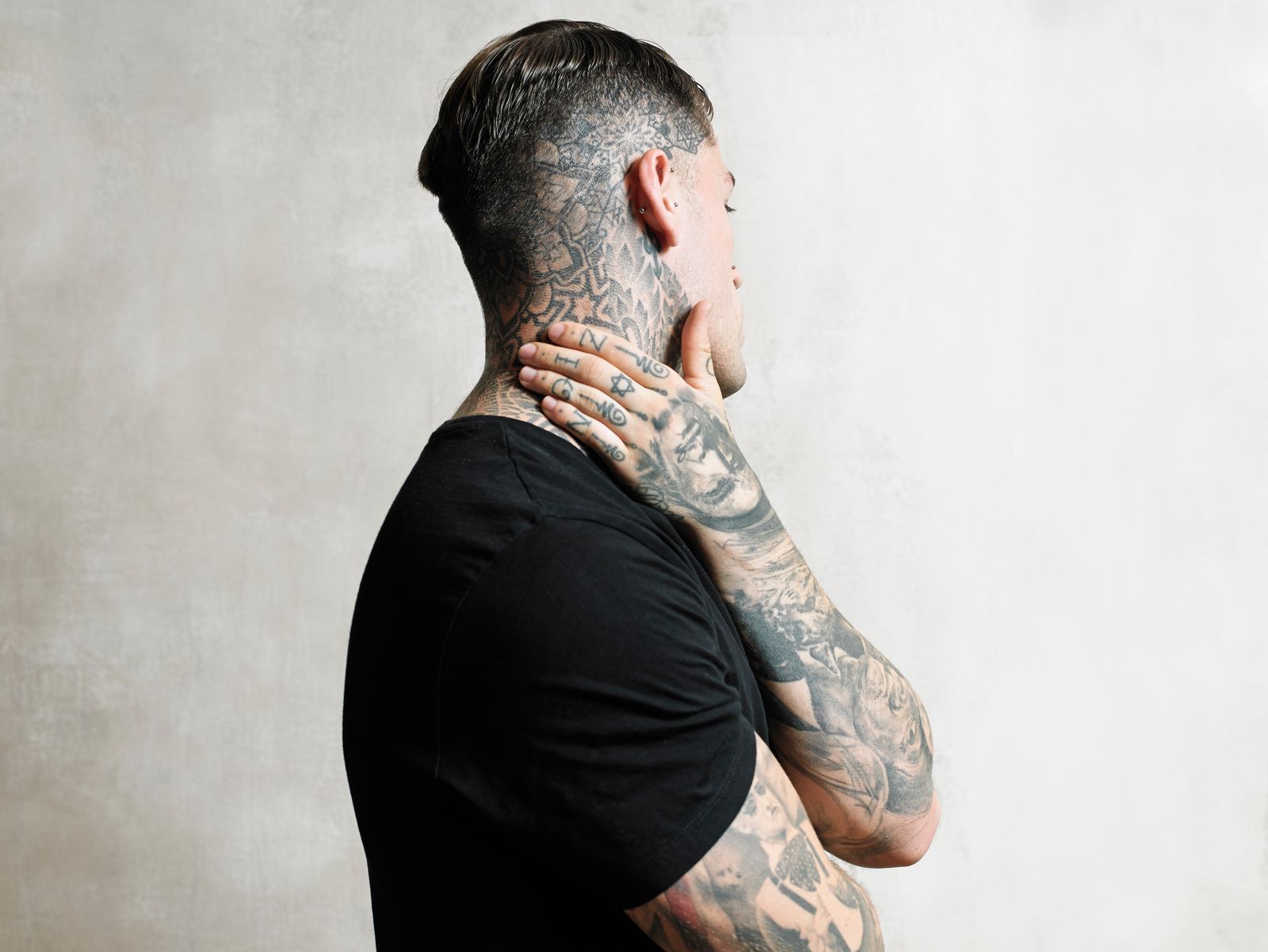
James’ head and hand tattoos bring the detail into smaller spaces. The closely cut sides of his hair reveal repeating shapes above and behind the ear. Some are pointed and geometric; others look more like curved petals. They continue into the patterned neck, so the head work feels connected rather than sitting alone above it.
The hairline changes how much of that design you see. In a side view, a narrow band of dark pattern peeks out near the temple. From behind, the coverage looks broader and more intricate. The longer hair on top makes a clear border against the shaved section, which is why his haircut and tattoos have such a strong visual relationship.
The back of his left hand carries a portrait, with dark facial details framed by a curved outline. The fingers have much simpler marks. A small six-pointed star, individual letters, and curling symbols sit in separate spaces. It’s a good example of scale changing the way a collection works: the hand holds a picture, while each finger only needs a small sign.
Those marks are close together, but they don’t all merge into a solid band. You can still see skin between them. The portrait’s darker areas contrast with the thinner finger lines, and the wrist leads into the larger arm shading. When he rests that hand against his neck, several different kinds of tattoo sit right beside one another without losing their separate shapes.
Not every letter or symbol has an obvious explanation, and a single photo can’t tell you why he chose it. The appealing part here is the arrangement. Small marks have their own spaces, and the larger portrait sits where there’s enough room to recognise a face. The head pattern uses repetition; the hand uses a central image; the fingers use short, separate details.
That mix is what makes close-up pictures rewarding. The sleeve might grab your attention first, but the smaller placements give you something new to notice when you look again.
The oversized skull back tattoo
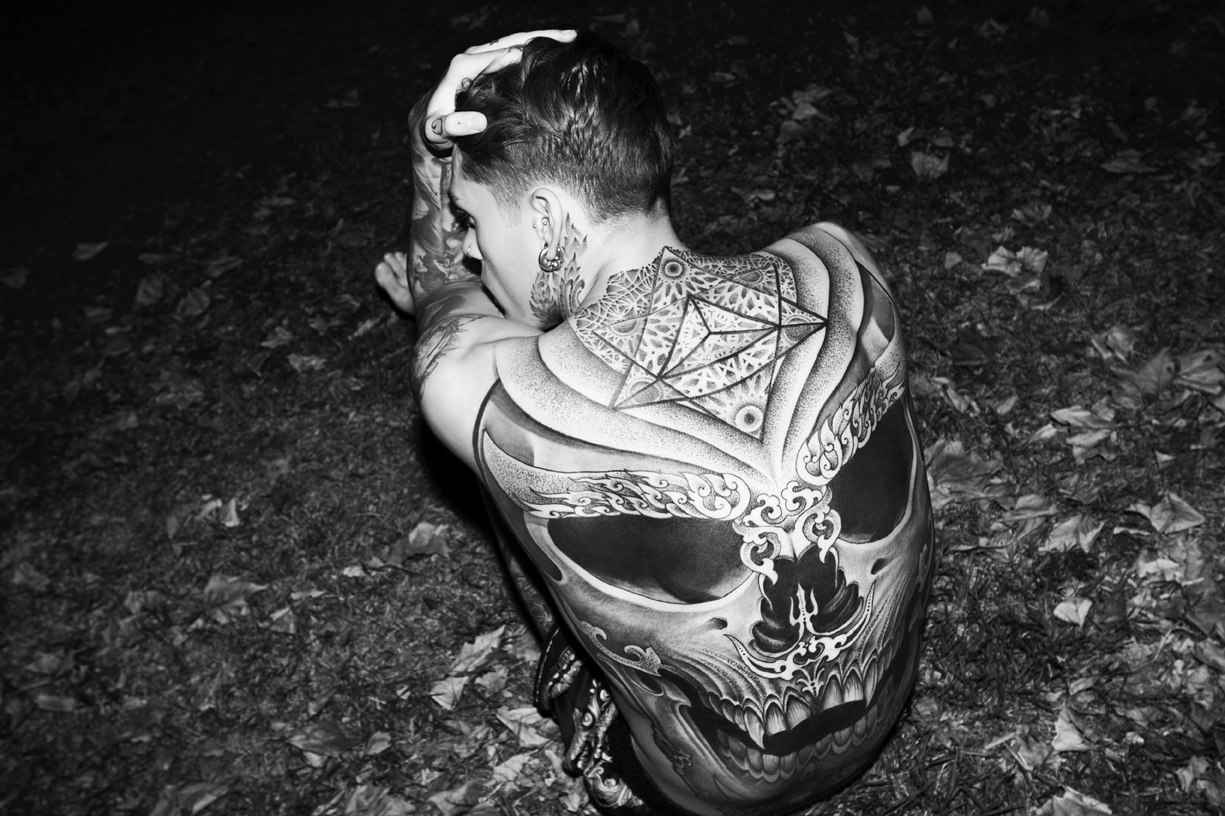
The skull across Stephen James’ back is the boldest single image in this group. Deep black eye sockets occupy much of the upper half. A dark nose cavity sits between them, and a wide row of teeth fills the lower section. The scale makes the skull readable without needing to follow every decorative line.
It isn’t a plain anatomical skull. Curved flourishes sit above the eye sockets, and a decorative shape runs down the centre of the forehead and nose. The teeth have their own outlines and shading, giving the lower part more texture than a simple white grin. These additions connect the skull to the ornamental style seen elsewhere in his collection.
Above the main face, a pointed geometric section spans the upper back. Straight lines, smaller divisions, and stippled shading give that area a different texture. The hard edges sit against the skull’s rounder eye sockets and sweeping brow. It’s a striking pairing: one section relies on repeated geometry, while the larger face below relies on a few heavy shapes.
The design also uses the width of the shoulders well. The eyes reach outward, while the central nose keeps the face anchored along the spine. Lower down, the mouth follows the narrowing shape of the back. That relationship between tattoo and body is a big part of why the piece feels so large without looking randomly stretched.
If the skull is the part that catches your attention, Rick Genest’s tattoos offer a different take on skeletal imagery. James keeps a huge skull on the back, while Genest made that theme part of his face and wider body coverage. The comparison is interesting because the same broad subject can create a very different look depending on placement.
Turn back to James’ neck, sleeves, and hands, and the contrast is clear. The skull makes an immediate impression. The smaller tattoos ask you to slow down. Together, they give his collection both a recognisable outline and plenty of detail to explore.
For a look at James during a tattoo session, here’s a short video from his own channel.