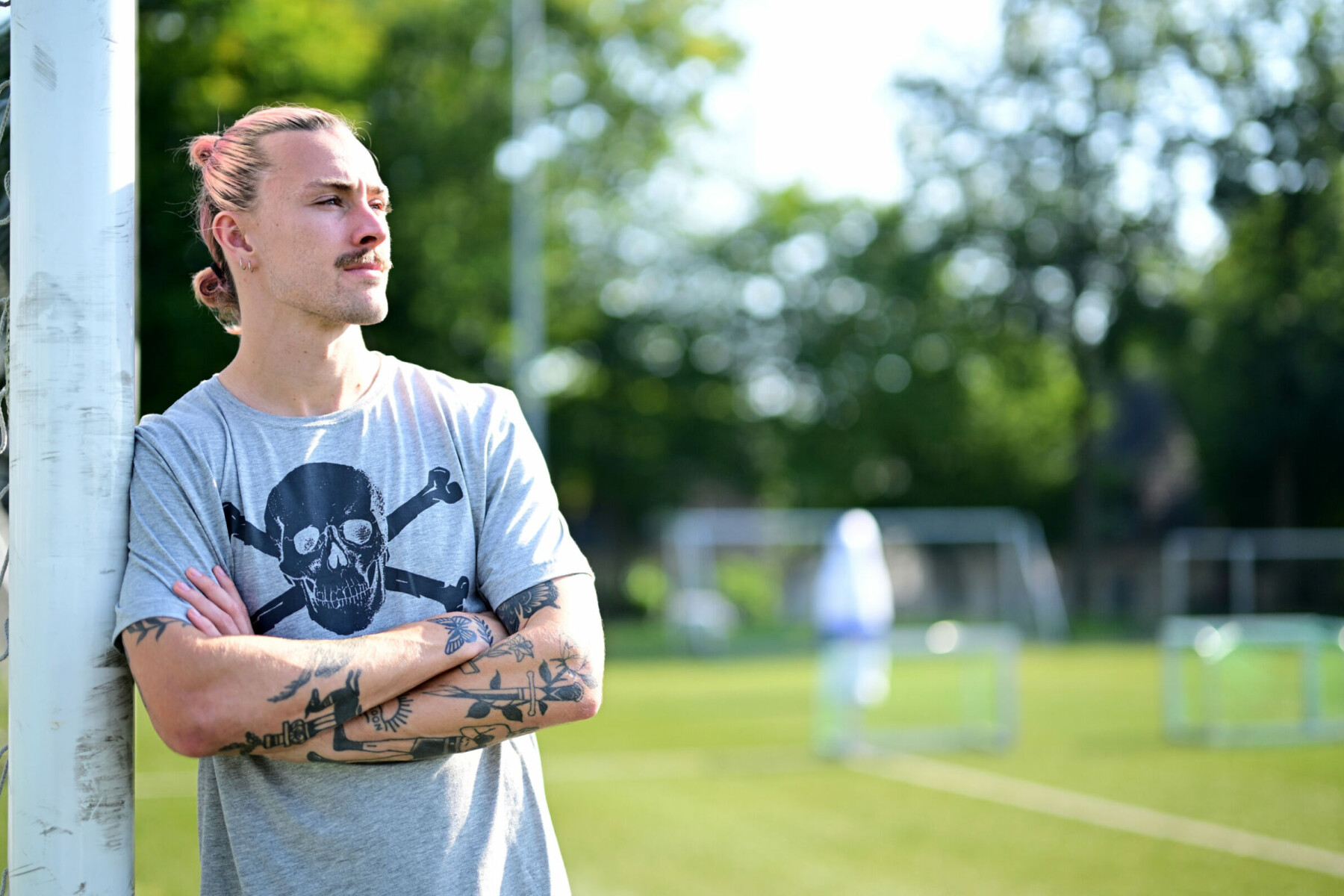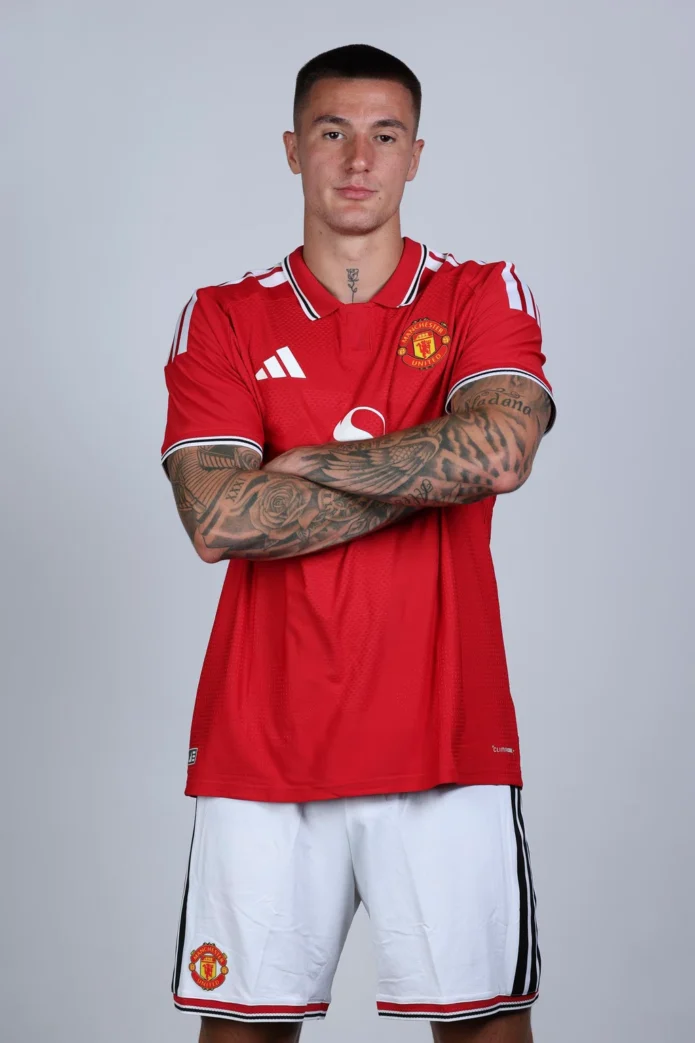
Benjamin Šeško has explained many of his tattoos in Manchester United’s “The Story of Sesko’s Body Art.” His collection spans his legs, arms, chest and neck, with family tributes, faith-related images, lettering and larger illustrative pieces. He says some tattoos are personal; others appealed to him as designs. The first, on his left calf, pairs a winged football with the words “Don’t wish for it, work for it.”
That calf piece is a useful place to start, but it doesn’t explain every design. Here’s what Šeško has said and what the photographs show, without assigning a story to every rose or clock.
The chest lettering sits among larger images
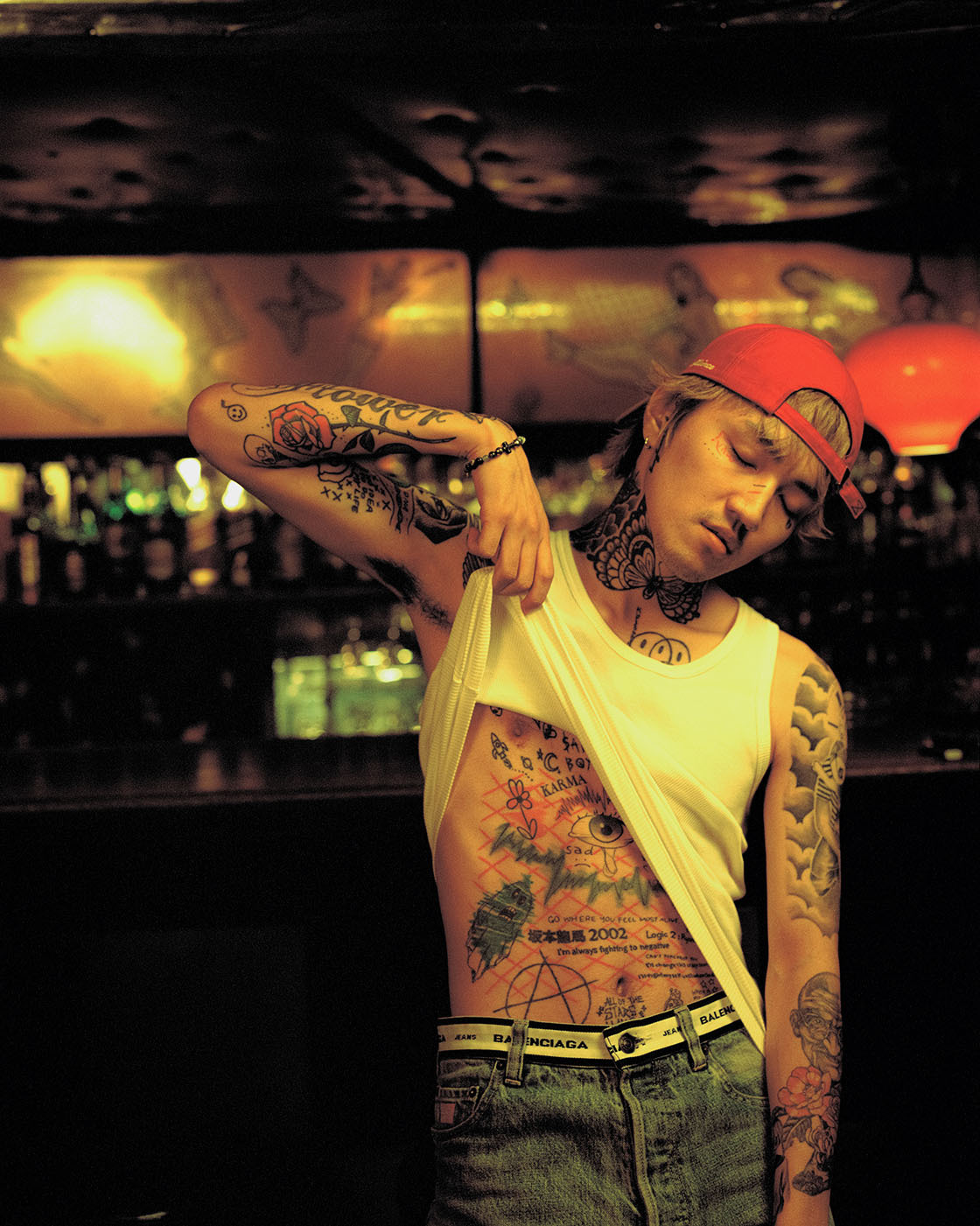
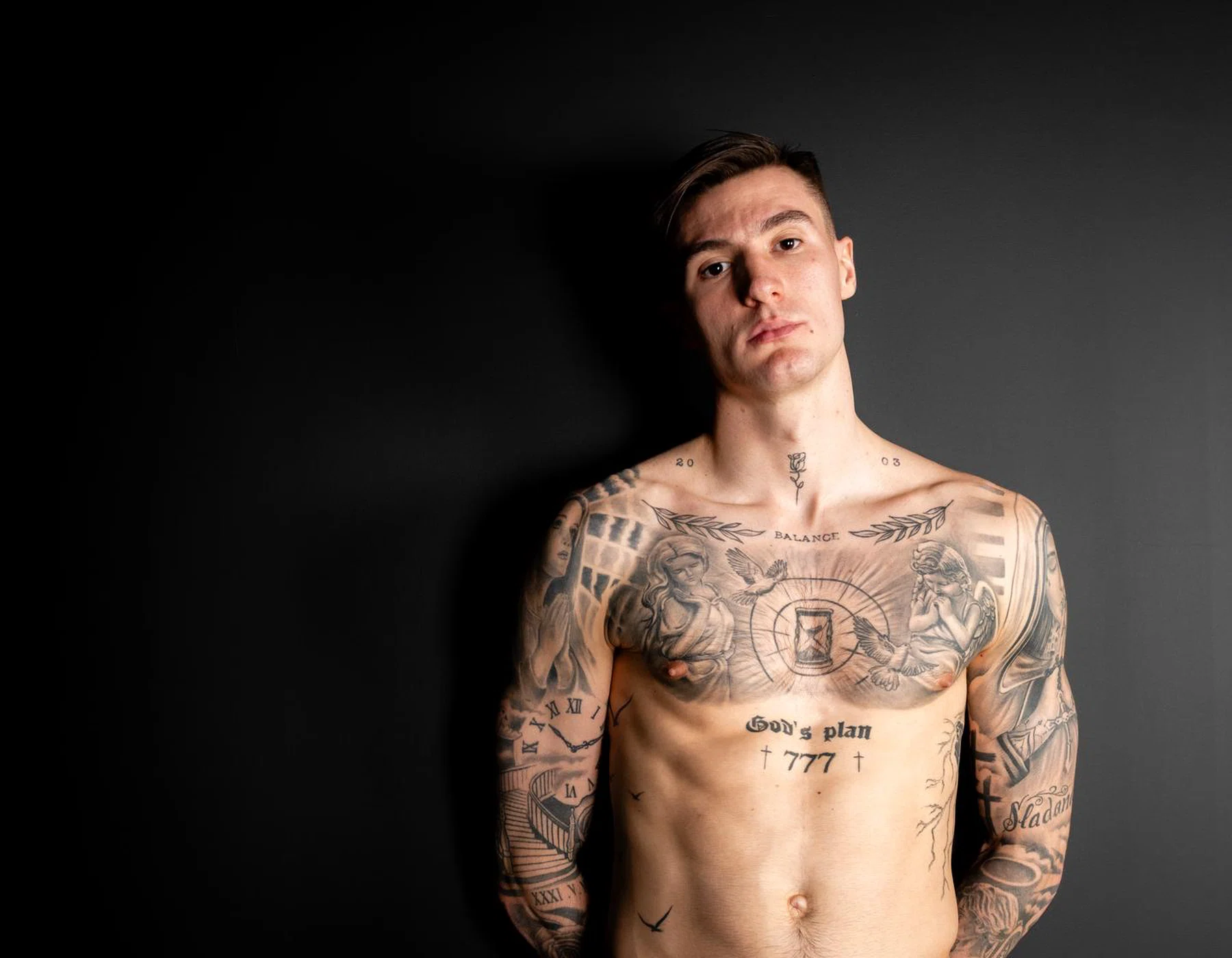
Across his upper chest, “BALANCE” sits above “God’s Plan.” Fine branches frame the first phrase; crosses and 777 appear with the second. In Manchester United’s feature, Šeško connects his faith with how he thinks about life, so the context for those words comes from his own account.
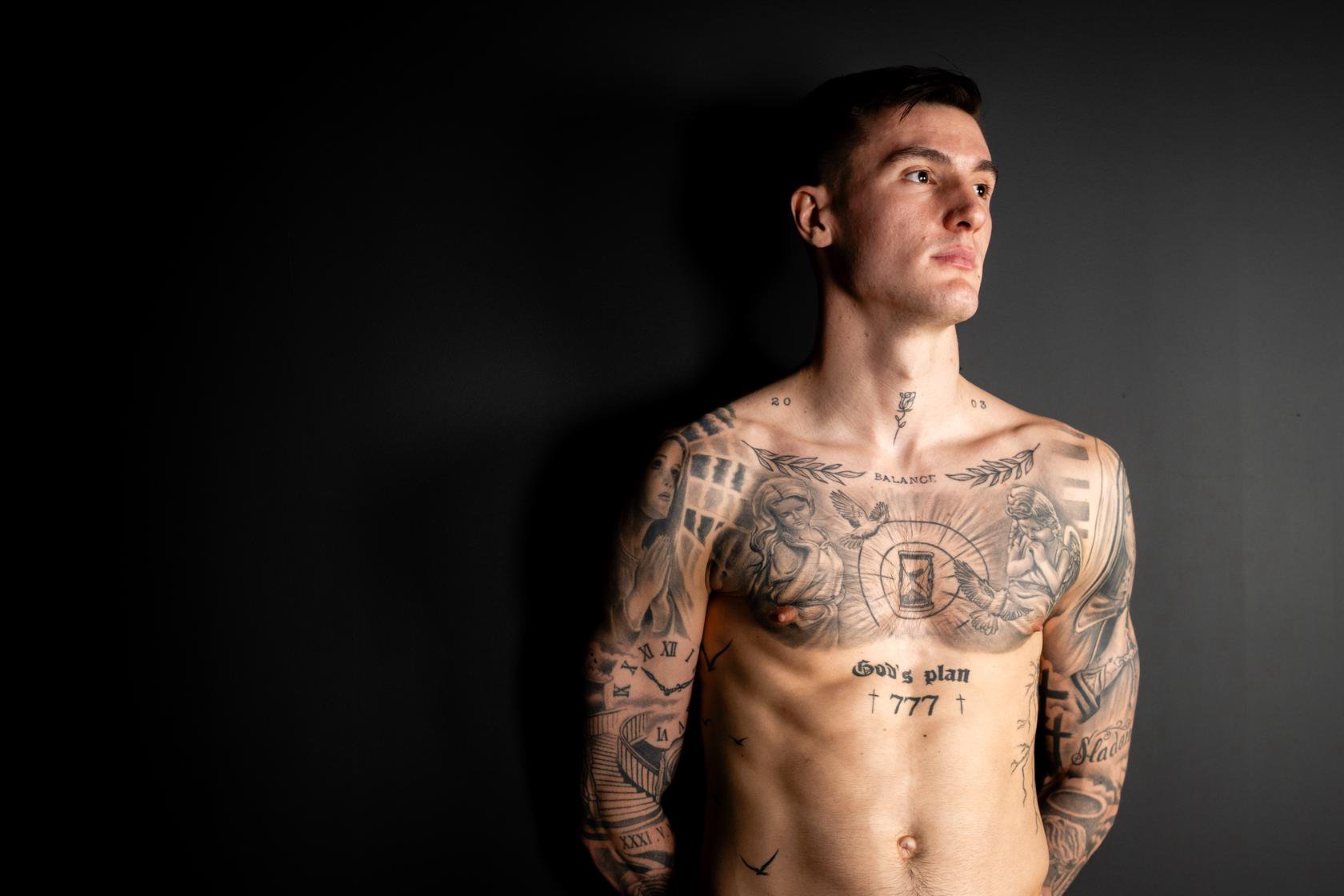
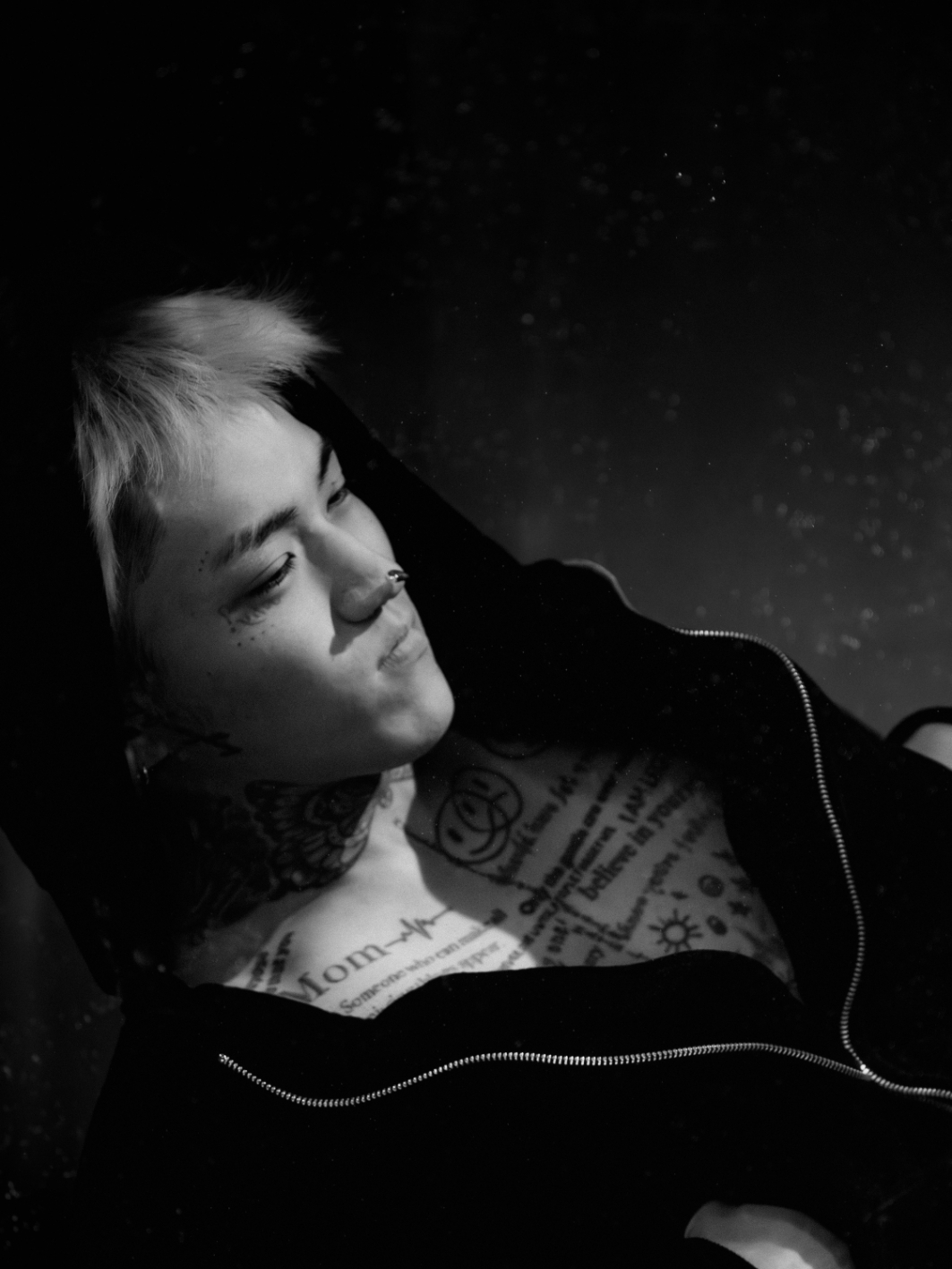
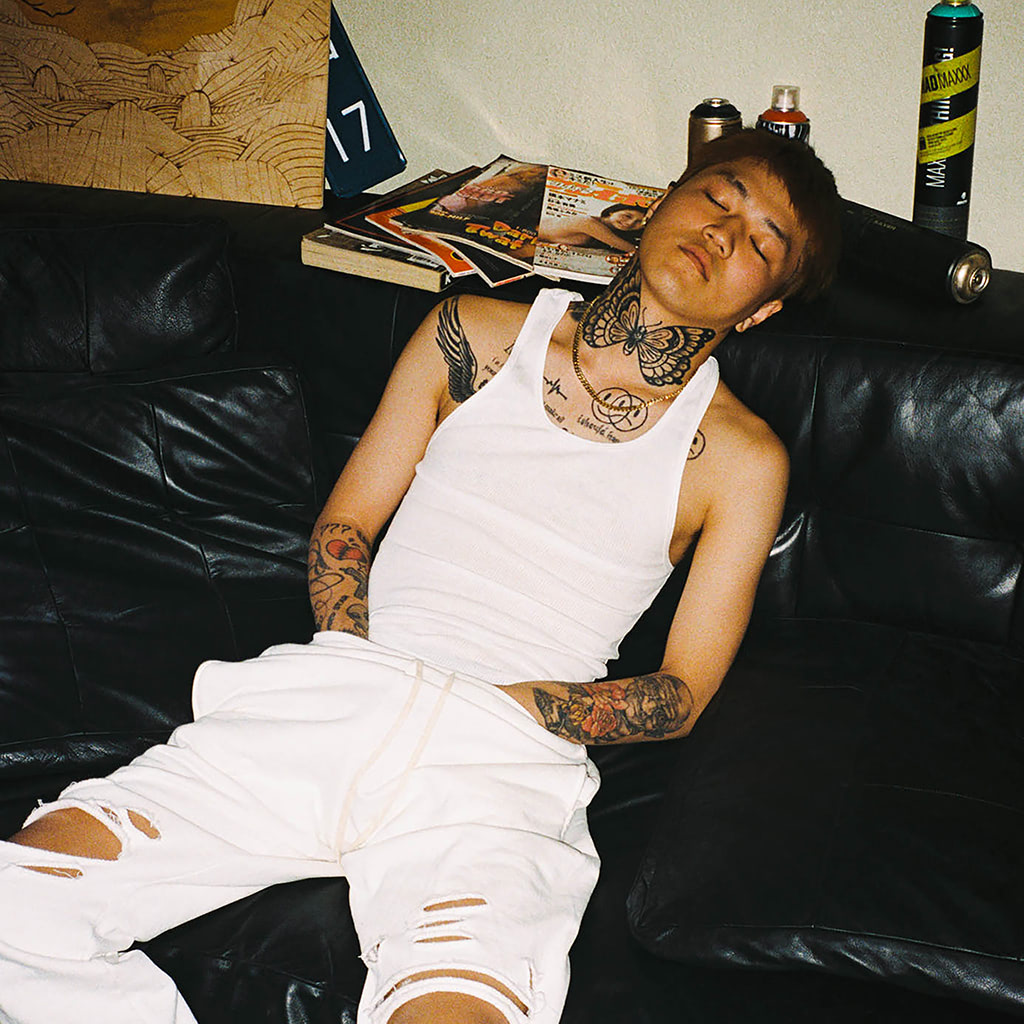
The two phrases sit differently on his chest: “BALANCE” runs wide and high, while “God’s Plan” is lower and more compact. Shaded figures, wings and clocks fill the space around them, with smaller marks near the collarbones and a rose at the front of his neck. Fine lettering and narrow branches share space with darker images rather than forming one bordered picture.
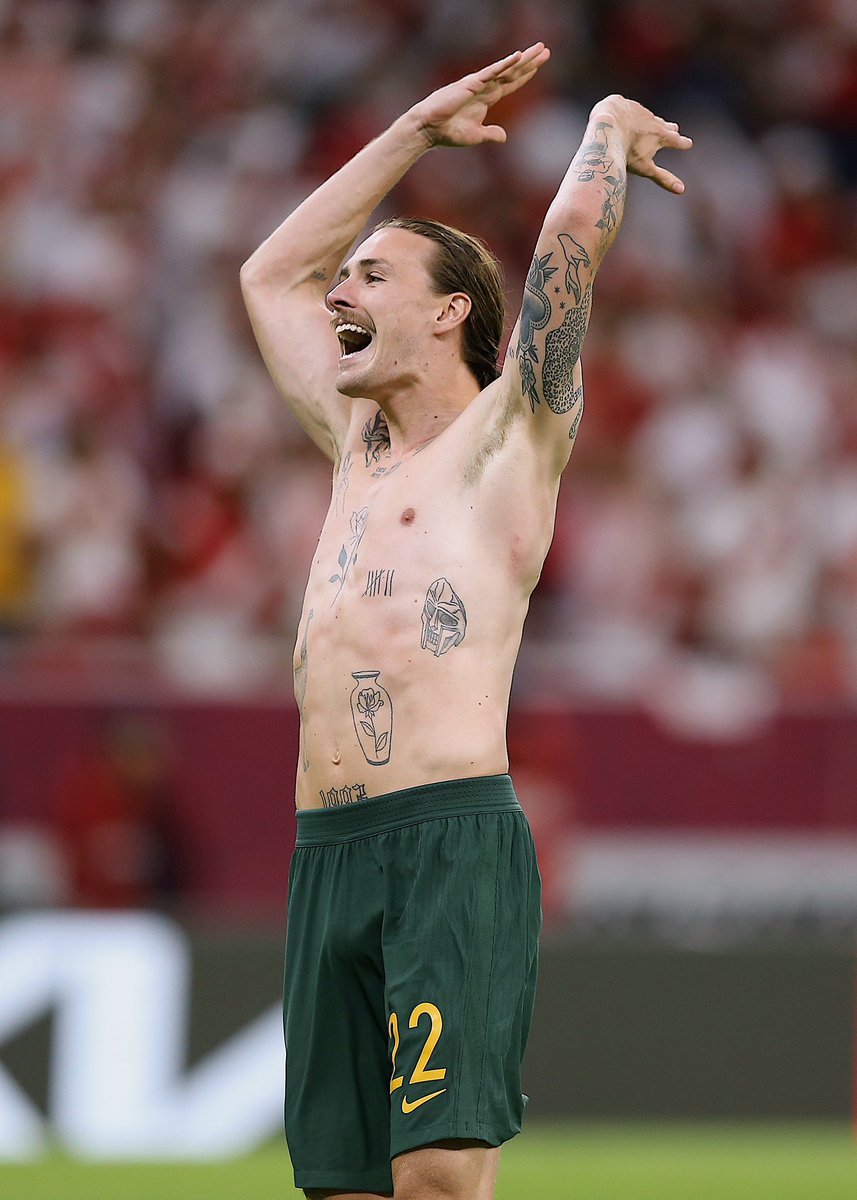
Match photos often crop the torso or cover it with a shirt. A full portrait shows how much of the work sits above the waist, while a second front-facing image gives the chest lettering and nearby illustrations another view.
The religious portraits are personal, not a puzzle to solve
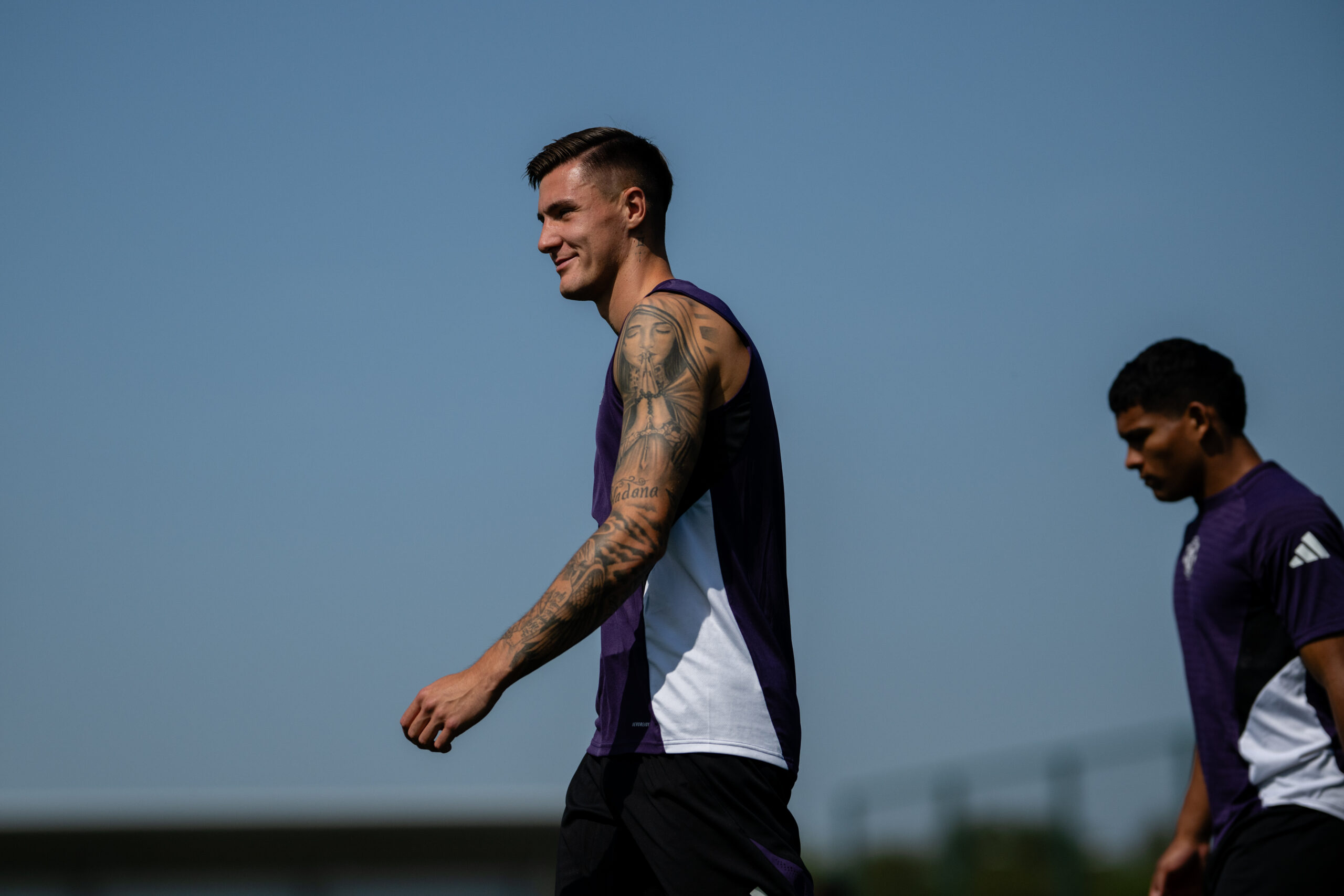
Religious imagery appears on Šeško’s chest and arms. Photos show praying figures, a woman holding a cross and a smaller haloed figure among the sleeve work; coverage of his 2026 tattoo interview also identifies references to Zeus. He has spoken about believing in God, but that doesn’t tell us what each figure, cross or number means to him.
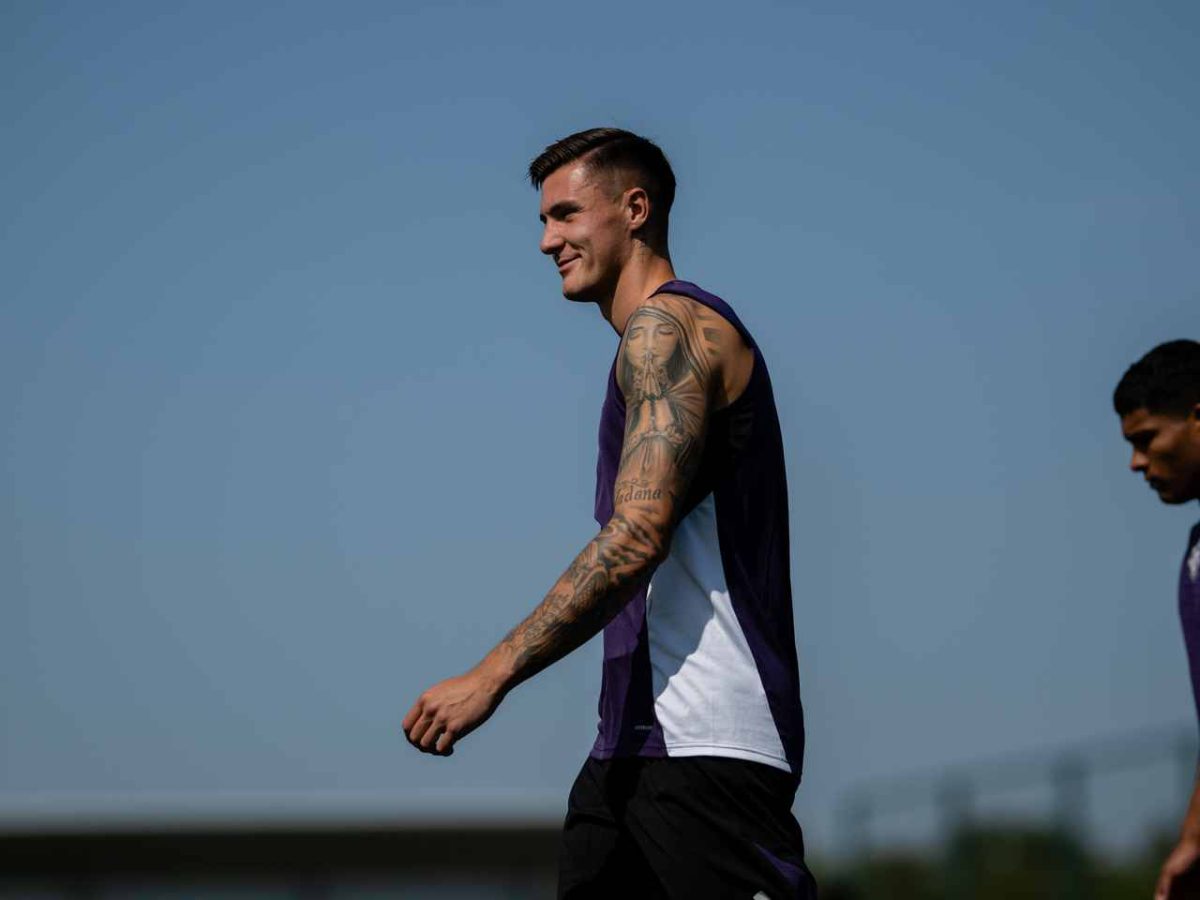
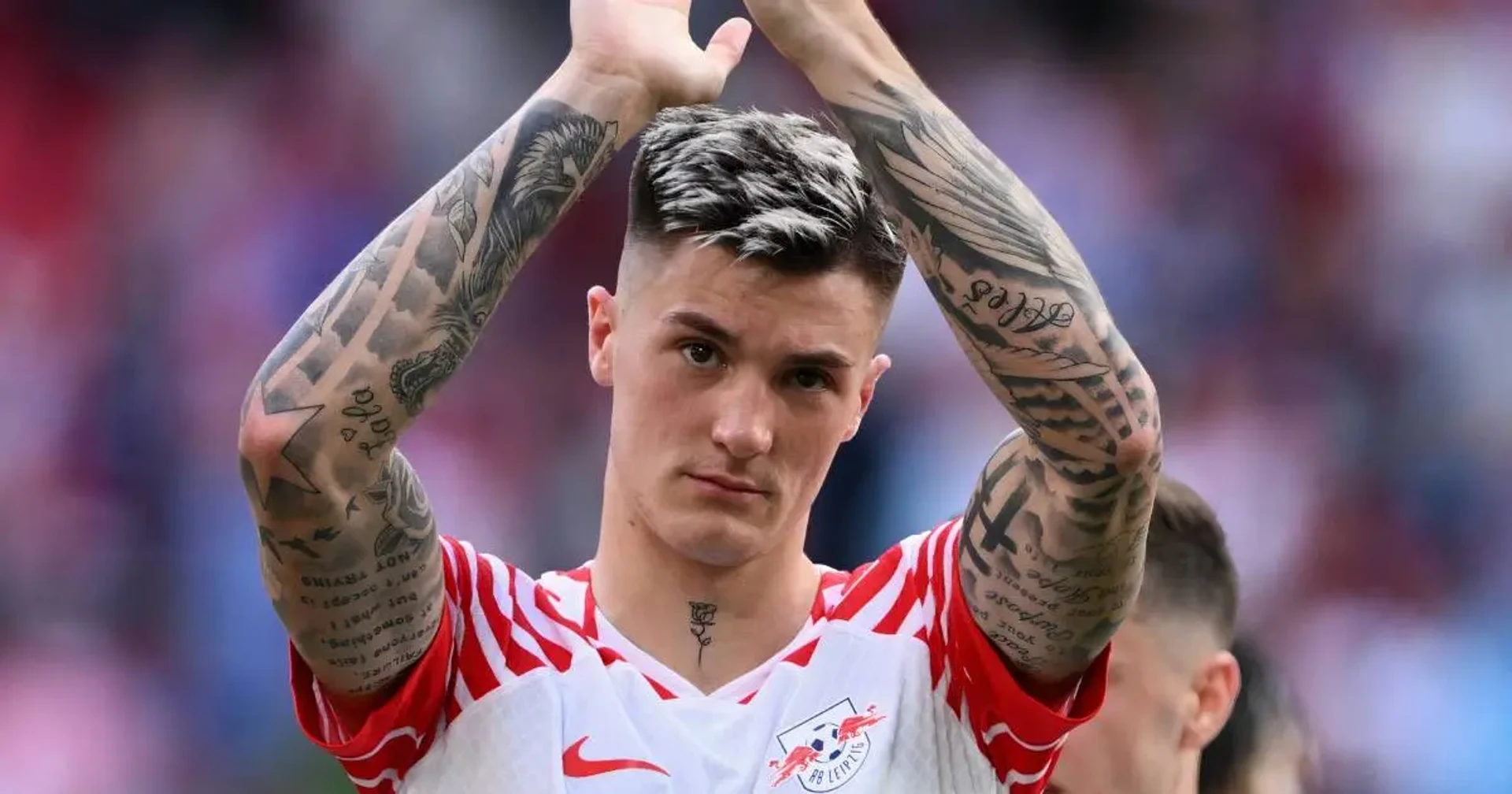
A close-up of the upper-arm portrait shows its face, hands and shading as one composition. In a training photo, the same work can blur into a dark patch. The central portrait sits among smaller script and symbols, with shading connecting the shoulder to the lower arm.
Some online roundups assign clocks, stars or clouds a particular meaning. Unless Šeško has explained one, those readings remain guesses. His own comments give the faith-related work context without requiring an outside story for every detail.
His arm lettering puts motivation and faith into words
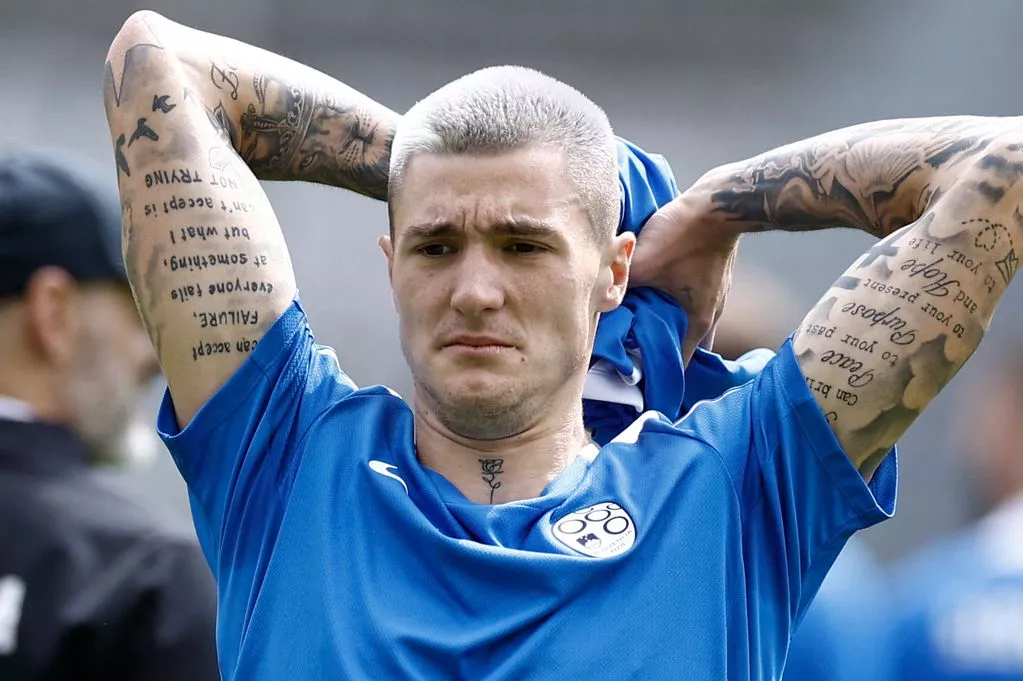
One arm carries Michael Jordan’s often-attributed line, “I can accept failure, everyone fails at something, but what I can’t accept is not trying.” Another has a script passage about peace in the past, purpose in the present and hope for the future. A photo with both arms raised makes the writing easier to read and shows how it sits among the other designs.
The two passages look different: the Jordan quote is arranged as a longer block, while the faith message runs in cursive. Šeško has connected the work-for-it phrase on his first calf tattoo with visualization, which he considers important. That’s what he has said about that line; it doesn’t make every phrase a football motto.
Across the arms, fine script shares space with shaded portraits and larger panels. No single frame shows everything: one can make the words clear, another show the surrounding figures, and a wider shot helps place the pieces.
The family tattoos are his most direct personal tribute
Šeško has given a direct explanation for his family tattoos. The calf design is reported to show him and his sister Zala between their parents, Aleš and Slađana, with a line about staying together even when distance separates them. He said he was proud to have his family’s names tattooed and values the time they spend together.
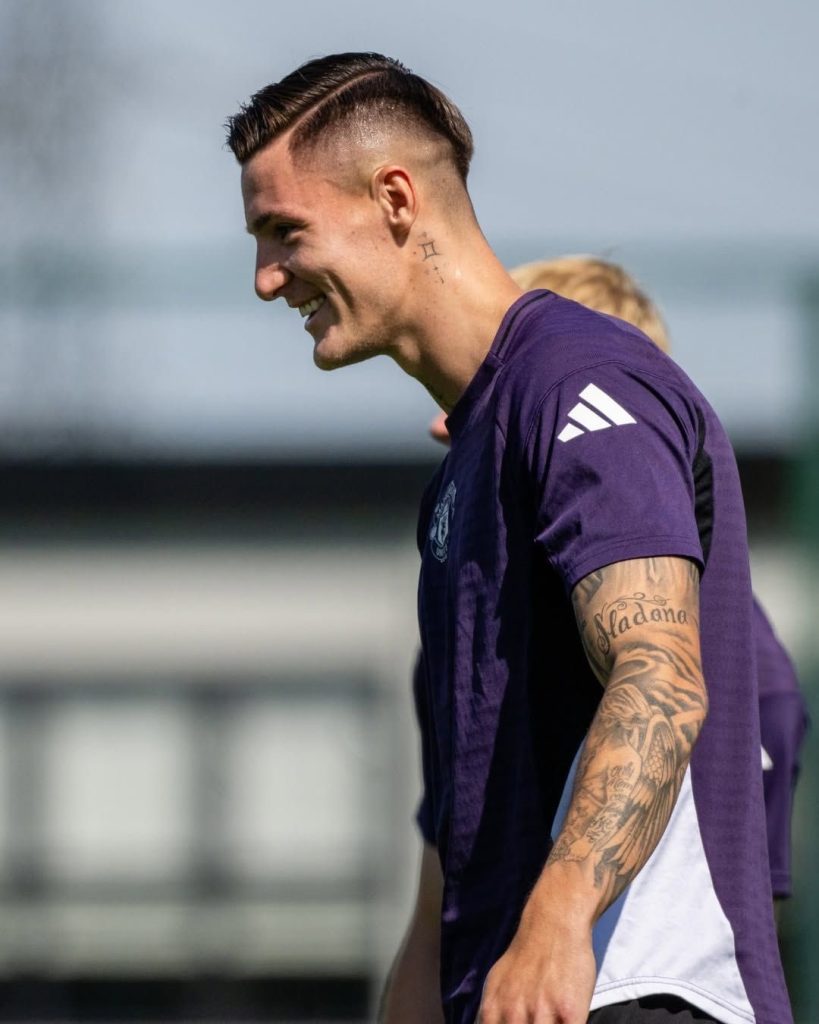
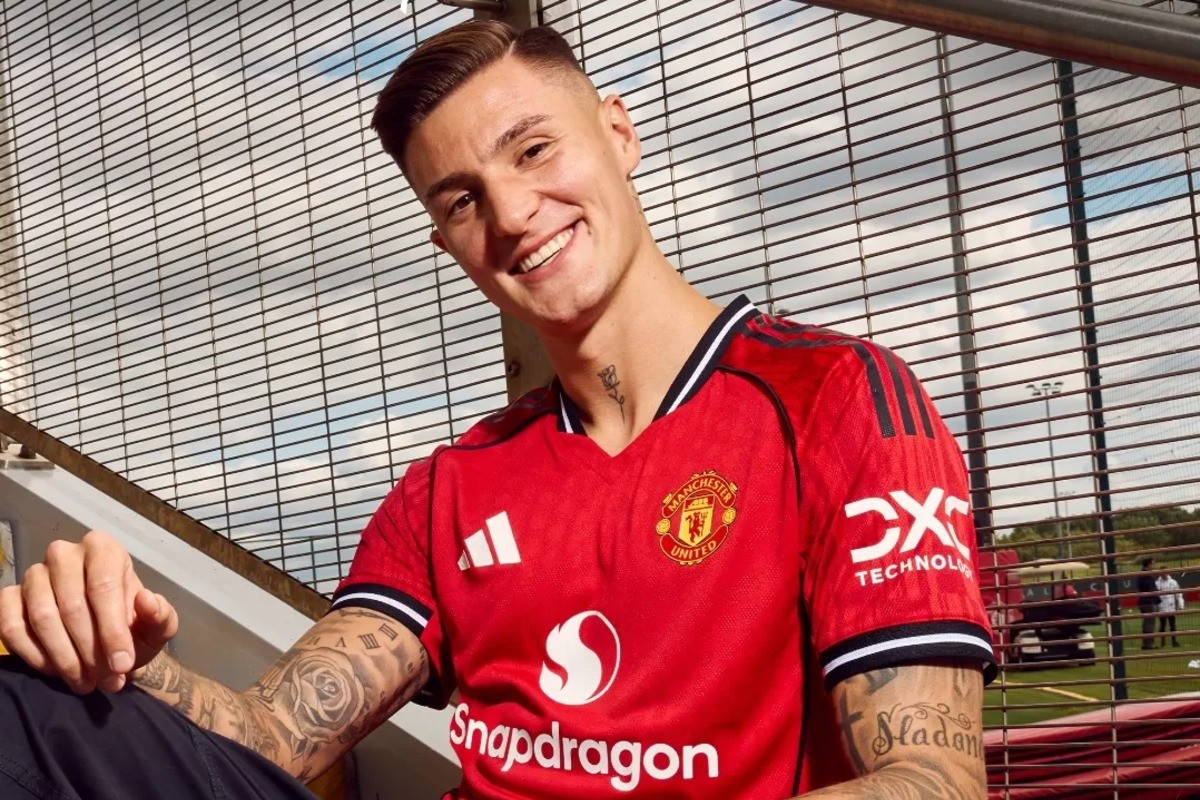
He has spent time away from home since he was young and described staying close to his parents and sister while living abroad. Photos also show his mother’s name, “Slađana,” on his arm, separate from the family group on his calf. The two placements shouldn’t be mistaken for one design.
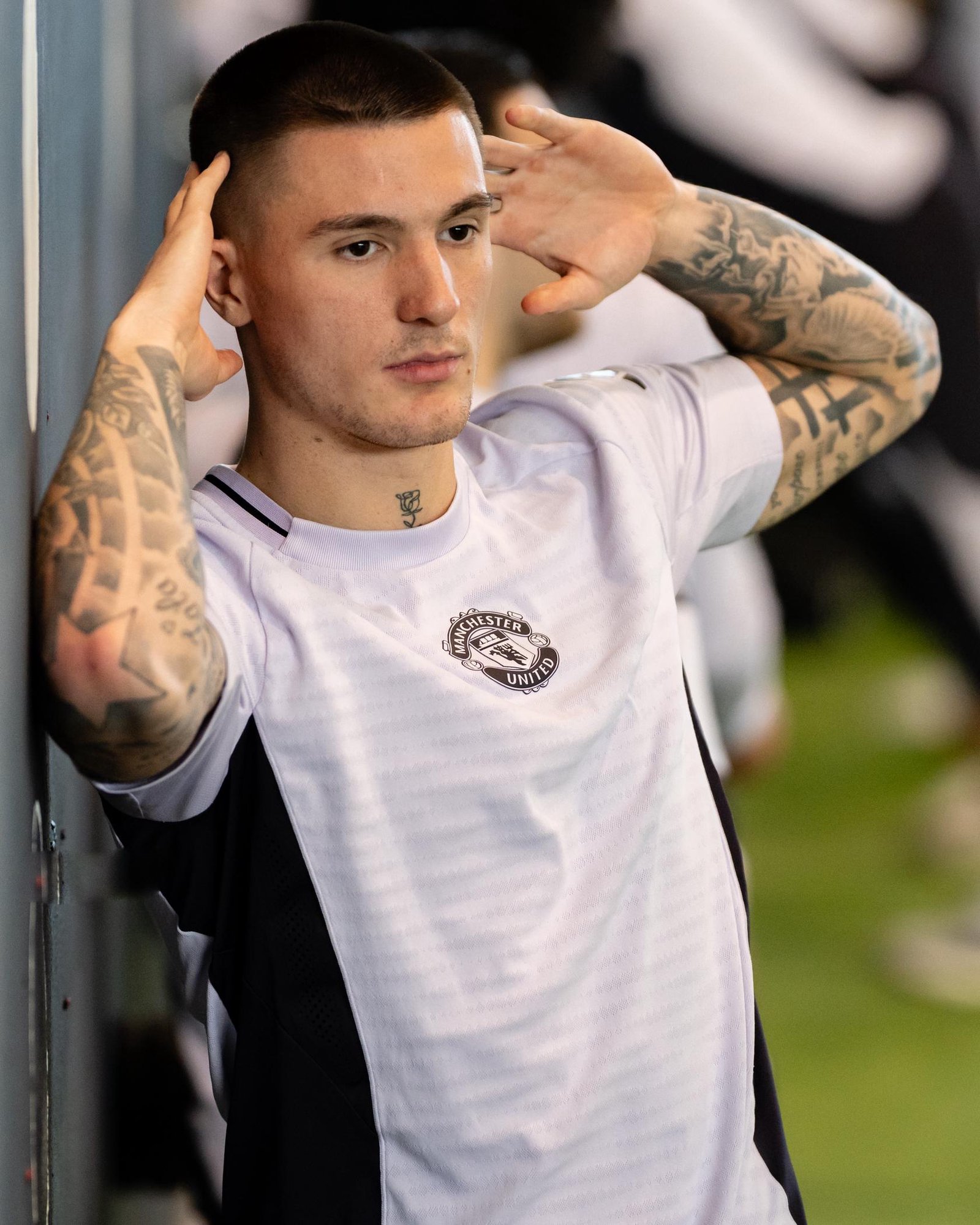
A second photo shows the “Slađana” lettering from another angle. It belongs to the larger arm composition; the calf tribute is a separate piece.
The sleeves combine portraits, roses and smaller motifs
Šeško’s arms bring together roses, clocks, portraits, religious imagery, script and smaller symbols. Manchester United’s feature discusses them as separate pieces. Some, he says, are personal; others simply appealed to him.
Roses appear on the neck and arms. Their curved petals sit beside lettering and clock faces; in some photos a rose is tucked into a shaded sleeve, while branches and smaller marks fill the spaces between larger images.
A clock can invite guesses about a birth time or milestone, but the photos don’t establish that. The same goes for stars, clouds and small numerals: without an explanation from Šeško, it’s better to describe what’s visible than to assign a meaning.
The sleeves are made up of several distinct pieces, with different amounts of shading and detail. Large portraits and flowers catch the eye, while smaller writing and symbols take a closer look. Wide photos show the coverage; closer shots show how the figures, roses, clocks and lettering sit together.
The neck details sit within a collection still growing
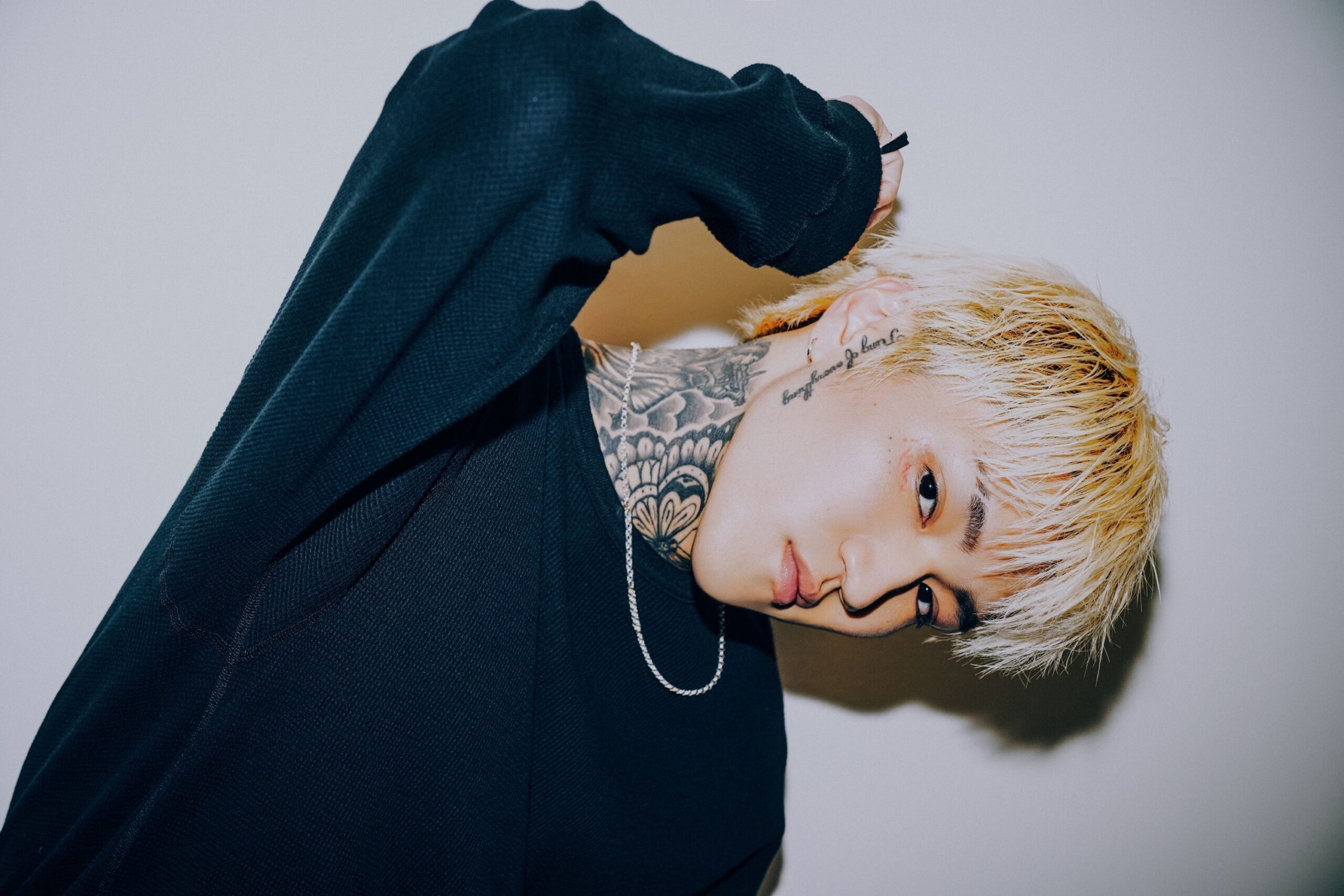
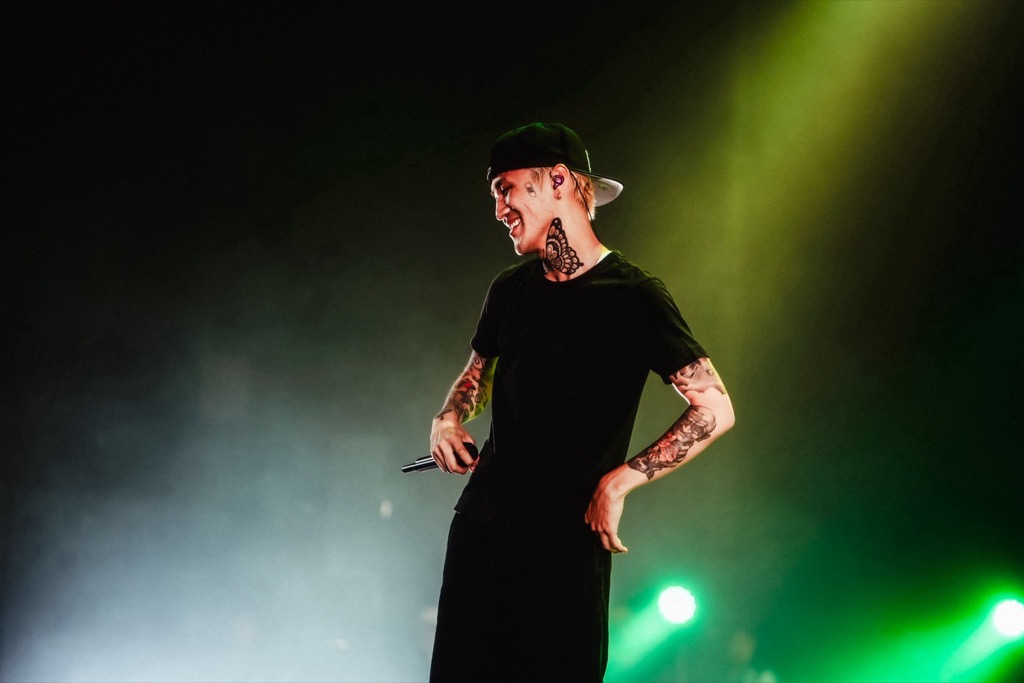
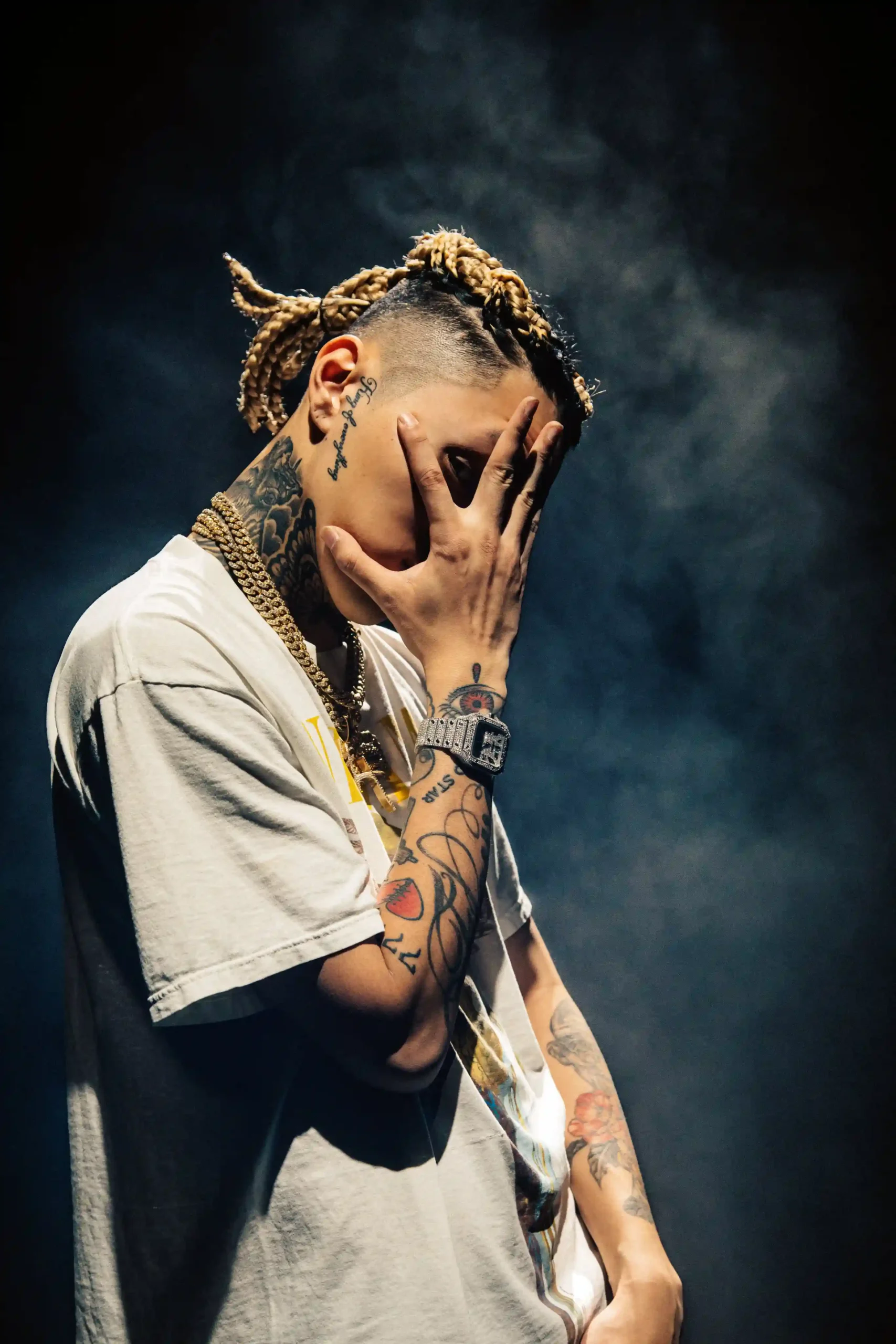
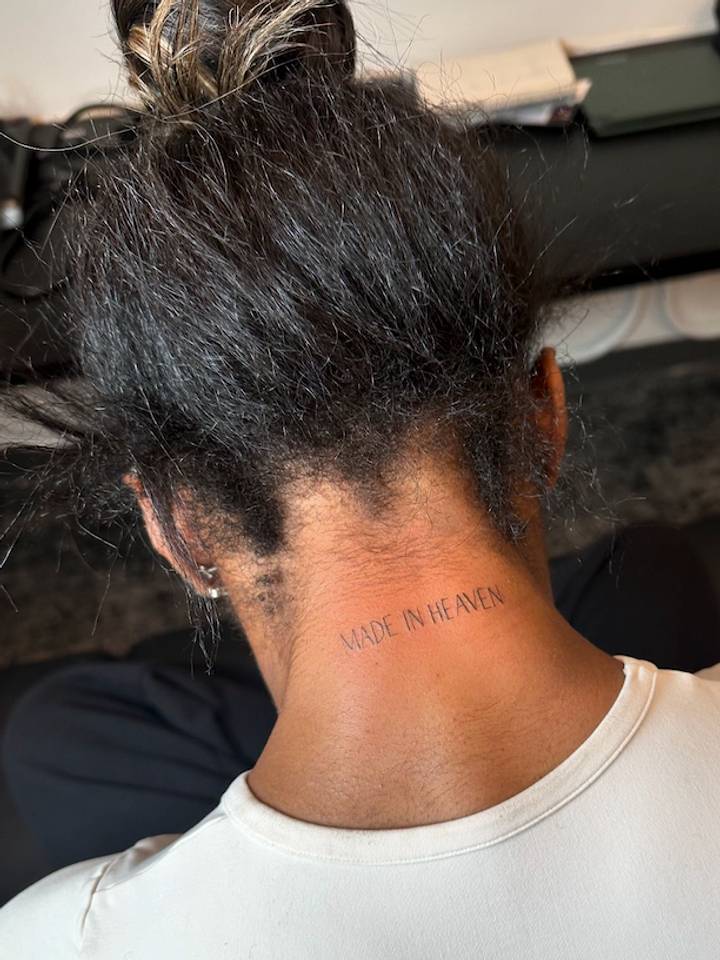
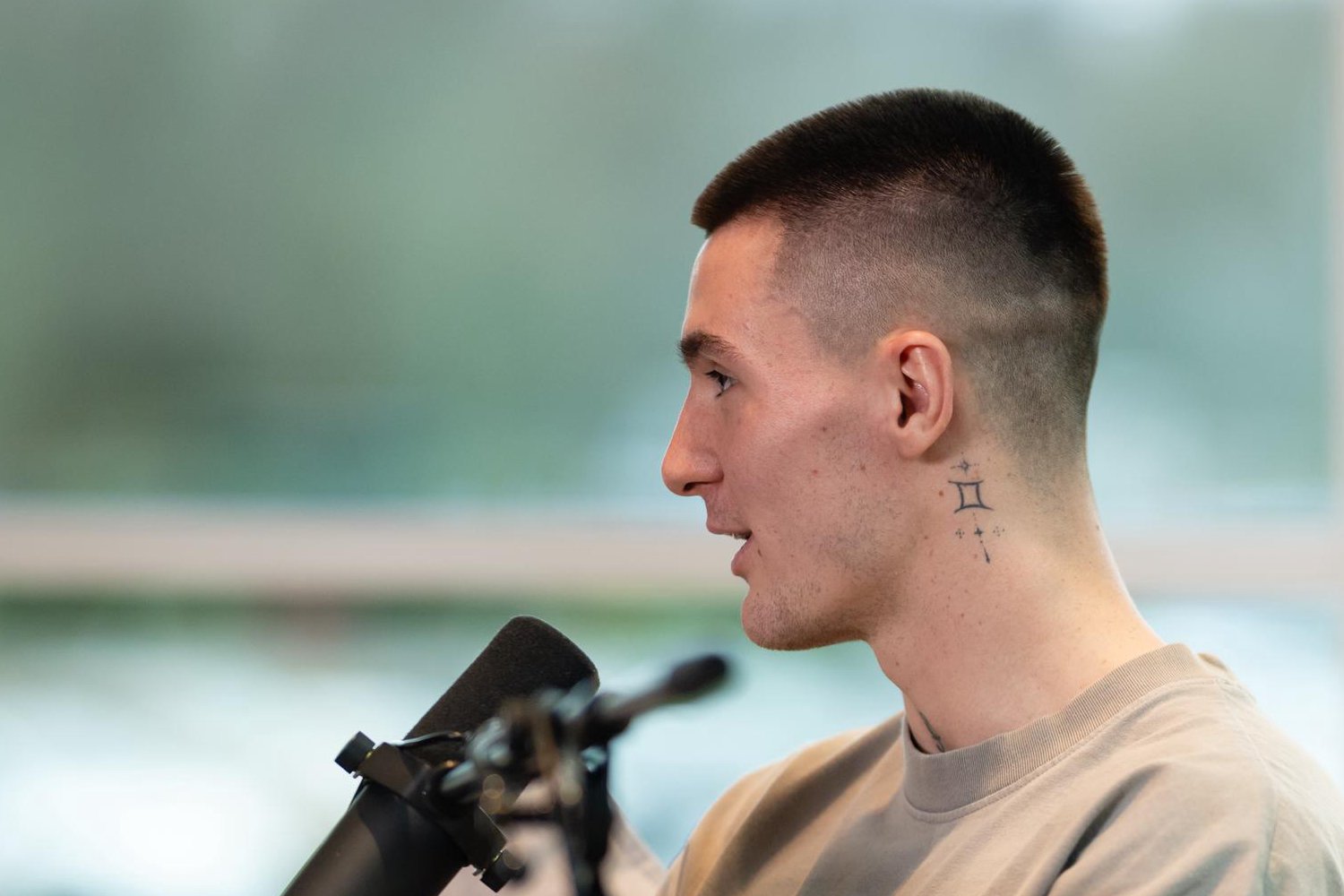
A small rose sits at the front of Šeško’s neck. Close-ups also show compact marks near his collarbones and below his ear. A side-profile photo makes the neck ink easier to see beside the much larger chest and arm designs.
In interview coverage, Šeško said he liked tattoos as a child and wanted his own after seeing them on other people. He joked that once you start, it’s hard to stop, and said he’d leave some room for future trophies.
He has also discussed a large back piece he plans to get. That is a plan, not a tattoo he already has.
The Manchester United feature below has Šeško talk through the collection.