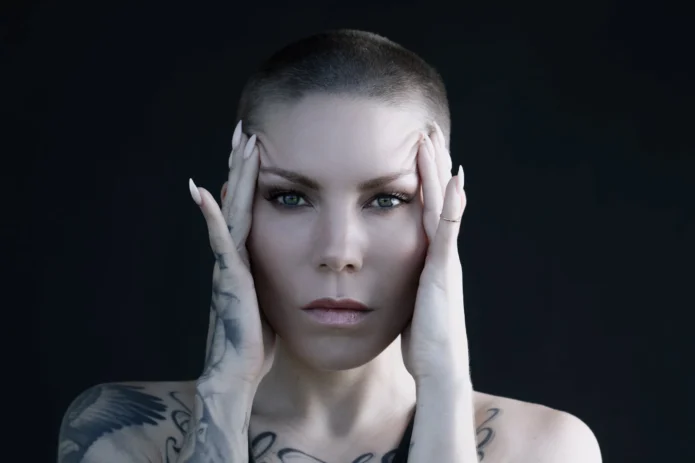
Skylar Grey’s tattoos don’t feel like a set of separate decorations. The chest lettering, the animal-filled arm work and the stories she has told about getting ink all point back to the same place: the woods, the hard stretches she made it through, and the feeling of wanting to take up space in her own skin. She has talked about her tattoos in unusually specific detail, including the artists behind several pieces and the memories attached to them.
One detail is easy to miss when people list her designs: Grey has never claimed that every tattoo needs a perfectly polished meaning. Some pieces carry a clear story; others are reminders of a time, a place or even a choice she might change. That mix makes the collection more interesting than a neat catalogue of symbols.
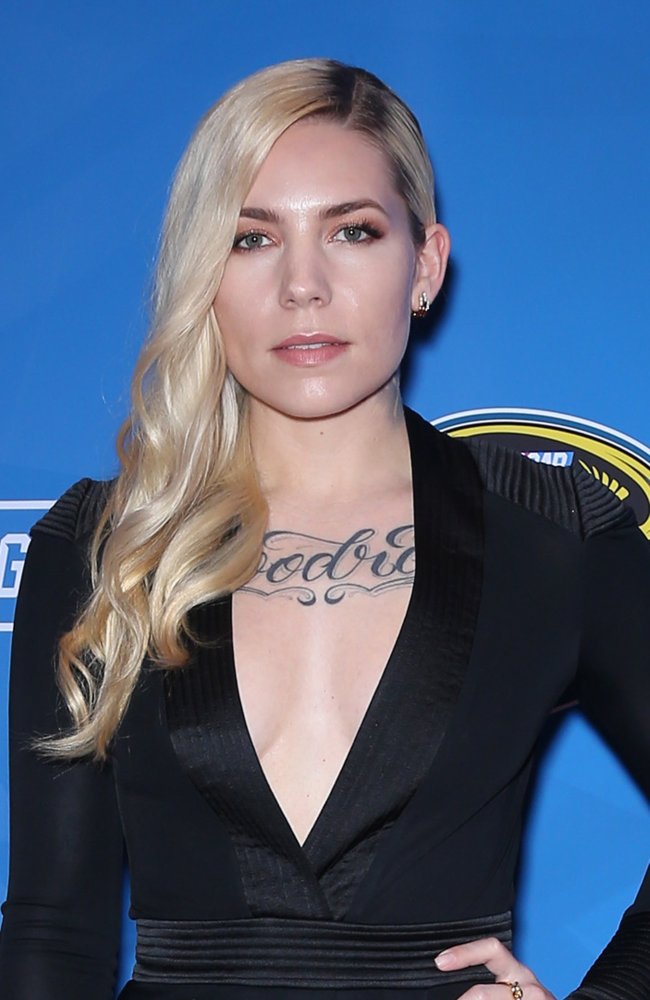
Woodrat on her chest ties the collection to the woods

The large script across Grey’s upper chest reads Woodrat. It is one of the most immediately recognizable pieces in photographs, and it connects the visible tattoo story to a name she has used beyond her skin. In her INKED tattoo tour, Grey explained that the name grew out of her relationship with the woods and became a logo as well. The lettering is bold enough to read from a distance, but it also sits among other pieces rather than looking like a standalone label.
Grey has described a period of living in a cabin in Oregon when she felt broke, low and unsure of herself. In a later interview about the tattoo, she said the experience became a test: she wanted to prove to herself that she could get through difficult conditions and survive on her own. The chest design makes sense in that context. It is not simply a forest-themed word; it marks a time she associates with learning what she could handle.
That distinction matters because a tattoo’s personal meaning can be more precise than its image. Someone seeing the word might read it as a band name or a playful nickname. Grey’s explanation points instead to a stretch of isolation and self-reliance. The design holds the memory without needing a long quotation or a literal scene to spell everything out.
Grey has also connected the cabin period with her songwriting. She has said that the experience helped shape the perspective behind Love the Way You Lie, a song she wrote before it became a major hit for Eminem and Rihanna. That career detail belongs here only because she herself connected the difficult period, the woods and the work that followed. The tattoo is a personal marker first, not a piece of album merchandise.
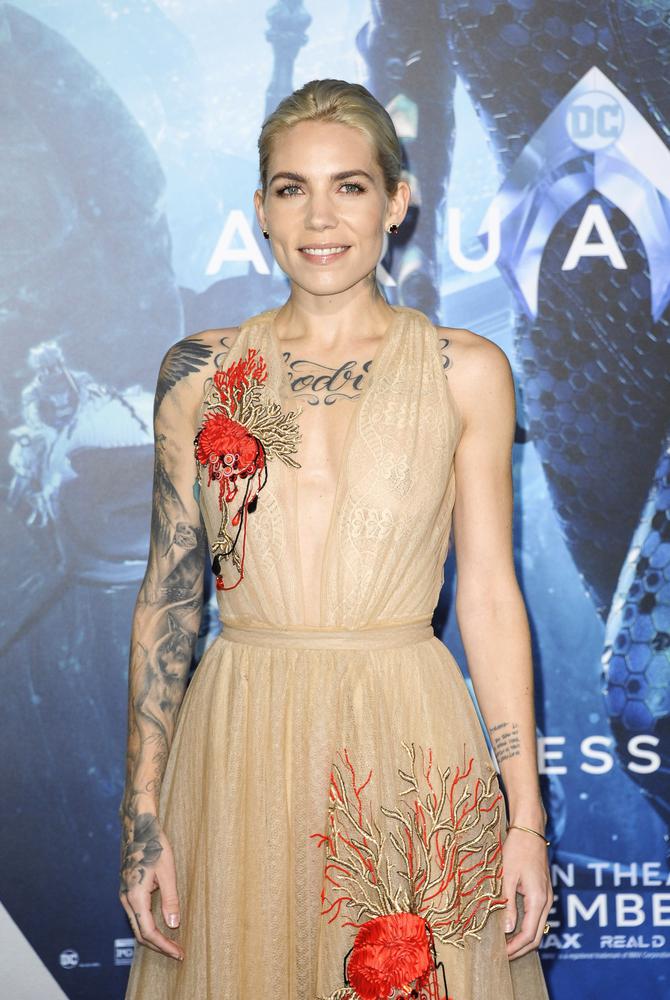
There is a useful contrast between the chest lettering and the denser artwork on her arm. Woodrat is direct. You can read it in a single glance. The surrounding images ask for more time, and they make the word feel like a title for a larger, lived-in landscape. In several portraits, the script crosses the upper chest while the black-and-gray work climbs over the shoulder and arm. That placement creates a visual bridge between the plain word and the more detailed imagery.
Grey has identified tattoo artist Mister Cartoon as the artist behind the chest piece. Naming the artist adds a concrete detail, but the most revealing part of her account is still the connection to her own experience. She did not describe the word as a universal symbol or offer a meaning for other people to borrow. It belongs to her history, and the fact that the word also became a logo shows how a private idea can travel into public creative work without losing its original association.
When people talk about celebrity tattoos, they often jump straight from a design to a fixed interpretation. Grey’s explanation is a good reminder to keep those two things separate. The photo tells us what is there: large script across the chest. Her interview tells us why she chose it: a name tied to the woods, a cabin period and a personal test of endurance. Anything beyond that would be guesswork.

The chest lettering also helps explain why the word tattoo remains so visible in her photographs. It is not hidden on a rib or tucked behind an ear. It sits near the center of the body and works almost like a signature. The placement makes it part of her visual identity, yet the story behind it keeps it from feeling like branding alone.
Her arm and hand tattoos turn wilderness into a changing scene
Grey’s arm work is the collection’s most detailed area. She has described a woodland sleeve created by Tye Harris with a group of animals and landscape details: a jackalope, snake, bear, eagle, mountains and wolf. The quote “The journey is the reward” is part of that composition. Rather than treating each animal as an isolated emblem, the sleeve gathers them into a setting. The forest theme is not a decorative afterthought; it is the thread that lets very different creatures sit together.
That approach gives the sleeve room to feel personal without asking every animal to carry one tidy message. The documented explanation is about the overall woodland world and the phrase running through it. There is no need to assign separate spiritual meanings to the snake, bear or eagle when Grey has not done that herself. What can be said confidently is that the imagery builds a small landscape across her arm, drawing on the same woods that recur in the Woodrat story.

Photographs show that the arm and hand are not blank spaces around the larger designs. Smaller tattoos and dense black-and-gray work continue down toward the wrist and fingers. In the INKED tour, Grey talked about a rose on the back of her hand, which she said helped balance feminine and masculine elements in her tattoos. She also discussed the word GREY across her knuckles, a name she connected with the unknown possibilities ahead.
Those two ideas sit together in an interesting way. The rose is a visual counterweight, while the knuckle lettering turns her own surname into a statement about uncertainty. But Grey’s language is personal, not a rulebook. The rose does not have to stand for a universal version of femininity, and the word Grey does not mean the same thing for every person with a surname tattoo. They are choices she described in her own terms.
She has also spoken about an owl tattoo on her side, explaining that she likes owls as birds of the night. An Aubrey Beardsley-inspired piece on her thigh draws from The Peacock Skirt, an 1893 illustration. A Japanese phrase meaning “Save the whales” sits on her foot. These designs show how broad the collection is, moving from wildlife and literature to a direct environmental message. They are worth mentioning as part of the wider picture, but they should not be confused with the arm imagery visible in the photographs here.
Another useful example of Grey’s willingness to talk plainly about her decisions is the Deathly Hallows tattoo on her forearm. She has said she may remove it because she felt it was poorly done and recalled getting it while drunk in Las Vegas. That is not a dramatic reinvention story. It is simply an honest account of looking at an old tattoo and feeling differently about it now.
That kind of candor makes the collection feel less like a finished monument and more like something that has grown with her. Some pieces have a clear narrative, some are visual choices, and one may eventually be removed. There is no contradiction in that. A tattoo can matter at one point in someone’s life and later become a reminder of a decision they would not repeat.
Conclusion
In the same INKED conversation, Grey linked her tattoos to sensitivity and to wanting to feel tougher, less likely to be pushed around. She also talked about people making assumptions about tattooed women. That context helps explain why the collection is not only an inventory of woodland designs. For her, visible ink could change how she felt moving through the world, even while it exposed her to other people’s judgments.
Her song Angel With Tattoos gives that tension a public form. Grey said the song’s story was based on a real feeling of being judged by her fiancé’s family. The title does not mean that every tattoo is a shield or that the song is a literal description of each piece on her body. It connects the broader experience of being read from the outside with the way she has talked about her own tattoos.
There is a difference between saying ink made her tougher and claiming that tattoos automatically make a person confident. Grey was describing her own experience. The distinction keeps the story grounded. Her collection includes bold lettering, animals, literary art and small personal marks, but the shared thread may be that she chose them for herself, on her own terms, rather than to satisfy somebody else’s idea of what a woman should look like.
That is also why the imperfect tattoo belongs in the story. The forearm piece she might remove complicates any neat narrative in which every mark is a treasured symbol. Her comments leave room for regret, taste changing and plain old dissatisfaction with the work. The rest of the collection does not become less meaningful because one design did not age well for her.
Look across the photos and the contrast is clear: Woodrat is a confident word across the chest; the arm is a layered landscape; the hand and knuckles carry smaller statements. Grey has explained some pieces in detail and left others as simple preferences. The strongest reading is not that all the tattoos share one hidden code. It is that each has a different scale and role, from remembering a hard season to enjoying a particular image or acknowledging that a choice can be revised.
For anyone taking inspiration from Skylar Grey’s tattoos, the most useful lesson is not to copy a specific animal or word. It is to notice how varied the reasons can be. A piece can hold a place, a feeling, an aesthetic preference or a complicated memory. Her own explanations are specific, and they work best when we leave them that way instead of turning them into a universal meaning.
Watch the official Angel With Tattoos video below for another view of the visual world she built around the song.