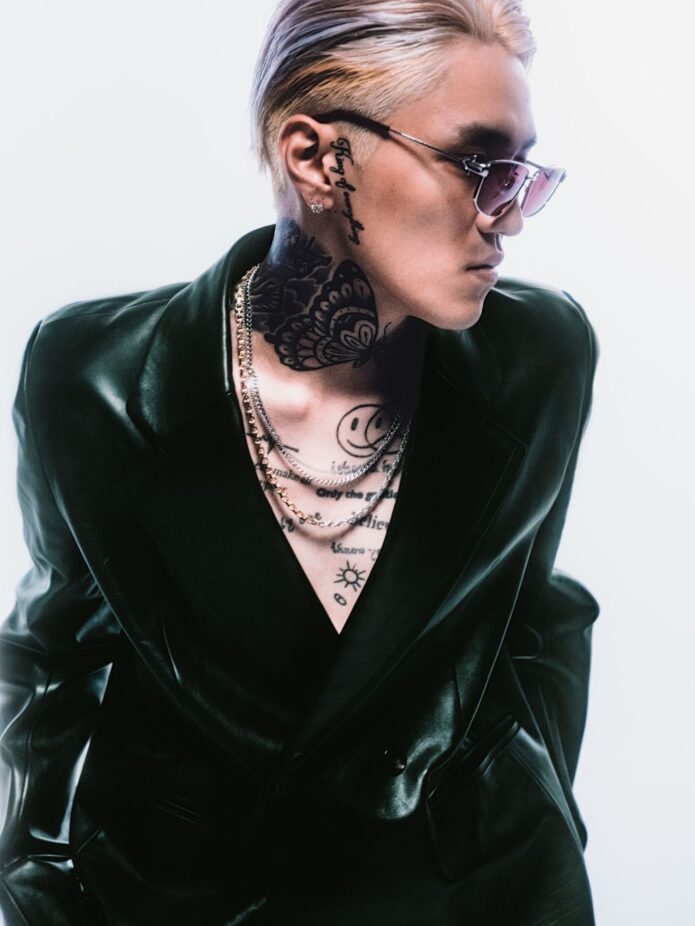
LEX’s tattoos aren’t one neat theme, and he doesn’t pretend they are. In his GQ Japan tattoo tour, the Japanese rapper moves between Star Wars, films, words, music and family, explaining what each piece means to him in his own terms. The strongest thread is not a single style. It’s the way he uses ink to keep ideas close: a story that fires him up, a promise he wants to live by, or a memory he doesn’t want to lose.
That first-person context matters. Some designs have a clear explanation; others are simply tattoos he likes. Here’s what LEX has actually shared, with the uncertain details left uncertain.
Anakin and Gandhi across the forearms
LEX points to an Anakin Skywalker tattoo as one of his favorites. It brings together two moments from the character’s story: Anakin as a child in Episode I and as Anakin in Episode III. On the opposite forearm, he has a portrait of Gandhi. Those are unusually specific references, but LEX’s explanation is less about matching the two figures than about the place Star Wars has had in his life.
He says the films have been important since childhood. When he feels frustrated or needs to get himself moving, he imagines being the protagonist in a Star Wars story and uses that mental shift to take action. The Anakin tattoo, then, is not just a portrait of a favorite character. It keeps a personal source of momentum in view. LEX doesn’t give a separate symbolic reading for the Gandhi portrait in the tour, so it’s better not to attach one for him.
The two forearms also show how his collection can hold different kinds of references side by side. One piece comes from a long-running fictional world; the other is a portrait of a real historical figure. The connection readers can safely draw is that both matter enough to have a permanent place on his body. Beyond that, the explanation belongs to LEX.

A second view of the collection helps put those portraits in context: the forearm pieces sit among a much larger mix of images and lettering rather than forming an isolated, uniform sleeve.
Film tattoos: Memento and The Butterfly Effect
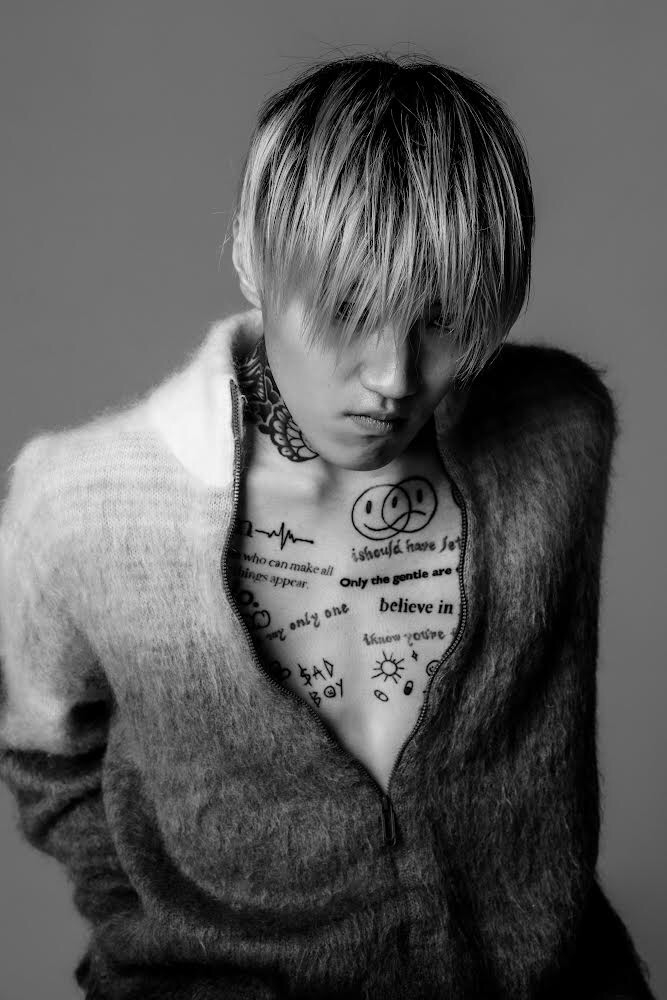
Two other tattoos come directly from films that stayed with LEX. He says Memento inspired one piece, including the way the film’s character uses tattoos. LEX hopes that his own version will eventually look like a mural. That comment is useful because it describes an idea about how the tattoo should feel as the collection develops, not just what image it copies.
He also has a tattoo inspired by The Butterfly Effect. LEX explains it through the film’s central idea of choices shaping what comes next. For him, it became a reminder to choose his future, stay genuine, and trust that genuine people draw genuine people. It sounds less like a plot summary than a principle he wants to carry into ordinary decisions.
The two references approach film in different ways. With Memento, LEX talks about the visual language of tattoos and a larger mural-like result. With The Butterfly Effect, he focuses on a message he can use in life. Neither needs a made-up design analysis to be interesting. His own description gives enough to see why the films mattered and how he translated that feeling into ink.

The close view below shows how the film-inspired work sits within the visible neck and upper-body collection. It is a photograph of LEX’s tattoos, not a claim that every small mark in the frame belongs to one film reference.

Words LEX uses to hold himself accountable
LEX also has the words “genius” and “mission” tattooed on him. He describes them as a way of putting pressure on himself and making a commitment. He believes in words, and in saying dreams aloud rather than keeping them safely vague. In that sense, the lettering works like a short personal contract: it reminds him that ambition is something he has to back up.
There’s a difference between treating these words as a prediction and reading them as a standard. LEX’s explanation points to the second. He is not saying a tattoo makes success inevitable; he is describing language that pushes him to work and take his own goals seriously. That is a more grounded reading than turning the words into a generic statement about confidence.
His interview also makes clear that the collection is not a polished branding exercise where every tattoo has one tidy explanation. Some choices are deliberate reminders; others come from a moment or an opportunity. The “genius” and “mission” pieces stand out because LEX gives them a direct job to do: keep his own expectations in front of him.
“Ryoma Sakamoto 2002”: a name and year in ink
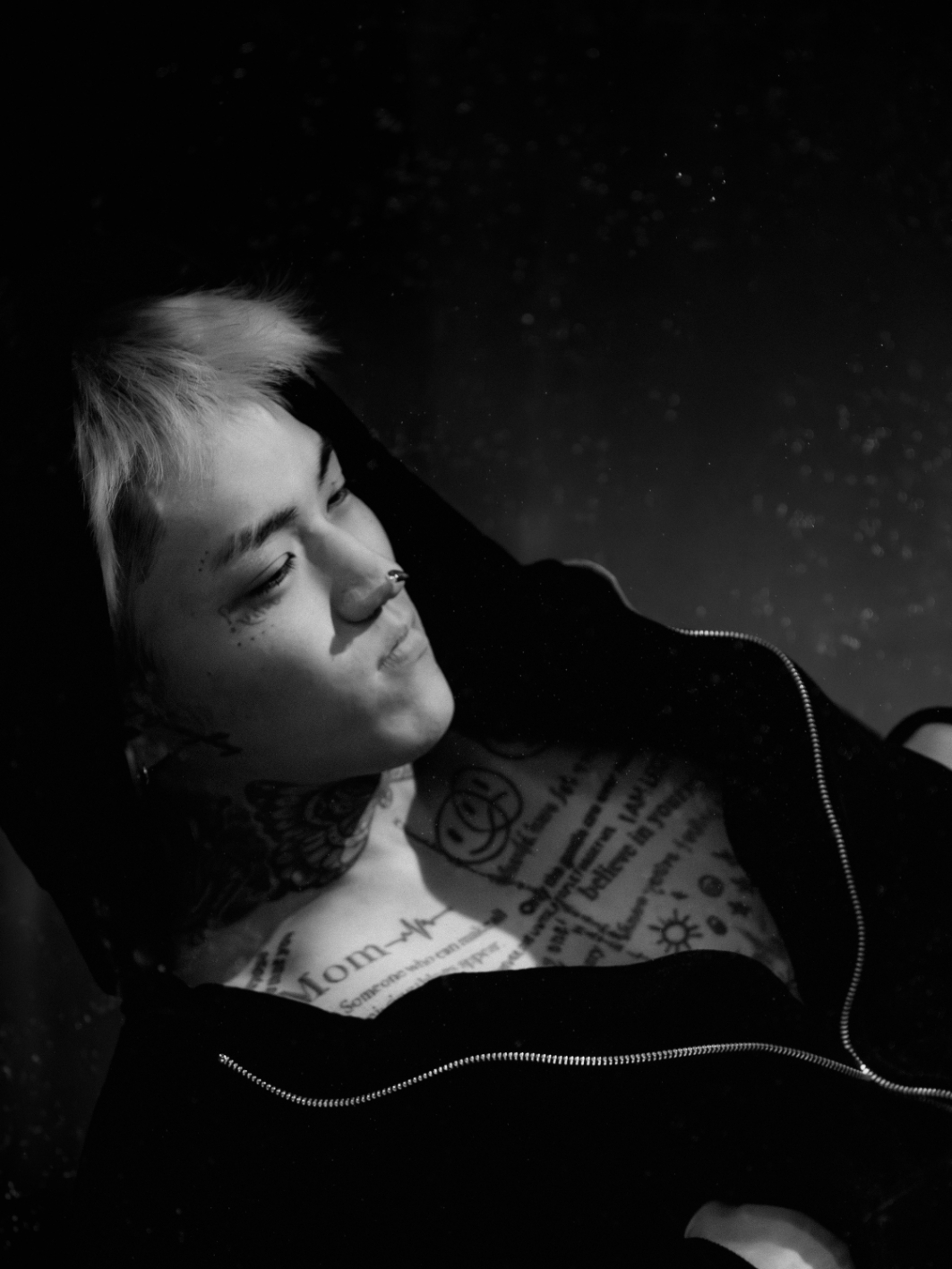
Another piece reads “Ryoma Sakamoto 2002.” LEX’s given name is Ryoma, and he says his mother named him after the historical Japanese figure Sakamoto Ryoma. The year is his birth year. He describes the tattoo as saying that a new Ryoma Sakamoto was born in 2002, a line his friends sometimes tease him about.
It’s a personal name tattoo, but the explanation reaches beyond a simple date. The name carries a family story, while the year anchors that story to his own life. LEX doesn’t present it as a claim that he is the historical figure reborn in a literal sense. It’s a playful, confident way to connect his name, his mother’s choice and his own starting point.
Name-and-date tattoos can be easy to overread from a photograph. In this case, the useful meaning comes from LEX himself: his mother chose the name because of Sakamoto Ryoma, and he was born in 2002. That is the part worth preserving. The interview does not give a more elaborate historical or political meaning, so there’s no need to invent one.

Music-title tattoos and “0 + 0 = 1”
Music appears directly in LEX’s tattoo choices. “King of Everything” is an album title, and he says he intends to do this with each album. He also mentions “SPEED STAR,” an earlier song, while talking through the music connected to his tattoos. The titles work as markers of creative chapters: rather than keeping a release only in a discography, he wants parts of that work to stay with him.
One of the clearest pieces is “0 + 0 = 1.” LEX links it to a person in the music business who doubted that he could create something. His answer was that he could start from zero and make one; he could not turn one into two in the way the skeptic imagined. He says the tattoo holds his resolve to work hard and the anger he felt when people questioned whether he would succeed.
That story gives the equation a specific meaning. It is not a general math-themed tattoo or a mysterious code for fans to decode. It records a challenge and LEX’s response to it. The phrase also fits his wider comments about commitment: the ink keeps a moment of doubt close, but the point is what he chose to do with that doubt.

Color changes in the waveform, ghost and diamond tattoos
Not every detail in LEX’s collection begins with a fixed final plan. In the tattoo tour, he talks about wanting waveform tattoos and asking for red and blue, then adding color later. He also points out that the ghost was not originally green and the diamond was not originally red. Friends told him the colors suited him, and he seems happy with how those choices developed.
That small account makes the process feel refreshingly ordinary. A tattoo can start with a shape or idea and gain details as the person lives with it. LEX doesn’t claim the colors represent a hidden code, and he doesn’t give each waveform or shape an elaborate meaning. What he does explain is the practical story: some color arrived later, and other people’s reactions helped him feel good about the result.
He also says he does not have one regular tattoo artist and can make spontaneous choices, including getting tattooed at a free event. That is his account of his own habits, not advice that everyone should copy. The color stories are a reminder that the finished image can reflect decisions made at different times, rather than one perfectly mapped-out design session.

Family tattoos and the memory of his father
LEX’s most emotional tattoo story is about his father. He says the tattoo preserves the memory and feeling of their last hug. Before that embrace, his father asked, “Do you still love me?” LEX says he did, but the situation at home was complicated and he answered no. His father hugged him while crying. LEX describes the memory as vivid, and says he wanted to keep that moment with him.
The interview gives the story, but it does not clearly identify a precise visible design or exact placement for this tattoo. That distinction matters. It is fair to say the tattoo is tied to the last hug and the complicated feelings around it. It would not be fair to label a particular image in a photograph as the memorial tattoo without evidence. LEX’s explanation is already powerful without guessing at what the mark looks like.
He also talks about his sister LANA’s flower tattoo. She chose one in almost the same position, apparently without copying him; she had been thinking about it for a while. LEX says he liked the choice and recalls talking her out of getting a face tattoo. It is a lighter family story than the one about his father, but it shows how tattoos can become part of a conversation between siblings without every similar design being planned as a matching set.

Neck and chest tattoos in public
LEX recalls meeting Willow Smith and introducing himself as a Japanese music artist. She complimented his neck tattoo, and he says he was delighted by that. It is a small anecdote, but it shows how a visible tattoo can become an opening for a conversation rather than only a private symbol.
He says he got that neck tattoo at a free event and does not have a go-to artist, often making choices on a whim. The tour presents this as his personal approach, not as a universal recommendation. He also acknowledges that tattoos can affect what is easy to do in Japan, and advises thinking carefully about goals and plans before getting a face tattoo. That comment is relevant context for his choices, though it does not mean he regrets his existing work.
Across photographs and performances, LEX’s neck, chest and arms make the collection highly visible. Still, visibility alone does not explain a tattoo. His interview gives some designs a clear story, while others remain open or simply go unexplained. The best way to read the collection is to hold both facts together: the visible ink is part of his public image, but the meanings he has actually stated are personal and specific.

LEX’s tattoos make the most sense as a record of things he returns to: stories that motivate him, words that set a bar, work he has made, and people he loves. Some are explained in detail; some are not. That mix is part of what makes the collection feel personal rather than like a single concept built for an audience.
Watch LEX explain his tattoos
In GQ Japan’s tattoo tour, LEX walks through the pieces and explains the stories in his own words.