codex

Ivan Toney Tattoos: The Tiger and Kitten, Family Ink and More

Ivan Toney’s tattoos include a kitten that sees a tiger in its reflection, family portraits, a line about discipline and regret, and several football references. He has explained some of the larger pieces himself; other designs are visible in photographs but have no confirmed public meaning.

The tiger and kitten tattoo is about self-belief
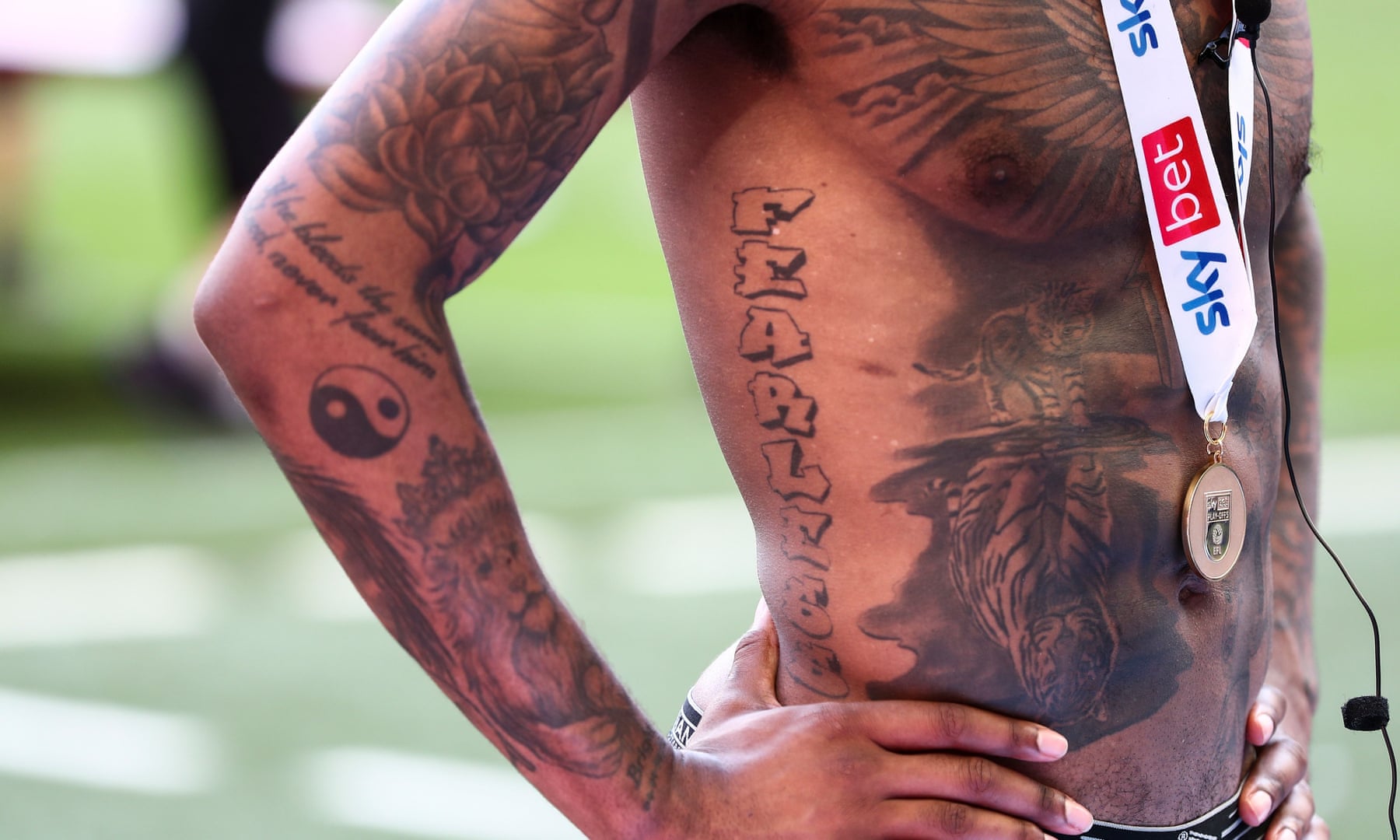
Ivan Toney tattoos: Torso photograph showing the tiger-and-kitten scene discussed in his Guardian interview

The tiger-and-kitten scene sits on Toney’s torso. He explained it to The Guardian in 2021 after a reporter noticed the design. When asked how long he would keep going, he replied, “Until I win.” He said it matters how you see yourself, not how other people see you: they may see a kitten, while you see a tiger.

At the time, Toney had just helped Brentford reach the Premier League by winning the Championship play-off final. He also spoke about a difficult path and moments when he questioned whether to continue. That context helps explain why the image resonated with him, but the reporting doesn’t say it was made for the promotion or any one match. He described self-perception and persistence, not a promise that the tattoo would bring success.
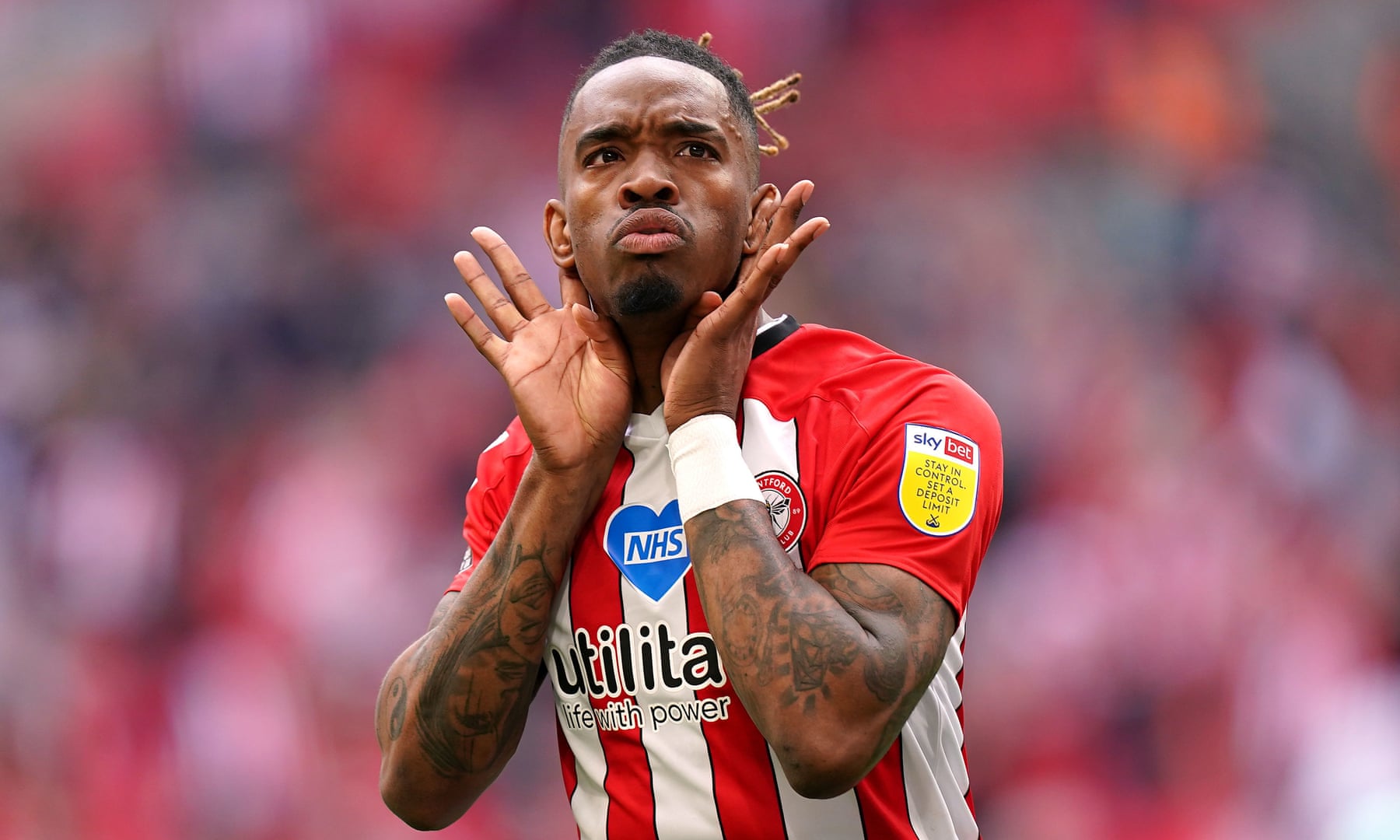
Ivan Toney tattoos: Separate Wembley celebration view showing the torso ink in the same reporting feature

Family portraits bring his chest tattoos close to home
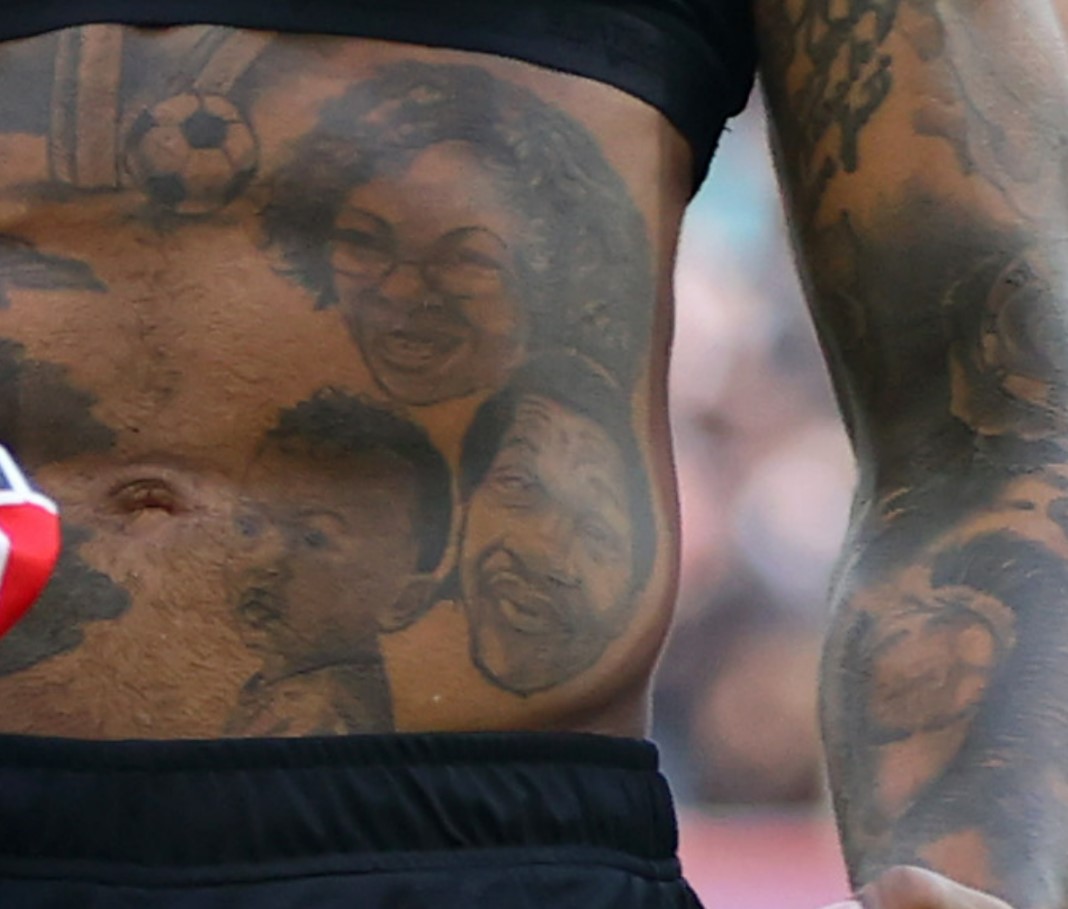
Ivan Toney tattoos: Distinct closer view of the chest portraits identified in reporting

A 2021 profile identified portraits of Toney’s late grandmother, Elma, his grandfather, Benjamin, and his son, Ivan Jr, among the tattoos on his chest and torso. Shirts and match photos can obscure the designs, but a closer image shows the portraits alongside other pieces.

The subjects make family a clear part of the collection. The reporting does not establish when each portrait was tattooed, who did them, or what each one means to Toney personally, so there’s no need to add a story about grief or fatherhood that he hasn’t shared.
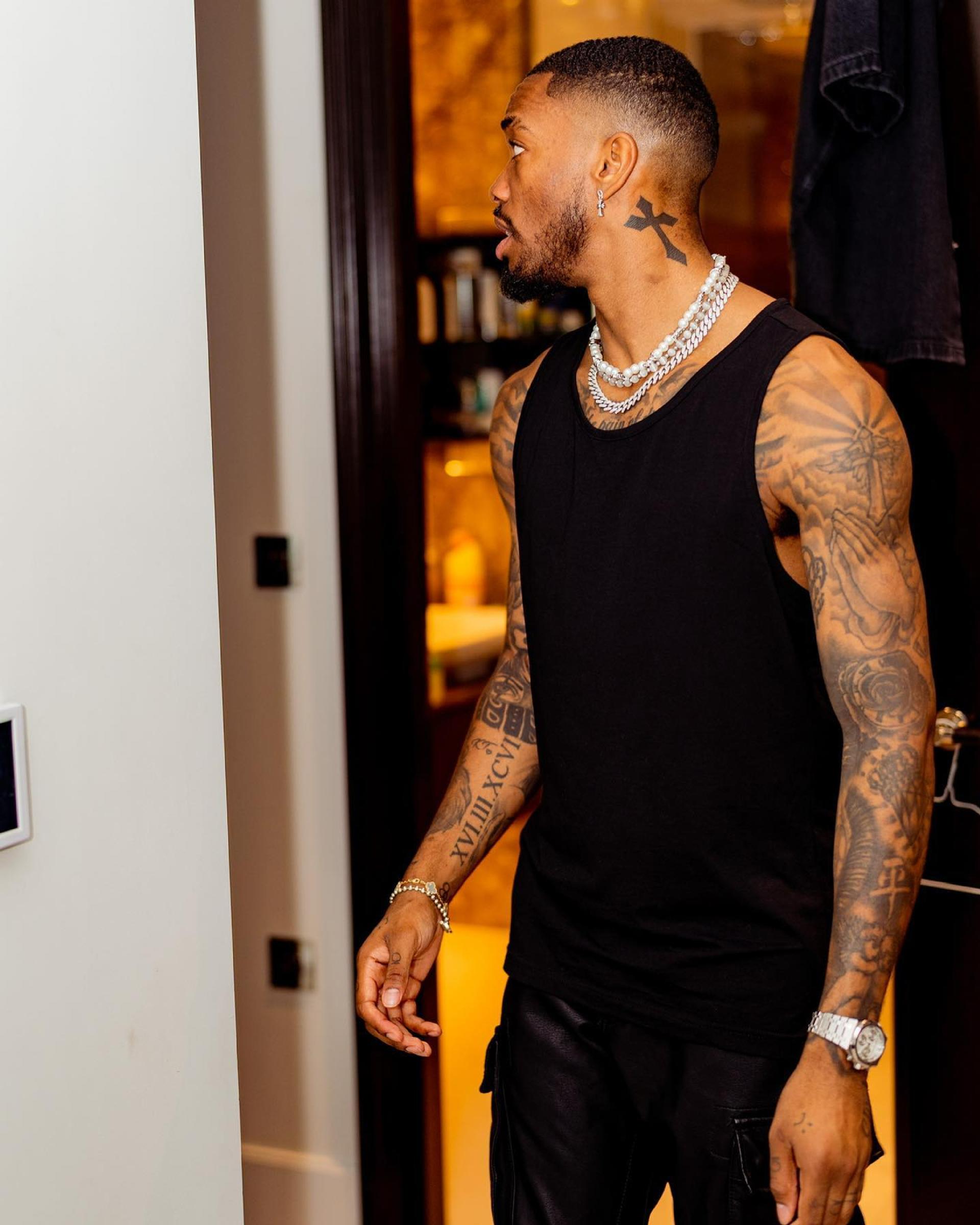
Ivan Toney tattoos: Distinct side-angle torso view accompanying the family portrait discussion

The discipline-and-regret lettering across his chest
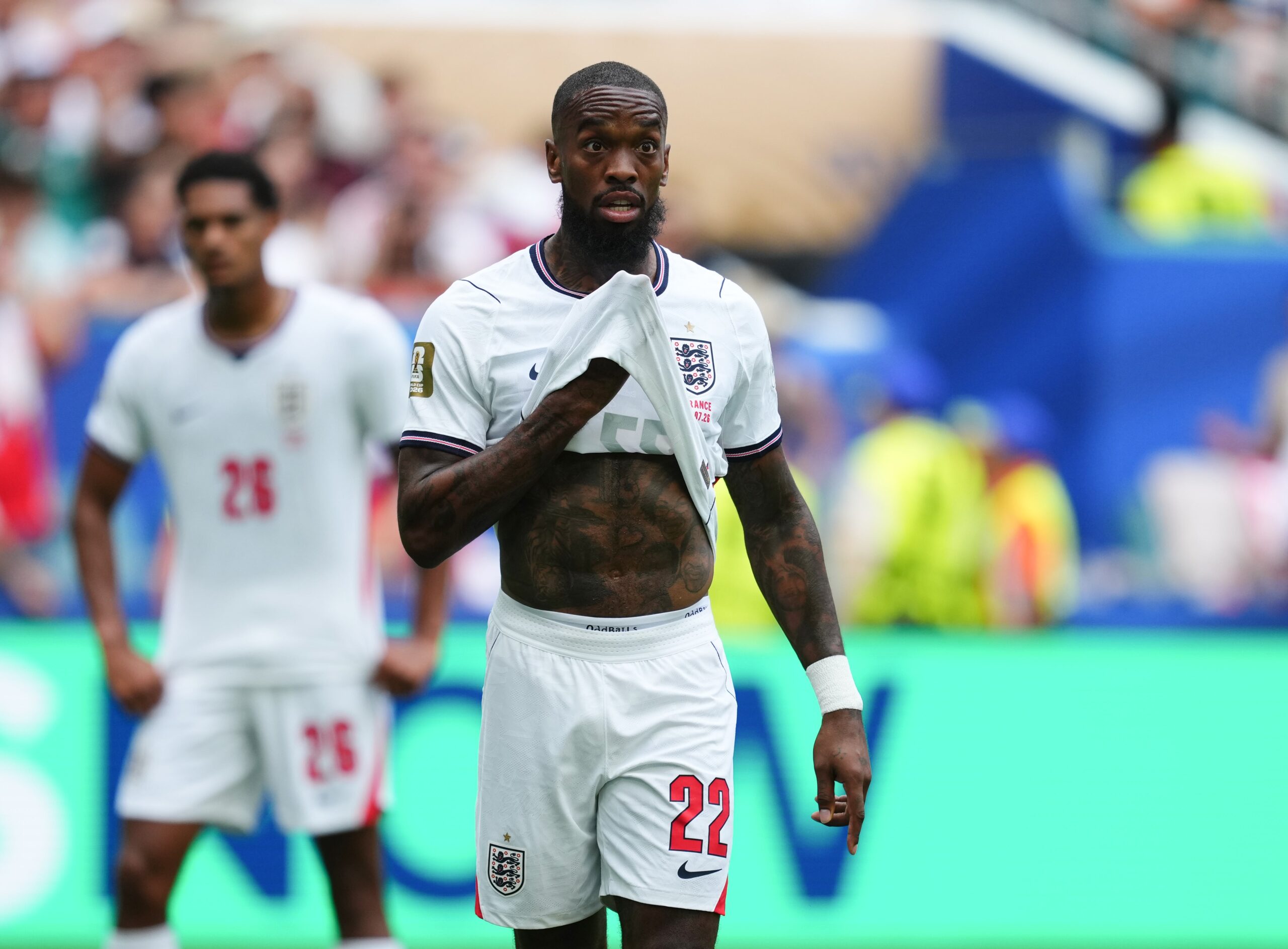
Ivan Toney tattoos: Shirt-lift photograph showing chest lettering and nearby tattoos

The sentence across Toney’s chest reads, “Suffer the pain of discipline or suffer the pain of regret.” It puts the effort required now alongside the regret of wishing you had made it. The line has been reported during coverage of his first England call-up and rise with Brentford.

His career included youth football, a move to Newcastle, several loan spells and a period rebuilding before Brentford signed him. Toney has discussed setbacks, but no source connects the tattoo to one manager, transfer or specific moment. In photographs, the lettering is usually covered by his shirt and becomes visible when he lifts it or celebrates bare-chested. The full sentence matters; shortening it loses the contrast that completes the thought.

The No 17 and football tattoos mark his Brentford chapter
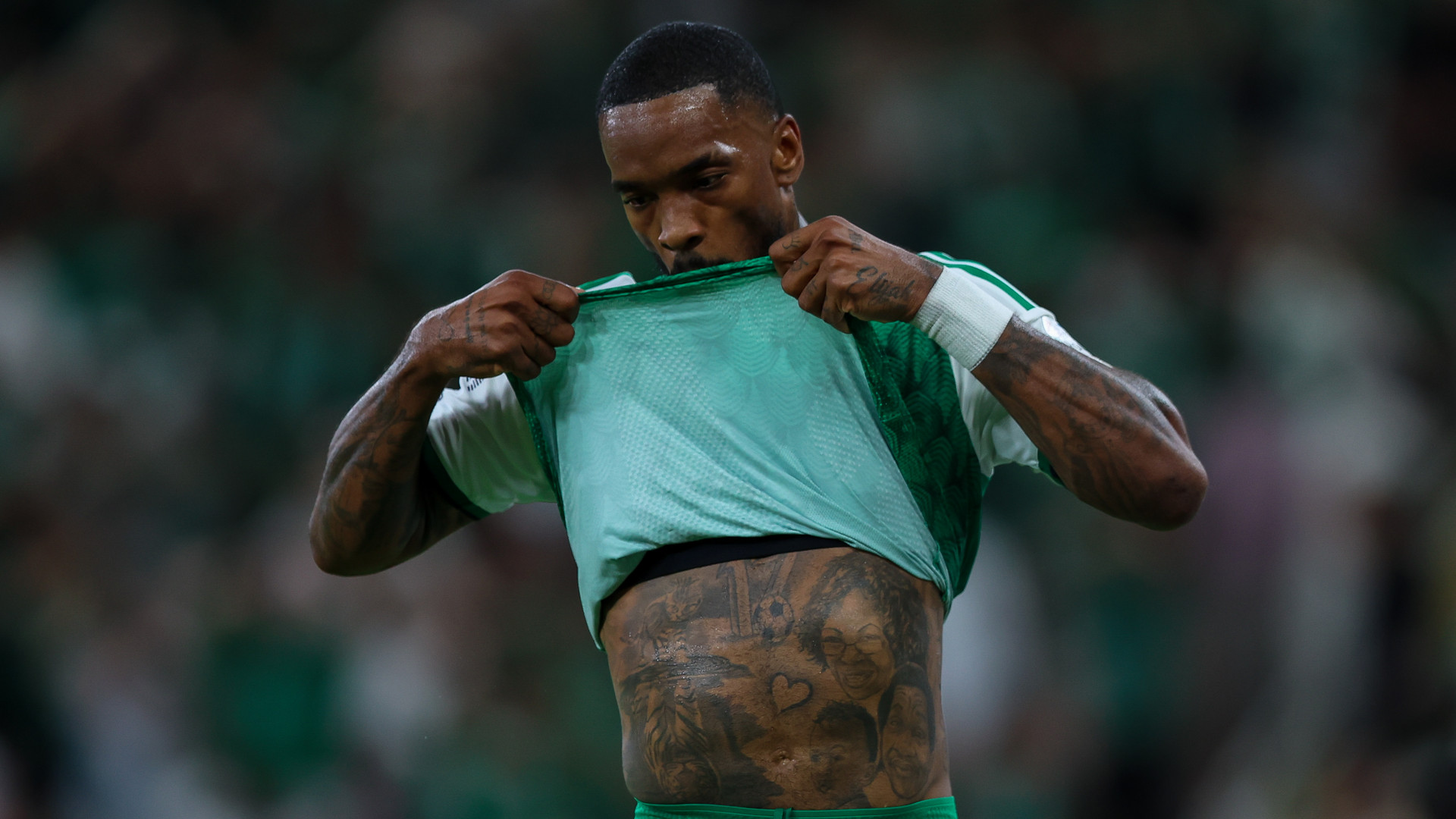
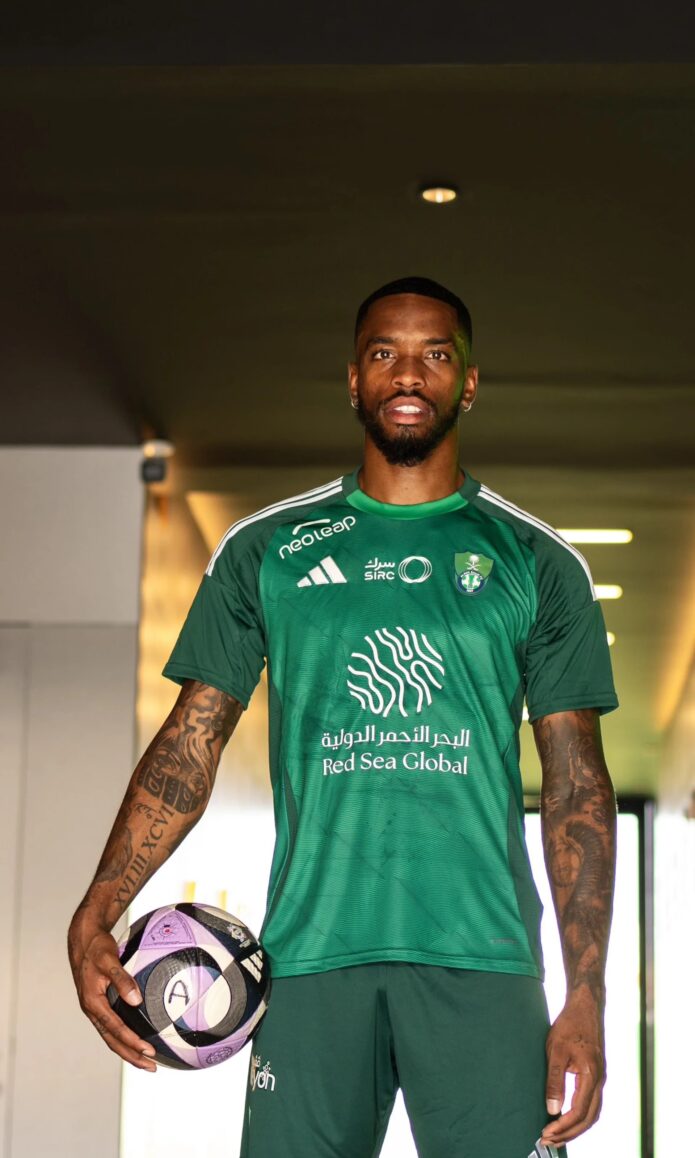
Ivan Toney tattoos: Separate later-career torso view showing the collection in an Al-Ahli match setting

A 2021 profile identified the number 17 and a football on Toney’s torso. Seventeen was his Brentford shirt number then, and the profile described the ball as a symbol of his love for the game. It points to that part of his career; the sources don’t say the number marks a birthday or private date.

Shirt numbers change, but a tattoo stays put. The number is best understood in its Brentford context, rather than as a reference to every club he has played for.

The cross and “Original” tattoos around his neck
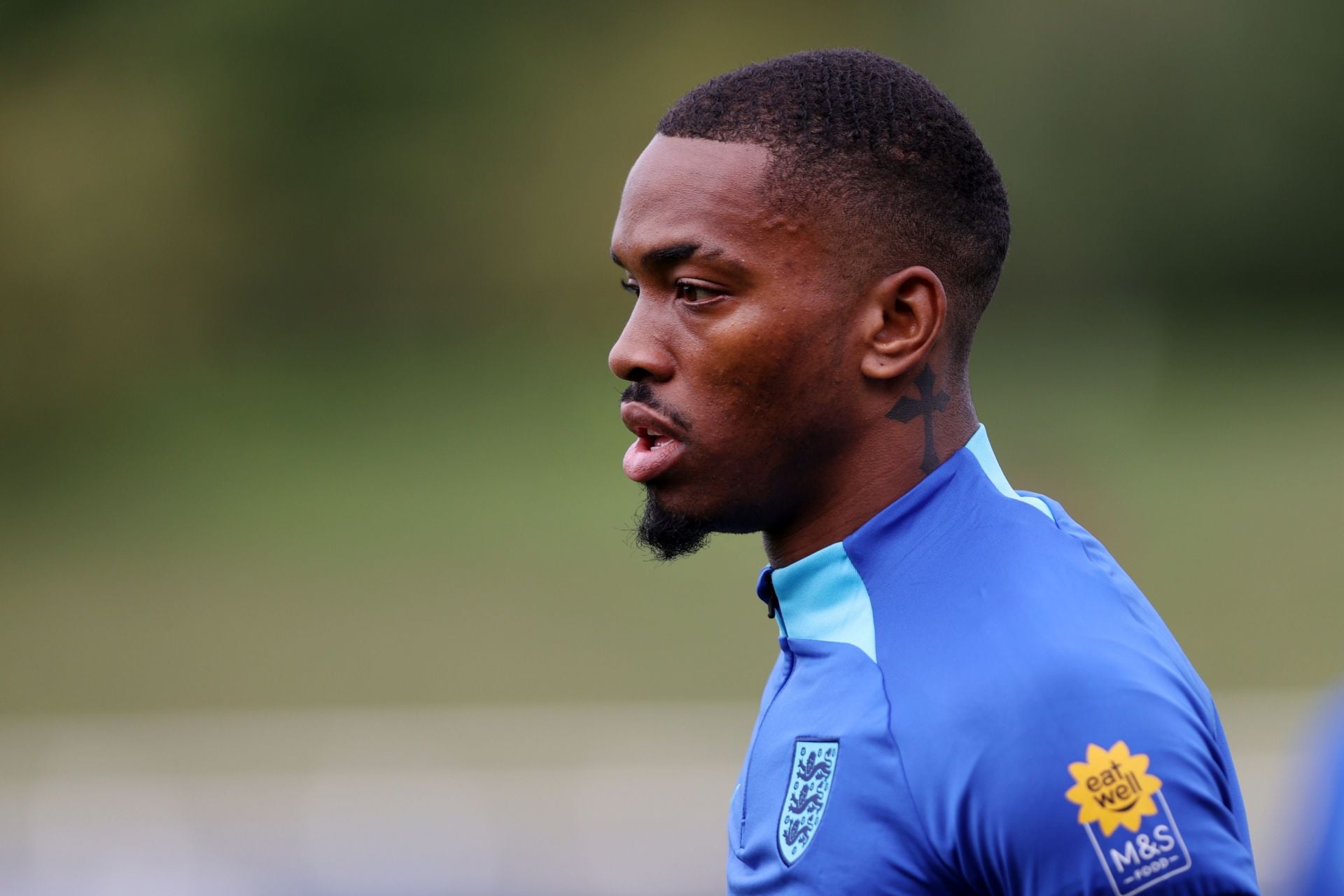
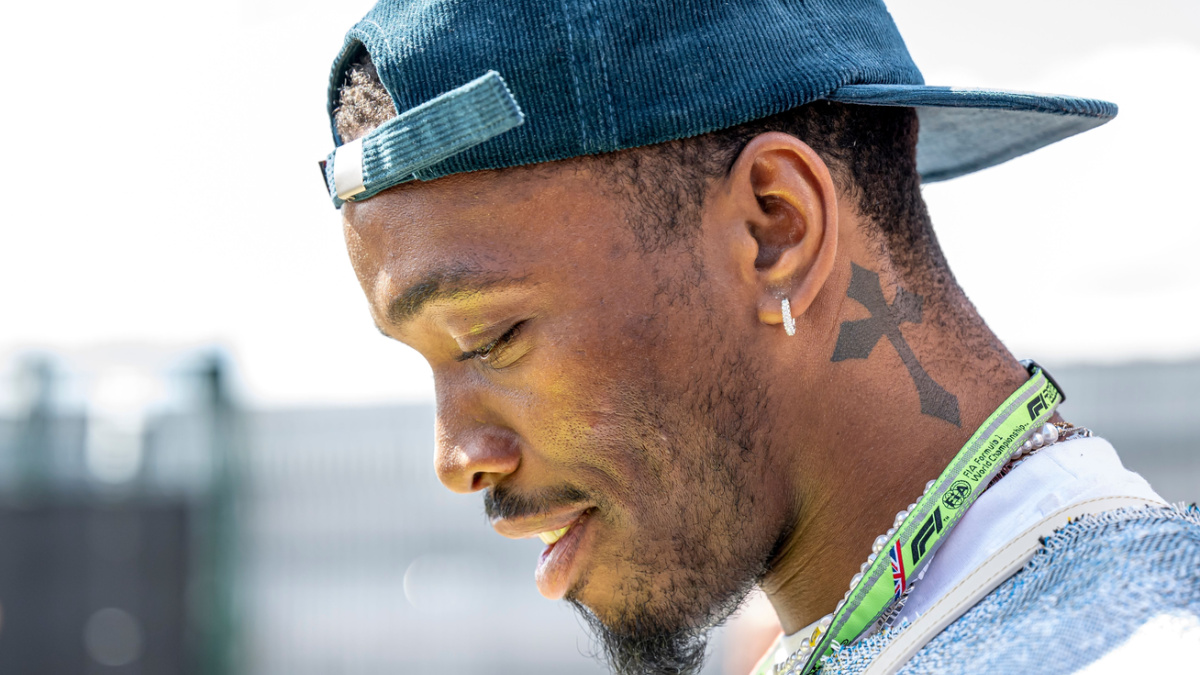
Ivan Toney tattoos: Training portrait showing the side-of-neck cross
Ivan Toney tattoos: Independent profile photograph illustrating the neck placement

Photographs show a small cross on the side of Toney’s neck. In a 2026 interview, The Guardian also noted “Original” in front of his left ear. The interview confirms the word and location but does not explain its meaning. The cross is visible too, though Toney has not given a verified explanation of that particular design.

The two marks appear in different photographs. Their proximity doesn’t establish that they were done together, by the same artist, or for the same reason. The pictures show where the ink sits; the rest remains unconfirmed.
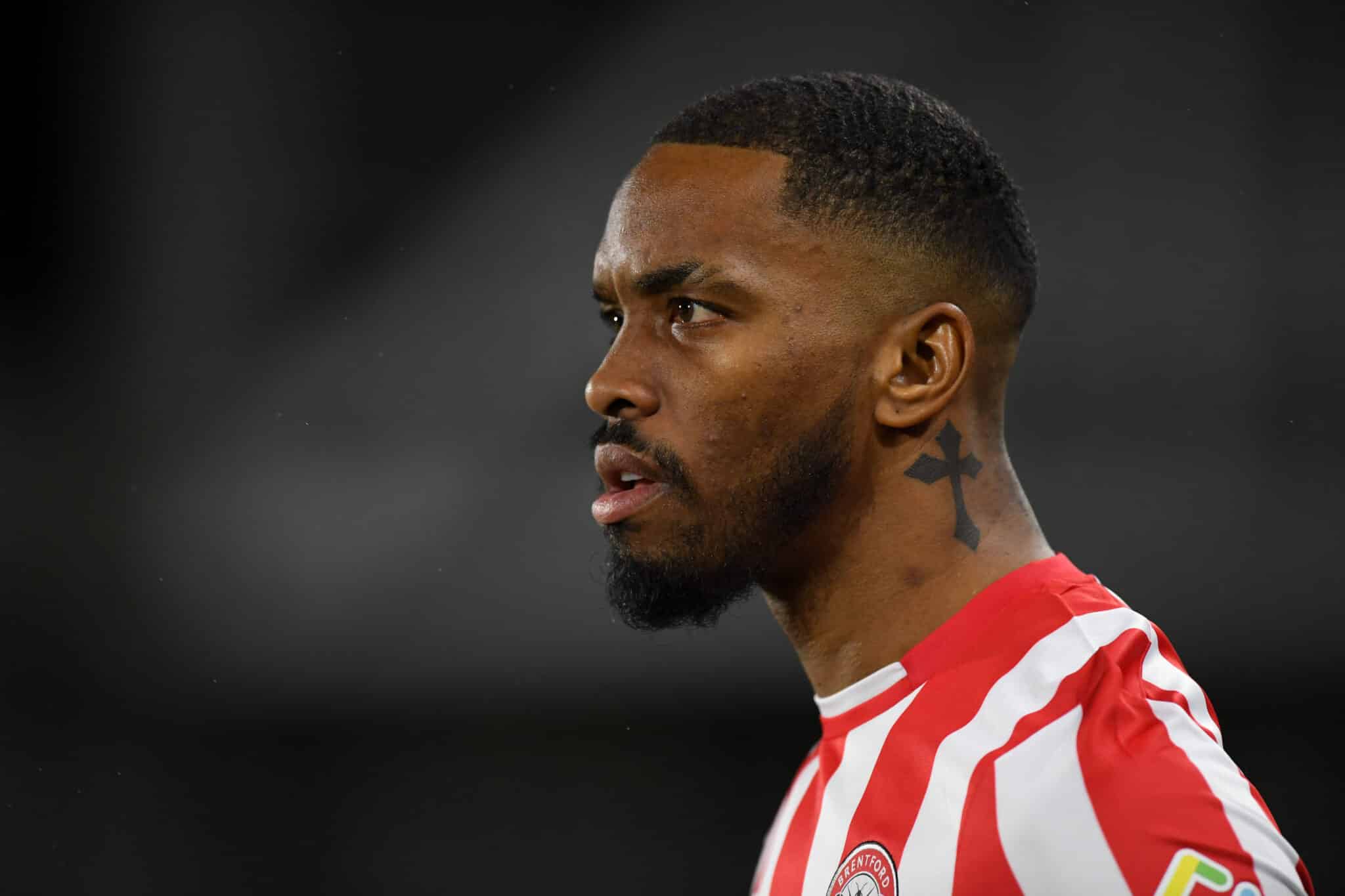
Ivan Toney tattoos: Close side profile showing the neck tattoo from a separate photograph

What the visible arm ink tells us, and what it does not
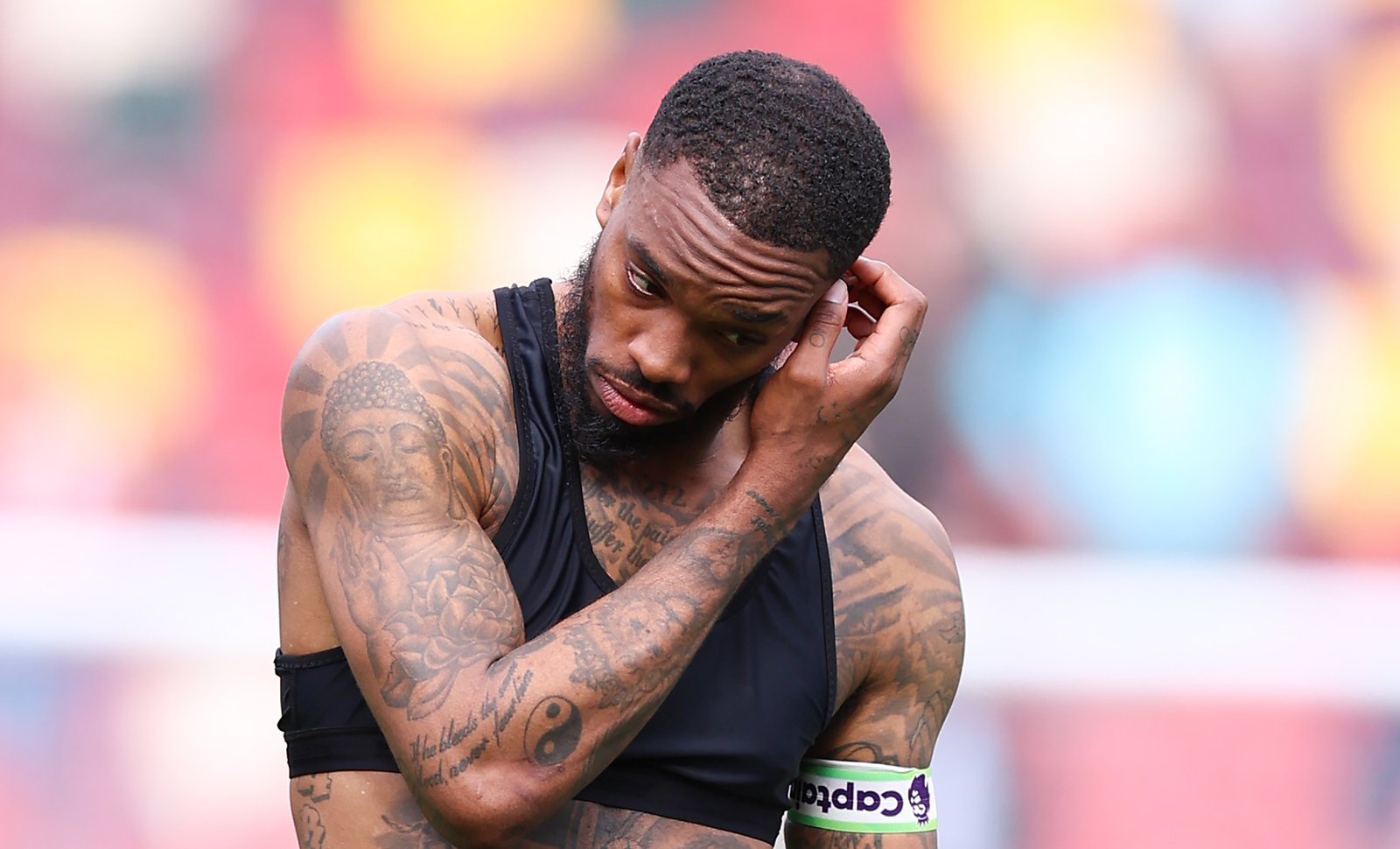
Ivan Toney tattoos: Match-action image documenting visible arm ink without assigning names to indistinct motifs

Match photos show tattoos across Toney’s arms, though many small details are too indistinct to identify. Coverage in 2024 estimated that he had around 50 tattoos. That was an approximate count at the time, not a permanent total; new pieces and extensions can change how the collection is counted.

The clearest reported subjects include family, football, self-belief and discipline, but not every tattoo has a public explanation. An image can show the extent of the arm ink without identifying each mark.

The Euro trophy joke

Before Euro 2024, Toney joked that he might tattoo the trophy on his forehead if England won. He then softened the idea to a small commemorative design. The Independent reported the exchange in June 2024. England did not win, and there’s no verified image of a trophy tattoo. It was a joke about a possible design, not evidence that he got one.

Why Toney’s collection feels like a timeline

The photographs show Toney’s tattoos at different points in his career, while his interviews explain only some of them. He has given the clearest account of the tiger-and-kitten design; the rest can be described without guessing at what he hasn’t shared.
More athlete tattoo guides

Yasmani Grandal Tattoos: Scorpio, YAZ, Cuba and Baseball Ink

Yasmani Grandal’s tattoos point to specific parts of his life: his first year at Miami, a nickname from Little League, goals in pro baseball, Cuba, and a game with his wife. In a 2019 MLB interview, he said he wanted each design to mean something. A 2016 Los Angeles Times profile adds context about the first tattoo. The accounts differ on a few details, so those differences are worth keeping.

College tattoos: Scorpio, the Miami U, and a line for motivation

Grandal got his first tattoo at 18, during his first year at the University of Miami. It’s his Scorpio sign in Japanese characters on his left arm. He wanted something small to try the tattoo-shop experience, and the zodiac sign was familiar from the horoscopes his mother read.

Yasmani Grandal tattoos: Japanese Scorpio characters on his left arm and chest lettering in a distinct front-side pose

His 2019 account dates the tattoo to his first year of college. The Times wrote in 2016 that he came home with it in the days after high-school graduation. Both describe it as his first tattoo, but neither gives an exact date. His mother, Maria Gomez, had asked him to wait until he moved out. The Times called the reveal youthful defiance; Grandal later said her horoscope readings helped spark his interest in zodiac signs.

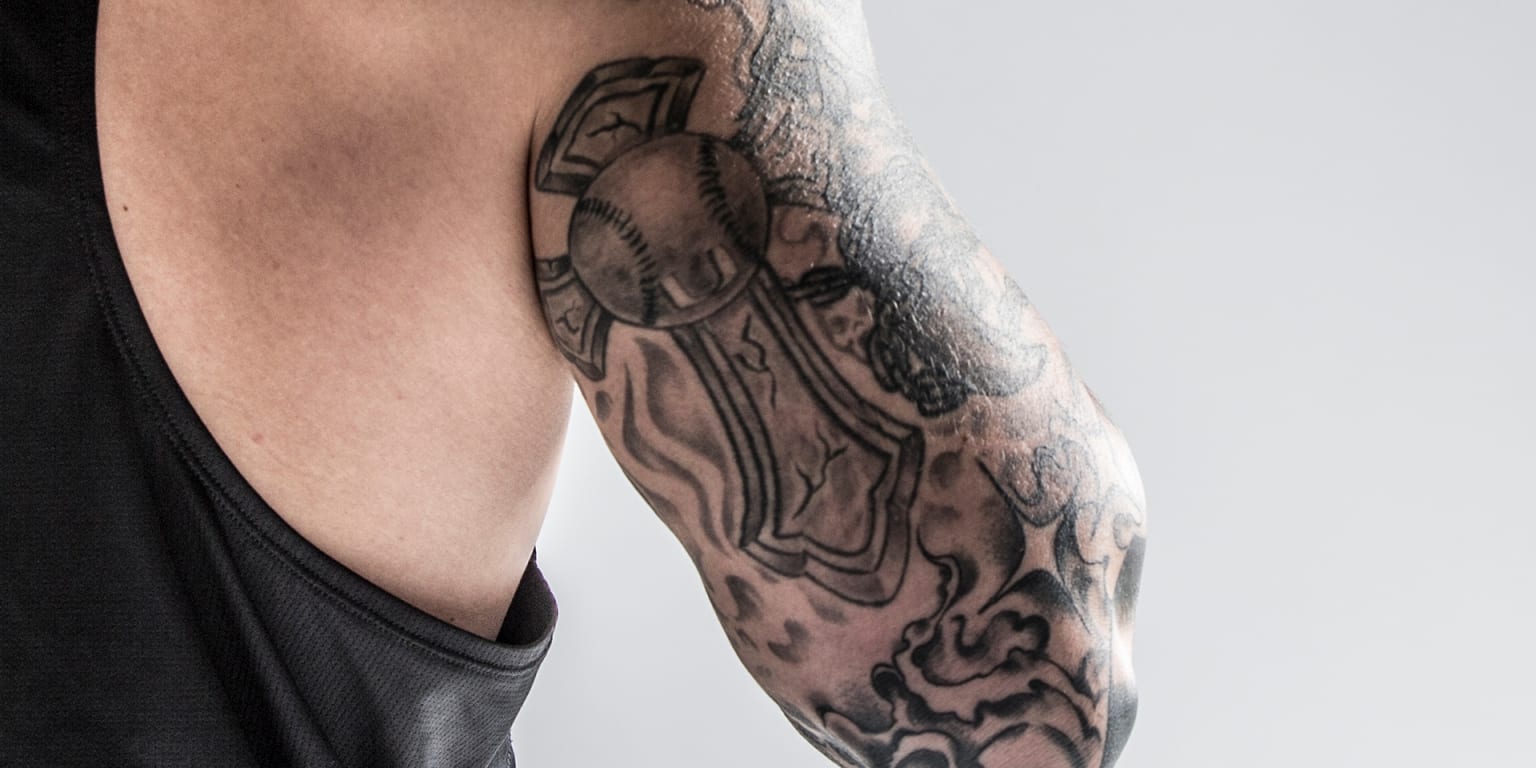
During his sophomore year, he added a cross, baseball and the University of Miami “U” to his right triceps. He said the baseball represented his work, the cross his faith and Sunday chapel visits, and the U the school where he was playing.

Yasmani Grandal tattoos: Close view of the right upper-arm cross, baseball and Miami U design

A line on his chest is associated with Nelson Mandela and a period of early-morning training. Grandal recalled it as “I am the captain of my soul”; the Times recorded a different wording: “You are the Captain of Yourself.” He placed it where he could see it in the morning. As a junior, he was getting up around 4:30 a.m. to work on conditioning, throwing, hitting and defense. The 2019 and 2016 accounts don’t settle the exact wording.

The YAZ tattoo and the eyes on his upper back

“YAZ” sits above a pair of stylized eyes across Grandal’s upper back. A Little League coach who was a Boston Red Sox fan started calling him Yaz when Grandal was about 12 and the coach had trouble with his name. The nickname came from Red Sox player Carl Yastrzemski; Grandal said he didn’t understand the reference until he was 16 or 17.

Yasmani Grandal tattoos: Upper-back YAZ lettering and stylized eyes in a wide rear view

He added the nickname and eyes during his second year at Miami. His mother suggested “envy eyes,” joking that a catcher should have eyes on his back because he faces away from the crowd. Grandal said the idea fit his position behind the plate.

The design later drew comparisons to the Lake Elsinore Storm logo during a rehabilitation start in the San Diego organization. Grandal told MLB he hadn’t meant to copy it. He and the tattoo artist had discussed a cartoon-like treatment because realistic eyes are difficult to draw; the resemblance was accidental.

The chained scorpion tattoo that marks goals still ahead

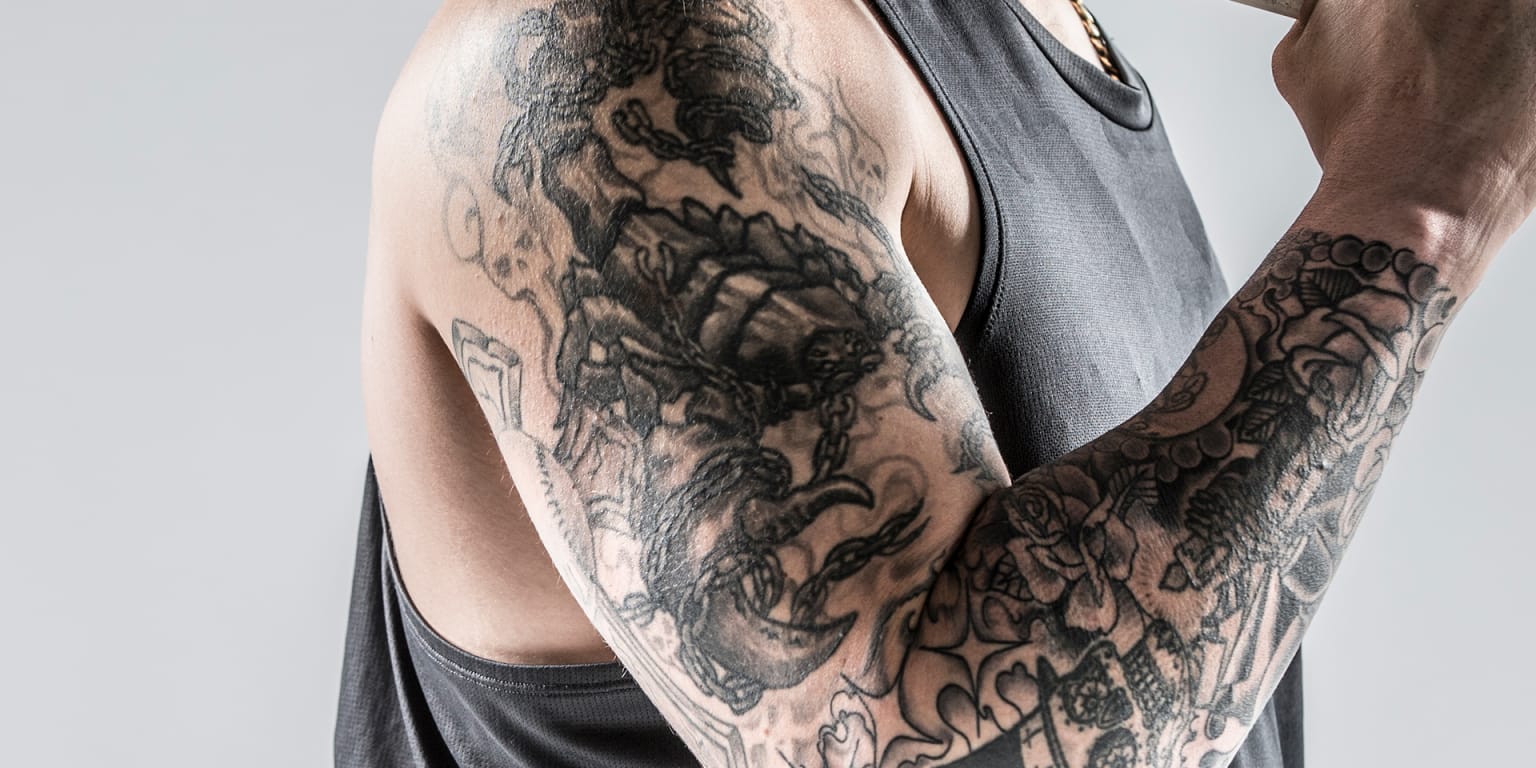
On his right upper arm, Grandal has a scorpion wrapped in chains, some broken and some still attached. He got it after his first year in the Minor Leagues. He said the chains stand for goals he had reached and goals still ahead.

Yasmani Grandal tattoos: Right upper-arm scorpion wrapped in broken and intact chains

Before the draft, Grandal had hoped to become a first-round pick and the best catcher in college. By the time he got the tattoo, professional baseball had started and he had new goals. He described the design as a reminder that reaching one target didn’t end the work.

The Cuba outline on his left wrist

Grandal has a simple outline of Cuba on his left wrist. He told MLB he noticed a similar tattoo on his older brother when they reunited in San Diego in 2014, after roughly 17 years apart. His brother’s version included the Cuban flag’s colors.

Yasmani Grandal tattoos: Outline of Cuba on his left wrist

Grandal later learned his younger brother had the same outline in the same place. None of the three had known about the others’ tattoos. He called the discovery “pretty cool.” He didn’t describe the designs as coordinated; the shared outline became a family connection by coincidence.

The Tasmanian Devil tattoo in catcher’s gear

On his left forearm, Grandal has a Tasmanian Devil in catcher’s gear. The name came from a sign his wife, Heather, made for the first time she came to see him play in the Major Leagues, in Arizona against the Diamondbacks. She called him the “Yazmanian Devil,” combining his childhood nickname with the cartoon character.

Yasmani Grandal tattoos: Tasmanian Devil wearing catcher’s gear on his left forearm

Grandal said he hit a home run that night, the sign appeared on television, and the phrase caught on with fans. The next season, he had the character tattooed in catcher’s equipment. After home runs, he began throwing up the horns, and teammates picked up the gesture. In the MLB interview, he described how the sign, the game and the nickname became part of the tattoo.

More athlete tattoo guides

Marek Hamšík Tattoos: Family Names, 109 and Napoli Ink

Marek Hamšík’s tattoos hold onto people and places from his life: his children, his wife Martina, his hometown and his years in Naples. His longtime tattoo artist, Enzo Brandi, has described how the collection grew. Hamšík has explained several pieces himself, while other details come from interviews and reporting.

The arm tattoos in match photographs

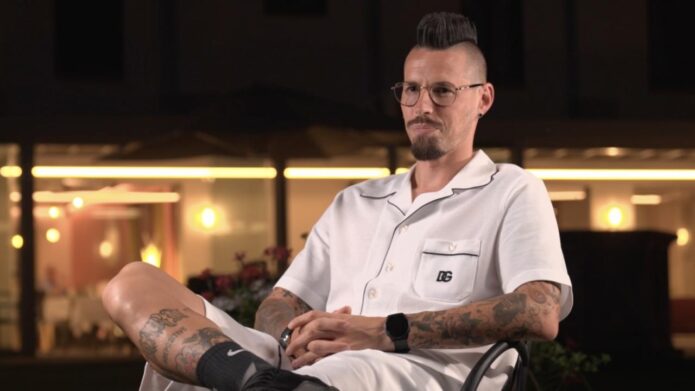
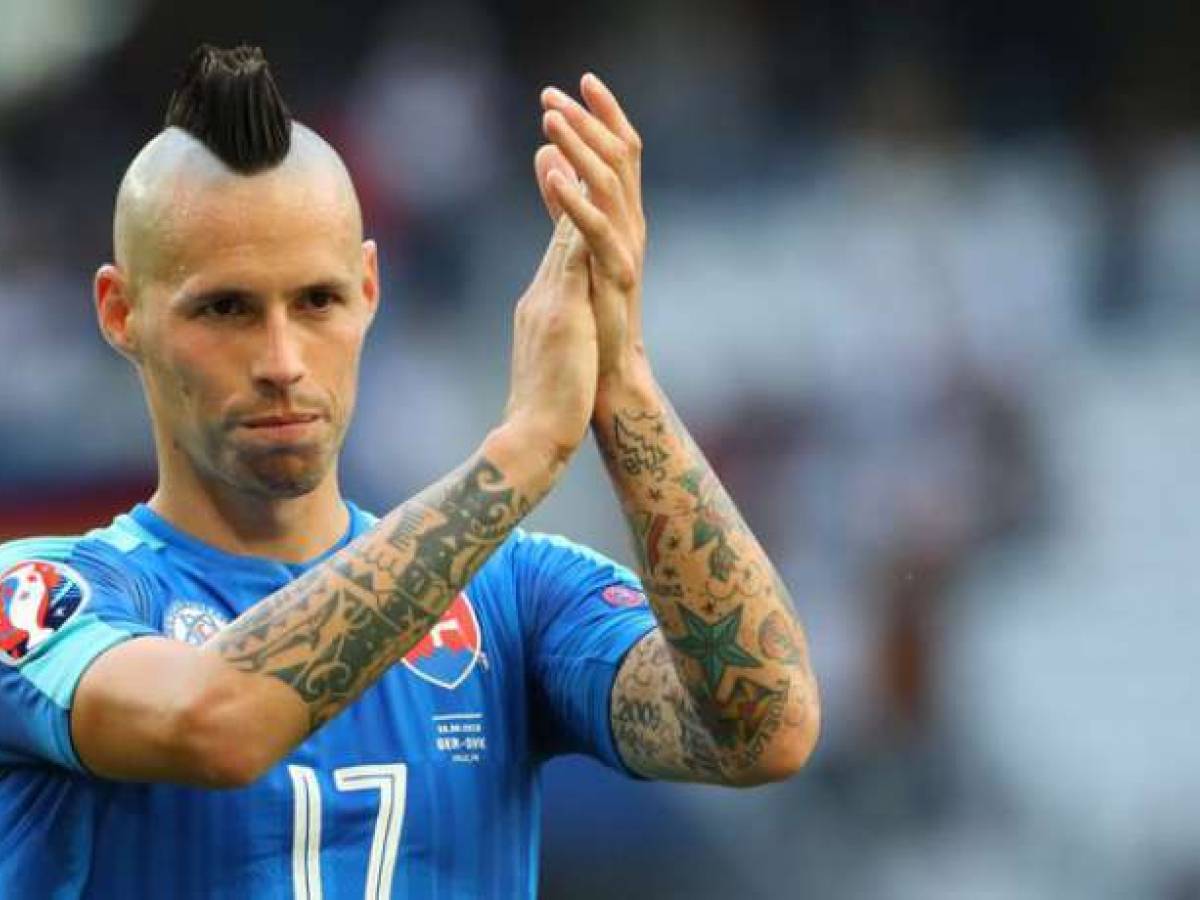
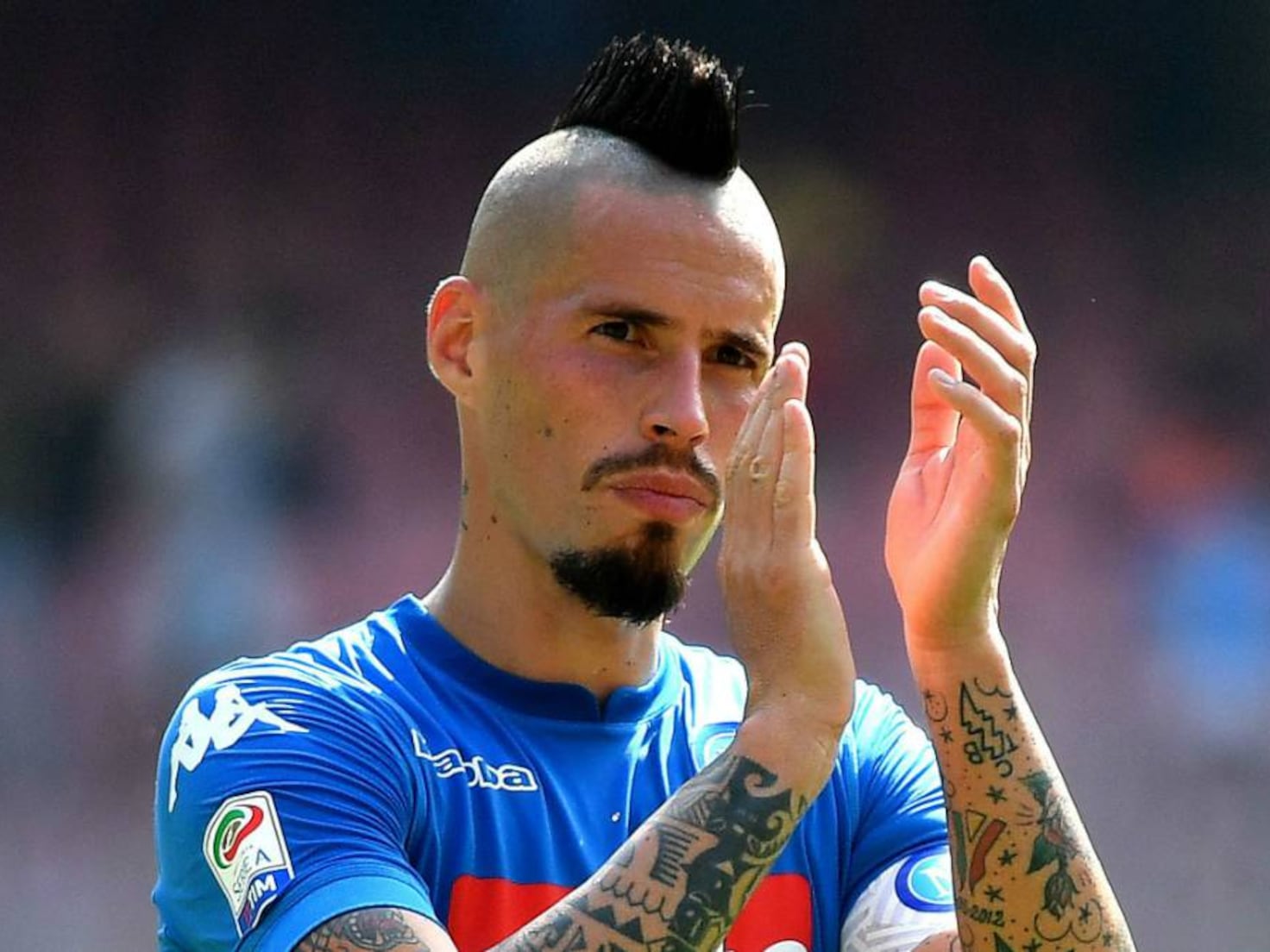
Marek Hamšík tattoos: Marek Hamsik applauding with his tattooed forearms visible in a Napoli match photograph

Hamšík’s forearms carry dense, overlapping designs that show up in match photos as he claps, raises his arms or turns toward the stands. Each picture catches a different angle; together they show the amount of ink, not the meaning of every small shape.

Brandi said Hamšík had five tattoos when he first arrived in Naples and more than thirty by 2019. He described the collection as something built over years, sometimes adding more than one tattoo in a sitting. That count belongs to his 2019 interview, not to the present day. Brandi also said the tattoos connected to Hamšík’s children mattered most to him; the match photos don’t identify which designs those are.

The neck character and forearm patterns

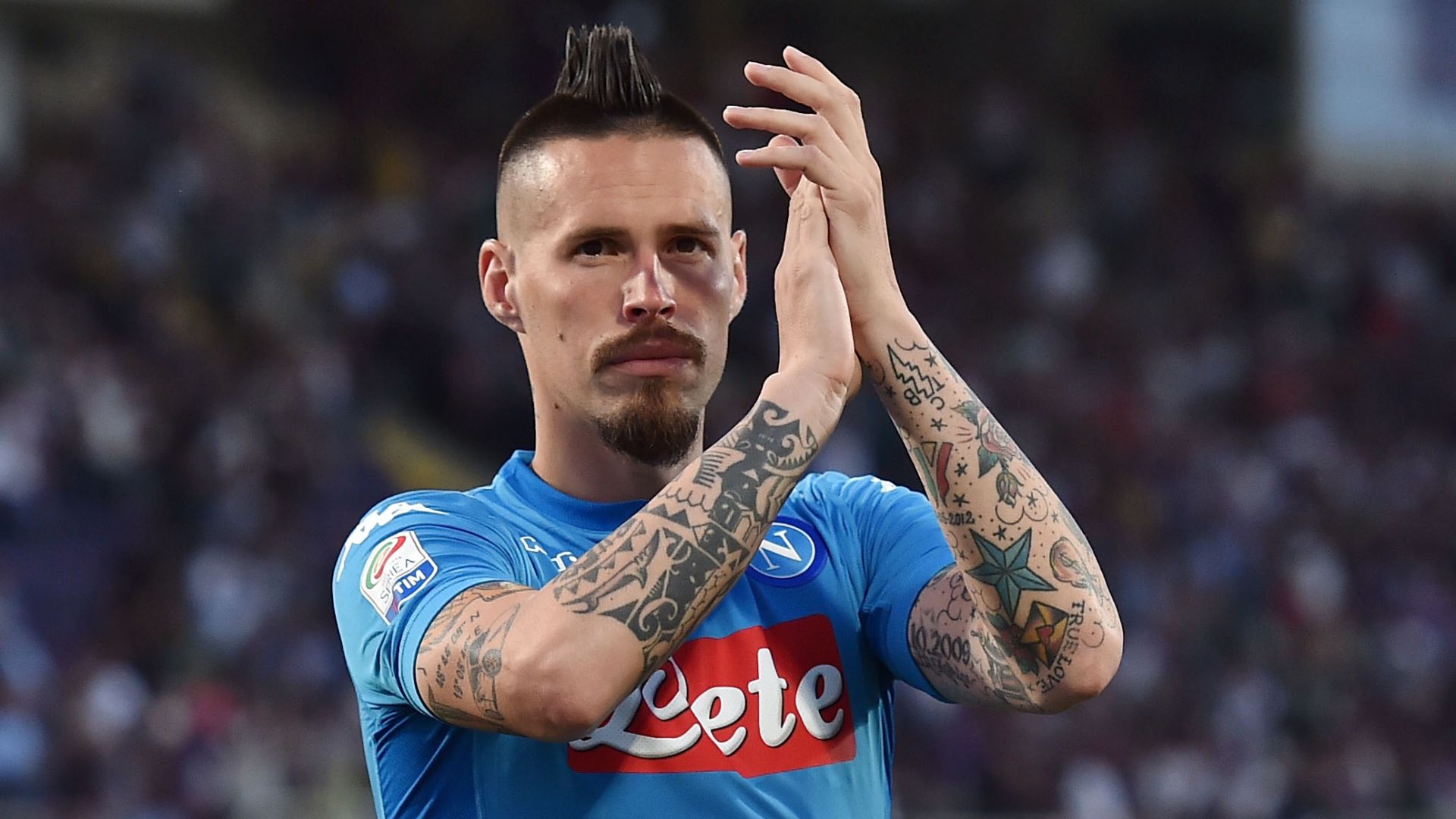
Marek Hamšík tattoos: A separate frontal Napoli photograph where the ink across both forearms is clearly visible

A feature by Swiss broadcaster SRF identified a small Japanese character on Hamšík’s neck. He said it meant “passion,” while the report noted another possible translation, often given as “lust.” Both belong in the account; the source doesn’t settle the difference.

SRF’s photo captions describe the forearm patterns as inspired by Māori art. In a wide shot, the lines can look like dark bands; another angle reveals how the designs wrap around the arm. The photos show placement and appearance, while the translation and reported influence come from the source.

The wider collection and its documented stories

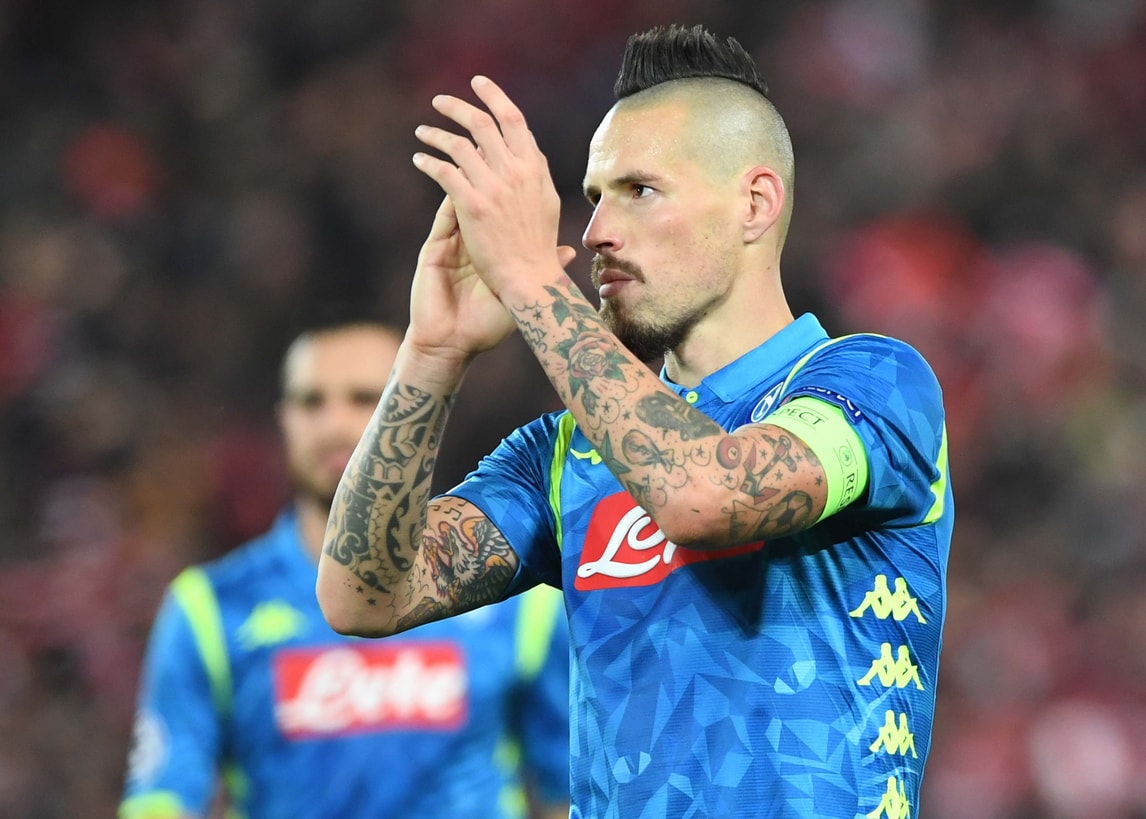
Marek Hamšík tattoos: A distinct side-angle photograph showing the tattoo coverage on Hamšík’s forearms

Family is the best-documented thread. In a 2018 interview with Corriere della Sera, Hamšík discussed dates connected to his children, coordinates for his hometown, a K for “King” with a heart, and a Q for “Queen” for Martina. The interviewer also listed dice, a swallow, a geisha on his calf and Chinese ideograms among the designs.

In a 2025 nss sports interview, Hamšík said his children’s names are tattooed on him and that he carries the number of the hospital room where all three were born: 109. The accounts don’t establish that this number is one of the dates described by Corriere, or that every reference sits in one place. SRF also identifies a heart for Martina and the name Christian, details that sit alongside, rather than replace, the K and Q and children’s dates reported elsewhere.

Napoli, the eagle and the hometown coordinates

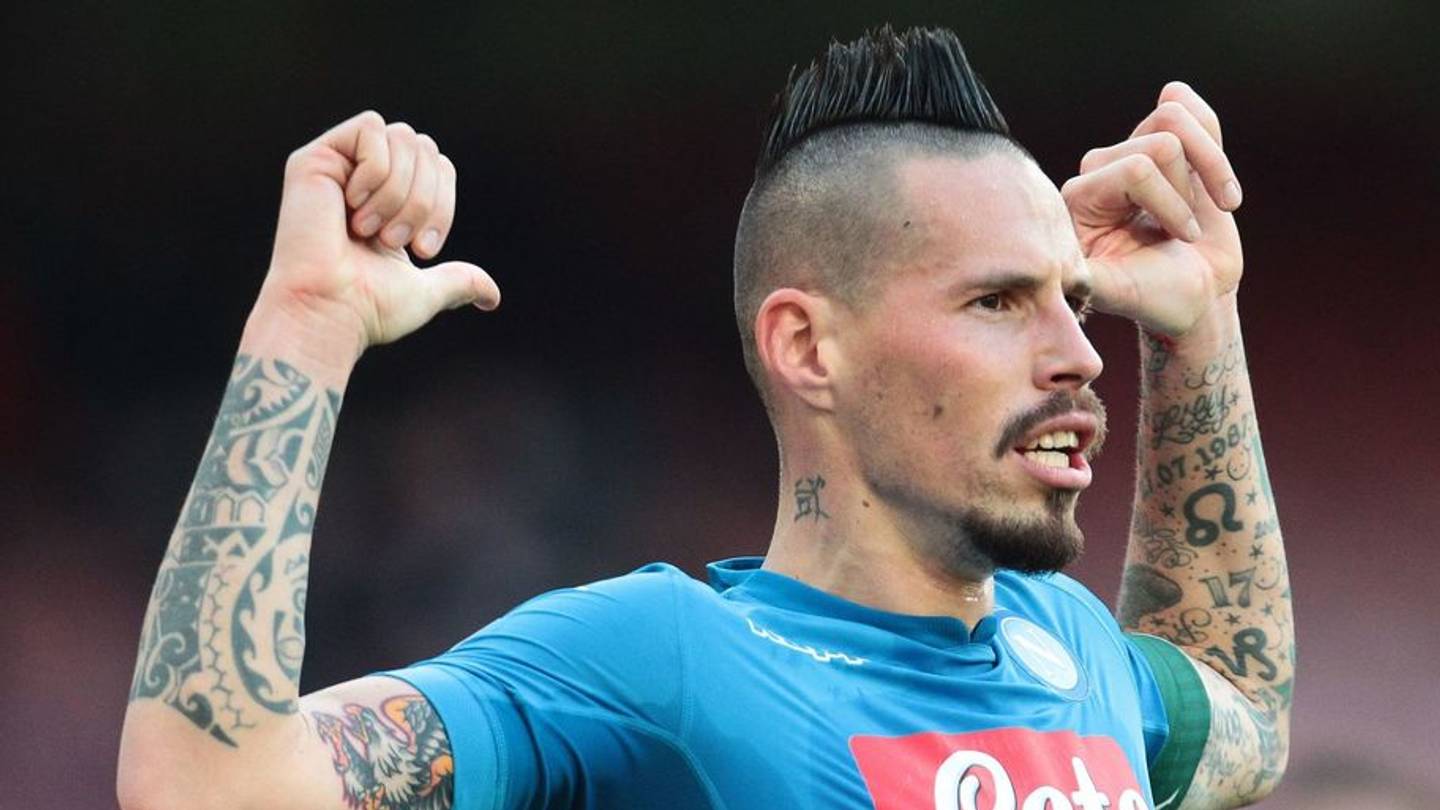
Marek Hamšík tattoos: Hamšík with arms raised; the neck character and tattoos on both forearms are visible

A 2017 Corriere dello Sport report identified an eagle, a snowflake and coordinates for Banská Bystrica, Hamšík’s hometown. The hometown location is clear; the source doesn’t assign a meaning to the eagle or snowflake. Corriere della Sera separately described a geisha on his calf as connected with SSC Napoli, a specific association that doesn’t make every tattoo a Napoli tribute.

Brandi said the two men were close friends and kept in touch after Hamšík left Napoli. In 2017, he also recalled a joke about getting a Scudetto tattoo if Napoli won the Italian championship; the team colors had been reserved. That was a conditional plan, not confirmation of a finished tattoo. Brandi said Hamšík once tattooed him, putting the footballer’s number 17 on his wrist.

What the photographs can confirm

Marek Hamšík tattoos: A fifth distinct match photograph showing the visible tattoo work on Hamšík’s arms

The five photographs show different views of Hamšík’s tattooed arms, neck and forearms. They document how the ink sits on his body, but they don’t provide a complete inventory. The names, room number, translation and place references come from the interviews and reports; shapes that aren’t clear in the images are best left unidentified.

More athlete tattoo guides

Alessio Sakara Tattoos: Roman Ink and Latin Phrases

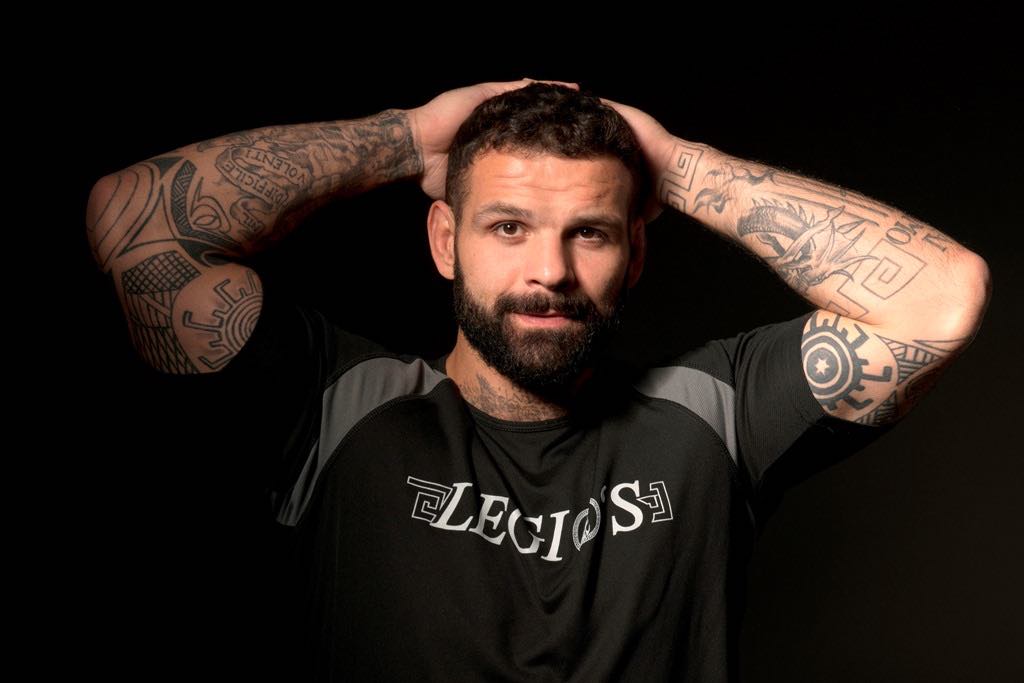
Alessio Sakara has said his tattoos hold his history and values. He connects the Roman imagery to Rome itself, its history and his identity as a fighter. The interviews explain the larger theme; photographs show how the eagle, lettering and classical figures fit across his body.

Rome and the tattoos

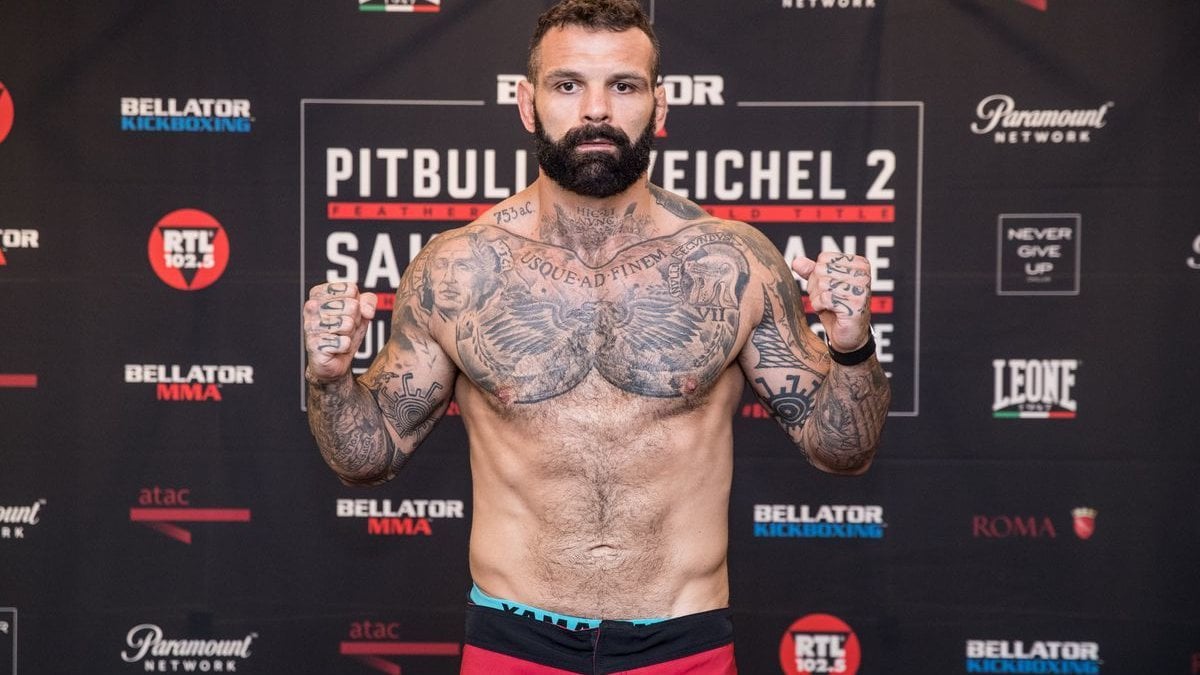
Alessio Sakara’s Roman chest tattoos at a Bellator weigh-in
A weigh-in photograph shows the chest lettering and eagle as part of Sakara’s wider Roman-themed work.

In a 2012 interview, Sakara said Roman history and the image of a legionary resonated with him. He described tattoos as a way to carry his history and attitude. He also recalled that people began calling him Legionarius while he was in Brazil, around the time Gladiator came out. He embraced the nickname and was reading historical novels.

In a 2016 interview, he traced his love of Rome to books and history passed down to him. He said he tattooed himself in honor of Rome and the Romans. The repeated Roman references come from a connection he has explained himself, rather than an interpretation based only on photographs.

The chest eagle and Latin

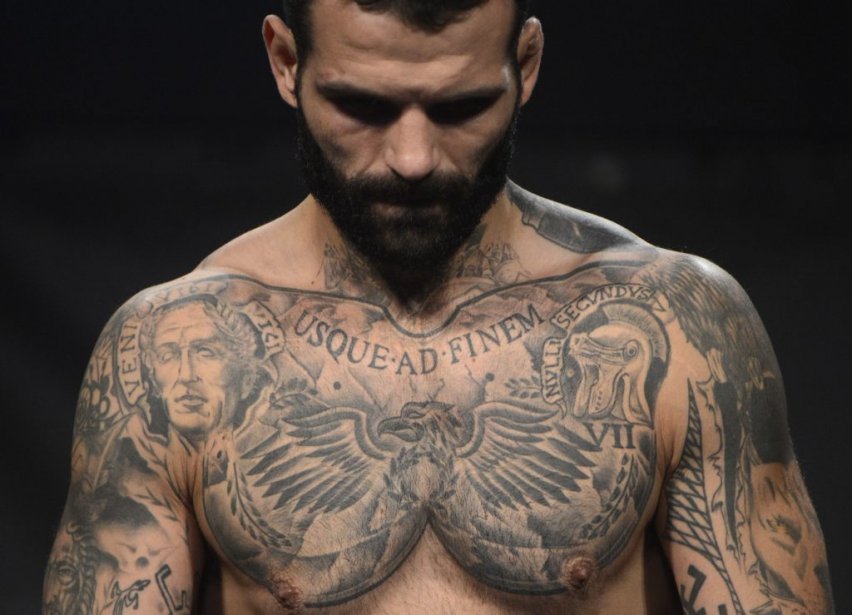
Close view of Alessio Sakara’s chest eagle and Latin tattoo lettering
The close view makes the chest lettering and eagle easier to distinguish.

A large eagle spreads across Sakara’s chest, alongside other classical imagery and lettering. A 2010 report also identified a centurion helmet there. The pieces sit close together, forming a dense composition.

Sakara translated usque ad finem as “until the end” and also spoke about hic et nunc, “here and now.” He hasn’t given a detailed explanation for each placement, so the words can be reported without building a wider philosophy around them. The translations are his own account.

SPQR and arm ink

Alessio Sakara’s tattooed arms in a promotional portrait
A separate portrait shows how the Roman-themed work continues from the torso onto the arms.

The 2010 report identified a legionary on Sakara’s forearm and SPQR on his arm. The letters abbreviate Senatus Populusque Romanus, usually translated as “the Senate and People of Rome.” The arm tattoos continue the Roman theme seen on his chest, though the photographs don’t make every small design readable.

The Legionarius back piece

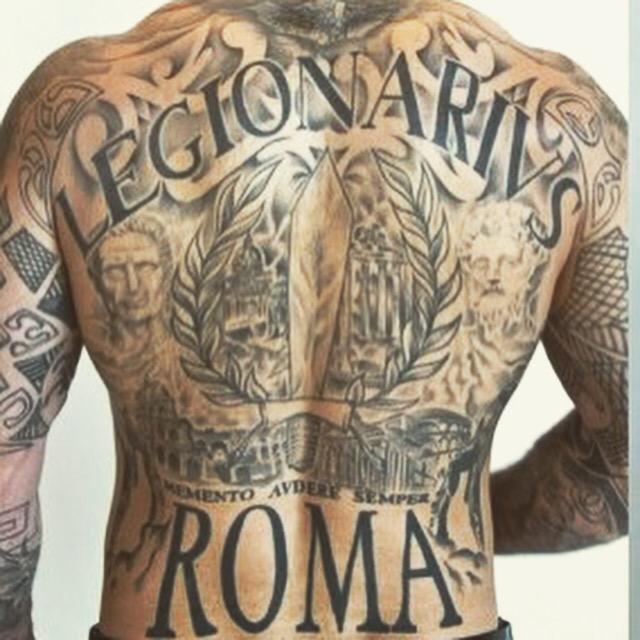
Sakara shared a view of the back piece in 2015 and said its final section had been completed inside “Roma.” Large Legionarius lettering runs across the upper back, with a Roman sword and other classical details below.

Alessio Sakara’s Legionarius and Roma back tattoos
Sakara shared this view of the back piece in 2015, showing its lettering and Roman imagery.

He has also described the design as “Legionarius, Gladius and Empire of Rome.” Gladius means sword. The words and overall composition are documented; the source doesn’t explain every smaller shaded detail. The back has its own focal point, distinct from the chest eagle.

A body-wide plan

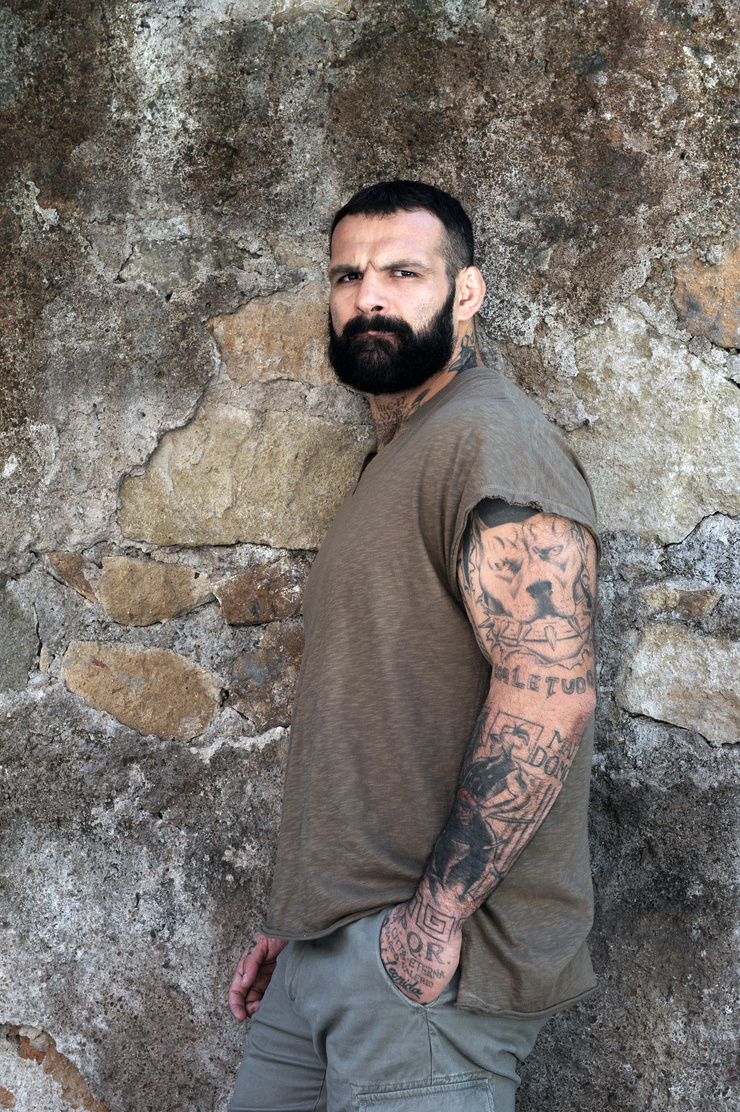
Alessio Sakara’s arm sleeve tattoos in profile
The profile view shows the sleeve’s placement and how its separate elements sit along the arm.

In the 2010 report, Sakara said his tattoo artist had planned the body as a whole and that he was completing the work piece by piece. The report said only a few small spaces remained at the time. His 2015 note about finishing one section in Rome also shows that the work happened over time, not in a single sitting.

The photographs come from different years and settings, so each shows a different part of the layout. Their shared Roman imagery connects the pieces, even as the individual designs were added in stages.

What Sakara says

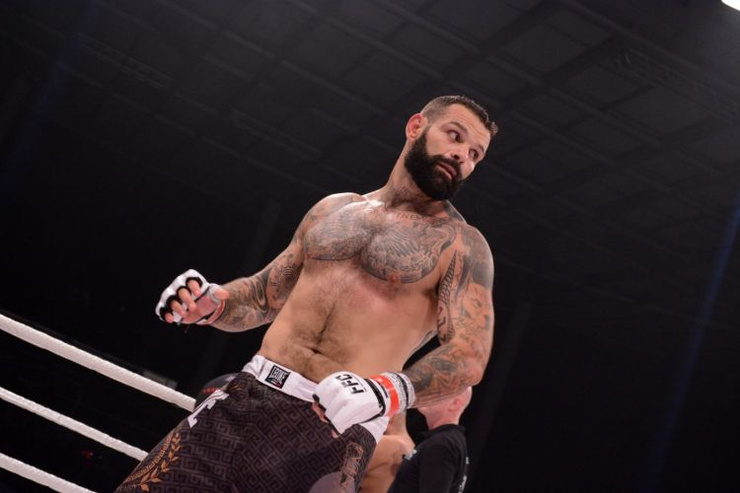
Alessio Sakara fighting with his chest and arm tattoos visible
A separate fight photograph shows how the chest and arm tattoos read in motion.

Sakara has repeatedly tied his tattoos to Rome, Roman history and his life as a fighter. He has also named values such as honor and persistence. Not every visible figure or mark has a public explanation; photographs can show where the ink sits, but only Sakara’s comments establish the meanings he has shared.

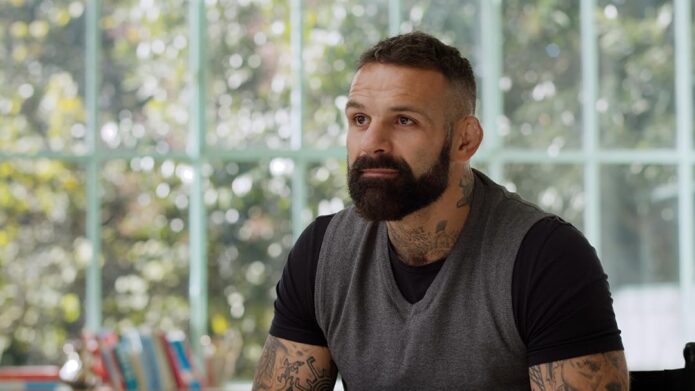
Sakara discusses his life and work in the video below.

More athlete tattoo guides

Alyssa Milano Tattoos: The Stories Behind Her Rosary, Roses and More

Alyssa Milano’s tattoos are spread across her shoulders, back, wrists, ankles and lower back. The collection includes a rosary, a small neck symbol, floral designs, a bird and a Sacred Heart-style piece. Photographs show different angles and moments, so placement is clearer than the private meaning of every design.

Alyssa Milano’s rosary tattoo is her most recognisable piece

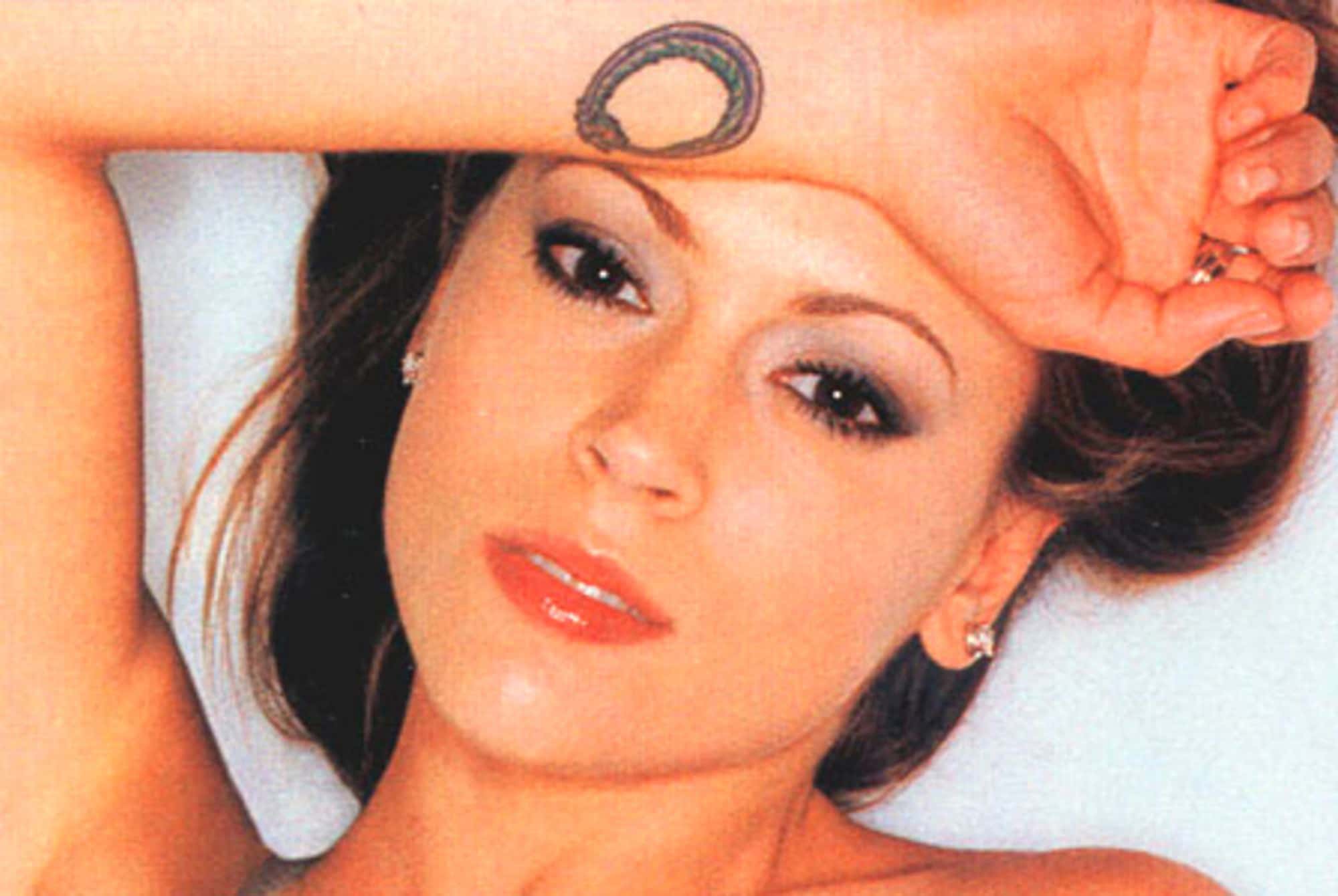
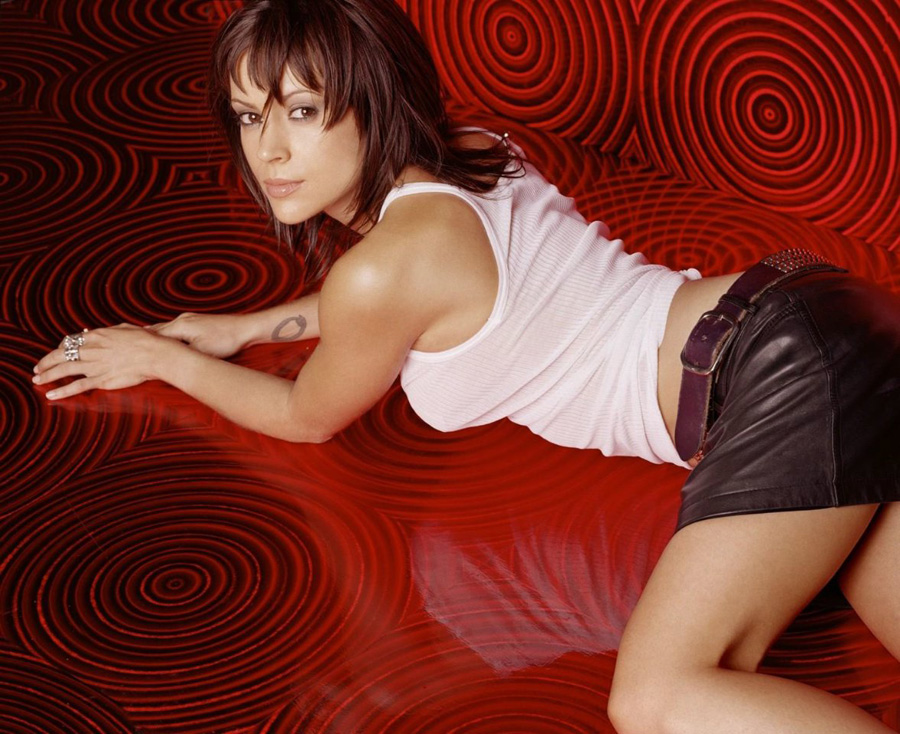
Alyssa Milano tattoos: clear wrist and forearm tattoo photograph showing the small ouroboros-style design

The rosary on Milano’s upper back and shoulder is the piece most often associated with her. Descriptions place beads leading to a cross along the curve of her shoulder blade. Its appearance changes as she turns or raises an arm, and a strapless or low-backed outfit exposes more of it. The close-up under this heading is labeled as a small wrist/forearm ouroboros, so it documents a different tattoo. The rosary is a religious design, though coverage does not give one consistent account of its specific story.

For a similar piece, the beads and cross need enough space to remain distinct as the line follows the shoulder. The placement can keep it visible in some clothes and covered in others.

The small neck symbol adds a quiet focal point

Alyssa Milano tattoos: separate close-up photograph of the wrist ouroboros tattoo

Coverage describes a small mark at the base of Milano’s neck as heart-like or Aum-inspired, depending on the source and photograph. The image under this heading is labeled as a wrist ouroboros, so it doesn’t settle which neck-symbol identification is right. The mark can show when her hair is pulled back and disappear under hair or a collar.

Small designs need simple lines and room around their details. If a symbol is reduced too far, it can become hard to recognise over time.

Her ankle tattoos mix flowers with a lighter, more playful feel

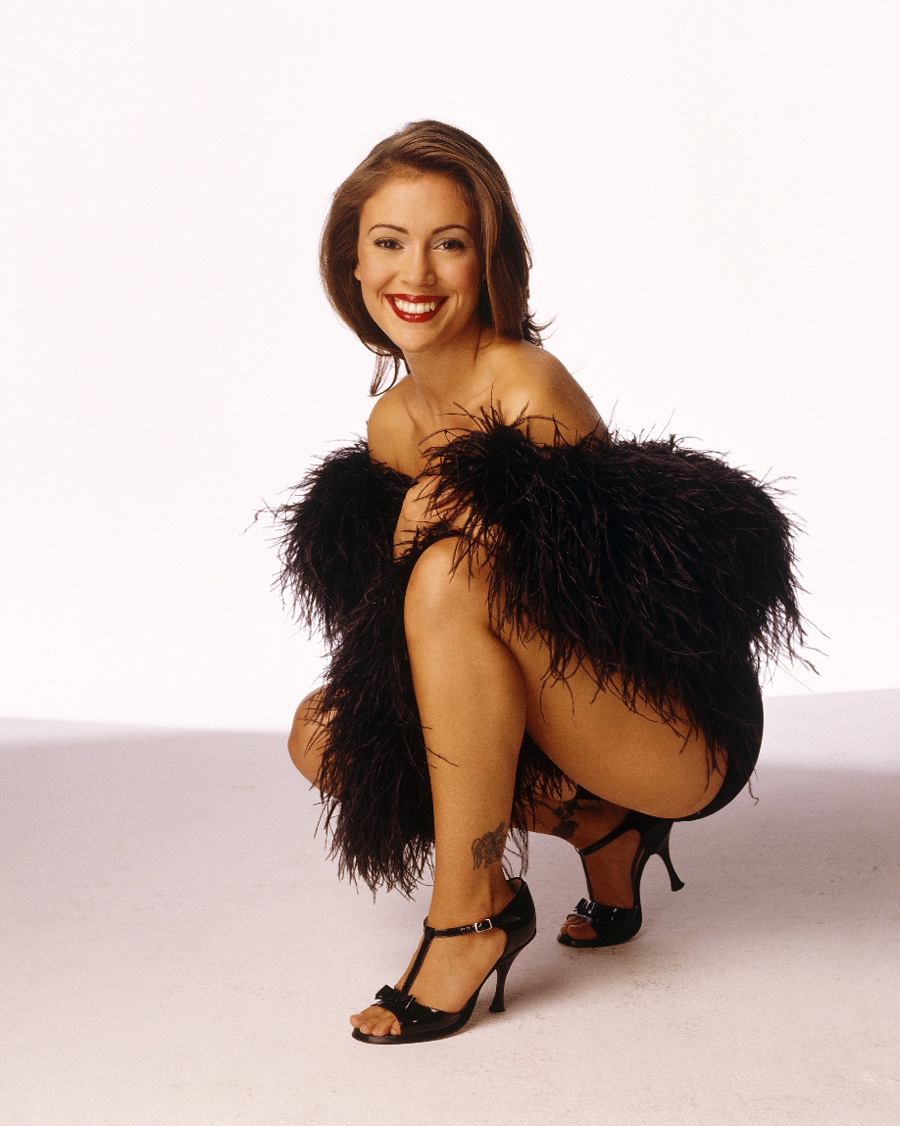
Alyssa Milano tattoos: full-body photograph clearly showing the ankle tattoo and its placement beside the shoe

Photos show a rose or floral band around Milano’s ankle, along with a small bird or other delicate motif near the lower leg. The designs sit close to shoes and dress hems, so they are visible in some outfits and easy to cover in others. A wraparound band needs careful placement so the pattern meets evenly around the ankle bone.

A second ankle photograph shows how placement changes the design

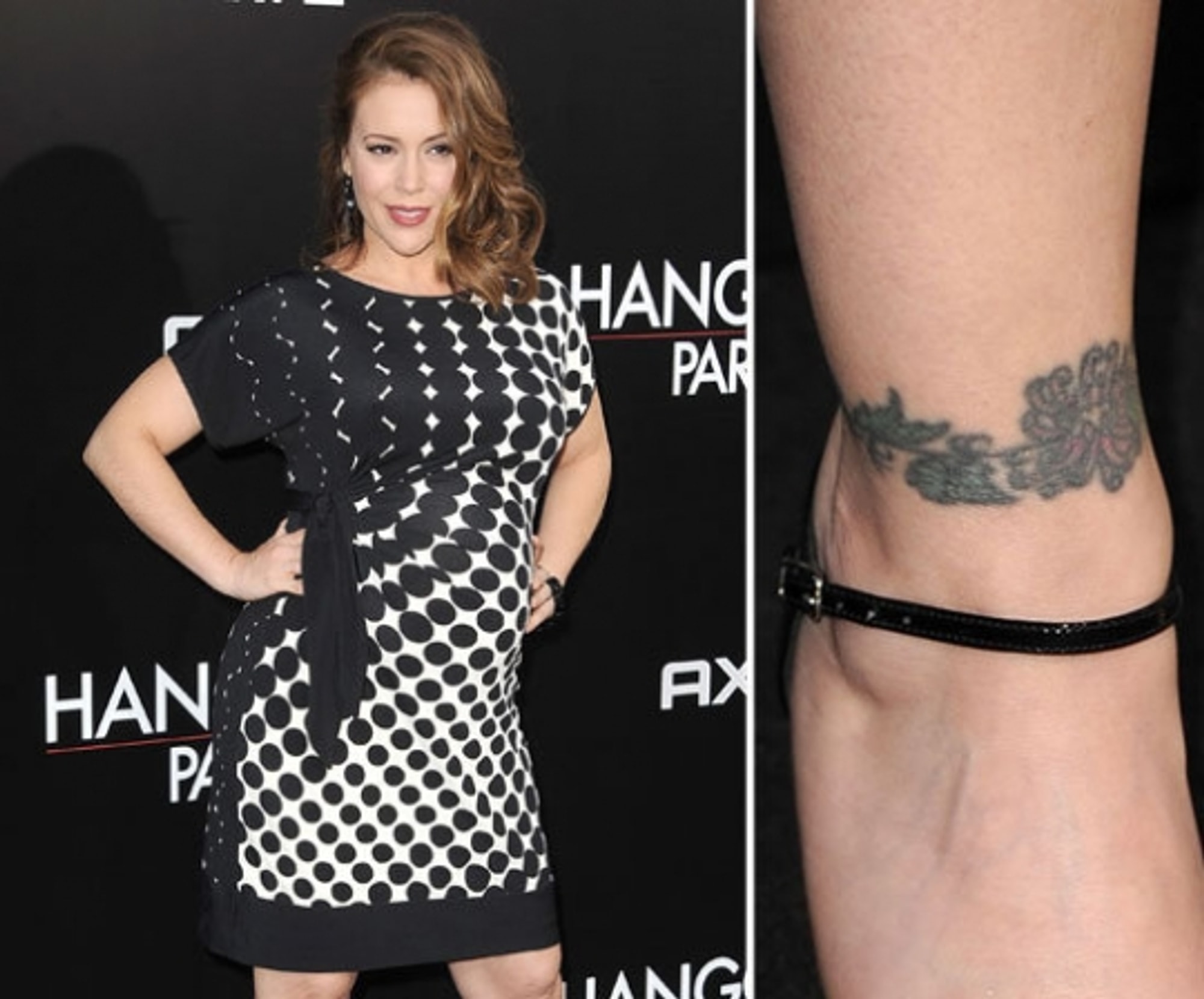
Alyssa Milano tattoos: separate editorial photograph with a clear close view of the rose ankle band

A side view makes the ankle band look more compact and shows how it sits beside a shoe strap. Socks and shoes can rub this area, and it gets sun when uncovered, so size, aftercare and sunscreen matter if you choose a similar placement.

The shoulder and upper-back photographs reveal the collection in motion

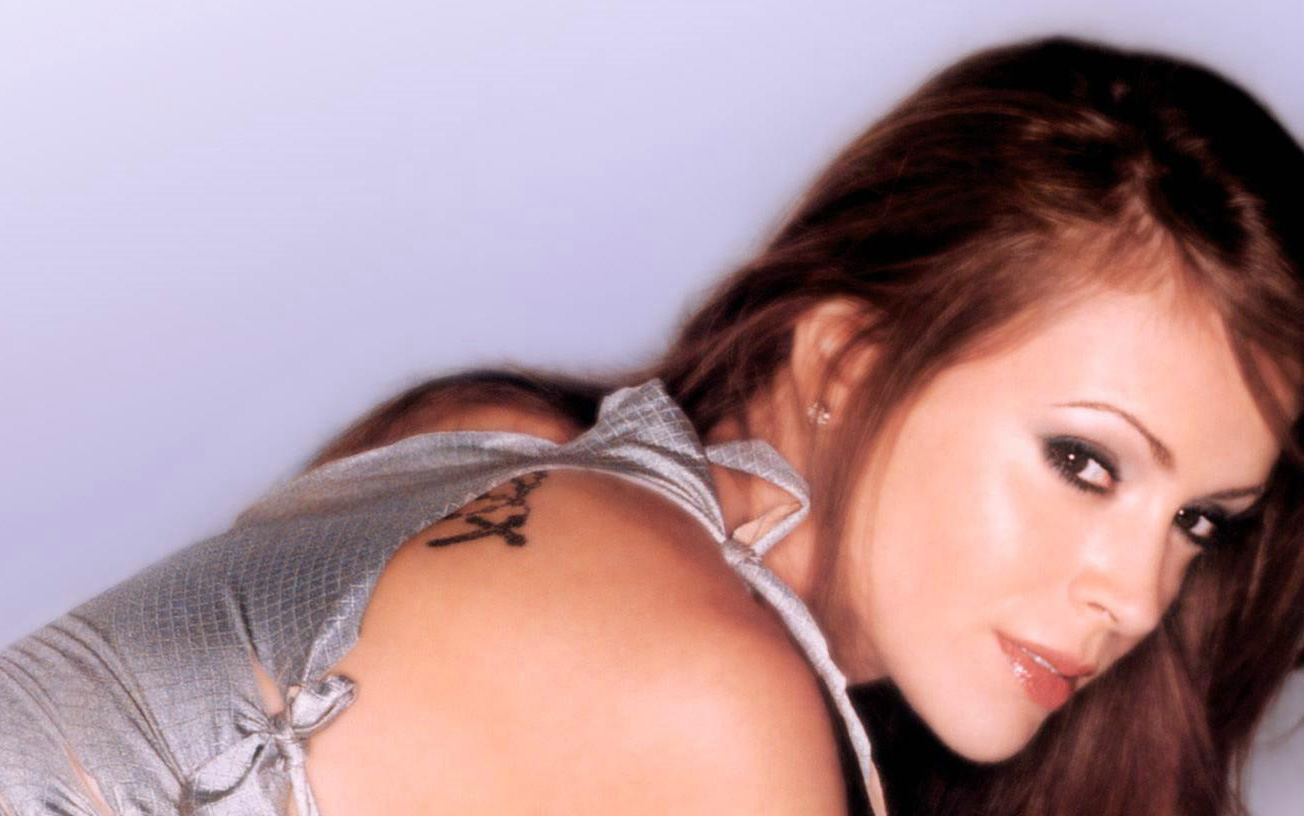
Alyssa Milano tattoos: close shoulder photograph showing the upper-back tattoo in motion

A turning shoulder photograph shows how Milano’s upper-back ink follows her posture. The beads shift with the skin rather than sitting in a rigid line. When testing a design in this area, check the stencil while standing, sitting and turning; that helps show how it will look as the body moves.

One more idea for the collection

Coverage also mentions a Sacred Heart-style design on Milano’s lower back. The specific meaning isn’t clearly documented. That image can be drawn in different ways, from traditional colour to fine black linework; decide what you want the design to express before settling its size and detail.

Putting the choices together

The collection mixes religious imagery, a small neck mark, flowers and ankle designs. These pieces don’t need to match to sit together. Their placements also vary in visibility: a nape mark can hide under hair, while ankle ink appears with some shoes and hems.

Making the idea your own

Use Milano’s tattoos as references for placement and scale, not as designs to copy. Bring an artist clear examples and discuss line weight, size, healing and how the image may age. A custom drawing can keep the part of an idea you like while fitting your own body.

Final thoughts on Alyssa Milano’s tattoos

The photographs show how a shoulder design moves, how the ankle work wraps around the leg and how a small neck mark can be covered. They help with visual reference, but they don’t explain every personal meaning. Keep those distinctions in mind when taking inspiration from the collection.

A video for more inspiration

More actor tattoo guides

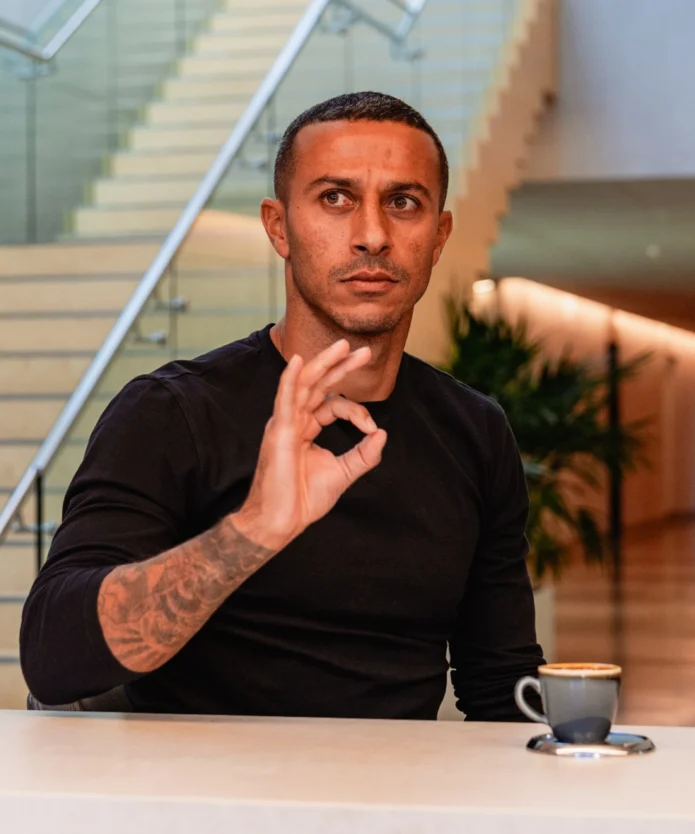
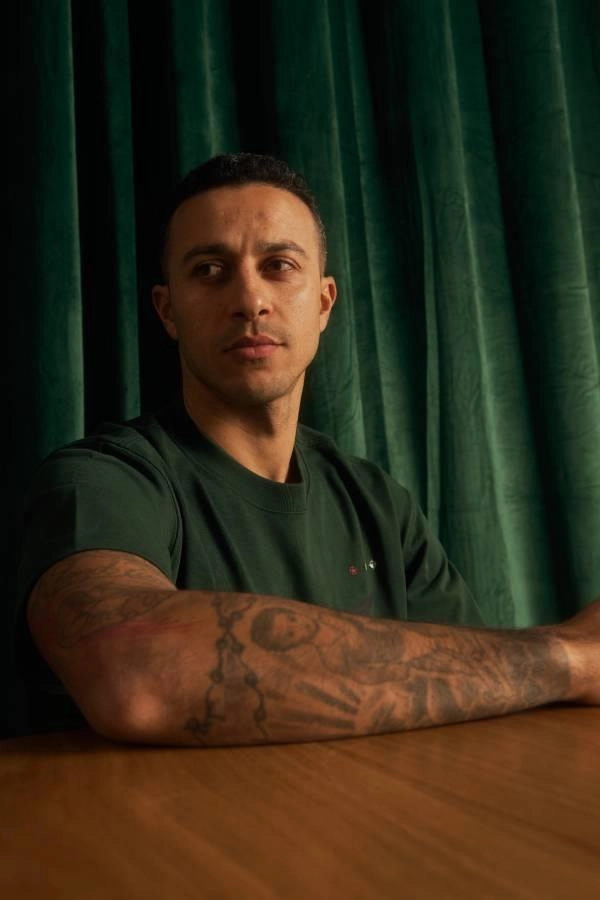
Thiago Alcántara Tattoos: The Childhood Portrait and Family Stories

Thiago Alcántara describes his tattoos as a collage of moments, not a matching set. The clearest stories lead back to a childhood photograph, his parents, leaving home for Barcelona, his father and football. He has also left some words private and given artists room to shape the designs.

The childhood football portrait on his right forearm

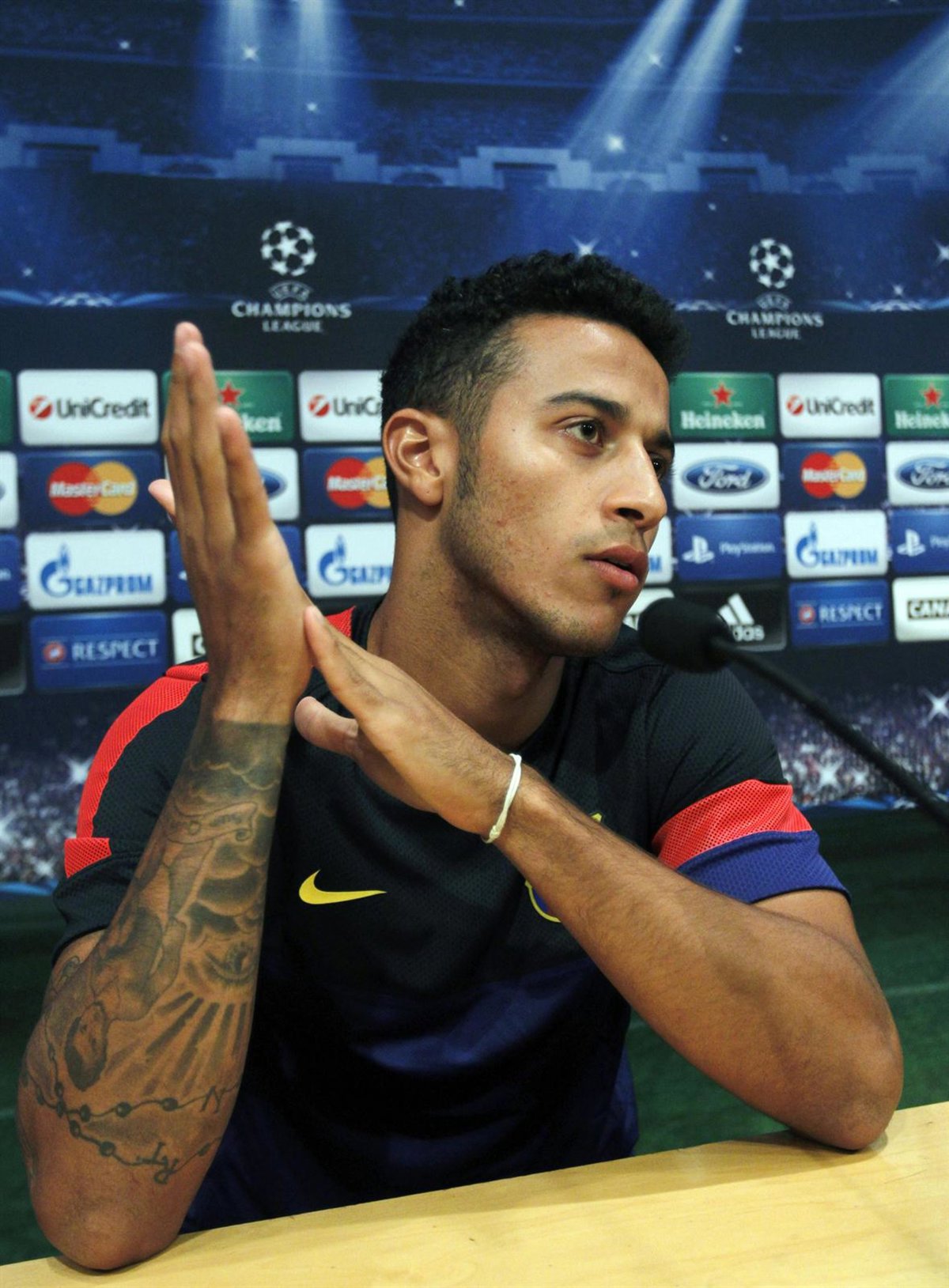
Thiago Alcántara tattoos

A portrait on the back of Thiago’s right forearm shows him at about one year old, in diapers with a football close by. El País described the ball under his arm; BILD also identified the child and ball. Thiago said the ball was his first gift from his parents and that he carried it everywhere. He kept a photograph of that time and wanted the memory on his body.

Reports place the tattoo around the time he turned 18. El País said in 2010 that he got it at 18 after asking permission at home; in a later Liverpool interview, he recalled his first tattoo coming the day after his 18th birthday. A 2014 El País interview also calls a phrase from his mother his first tattoo, so the reports don’t establish which design came first.

The message linked to leaving home for Barcelona

Thiago Alcántara tattoos: separate match photograph showing torso script and arm tattoos

Thiago left home at 14 to join Barcelona’s La Masia academy. In a 2024 Liverpool interview, he connected his mother’s words and the opening design to that move, describing it as bittersweet: he was leaving home to pursue a dream.

In 2014, he told El País that a phrase his mother had embroidered on a cushion when he first arrived in Spain became his first tattoo. He wouldn’t reveal the wording, saying it was too private.

The horse and ‘good times’ ribbon on the right-arm sleeve

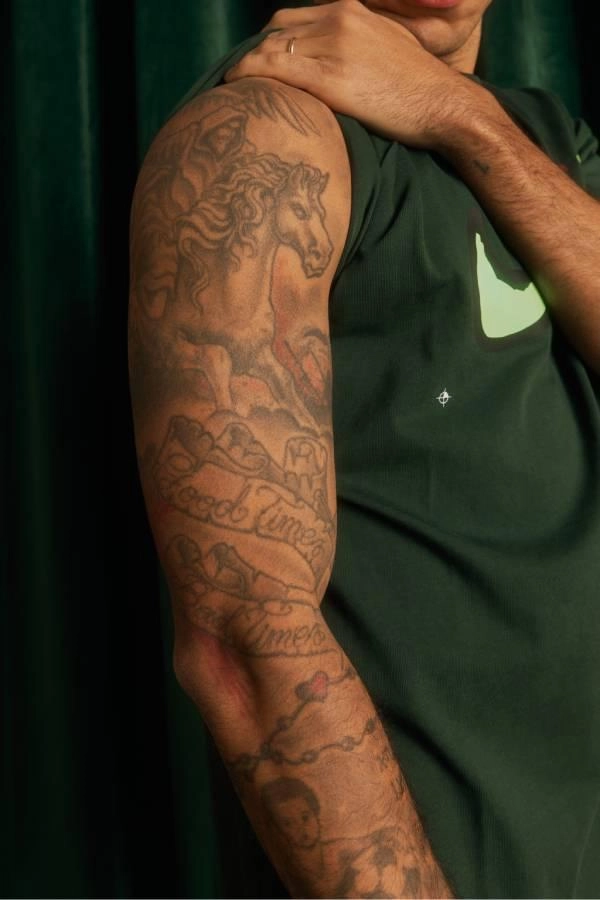
Thiago Alcántara tattoos: close view of the horse and ‘good times’ elements on his right-arm sleeve

A large horse emerges through cloud-like shading on Thiago’s right-arm sleeve, beside a ribbon carrying the words “good times.” He hasn’t given the horse or phrase a specific public meaning. In the Liverpool feature, he said he enjoys working with tattoo artists and gives them room to create. The image can be described without assigning it a story he hasn’t shared.
The Brazilian anthem, his father and football tattoos

Thiago Alcántara tattoos: right-arm sleeve detail in a separate 2013 press-conference photograph

A line from the Brazilian national anthem is connected to Thiago’s father, Mazinho. Liverpool’s feature also mentions a guardian angel and a symbol of Thiago’s love of football. It doesn’t publish the full anthem line or say whose angel it is, so those details should stay open.

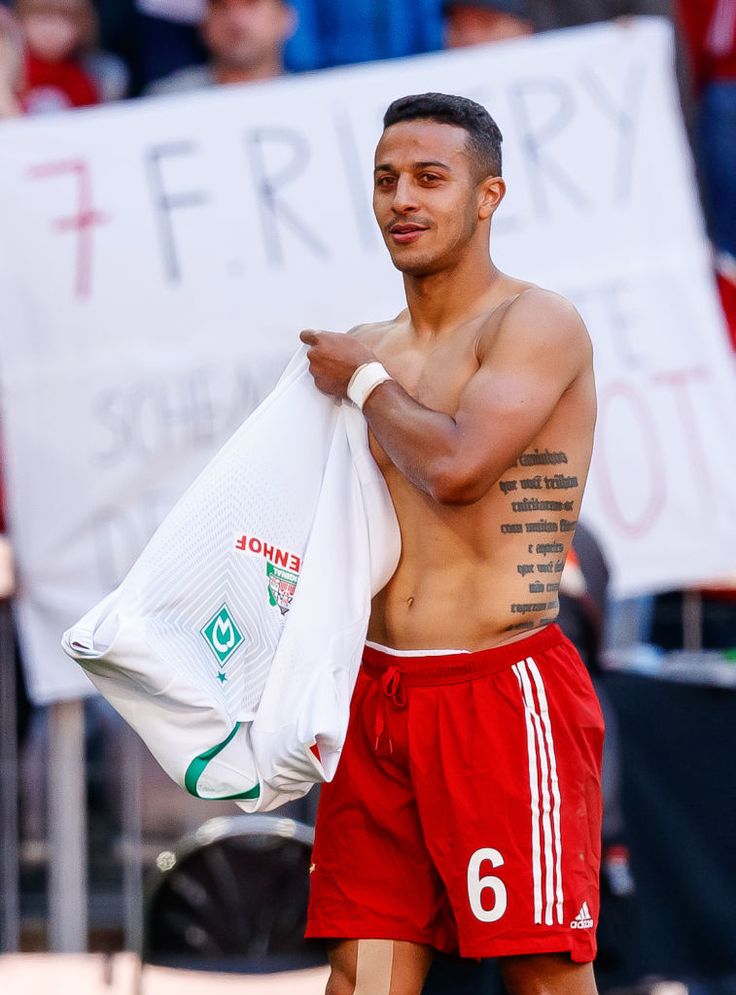
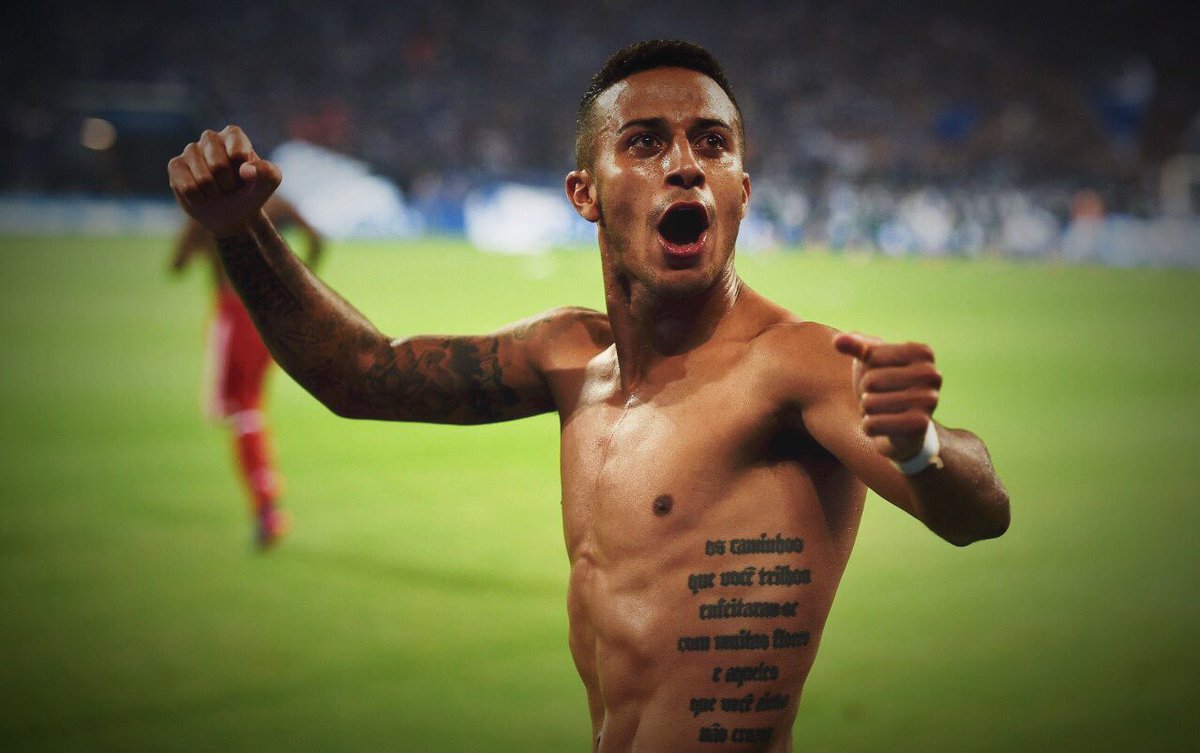
BILD reported torso lettering in 2013, but the English translation in that article isn’t confirmed by the primary interviews. The photograph shows script; the exact wording and meaning aren’t settled.

Why the sleeve tattoos look like a life collage

Thiago Alcántara tattoos: visible torso lettering and right-arm tattoo work in a shirtless match celebration

Thiago has called the collection a collage of pieces added over time, reflecting good and difficult moments. He grew up in Brazil around beach culture and people with tattoos, and his mother has many as well. He has described tattooing as self-expression and said he likes meeting artists and seeing how they work.

The sleeve mixes portraits, writing, shading and other images rather than following one pattern. Football shirts and match cameras make the ink visible, but that doesn’t make every tattoo’s meaning public. Some stories are clear, some have only a broad explanation, and others remain private.

What Thiago has and has not explained

His interviews explain some tattoos in detail and leave others open. Thiago’s “collage” description is the best guide to the whole sleeve: separate designs tied to different moments, without a public explanation for every one.

For a closer look at Thiago discussing the tattoos, watch the feature below.

More athlete tattoo guides

Stefan Frei Tattoos: Egyptian Art, a Back Piece and the Sounders Star

Stefan Frei’s tattoos began with a Swiss crest and grew into a connected body of Egyptian imagery. He has explained the stories behind several pieces, from the Book of the Dead scene on his torso to the star he got after Seattle won the 2016 MLS Cup. Frei also sketches and makes visual art, and has said he thinks about tattoos as compositions as well as personal symbols.

The Egyptian sleeve is designed to read as one connected piece

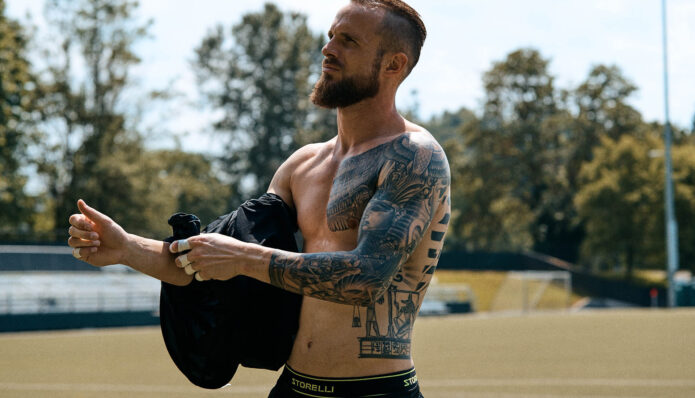
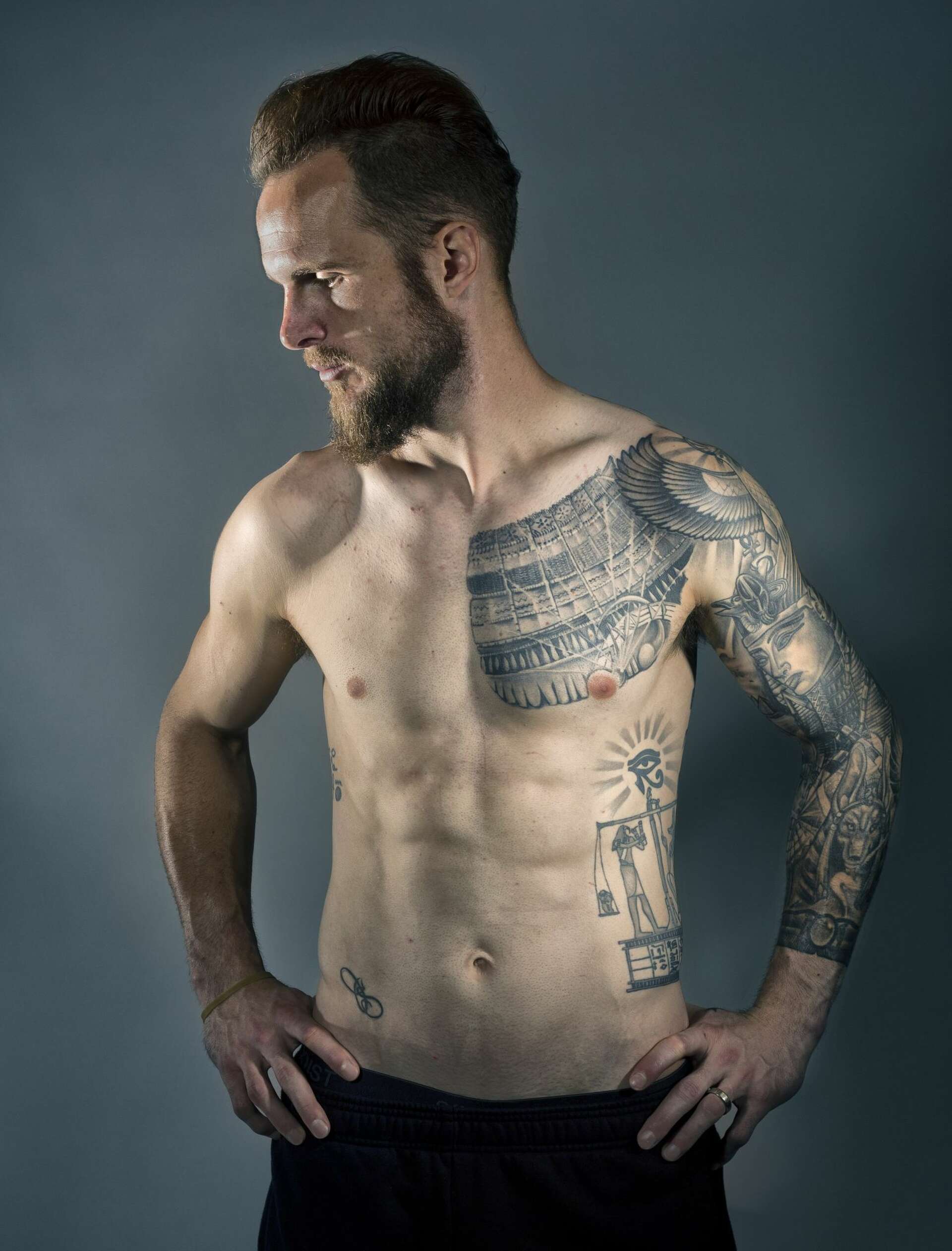
Stefan Frei tattoos: Egyptian chest and left-arm work in a front three-quarter studio portrait

Frei’s first tattoo was a small tribute to Switzerland: a simplified crest, his birth year and a Latin word for the country. The idea came from a stamp he remembered as a child. He liked its detail, but his artist said a faithful version would take a full back, so Frei pared it down. The red mark on his left bicep adds a spot of colour among the later black-and-grey work.

His interest in Egyptian art began in a Classical Civilizations course at UC Berkeley. Frei said it drew him to mythology and stories about life, death, the afterlife and the gods. On his left arm, Anubis and Horus appear near the hand, King Tut and pyramids sit through the middle, and Ra and an ankh are higher up. He identified the ankh as a sign of life and linked a scarab to reincarnation and the cycle between life and death.

Frei sketched tattoo ideas before his first appointment and researched the Egyptian imagery. He said he wanted the arm to read as a connected piece rather than separate patches. The torso work came first; he later returned to add the sleeve as a visual narrative.

The Book of the Dead tattoo scene turns the torso into a reflection

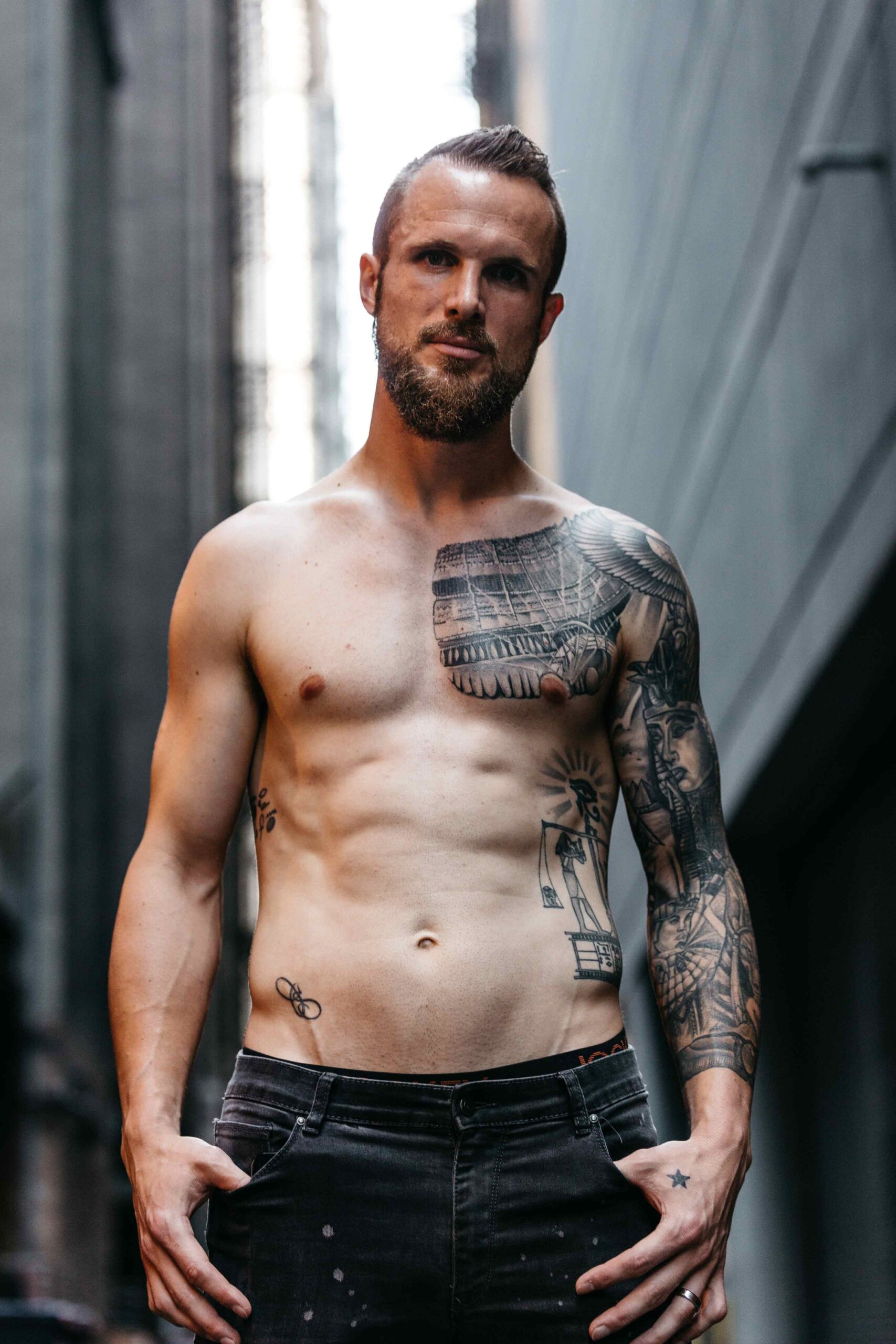
Stefan Frei tattoos: full-front view of the Book of the Dead torso scene and connected Egyptian sleeve

On his right ribs, Frei has an Egyptian inscription he translates as “Live and Let Live.” He describes it as a personal motto: he wants to live his own way and let others do the same. He asked a professor at Berkeley to check the wording before making it permanent.

On the left side of his torso, Anubis weighs a heart against a feather in a scene from the Book of the Dead. Frei explained that wrongdoing makes the heart heavy; if it is too heavy, it is devoured rather than admitted to the afterlife. He also described an inscription below the scene as meaning that actions are counted even when other people don’t see them. Those are his explanations of the image, not a complete account of Egyptian belief.

A half-necklace based on pharaonic jewelry sits on his left pectoral. Frei said he researched examples, combined ideas in sketches and had the design placed near the chest and sleeve. It helps tie those areas together.

The Egyptian skull turns his back into a larger canvas

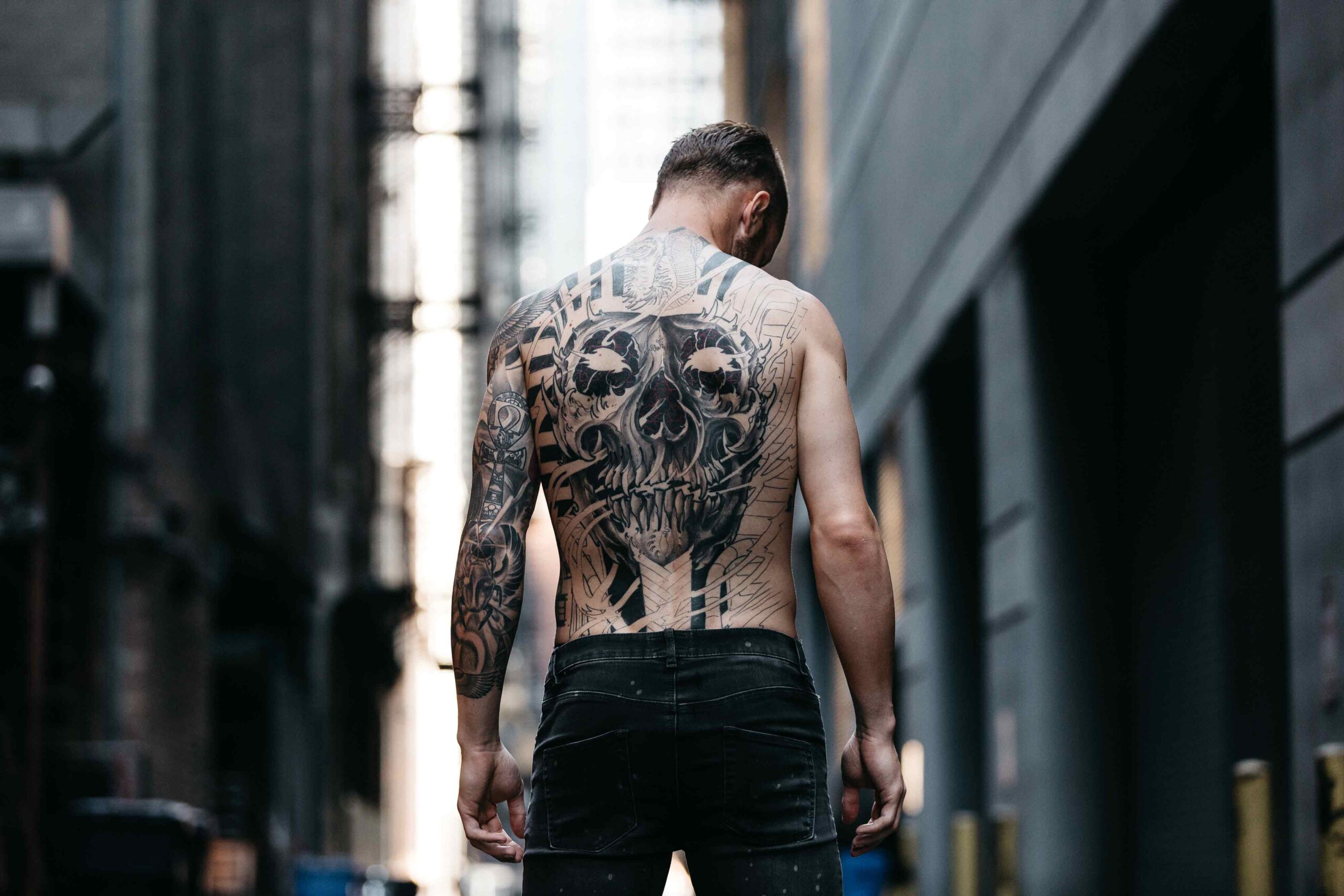
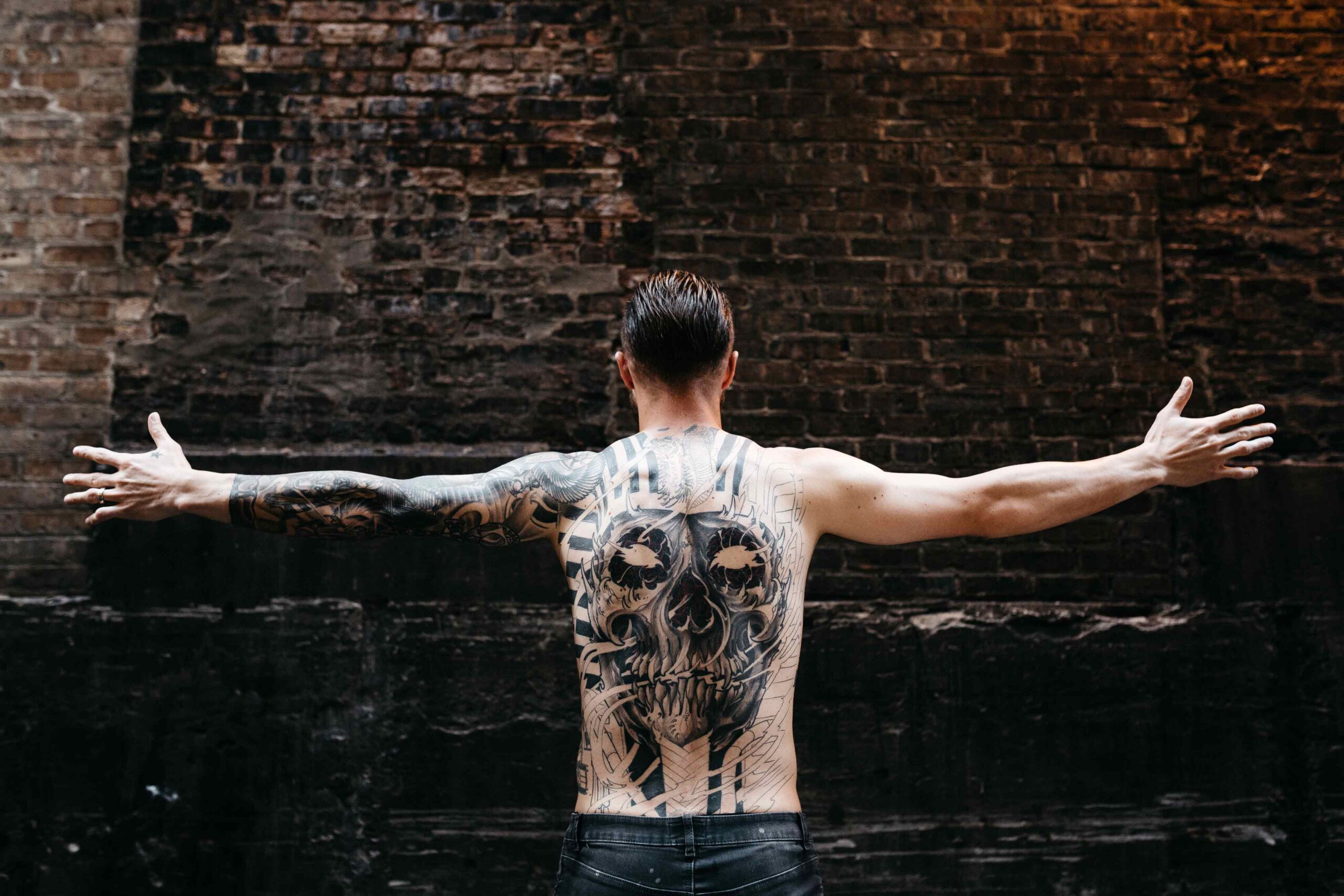
Frei calls his back his largest canvas. He wanted an Egyptian skull, rather than a conventional skull, to fit the imagery already on his body.

Stefan Frei tattoos: full-back Egyptian skull tattoo and left-arm sleeve in a rear walking portrait
Stefan Frei tattoos: second distinct view of the Egyptian skull back piece with arms outstretched

The project followed his move from Toronto to Seattle in 2013, though Frei did not say it was meant to celebrate the transfer. In the Sounders’ 2017 feature, the work had taken well over a year and was still unfinished. MLS later reported a February 2017 progress photo in which Frei thanked his artist, AtomArtCore. Those dated accounts show how long the piece took; they don’t establish its current completion status.

The small hand star keeps one Sounders night close

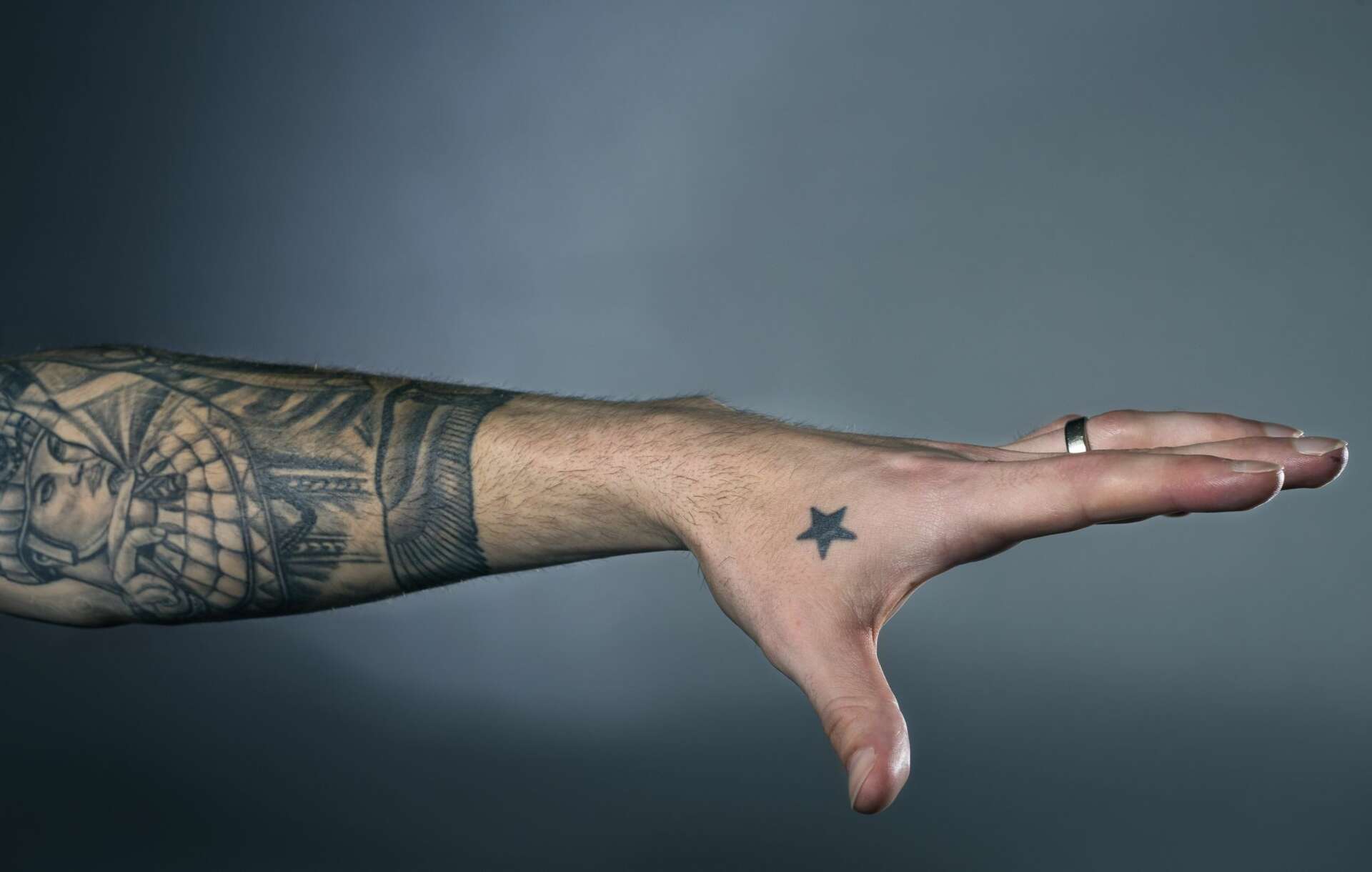
Stefan Frei tattoos: close view of the dark championship star between the left thumb and index finger

After Seattle won the 2016 MLS Cup, Frei added a dark star between the thumb and index finger of his left hand. The Sounders reported that he unveiled it after the team’s December 14 parade and rally.

The final against Toronto was scoreless through extra time. Frei saved a shot from Jozy Altidore, then stopped a penalty in the shootout as Seattle won its first MLS Cup. The club named him MVP. Frei said the star marks that night. He chose his hand because other artwork already filled the space on his chest.

In SeattlePI’s gallery, Frei identified the star as his direct soccer tattoo; the Egyptian pieces grew from his historical interests. The distinction fits the stories he has shared.
What Frei’s tattoos say together:

The crest points back to Switzerland; the Egyptian work grew from his studies and art; the star marks one Sounders title. Frei has said some designs carry clear messages and others are images he simply wanted. He has compared making art with the calm he finds away from the pressure of goalkeeping.

For more on Frei’s creative work, watch the MLS feature below.

More athlete tattoo guides

Corey Graves Tattoos: The Stories Behind His Neck, Hands and Arms

Corey Graves’s tattoos cover his knuckles, neck, arms and chest. He has explained the stories behind some of the most visible pieces, while other tattoos are documented mainly by their designs and placement. The clearest examples are the words on his hands and the neck pieces he has connected to his wrestling career.

The knuckle lettering that became his wrestling signature

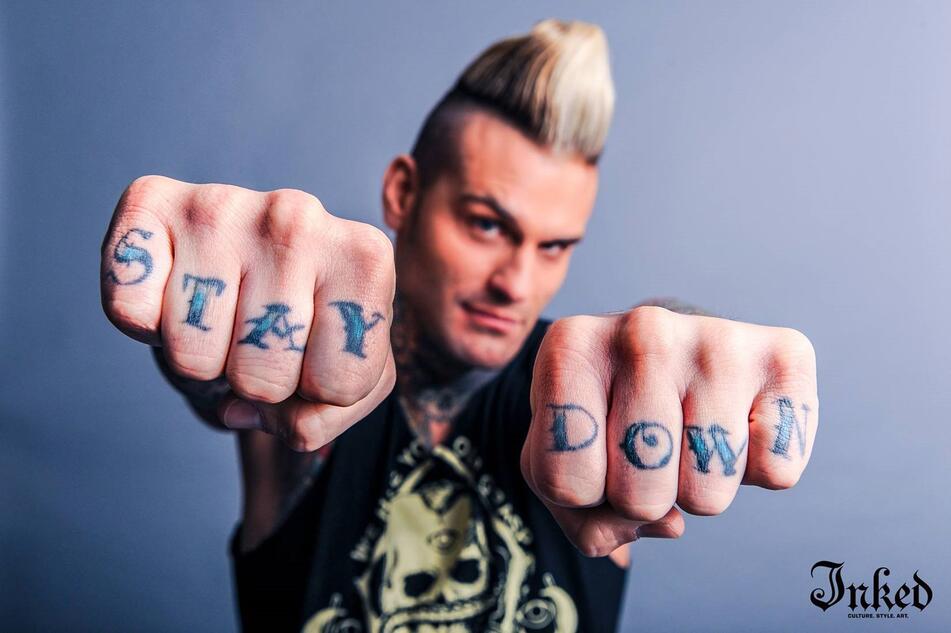
“STAY DOWN” runs across Graves’s knuckles. In a WWE tattoo feature, he said the phrase began as an instruction to an opponent and became part of his in-ring signature. The words are short and easy to read when he raises his hands; Graves supplied the wrestling context himself.

Corey Graves tattoos: STAY DOWN lettering visible across both knuckles in a distinct WWE/Inked editorial photograph

The neck collection: a Sacred Heart and a skull

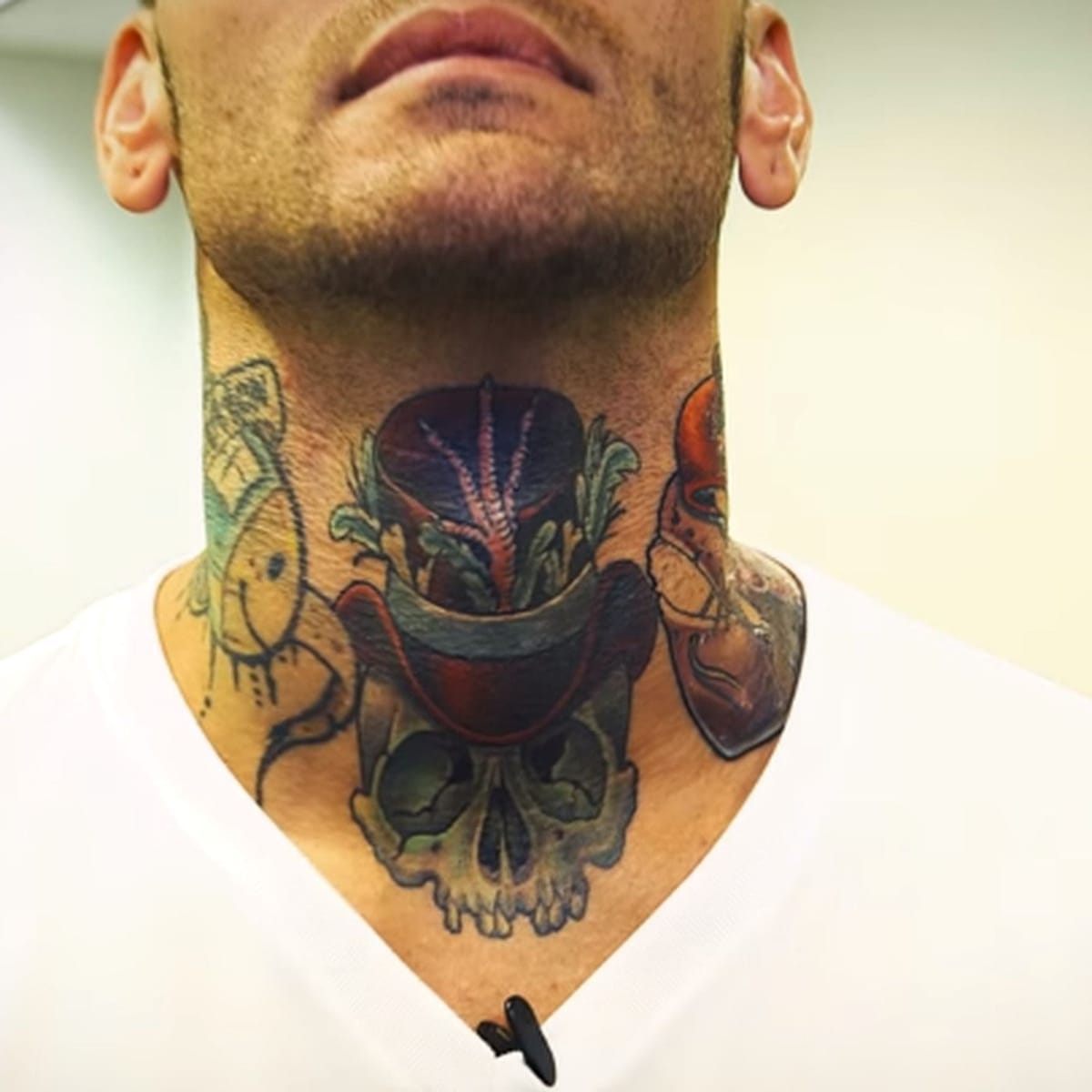
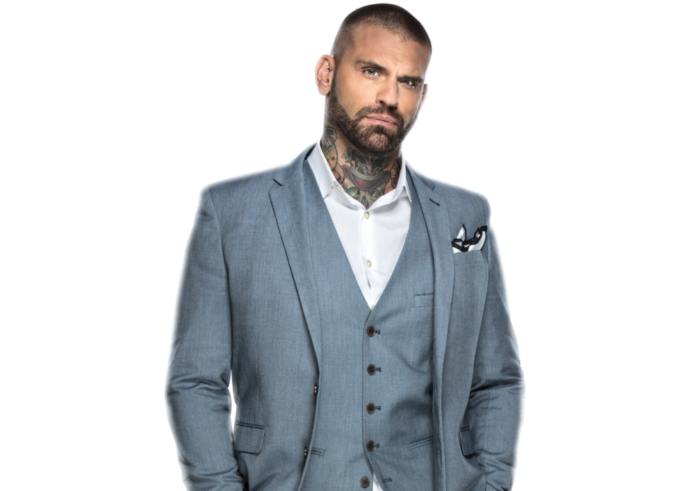
Graves’s neck is densely tattooed. A Sacred Heart sits beside a skull wearing a hat, with flowers and other traditional-style designs around them. He has described the two central pieces separately.

Corey Graves tattoos: clear close view of the Sacred Heart, skull and surrounding neck tattoos

Graves said the Sacred Heart was one of his most meaningful tattoos. The flames were left unfinished, and the heart was drawn broken and repaired. He connected it to wrestling setbacks and injuries, and to repeatedly picking himself up and returning. The skull, by contrast, is tied to “bad luck” around an injury he suffered during WrestleMania weekend in New Orleans.
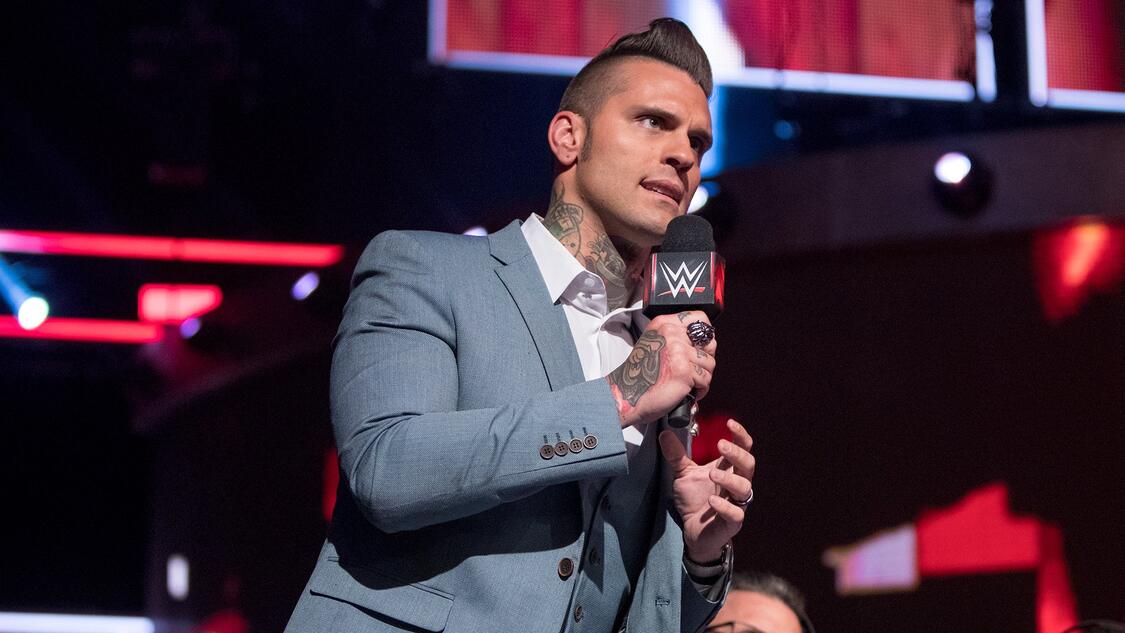
Corey Graves tattoos: separate WWE Raw photograph showing the neck tattoos and hand ink in television context

Japanese-inspired imagery across the arm

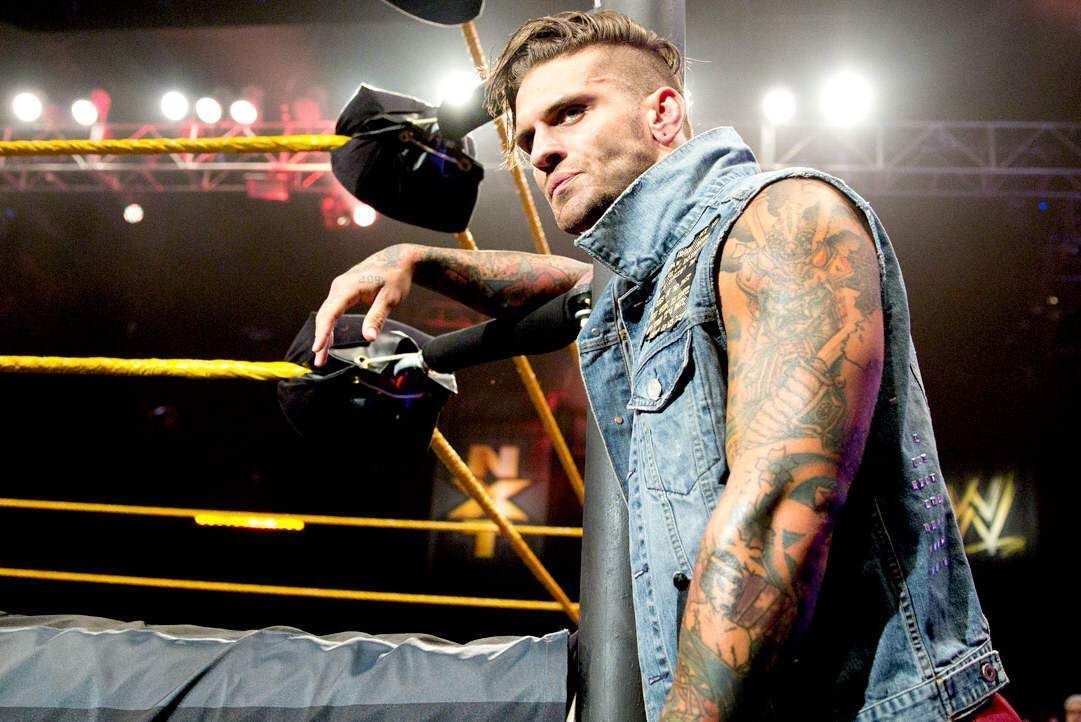
A tattoo catalogue identifies a geisha, koi and samurai imagery on Graves’s left arm. The designs share a Japanese influence, but the available accounts don’t attach one personal story to the full sleeve.

His right arm has a devil-like face and the words “Pretty Girls Make Graves,” a play on his surname. Graves reportedly said the tattoo was done by Kevin, a shop manager, and described its message as a wry warning about relationships. Near the shoulder, a luchador mask grew from a customer’s suggestion that he choose a larger design.

Corey Graves tattoos: distinct ringside side-view with the arm tattoo sleeve clearly visible

Portraits and bold images across the chest

A tattoo catalogue lists portraits across Graves’s chest, along with a Joker-like mask and a cartoon image linked to 2004. It doesn’t identify the people in the portraits or explain why he chose each image.

Other documented designs include “Good Night” with brass knuckles, a water dragon, a green rose and other flowers, a sugar skull, a donut, a cocktail-and-surname banner, and a creature on his abdomen. These descriptions identify what is visible, not a confirmed meaning for each tattoo.

Corey Graves tattoos: separate front-facing photograph showing the chest portraits and surrounding designs

What the collection says, and what it leaves open

Graves has given specific accounts of the knuckle phrase and the Sacred Heart and skull on his neck. The arm and chest tattoos are mostly described by appearance, with a few brief stories about how they came about. A catalogue entry or photograph can identify a design, but it doesn’t reveal a private meaning on its own.

In the WWE Superstar Ink Extra clip below, Graves tells AJ Styles the story behind his first tattoo. It adds his own account alongside the later explanations.

Sandro Tonali Tattoos: His Family Ink and ‘Impossible’ Hand Message

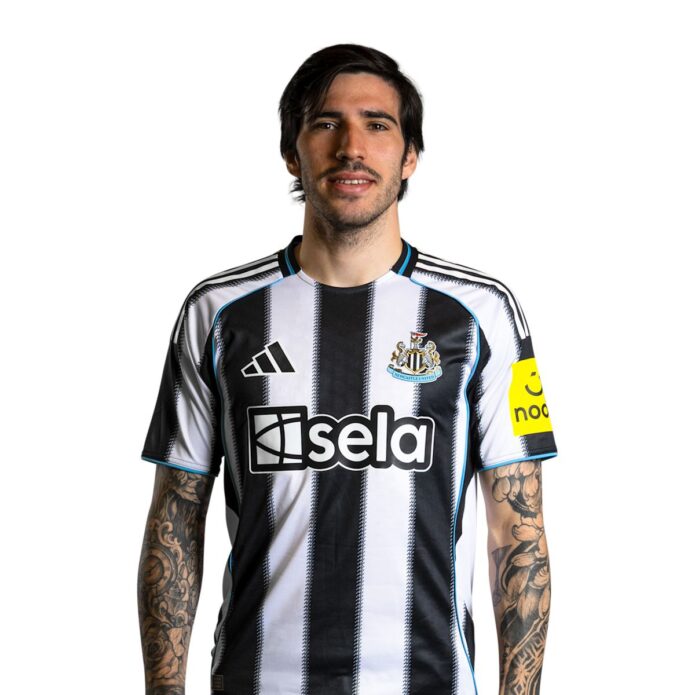
Sandro Tonali’s tattoos are easiest to understand through what he has said about them. In AC Milan’s 2022 Under My Skin interview, he talked about his grandmother’s birth date, family portraits, the numbers on his hand and the word “impossible” marked through in red. Football runs through the collection, though not every design is a club tribute.
Some pieces have a clear story; others came from his tattooist. Here’s what Tonali has confirmed and what the photographs show without assigning a meaning to every shaded detail.

The hand tattoo turns ‘impossible’ into a personal message

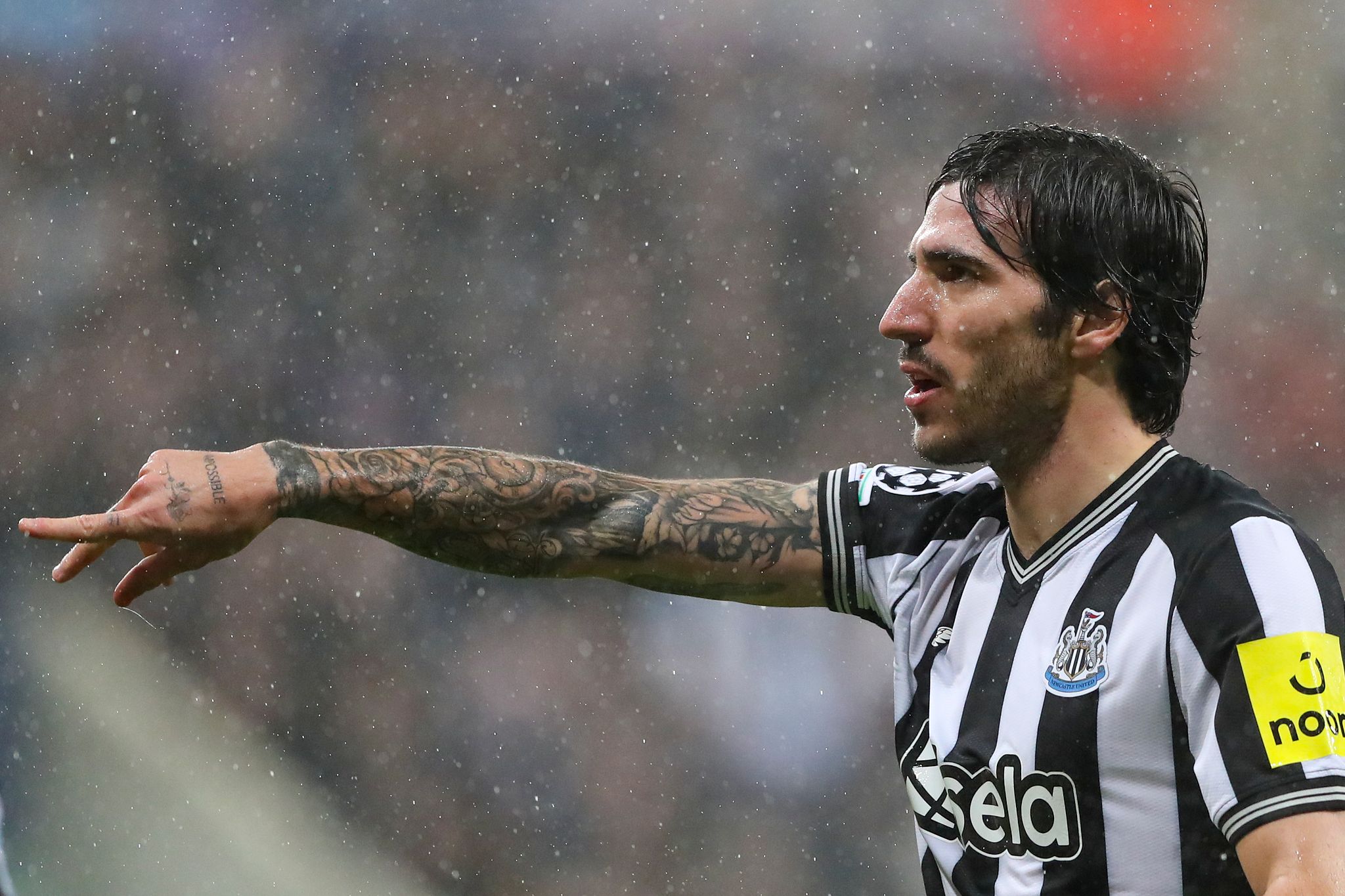
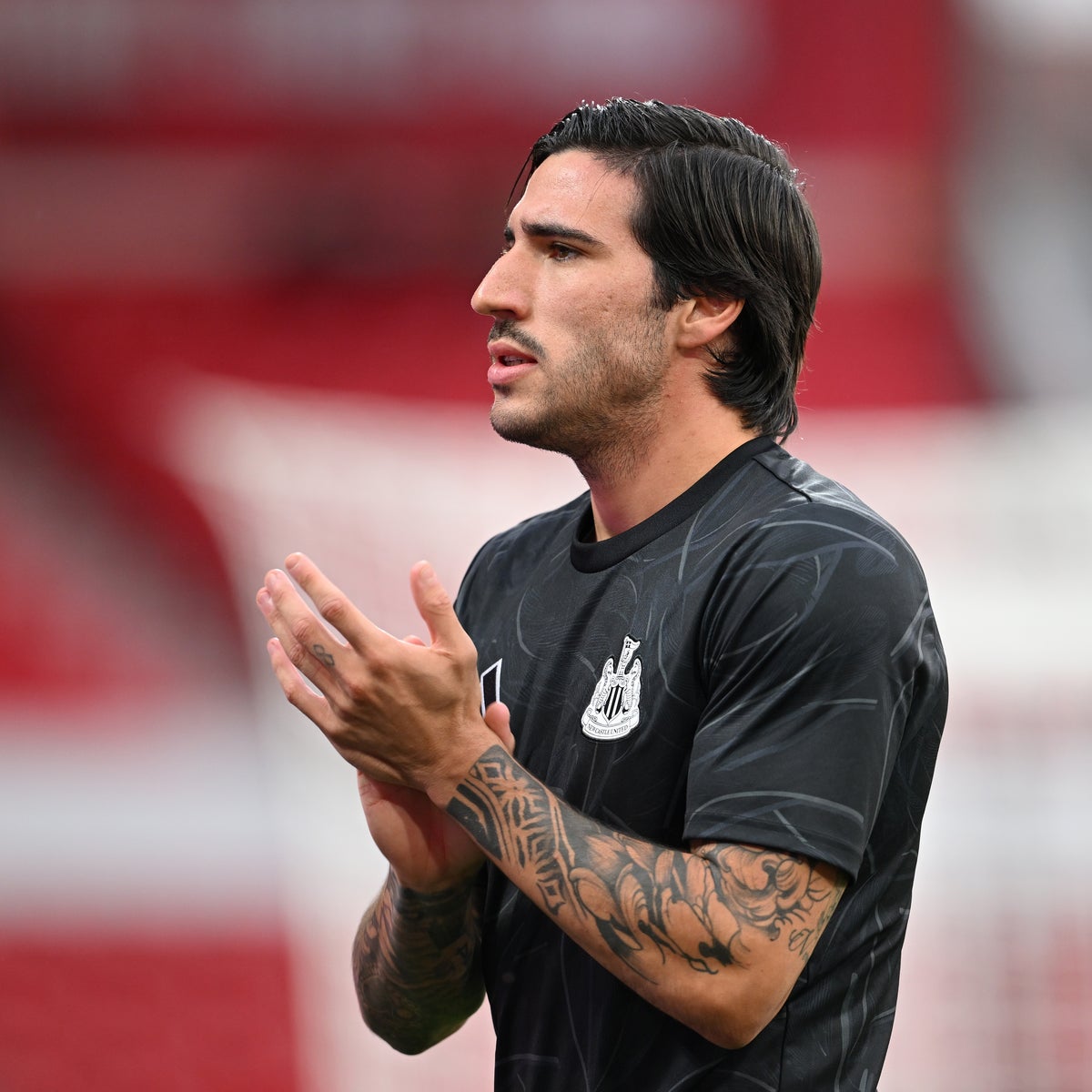
Sandro Tonali tattoos: hand lettering and tattooed sleeve during a Newcastle match

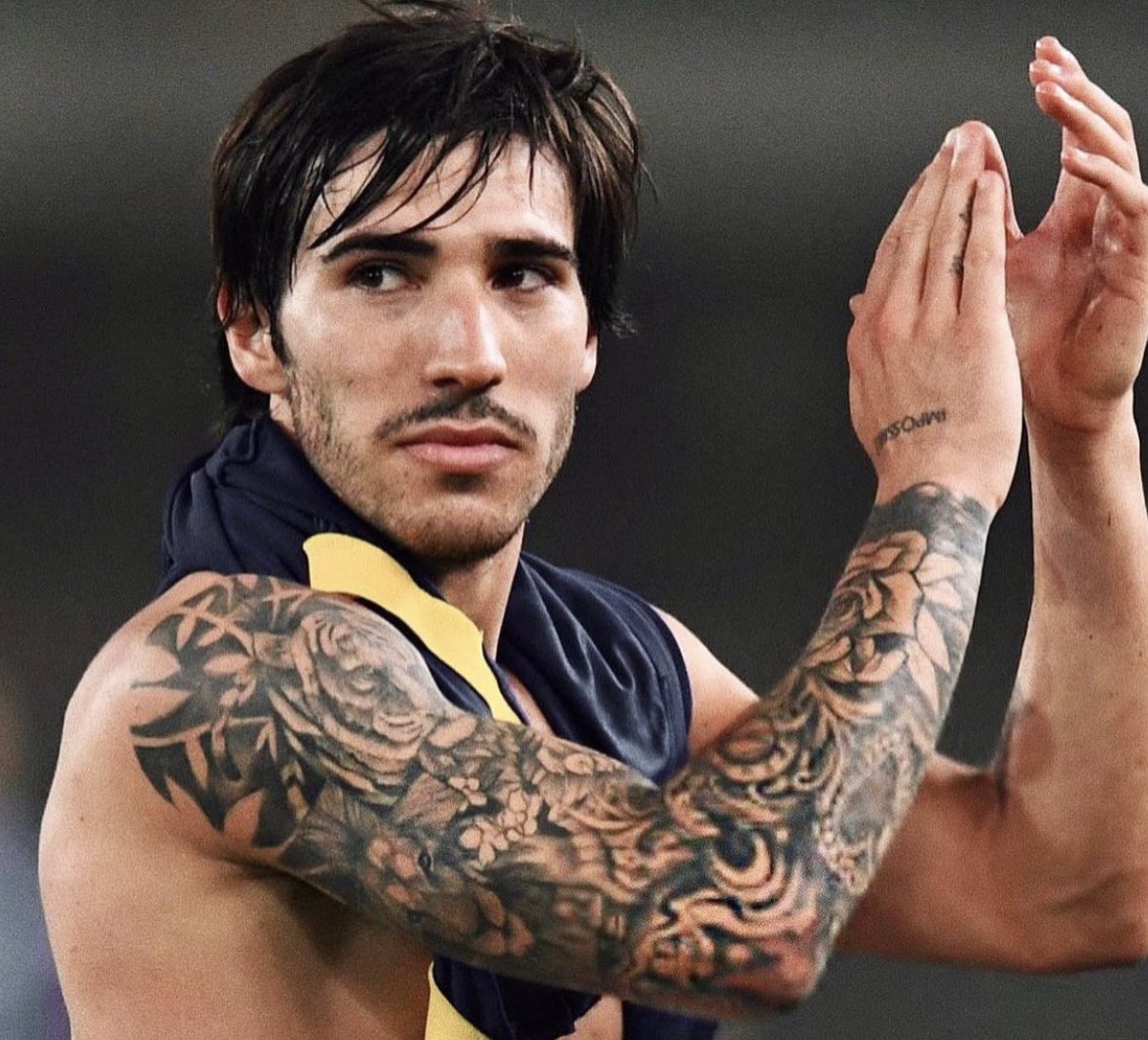
The word on Tonali’s hand is “impossible,” with red strokes crossing its opening letters. In Newcastle United’s profile of the midfielder, he explains it simply: “Nothing is impossible. This is my message.” The red marks change how the word reads rather than replacing it with another slogan.

The lettering sits where it can be seen during handshakes, celebrations and everyday gestures. This match photo isn’t a close-up, but the word is visible beside the larger sleeve, showing how the small hand piece fits into the wider work.

His first tattoo records his grandmother’s birth date

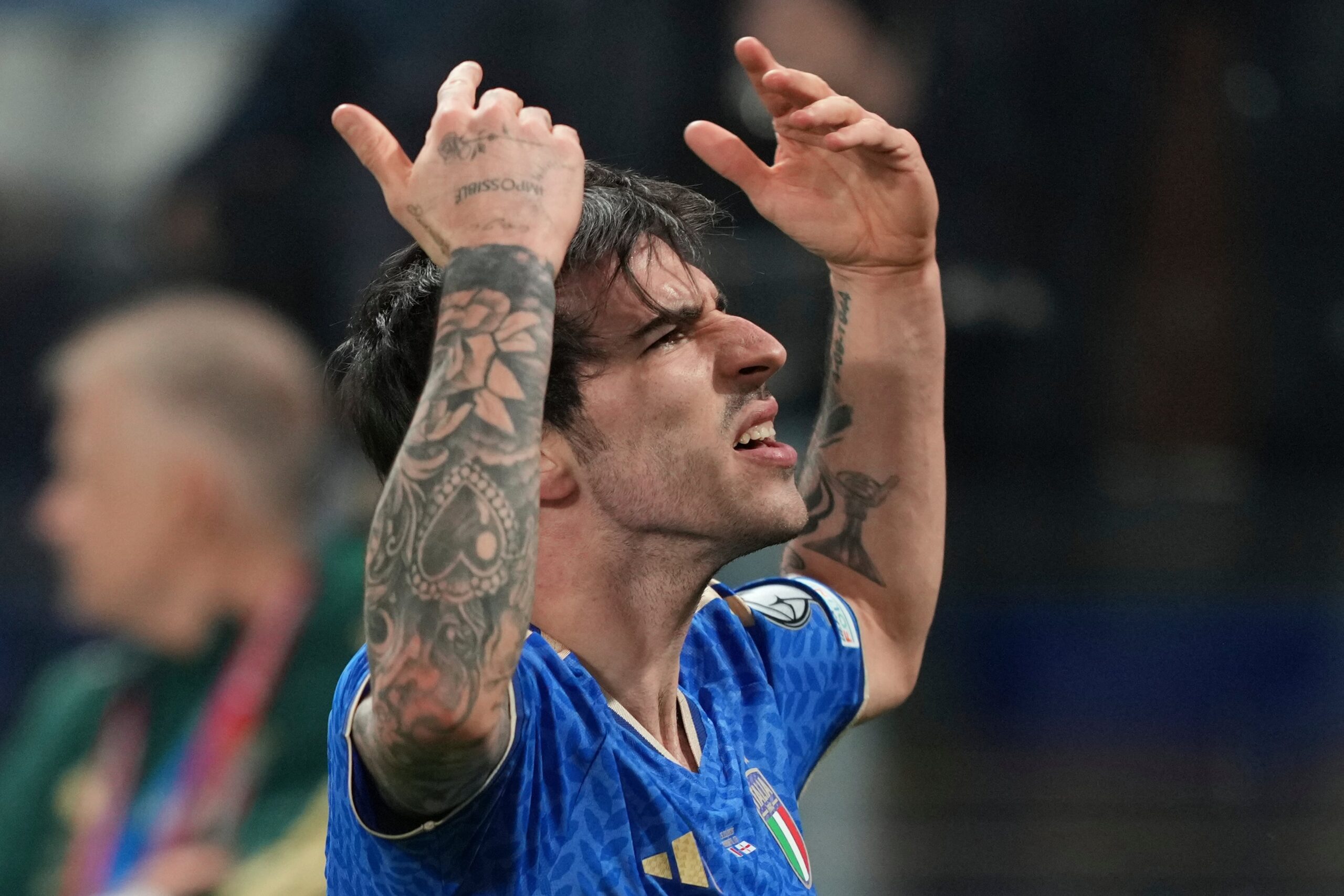
Sandro Tonali tattoos: arm sleeves and visible floral designs in an Italy match photograph

Tonali said his first tattoo was his grandmother Gina’s birth date, 4 September 1944, on his left arm. He described her as the person who mattered most to him then and still matters now. She calls after his goals and before derbies, and he has said she was the person who made him a Milan supporter.

He’d wanted a meaningful tattoo for a long time and chose a studio in his hometown. His family generally wasn’t keen on tattoos, he said, but this was an easy decision for him. In another interview, he recalled that he didn’t have to think long about what the first piece should be.

The arm work is a family album, not a random sleeve

Sandro Tonali tattoos: forearm sleeve tattoos visible in a Newcastle return warm-up photograph

On his right arm, Tonali has a tattoo of his dog Margot, a cross with a lion, portraits of his parents and a heart meant for the family. He said Margot’s tattoo took several hours in one sitting and hurt because the area was soft. When he spoke in 2022, his brother and sister had not yet been added to that family grouping.

Tonali said many other ideas came from his tattooist, so the leaves and shaded filler shouldn’t be given invented meanings. He described building the right arm in stages—one half, then the other, then the back—because he wanted to complete the area as a whole.

The rose and the hand numbers connect his tattoos to home

Sandro Tonali tattoos: arm and hand tattoos in a distinct AC Milan post-match photograph

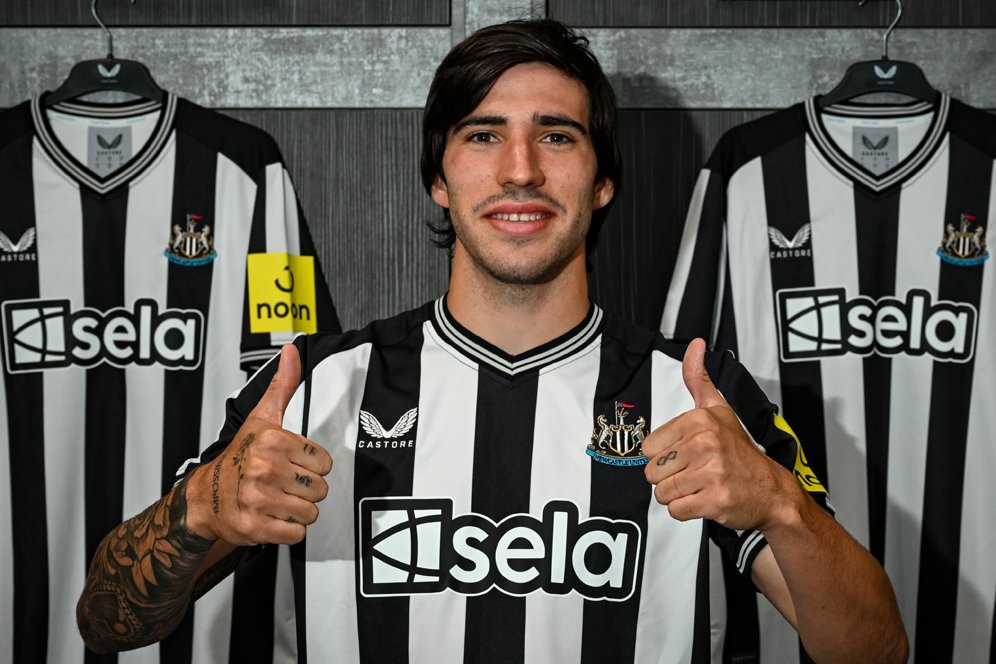
Tonali has the numbers 8 and 4 on his hand. The 8 is the shirt number associated with him; the 4 recalls Brescia, where his father Nik carried him to matches when he was a child. Tonali remembered sitting on his father’s shoulders as part of that story.
The rose is for his mother, Maria Rosa. He said he chose it because of her name. In his account, that flower has a specific family connection; other designs may simply have come from his tattooist. The AC Milan photo shows the hand and arm together, though match pictures can obscure smaller details.

The Brescia number 34 marks an earlier football chapter

Sandro Tonali tattoos: right arm sleeve and hand tattoos in a Newcastle introduction portrait

Tonali also has an image of himself as a child wearing number 34, the shirt he wore at Brescia, his first professional club. He placed the tattoo on his left side and described it as a reference to that early part of his career.

The number 34 and the hand’s number 4 both reach back to Brescia, but they mean different things: one recalls the shirt he wore, the other a childhood memory with his father.

A Milan tribute was only a future idea in 2022

In April 2022, Tonali said he wasn’t planning another tattoo right away, though he could imagine marking his Milan years because they meant a great deal to him. He said he’d want any future club tattoo to represent the years or the moment, not just put the club name on his skin. That was a possibility he described then, not confirmation that he later got one.

How to read the collection without guessing at every detail

Tonali has explained the date on his arm, Margot, the family imagery, the numbers, his mother’s rose and the hand message. His interviews are the best source for those meanings; match photos help show where the designs sit, though sleeves move and lighting can hide small details.

The work is dense and mostly black and grey in the available views, with the red marks on “impossible” as a clear color accent. His own account leaves room for both personal references and designs suggested by his tattooist, without forcing every piece into one theme.

Watch Tonali explain the stories behind his tattoos in AC Milan’s Under My Skin interview below.

More athlete tattoo guides

Duki Tattoos: The Stories Behind His Face and Hand Designs

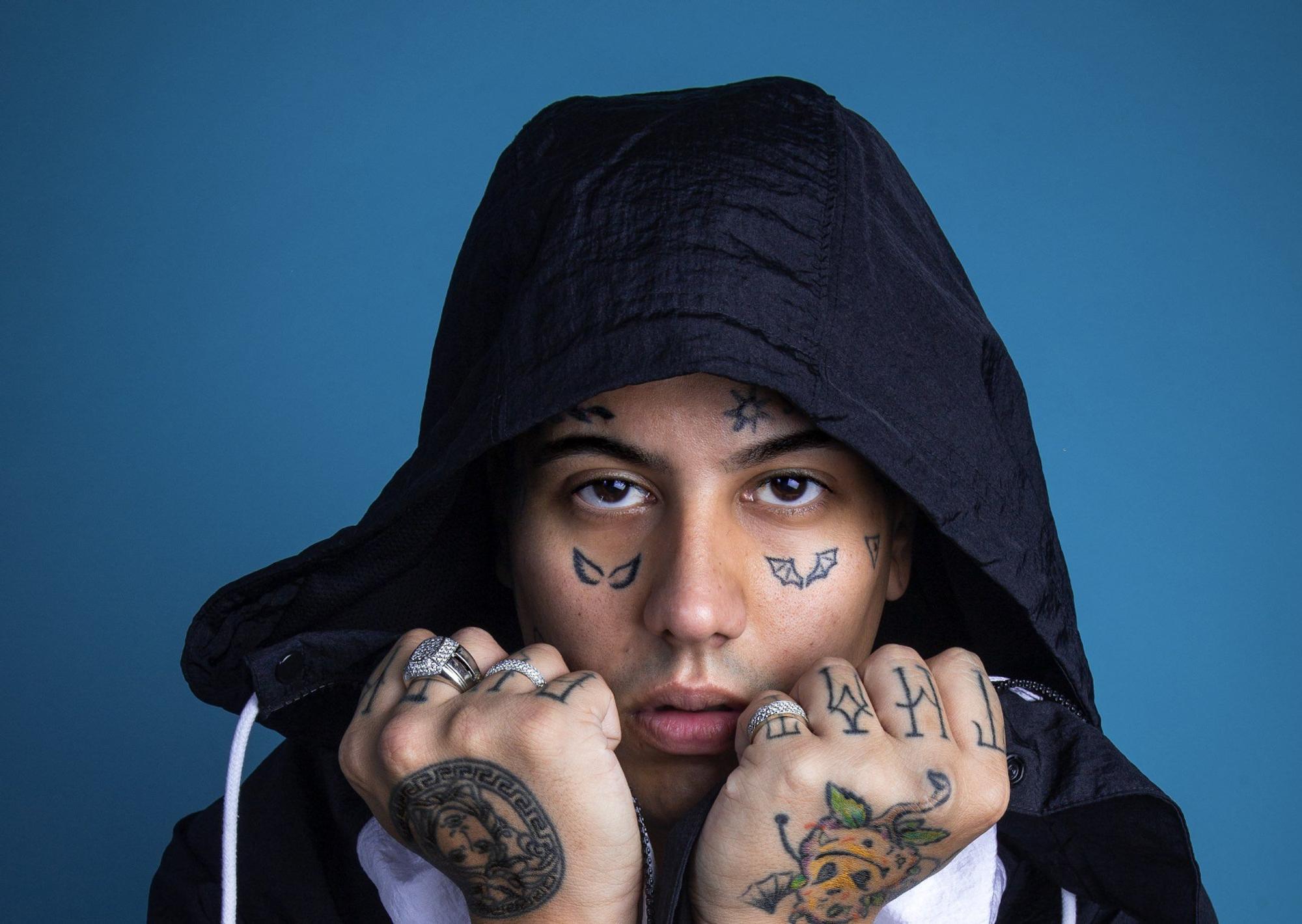
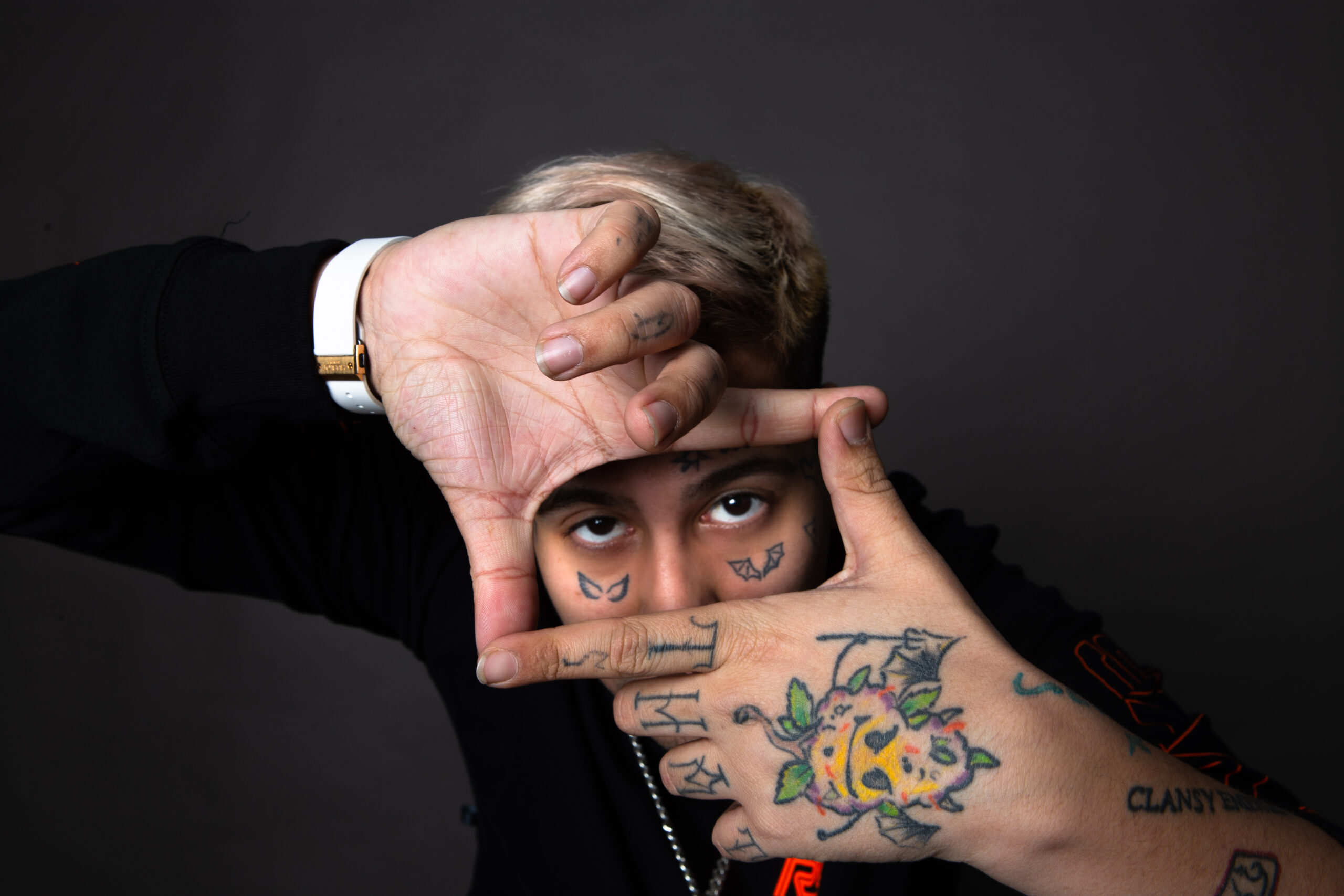
Duki’s face tattoos get attention first, but he has also explained family references on his arms and smaller pieces tied to friends and places. His interviews give meaning to some designs; photographs show where others sit.

He has discussed his collection in an Esquire tattoo tour, on Spanish television and in interviews reported by Spanish and Argentine outlets.

Duki’s face tattoos: wings, balance and a deliberate choice

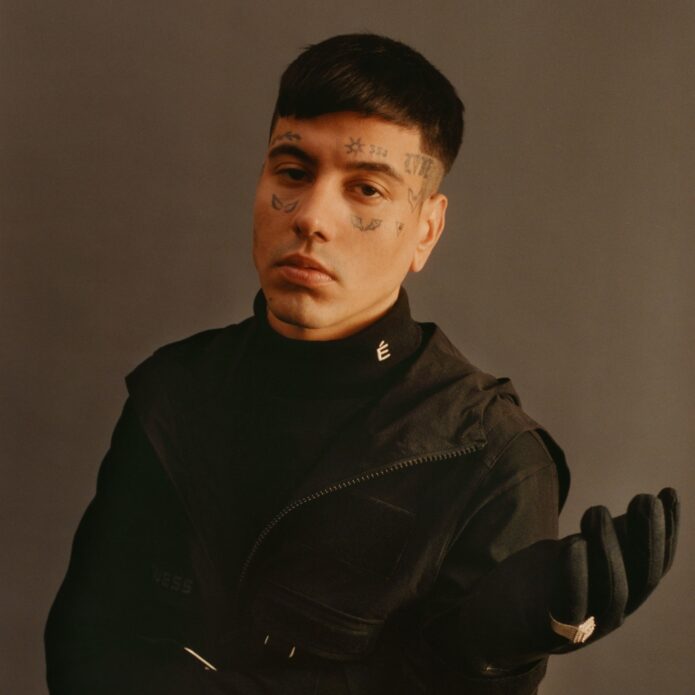
Duki has called the pair of wings beneath his eyes his favourite tattoo. He said he first thought about them as a teenager and got them at around 21 or 22. To him, they hold the good and bad sides of a person together, much like yin and yang.

Duki tattoos: Face wings and hand tattoos in a direct portrait

In a 2025 interview, he said he had considered face tattoos for years. Fantasy, anime and the idea of wearing a superhero-like suit shaped the choice; he wanted the ink to be seen. That doesn’t mean every mark carries the same message. The wings, in his account, are about balance.

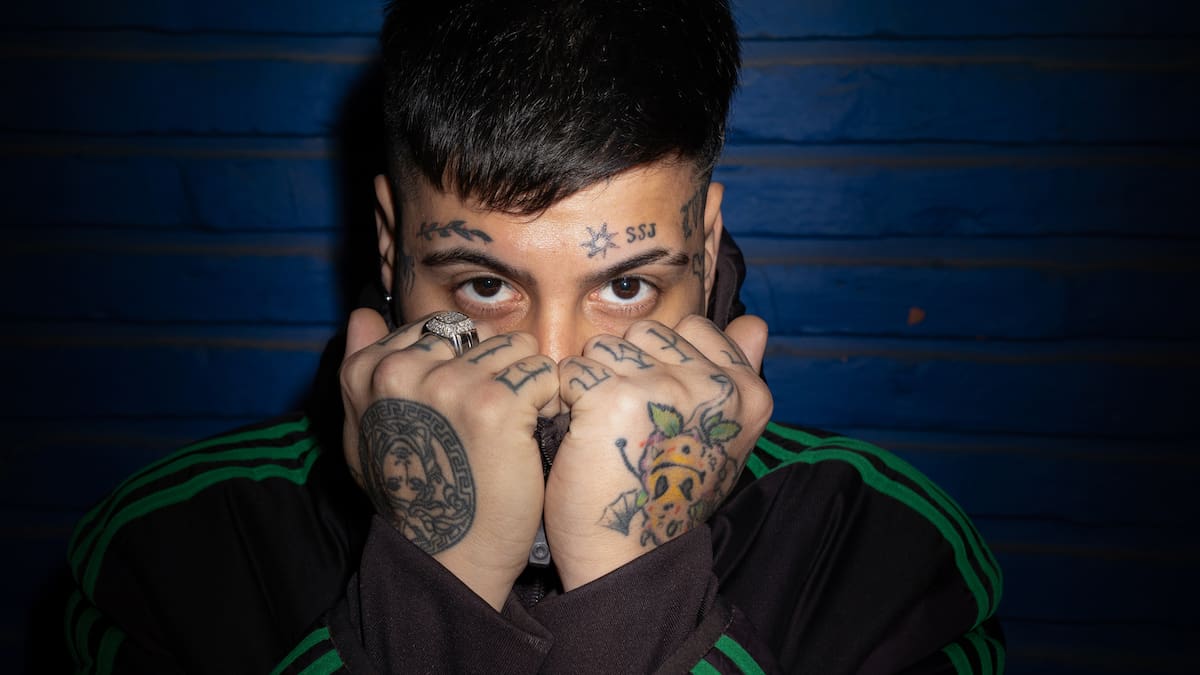
The separate marks around his eyes and temples don’t form one connected mask. In photos, pose, hair and shadows can hide one side; the two images here are different views.

Duki tattoos: Forehead SSJ and sun with hand designs visible

Forehead and cheek tattoos: SSJ, the sun and familiar symbols

Reports on his forehead tattoos list a sun, SSJ, a short Japanese phrase and an olive branch. Europa FM’s 2023 account says Duki connected the sun with light and the branch with victory. He linked SSJ to his album Super Sangre Joven and the Dragon Ball Super Saiyan idea. Coverage translates the Japanese phrase as “devil side,” based on his reported explanation.

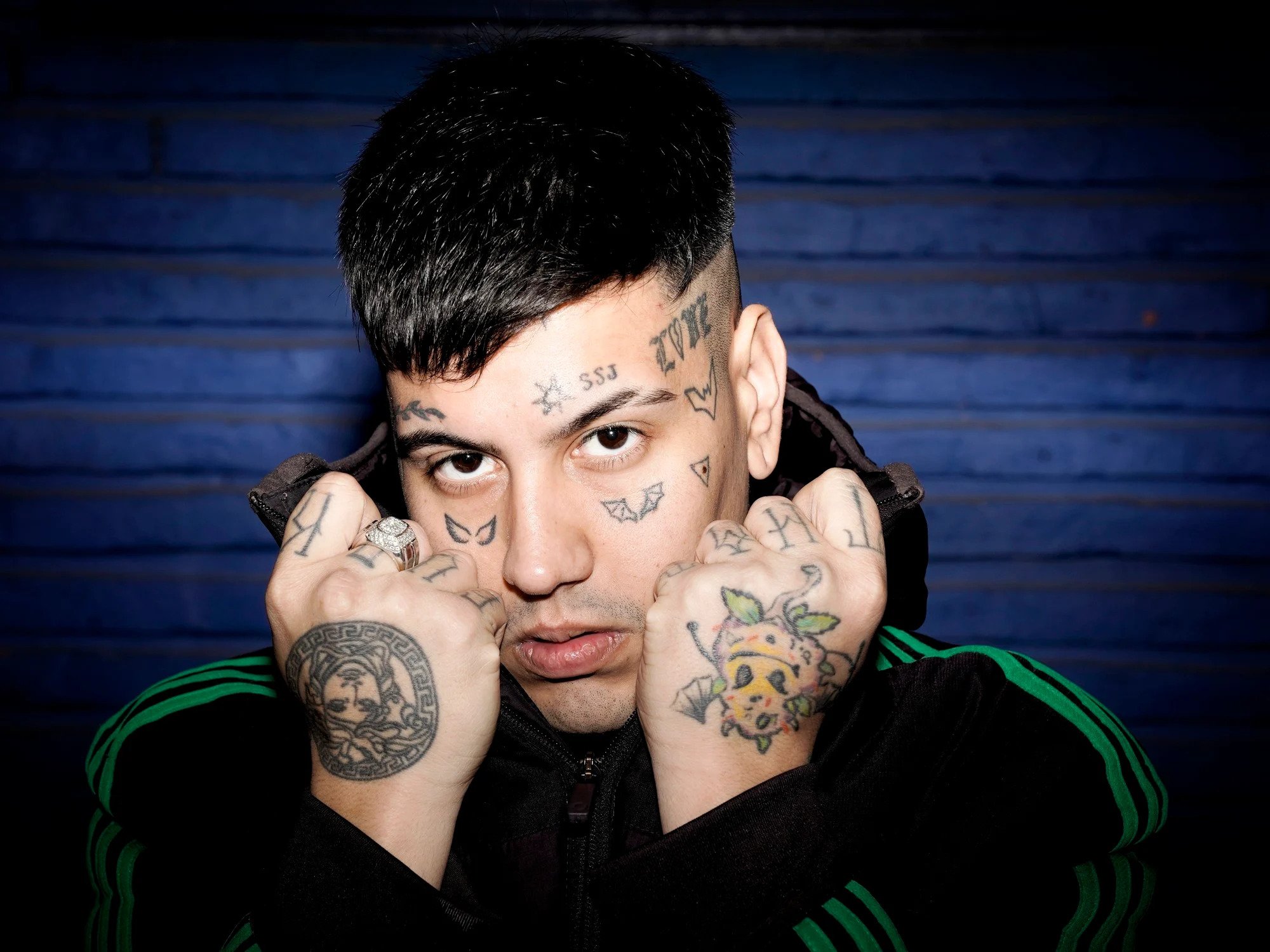
Duki tattoos: Separate portrait showing face symbols and two hand designs

Other small designs include LOVE, a Batman symbol, a Spider-Man mark and a triangle with a dot. Reports differ on which side some appear, and mirrored photos can make placement hard to judge, so it’s safer to name the symbols without assigning sides.

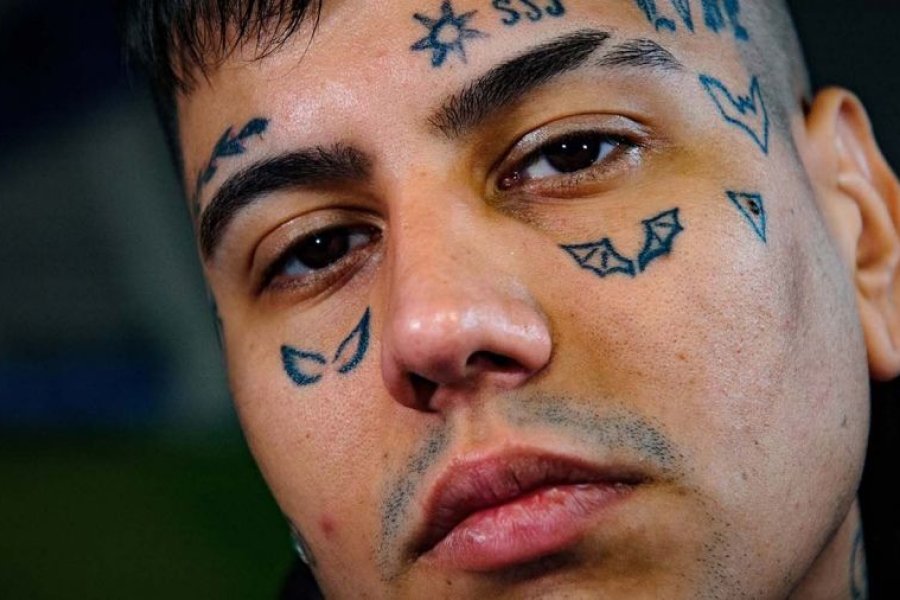
Duki tattoos: Close view of the wing and cheek symbols

The character symbols fit the fantasy and superhero references he has discussed, but not every tattoo has a published explanation. Europa FM also reports that he once had an Instagram verification badge tattooed and later removed it. Photos from different years, then, won’t show exactly the same collection.

Hand and lower-arm tattoos: family, friends and places

His hands have brighter colour and denser detail than the fine marks around his eyes, with lettering and images across the fingers and backs of the hands.

Duki tattoos: Distinct framing pose showing hand and finger tattoos

AS recounts Duki’s description of a lower-arm playing-card design: a king and queen with his parents’ initials, Sandra and Guillermo, in place of the usual letters. He said the pair represented both parents and called them his king and queen.

He also linked the numbers 0600 and 0800 to a producer and a jeweller friend, saying he got them during an afternoon in Córdoba. Another story involves a tattoo connected to an Argentine artist he admired. Duki said he associated the design with “Medusa,” then later realised the word was also linked to Versace.

Esquire’s 2023 tattoo tour described more than 30 pieces; AS later reported Duki estimating that he had around 30 or 31. Those are interview snapshots, since tattoos can be added, covered or removed.

Duki has recounted that his mother cried when she first saw his face tattoo and worried about his looks and future work. In a 2025 account, he said his parents had first seen the change on social media before he visited them. The interviews describe the timing differently, but both report that the visible decision surprised her.

His interviews explain the wings, some forehead symbols, the family cards and the numbers. The photographs help show where the rest sit; some marks have no public explanation.

More musician tattoo guides