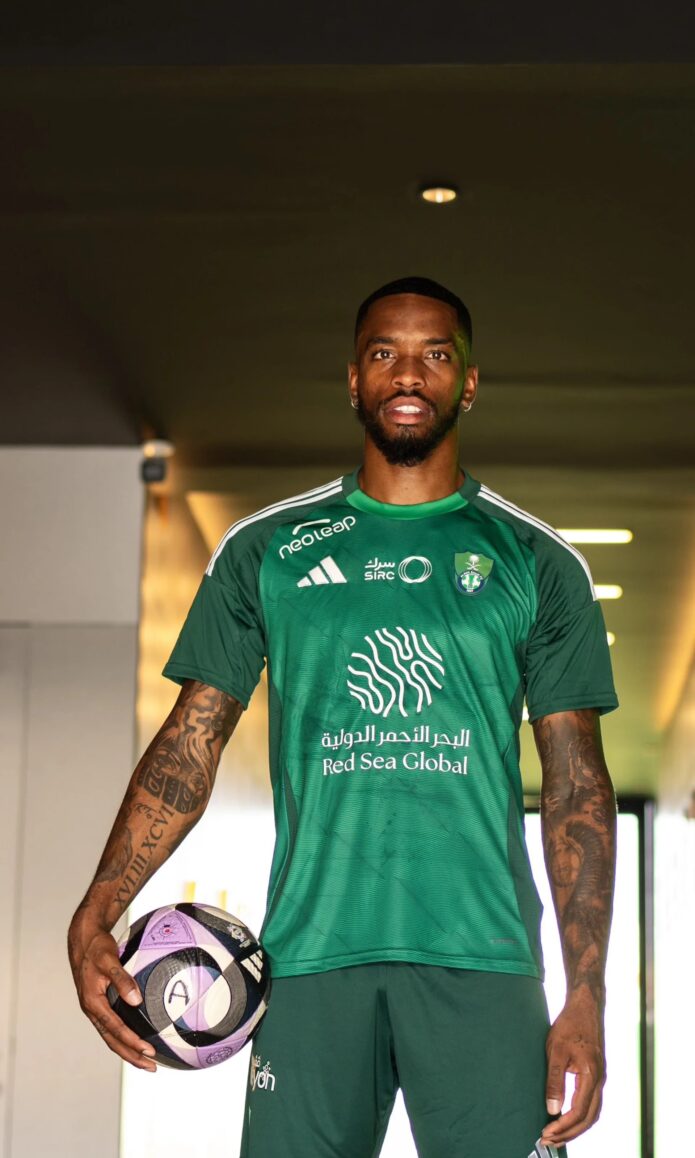
Ivan Toney’s tattoos are not a tidy set of matching symbols. They read more like a personal collage: family portraits, a striking tiger-and-kitten scene, words about discipline, football references and smaller marks that only become clear in close photographs. The most revealing pieces are the ones he has discussed himself, because they give us a rare line between what the ink shows and what he says it means.
One image in particular catches the eye. A kitten looks into a puddle and sees a tiger looking back. Toney has explained the idea in plain terms: the way you see yourself matters more than the way other people see you. Around that centerpiece are portraits of relatives, a message about discipline and regret, and the number 17 associated with his Brentford shirt. There is also a small word tattooed in front of his left ear. Here is what is documented, what the photographs show, and where the reporting leaves questions open.
The tiger and kitten tattoo is about self-belief
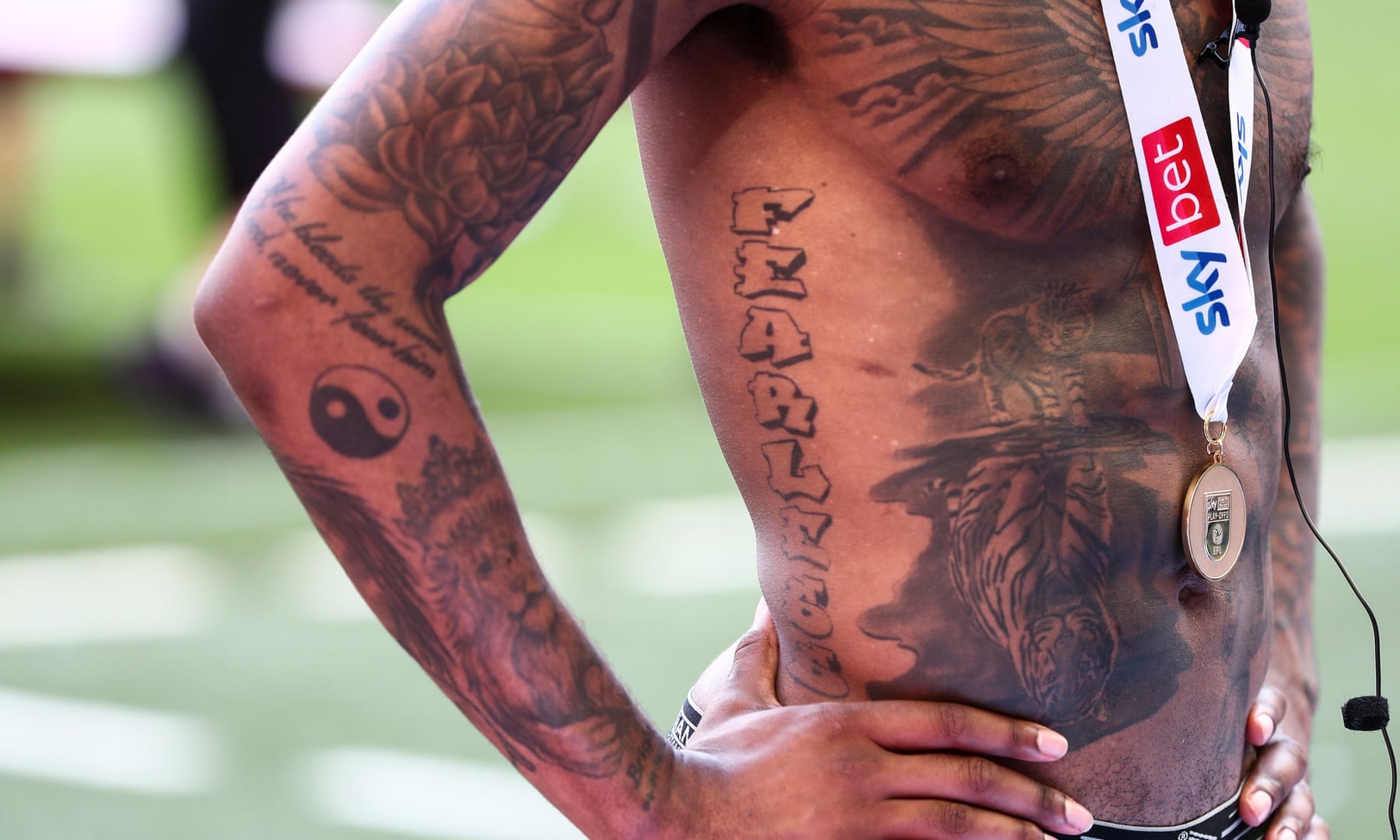
The best-known design in Ivan Toney’s collection sits on his torso. It shows a kitten looking down into a pool of water, but instead of seeing a kitten in the reflection, it sees a tiger. Toney described the image to The Guardian in 2021, when a reporter noticed it during an interview. Asked how long he would keep going, he answered, “Until I win.”
That reply is short, but the surrounding explanation is more useful than a guess based on the picture alone. Toney said the image is about how someone should see themselves in the mirror. In his telling, it matters how you view yourself, not how other people view you. The kitten-to-tiger contrast makes that idea easy to understand: the outside observer may see a small animal, while the person looking back can hold a much bigger sense of their own potential.
The tattoo also has an unusual visual structure. It is not simply a portrait of a tiger or a piece of wildlife art. The pool and reflected image make the viewer pause and check what is really being shown. That small shift from kitten to tiger turns an ordinary mirror image into a statement about confidence. Toney did not describe it as a prediction that success arrives automatically. His comments link it to self-perception and persistence, not a promise that hard work will always produce a particular result.
The timing of the interview gives the design a specific backdrop without reducing it to a single event. In August 2021, Toney had just helped Brentford reach the Premier League after winning the Championship play-off final. He spoke about the difficult route that had preceded that moment, including periods when he questioned whether to keep going. It is reasonable to read the tattoo alongside that career context because he himself connected the design to how he saw himself. It would be a stretch, though, to claim the tattoo was created for the promotion or for one particular match. The reporting does not establish that.
Photographs from the play-off final and later appearances show the piece among the larger torso tattoos. The view changes with the angle, clothing and lighting, so not every image reveals the whole scene at once. That is why the interview matters: the photograph identifies the artwork, while Toney’s own words give a grounded explanation of the mirror idea.
Family portraits bring his chest tattoos close to home
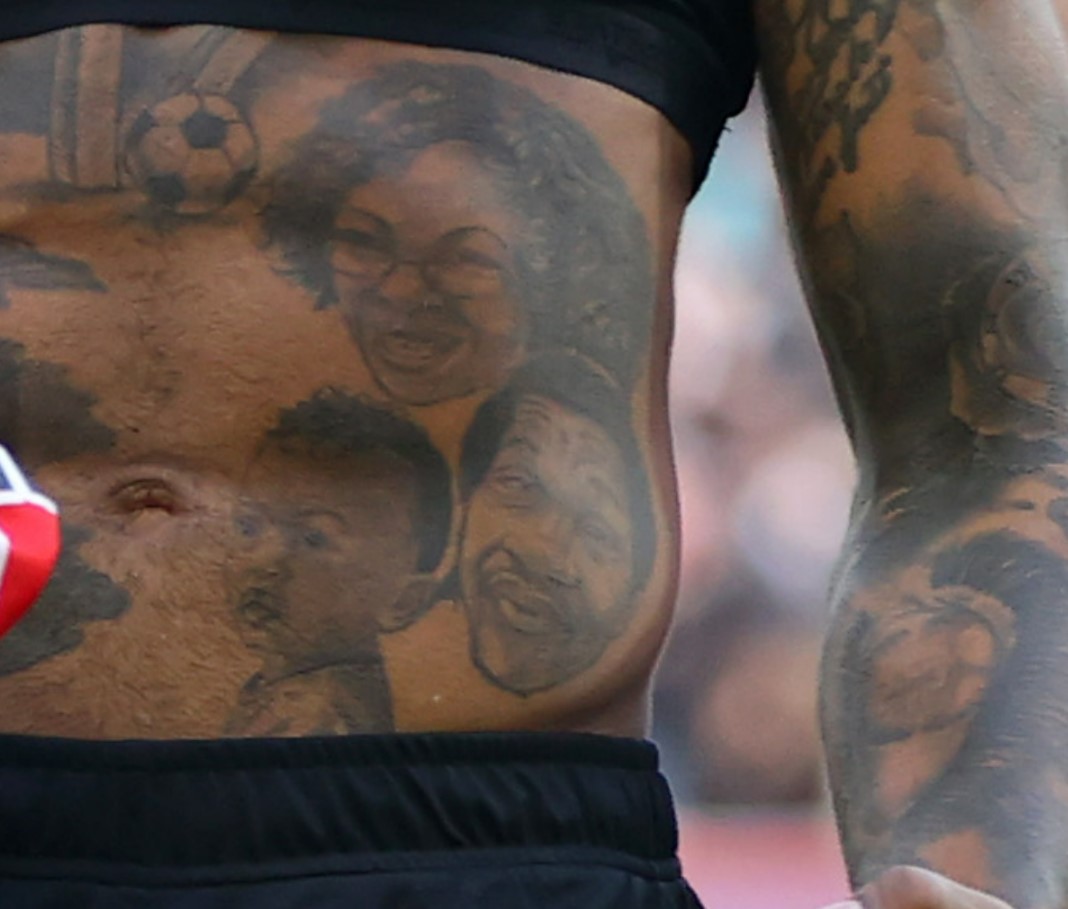
Another documented group of designs is more direct in subject. Family portraits are the clearest theme in this part of the collection. A 2021 profile described likenesses of Toney’s late grandmother, Elma, his grandfather, Benjamin, and his son, Ivan Jr, among the tattoos across his chest and torso. These are portraits of people, not anonymous decorative faces. The names and relationships reported alongside them make family the clearest theme in this part of the collection.
Portrait tattoos can be difficult to read in a single match photograph. Shirts shift, the torso is moving, and the image may be shot from the stands. A closer image of Toney lifting his shirt gives a more useful view of the larger chest and side pieces, although even a sharp photograph cannot tell us what every small detail means. It is safer to describe what the published account identifies than to assign a private story to each portrait.
The pieces also sit within a collection that has grown across different stages of his life. His grandmother and grandfather are remembered in the design, while his son represents family in the present. That combination can make the chest feel like a place where several generations appear together. Still, the exact date each portrait was tattooed and the artist who made it are not clearly established in the reliable reporting used here. The emotional significance is suggested by the subjects, but Toney’s own detailed explanation of each portrait has not been published in the sources we could verify.
That distinction matters. It is tempting to turn any family portrait into a long story about grief, legacy or fatherhood. Those themes may be meaningful to Toney, but unless he has said so about a particular piece, they remain interpretation rather than confirmed fact. What can be stated confidently is that the portraits depict close relatives and that the reporting specifically identifies them. Their placement among other chest tattoos makes the torso a kind of visual family album, but the details behind each image remain personal.
In photos, the portraits sit alongside lettering and football-related imagery rather than in a separate, isolated panel. The combined effect is busy, but that does not make it random. It places family faces among the words and symbols that Toney has chosen to carry with him.
The discipline-and-regret lettering across his chest
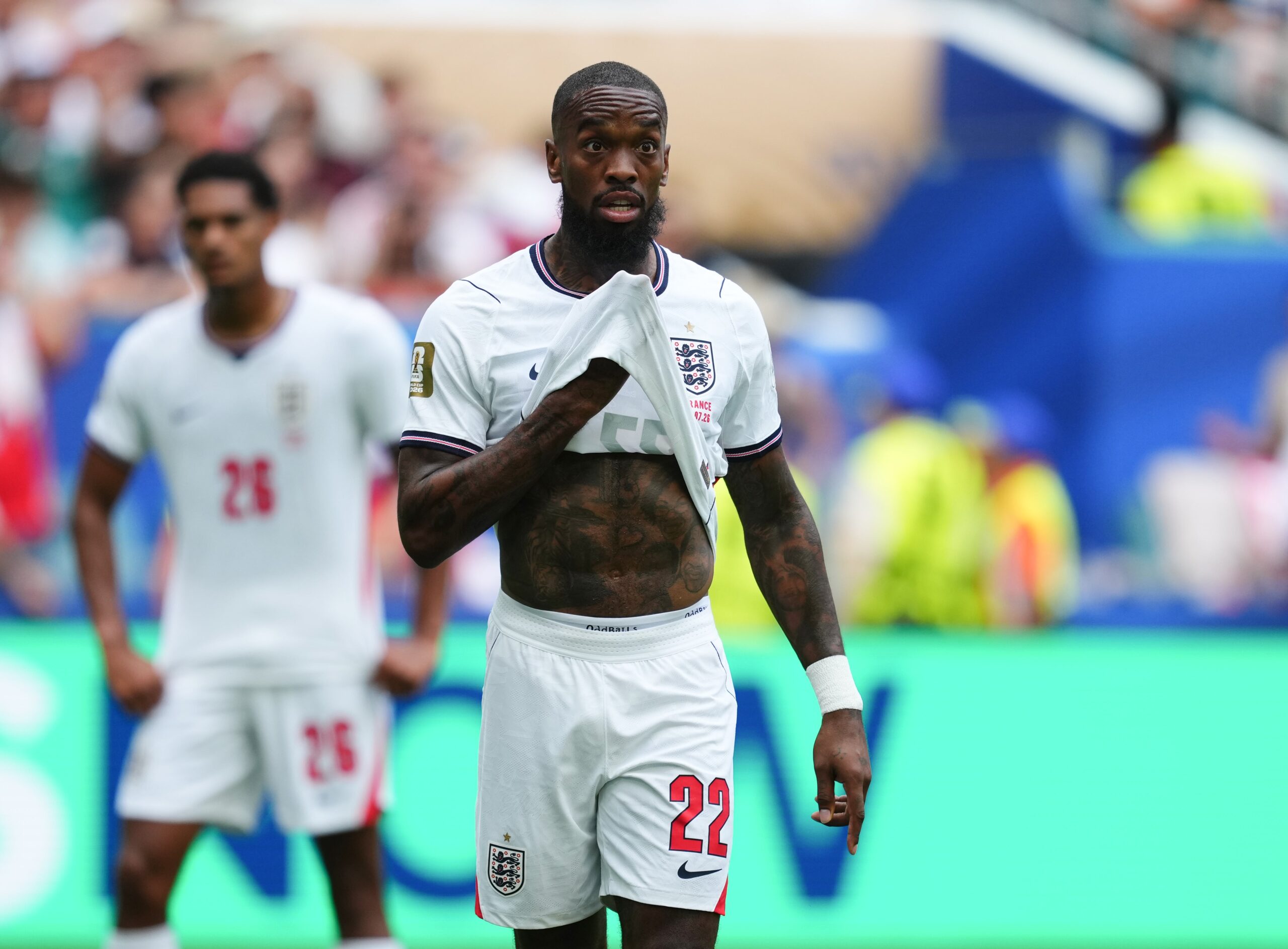
One phrase reported across Toney’s chest reads, “Suffer the pain of discipline or suffer the pain of regret.” It is a long line for a tattoo, and its wording has been repeated in coverage of his first England call-up and his rise with Brentford. The message sets up a choice between two kinds of discomfort: the effort required to stay disciplined, and the later disappointment of wishing you had made that effort.
The phrase fits with the story Toney has told about his career, but it should not be treated as a complete autobiography in one sentence. His path included youth football, a move to Newcastle, several loan spells and a period rebuilding his momentum elsewhere before Brentford signed him. He has spoken about learning from setbacks and working through difficult stretches. Those details make the motto feel relevant, but no reliable source says it was designed to describe one specific transfer, manager or setback.
Visually, the quotation is more practical than ornate. It is a block of words rather than an illustration, so its main impact comes from scale and placement. When Toney plays in a shirt, the writing is usually hidden. When he celebrates shirtless or raises the fabric, the line becomes one of the most readable parts of the collection. The contrast between a large sentence and the surrounding portraits makes the chest feel like both a display area and a private reminder.
The wording is also often shortened in captions or repeated without context. Keeping the full sentence matters because the second half completes the thought. It does not say that pain itself is noble; it compares discipline now with regret later. That reading follows the words directly and avoids adding a more elaborate philosophy that Toney has not publicly claimed.
Images from different seasons show the lettering as part of the same broader torso work, although photographs vary in clarity. A shirt-lift image from an England setting and a later Al-Ahli match celebration provide distinct views rather than duplicate copies of the same frame. Neither image should be used to infer a date for the tattoo. They simply show that the writing remained visible in public photographs across more than one period.
The No 17 and football tattoos mark his Brentford chapter
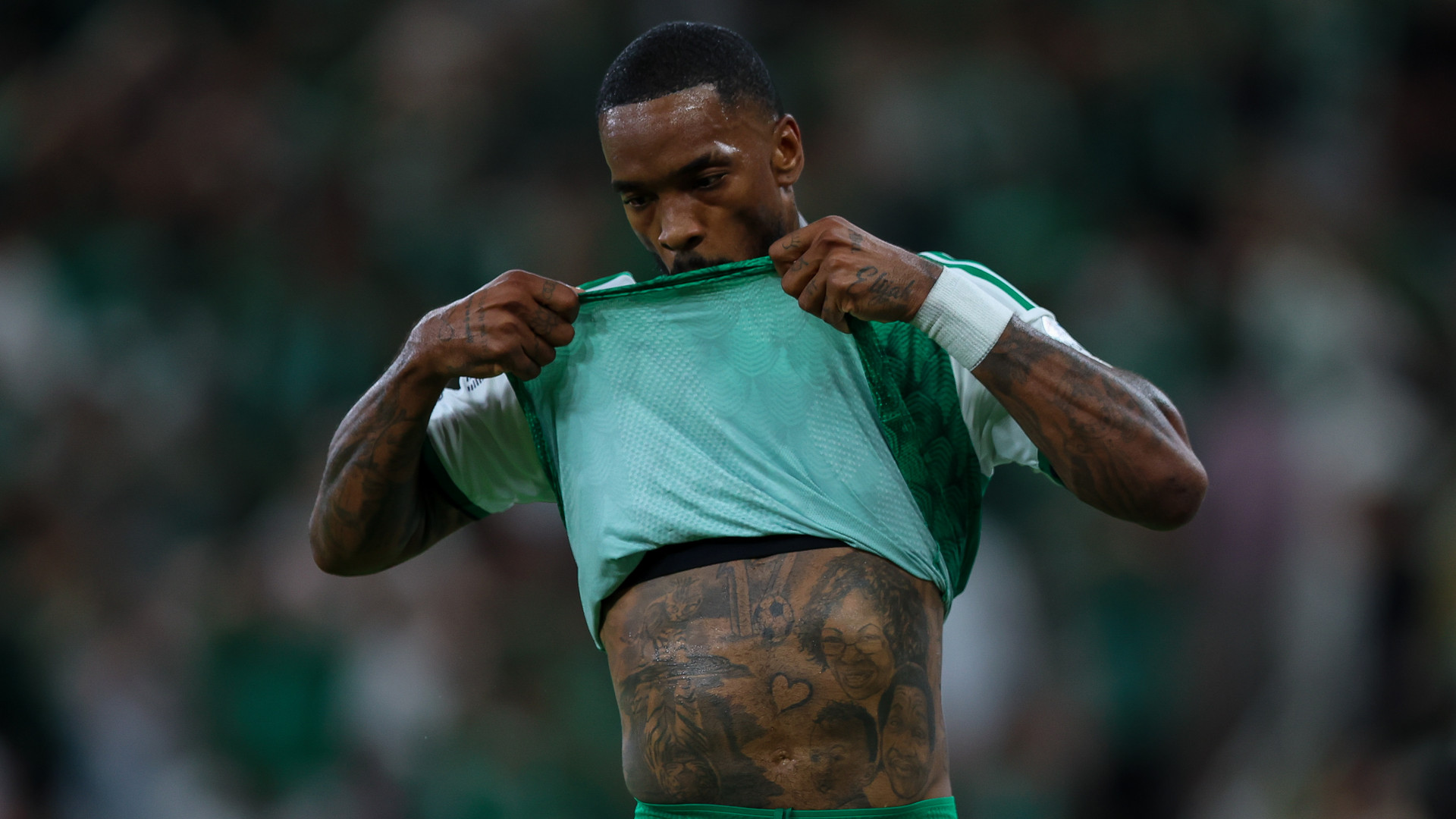
The same 2021 profile identifies a number 17 on Toney’s torso, alongside a football. At the time, 17 was the number on his Brentford shirt. The article describes the ball as a symbol of the game he loves. This is one of the clearest football references in the collection because the number and sport are both tied to a specific moment in his career.
That detail is time-sensitive. Shirt numbers can change when a player moves clubs, and a tattoo does not update itself when a kit does. The reported connection is to his Brentford period, not a universal statement about every shirt he has worn. It is best understood as a marker of a chapter: the season in which he became a central figure for the club and helped it earn promotion.
The placement also makes the tattoo feel personal rather than like a club crest. A number and ball can carry a private association with the work, matches and routines that shaped a player’s life, while avoiding a full team badge. The source says the ball represents his love of football. Beyond that, we should not assume the number refers to a birthday, family date or another private code. No such explanation appears in the reporting.
It is a useful example of how Toney’s tattoos combine intimate subjects with public milestones. A portrait can point toward family, while a number recalls a footballing chapter. The designs do not need to share one visual style or one theme to make sense together. Their connection may simply be that they record people and periods that mattered to him.
The body photographs are stronger evidence here than a regular match shot, since the number and ball are easier to locate when the shirt is lifted. A separate image of Toney in Brentford action shows how his arm ink appears during a match, but it does not replace a clear torso view. The two kinds of photographs answer different questions: one helps identify the design; the other shows how the tattoos look in everyday football settings.
The cross and “Original” tattoos around his neck
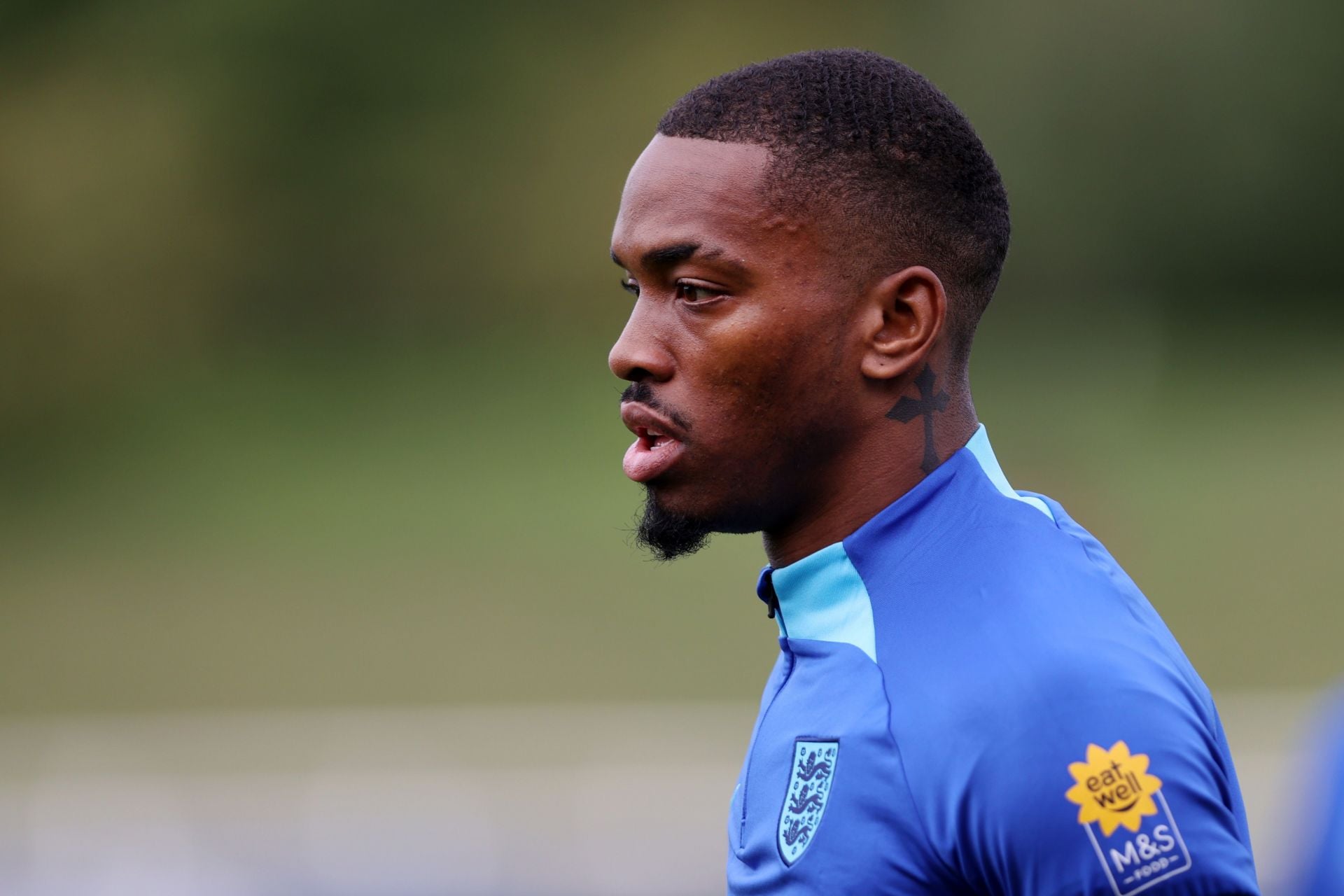
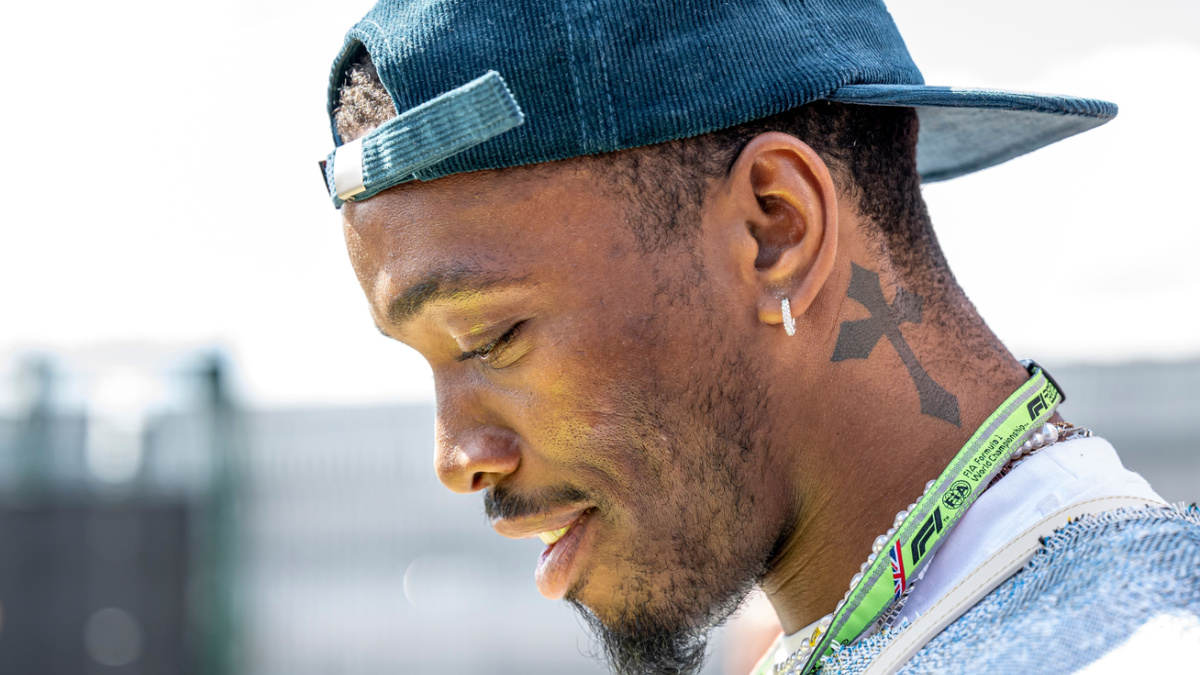
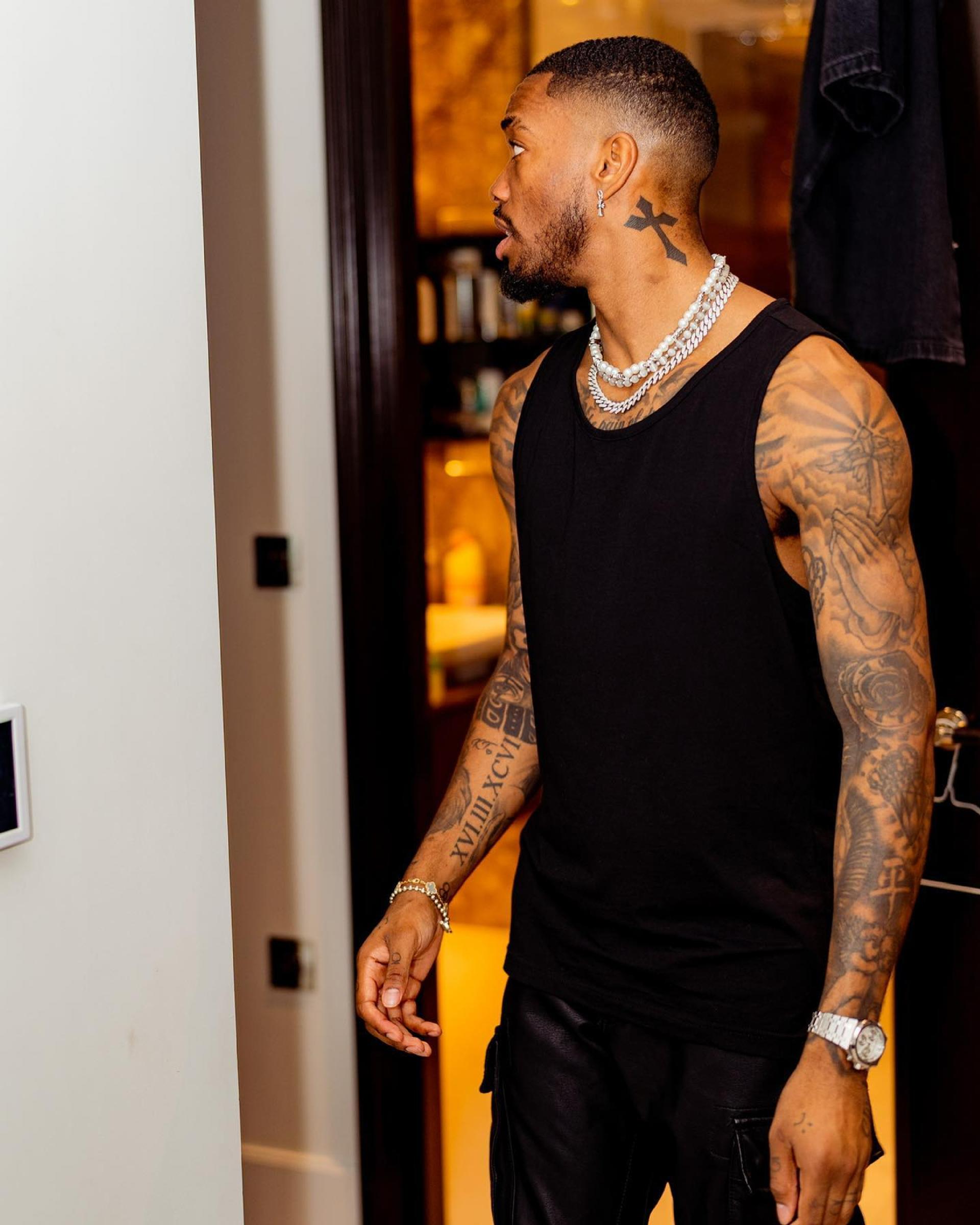
Public photographs show small tattoos around Toney’s neck and ear. A cross is visible on the side of his neck in several profiles. In a 2026 interview, The Guardian also noted the word Original tattooed in front of his left ear. That is useful confirmation of the word and its placement, but the article does not explain what the word means to him.
So the careful reading is a simple one. The word says “Original”, and it is positioned just ahead of the left ear. It may sound like a statement of identity, but assigning a precise personal meaning would go beyond what Toney has shared in the cited interview. He may have explained it elsewhere; the sources verified for this guide do not provide that explanation. A tattoo can be legible without its private story being public.
The cross is similarly easy to spot but harder to interpret. It is a religious symbol in a broad cultural sense, yet that does not prove anything specific about Toney’s beliefs. We have not found a direct, dependable statement from him explaining this particular cross. It is more accurate to call it a visible cross tattoo than to claim it represents a defined spiritual turning point or family event.
Neck ink behaves differently from a large chest design in photographs. A slight turn of the head can reveal or hide it, and hair, collars or camera position can cover the mark. In close-up images, the “Original” lettering sits close to the ear and is easy to distinguish from the larger body tattoos. In training and match pictures, the cross can appear as a small detail on the side of the neck. The photographs here are different moments, not alternate crops of one portrait, and together they show why the location is part of the design’s visibility.
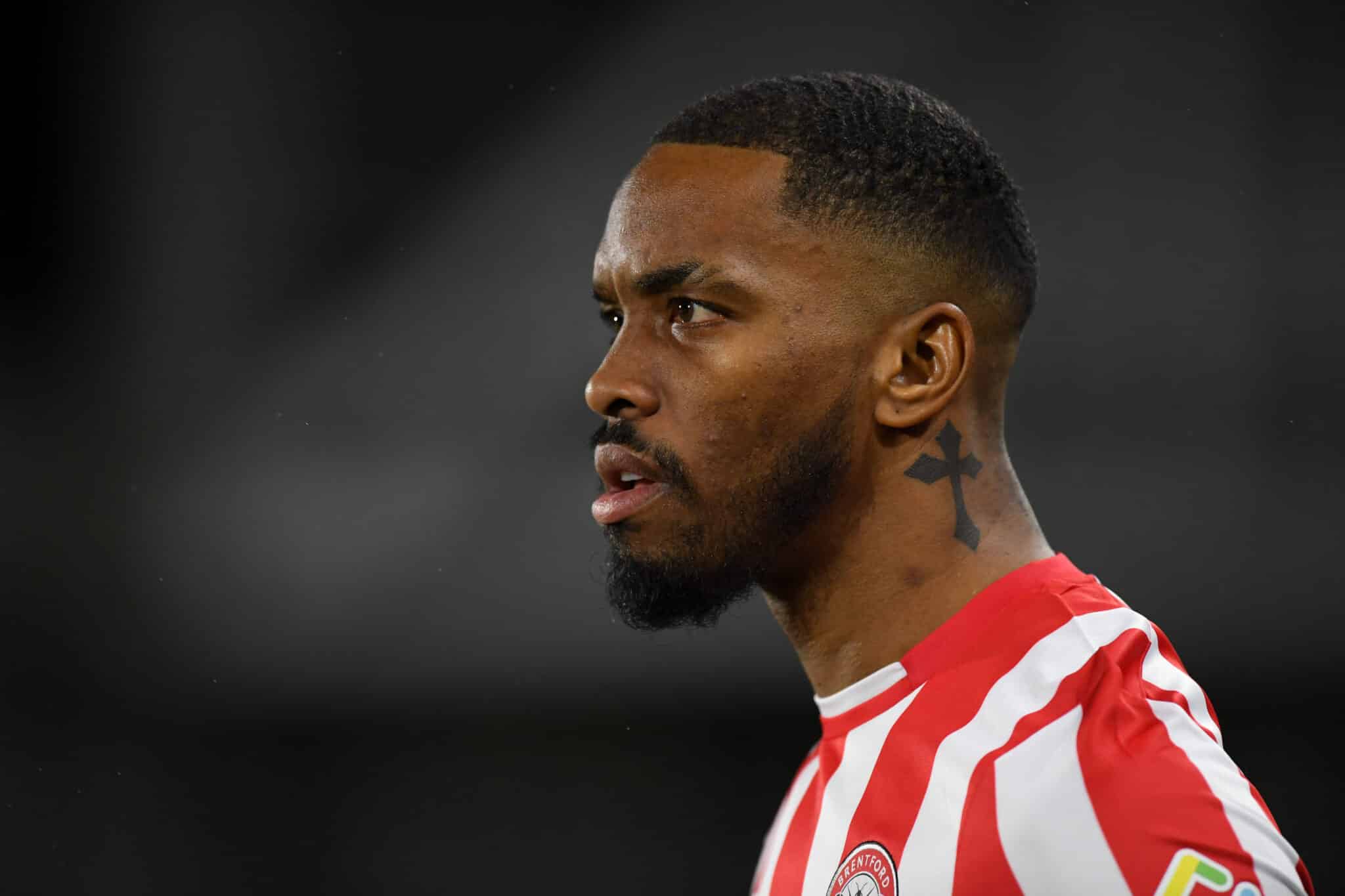
There is no need to force the two marks into one story. Their proximity does not mean they were done at the same time or by the same artist. The available evidence supports their presence and location, not their chronology. That restraint makes the article more useful: readers can see what is actually there without being handed a made-up explanation.
What the visible arm ink tells us, and what it does not
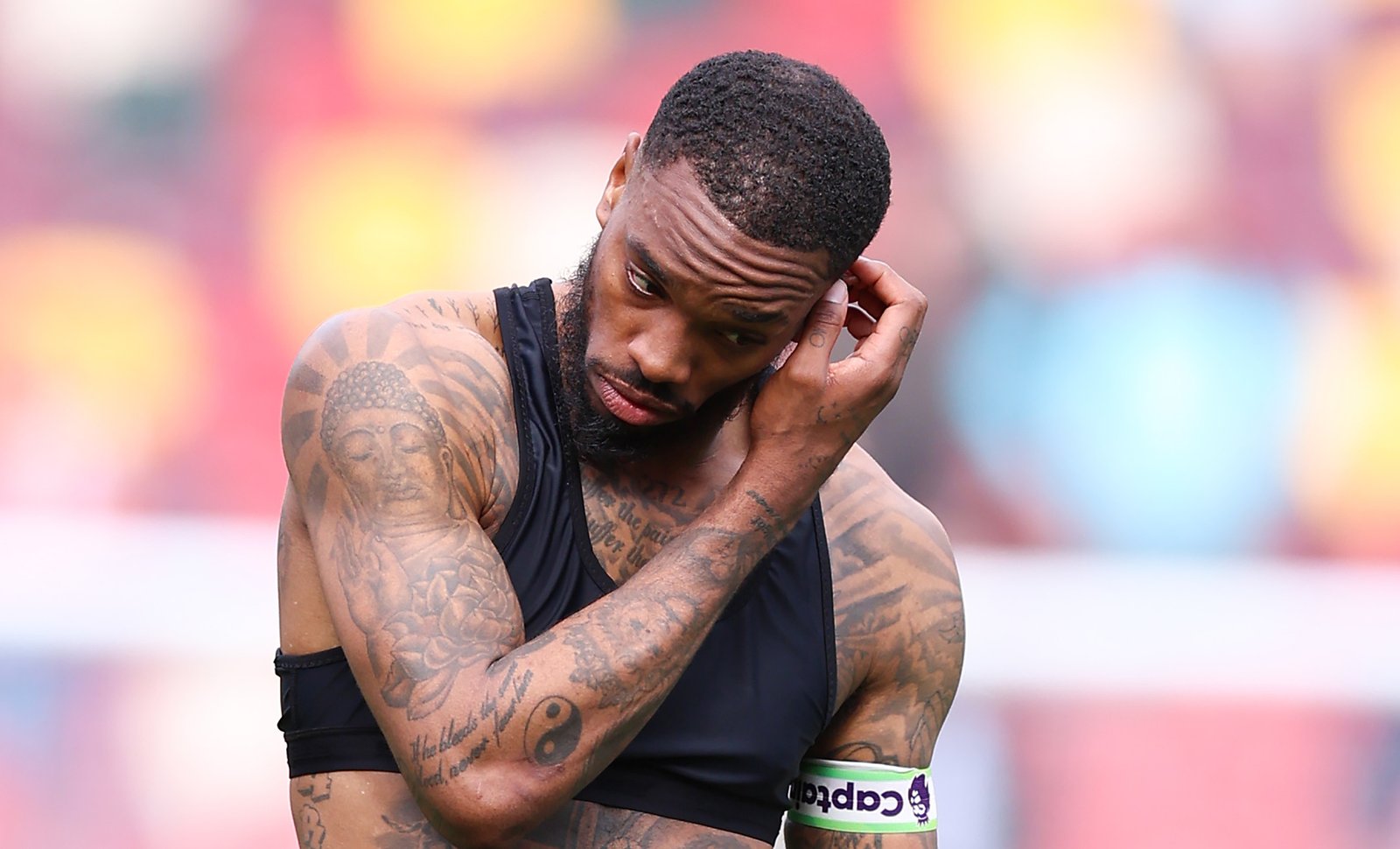
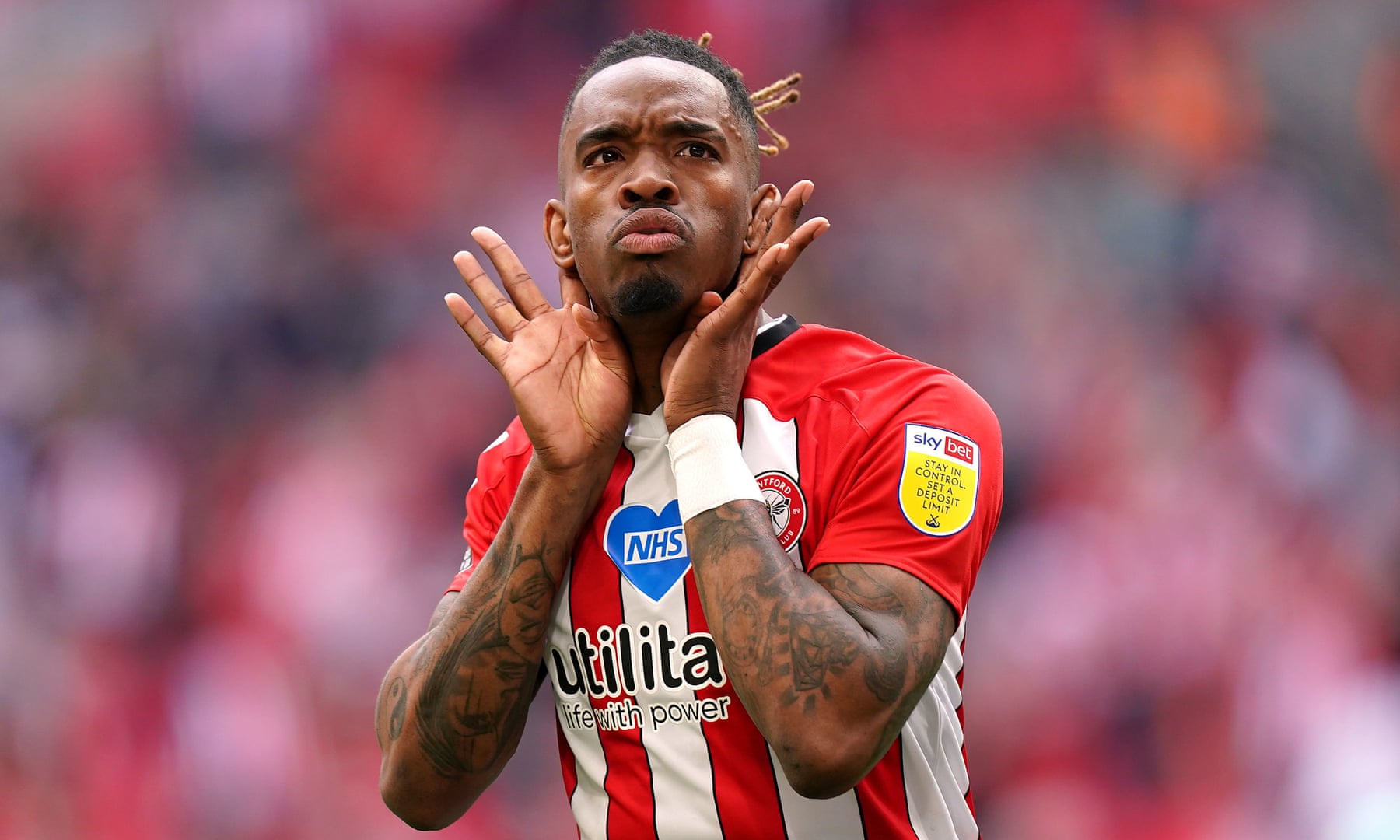
Match photographs show additional ink across Toney’s arms, but the details are harder to catalogue responsibly than the major chest designs. The Guardian’s play-off image and other football photographs capture several tattoos at once. At that distance, the pictures establish that the collection extends beyond the torso and neck. They do not always resolve every symbol, word or small design well enough to name it.
That is why this guide focuses on the designs that have either been identified in reporting or are clearly visible in the inspected photographs. A tattoo article can become less accurate when every dark patch in a low-resolution image is assigned a name. If a line of script cannot be read, it is better to say so. If a photograph shows arm coverage without enough detail to identify a motif, the image can document the extent of the ink without becoming evidence for a specific design.
Coverage from 2024 described Toney as having around 50 tattoos. That is an approximate count reported at the time, not a permanent total. New pieces can be added, older ones can be extended, and a single connected composition can be counted in different ways. The figure conveys how extensive the collection had become, but it should not be presented as an exact current inventory.
Across the clear examples, a pattern does emerge: family, football, self-belief and discipline recur as subjects. That does not mean every tattoo fits neatly into one of those categories. Some designs are visible without being explained, and those deserve to remain open questions. The collection feels personal partly because it is not fully captioned for the public.
For readers, the strongest way to understand the overall style is to compare images from different settings. A training photo can reveal the neck; a shirt-lift celebration can show the torso; a match image can show the arms in motion. Those views make the tattoos easier to locate, but they do not turn every visible mark into a confirmed story.
The Euro trophy joke
There is one tattoo story worth separating from the designs Toney actually wears. Before Euro 2024, he joked that if England won the tournament he might get a tattoo of the trophy on his forehead. He laughed as he said it, then softened the idea to a small commemorative design. The Independent reported the exchange in June 2024.
England did not win that tournament, so the promised condition was not met. The comment is not evidence that Toney got a trophy tattoo, and there is no verified image in this research showing one. It belongs in the article because it says something about his sense of humor and about how he talks about adding ink, but it should not be folded into a list of existing tattoos.
The distinction is useful whenever a celebrity discusses a tattoo they might get. A plan, dare or joke can become a headline even when no needle ever touches skin. In Toney’s case, the forehead line was clearly delivered playfully, and the later outcome gives no reason to treat it as a real design. His documented collection remains the one visible in photographs and described in interviews.
Why Toney’s collection feels like a timeline
Toney’s tattoos work as a collection because they hold several kinds of memory at once. The tiger and kitten express a way of seeing himself. The portraits keep family close. The discipline phrase sets out a principle. The number and football image point toward a defining club chapter. “Original” and the cross sit in highly visible places, even though their deeper meanings are not fully public.
There is no confirmed master plan tying every piece together. The designs come from different subjects and placements, and the photographs show them at different points in his career. That variety is part of the appeal. Rather than looking like a single themed sleeve, the tattoos feel accumulated around ideas that mattered at different times.
The most responsible takeaway is not that each image has one obvious universal meaning. It is that the pieces Toney has explained connect to self-belief, persistence, football and family, while some of the smaller marks remain personal. The tiger-and-kitten scene offers the clearest statement because he has actually discussed it. The rest are best read with the same care: name what can be confirmed, then leave space for what has not been shared.
That mix of confidence and privacy gives the collection its shape. A viewer can recognize the central image and read the chest motto, but cannot know every story simply by looking. The photographs make the tattoos visible; Toney’s own comments provide a few windows into them. Beyond that, the unanswered details belong to him.