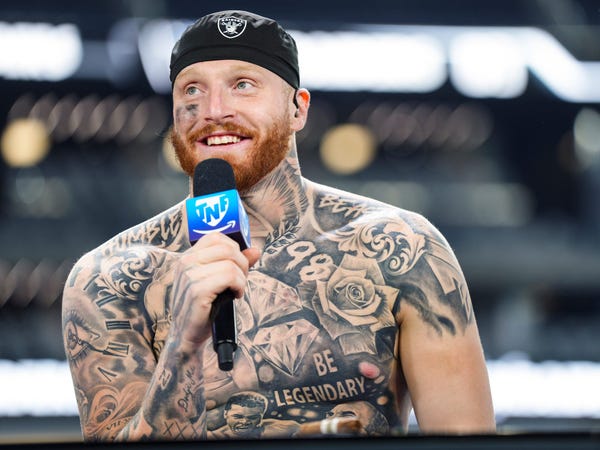
Maxx Crosby’s tattoos read like a scrapbook of the people and things he cares about. His arms carry Raiders imagery, family pieces and the early work that grew into a sleeve. Across his chest and stomach are sports legends, family references, roses, diamonds and the words “Be Legendary.” It does not look as though the whole collection came from one plan. Maxx has said the sleeve began as separate tattoos and gradually came together.
That gradual build is the key to the collection. In GQ’s tattoo tour, he talked through his first pieces, his great-grandmother, his mother and the portraits on his torso. Other reports cover newer tributes to Michael Jordan, Kobe Bryant and Muhammad Ali, as well as the Raiders designs on his arm. Each story makes more sense on its own than as part of one giant sports collage.
Maxx Crosby’s first tattoo was his name and birth year
Maxx says his first tattoo was his surname and birth year, inked on his wrist when he was seventeen. He used his brother’s ID to get it. That small teenage choice feels a long way from the large chest work he has now, but it stayed with him as the collection grew.
The wrist tattoo also gives the rest of Maxx’s account a starting point. He does not describe his ink as a perfectly planned catalogue. He remembers when he got designs, who they were for and how the sleeve came together. The first one was simple: his name and the year he was born. It marks a personal moment, rather than the public image he later built as a Raiders defensive star.
Older photographs help show that early piece. A jersey cuff or athletic tape can cover the lettering, while an interview close-up may reveal it for a moment. It is not his largest tattoo, but it anchors the timeline: the other designs followed his first decision to put a private detail on his body.
The great-grandmother portrait was made for his mother
One of Maxx’s most personal tattoos is a portrait of his great-grandmother on his forearm. He has said she was very close to his mother and died while he was young, so the design was chosen for both of them. That gives the portrait a specific family story; it is more than a face added to a sleeve.
The forearm keeps it visible when Maxx works out, speaks with reporters or stands on the sideline. Other tattoos were added around it over time, but the portrait remains its own piece even when a photo makes the arm look like one continuous black-and-grey panel.
Maxx has talked about regretting some choices he made when he was younger and becoming more selective later. That does not take anything away from the earlier tattoos; it helps explain why the great-grandmother portrait stands out. A person and a story are attached to it, while some nearby marks are part of the sleeve’s gradual build.
The portrait is easiest to see when his arm is uncovered. Stadium lights can flatten the detail, and tape can cover the lower forearm. A dedicated tattoo photo should show the face and surrounding lines clearly, instead of relying on a distant action shot where the image becomes an indistinct patch.
His chest and torso carry tributes to Jordan, Kobe and Ali
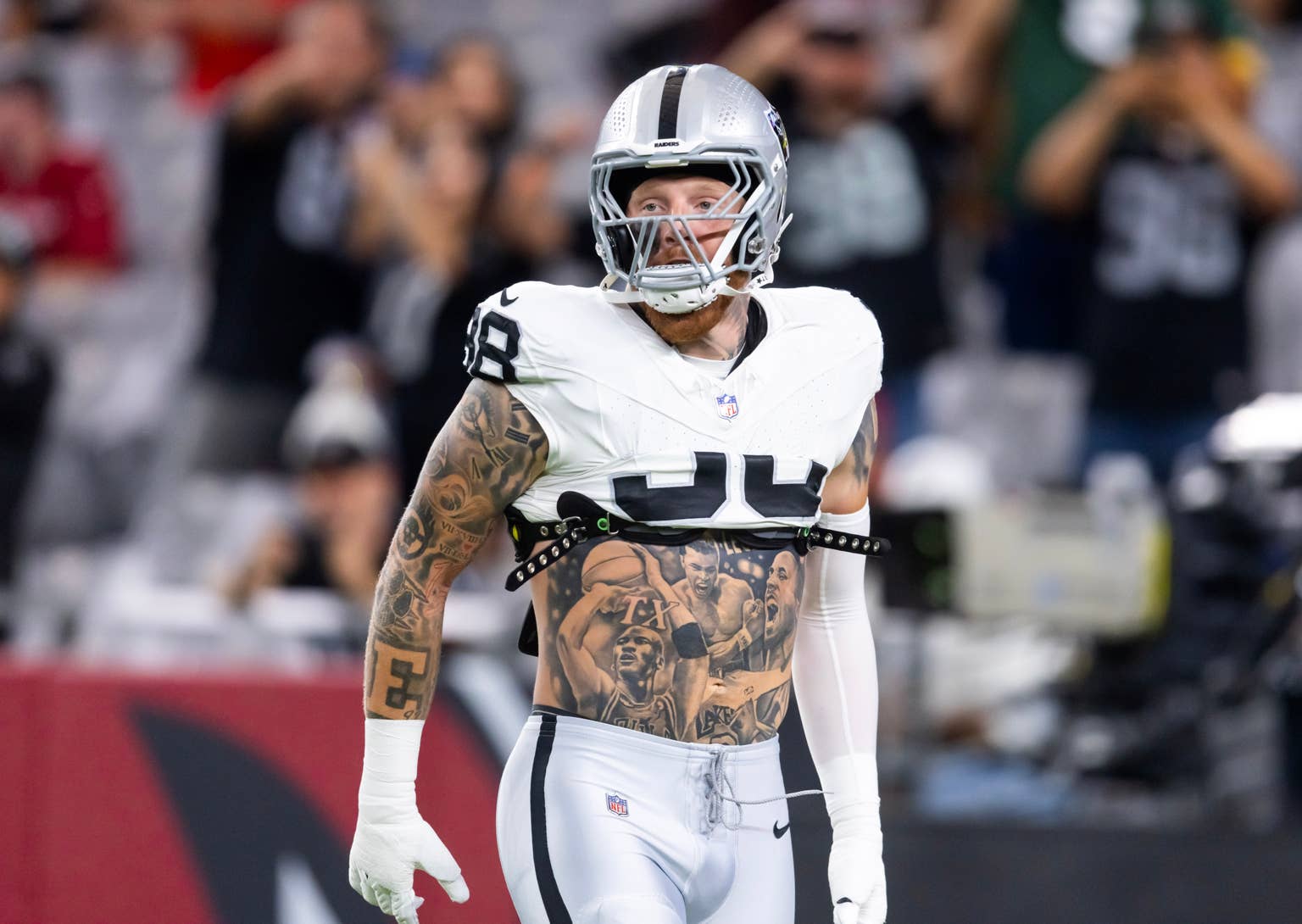
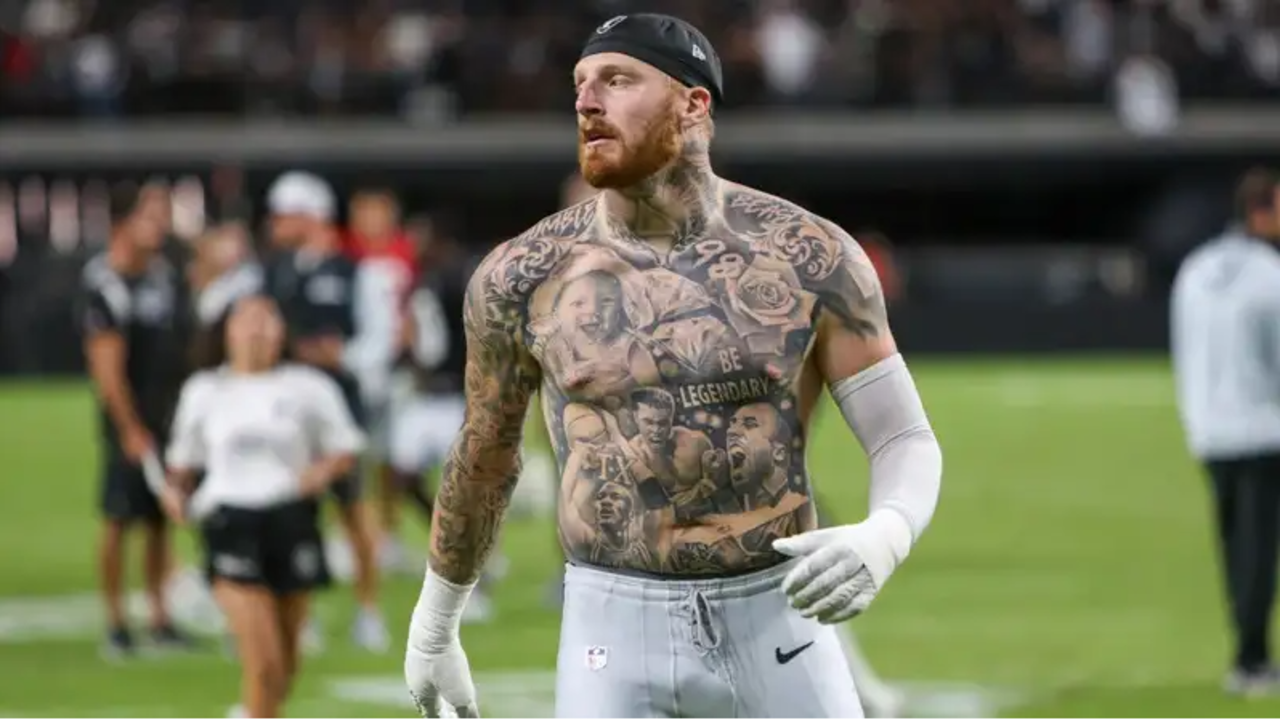
A major addition to Maxx’s collection is a torso composition honouring Michael Jordan, Kobe Bryant and Muhammad Ali. Their portraits run across his chest and stomach among shading, lettering and other details. Sports coverage describes the designs as tributes to athletes who influenced him; photos show how they sit with the words “Be Legendary.”
That phrase gives the composition a clear centre. It runs across the torso rather than sitting as a tiny motto, alongside the portraits and the number 98 linked to Maxx’s playing identity. A field photo can show the overall layout, while a closer interview image makes the faces and smaller shapes easier to see.
Roses, diamonds and a tattoo connected with his daughter Ella Rose also appear in reports on the newer torso work. These details are described as part of a family addition, not random filler. The rose works with the name, and the diamonds and shading help bring the portrait panel together.
This is where the timeline matters. Maxx has said his rookie-year sleeve looked terrible because he kept adding one random tattoo after another. The torso designs came later and have a more deliberate relationship: they are busy, but the portraits, words and spacing fit together. Later work helped connect areas that had been built separately.
The portraits do not mean every tattoo on Maxx’s body has one shared purpose. Sources are clearest about the athletes and the tribute to his daughter. Other faces and symbols can be seen, but should be described carefully when there is no direct explanation. It is possible to identify a portrait without inventing a speech from the person pictured.
The Raiders sleeve grew from random pieces into a team record
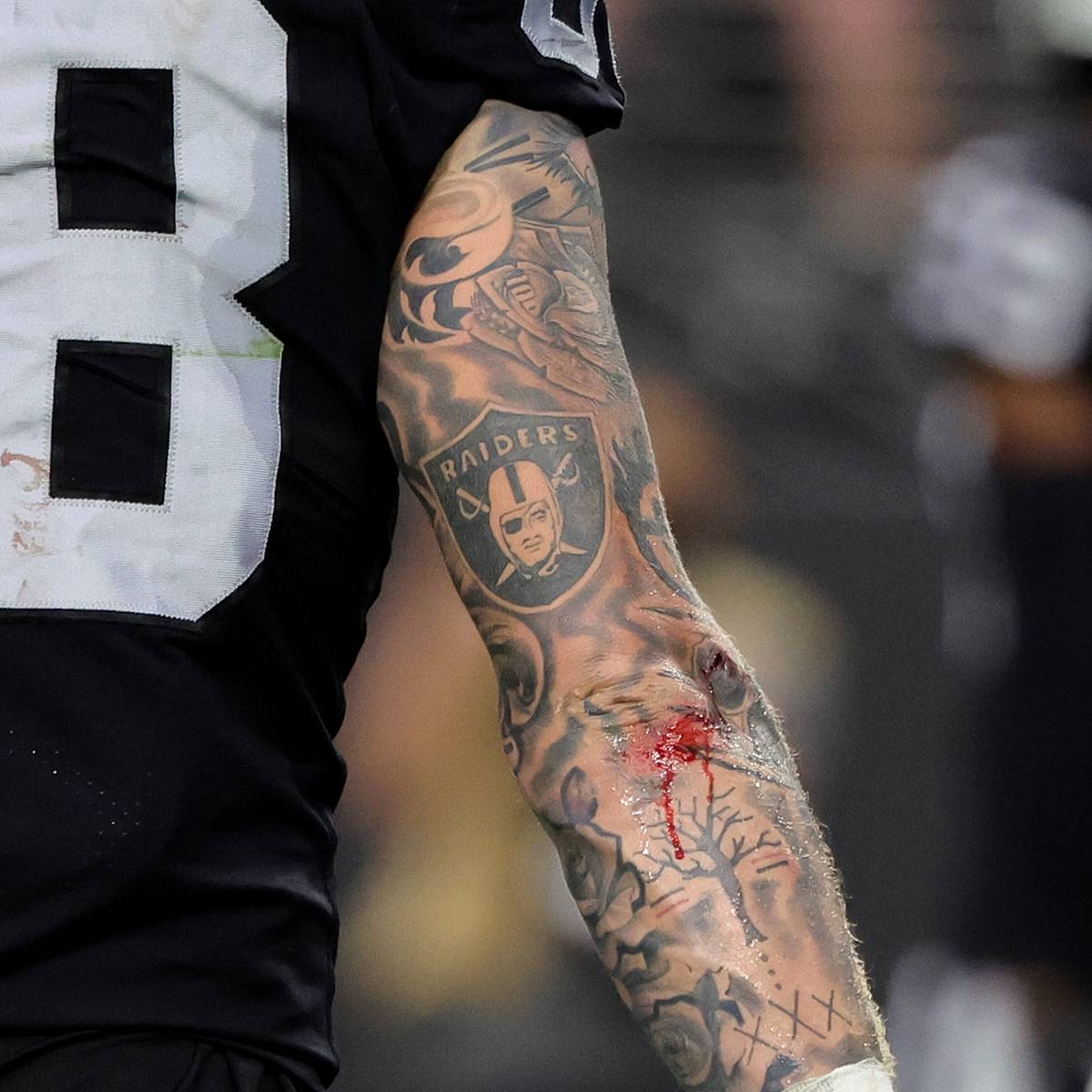
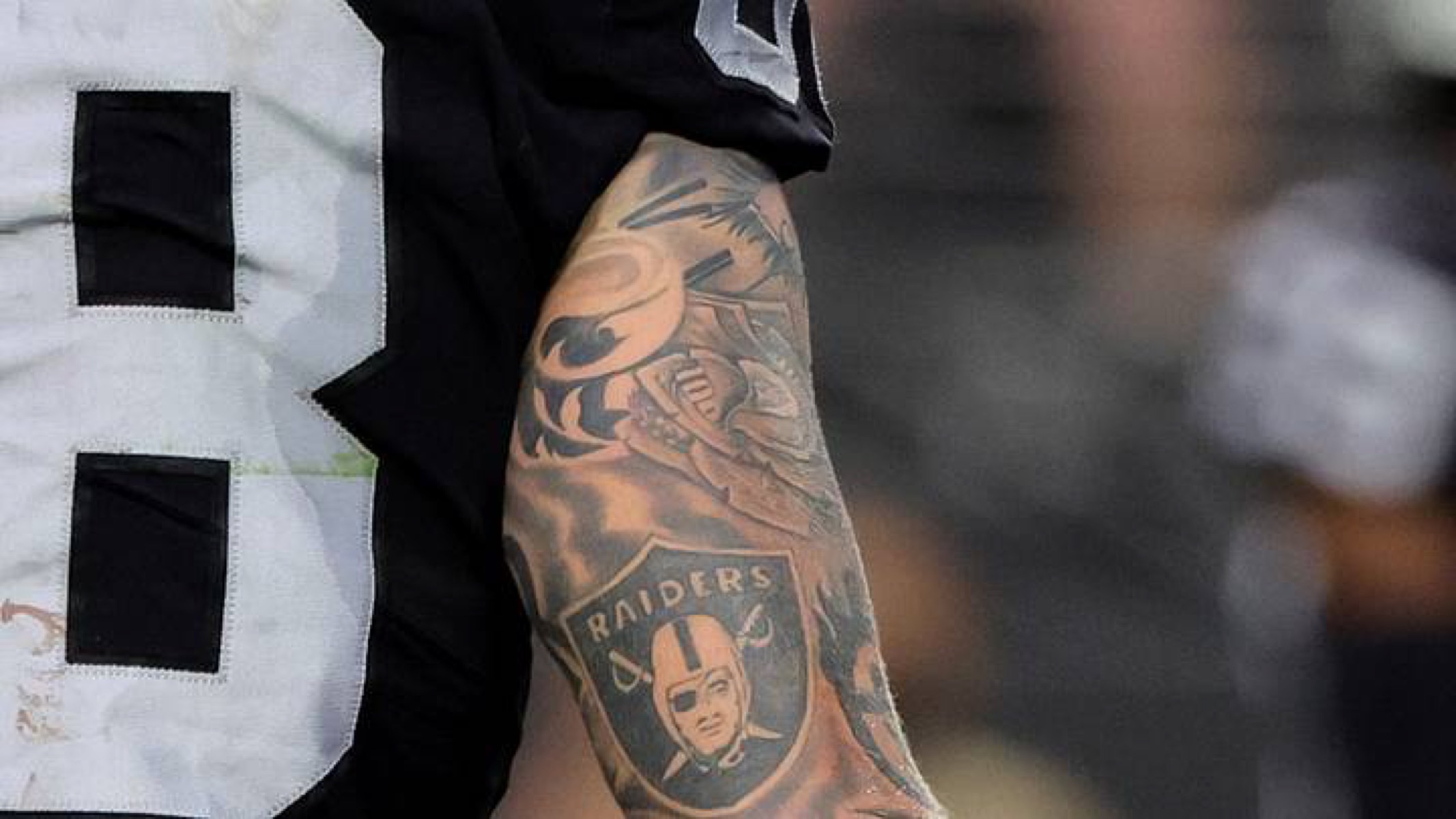
Football imagery is most obvious in Maxx’s arm sleeve. The Raiders shield sits on his upper arm among portraits, numbers, lettering and darker traditional-style work. Some game photos show the logo clearly; others reveal how much sits above and below it. The sleeve is more than a team badge: it combines his football identity with tattoos he chose before the arm had a finished shape.
Maxx has been open about how unplanned the early sleeve was. In GQ, he described his rookie-year arm as separate choices that did not yet fit together. That explains the contrast between the older, smaller pieces and the later large-scale work. The sleeve grew gradually, with new tattoos filling the gaps.
Other arm designs include a tree, Roman numerals, lettering and small symbols that show best in close sports photos. The Raiders shield has the clearest public association, but the other work makes the sleeve look like Maxx’s rather than a bit of team merchandise.
Photographing the arm has practical limits. Pads, gloves and jersey sleeves can hide large sections during a game. One sideline shot might show the lower arm but cover the shoulder; another might reveal the shoulder while the wrist is taped. Several photos are needed to understand the sleeve, since one image rarely shows the placements of neighbouring tattoos.
Maxx has also worked with Las Vegas tattoo artists, including Carlos at Hart & Huntington. That studio connection belongs to particular sessions; it should not be treated as proof one artist created the whole sleeve. The collection developed across years, and its artist history is layered too.
The smaller tattoos fill in the family and recovery timeline.
Not every meaningful tattoo is large. The wrist name and birth year, great-grandmother portrait and daughter reference mark family moments; the Raiders logo and athlete tributes reflect the public side of Maxx’s identity. Other small designs appear around his arms and torso, but the guide should separate what he has explained from what a photo only shows as a dark shape.
Maxx’s recovery is also part of the broader timeline. He entered rehab for alcoholism in 2020, and later coverage discussed a more focused approach to football and family. That does not make every tattoo a recovery symbol. It simply provides context for later family and motivational designs.
The words “Be Legendary” are a good example. They are easy to see and quote, but need no grand theory. The phrase works as a personal motto and as part of the torso design. The portraits add a sports context; the family tattoo brings in a more private one.
Across the collection, the story moves from teenage lettering to family portraits, from an early, loosely assembled sleeve to a connected torso composition, and from small pieces to the Raiders images fans recognise. The work is busy, but not meaningless. Each part has its own story, and the photos work best when they show the specific tattoos being discussed.
There is no reliable reason to assign the collection a fixed count. New work, cover-ups and added shading can change the total, while game photos rarely reveal every area. A more useful map includes the wrist name and birth year, great-grandmother portrait, Raiders sleeve, sports legends, family references, roses, diamonds and the central “Be Legendary” lettering.
That gives readers more than a quick list. It shows how Maxx’s ink developed with him, from rough early choices to later designs tied to family, football and ambition. The older and newer stages belong together.
One thought on “Maxx Crosby’s Tattoos: Raiders Ink, Family Portraits and Sports Legends”