Lucy Dacus’s tattoos span flowers, roots, snakes, eyes and other small marks across her hands, arms and neck. The collection has a relaxed black-and-gray look, with enough open skin to keep the pieces distinct.
One image can be misleading: the chest lettering used with Forever Is a Feeling was drawn on for the artwork, not permanent ink. The photographs below show the tattoos themselves, though not every small design has a public explanation.
Lucy Dacus’s floral hand and forearm tattoo
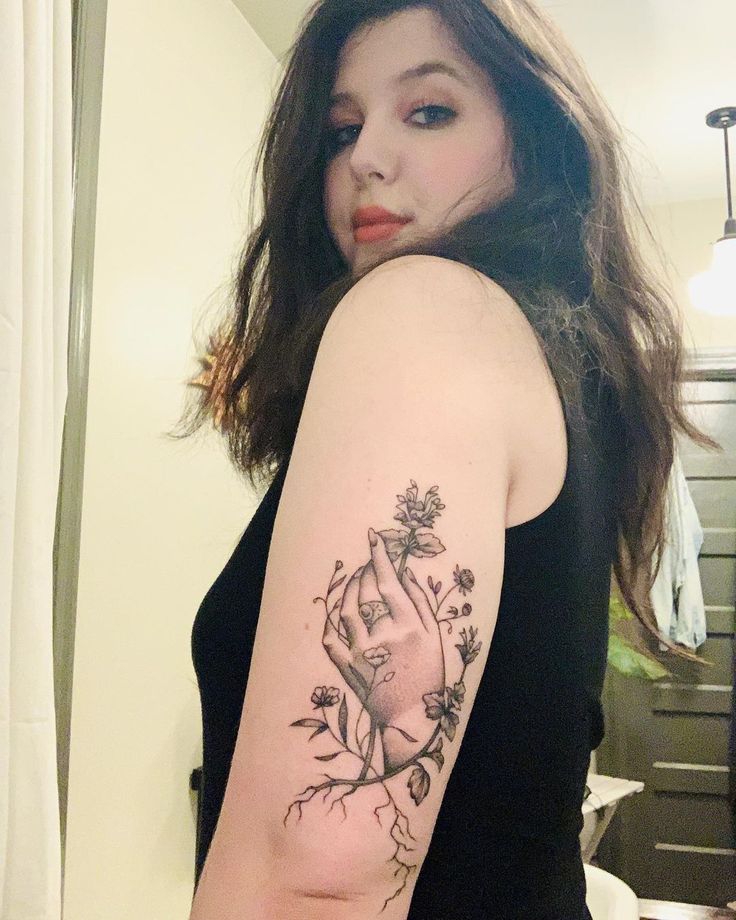
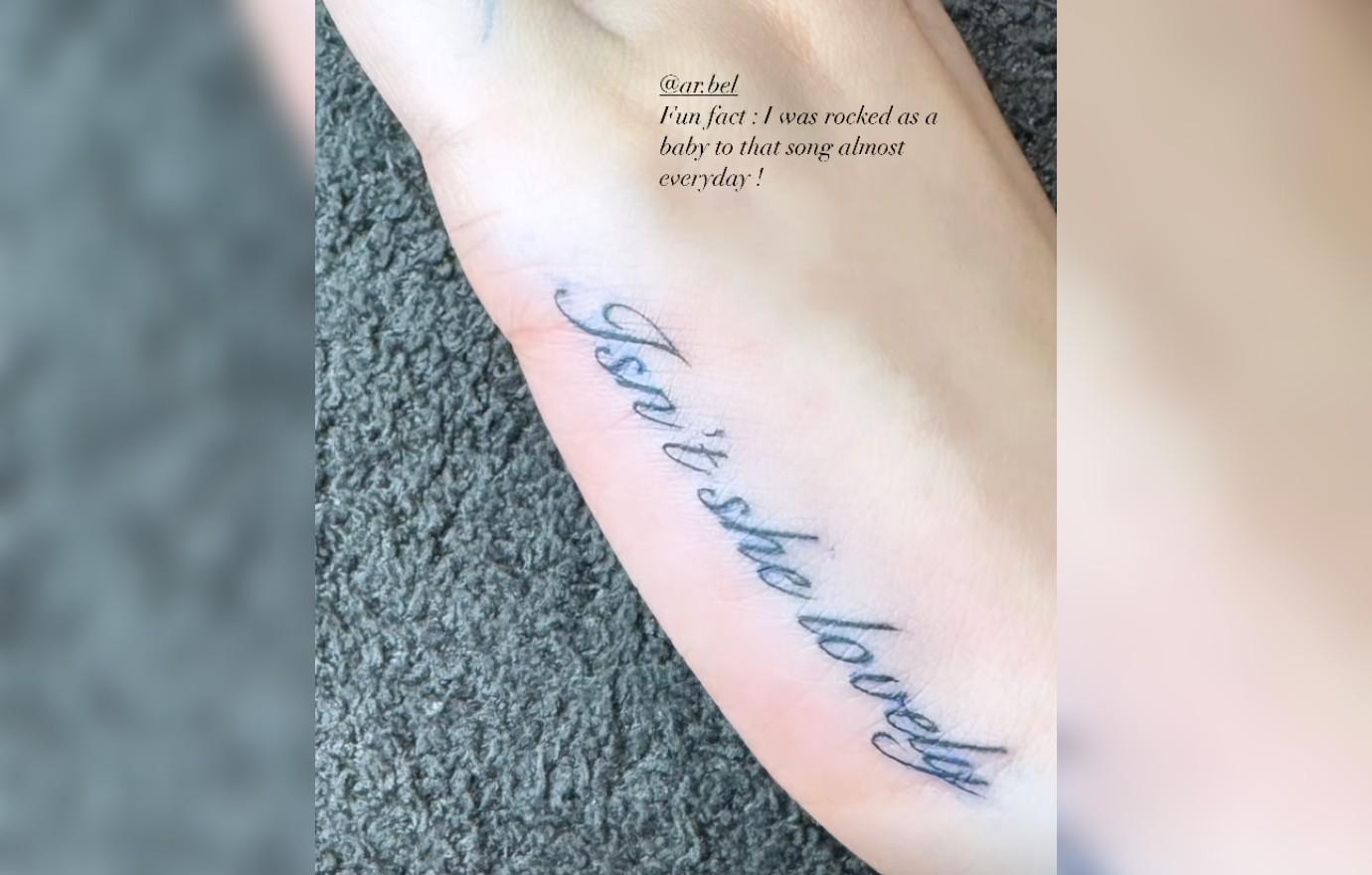
Flowers, leaves and thin stems surround a hand, while roots trail down the forearm. The hand gives the piece a clear focal point; the plants connect it to the rest of the arm. There’s room between the lines, so it reads as an illustration without filling the whole area.
The roots help the flowers feel connected instead of scattered. If you want a larger piece, stems or branches can link separate subjects while leaving open skin around them. Fine details need space to stay clear as the tattoo ages.
The full floral and snake tattoo collection
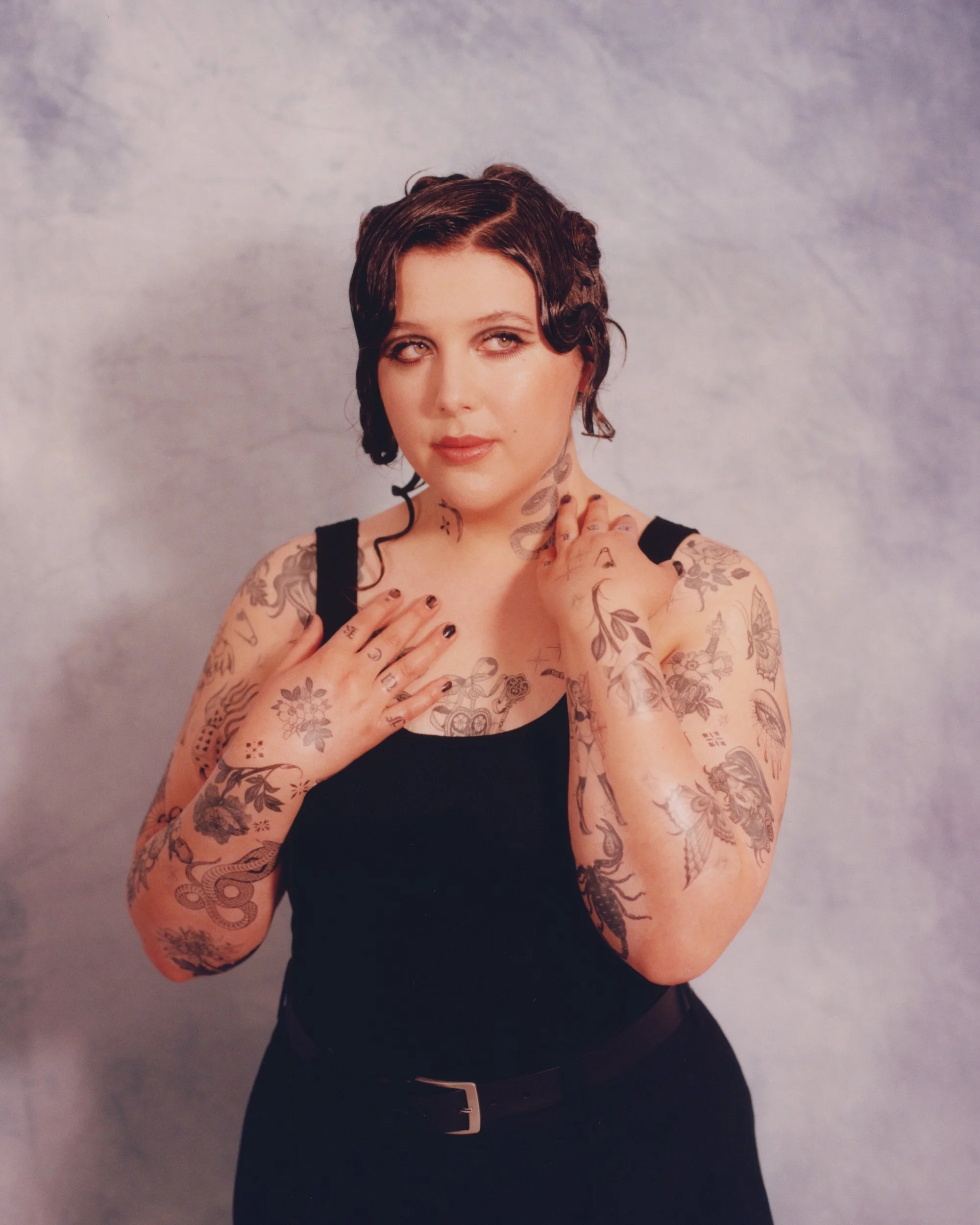
This studio image shows tattoos on both arms and a snake at the neck. The flowers repeat, but the blooms and surrounding leaves change from one section to another. The arms feel related without being matching sleeves: one area is darker, another lighter, and small marks sit near the fingers.
The black and gray work uses different weights, from soft shading to firmer outlines. That variation gives the collection texture. It also leaves room for future pieces without requiring every tattoo to follow the same subject.
Lucy Dacus’s snake and eye tattoos
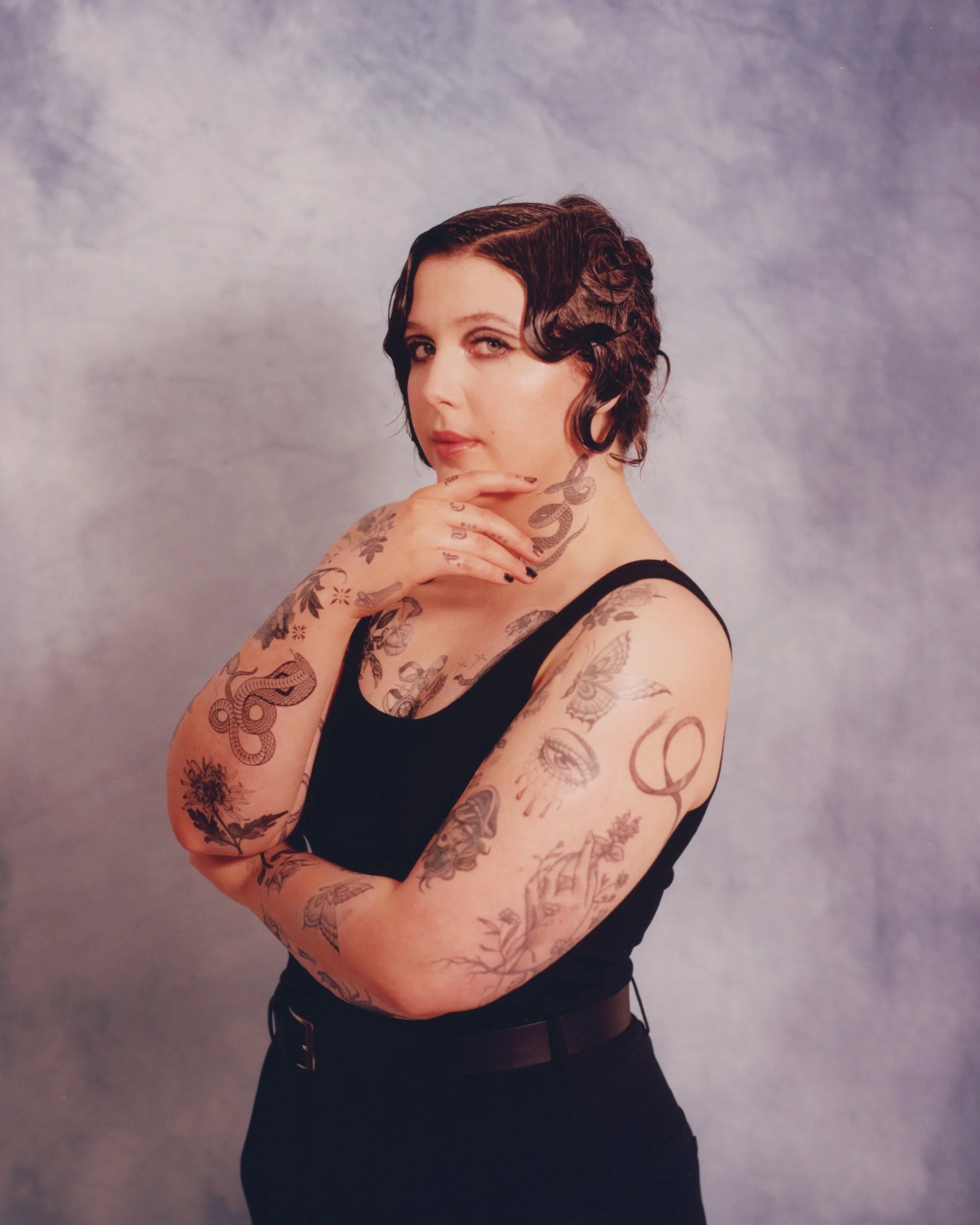
A snake curves along the neck, another coils on the forearm, and a fine-lined eye sits on the upper arm. The longer snake shapes follow the body’s lines; the eye creates a compact focal point beside the flowers.
The photo also shows how a design shifts when the arm turns. Some parts are clear from one angle and partly hidden from another. That’s normal for tattoos on a moving body; they don’t need to face the camera at every moment.
How the tattoos work together across both arms
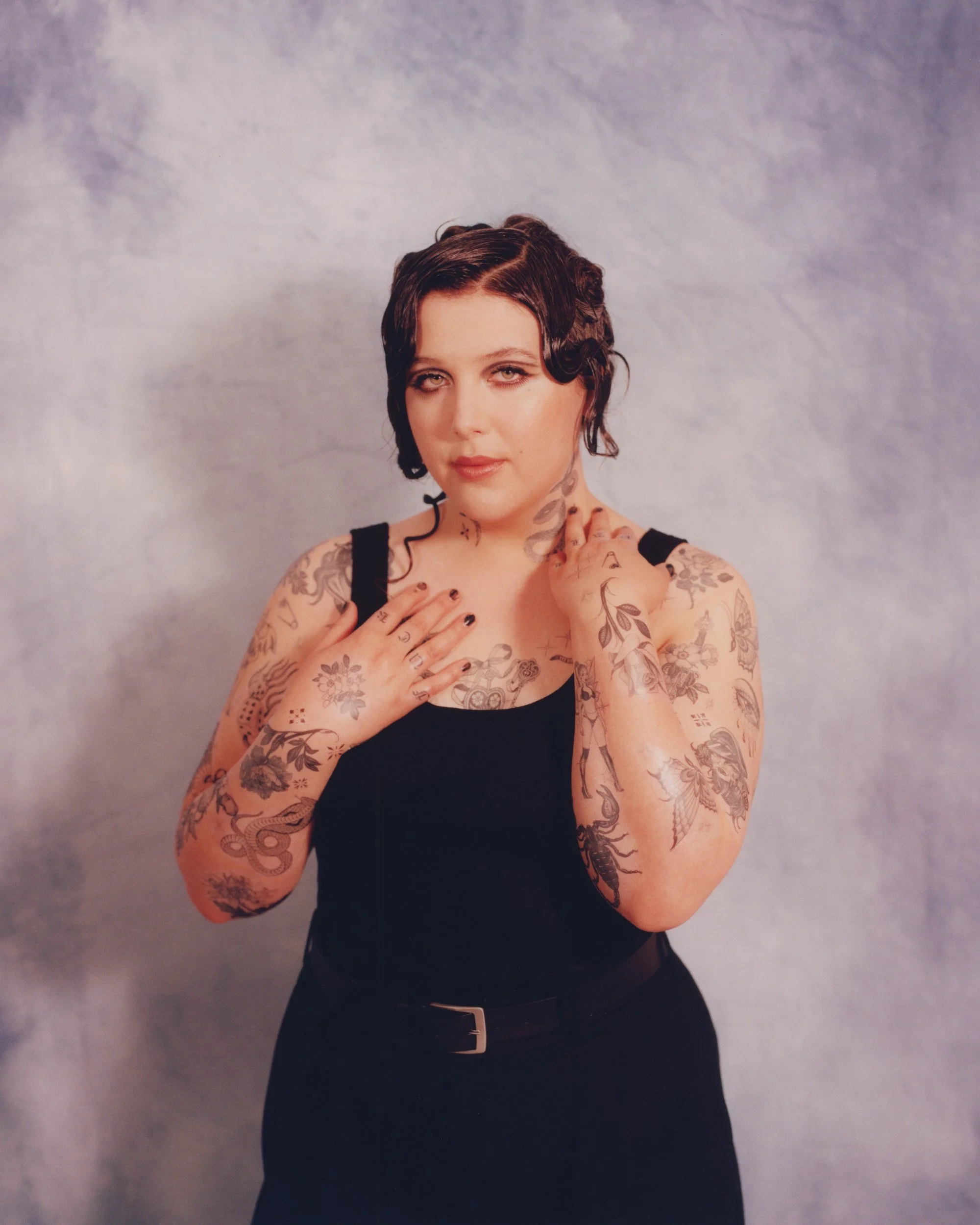
In this centered portrait, flowers, snakes, eyes, hand marks and darker shaded pieces share the frame. The common thread is the linework and spacing, not a single subject. Open skin separates the designs and keeps lighter pieces visible beside the darker ones.
The collection appears to have grown over time. Separate tattoos can still feel connected when they share a similar line quality or mood, even if they weren’t planned as one sleeve.
The animal and architectural arm tattoos

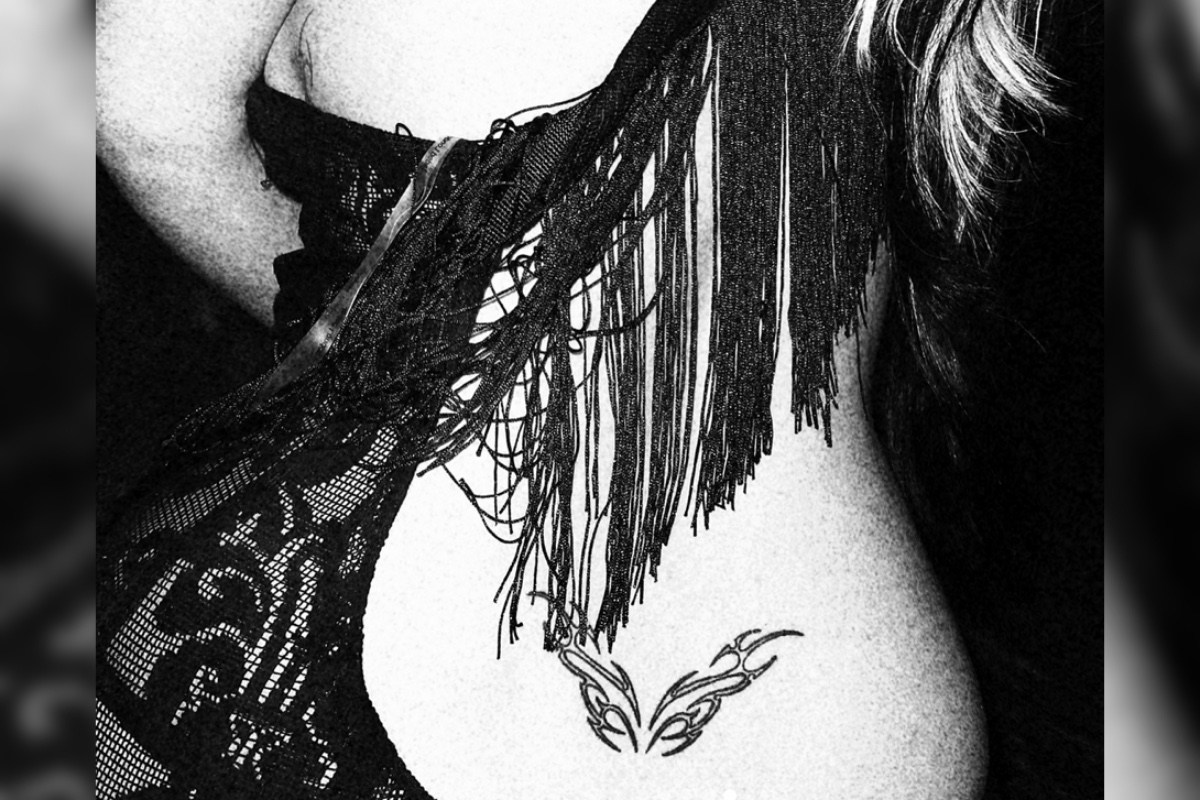
The live-performance photo shows an animal-and-architectural design on the exposed upper arm, with darker lines lower down. The moving pose and stage light make it harder to study than the studio images, but the larger shapes remain visible.
Animal imagery gives the eye a firm shape to hold; architectural lines add angles beside the curves of flowers and snakes. That contrast keeps the arm from feeling too sweet. Stage light can soften gray shading, while a darker outline remains easier to see.
Why the collection feels balanced
The tattoos vary in size and detail, and they don’t all touch. That spacing gives each design its own edge. Repeating a few things—botanical lines, black-and-gray shading, or small marks—helps the pieces sit together without making them look identical.
Some tattoos have a story, while others are only visible in a photo. There’s no need to assign a secret meaning to every mark. It’s more useful to describe what the image shows and leave the rest open unless Dacus has explained it.
Ideas to borrow without copying the exact ink
Start with the part of the collection you like: the roots tying the floral hand piece together, the neck snake following the body, or the contrast between softer flowers and sharper shapes. Choose subjects that matter to you, then ask an artist to draw them for your anatomy instead of tracing a screenshot.
Hands, fingers, the neck and outer arms stay visible and can affect clothes or work. Think about that before choosing placement. Dacus’s collection feels warm, botanical and a little gothic, but you can get a similar personal feel from your own references without copying her designs.