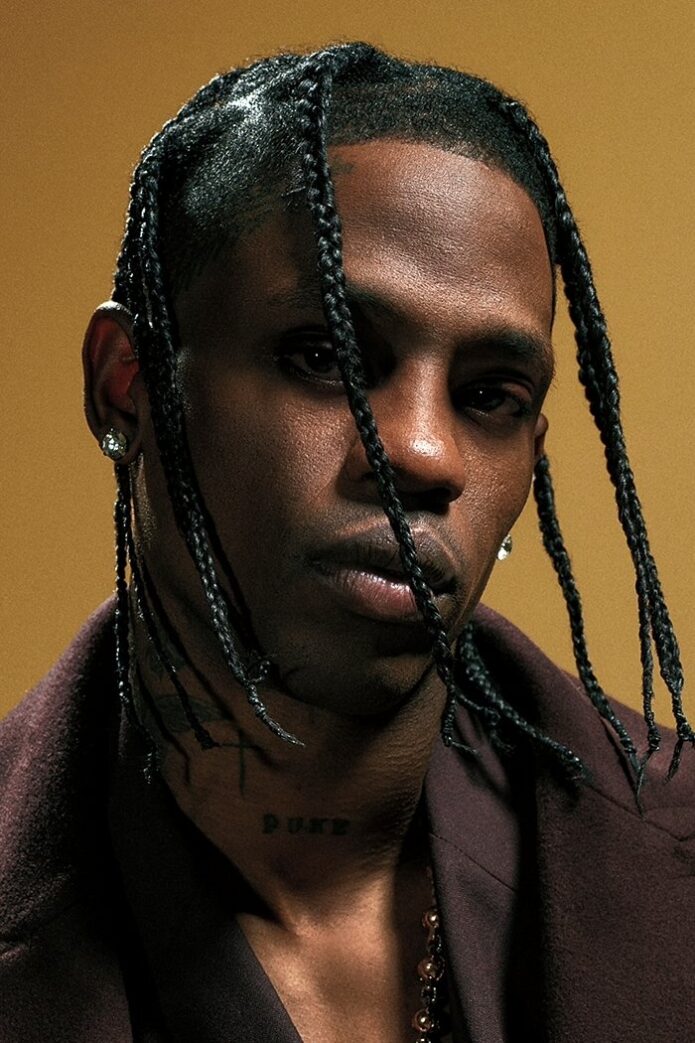
Travis Scott’s tattoos make more sense as a changing map than as a numbered checklist. Public photographs show ink on his head, arms, hands, ankles, neck, chest and torso. Some designs have a reported story, such as the matching butterfly with Kylie Jenner or the Portland landscape he has discussed. Others have been named in tattoo references without a first-person explanation.
This guide keeps those kinds of evidence distinct. A photograph can show that a design is there and where it sits; an interview or direct statement can explain why it was chosen. Both are useful, but one cannot stand in for the other.
The large temple tattoo changed the shape of Travis Scott’s face
One of Scott’s most recognisable later additions is the large geometric, tribal-style tattoo on the left side of his head near the temple. Reports link the work to tattoo artist Scott Campbell and place it around the time Scott was getting ready for the Astroworld tour. Its scale is striking: this is a major piece across the temple and scalp, not a small mark by the ear.
Some coverage framed the tattoo as part of getting “tour ready,” but that does not explain what each line means to Scott. The reliable details are its location, size, approximate timing and reported artist. Ideas about strength, unity or transformation should be treated as interpretation unless Scott has said that himself.
Photos from different years help put the head tattoo in context. An earlier portrait can make Scott’s collection look quite different from a later concert image, even if the arm and chest pieces are unchanged. If the temple tattoo is missing from an older picture, that helps date the image; it does not mean the design was removed.
The moon above a bat is one of the clearest arm compositions
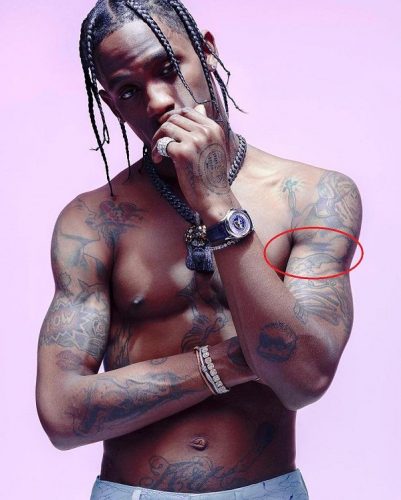
A full moon over a bat is one of the most recognisable compositions on Scott’s upper left arm. The moon and bat are usually shown together, so they make more sense as one design than as two unrelated tattoos. Their placement gives the image a nighttime feel, alongside the darker motifs elsewhere in his collection.
The design is easy to identify in photographs, but the sources used here do not establish its personal meaning. It might invite ideas about night life or the night sky, but those are a viewer’s readings. The grounded description is a full moon above a bat on his upper arm.
Other arm designs reported in photographs include a monkey wearing headphones, a rose, cactus imagery and cartoon-style faces. When an image is clear, their subjects can be described. The photos come from different times and angles, though, so they do not prove that all these pieces were planned as one sleeve or done in a single session.
Hand and wrist lettering is easy to see but harder to interpret
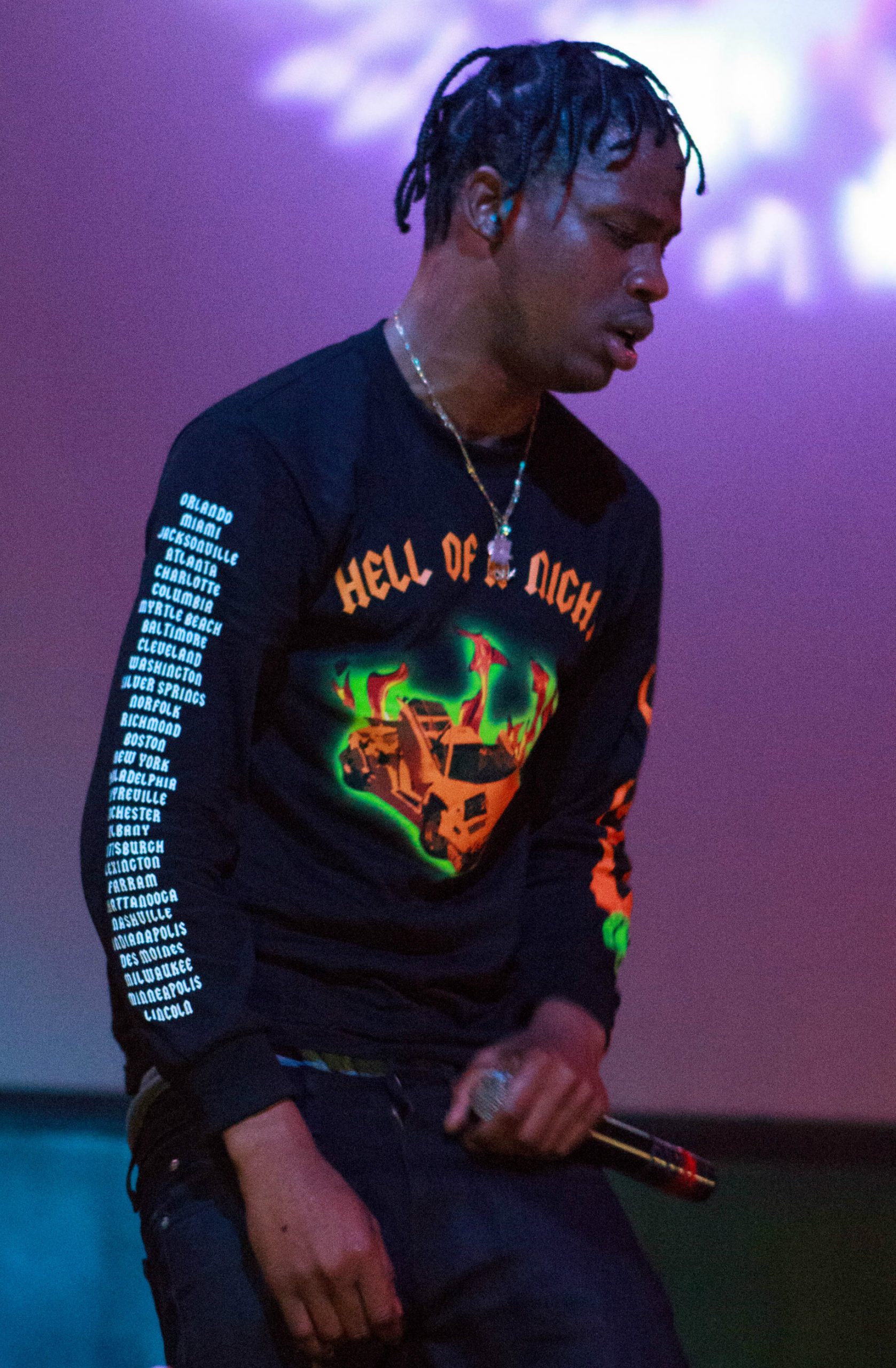
Scott’s hands and wrists carry smaller designs that show up in close-up photos and performance shots. Tattoo references identify lettering such as “Mercy”, the number 713, characters on his knuckles and a small “Free” tattoo below his eye. The marks are visible, but a clear personal explanation is not available for each one.
A landscape on the back of his hand has been associated with Portland, a city Scott has described as important to him. That context is more useful than assigning a broad idea like freedom to any landscape tattoo. Unless the source directly calls it a Portland tribute, it is best to describe the association carefully.
Hand tattoos can be difficult to photograph. A ring, microphone or bent finger may cover part of a word, and stage lighting can flatten fine lines. One clear picture may confirm that a mark is there without making every letter readable, so transcriptions should stay limited to what the image supports.
The matching butterfly connects Scott, Kylie Jenner and Stormi
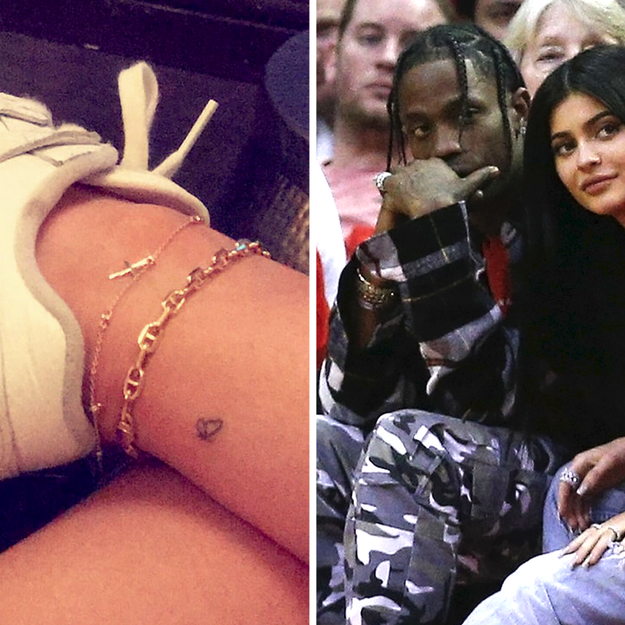
Scott and Kylie Jenner got matching butterfly tattoos on their ankles early in their relationship. Jenner later said the butterfly represented their relationship and their daughter, Stormi. Her explanation gives the design a documented personal meaning beyond the common assumption that it refers only to Scott’s song “Butterfly Effect.”
The song is still relevant context: reports connected the tattoos with the period around its release. It helps explain why the butterfly drew attention, but it should not replace Jenner’s own account. The shared motif, matching placement and family connection are what make the tattoos meaningful in the public record.
The butterfly is small and sits at the ankle, where socks, shoes or trouser hems can hide it. That is why it appears in some photographs and disappears in others. A picture without a clear ankle view does not tell us much about whether the tattoo is visible.
Neck and chest tattoos add lettering, symbols and animal imagery
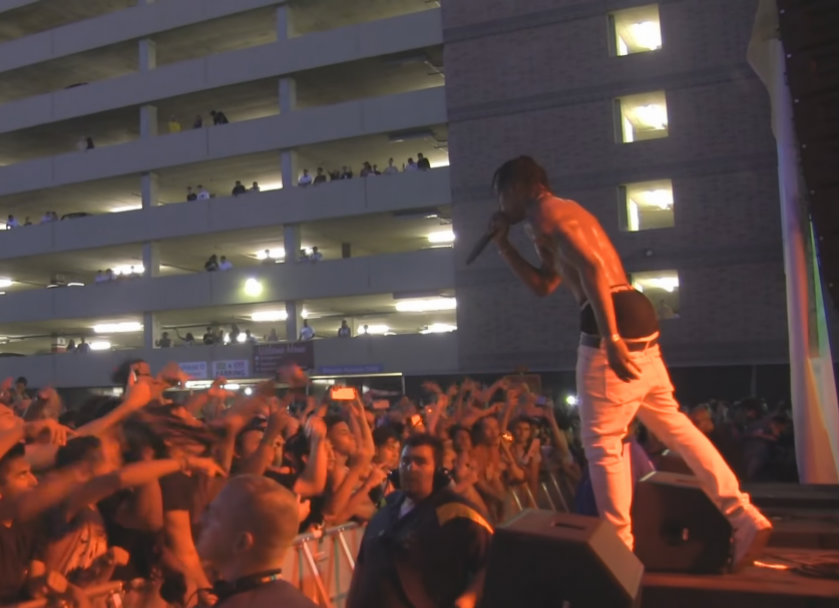
Tattoo references identify a tiger, a cross, a bee and the word “PUKE” around Scott’s neck and upper body. The tiger adds to the animal imagery in his collection, while the smaller symbols sit in the surrounding spaces. Necklaces, collars and camera angles often change what can be seen.
A story that “PUKE” refers to an unpleasant night is repeated in some coverage, but the available sources do not support it as strongly as the butterfly account. It is safer to report the lettering and describe that explanation as something secondary sources have suggested, rather than present it as a direct quote from Scott.
Other photos show a flying bird, a woman, broken-heart imagery and more lettering around his chest and waist. These details belong in a dated visual record. The pictures were taken at different times and show different amounts of skin, so they should not be combined into one supposedly current view.
His wider arm and torso collection grew around the named pieces
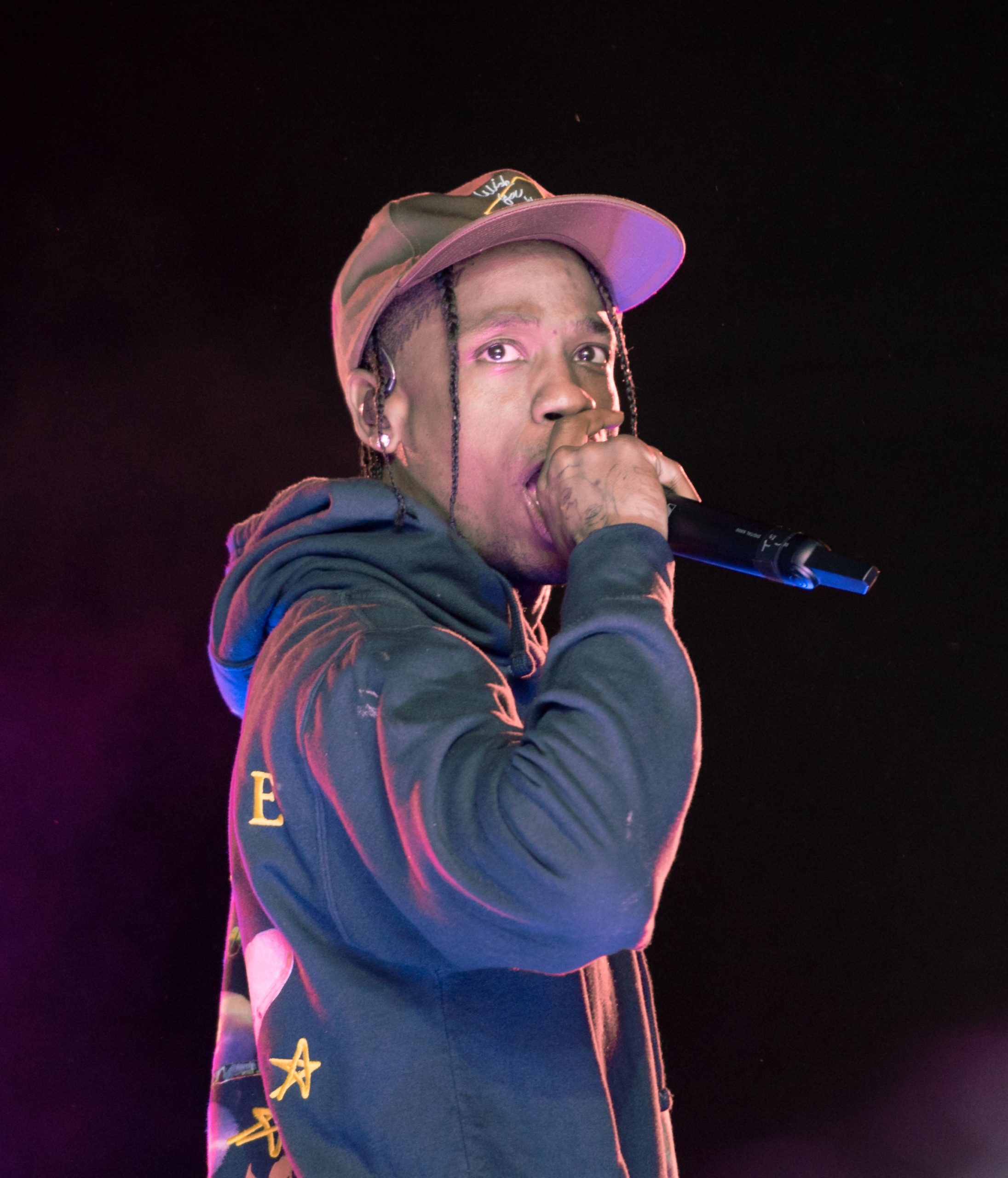
Scott’s tattoo collection extends well beyond the designs that tend to appear in search headlines. His arms and torso include smaller symbols, illustrated faces, lettering and pieces that only appear when his clothes or pose reveal them. A photograph may show a tattoo clearly without telling us who made it or why he chose it.
The collection also grew as his career changed. Early performance shots show arm and hand tattoos before the later temple piece appeared. Newer portraits reveal more connected ink across his upper body, but they are still just one view from one date. Clothing, angles and lighting all affect how much is visible.
There is no reliable official count that turns the collection into a fixed number. A useful guide records where each design sits, what can be seen, when it appeared and how strong the explanation is. The temple tattoo and moon-and-bat image are clear visual anchors; Jenner gave a personal account of the butterfly. Smaller lettering and torso motifs can be included when photos support them, with uncertain readings labelled as such.
That mix of clear details and open questions is part of what makes Scott’s tattoos interesting. The temple design marks a visible change, the moon and bat make a distinct arm scene, the hands carry hard-to-read lettering, and the butterfly keeps a family moment in view. The photographs give a substantial record, but they do not tell us the meaning of every mark.