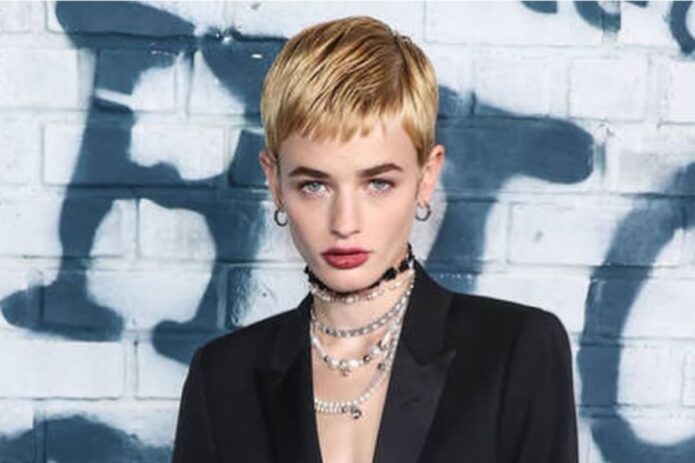
Esther McGregor’s tattoos are a collection of small drawings across her arms and hands: flowers, an eye, a portrait and fine-line sketches. British Vogue described them as a constellation of delicate tattoos, and McGregor has said she designed the pieces herself.
She has also worked as a model and actor, made music and tattooed other people. She opened a tattoo studio in New York and described tattooing as “almost like a form of therapy.” In one interview, she recalled giving a client the wrong coordinates for a large chest tattoo. The story shows she knows the work from both sides of an appointment.
Esther McGregor’s self-designed arm tattoos

Photos show pieces at different scales, with open skin between them rather than one solid sleeve. Some are simple line drawings; others have stronger outlines or a little color. The mix gives each design room.
The tattoos have a loose, hand-drawn quality, more like illustrations than one fixed style. A patchwork arm can feel connected through line, scale and spacing without making every subject match. McGregor’s collection also seems to have grown over time; no single plan has to account for every piece.
The hydrangea tattoo honoring her grandfather
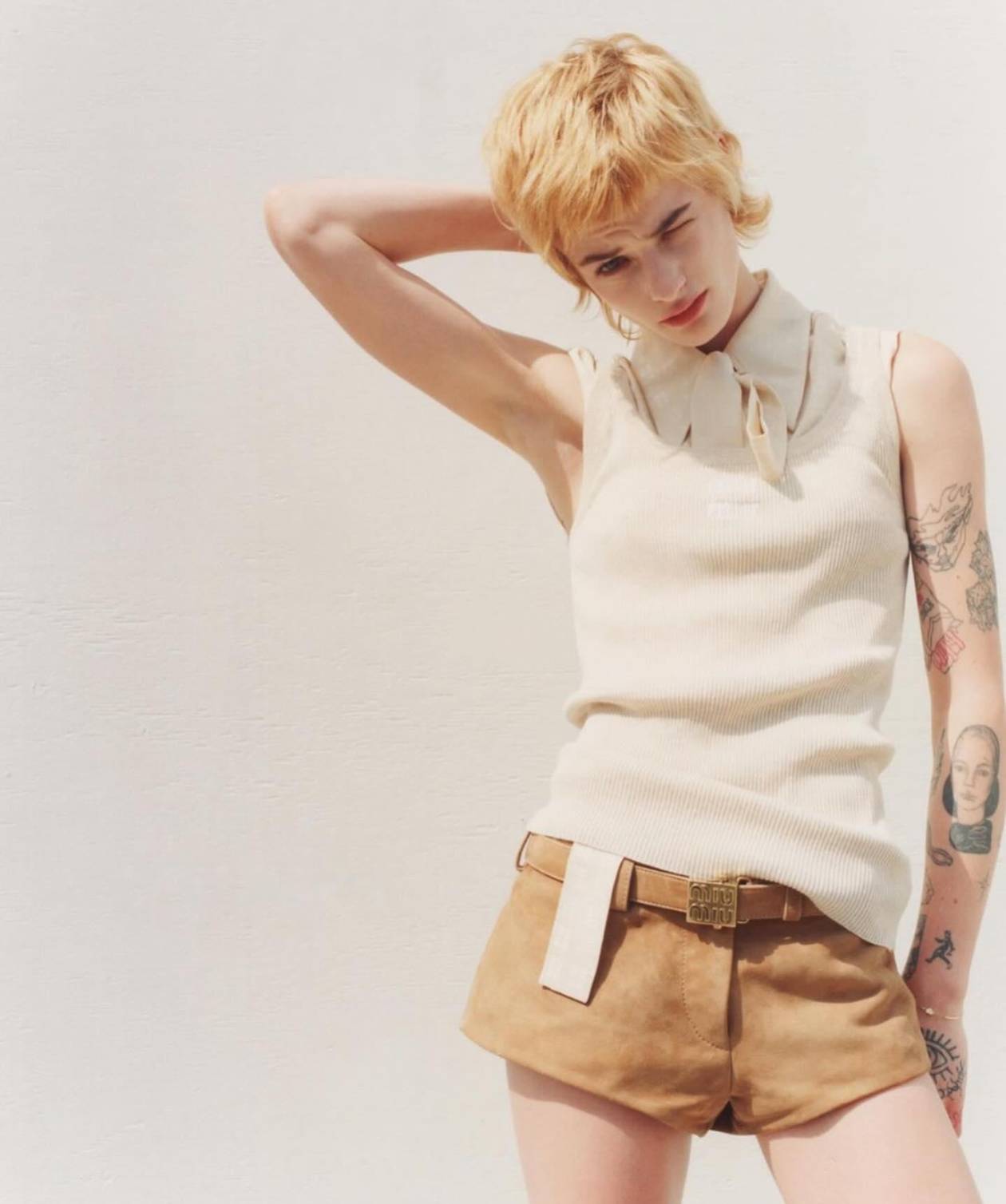
One clearly reported piece is a hydrangea on McGregor’s upper right arm, connected in coverage to her grandfather. It sits among smaller sketches but has a fuller flower shape, between a simple outline and a developed botanical drawing.
An upper-arm placement can show with a sleeveless top and stay covered under a sleeve. For a floral tattoo, start with the person or memory you want to mark, then work with an artist on the drawing. The meaning can be personal even if the flower stays simple.
The hand tattoos and all-seeing eye

In a black-and-white portrait, small line drawings cross McGregor’s fingers and hand, with a larger eye near the back of the hand. Curved lines and lashes frame a strong center, so the eye reads without heavy shading. The smaller marks leave some skin around it.
Hand tattoos are harder to hide than arm pieces. The skin is washed, rubbed, bent and exposed, so fine detail can soften and some areas may need touch-ups. The eye works because its main shape stays clear; scale and placement matter more than filling every gap.
The portrait work across her sleeve
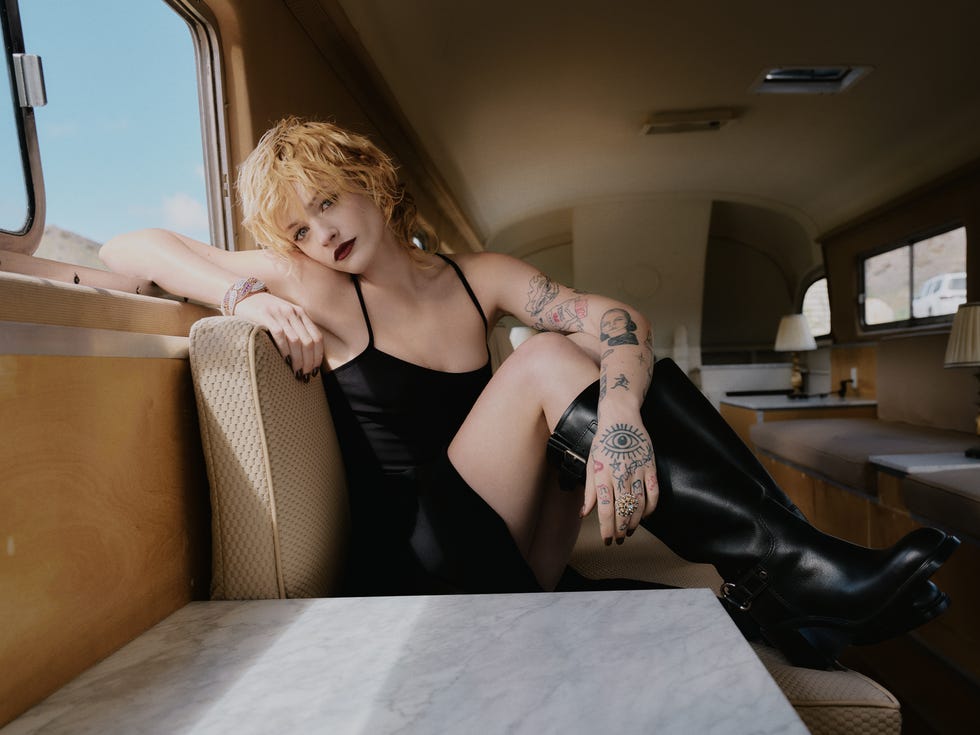
Editorial photos show a portrait among the flowers and smaller sketches. It adds a focal point without turning the arm into a portrait sleeve.
Faces are unforgiving at small sizes: the eyes, nose and mouth need enough room and contrast to stay recognizable. An artist can help choose a size that holds those features after the tattoo heals and settles.
McGregor’s arm isn’t evenly balanced. Darker pieces sit beside lighter linework, and the open skin is part of the composition; there’s no need to fill every gap at once.
Esther McGregor’s acting and fashion era

Her tattoos can look delicate in an editorial photo and more punk with a different outfit. Film, fashion and red-carpet styling show different amounts of the same ink, which changes its mood.
An upper-arm piece can disappear under a sleeve, while a hand tattoo stays visible; something near the wrist can read like jewelry. McGregor’s collection moves between those levels of visibility.
Her work as a tattoo artist gives her a close view of line and spacing, but not every mark needs a deep explanation. The hydrangea has a family connection; other drawings may simply be pieces she wanted to keep.
If you’re taking ideas from McGregor’s collection, borrow the approach rather than a specific design: leave space, choose subjects that matter to you, and let an artist adapt them to your body.