Jihyo doesn’t need much to make a tiny detail feel like a full comeback clue. A backstage photo, a bare shoulder, and four little butterflies were enough to send TWICE fans into detective mode. The pictures looked like a new tattoo reveal, but the detail that matters is easy to miss: these were transfer tattoos, not confirmed permanent ink. That difference makes the whole story more interesting, because the design was part of a visual tease rather than a simple announcement about a new piece.
The butterfly cluster appeared on Jihyo’s upper arm during TWICE’s Ready to Be World Tour. She shared the photos from backstage in Tokyo, and one frame was focused tightly enough for fans to see the designs clearly. They were delicate, dark butterfly shapes arranged down the arm, with the biggest one near the shoulder and smaller ones trailing below it. The look was neat, graphic, and just temporary enough to leave room for questions.
Jihyo’s butterfly tattoo reveal
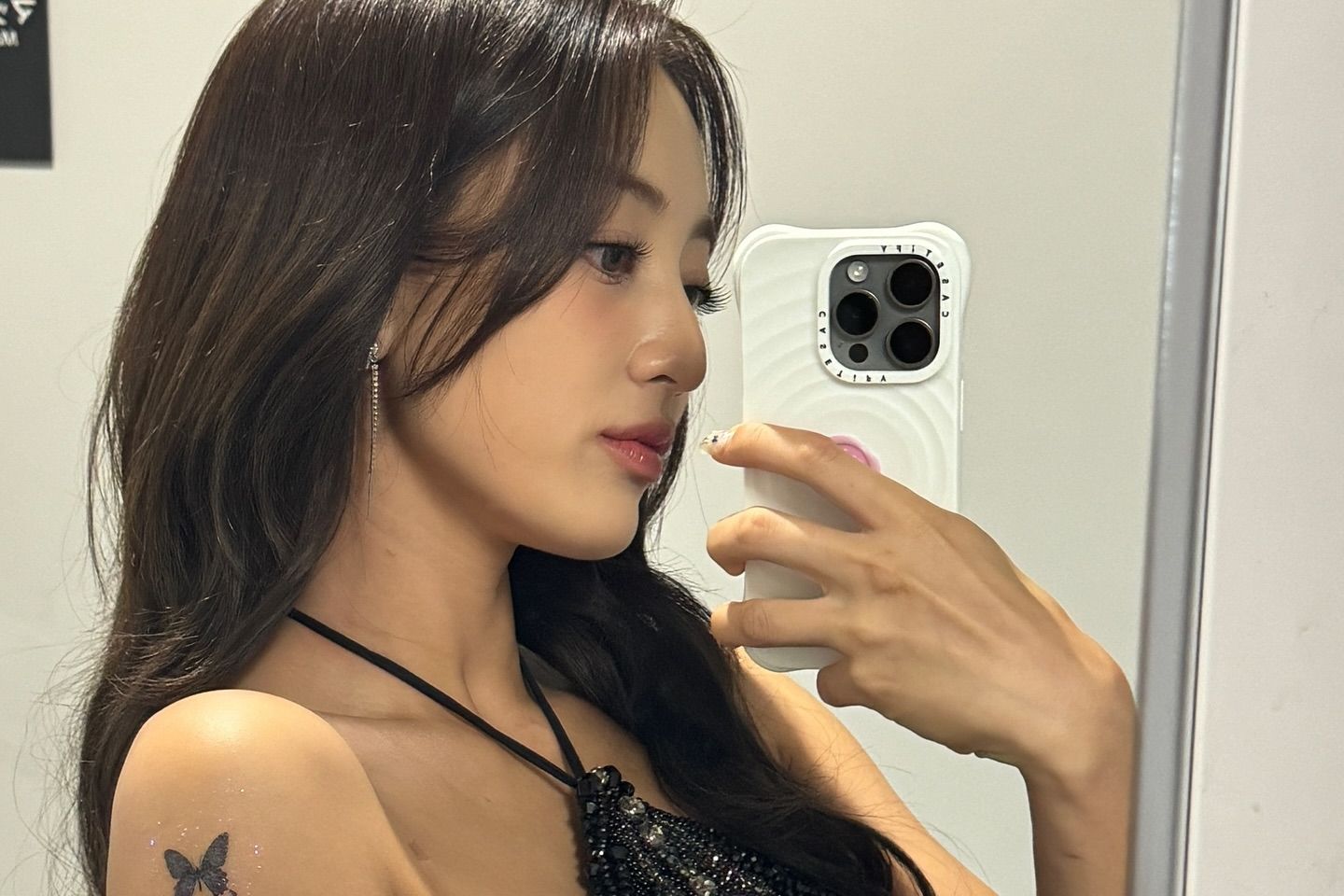
Jihyo’s mirror selfie shows the butterfly transfer tattoos on her upper arm. The designs were temporary rather than confirmed permanent ink.
That first image is the one most people remember. Jihyo is taking a mirror selfie in a black outfit, and the butterflies sit high on her arm where they can catch the eye without taking over the photo. The biggest shape has a solid, almost sticker-like fill, while the smaller butterflies follow below it. There isn’t much shading or fine-line detail, which is part of why the set reads so well from a distance. It looks clean on stage, clean in a selfie, and easy to spot when her hair or sleeve moves out of the way. The upper-arm placement keeps the whole idea light.
Teen Vogue described the designs as four delicate butterfly transfer tattoos. That wording is important. They were placed to look like real body art, but the reporting didn’t confirm a permanent appointment or a lasting tattoo. Fans had already seen butterfly imagery around TWICE performances, so the placement felt less like a private piece and more like a visual breadcrumb. Jihyo’s photos landed right in the middle of that conversation.
Four butterfly transfer tattoos on Jihyo’s arm
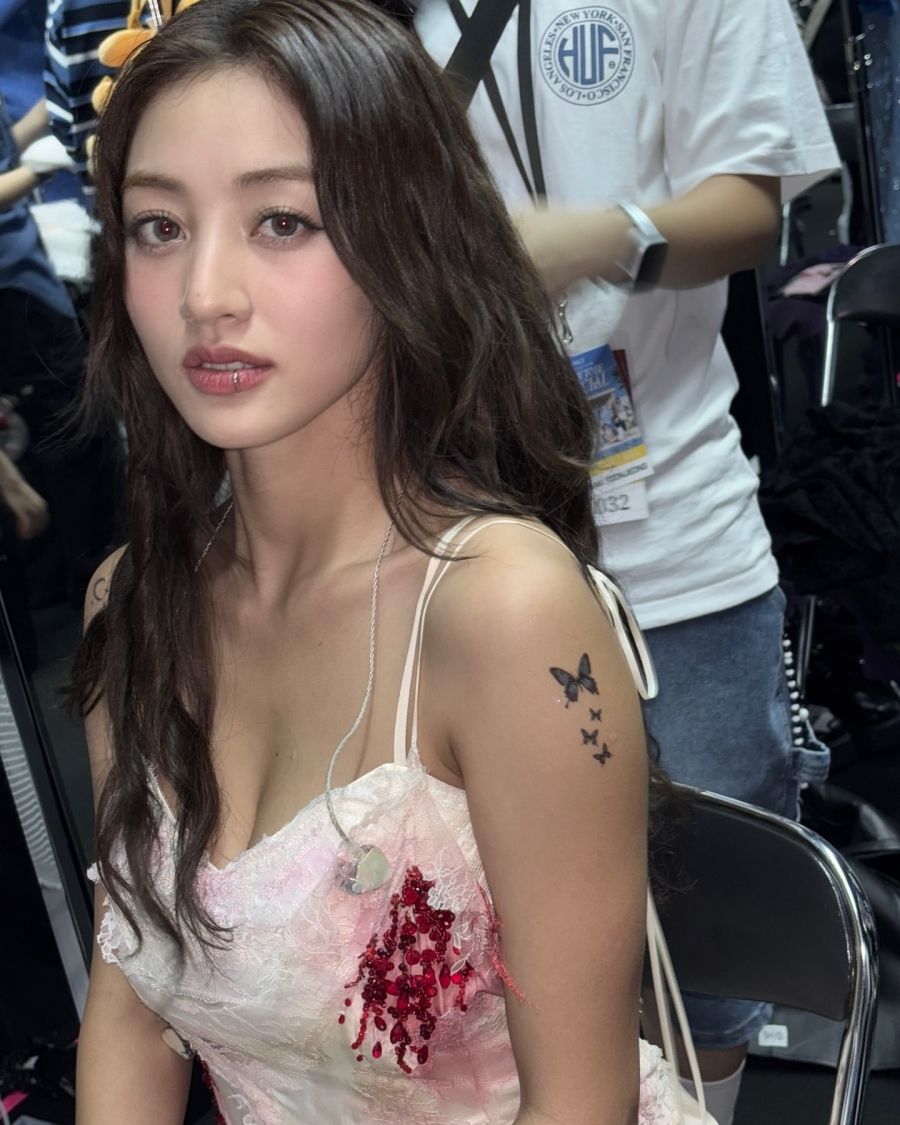
A second backstage view shows the same butterfly cluster from a taller, more vertical angle. It is still a temporary design, not proof of permanent ink.
The second view is useful because it shows the spacing better. From this angle, the butterflies form a loose diagonal that follows the natural line of the upper arm. The arrangement isn’t perfectly symmetrical, and that gives it a little more movement. A tattoo artist could easily build a permanent design from that idea: one larger butterfly as the anchor, smaller shapes drifting behind it, and enough empty skin to keep the whole thing light.
For anyone thinking about copying the look, the placement does a lot of the work. The upper arm gives a small design room to breathe, and it can be hidden by a sleeve or shown with a tank top. A cluster like this also photographs well because the shapes are separated instead of packed into one dark block. If you want a softer version, fine-line outlines would make the butterflies feel more airy. If you want something bolder, blackwork silhouettes would hold up better over time.
There is another practical lesson here: temporary ink can be a good way to test a placement before committing. Jihyo’s photos show how a butterfly group moves when the arm is bent, lifted, or turned toward the camera. That kind of test matters with small designs. A sketch that looks balanced on a flat stencil can feel crowded once it wraps around the arm. Temporary transfers let you see the rhythm in real life before a needle gets involved.
Reading the photos
The separate backstage views make the scale and temporary nature of the design easier to judge.
The third image makes the scale easier to judge. The largest butterfly is small enough to sit comfortably between the shoulder and elbow, while the other shapes taper down the arm. None of the photos establish a secret symbol, a personal name, or a specific meaning. That is worth saying plainly because celebrity ink coverage often fills in a backstory before the person has offered one.
What we can say is that butterflies were already part of TWICE’s visual language around this period. Other members had been seen with temporary butterfly designs during performances, and fans connected those details with possible comeback hints. Jihyo’s arm photo fed that theory. It didn’t prove a new song, a group concept, or a permanent tattoo, but it gave fans a small piece of a pattern they were already watching.
That makes the design a nice example of how a simple tattoo idea can work in two ways. On the skin, four butterflies are a compact decorative cluster. In the wider pop context, they become a signal. The same shapes can be read as a cute accessory, a stage prop, or a bit of visual storytelling depending on where you see them. That’s a lot of mileage from a few small silhouettes.
Jihyo’s style outside the reveal
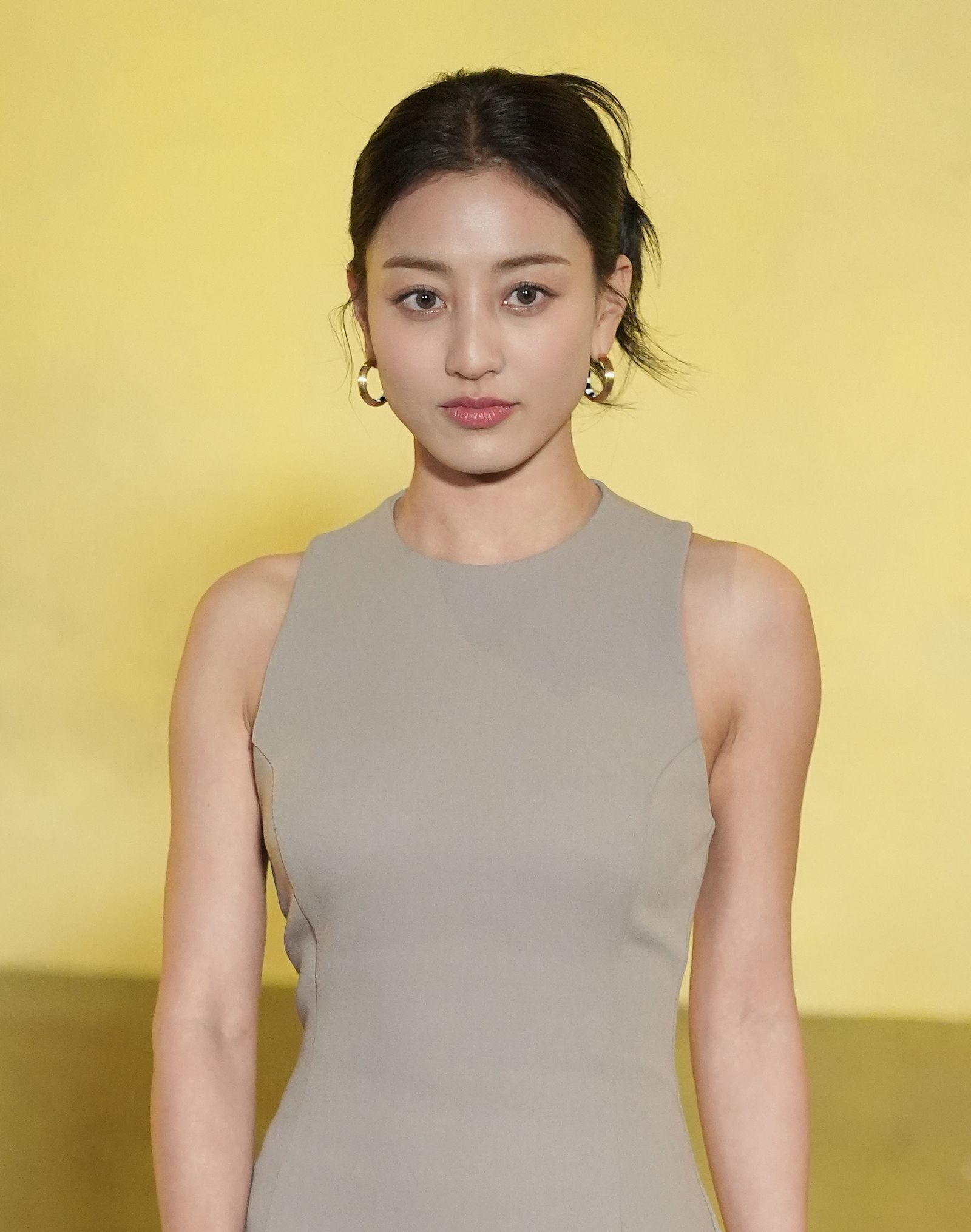
Jihyo at the AMI Paris show. This is a contextual fashion image included to show her clean, understated styling away from the butterfly reveal.
Jihyo’s fashion choices make the temporary tattoo look feel natural. She can switch from a sharp stage outfit to a simple sleeveless look without losing that strong, polished presence. A tiny tattoo cluster works especially well with that kind of styling because it adds detail without fighting the clothes. You notice it when the arm is bare, then it disappears when the outfit calls for a cleaner line.
Her solo work has also made that contrast more obvious. The ZONE era leaned into a confident, grown-up performance style, while her group work leaves more room for playful references and shared visual ideas. The butterflies sit comfortably between both sides. They are sweet enough for a pop concept but graphic enough to look sharp against black clothing, stage lighting, or a close-up mirror photo.
If you’re designing a similar tattoo, the main takeaway isn’t to copy the exact butterflies. It is to pay attention to scale and spacing. Four tiny designs can look more intentional than one oversized image when they follow the body instead of floating randomly. Keep the largest shape near the strongest visual point, then let the smaller pieces create a gentle path. That gives the eye somewhere to travel.
Jihyo’s red-carpet look
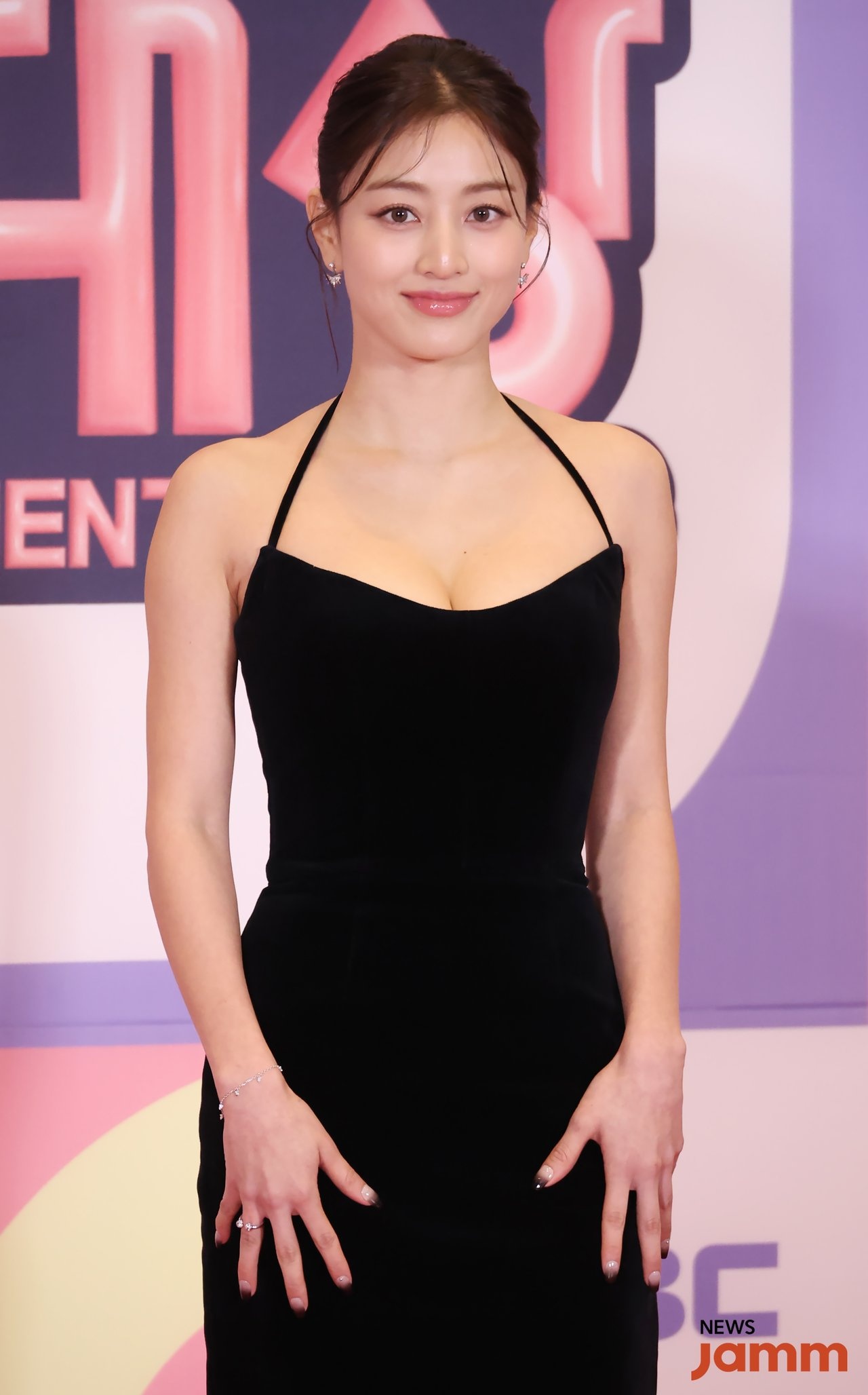
A separate red-carpet portrait of Jihyo. This image is contextual only and does not show the butterfly design.
This red-carpet photo is a useful reminder that a celebrity’s tattoo story isn’t limited to close-up ink shots. Hair, makeup, jewelry, and clothing all change how a small design reads. When the arm is bare and the hair is pulled back, the butterflies become the detail. When the look is more formal, the same area can fade into the overall silhouette.
That flexibility is one reason upper-arm butterfly tattoos stay popular. They can be soft, bold, hidden, or shown off with a small change in styling. They also suit a wide range of tattoo approaches. A client might choose delicate outlines, solid black shapes, watercolor wings, or a more realistic moth-like treatment. The basic idea stays recognizable, but the finish can be personal.
Jihyo’s photos lean toward the simplest version: dark shapes, small scale, and a clean line down the arm. There is no heavy background, no frame, and no extra lettering competing with the butterflies. That restraint keeps the design readable. It also means a future permanent version could be adjusted without becoming crowded.
Live performance energy
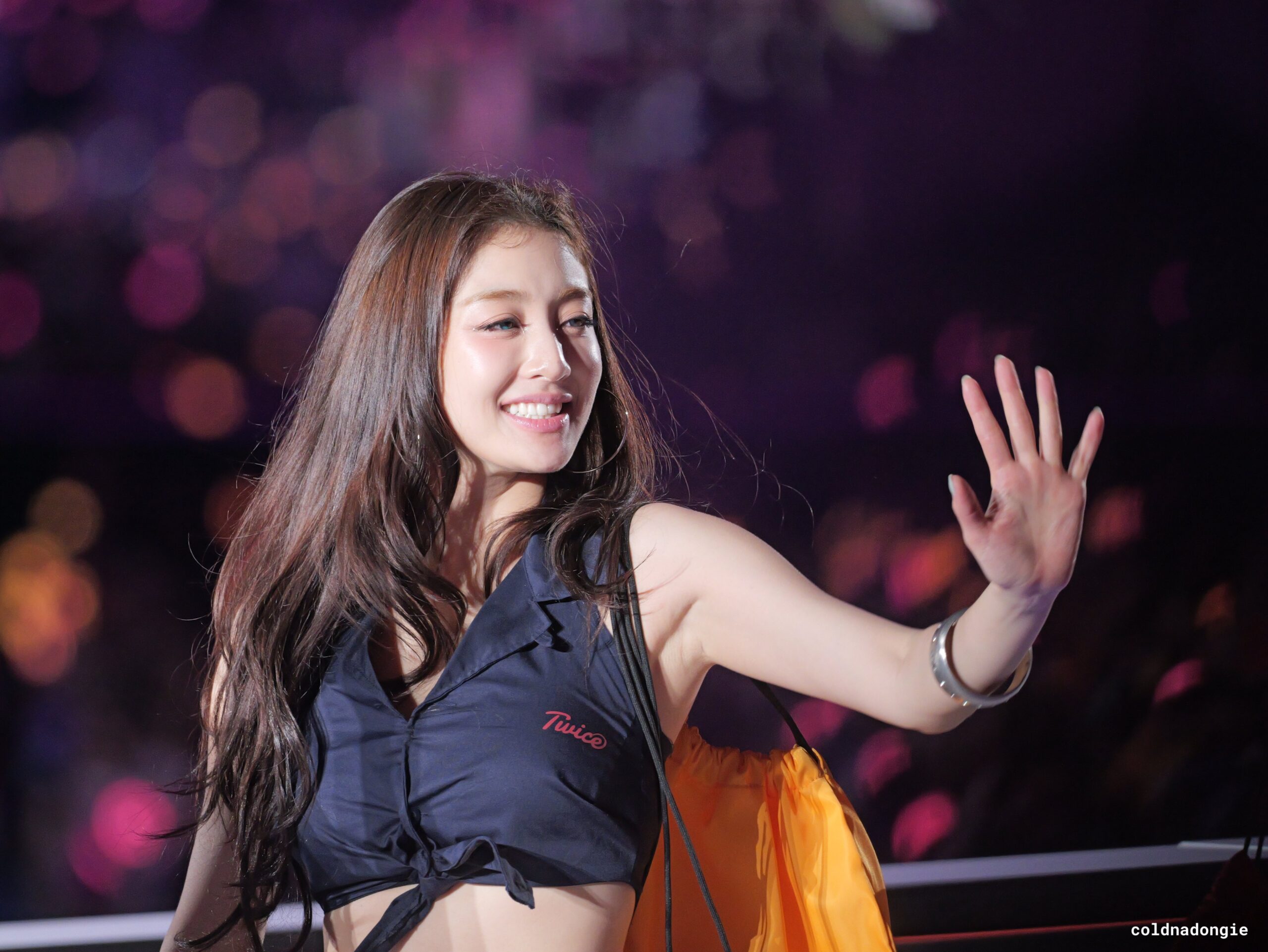
Jihyo during a live performance. This is a contextual concert photograph.
Stage photos explain why temporary designs are useful for performers. A little ink can be part of a costume without locking an artist into the same look forever. It can match a concept, echo a lyric, or give fans something to spot in a crowded performance. With butterflies, the effect is even more noticeable because the shapes suggest motion. They look like they are moving up the arm, which fits a dancer’s gestures and the energy of a live set.
It is also a smart option when a group wants a shared motif without giving every member the same permanent tattoo. Temporary transfers can be placed differently on each person and removed when the promotion ends. That keeps the visual connection while giving everyone control over their own skin. Jihyo’s reveal landed in that exact space: personal enough for a selfie, public enough for a theory, and temporary enough to stay flexible.
Fans will probably keep watching for the butterflies, especially when TWICE returns to a new concept. If Jihyo ever chooses to make the design permanent, the photos give her a strong starting point. If she doesn’t, the temporary set still did its job. It created a memorable detail, sparked conversation, and showed how a small tattoo idea can carry a whole mood without needing a complicated explanation.
Why the look works
The best part of this story is that it doesn’t need a dramatic meaning attached to it. Sometimes a tattoo is a personal symbol. Sometimes it’s a styling choice. Sometimes it is just a fun visual that happens to get photographed at exactly the right moment. The butterfly cluster can be appreciated on all three levels, as long as we keep the temporary detail clear.
For a tattoo artist, the design is a good study in restraint. The shapes are simple, the placement is easy to understand, and the empty skin does as much work as the ink. For someone planning their own piece, it offers a few routes: use one butterfly as a tiny standalone tattoo, stack several in a loose trail, or turn the idea into a shoulder-to-forearm composition with more detail. The reference is flexible without becoming vague.
Most of all, Jihyo’s photos show why the source image matters. A blurry crop can make temporary ink look permanent, while a clear close-up lets you see what is actually happening. Here, the reliable description is four butterfly transfer tattoos on her upper arm, shared during a Tokyo tour stop and linked by fans to TWICE’s recurring butterfly motif. Anything beyond that should be treated as speculation.
The short version
Jihyo’s butterfly tattoo moment is a small but well-executed piece of pop styling. The designs sit on her upper arm in a simple cluster, the photos show four butterflies clearly, and the placement makes the idea easy to adapt. They were temporary transfers rather than confirmed permanent tattoos, so there is no solid meaning or tattoo-artist backstory to attach to them yet.
That doesn’t make the design less useful. If anything, it makes the idea more approachable. Try the placement with a temporary transfer first, see how the cluster moves with your arm, and decide whether you want fine-line butterflies, black silhouettes, or something more detailed. Jihyo’s version works because it stays light, leaves room around each shape, and lets the body do some of the designing.
For the performance that helped make Jihyo’s solo era so memorable, watch the official ZONE opening trailer below.