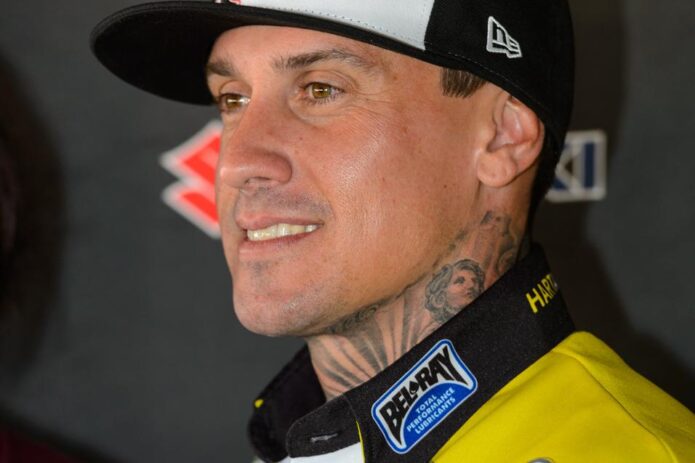
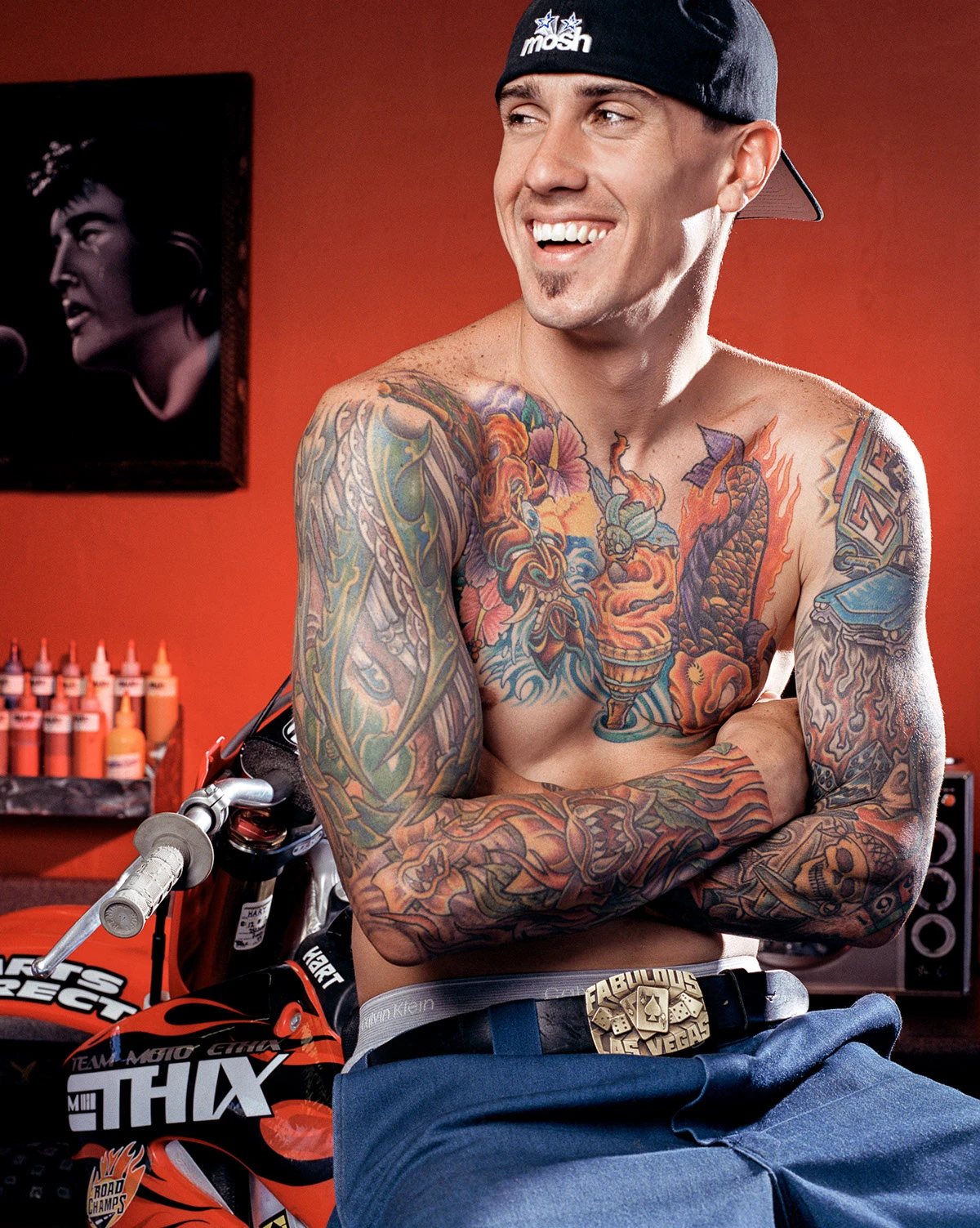
Carey Hart began getting tattooed young and has reworked some designs over the years. His ink covers his chest, neck and arms, with traditional imagery, lettering and references to motocross, Las Vegas and family.
The koi cover-up and chest piece
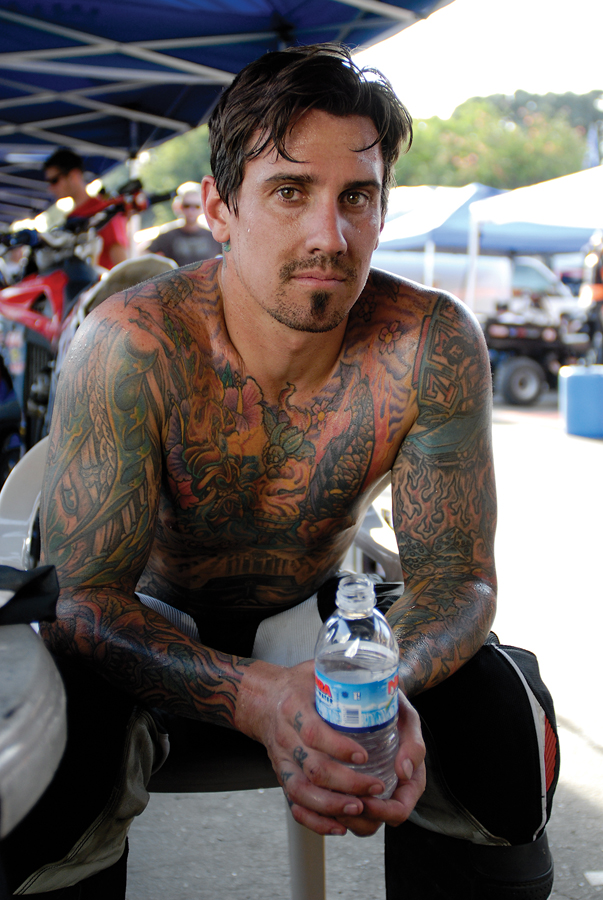
The koi covers Hart’s first tattoo, the flaming skull and 111. Rather than hide the old lines with a small patch, he worked them into a larger Tiki-style chest composition. The fish’s curved body and scales carry across the chest and connect with the shoulders, upper arms and stomach.
Warm reds and oranges, blue-green sections and dark outlines keep the colorful area readable.
The Las Vegas sleeve and Hart’s hometown ink
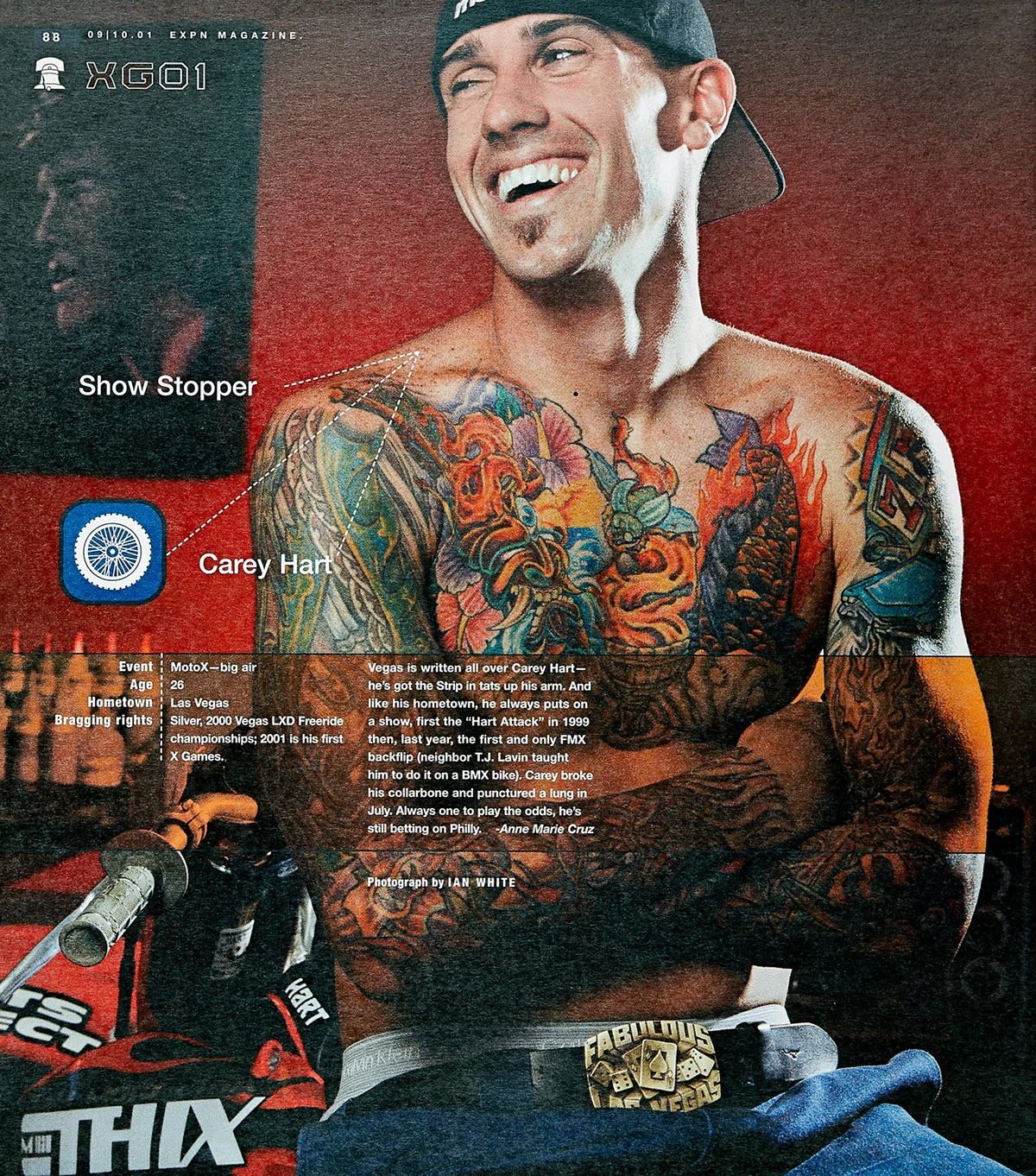
Hart has described his left sleeve as a collage of Las Vegas hotels and the “Welcome to Las Vegas” sign. The images point to the city he calls home, not just a generic skyline. The pieces overlap and share a bold palette, which helps them read together.
Las Vegas also connects Hart’s racing work with the tattoo business he built there.
Why the neck pieces matter most
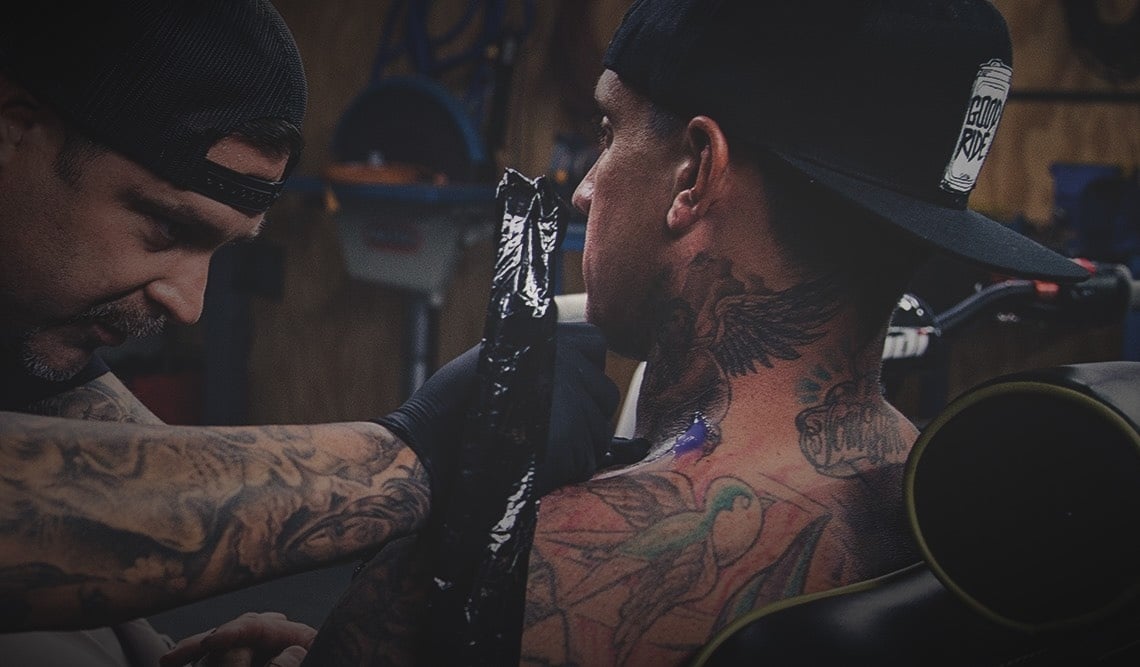
Hart has said his most meaningful tattoos are on his neck: an angel for his brother Anthony, another for his daughter Willow, his wife’s name under his chin, and a sacred heart for his father at the back of his neck.
Neck tattoos show in most clothes. Hart has chosen that visible spot for tributes to people close to him; the designs are separate, not a matching set.
Carey Hart’s family tattoos: names and the small J
Hart has script tattoos for his daughter Willow and son Jameson. He later added a small “J” behind his left ear for Jameson. The names sit near his shoulder; the initial behind his ear is easy to miss.
For small script, check the letter spacing and line weight with the tattoo artist. A name that looks clear on a phone can blur if the strokes are too close. Handwriting from a card or note can make the lettering personal without adding extra imagery.
The motorcycle-carbon tattoo
One tattoo used carbon from a burnout on Hart’s Indian Scout flat-track bike. The material itself ties the piece to a particular motorcycle and the work he did with it; it isn’t just a generic bike emblem.
How the racing background shaped his style
Hart came up through motocross and freestyle motocross. His tattoos use sweeping lines, flames, animals and large blocks of color, including in the family pieces. Photos also show how a chest design changes when he leans over a bike and how a sleeve shifts as his shoulder or elbow bends.
What to borrow from Carey Hart’s tattoos
Start with a real reference.
Choose a person, place or object you can explain in your own words. A specific memory gives an image more to work with than a broad idea like “strength.”
Let the collection grow.
Hart’s tattoos were added over time, and he changed some pieces. Leave room for another design instead of filling every open patch at once.
Use placement honestly.
The neck stays visible in most clothes; a tattoo on the ribs or upper arm can stay covered. Decide how much of the story you want to share before choosing the spot.
Keep a cover-up realistic.
Show an artist the old tattoo and ask how its lines and darkness will affect the new design. Scale and detail need to fit what’s already on the skin.
Carey Hart tattoo ideas that still feel personal
If you want a starting point, build from one of these details:
- A hometown collage from a sign, building, road or local detail.
- A family tribute in handwriting, a familiar object or a symbol only your family recognizes.
- A cover-up that works old lines into a larger animal, botanical or traditional design.
- A hobby reference such as motorcycle carbon, a tool mark, a camera or a favorite instrument.
- A sleeve that repeats color or movement while leaving each tattoo its own subject.
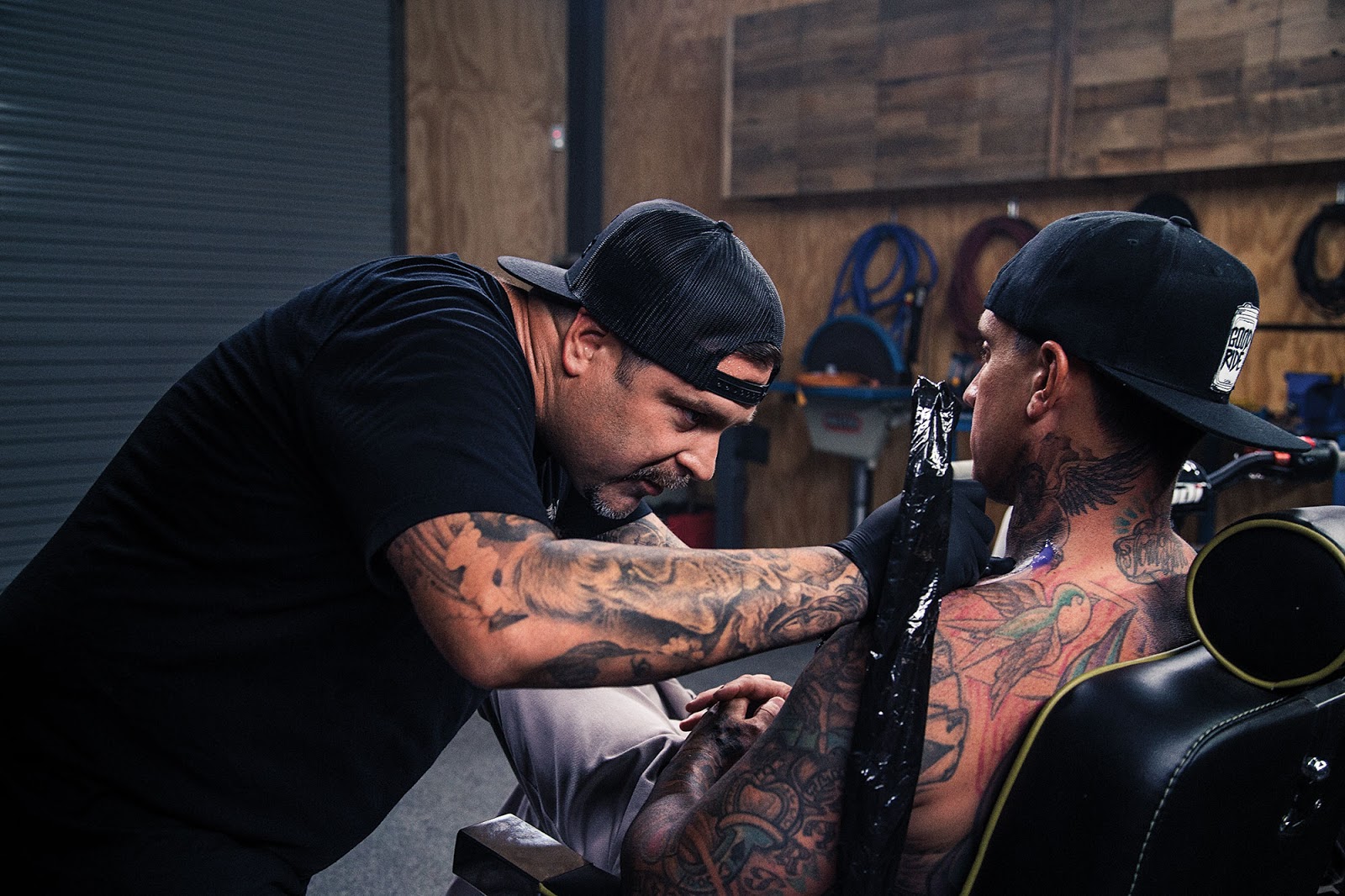
For a look at the shop and tattoo culture tied to Hart’s work, watch the Hart & Huntington video below.