Anthony Kiedis’s tattoos built up over several decades, so they do not fit neatly into a quick list. The best-known pieces spread across his upper arms, forearms, wrists, back and torso. There are Red Hot Chili Peppers references, portraits, animals and broad black patterns. Kiedis has also spoken about his interest in Native American imagery, though he has not explained every tattoo.


To follow the collection, look at one design at a time. Photos show where a tattoo sits and how it looks; an interview may explain why he chose it. When there is no clear account, a plain description beats a dramatic story Kiedis never told.
The named chief portraits anchor Kiedis’s upper arms

Kiedis’s tattoo history usually starts with Chief Sitting Bull, on his upper right arm. The portrait takes up much of the arm, more like a large face study than a small symbol. Older photos show lines and shapes around it, but the face still reads as its own piece, with distinct outline and shading.
The portrait work around his upper arms is often described through Native American imagery; it is separate from the tribal bands on his forearms. A face tattoo and an armband work differently on the body. The portrait draws the eye to a person’s features, while bands and daggers carry it around the limb.
Tattoo guides connect Sitting Bull’s name and image, but Kiedis has not publicly laid out every reason he chose him. What is clear is the portrait’s identity, its place as an early tattoo in his collection, and where it sits.
The tiger gives the inner forearm a completely different subject

Photos place a tiger on Kiedis’s right inner forearm, though the boundary between inner forearm and upper arm can be hard to judge from one shot to another. In close-up, the animal is separate from the portraits above the biceps; its curved stripes and face make it easy to pick out.
The tiger breaks up the portrait-heavy sleeve. The chiefs rise vertically along the arm; the tiger spreads wider, with its stripes following the limb. A close shot brings out the shape better than a distant full-body photo, where it gets lost among the surrounding ink.
Kiedis has not given a clear public explanation for the tiger, but its place among the other designs is easy to see. It breaks up the faces and dark bands, adding an animal to a collection otherwise dominated by portraits and patterns.
Tribal daggers and armbands run down the forearms

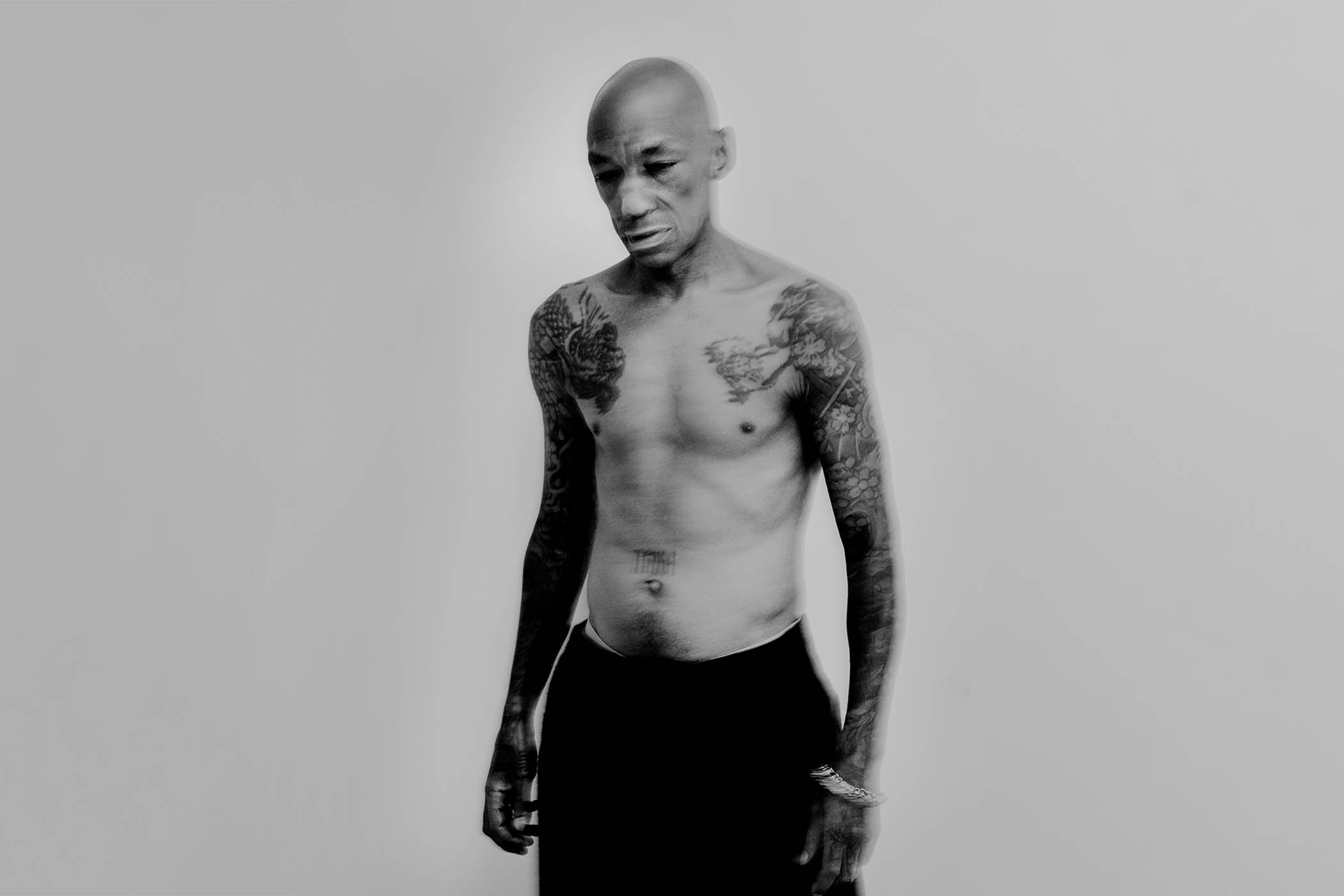
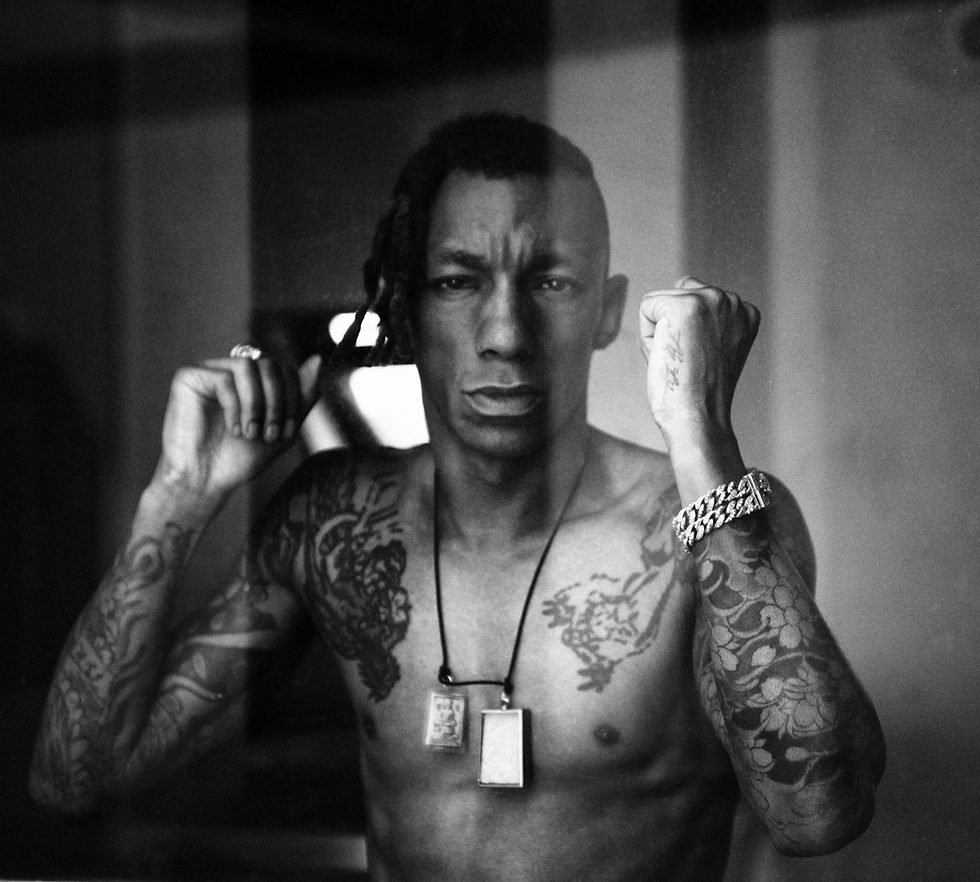
Bold black ink covers much of each forearm, including tribal daggers, armbands and angular shapes. The designs run from elbow toward wrist, with pointed ends and gaps of bare skin. In sharper photos, you can see how they are built from separate pieces rather than one solid sleeve.
The broad black bands are easiest to pick out, even when Kiedis bends his arms. Onstage, they show up again and again because they are hard to miss against bare skin. Some are thick and solid; others taper to points, with skin showing between the lines.
Online accounts sometimes attach cultural stories to these designs, but the photos do not establish a link to ancestry, spirituality or a private event. What they clearly show is black, tribal-style work: bands, angular motifs and dagger-like shapes running down the forearms.
The Red Hot Chili Peppers asterisk is a band mark on the wrist

The Red Hot Chili Peppers’ asterisk logo is often identified as a wrist tattoo. Unlike the larger portraits and bands, it points directly to Kiedis’s work with the group: the asterisk is the Chili Peppers’ best-known visual mark. It is small, but its connection is clear.
The wrist gives the logo a different kind of visibility. It shows in everyday hand movements and during performances, while a shirt can hide the portraits higher on the arm. Some of Kiedis’s tattoos stay close to the body; others read from across a stage.
The asterisk and forearm daggers may appear in the same photo, but they are separate parts of the collection: one compact band emblem, one set of larger patterns. That distinction makes the tattoo map easier to follow.
The back piece spreads across the shoulder blades in a broad geometric field

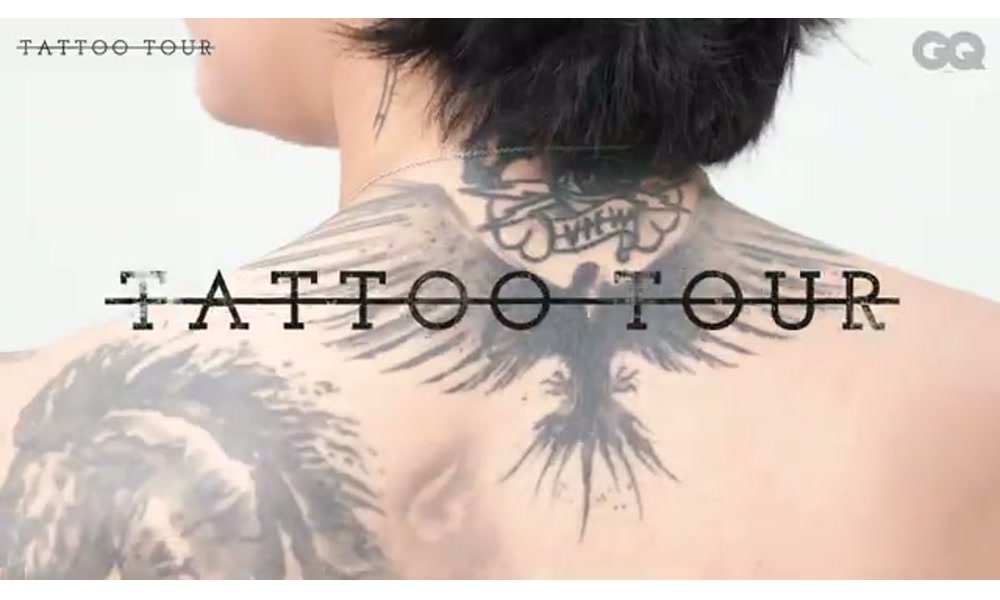
Kiedis’s back carries one of the collection’s largest designs. Photos show dark geometric, tribal-inspired work spreading across the shoulder blades. Repeated shapes make it read as a wide panel rather than a single emblem, and clothing hides nearly all of it.
The design uses the full width of his back: lines fan across the shoulders and draw the eye toward the spine. Its repeated geometry gives it an architectural feel, unlike the tiger or the two chief portraits.
Some tattoo catalogues describe it as Aztec-inspired or tribal, but those labels speak to its visual style, not Kiedis’s heritage or the source of every symbol. Photos show a large black design across his upper back; the private meaning of the individual marks has not been clearly documented.
The torso and shoulder photographs show how the collection changed around the main pieces

Photos also show small marks across Kiedis’s shoulders, chest and torso, though many have not been named in published accounts. Some look like short bands, others like small emblems; movement and stage lighting can hide their edges. Without a clear identification, it is hard to count them as named tattoos.
New work filled in around the older portraits over time. What looks like one continuous sleeve may be several pieces—a chief, a tiger, an armband and smaller filler designs—with gaps between them. Those breaks help show where one tattoo stops and the next begins.
The collection also looks denser in later photos. Older shots show the portraits and arm work before additions filled out the limbs. Concert lighting can hide thin lines or make black ink look heavier, so dated photos give a clearer timeline than trying to count everything from a single image.
Clothing and movement reveal different parts of the collection. A short sleeve may cover the upper-arm portraits; the tiger sits near the inner arm, while the forearm bands show when Kiedis raises a microphone. His back piece disappears under a shirt, even though it spans the shoulder blades.
Photos from different years and settings fill in the gaps. Stage shots, studio portraits and older shirtless interviews each reveal another section; no single image catches every tattoo. Together, they show how the collection grew around its original pieces.
What can be confirmed without inventing meanings
The clearest identifications are Chief Sitting Bull, Chief Joseph, the tiger, the forearm daggers and bands, the Red Hot Chili Peppers asterisk, and the broad back piece. Those can be named and placed from available photos and accounts. Smaller marks across the shoulders, chest and hands are harder to identify without a clear source.
The collection mixes portraits, animals, band history and large graphic patterns. The chiefs give the arms recognisable faces; the tiger adds another subject; the asterisk points to Kiedis’s career. The daggers and back work widen the design into a larger body map.
One blurry concert shot cannot settle the full count. The named pieces already show how Kiedis’s collection brings together portraits, band history and bold blackwork; any smaller mark needs a clearer photo or a first-person explanation.