Jaden Smith’s documented tattoo work ranges from small thigh lettering to scenes connected to The Pursuit of Happyness. Other face and torso marks appeared during the ERYS music-video period. Grace Lovejoy, who worked on the videos, said some marks were created for the project and its character study, so photos from that era don’t establish that every mark was permanent.
Jaden Smith’s ERYS face tattoos
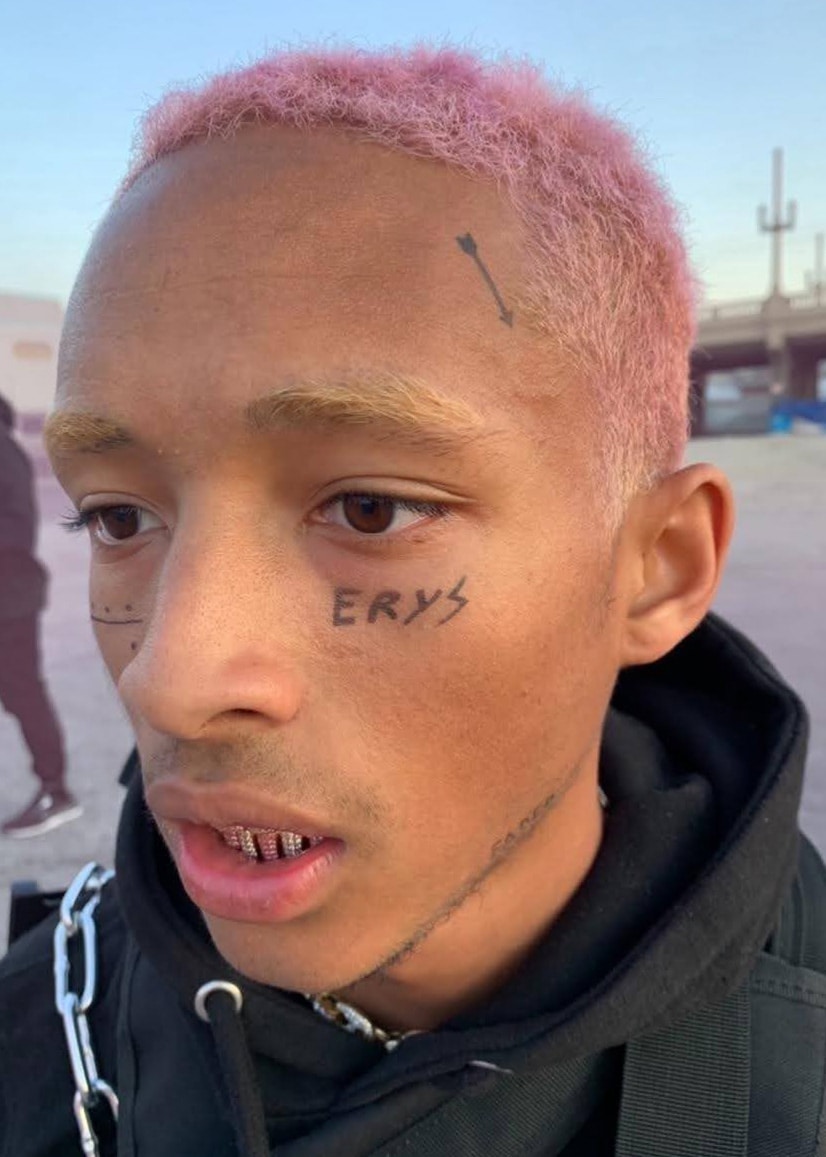
In ERYS-era images, “ERYS” appears below one eye, with smaller marks near the other eye and high on the side of his head. A slim arrow runs above the temple, and a fine line follows the jaw toward the neck.
The close crop gives these marks a graphic look, but they should be described as visible in those images rather than assumed to be permanent tattoos. The arrow is a simple detail: its angle follows the temple, so placement does most of the work.
The One World thigh tattoo
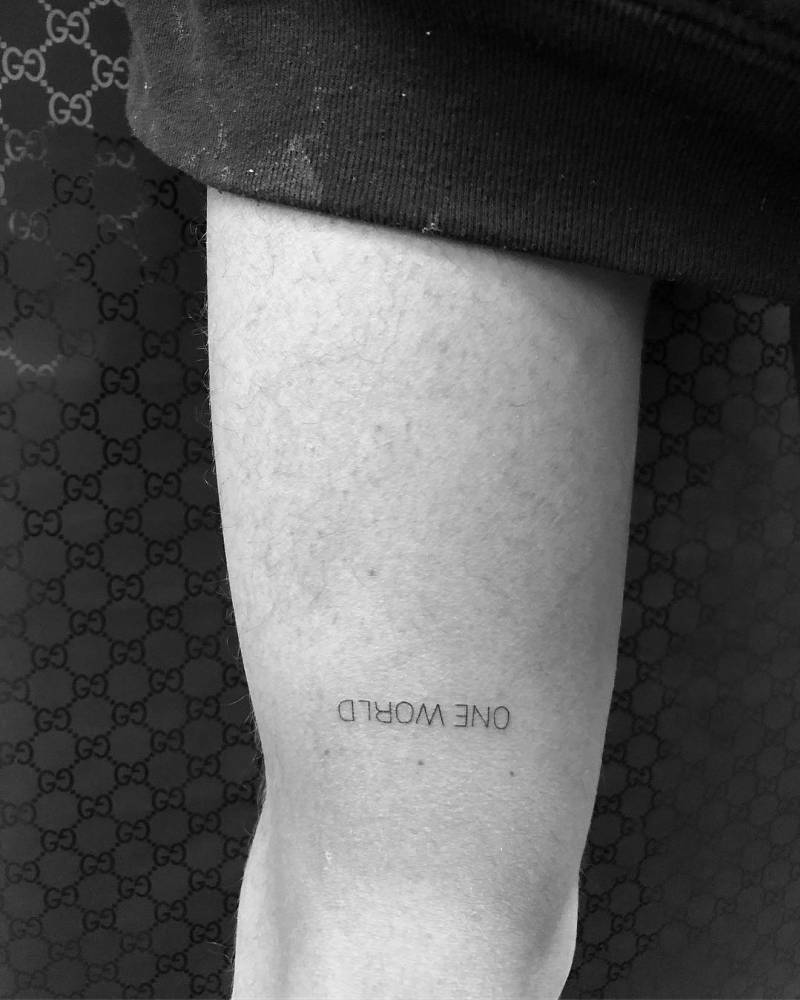
One World is a short line of lettering on Smith’s thigh, shown upside down in a black-and-white close-up. The words are spaced apart, leaving the phrase easy to read as it follows the skin.
The thigh keeps the piece covered much of the time. With lettering this minimal, spacing and a steady line matter more than extra decoration.
The Pursuit of Happyness forearm tattoo
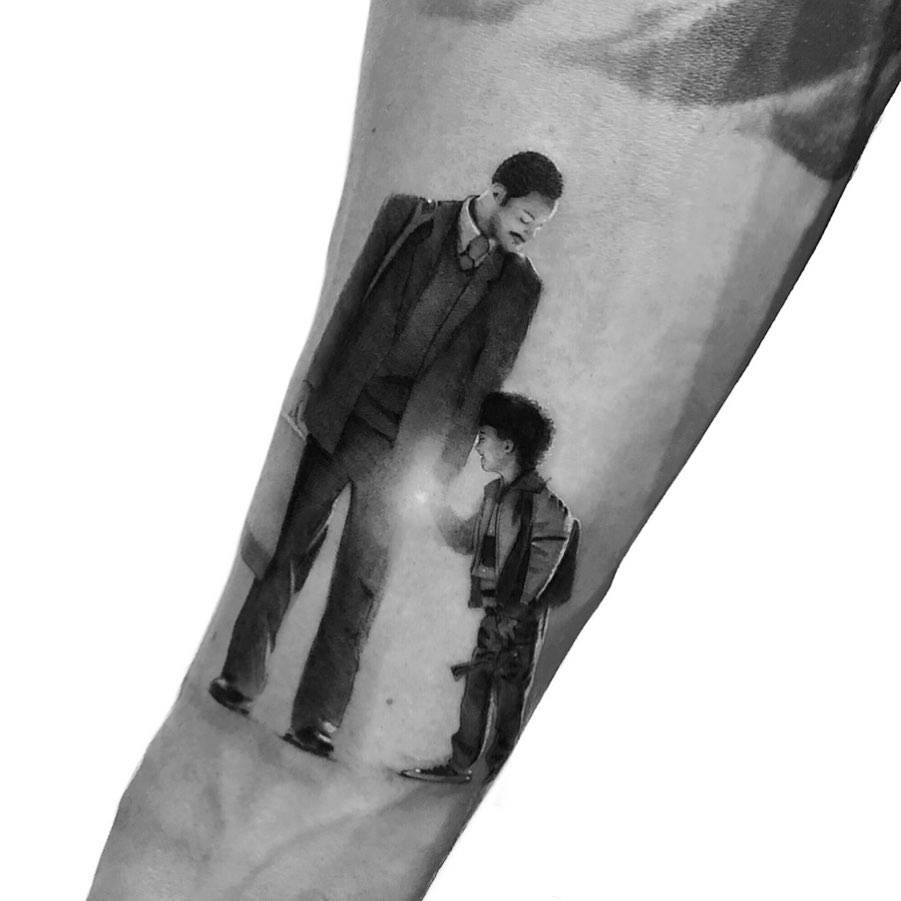
One The Pursuit of Happyness reference is a small black-and-grey scene of an adult and child standing together. The older figure looks down toward the child. Smith made the film with his father, Will Smith; the scene points to that shared project without relying on a portrait.
Soft shading gives the figures depth, while open skin keeps the image from becoming a dark block. A film reference can be a moment or relationship from the story instead of a title or poster.
The Pursuit of Happyness thigh tattoo
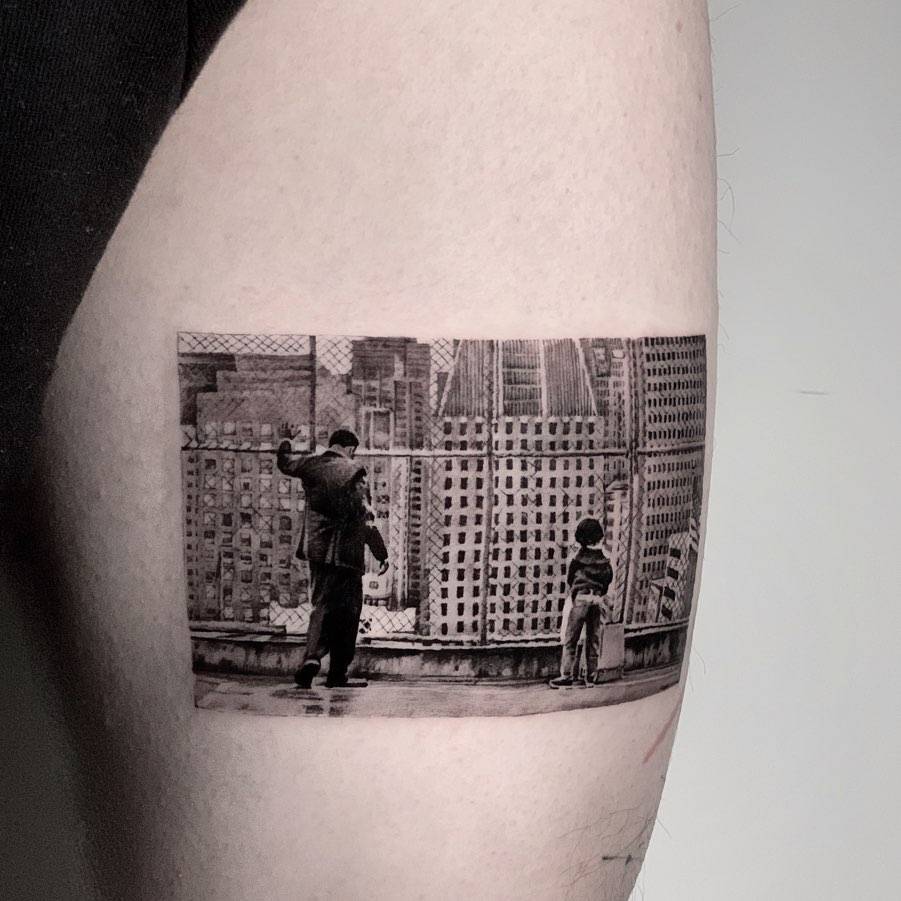
A second film piece sits on the thigh and pairs a suited adult and child with handwritten words beneath them. The quote refers to protecting a dream when others say it can’t happen. Image and lettering run in one vertical line, like a small page kept close to the body.
The writing has room to stay apart from the scene. On a curved area such as the thigh, an artist may need to adjust the proportions so both parts still read when the leg moves.
The Pursuit of Happyness tricep tattoo
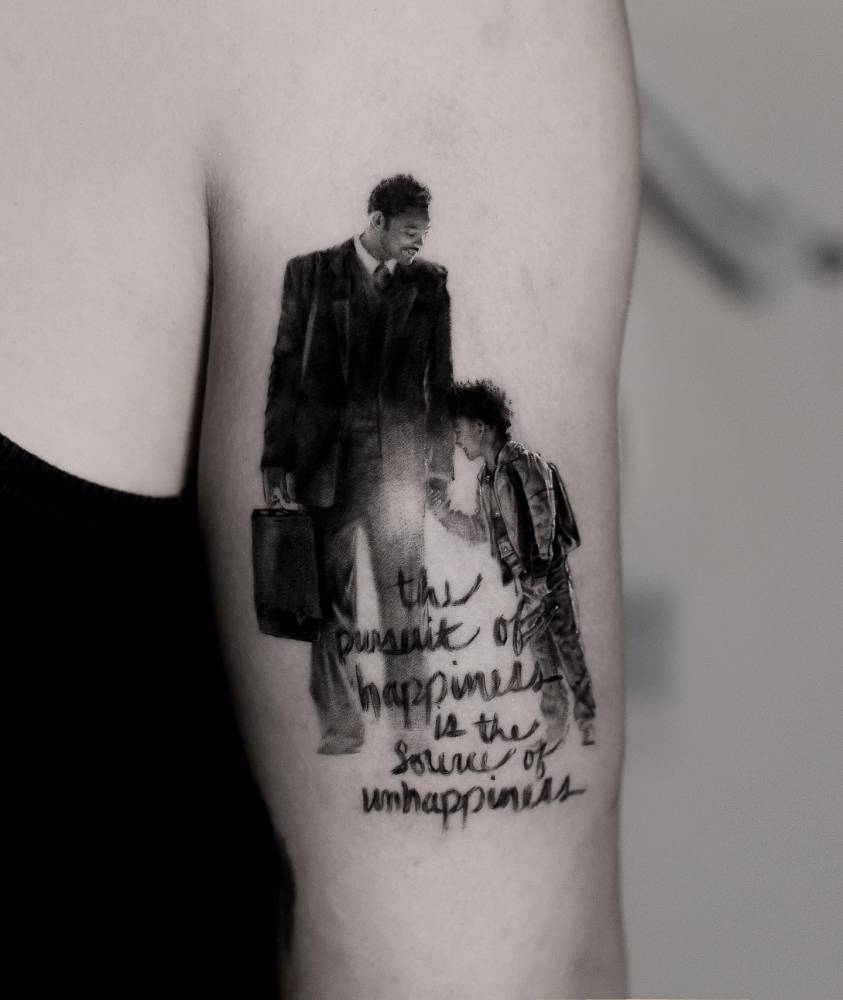
The tricep version uses the same adult-and-child scene with the quote below it, but in a taller layout. The figures come first; the eye then moves down to the words. Open space helps keep the image and script distinct.
The three film references share an idea without using identical compositions. Crop, scale and placement change with each part of the body.
Style, clothes, and the world around him
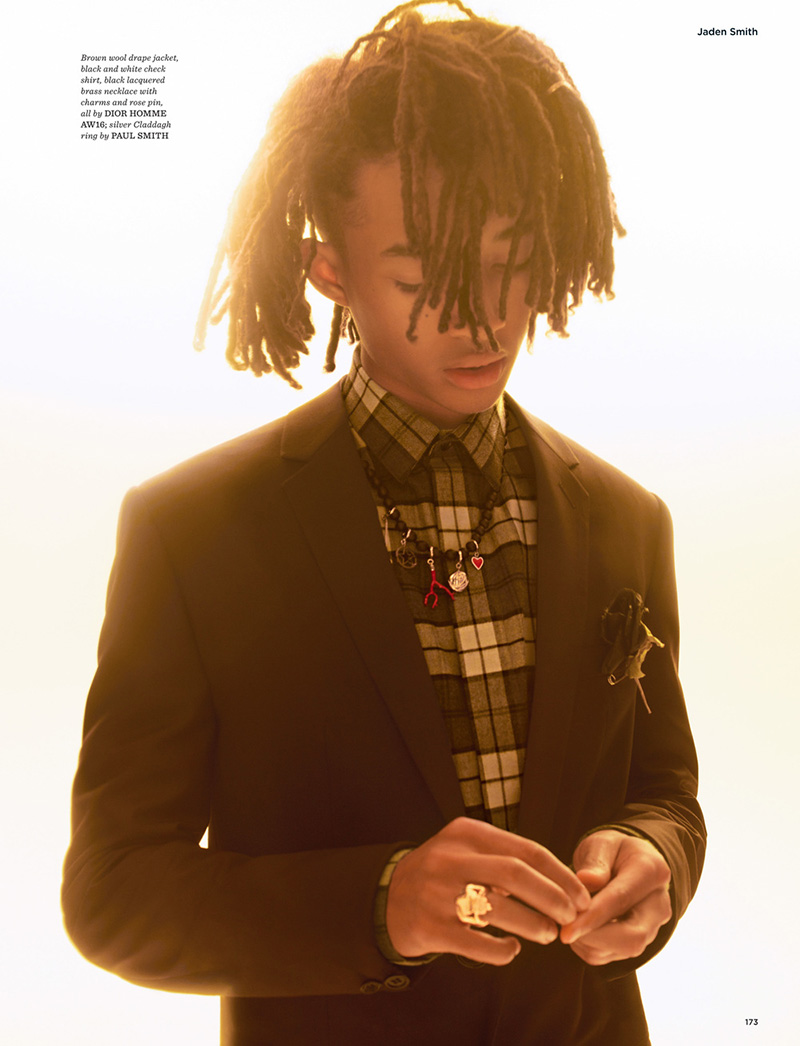
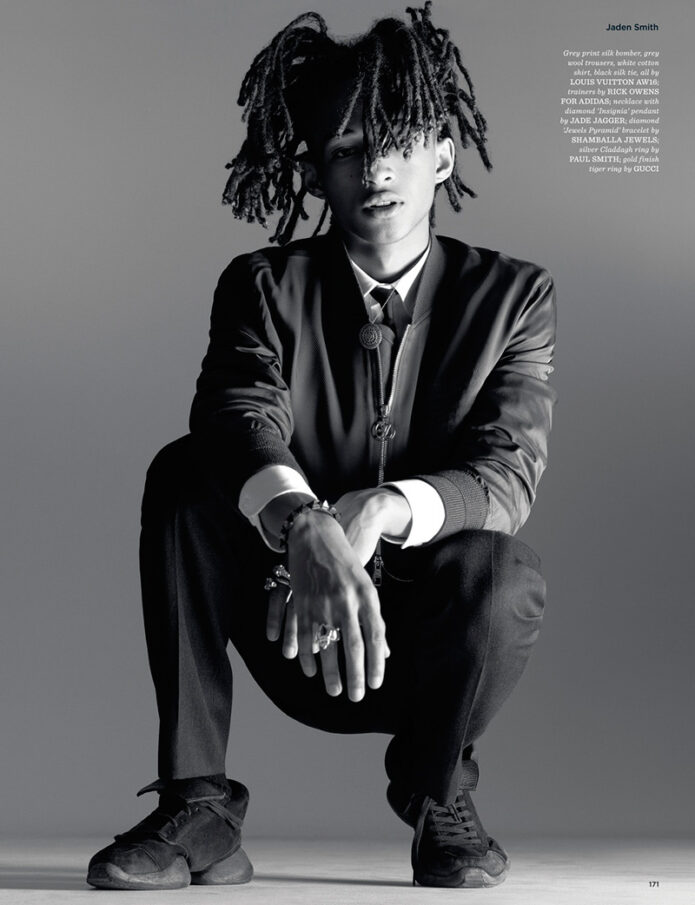
GQ Style’s ERYS-era portraits show Smith in layered tailoring, jewellery and clothes between formalwear and street style. The warm editorial image gives context for his styling, but it isn’t a close view of a particular tattoo.
His clothes add to the graphic feel of the ERYS marks and fine lettering. In a strong outfit, a small tattoo can stay a quiet detail; a larger image may take focus when more skin is visible.
The visual language around Jaden
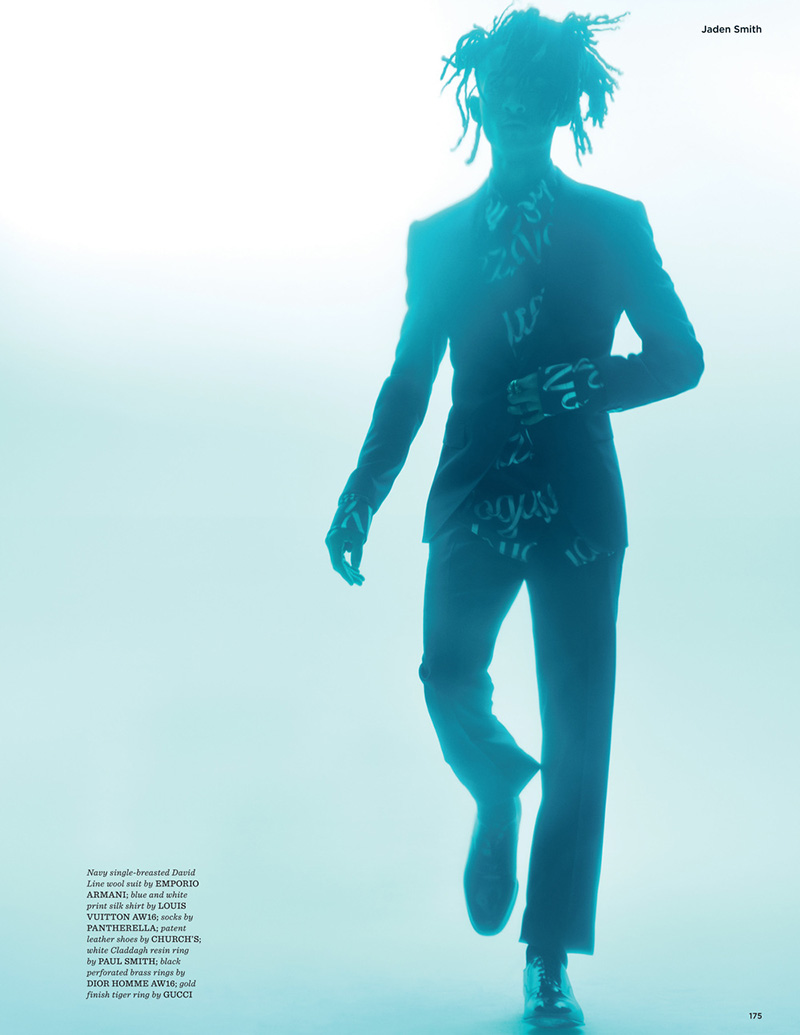
The second editorial portrait reduces Smith to a blue-toned silhouette. It shows the fashion mood of that period, not a close view of his ink. The ERYS marks, film scenes and One World lettering each come from a different reference.
If you’re developing a design of your own, start with the part of a film, project or phrase that matters to you. Then find an artist whose work fits the style: fine lettering and black-and-grey realism call for different approaches.
What to borrow from Jaden’s approach
Smith’s tattoo references don’t follow one style. The common thread is that each starts with something specific, whether a film scene, a phrase or an album’s visual world. You don’t need to copy the exact image or wording.
Choose the idea first, then work with the artist on scale, placement and detail. And with ERYS-era photos, keep in mind that some face and torso marks were made for the videos rather than confirmed as permanent tattoos.